249 Results for "

shape-selective methylation

" in MedChemExpress (MCE) Product Catalog:
Products (249)

249 Results for "shape-selective methylation" in MCE Product Catalog:

Cat. No.: HY-L005
2,031 compounds

Epigenetics refers to changes in phenotype that are not rooted in DNA sequence. Many types of epigenetic processes have been identified, including DNA methylation, alteration in the structure of histone proteins and gene regulation by small noncoding microRNAs. Modification of DNA, protein, or RNA, resulting in changes to the function and/or regulation of these molecules, without altering their primary sequences, reveals the complexities of cellular differentiation, embryology, the regulation of gene expression, aging, cancer, and other diseases.

MCE provide a unique collection of 2,031 epigenetics-related compounds that can be used in the research of the related diseases.

Cat. No.: HY-A0248AS
Polymyxin B1-d7 TFA is the deuterium labeled Polymyxin B1 TFA (HY-A0248A). Polymyxin B1 is a potent antimicrobial lipopeptide first derived from Bacilus polymyxa. Polymyxin B1 is the major component in Polymyxin B (HY-A0248). Polymyxin B1 can induce lysis of bacterial cells through interaction with their membranes. Polymyxin B1 has the potential for multidrug-resistant Gram-negative bacterial infections treatment .
loading...
    loading...
Cat. No.: HY-A0248AS1
Polymyxin B1-D-Leu-d7 TFA is the deuterium labeled Polymyxin B1 (HY-A0248A). Polymyxin B1 is a potent antimicrobial lipopeptide first derived from Bacilus polymyxa. Polymyxin B1 is the major component in Polymyxin B (HY-A0248). Polymyxin B1 can induce lysis of bacterial cells through interaction with their membranes. Polymyxin B1 has the potential for multidrug-resistant Gram-negative bacterial infections treatment .
loading...
    loading...
Cat. No.: HY-151229
CAS No.: 686-07-7
Purity:  99.77%
Synonyms: DETC-Me; DDTC-Me; Diethyldithiocarbamic acid methyl ester
Research Areas:  

Metabolic Disease

S-Methyl-N,N-diethylthiolcarbamate (DETC-Me; DDTC-Me) is the active metabolite of the aldehyde dehydrogenase inhibitor disulfiram (HY-B0240). It is produced by the methylation of the disulfiram metabolite diethyldithiocarbamate in mouse liver microsomes. S-Methyl-N,N-diethylthiolcarbamate (DETC-Me; DDTC-Me) inhibits rat liver low Km aldehyde dehydrogenase (ALDH) (ID50=15.5 mg/kg). When administered at a dose of 20.6 mg/kg, it decreases mean arterial pressure (MAP) and increases heart rate in rats during ethanol stimulation.
loading...
    loading...
Cat. No.: HY-172732
CAS No.: 3002409-47-1
Research Areas:  

Cancer

PRMT5-IN-50 is an orally active and selective inhibitor of PRMT5. PRMT5-IN-50 has good metabolic stability and low clearance rate in human liver microsomes. PRMT5-IN-50 inhibits SDMA/HCT116-MTAPdel and SDMA/HCT116-MTAPwt with IC50s value of 1.0, 536 nM for arginine symmetric methylation, 19, 1620 nM for anti-proliferation, respectively. PRMT5-IN-50 inhibits tumor growth in mice .
loading...
    loading...
Cat. No.: HY-181781
CAS No.: 3104325-26-7
Research Areas:  

Cancer

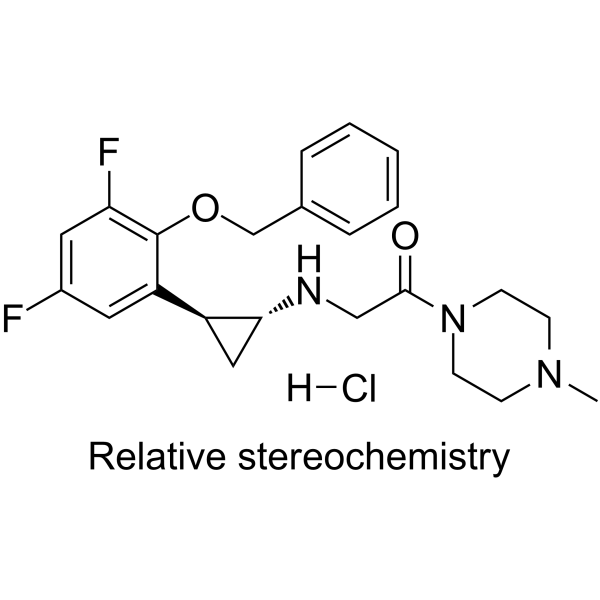
LSD1-IN-48 is a tranylcypromine-pyrimidine derivative and selective LSD1 inhibitor with a human IC50 of 7.87 nM. LSD1-IN-48 increases H3K4me1/2 histone methylation levels. LSD1-IN-48 induces apoptosis, upregulates CD86, downregulates SOX2 and CD44, inhibits proliferation in cancer cells. LSD1-IN-48 can be used for the research of acute myeloid leukemia .
loading...
    loading...
Cat. No.: HY-181975
CAS No.: 956181-19-4
Target:  

Notch

Research Areas:  

Cancer

ATOX1-IN-1 is an inhibitor of ATOX1 (a copper chaperone protein) with a Kd value of 12.5 μM. ATOX1-IN-1 induces intracellular copper accumulation, increases the level of DNA methylation in the NOTCH1 promoter region, and inhibits the NOTCH1/HES1 signaling pathway. ATOX1-IN-1 enhances the sensitivity of hepatocellular carcinoma cells to Cisplatin (HY-17394). ATOX1-IN-1 can be used in hepatocellular carcinoma-related research .
loading...
    loading...
Cat. No.: HY-E70583
Target:  

TET Protein

Research Areas:  

Others

Recombinant Ten-Eleven Translocase is a recombinant Fe(II)- and α-ketoglutarate-dependent dioxygenase. Recombinant Ten-Eleven Translocase converts 5-methylcytosine (5mC) to 5-hydroxymethylcytosine (5hmC), and then to 5-formylcytosine (5fC) and 5-carboxycytosine (5caC) through a series of oxidation reactions. Then, 5caC is further converted into uracil (U) through the action of a conversion agent or enzyme, and uracil (U) is converted into thymine (T) through PCR, thereby achieving single-base resolution and high-accuracy identification of DNA methylation sites .
loading...
    loading...
Cat. No.: HY-W008091S
CAS No.: 1219795-15-9
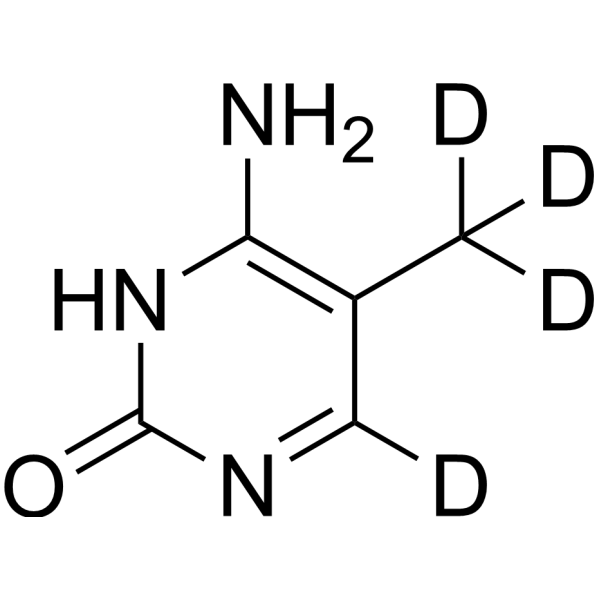
5-Methylcytosine-d4 is the deuterium labeled 5-Methylcytosine (HY-W008091). 5-Methylcytosine is a well-characterized DNA modification in prokaryotes and eukaryotes. 5-Methylcytosine forms symmetrical methylation on CpG dinucleotides in DNA, stabilizes tRNA/rRNA structure in RNA, and affects mRNA translation. 5-Methylcytosine can be oxidized to generate 5hmC, 5fC, and 5caC. 5-Methylcytosine can be used in epigenetics, developmental biology, and the study of diseases such as colorectal cancer and hepatocellular carcinoma .
loading...
    loading...
Cat. No.: HY-W097929
CAS No.: 87-40-1
Synonyms: 2,4,6-Trichloroanisole
Tyrene (2,4,6-Trichloroanisole) is an off-flavor compound, cyclic nucleotide-gated (CNG) channel inhibitor, and olfactory transduction attenuator. Tyrene is formed by microbial O-methylation of 2,4,6-trichlorophenol. Tyrene inhibits channel activity in olfactory receptor cells by partitioning into the plasma membrane lipid bilayer, and also suppresses odorant- and cAMP-induced currents in individual olfactory receptor cells. Tyrene causes cork taint in wine. Tyrene also produces off-flavors in potato chips, dried fruits, coffee, and drinking water .
loading...
    loading...
Cat. No.: HY-13599S1
Synonyms: 2-Chloro-2′-deoxyadenosine-13C5,15N2; CldAdo-13C5,15N2; 2CdA-13C5,15N2
Cladribine- 13C5, 15N2 (2-Chloro-2′-deoxyadenosine- 13C5, 15N2) is 13C and 15N labeled Cladribine. Cladribine (2-Chloro-2′-deoxyadenosine), a purine nucleoside analog, is an orally active adenosine deaminase inhibitor. Cladribine functions as an inhibitor of DNA synthesis to block the repair of the damaged DNA. Cladribine can inhibit DNA methylation. Cladribine has anti-lymphoma activity. Cladribine can be used for the research of several hematologic malignancies and multiple sclerosis .
loading...
    loading...
Cat. No.: HY-13599S4
Synonyms: 2-Chloro-2′-deoxyadenosine-13C,15N2; CldAdo-13C,15N2; 2CdA-13C,15N2
Cladribine- 13C, 15N2 (2-Chloro-2′-deoxyadenosine- 13C, 15N2) is the 13C- and 15N-labeled Cladribine (HY-13599). Cladribine (2-Chloro-2′-deoxyadenosine), a purine nucleoside analog, is an orally active?adenosine deaminase?inhibitor. Cladribine functions as an inhibitor of?DNA synthesis?to block the repair of the damaged DNA. Cladribine can inhibit DNA methylation. Cladribine has anti-lymphoma activity. Cladribine can be used for the research of several hematologic malignancies and multiple sclerosis.
loading...
    loading...
Cat. No.: HY-136523
CAS No.: 2262488-39-9
Purity:  98.44%
Research Areas:  

Cancer

S2157, a N-alkylated tranylcypromine (TCP) derivative, is a potent lysine-specific demethylase 1 (LSD1) inhibitor. S2157 increases H3K9 methylation and reciprocal H3K27 deacetylation at super-enhancer regions. S2157 induces apoptosis in TCP-resistant T-cell acute lymphoblastic leukemia (T-ALL) cells by repressing transcription of the NOTCH3 and TAL1 genes. S2157 efficiently pass through the blood-brain barrier and can almost completely eradicate CNS leukemia in mice transplanted with T-ALL cells .
loading...
    loading...
Cat. No.: HY-156597
CAS No.: 1998705-63-7
Purity:  99.88%
Synonyms: AT-752 free base
Research Areas:  

Infection

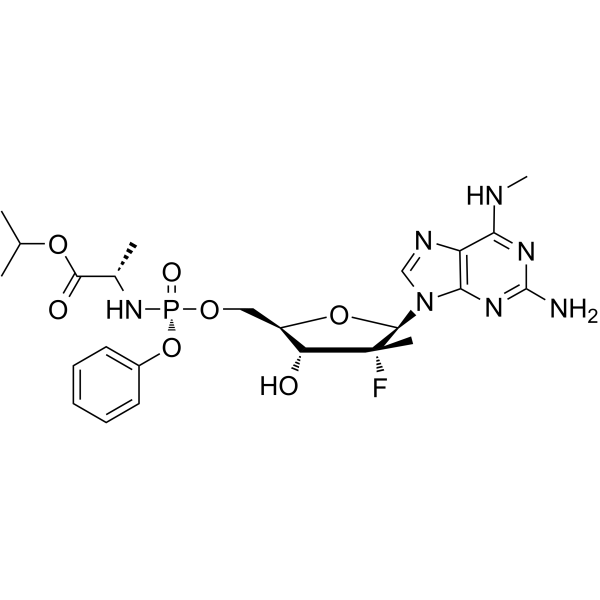
Arbemnifosbuvir (AT-752 free base) is an orally active inhibitor of DENV NS5 RdRp and MTase, and is also a guanosine nucleotide analog prodrug. Arbemnifosbuvir forms the active triphosphate metabolite AT‑9010 (HY-139165) in peripheral blood mononuclear cells, which competes with GTP to terminate RNA synthesis and binds to the GTP/RNA-cap site to inhibit 2'-O-methylation. Arbemnifosbuvir reduces viremia, improves survival, prevents weight loss, and decreases viral load in a mouse model of dengue virus. Arbemnifosbuvir can be used for research related to viral infections .
loading...
    loading...
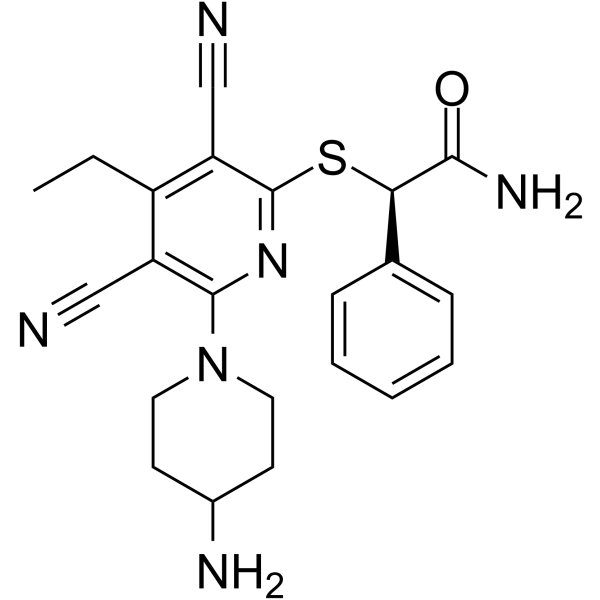
Cat. No.: HY-174908
SJL2-1 is a PRMT5 inhibitor, with an IC50 of 1.56 μM. SJL2-1 suppresses proliferation, migration, and invasion in prostate cancer cells. SJL2-1 promotes apoptosis and blocks the cell cycle at the G0/G1 phase. SJL2-1 can target the binding of PRMT5 in cells and inhibit the methylation and expression of the androgen receptor. SJL2-1 can be used for the study of early androgen-sensitive prostate cancer and advanced castration-resistant prostate cancer (CRPC) .
loading...
    loading...
Cat. No.: HY-123577
CAS No.: 2098621-17-9
Research Areas:  

Cancer

TPC-144 is a LSD1/KDM1A inhibitor. TPC-144 inhibits LSD1, and leads to a decrease in the protein level of DNMT1, causing low methylation of the LINE-1 element. TPC-144 can also produce a synergistic effect with Decitabine (HY-A0004) (a DNMT inhibitor), jointly promoting DNA demethylation and thereby inducing differentiation and apoptosis of leukemia cells. TPC-144 has also demonstrated anti-tumor efficacy in acute myeloid leukemia (AML) models. TPC-144 can be used for the study of AML .
loading...
    loading...
Cat. No.: HY-126061
CAS No.: 33868-03-0
Purity:  99.82%
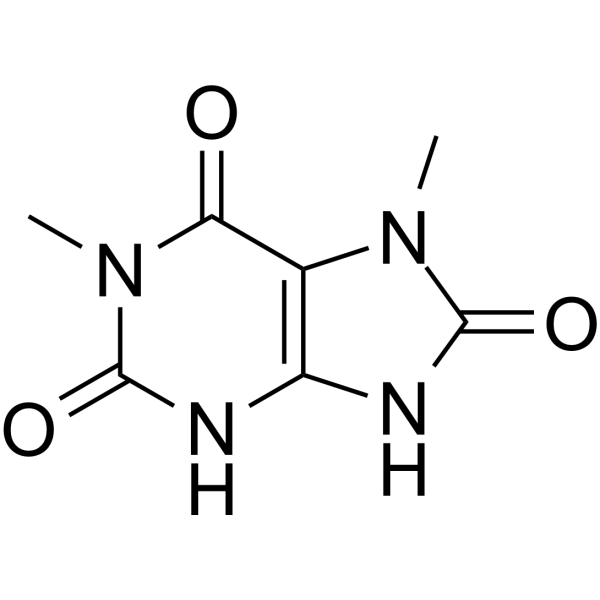
1,7-Dimethyluric acid is an N-methylated uric acid and purine derivative, as well as a caffeine metabolite. When 1,7-Dimethyluric acid is acted upon by peroxidase in the presence of H2O2, it follows the same oxidation pathway to generate a UV-absorbing intermediate, which decays via first-order kinetics. 1,7-Dimethyluric acid can adsorb onto pyrolytic graphite electrodes, but not onto glassy carbon electrodes or platinum electrodes. The N-methylation modification of its pyrimidine ring prevents ring contraction of the diol intermediate, and no NMR evidence of O-alkylation is observed during propylation under the test conditions .
loading...
    loading...
Cat. No.: HY-13599S3
Synonyms: 2-Chloro-2′-deoxyadenosine-13C3,15N3; CldAdo-13C3,15N3; 2CdA-13C3,15N3
Cladribine- 13C3, 15N3 (2-Chloro-2′-deoxyadenosine- 13C3, 15N3) is the 13C- and 15N-labeled Cladribine (HY-13599). Cladribine (2-Chloro-2′-deoxyadenosine), a purine nucleoside analog, is an orally active adenosine deaminase inhibitor. Cladribine functions as an inhibitor of DNA synthesis to block the repair of the damaged DNA. Cladribine can inhibit DNA methylation. Cladribine has anti-lymphoma activity. Cladribine can be used for the research of several hematologic malignancies and multiple sclerosis .
loading...
    loading...
Cat. No.: HY-139664A
CAS No.: 2170140-50-6
Purity:  98.97%
Target:  

DNA Methyltransferase

Research Areas:  

Cancer

(R)-GSK-3685032 is the R-enantiomer of GSK-3685032 (HY-139664) and is a potent, non-covalent, reversible DNMT1-selective inhibitor with an IC50 of 0.036 μM against DNMT1. (R)-GSK-3685032 preferentially binds DNMT1 in a hemimethylated DNA context, inhibits DNA methylation maintenance by occupying the DNMT1 active site loop that inserts into DNA and by interacting with the target recognition domain, thereby inducing DNA hypomethylation and transcriptional activation. (R)-GSK-3685032 is useful for research on DNMT1, acute myeloid leukemia, and B cell humoral immunity .
loading...
    loading...
Cat. No.: HY-156152
CAS No.: 3032785-00-2
Research Areas:  

Cancer

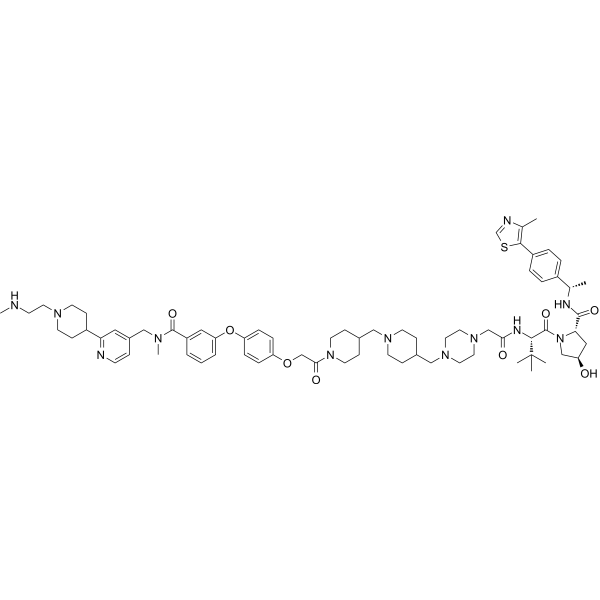
PROTAC CARM1 degrader-1 is a highly selective CARM1 PROTAC degrader, with a DC50 of 8.1 nM in MCF‑7 cells. PROTAC CARM1 degrader-1 recruits the VHL E3 ubiquitin ligase complex to act on CARM1, inducing a proteasome-dependent degradation process. PROTAC CARM1 degrader-1 downregulates the methylation level of CARM1 substrates in breast cancer cells, inhibits breast cancer cell migration, and exhibits no significant inhibitory effect on cell proliferation. PROTAC CARM1 degrader-1 is applicable for related research on breast cancer .
loading...
    loading...

