249 Results for "

shape-selective methylation

" in MedChemExpress (MCE) Product Catalog:
Products (249)

249 Results for "shape-selective methylation" in MCE Product Catalog:

5
5 Cited Publications
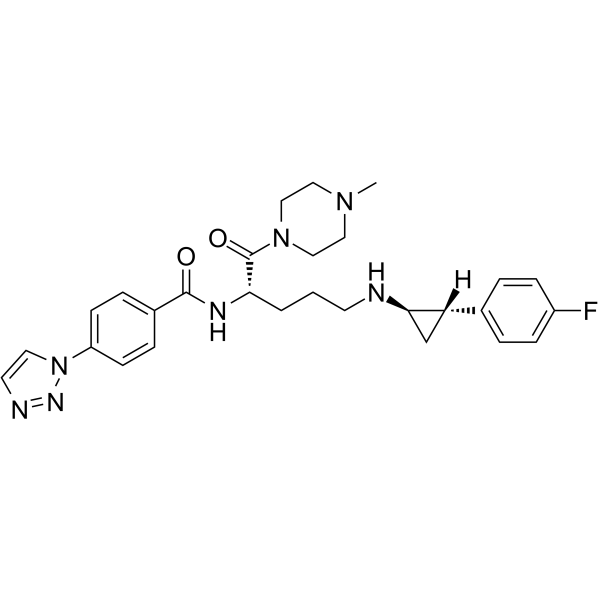
Cat. No.: HY-109169
CAS No.: 1990504-34-1
Synonyms: IMG-7289
Research Areas:  

Cancer

Bomedemstat (IMG-7289) is an orally active and irreversible lysine-specific demethylase 1 (LSD1) inhibitor. Bomedemstat can increase H3K4 and H3K9 methylation, and then alter gene expression. Bomedemstat shows anti-cancer activities, inhibits cancer cell proliferation and induces apoptosis .
loading...
    loading...
5
5 Cited Publications
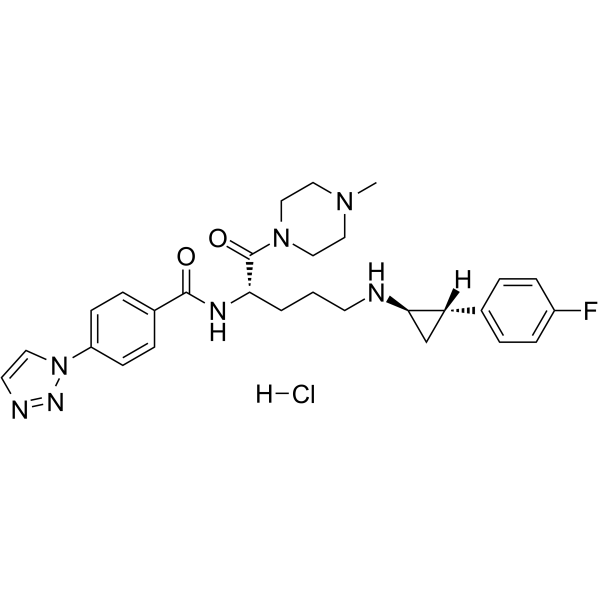
Cat. No.: HY-109169B
Purity:  99.94%
Synonyms: IMG-7289 hydrochloride
Research Areas:  

Cancer

Bomedemstat (IMG-7289) hydrochloride is an orally active and irreversible lysine-specific demethylase 1 (LSD1) inhibitor. Bomedemstat hydrochloride can increase H3K4 and H3K9 methylation, and then alter gene expression. Bomedemstat hydrochloride shows anti-cancer activities, inhibits cancer cell proliferation and induces apoptosis .
loading...
    loading...
5
5 Cited Publications
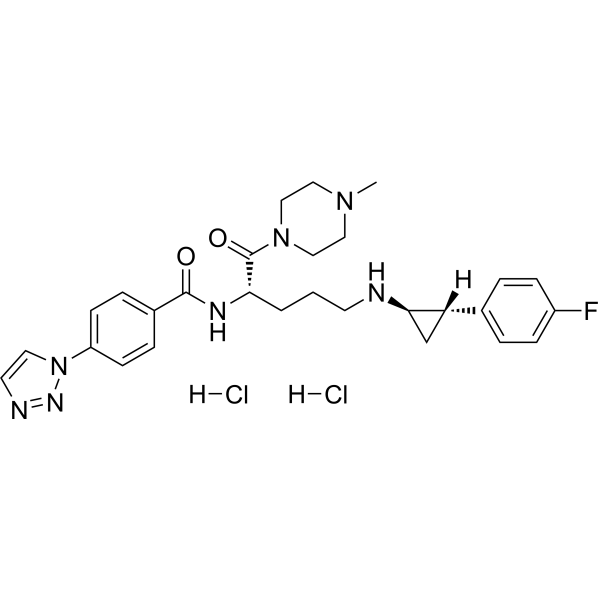
Cat. No.: HY-109169C
Purity:  99.55%
Synonyms: IMG-7289 dihydrochloride
Research Areas:  

Cancer

Bomedemstat (IMG-7289) dihydrochloride is an orally active and irreversible lysine-specific demethylase 1 (LSD1) inhibitor. Bomedemstat dihydrochloride can increase H3K4 and H3K9 methylation, and then alter gene expression. Bomedemstat dihydrochloride shows anti-cancer activities, inhibits cancer cell proliferation and induces apoptosis .
loading...
    loading...
5
5 Cited Publications
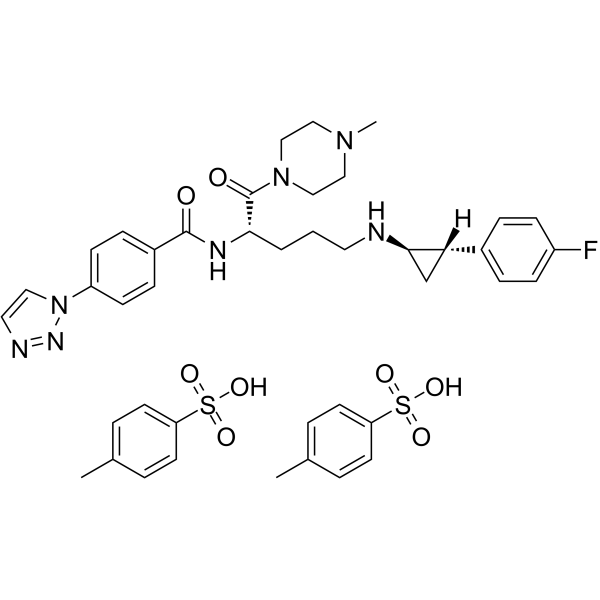
Cat. No.: HY-109169A
CAS No.: 1990504-72-7
Purity:  99.14%
Synonyms: IMG-7289 ditosylate
Research Areas:  

Cancer

Bomedemstat (IMG-7289) ditosylate is an orally active and irreversible lysine-specific demethylase 1 (LSD1) inhibitor. Bomedemstat ditosylate can increase H3K4 and H3K9 methylation, and then alter gene expression. Bomedemstat ditosylate shows anti-cancer activities, inhibits cancer cell proliferation and induces apoptosis .
loading...
    loading...
4
4 Cited Publications
Cat. No.: HY-101938
CAS No.: 58944-73-3
Purity:  99.91%
Synonyms: Adenosyl-Ornithine; A-9145; Antibiotic 32232RP
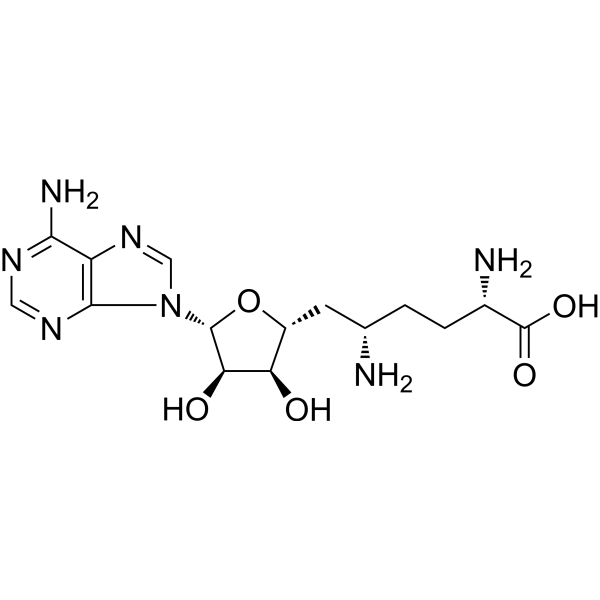
Sinefungin is a potent inhibitor of virion mRNA(guanine-7-)-methyltransferase, mRNA(nucleoside-2'-)-methyltransferase, and viral multiplication . Sinefungin, a SET7/9 inhibitor, ameliorates renal fibrosis by inhibiting H3K4 methylation .
loading...
    loading...
4
4 Cited Publications
Cat. No.: HY-113081
CAS No.: 15763-06-1
Purity:  99.21%
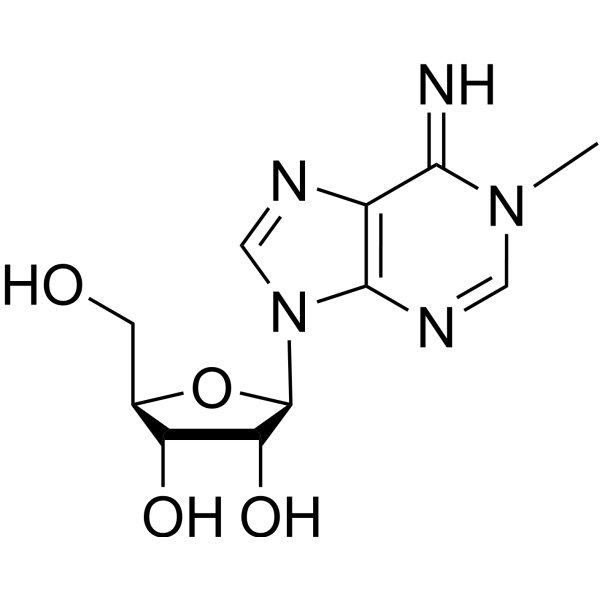
1-Methyladenosine is an RNA modification that can serve as a tumor marker, with elevated levels in the body associated with cancer development. Following 1-methyladenosine methylation, upregulation of PPARδ expression regulates cholesterol metabolism and activates Hedgehog signaling pathway, driving liver tumorigenesis .
loading...
    loading...
4
4 Cited Publications
Cat. No.: HY-12759
CAS No.: 1020399-49-8
Purity:  ≥95.0%
Research Areas:  

Cancer

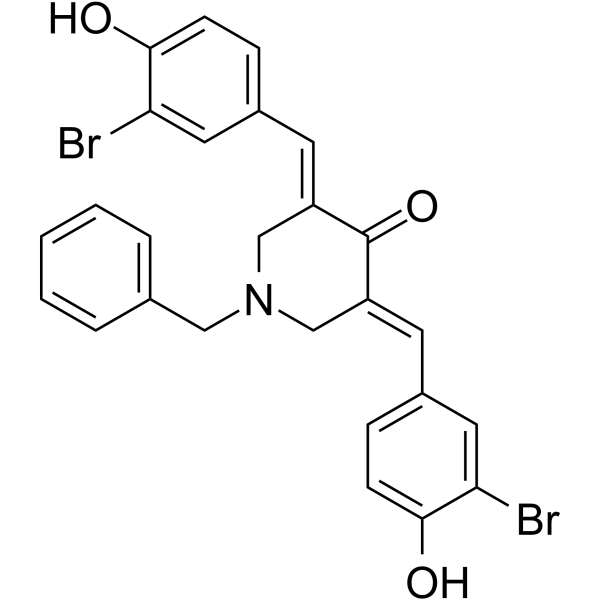
CARM1-IN-1 (compound 7g) is a highly potent and selective inhibitor of CARM1 (IC50=8.6 μM, CARM1/PABP1), with low inhibitory activity against PRMT1 and SET7 (IC50 >667 μM). CARM1-IN-1 inhibits the methylation activity of CARM1 and the methylation levels of different substrates, such as PABP1, CA150, SmB, and H3. CARM1-IN-1 also inhibits the promoter activity of prostate-specific antigen (PSA) without significant cytotoxicity .
loading...
    loading...
4
4 Cited Publications
Cat. No.: HY-12759A
CAS No.: 2070018-31-2
Purity:  95.13%
Research Areas:  

Cancer

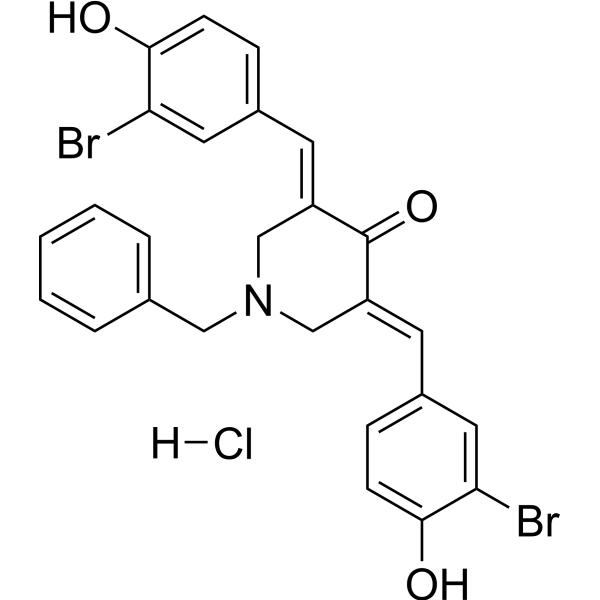
CARM1-IN-1 (compound 7g) hydrochloride is a highly potent and selective inhibitor of CARM1 (IC50=8.6 μM, CARM1/PABP1), with low inhibitory activity against PRMT1 and SET7 (IC50 >667 μM). CARM1-IN-1 hydrochloride inhibits the methylation activity of CARM1 and the methylation levels of different substrates, such as PABP1, CA150, SmB, and H3. CARM1-IN-1 hydrochloride also inhibits the promoter activity of prostate-specific antigen (PSA) without significant cytotoxicity .
loading...
    loading...
3
3 Cited Publications
Cat. No.: HY-W012078
CAS No.: 838-07-3
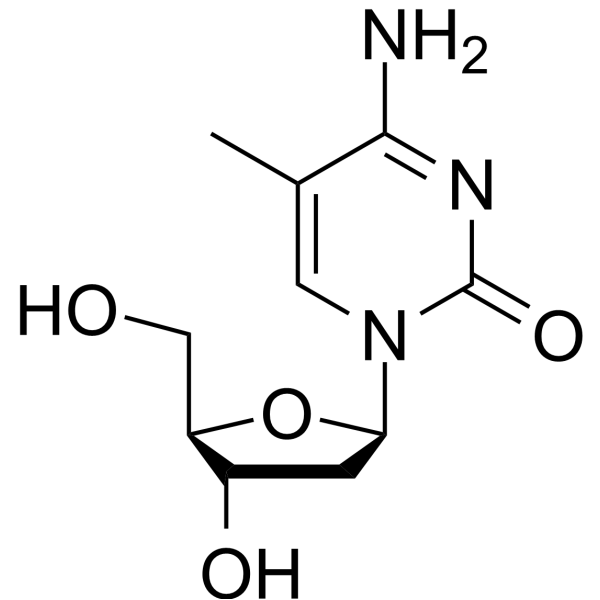
Synonyms: 5-Methyldeoxycytidine
5-Methyl-2'-deoxycytidine (5mdC) is an endogenous substrate of DNA methyltransferases (such as mammalian 5-C-MTase) and binds to DNA dependent on the formation of DNA stem-loop structures. 5-Methyl-2'-deoxycytidine guides de novo DNA methylation by acting as a methylation mark and activates the methylation of adjacent CpG sites in single-stranded DNA through cis action. 5-Methyl-2'-deoxycytidine regulates DNA methylation patterns by recruiting methyltransferases to specific chromatin regions, affecting chromatin condensation and gene expression. Its distribution in plant cells is related to cell proliferation and differentiation stages. The methylation level of 5-Methyl-2'-deoxycytidine is low in proliferating cells and high in differentiated cells .
loading...
    loading...
3
3 Cited Publications
Cat. No.: HY-W037893
CAS No.: 122323-88-0
Synonyms: Methyl piperazine-2-carboxylate dihydrochloride; METTL3 activator-1
Target:  

METTL3 HIV

Research Areas:  

Infection Neurological Disease

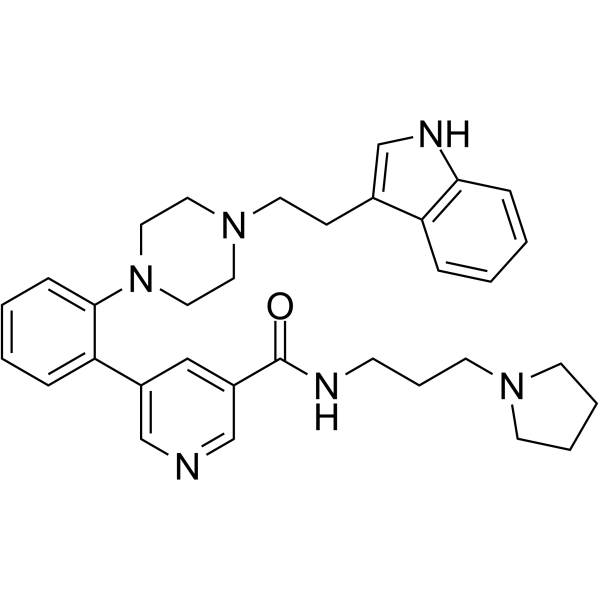
CHMA1004 (Methyl piperazine-2-carboxylate; METTL3 activator-1) dihydrochloride is a METTL3/METTL14/WTAP methyltransferase complex activator. CHMA1004 dihydrochloride exhibits neuroprotective and anxiolytic potential by enhancing m 6A methylation modification of RNA. CHMA1004 dihydrochloride promotes HIV replication in an infection context. CHMA1004 dihydrochloride can be used in studies related to anxiety disorders and HIV-1 infection .
loading...
    loading...
2
2 Cited Publications
Cat. No.: HY-124124
CAS No.: 114-33-0
Purity:  99.72%
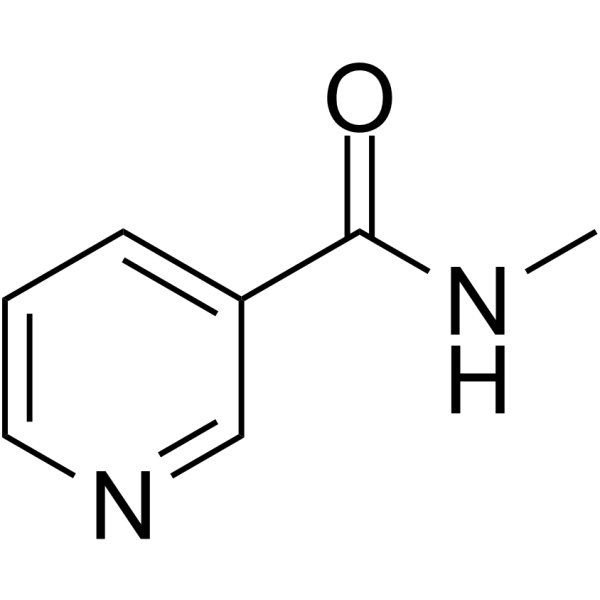
N-Methylnicotinamide is an endogenous metabolite with antithrombotic effect. N-Methylnicotinamide via production/release of prostacyclin inhibits arterial thrombosis development. N-Methylnicotinamide is also the N-methylation product from nicotinamide catalyzed by N-methyltransferase within nicotinate and nicotinamide metabolism pathway .
loading...
    loading...
2
2 Cited Publications
Cat. No.: HY-16513
CAS No.: 23261-20-3
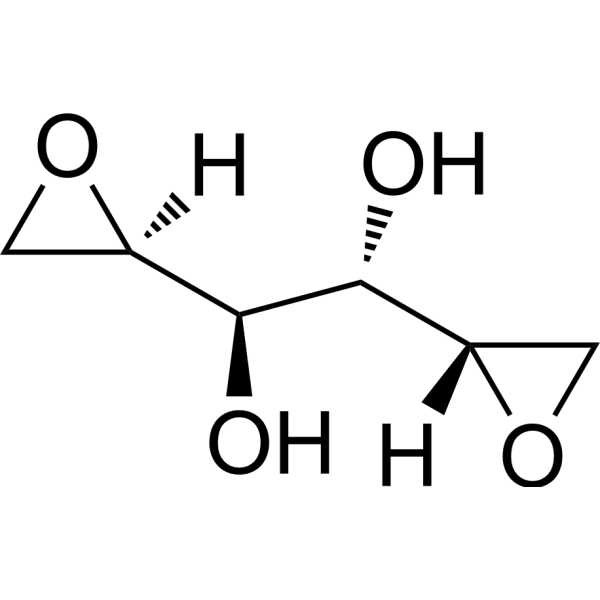
Synonyms: Dianhydrodulcitol; Dianhydrogalactitol
Research Areas:  

Cancer

VAL-083 is an alkylating agent that creates N7 methylation on DNA, with antitumor activity.
loading...
    loading...
2
2 Cited Publications
Cat. No.: HY-19980A
CAS No.: 5608-24-2
Synonyms: NSC-281668
Research Areas:  

Cancer

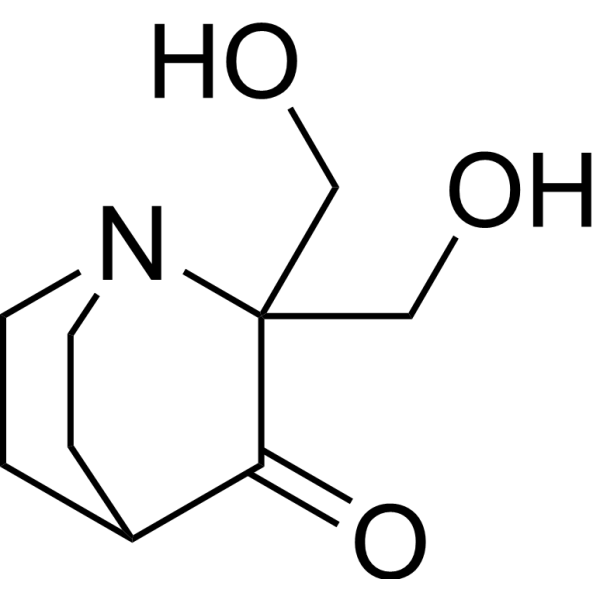
PRIMA-1 (NSC-281668) is a mutant p53 reactivator, restores the sensitivity of TP53 mutant-type thyroid cancer cells to the histone methylation inhibitor 3-Deazaneplanocin A.
loading...
    loading...
2
2 Cited Publications
Cat. No.: HY-134828
CAS No.: 2043321-54-4
Purity:  99.74%
Research Areas:  

Cancer

AZ506 is a potent SMYD2 inhibitor with an IC50 of 17 nM. AZ506 inhibits SMYD2 methyltransferase activity in cells, leading to a decrease in the SMYD2-mediated methylation signal .
loading...
    loading...
2
2 Cited Publications
Cat. No.: HY-W012078R
CAS No.: 838-07-3
Synonyms: 5-Methyldeoxycytidine (Standard)
5-Methyl-2'-deoxycytidine (5mdC) is an endogenous substrate of DNA methyltransferases (such as mammalian 5-C-MTase) and binds to DNA dependent on the formation of DNA stem-loop structures. 5-Methyl-2'-deoxycytidine guides de novo DNA methylation by acting as a methylation mark and activates the methylation of adjacent CpG sites in single-stranded DNA through cis action. 5-Methyl-2'-deoxycytidine regulates DNA methylation patterns by recruiting methyltransferases to specific chromatin regions, affecting chromatin condensation and gene expression. Its distribution in plant cells is related to cell proliferation and differentiation stages. The methylation level of 5-Methyl-2'-deoxycytidine is low in proliferating cells and high in differentiated cells .
loading...
    loading...
2
2 Cited Publications
Cat. No.: HY-W008091
CAS No.: 554-01-8
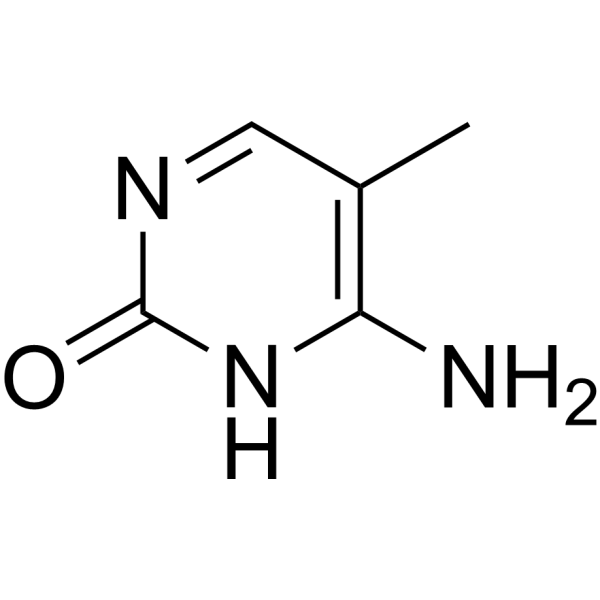
5-Methylcytosine is a well-characterized DNA modification in prokaryotes and eukaryotes. 5-Methylcytosine forms symmetrical methylation on CpG dinucleotides in DNA, stabilizes tRNA/rRNA structure in RNA, and affects mRNA translation. 5-Methylcytosine can be oxidized to generate 5hmC, 5fC, and 5caC. 5-Methylcytosine can be used in epigenetics, developmental biology, and the study of diseases such as colorectal cancer and hepatocellular carcinoma .
loading...
    loading...
2
2 Cited Publications
Cat. No.: HY-W008091A
CAS No.: 58366-64-6
Research Areas:  

Cancer

5-Methylcytosine hydrochloride is a well-characterized DNA modification in prokaryotes and eukaryotes. 5-Methylcytosine hydrochloride forms symmetrical methylation on CpG dinucleotides in DNA, stabilizes tRNA/rRNA structure in RNA, and affects mRNA translation. 5-Methylcytosine hydrochloride can be oxidized to generate 5hmC, 5fC, and 5caC. 5-Methylcytosine hydrochloride can be used in epigenetics, developmental biology, and the study of diseases such as colorectal cancer and hepatocellular carcinoma .
loading...
    loading...
2
2 Cited Publications
Cat. No.: HY-W008091R
CAS No.: 554-01-8
5-Methylcytosine (Standard) is the analytical standard of 5-Methylcytosine (HY-W008091). This product is intended for research and analytical applications. 5-Methylcytosine is a well-characterized DNA modification in prokaryotes and eukaryotes. 5-Methylcytosine forms symmetrical methylation on CpG dinucleotides in DNA, stabilizes tRNA/rRNA structure in RNA, and affects mRNA translation. 5-Methylcytosine can be oxidized to generate 5hmC, 5fC, and 5caC. 5-Methylcytosine can be used in epigenetics, developmental biology, and the study of diseases such as colorectal cancer and hepatocellular carcinoma .
loading...
    loading...
2
2 Cited Publications
Cat. No.: HY-N0353
CAS No.: 13657-68-6
Synonyms: (+)-Curdione
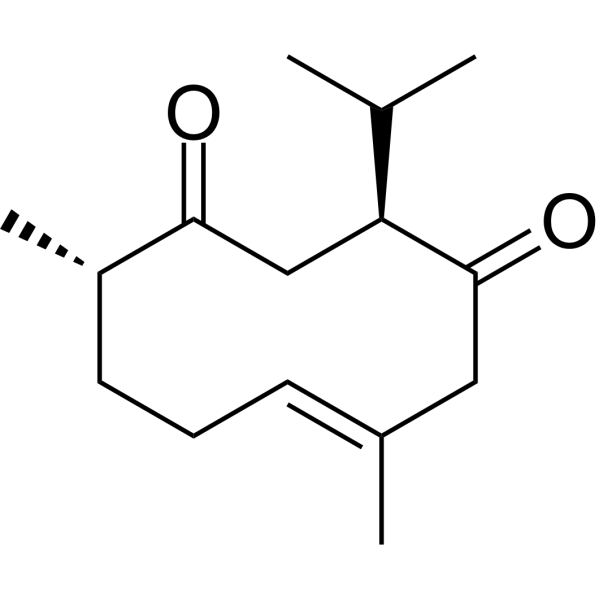
Curdione ((+)-Curdione) is an orally active sesquiterpenoid. Curdione inhibits platelet aggregation. Curdione induces ferroptosis in colorectal cancer via m6A methylation mediated by METTL14 and YTHDF2. Curdione inhibits ferroptosis in Isoproterenol (HY-B0468)-induced myocardial infarction by regulating the Keap1/Trx1/GPX4 signaling pathway, suppressing oxidative stress (ROS) and apoptosis. Curdione ameliorates Doxorubicin (HY-15142)-induced cardiotoxicity by inhibiting oxidative stress (ROS) and activating the Nrf2/HO-1 pathway. Curdione ameliorates sepsis-induced lung injury by inhibiting platelet-mediated neutrophil extracellular trap formation. Curdione ameliorates Bleomycin (HY-17565A)-induced pulmonary fibrosis by inhibiting TGF-β-induced fibroblast-to-myofibroblast differentiation. Curdione exhibits neuroprotective effects against focal cerebral ischemia-reperfusion injury in rats. Curdione exerts antiproliferative effects against human uterine leiomyosarcoma by targeting IDO1. Curdione protects vascular endothelial cells and atherosclerosis by regulating DNMT1-mediated ERBB4 promoter methylation. Curdione inhibits inducible prostaglandin E2 production (IC50 = 1.1 μM) and cyclooxygenase 2 expression .
loading...
    loading...
2
2 Cited Publications
Cat. No.: HY-138830
CAS No.: 1818252-53-7
Purity:  99.81%
Target:  

Histone Demethylase

Research Areas:  

Neurological Disease

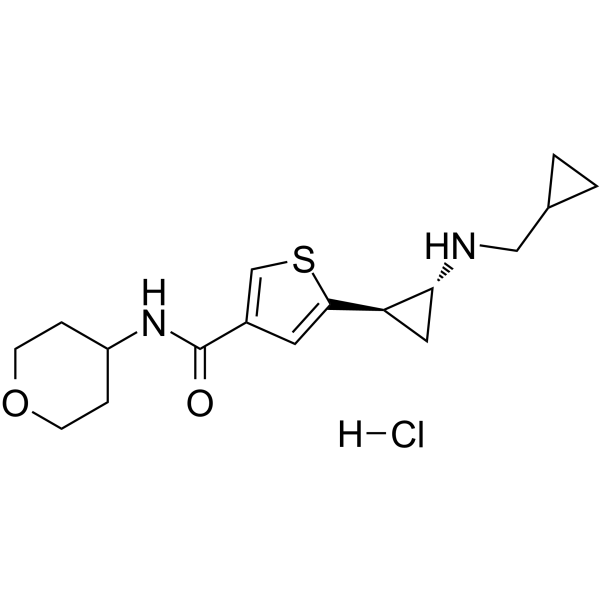
TAK-418 is an orally active, blood-brain barrier-penetrant LSD1 inhibitor with a human IC50 of 2.9 nM. TAK-418 irreversibly inhibits LSD1 by forming a compact flavin-FAD adduct with the catalytic domain FAD, blocking the demethylation of H3K4me1/2 and H3K9me1/2 without disrupting the LSD1-GFI1B interaction. TAK-418 restores normally dysregulated brain gene expression and DNA methylation, increases H3K4me1/2/3 and H3K9me2 at the Ucp2 locus, and induces Ucp2 mRNA expression. TAK-418 rescues defective H3K4 histone modifications, normalizes adult neurogenesis, and improves recognition memory, social behavior, and cognition in rodent models. TAK-418 can be used in research related to neurodevelopmental disorders, Alzheimer's disease, and autism spectrum disorders .
loading...
    loading...

