



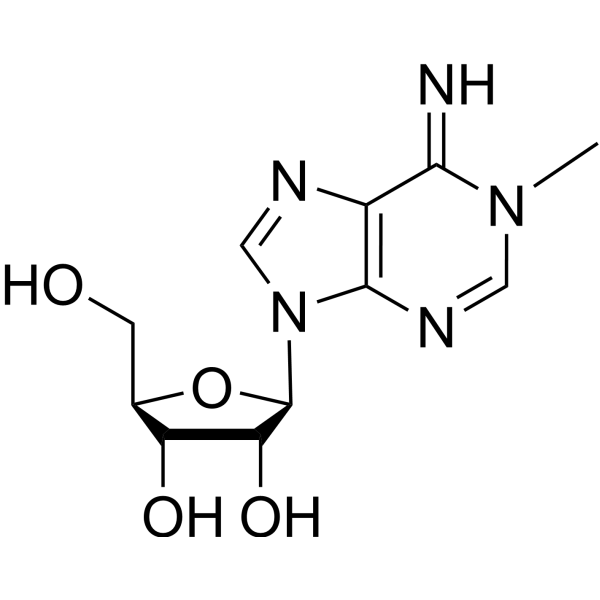
1-Methyladenosine
Based on 5 publication(s) in Google Scholar
1-Methyladenosine is an RNA modification that can serve as a tumor marker, with elevated levels in the body associated with cancer development. Following 1-methyladenosine methylation, upregulation of PPARδ expression regulates cholesterol metabolism and activates Hedgehog signaling pathway, driving liver tumorigenesis.
연구목적의 판매만을 진행합니다. 환자를 대상으로 한 판매는 하지 않습니다.
- Purity : 99.92%
- CAS No.: 15763-06-1
- 화학식: C11H15N5O4
- 분자량:281.27
-
보관:Powder -20°C, 3 years , 4°C, 2 years ; In solvent -80°C, 6 months , -20°C, 1 month

To place orders, for customer services and technical support, please contact: MedChemExpress USA
Tel: 609-228-6898 E-mail: [email protected] [email protected]


-
 Biological Activity
-
Chemical Information
-
용액&용해도
- Protocol
- 순도&문서
- References
-
 Help & FAQs


-
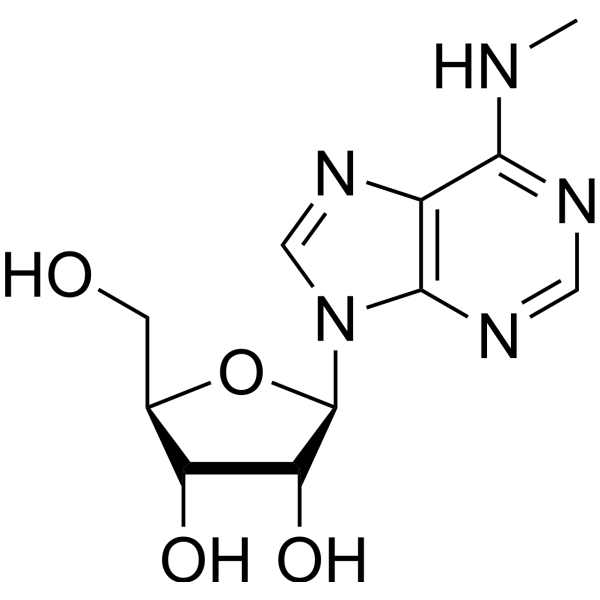
HY-N0086
N6-MethyladenosineViral RNA Modified Agent -
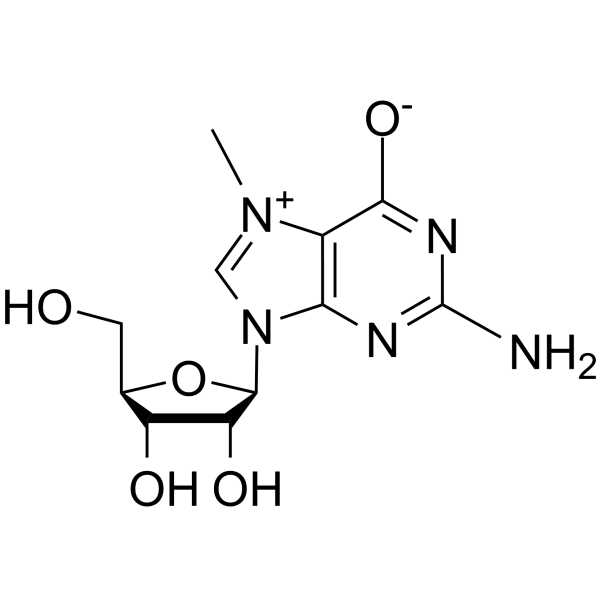
HY-122524
7-MethylguanosineNucleotide Analog -
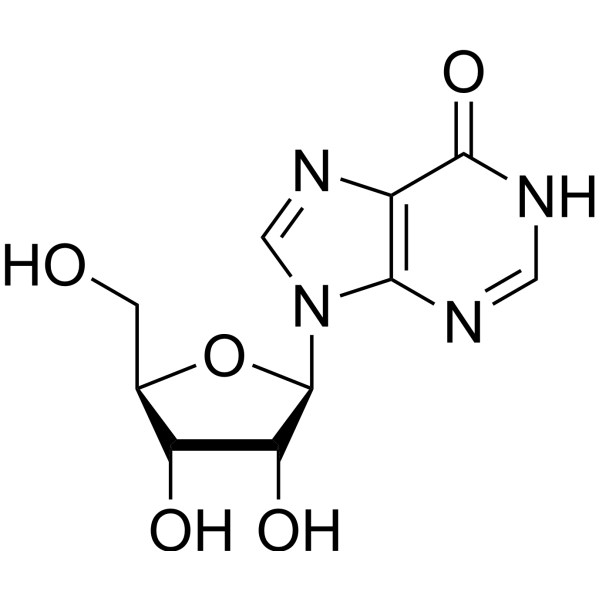
HY-N0092
InosineEndogenous Metabolite -
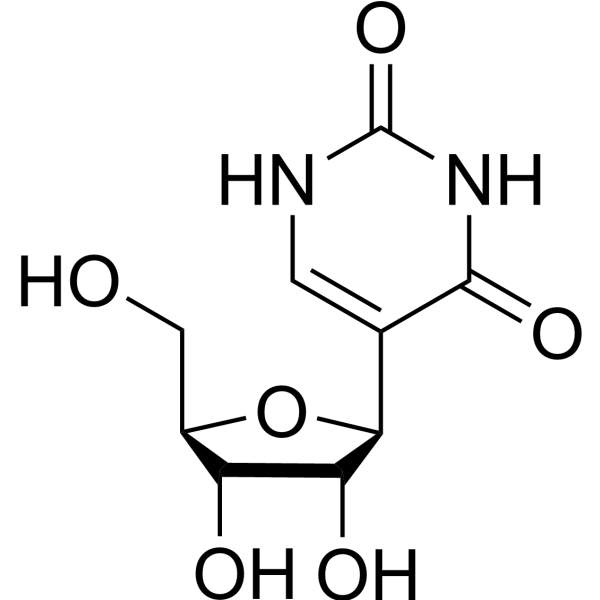
HY-113061
PseudouridineNucleoside -
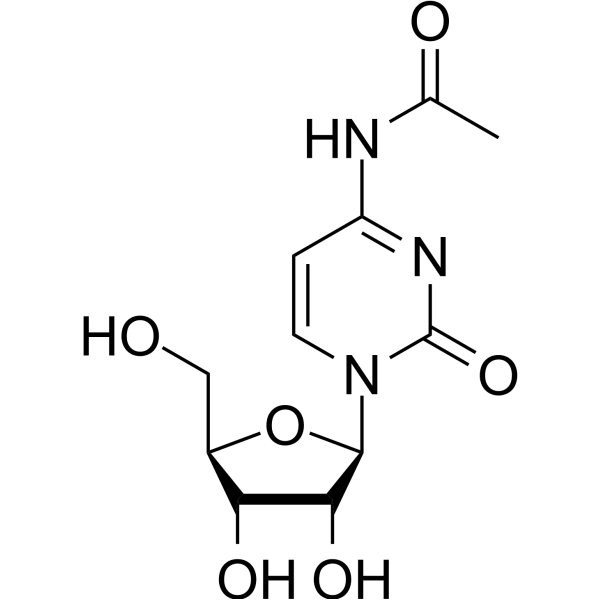
HY-W019670
N4-AcetylcytidineRNA Modifying Substance -
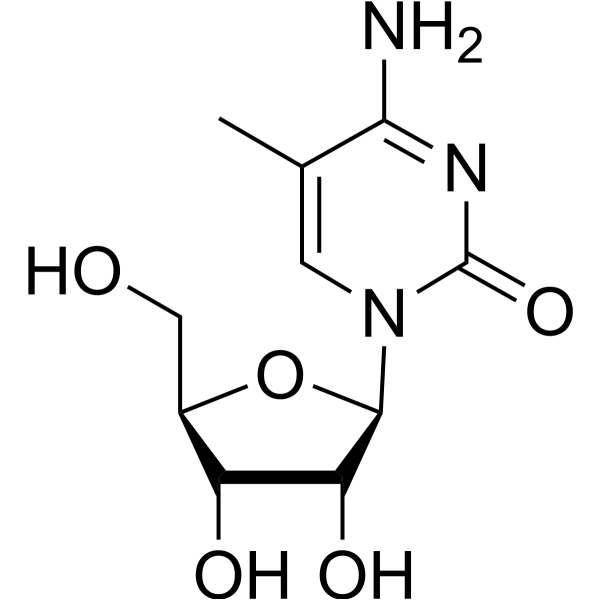
HY-113135
5-MethylcytidinePyrimidine Nucleoside -
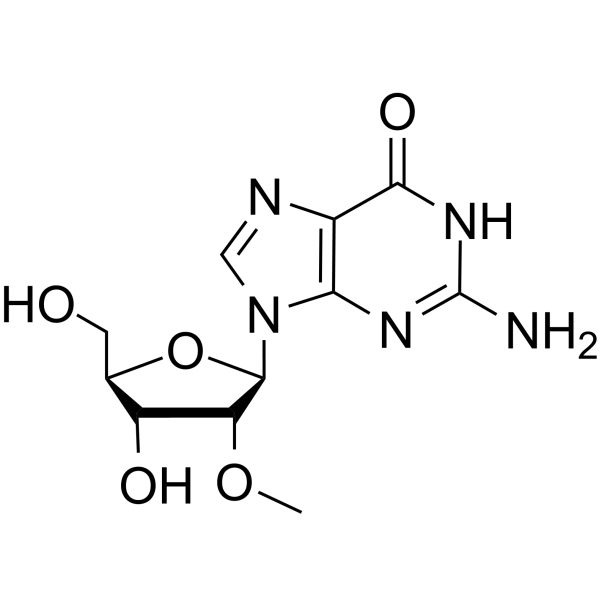
HY-W013260
2'-O-MethylguanosineApoptosis Inducing Nucleoside -
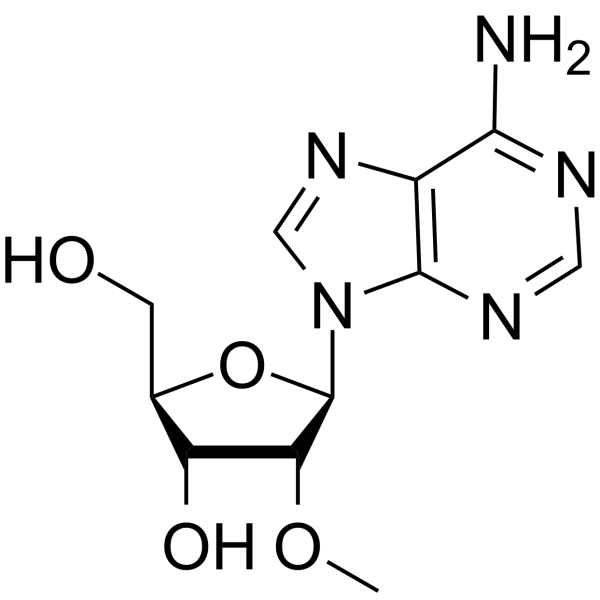
HY-W011552
2'-O-MethyladenosineHypertensive Compound -
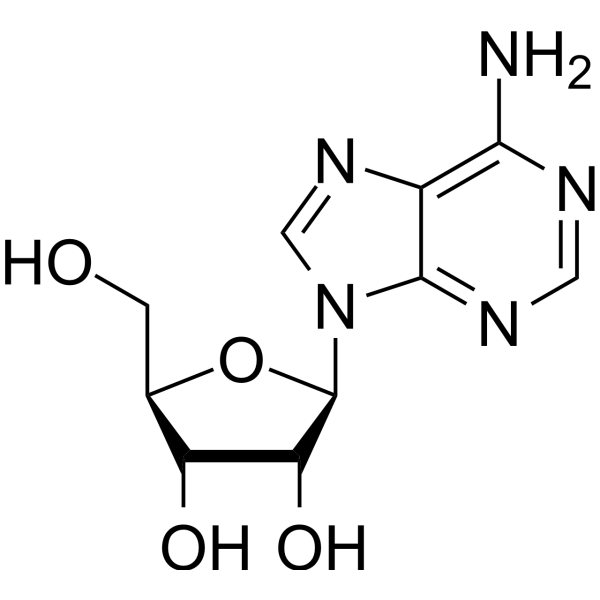
HY-B0228
AdenosineEndogenous Autacoid -

HY-113081R
1-Methyladenosine (Standard)Endogenous Metabolite -
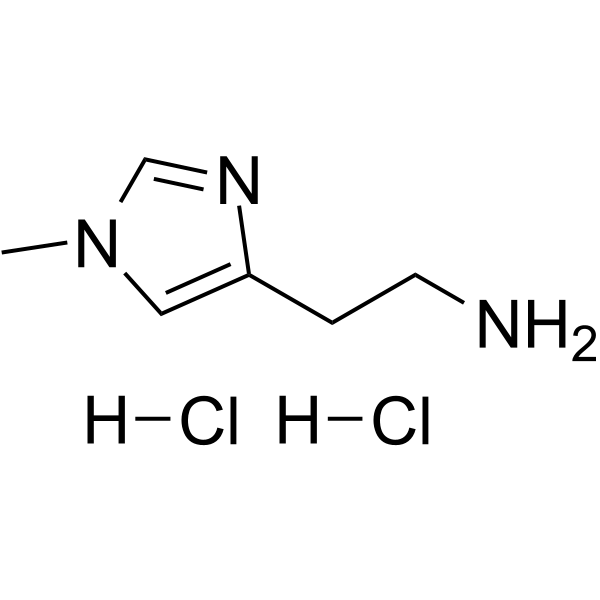
HY-W053787
1-Methylhistamine dihydrochloride -
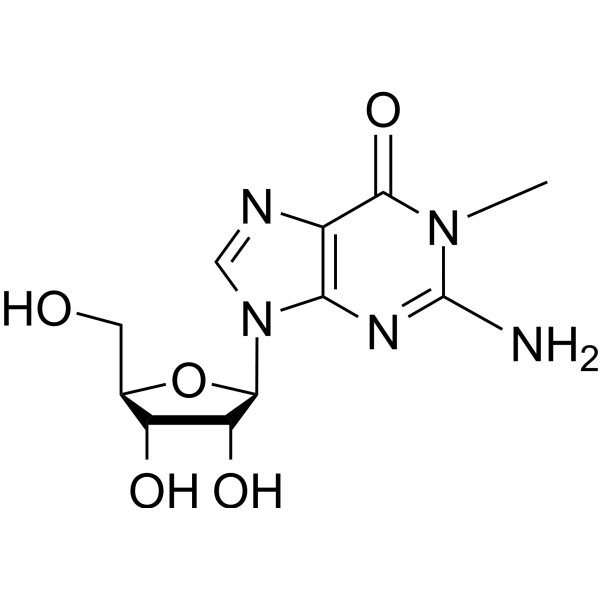
HY-113136
1-MethylguanosineTumour Marker
Publications Citing Use of MedChemExpress (MCE) 1-Methyladenosine
More Customer Validation & Images

-
WB

All Endogenous Metabolite Isoforms
More

Biological Activity
제품 설명
IC50 & Target
|
Human Endogenous Metabolite |
PPAR-γ |
In Vitro
Compared to surrounding tumor tissues, 1-methyladenosine methylation in RNA is aberrantly elevated in hepatocellular carcinoma (HCC) cell lines and liver cancer stem cells (CSCs). Methylated 1-methyladenosine can promote cholesterol synthesis and activate the Hedgehog signaling pathway by enhancing the translation of PPARδ in liver CSCs, ultimately driving the self-renewal and tumorigenesis of liver cancer stem cells[3].
MedChemExpress (MCE) has not independently confirmed the accuracy of these methods. They are for reference only.


Chemical Information
-
CAS No. 15763-06-1
-
Appearance Solid
-
분자량 281.27
-
화학식 C11H15N5O4
-
Color White to off-white
-
SMILES
OC[C@@H]1[C@@H](O)[C@@H](O)[C@H](N2C(N=CN(C)C3=N)=C3N=C2)O1
-
Structure Classification
-
선적
Room temperature in continental US; may vary elsewhere.
-
보관
Powder -20°C 3 years 4°C 2 years In solvent -80°C 6 months -20°C 1 month


Publications (5)
-
Journal Impact Factor
-
Most Recent
-
Nature
2025 Jul;643(8070):192-200. PMID: 39695227
1-Methyladenosine purchased from MedChemExpress. Usage Cited in: Nature. 2025 Jul;643(8070):192-200. [Abstract]
1-Methyladenosine activates AMPK at levels far exceeding those found in the serum under conditions of caloric restriction (CR). Mouse embryonic fibroblasts (MEFs) were treated with the indicated concentrations of 1-methyladenosine for 4 hours, or subjected to glucose-free starvation for 2 hours as a control, followed by the assessment of AMPK activity via immunoblotting.
-
J Med Chem
1,4,9-Triazaspiro[5.5]undecan-2-one Derivatives as Potent and Selective METTL3 Inhibitors. [Abstract]2021 Sep 9;64(17):12738-12760. PMID: 34431664 -
Talanta
High-throughput profiling of RNA modifications by ultra-performance liquid chromatography coupled to complementary mass spectrometry: Methods, quality control, and applications. [Abstract]2023 Oct 1:263:124697. PMID: 37262985 -
Cytotherapy
Automated vertical wheel bioreactor integrated with process analytics for T-cell manufacturing. [Abstract]2025 Aug 31:S1465-3249(25)00813-8. PMID: 41032004 -


용액&용해도
In Vitro:
DMSO : 116.67 mg/mL (414.80 mM; Need ultrasonic; Hygroscopic DMSO has a significant impact on the solubility of product, please use newly opened DMSO)
Please refer to the solubility information to select the appropriate solvent. Once prepared, please aliquot and store the solution to prevent product inactivation from repeated freeze-thaw cycles.
Storage method and period of stock solution: -80°C, 6 months; -20°C, 1 month. When stored at -80°C, please use it within 6 months. When stored at -20°C, please use it within 1 month.
Please refer to the solubility information to select the appropriate solvent. Once prepared, please aliquot and store the solution to prevent product inactivation from repeated freeze-thaw cycles.
Storage method and period of stock solution: -80°C, 6 months; -20°C, 1 month. When stored at -80°C, please use it within 6 months. When stored at -20°C, please use it within 1 month.
Concentration (start) × Volume (start) = Concentration (final) × Volume (final)
In Vivo:
Select the appropriate dissolution method based on your experimental animal and administration route.
- For the following dissolution methods, please ensure to first prepare a clear stock solution using an In Vitro approach and then sequentially add co-solvents:
- To ensure reliable experimental results, the clarified stock solution can be appropriately stored based on storage conditions. As for the working solution for In Vivo experiments, it is recommended to prepare freshly and use it on the same day.
- The percentages shown for the solvents indicate their volumetric ratio in the final prepared solution. If precipitation or phase separation occurs during preparation, heat and/or sonication can be used to aid dissolution.
Add each solvent one by one: 10% DMSO 40% PEG300 5% Tween-80 45% Saline
Solubility: ≥ 2.08 mg/mL (7.40 mM); Clear solution
This protocol yields a clear solution of ≥ 2.08 mg/mL (saturation unknown).
Taking 1 mL working solution as an example, add 100 μL DMSO stock solution (20.8 mg/mL) to 400 μL PEG300, and mix evenly; then add 50 μL Tween-80 and mix evenly; then add 450 μL Saline to adjust the volume to 1 mL.
Preparation of Saline: Dissolve 0.9 g sodium chloride in ddH₂O and dilute to 100 mL to obtain a clear Saline solution.
Add each solvent one by one: 10% DMSO 90% (20% SBE-β-CD in Saline)
Solubility: ≥ 2.08 mg/mL (7.40 mM); Clear solution
This protocol yields a clear solution of ≥ 2.08 mg/mL (saturation unknown).
Taking 1 mL working solution as an example, add 100 μL DMSO stock solution (20.8 mg/mL) to 900 μL 20% SBE-β-CD in Saline, and mix evenly.
Preparation of 20% SBE-β-CD in Saline (4°C, storage for one week): 2 g SBE-β-CD powder is dissolved in 10 mL Saline, completely dissolve until clear.
In Vivo Dissolution Calculator
Please enter the basic information of animal experiments:
-
-
-
-
Recommended: Prepare an additional quantity of animals to account for potential losses during experiments.
Please enter your animal formula composition:
-
%DMSO +
Recommended: Keep the proportion of DMSO in working solution below 2% if your animal is weak.
-
%+
-
+%Tween-80 + +
-
%Saline +
The co-solvents required include: DMSO, . All of co-solvents are available by MedChemExpress (MCE). , Tween 80. All of co-solvents are available by MedChemExpress (MCE).
Working solution concentration: 0.22 mg/mL
Method for preparing stock solution: mg drug dissolved in μL DMSO. Stock solution concentration: mg/mL.
1. Take μL DMSO stock solution;
2. Add μL .
μL , mix evenly;
3. Then add μL Tween 80, mix evenly;
4. Then add μL
Please ensure that the stock solution in the first step is dissolved to a clear state, and add co-solvents in sequence. You can use ultrasonic heating (ultrasonic cleaner, recommended frequency 20-40 kHz), vortexing, etc. to assist dissolution.


순도&문서
-
Data Sheet (277 KB)
-
SDS (394 KB)
- English - EN (394 KB)
- Français - FR (394 KB)
- Deutsch - DE (394 KB)
- Norwegian - NO (394 KB)
- Español - ES (394 KB)
- Swedish - SV (394 KB)
- Italian - IT (394 KB)
- Korean - KR (394 KB)
- Portuguese - PT (394 KB)
-
Handling Instructions (2659 KB)
References
[1]. Hauenschild R, et al. The reverse transcription signature of N-1-methyladenosine in RNA-Seq is sequence dependent. Nucleic Acids Res. 2015 Nov 16;43(20):9950-64. [Content Brief]
[2]. Banys K, et al. Effect of Genistein Supplementation on the Progression of Neoplasms and the Level of the Modified Nucleosides in Rats With Mammary Cancer. In Vivo. 2021 Jul-Aug;35(4):2059-2072. [Content Brief]
[3]. Wang Y, et al. N 1-methyladenosine methylation in tRNA drives liver tumourigenesis by regulating cholesterol metabolism[J]. Nature communications, 2021, 12(1): 6314. [Content Brief]


Complete Stock Solution Preparation Table
Please refer to the solubility information to select the appropriate solvent. Once prepared, please aliquot and store the solution to prevent product inactivation from repeated freeze-thaw cycles.
Storage method and period of stock solution: -80°C, 6 months; -20°C, 1 month. When stored at -80°C, please use it within 6 months. When stored at -20°C, please use it within 1 month.
| Optional Solvent | Concentration Solvent Mass | 1 mg | 5 mg | 10 mg | 25 mg |
|---|---|---|---|---|---|
| DMSO | 1 mM | 3.5553 mL | 17.7765 mL | 35.5530 mL | 88.8826 mL |
| 5 mM | 0.7111 mL | 3.5553 mL | 7.1106 mL | 17.7765 mL | |
| 10 mM | 0.3555 mL | 1.7777 mL | 3.5553 mL | 8.8883 mL | |
| 15 mM | 0.2370 mL | 1.1851 mL | 2.3702 mL | 5.9255 mL | |
| 20 mM | 0.1778 mL | 0.8888 mL | 1.7777 mL | 4.4441 mL | |
| 25 mM | 0.1422 mL | 0.7111 mL | 1.4221 mL | 3.5553 mL | |
| 30 mM | 0.1185 mL | 0.5926 mL | 1.1851 mL | 2.9628 mL | |
| 40 mM | 0.0889 mL | 0.4444 mL | 0.8888 mL | 2.2221 mL | |
| 50 mM | 0.0711 mL | 0.3555 mL | 0.7111 mL | 1.7777 mL | |
| 60 mM | 0.0593 mL | 0.2963 mL | 0.5926 mL | 1.4814 mL | |
| 80 mM | 0.0444 mL | 0.2222 mL | 0.4444 mL | 1.1110 mL | |
| 100 mM | 0.0356 mL | 0.1778 mL | 0.3555 mL | 0.8888 mL |


1-Methyladenosine Related Classifications
HY-113081 Related Classifications
 Powered by Bioz