
245 Results for "

Allosteric activators

" in MedChemExpress (MCE) Product Catalog:
Products (245)

245 Results for "Allosteric activators" in MCE Product Catalog:

Cat. No.: HY-182850
CAS No.: 2965316-77-0
Target:  

CXCR

Research Areas:  

Metabolic Disease

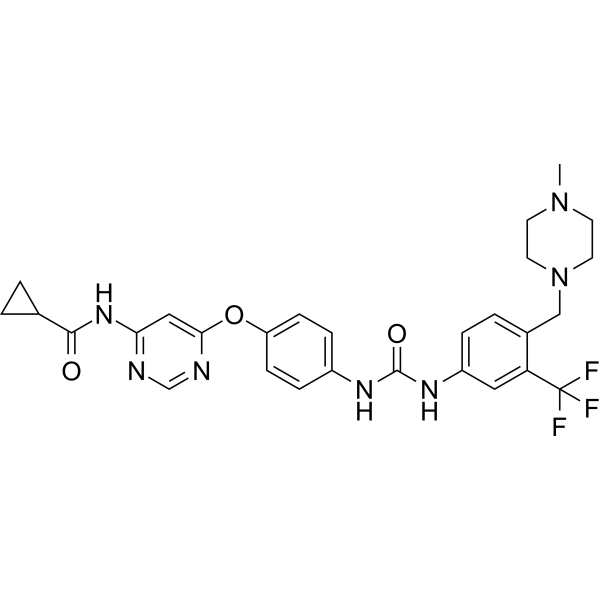
UCUF-965 is a CXCR4 positive allosteric modulator. UCUF-965 potentiates CXCL12-induced β-arrestin recruitment and cAMP signaling, activates lymphoblast migration, induces calcium flux, and does not bind CXCR4’s orthosteric CXCL12 site. UCUF-965 reduces miR-15b and miR-29a levels, increases miR-146a levels in fibroblasts. UCUF-965 enhances angiogenesis and reduces wound healing time in diabetic mice. UCUF-965 can be used for the research of diabetic wound healing impairment .
loading...
    loading...
Cat. No.: HY-184060
CAS No.: 1704716-36-8
Target:  

GABA Receptor

Research Areas:  

Neurological Disease

ASP8062 is an orally active, blood-brain barrier-permeable selective GABAB receptor positive allosteric modulator. ASP8062 enhances GABA-mediated activation of GABAB receptors and strengthens GABAergic neurotransmission. ASP8062 reverses Reserpine (HY-N0480)-induced myalgia, regulates the sleep-wake cycle, increases delta wave power during non-REM sleep, and impairs motor coordination at high doses. ASP8062 penetrates the central nervous system with a half-life of 40-50 h. ASP8062 can be used in research related to opioid use disorder, fibromyalgia, chronic pain, and alcohol use disorder .
loading...
    loading...
Cat. No.: HY-184106
CAS No.: 1268273-85-3
Target:  

HSP Apoptosis

Research Areas:  

Cancer

HSP70-IN-9 is an Hsp70 inhibitor that induces caspase-3,7 activation with an IC50 of 25.2 μM. HSP70-IN-9 reversibly binds to the allosteric pocket of the N-terminal domain, disrupts the Hsp70-HOP-Hsp90 mega-complex, and inhibits client protein refolding, thereby inducing apoptosis and degradation of Hsp90-Hsp70 tumor client proteins, ultimately inhibiting cancer cell growth. HSP70-IN-9 can be used for research on breast cancer, pancreatic cancer, and acute myeloid leukemia .
loading...
    loading...
Cat. No.: HY-W069974
CAS No.: 79932-56-2
Target:  

Calcium Channel

Research Areas:  

Inflammation/Immunology

Ca2+-Langerin-IN-1 (Compound 3) is a allosteric Langerin inhibitor. Langerin is a C-type lectin that is expressed on Langerhans cells and plays a crucial role in pathogen recognition and innate immune activation. The KD value of the CRD domain of murine Langerin protein for Ca2+-Langerin-IN-1 is 17 μM under the presence of Ca²⁺ and 53 μM under the absence of Ca²⁺ competition. Ca2+-Langerin-IN-1 induces conformational changes and competitively replaces Ca²⁺, thereby inhibiting the carbohydrate recognition function of the protein. Ca2+-Langerin-IN-1 can be used in the research of immunomodulatory therapy .
loading...
    loading...
Cat. No.: HY-109136R
CAS No.: 1402936-61-1
Synonyms: BAY 1101042 (Standard)
Runcaciguat (Standard) is the analytical standard of Runcaciguat (HY-109136). This product is intended for research and analytical applications. Runcaciguat (BAY 1101042) is a selective, orally active, allosteric activator of soluble guanylate cyclase (sGC) that specifically targets its oxidized and heme-free form. Runcaciguat binds to sGC in a histidine-dependent manner and restores cyclic guanosine monophosphate (cGMP) production under oxidative stress, independent of nitric oxide (NO) or heme. Runcaciguat exhibits renoprotective and cardioprotective activities, such as reduced proteinuria and improved renal function. Runcaciguat is primarily being studied in chronic Kidney disease (CKd) associated with hypertension, diabetes, and metabolic disorders, as well as potential cardiovascular indications such as heart failure with preserved ejection fraction (HFpEF) .
loading...
    loading...
Cat. No.: HY-115736A
CAS No.: 105931-36-0
Purity:  99.26%
Synonyms: 5'-XTP trisodium solution (100 mM)
Target:  

Adenylate Cyclase

Research Areas:  

Infection

Xanthosine-5'-triphosphate (5'-XTP) trisodium solution (100 mM) is a purine nucleotide that stimulates Adenylate Cyclase to induce Cyclic AMP (cAMP) (HY-B1511) biosynthesis, binds to the AL1 allosteric site of the D137N-SAMHD1 mutant to activate dNTP triphosphohydrolase activity, and stimulates P2Y/P2U purinergic receptor-coupled phosphoinositide-specific phospholipase C with Michaelis-Menten kinetics. Xanthosine-5'-triphosphate trisodium solution (100 mM) can be used for HIV-1 research .
loading...
    loading...
Cat. No.: HY-18654A
Target:  

mGluR

Research Areas:  

Neurological Disease

ADX88178 TFA is an orally active, blood-brain barrier-penetrant, selective positive allosteric modulator of mGluR4, with an EC50 of 3.5 nM against hmGluR4. ADX88178 TFA modulates mGlu4 activity, enhances glutamate-mediated receptor activation, and increases the apparent affinity of glutamate for the receptor. ADX88178 TFA reverses haloperidol-induced catalepsy, potentiates the effects of levodopa (L-DOPA) and quinpirole, but fails to alleviate established abnormal involuntary movements, does not exacerbate L-DOPA-induced dyskinesia, and does not affect forelimb akinesia when administered alone. ADX88178 TFA can be used in research related to L-DOPA-induced dyskinesia and Parkinson's disease .
loading...
    loading...
Cat. No.: HY-P2819
CAS No.: 9001-80-3
Synonyms: PFK1
Phosphofructokinase 1 (PFK1) is a glycolytic enzyme and also an allosteric activation target of fructose-2,6-bisphosphate. PFK1 supports cardiac glycolysis to maintain normal cardiac function and mediates adaptive responses to pressure overload. Upregulated expression and activity of PFK1 are associated with the alleviation of pathological changes induced by pressure overload, including diastolic dysfunction, interstitial fibrosis and myocardial hypertrophy. Inhibition of PFK1 redirects glucose carbon flux to the pentose phosphate pathway. PFK1 promotes proliferation, migration and glycolysis of colorectal cancer cells, reduces apoptosis and decreases their radiosensitivity, and shows higher expression levels in radioresistant tumors. PFK1 can be used in research related to diastolic dysfunction heart failure and colorectal cancer .
loading...
    loading...
Cat. No.: HY-P2819A
CAS No.: 9001-80-3
Phosphofructokinase,Bacillus stearothermophilus is a glycolytic enzyme and also an allosteric activation target of fructose-2,6-bisphosphate. PFK1 supports cardiac glycolysis to maintain normal cardiac function and mediates adaptive responses to pressure overload. Upregulated expression and activity of PFK1 are associated with the alleviation of pathological changes induced by pressure overload, including diastolic dysfunction, interstitial fibrosis and myocardial hypertrophy. Inhibition of PFK1 redirects glucose carbon flux to the pentose phosphate pathway. PFK1 promotes proliferation, migration and glycolysis of colorectal cancer cells, reduces apoptosis and decreases their radiosensitivity, and shows higher expression levels in radioresistant tumors. PFK1 can be used in research related to diastolic dysfunction heart failure and colorectal cancer .
loading...
    loading...
Cat. No.: HY-W241255
CAS No.: 27473-62-7
2-Aminoindan-2-carboxylic acid is a conformationally restricted Phenylalanine analog and molecular building block. 2-Aminoindan-2-carboxylic acid constitutes a component of allosteric LFA-1 antagonists targeting the LFA-1/ICAM-1 interaction. 2-Aminoindan-2-carboxylic acid serves as a molecular building block for various biologically active peptides, including μ-receptor-selective opioid analogs, activated protein C inhibitors, and histone deacetylase inhibitors. 2-Aminoindan-2-carboxylic acid can be used in the research of autoimmune diseases, inflammatory diseases, opioid receptor-related diseases, antidiuresis-related diseases, and cancers .
loading...
    loading...
Cat. No.: HY-12462
CAS No.: 1421227-52-2
Purity:  98.00%
WS3 is an allosteric inhibitor of 14-3-3 (14-3-3ζ: Kd = 2.29 μM). WS3 activates GSK3β by disrupting the binding of 14-3-3-pGSK3β, promotes the ubiquitination and degradation of NRF2, and inhibits the NRF2-ARE signaling pathway (IC50 = 135 nM). It exerts antioxidant inhibition and chemotherapeutic/ferroptosis sensitizing effects in tumors with hyperactivated NRF2. WS3 binds to EBP1/IKKε and promotes the proliferation of β cells and retinal pigment epithelial (RPE) cells, which can be applied to islet regeneration and RPE expansion transplantation . WS3 is applicable to research related to age-related macular degeneration, retinal degeneration and non-small cell lung cancer .
loading...
    loading...
Cat. No.: HY-131997
CAS No.: 89112-85-6
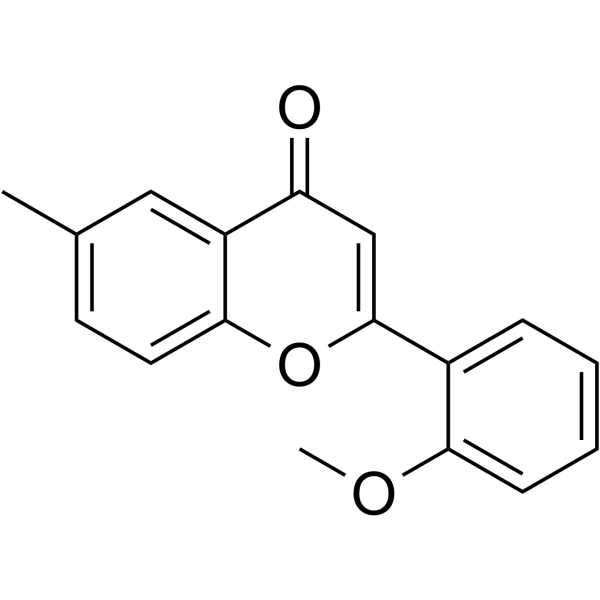
2'MeO6MF is a brain-penetrant positive allosteric modulator at α2β1γ2L and all α1-containing GABAA receptors. 2'MeO6MF also can directly activate α2β2/3 and α2β2/3γ2L GABAA receptors. 2'MeO6MF has anxiolytic and psychomotor stabilizing properties. 2'MeO6MF offers neuroprotection and improved functional recovery and dampens the stroke-induced inflammatory response .
loading...
    loading...
Cat. No.: HY-147105
CAS No.: 2244781-29-9
Purity:  98.04%
LRH-1 agonist-2 (Compound 6N) is a selective, full LRH-1 agonist with an EC50 of 15.7 nM. LRH-1 agonist-2 directly interacts with the Thr352 and His390 residues in the LRH-1 binding pocket, promotes allosteric signaling to the activation function surface (AFS), stabilizes the AFS and enhances coactivator recruitment. LRH-1 agonist-2 induces the anti-inflammatory cytokine IL-10, and reduces the pro-inflammatory cytokines IL-1β and TNFα. LRH-1 modulator-1 exerts anti-inflammatory effects in intestinal organoids. LRH-1 modulator-1 can be used in studies related to inflammatory bowel disease .
loading...
    loading...
Cat. No.: HY-181102
CAS No.: 3081614-92-5
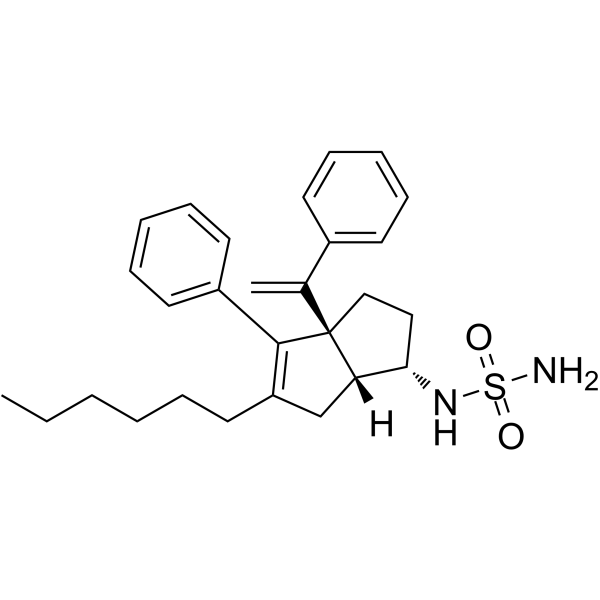
TGR5 agonist 10 is a selective, allosteric and orally active Takeda G protein coupled receptor 5 (TGR5) agonist with EC50s of 0.8 μM and 0.6 μM for human TGR5 and mouse TGR5, respectively. TGR5 agonist 10 demonstrates selectivity for TGR5 over FXR. TGR5 agonist 10 activates hTGR5 and mTGR5 to induce cAMP accumulation, and positively modulates lithocholic acid functional activity and potency at hTGR5, with higher selectivity for cAMP formation over β-arrestin2 recruitment. TGR5 agonist 10 exerts glucose-lowering effects in Mus musculus oral glucose tolerance tests. TGR5 agonist 10 can be used for the research of diabetes .
loading...
    loading...
Cat. No.: HY-185899
CAS No.: 72052-96-1
Synonyms: 5-Aza-2'-deoxycytidine-5′-triphosphate
Research Areas:  

Infection Cancer

5-Aza-dCTP (5-Aza-2'-deoxycytidine-5′-triphosphate) is a nucleotide analog that acts as a substrate for mammalian DNA polymerase α (Km = 3.0 μM) and a weak competitive inhibitor of this enzyme (Ki = 4.3 μM). 5-Aza-dCTP inhibits DNA polymerase α via incorporation into DNA through Watson-Crick base pairing, inhibits DNA methyltransferases via incorporation into hemimethylated DNA, and induces mutations in HIV-1 via incorporation into viral DNA during synthesis. 5-Aza-dCTP reverses the inhibitory effect of dTTP on dCMP deaminase, and allosterically activates dCMP deamination to the same extent as dCTP. 5-Aza-dCTP is applicable to research related to leukemia and type 1 human immunodeficiency virus infection .
loading...
    loading...
Cat. No.: HY-W097625R
CAS No.: 26964-24-9
6-Methoxyflavone (Standard) is the analytical standard of 6-Methoxyflavone (HY-W097625). This product is intended for research and analytical applications. 6-Methoxyflavone is an orally active methoxyflavone. 6-Methoxyflavone suppresses neuroinflammation in microglia through the inhibition of TLR4/MyD88/p38 MAPK/NF-κB dependent pathways and the activation of HO-1/NQO-1 signaling. 6-Methoxyflavone induces S-phase arrest through the CCNA2/CDK2/p21CIP1 signaling pathway and activates the PERK/EIF2a/ATF4/CHOP pathway in HeLa cells. 6-Methoxyflavone acts as a Flumazenil (HY-B0009)-insensitive positive allosteric modulator at human recombinant α1β2γ2L and α2β2γ2L GABAα receptors. 6-Methoxyflavone inhibits NFAT Translocation into the nucleus and suppresses T cell activation. 6-Methoxyflavone partially restores chronic ethanol-induced behavioral deficits in mice. 6-Methoxyflavone antagonizes chronic constriction injury and diabetes associated neuropathic nociception expression. 6-Methoxyflavone can be used for the study of cancer, inflammation and neurological diseases .
loading...
    loading...
Cat. No.: HY-174984
CAS No.: 3098437-66-9
Target:  

p97 Caspase p62

Research Areas:  

Cancer

VCP/p97 IN-3 is a VCP/p97 allosteric inhibitor. VCP/p97 IN-3 shows the inhibitory activity against the VCP proteins with an IC50 of 9 nM and the mutant VCP proteins with IC50 of 12 nM (N660K) and 19 nM (V474A/D649A). VCP/p97 IN-3 increases K48-linked ubiquitination and the level of cleaved caspase-3. VCP/p97 IN-3 activates ER-stress and the UPR. VCP/p97 IN-3 inhibits tumor growth in RPMI-8226 cell subcutaneous xenograft mouse models. VCP/p97 IN-3 can be used for the study of multiple myeloma .
loading...
    loading...
Cat. No.: HY-184776
CAS No.: 586-60-7
Synonyms: Dyclocaine
Dyclonine (Dyclocaine) is an orally active, blood-brain barrier-permeable piperidine phenylacetone small molecule commonly used as a local anesthetic. Dyclonine acts as a highly selective allosteric antagonist of TRPV3; it also reversibly inhibits G9a, ALDH2 and ALDH3A1, non-competitively blocks AChE. Dyclonine activates the Nrf2/ARE pathway, relieves the epigenetic silencing of FXN, blocks Aβ42 aggregation, and promotes remyelination and reparative polarization of microglia. Dyclonine alleviates pruritus via TRPV3 inhibition; it is used in studies of neurodegenerative disease models based on its AChE inhibitory, antioxidant and remyelinating effects; it sensitizes drug-resistant tumors through ALDH inhibition, and combined use with protease inhibitors induces more tumor cell apoptosis; it inhibits Candida albicans in vitro. Dyclonine can be used for research on multiple diseases including neurodegenerative diseases, cancer and pruritic dermatitis .
loading...
    loading...
Cat. No.: HY-B0110
CAS No.: 60282-87-3
Synonyms: SHB 331; WL 70
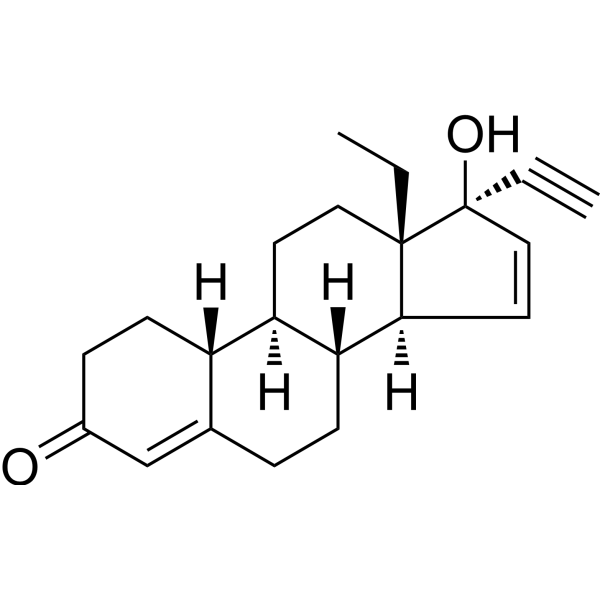
Gestodene (SHB 331; WL 70) is an orally active synthetic progestogen compound of the 19-nortestosterone class. Gestodene binds with high affinity to the progesterone receptor, inhibits 5α-reductase, binds to androgen and aldosterone receptors, and inactivates CYP3A. Gestodene acts as a positive allosteric modulator of PAR1, enhances PAR1-mediated signaling pathways, and is capable of increasing the activation potency of PAR1-AP toward PAR1, thereby promoting ERK1/2 phosphorylation, receptor internalization, cell morphological changes, and human platelet aggregation. Gestodene and its A-ring reduced metabolites promote the proliferation, differentiation, and mineralization of neonatal rat osteoblasts. Gestodene itself has no binding capacity for estrogen receptors, and this osteogenic activity depends on intracellular metabolism to generate A-ring reduced products with estrogen-like agonistic activity. Gestodene is useful for research on diseases related to progesterone secretion and diseases related to thrombosis .
loading...
    loading...
Cat. No.: HY-B0364AR
CAS No.: 536-43-6
Synonyms: Dyclocaine hydrochloride (Standard)
Dyclonine hydrochloride (Standard) (Dyclocaine hydrochloride (Standard)) is the analytical standard of Dyclonine hydrochloride (HY-B0364A). This product is intended for research and analytical applications. Dyclonine hydrochloride (Dyclocaine hydrochloride) is an orally active, blood-brain barrier-permeable piperidine phenylacetone small molecule commonly used as a local anesthetic. Dyclonine hydrochloride acts as a highly selective allosteric antagonist of TRPV3; it also reversibly inhibits G9a, ALDH2 and ALDH3A1, non-competitively blocks AChE. Dyclonine hydrochloride activates the Nrf2/ARE pathway, relieves the epigenetic silencing of FXN, blocks Aβ42 aggregation, and promotes remyelination and reparative polarization of microglia. Dyclonine hydrochloride alleviates pruritus via TRPV3 inhibition; it is used in studies of neurodegenerative disease models based on its AChE inhibitory, antioxidant and remyelinating effects; it sensitizes drug-resistant tumors through ALDH inhibition, and combined use with protease inhibitors induces more tumor cell apoptosis; it inhibits Candida albicans in vitro. Dyclonine hydrochloride can be used for research on multiple diseases including neurodegenerative diseases, cancer and pruritic dermatitis .
loading...
    loading...

