288 Results for "

zebrafish 53BP1

" in MedChemExpress (MCE) Product Catalog:
Products (288)

288 Results for "zebrafish 53BP1" in MCE Product Catalog:

Ultevursen sodium
0 Images
RNA, (P-thio)[2′-O-(2-methoxyethyl)](A-G-m5C-m5U-m5U-m5C-G-G-A-G-A-A-A-m5U-m5U-m5U-A-A-A-m5U-m5C), sodium salt
Cat. No.: HY-147412A
Synonyms: QR-421a sodium
Ultevursen sodium (QR-421a) is a splice-modulating antisense oligonucleotide targeting exon 13 of the USH2A gene, which restores the functional expression of Usherin protein by inducing exon skipping. Ultevursen sodium binds to USH2A pre-mRNA and modulates the splicing process to specifically skip exon 13 carrying the pathogenic mutation c.2299delG, generating an in-frame transcript and a truncated yet functionally normal protein. Ultevursen sodium exhibits concentration-dependent exon skipping activity in human cells and retinal organoid models, and restores Usherin expression and retinal function in zebrafish and gene-edited mouse models. Ultevursen sodium can be used for related research on type 2 Usher syndrome and non-syndromic retinitis pigmentosa .
loading...
    loading...
Cat. No.: HY-153898
CAS No.: 1332175-56-0
Purity:  99.10%
Target:  

Amyloid-β

Research Areas:  

Neurological Disease

rTRD01 is an orally active, specific TDP-43 binder that targets the RRM1 and RRM2 domains of TDP-43. rTRD01 partially disrupts the interaction between TDP-43 and c9orf72 repeat RNA, but does not affect the binding of TDP-43 to canonical binding sequences. rTRD01 exhibits significant neuroprotective effects in zebrafish models, improves motor function and protects against paraquat (a widely used herbicide)-induced neurodegeneration, with no teratogenicity at high concentrations. rTRD01 is not a general antioxidant and cannot counteract Rotenone (HY-B1756)-induced neuronal death. rTRD01 can be used to study amyotrophic lateral sclerosis and other TDP-43 proteinopathies .
loading...
    loading...
Cat. No.: HY-182372
CAS No.: 1638153-78-2
Target:  

Epoxide Hydrolase

Research Areas:  

Neurological Disease

SH-11037 is a potent inhibitor of soluble epoxide hydrolase (sEH) and docks to the substrate binding cleft in the sEH hydrolase domain. SH-11037 dose-dependently suppresses angiogenesis in the choroidal sprouting assay ex vivo and inhibited ocular developmental angiogenesis in zebrafish larvae. SH-11037 reduces choroidal neovascularisation lesion volume in the laser-induced CNV mouse model. SH-11037 synergises with anti-VEGF treatments in vitro and in vivo. SH-11037 induces G2/M phase blockade and retains retinal endothelial cell viability at active concentrations without overt toxicity. SH-11037 can be used for the research of retinal neovascularization and ocular neovascularization .
loading...
    loading...
Cat. No.: HY-182832
Synonyms: Dry skim milk; Non-fat milk solids; Skimmed milk powder
Skim Milk powder (Dry skim milk) is an orally effective, dairy-derived non-fat milk solid powder. Skim Milk powder serves as a nutrient source in microbial culture media and can also be used for blocking procedures in WB assays. Skim Milk powder protects zebrafish sperm from oxidative stress, DNA damage, membrane disruption and morphological abnormalities during cryopreservation, and improves their survival rate. After undergoing high Maillard reaction during moist-heat storage, Skim Milk powder exhibits negative metabolic activities such as inhibiting GLP-1/GIP and promoting intestinal inflammation. Skim Milk powder can be used in studies related to intestinal inflammation, diabetes and obesity .
loading...
    loading...
Cat. No.: HY-184417
CAS No.: 3085883-97-9
Target:  

Bacterial

Research Areas:  

Infection

Energy-coupling factor-IN-1 is an energy-coupling factor (ECF) transporter inhibitor with an IC50 of 42.84 μM against ECF-FolT2. Energy-coupling factor-IN-1 binds to the interface between the S component and the ECF module, and inhibits the uptake of folic acid and pantothenic acid via the target transporter. Energy-coupling factor-IN-1 acts as a bactericidal agent, exerting rapid and sustained activity for 24 h against Enterococcus faecium, while also acting against Gram-positive bacteria including drug-resistant strains. Energy-coupling factor-IN-1 improves the survival rate of zebrafish embryos infected with Enterococcus faecium. Energy-coupling factor-IN-1 can be used in studies of Gram-positive bacterial infections .
loading...
    loading...
Cat. No.: HY-B1361R
CAS No.: 7280-37-7
Synonyms: Piperazine estrone sulfate (Standard); Estrone sulfate piperazine salt (Standard)
Estropipate (Standard) (Piperazine estrone sulfate (Standard); Estrone sulfate piperazine salt (Standard)) is the analytical standard of Estropipate (HY-B1361). This product is intended for research and analytical applications. Estropipate is an inactive endogenous estrogen that can be converted into Estrone (HY-B0234) and Estradiol (HY-B0141). Estropipate is an orally active estrogen receptor α agonist and a selective OATP1B1 inhibitor. Estropipate inhibits OATP1B1-mediated uptake of statin substrates. Estropipate regulates the estrogen signaling pathway and ameliorates sensory processing and arousal-related behavioral deficits in scn1lab-mutant zebrafish. Estropipate can be used in studies related to autism .
loading...
    loading...
Cat. No.: HY-B2004
CAS No.: 130000-40-7
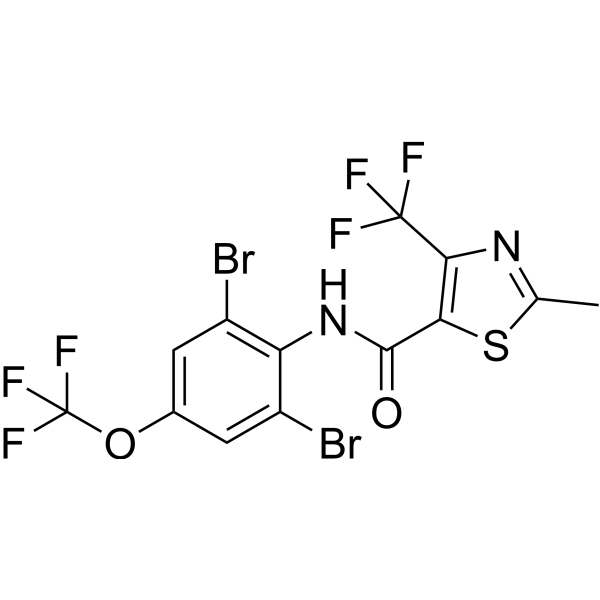
Thifluzamide is a fungicide that inhibits fungal respiration by blocking the ubiquinone-binding site in mitochondrial complex II. Thifluzamide exhibits significant activity against Basidiomycota pathogens (such as Rhizoctonia cerealis, Ustilago and Puccinia genera) and is commonly used in studies on wheat sharp eyespot. Thifluzamide displays a dual mechanism in regulating lipid metabolism: it reduces fatty acid synthase activity to inhibit endogenous fatty acid synthesis, and increases carnitine palmitoyltransferase-I activity to accelerate fatty acid β-oxidation, thereby reducing total cholesterol and triglyceride levels in the liver. Thifluzamide also induces hepatotoxicity in zebrafish models and carries a risk of developmental toxicity. Thifluzamide inhibition of Rhizoctonia cerealis may result in low to moderate levels of drug resistance, leading to the generation of stable drug-resistant mutants .
loading...
    loading...
Cat. No.: HY-D3190
CAS No.: 2173116-67-9
BODIPY-DOX is a conjugate composed of BODIPY and Doxorubicin (HY-15142A), as well as a pH-activated fluorescent probe for M1 macrophages and an apoptosis inducer. BODIPY-DOX undergoes pH-induced hydrazone bond cleavage in acidic M1 macrophage phagosomes, thereby releasing cytotoxic Doxorubicin (Dox) and inhibiting the function of pro-inflammatory M1 macrophages. BODIPY-DOX highly selectively inhibits the production of relevant pro-inflammatory cytokines by mouse and human monocyte-derived M1 macrophages, while exerting minimal effects on M2 or unactivated macrophages. Therefore, BODIPY-DOX enables simultaneous fluorescent tracing, differentiation and elimination of specific macrophage subsets, and exhibits the potential to regulate tissue regeneration in zebrafish models .
loading...
    loading...
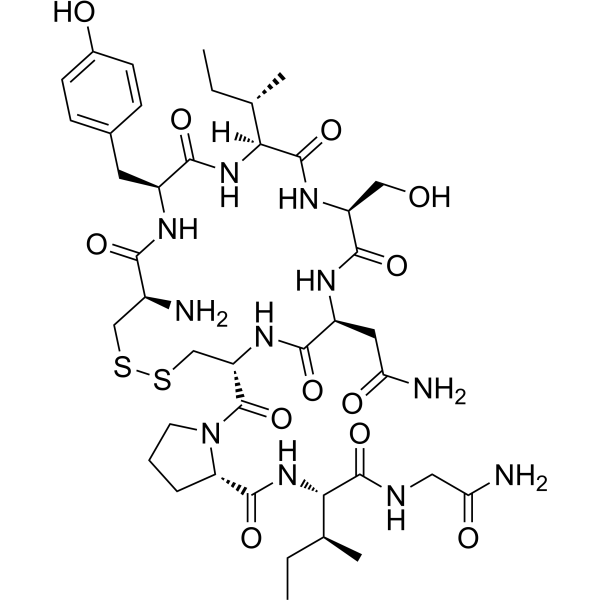
Cat. No.: HY-P4184
CAS No.: 550-21-0
Synonyms: (Ser4,Ile8)-Oxytocin
Isotocin is the homologue of mammalian oxytocin in teleost fish, belonging to the category of neurotransmitters/neuromodulators and peripheral hormones. Isotocin exerts biological effects by binding to its homologous isotocin receptor (with EC50 = 1.58e-10 mol/L in gilthead seabream) and specific G-protein-coupled receptor subtypes. Isotocin promotes paternal behavior in cichlids, regulates the expression of Foxi3a and P63, thereby controlling the differentiation of ionocyte progenitor cells and the proliferation of epidermal stem cells, and modulates whole-body ion content in zebrafish embryos. Isotocin regulates social and reproductive behaviors, synchronizes the reproductive cycles of teleost fish, and its neuronal phenotypes can be used to classify the types of reproductive systems in cichlids .
loading...
    loading...
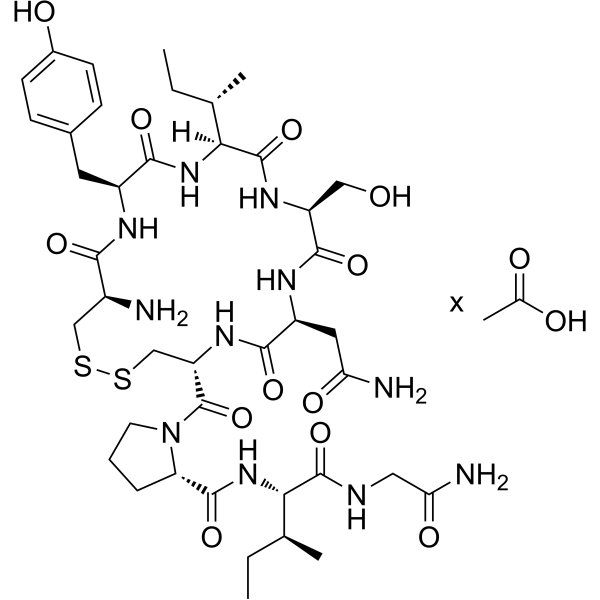
Cat. No.: HY-P4184A
Synonyms: (Ser4,Ile8)-Oxytocin acetate
Isotocin acetate is the homologue of mammalian oxytocin in teleost fish, belonging to the category of neurotransmitters/neuromodulators and peripheral hormones. Isotocin acetate exerts biological effects by binding to its homologous Isotocin acetate receptor (with EC50 = 1.58e-10 mol/L in gilthead seabream) and specific G-protein-coupled receptor subtypes. Isotocin acetate promotes paternal behavior in cichlids, regulates the expression of Foxi3a and P63, thereby controlling the differentiation of ionocyte progenitor cells and the proliferation of epidermal stem cells, and modulates whole-body ion content in zebrafish embryos. Isotocin acetate regulates social and reproductive behaviors, synchronizes the reproductive cycles of teleost fish, and its neuronal phenotypes can be used to classify the types of reproductive systems in cichlids .
loading...
    loading...
Cat. No.: HY-W012278S
CAS No.: 1718-53-2
Synonyms: Tetraphene-d12
Benz[a]anthracene-d12 (Tetraphene-d12) is the deuterated-labeled Benz[a]anthracene (HY-W012278). Benz[a]anthracene (Tetraphene) is a polycyclic aromatic hydrocarbon pollutant and also a ligand of aryl hydrocarbon receptor 2 (AHR2), with a pIC50 of 7.319. Benz[a]anthracene can be detected in spruce needles near aluminum smelters. Exposure to Benz[a]anthracene during zebrafish embryonic stage activates the AHR-CYP1A signaling pathway and induces AHR2 expression, leading to social behavioral deficits that persist into adulthood, accompanied by impaired neuro-immune interaction, while anxiety levels remain unaffected. Benz[a]anthracene can be used in studies related to PAH environmental toxicology, developmental neurotoxicity and biodegradation .
loading...
    loading...
Cat. No.: HY-W015600
CAS No.: 614-80-2
Synonyms: Orthocetamol
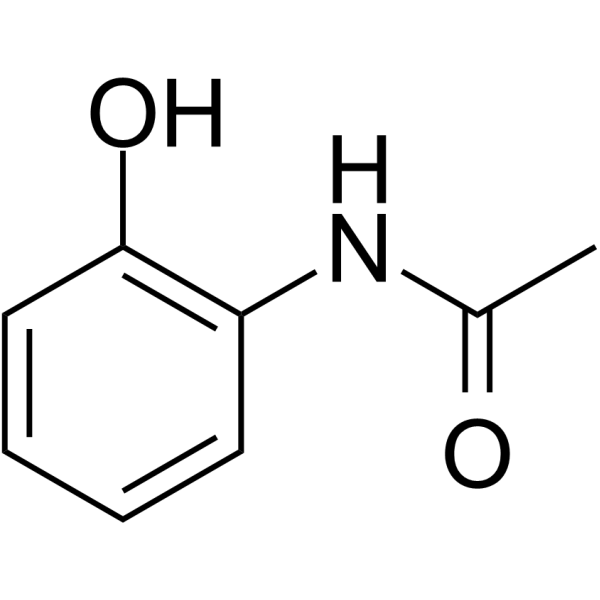
2-Acetamidophenol (Orthocetamol) is a regulator that targets ferroptosis and glutathione metabolic pathways, is the ortho-regioisomer of Paracetamol (HY-66005). 2-Acetamidophenol has anti-atherosclerotic activity, and inhibiting total cholesterol (TC) and triglyceride (TG) in a zebrafish hyperlipidemia model with IC50s for 30 μM and 40 μM, respectively. 2-Acetamidophenol upregulates the expression of glutathione synthesis-related genes (such as GCLC, GCLM, GSS) and iron ion transport genes (such as FPN1, FTH), reduces the accumulation of intracellular reactive oxygen species (ROS) and ferrous ions (Fe 2+), and enhances the activity of glutathione peroxidase GPX4, thereby inhibiting macrophage phagocytosis of oxidized low-density lipoprotein (ox-LDL) and foam cell formation .
loading...
    loading...
Cat. No.: HY-107830R
CAS No.: 1448-36-8
Methyl cholate (Standard) is the analytical standard of Methyl cholate. This product is intended for research and analytical applications. Methyl cholate is a bile acid analog and a specific inhibitor of TcdB toxin from Clostridioides difficile. Methyl cholate exerts a stronger selective inhibitory effect on TcdB than on TcdA. Methyl cholate induces conformational stabilization by binding to a unique site of TcdB, thereby blocking the binding of the toxin to host receptors and its self-processing process. Methyl cholate effectively protects human fibroblasts from TcdB-induced cytopathic effects. Methyl cholate exhibits dose-dependent anti-hepatic fibrosis activity in both cellular and zebrafish models, and significantly reduces the expression levels of α-SMA and COL-I. Methyl cholate is suitable for in-depth research in the fields of Clostridioides difficile infection and hepatic fibrosis .
loading...
    loading...
Cat. No.: HY-114849
CAS No.: 27314-13-2
Purity:  99.94%
Synonyms: SAN 9789
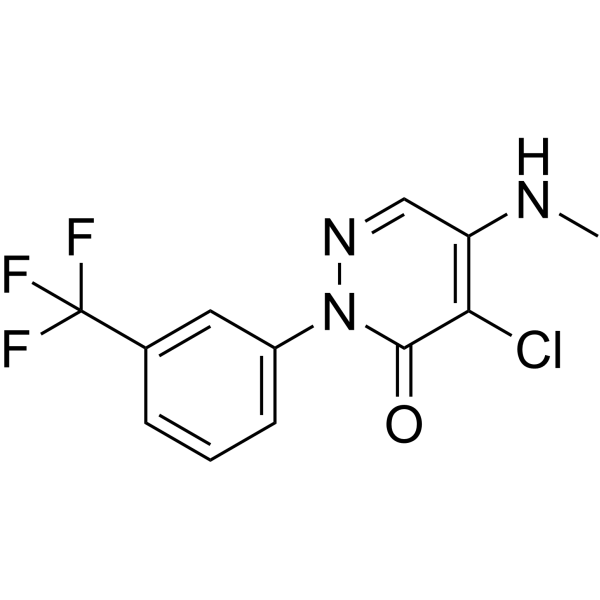
Norflurazon (SAN 9789) is a pre-emergence Herbicide. Norflurazon non-competitively inhibits phytoene desaturase by competing with the enzyme cofactor and disrupts carotenoid biosynthesis, thereby leading to chlorophyll photodegradation and chlorosis. Norflurazon inhibits MGDG synthase, CDP-choline phosphotransferase, Omega-3 FAD7 desaturase, and PG delta-3-trans desaturase, and activates LysoPC-acyltransferase and Omega-3 FAD3 desaturase. Norflurazon inhibits photosynthetic membrane organization, mitochondrial respiration, ATP production, PI3K signaling, and ERK1/2 phosphorylation. Norflurazon activates MAPK P38 phosphorylation and ER stress signaling. Norflurazon induces morphological malformations and cardiovascular effects in zebrafish embryos .
loading...
    loading...
Cat. No.: HY-119976R
CAS No.: 188425-85-6
Boscalid (Standard) is the analytical standard of Boscalid. This product is intended for research and analytical applications. Boscalid is a succinate dehydrogenase (SDHI) inhibitor with antifungal activity. Boscalid binds to the ubiquinone-binding site of fungal mitochondrial complex II, blocks ATP production and aerobic respiration, exhibits good control efficacy against a variety of plant fungal diseases including gray mold, sclerotinia rot and powdery mildew, and is widely used for disease control in agriculture. Boscalid induces apoptosis, altered lipid metabolism, mitochondrial dysfunction, respiratory impairment, oxidative stress, ROS accumulation and neurodevelopmental disorders in zebrafish. Boscalid reduces foraging ability, shortens median death time and causes chronic toxicity in exposed honeybees. Boscalid also possesses genotoxicity, cytotoxicity, elevated mitochondrial superoxide levels and early-stage apoptosis .
loading...
    loading...
Cat. No.: HY-147412D
Target:  

Fluorescent Dye

Research Areas:  

Neurological Disease

FAM labled Ultevursen sodiumis a FAM labled Ultevursen sodium (HY-147412A). Ultevursen sodium (QR-421a) is a splice-modulating antisense oligonucleotide targeting exon 13 of the USH2A gene, which restores the functional expression of Usherin protein by inducing exon skipping. Ultevursen sodium binds to USH2A pre-mRNA and modulates the splicing process to specifically skip exon 13 carrying the pathogenic mutation c.2299delG, generating an in-frame transcript and a truncated yet functionally normal protein. Ultevursen sodium exhibits concentration-dependent exon skipping activity in human cells and retinal organoid models, and restores Usherin expression and retinal function in zebrafish and gene-edited mouse models. Ultevursen sodium can be used for related research on type 2 Usher syndrome and non-syndromic retinitis pigmentosa .
loading...
    loading...
Cat. No.: HY-147412E
Target:  

Fluorescent Dye

Research Areas:  

Neurological Disease

Cy3 labled Ultevursen sodium is a Cy3 labled Ultevursen sodium (HY-147412A). Ultevursen sodium (QR-421a) is a splice-modulating antisense oligonucleotide targeting exon 13 of the USH2A gene, which restores the functional expression of Usherin protein by inducing exon skipping. Ultevursen sodium binds to USH2A pre-mRNA and modulates the splicing process to specifically skip exon 13 carrying the pathogenic mutation c.2299delG, generating an in-frame transcript and a truncated yet functionally normal protein. Ultevursen sodium exhibits concentration-dependent exon skipping activity in human cells and retinal organoid models, and restores Usherin expression and retinal function in zebrafish and gene-edited mouse models. Ultevursen sodium can be used for related research on type 2 Usher syndrome and non-syndromic retinitis pigmentosa .
loading...
    loading...
Cat. No.: HY-158978
Multitarget AD inhibitor-2 (Compound VN-19) is a multitargeting inhibitor acetylcholinesterase (AChE, IC50=0.14 μM), butyrylcholinesterase (BChE, IC50=11.6 μM), monoamine oxidase B (MAO B, IC50=0.45 μM). Multitarget AD inhibitor-2 inhibits self-induced aggregation of amyloid beta protein Aβ1-42 (inhibition rate is 47.3% at 20 μM), and downregulates the level of ROS in SH-SY5Y (80 inhibition rate at 25 μM). Multitarget AD inhibitor-2 ameliorates the cognitive decline in Scopolamine (HY-N0296)-induced Alzheimer’s Disease zebrafish models .
loading...
    loading...
Cat. No.: HY-16945A
CAS No.: 6949-03-7
Synonyms: N-65828 sodium
NCI-65828 (N-65828) sodium is a cell-permeable small molecule inhibitor. NCI-65828 inhibits the ribonuclease activity of human angiogenin and zebrafish Rnasel-1/3, as well as the activity of Mycobacterium tuberculosis AccD5 and its holoenzyme complex. NCI-65828 induces neuronal developmental defects, impairs vascular development, inhibits neurite outgrowth, and reduces protein synthesis in stem cells and neural progenitor cells, but shows no significant growth inhibitory effect on various human tumor cell lines. NCI-65828 is primarily used to study the role of angiogenin-like ribonucleases in neural and vascular development, to establish effect models of ALS-related angiogenin mutants, and in research related to amyotrophic lateral sclerosis, frontotemporal dementia, and tuberculosis .
loading...
    loading...
Cat. No.: HY-181076
Target:  

FOXM1 PI3K CDK Apoptosis

Research Areas:  

Cancer

FOXM1-IN-3 is a potent FOXM1 inhibitor. FOXM1-IN-3 downregulates FOXM1 expression at protein and mRNA levels, suppressing downstream effectors CCNB1 and CDC25. FOXM1-IN-3 induces G2/M cell cycle arrest and apoptosis in colorectal cancer cells. FOXM1-IN-3 inhibits colony formation and cell migration in colorectal cancer cells. FOXM1-IN-3 targets the cancer stem cell phenotype in colorectal cancer cells, reducing cancer stem cell marker expression. FOXM1-IN-3 reduces tumor growth in a zebrafish xenograft model. FOXM1-IN-3 can be used for the research of colorectal cancer .
loading...
    loading...