

345 Results for "

paracolon bacillus

" in MedChemExpress (MCE) Product Catalog:
Products (345)

345 Results for "paracolon bacillus" in MCE Product Catalog:

Cat. No.: HY-182488
CAS No.: 31673-63-9
Research Areas:  

Infection

Pulvinamide is a tetronic acid pigment, a pulvinic acid derivative, an Antibacterial agent and Antifungal agent. Pulvinamide can be isolated from lichens. Pulvinamide weakly inhibits the growth of Bacillus subtilis (ATCC 6633) with an MIC of 50 μg/mL. Pulvinamide weakly inhibits the growth of Candida albicans (ATCC 10231) and Saccharomyces cerevisiae (ATCC 9763), with MIC values of 200 μg/mL and 100 μg/mL, respectively .
loading...
    loading...
Cat. No.: HY-E70518
CAS No.: 9024-97-9
Target:  

Bacterial

Research Areas:  

Infection

Oxalate decarboxylase, Microorganism (EC 4.1.1.2), a stress-response enzyme in certain soil bacteria, is a Mn-dependent enzyme in the cupin superfamily and is found in fungi and soil bacteria. Oxalate decarboxylase catalyzes the decarboxylation of the oxalate mono-anion in the soil bacterium Bacillus subtilis. Enzymatic activity of OxDC is strongly pH dependent, with a maximum at around pH 4.0 .
loading...
    loading...
Cat. No.: HY-N12264
CAS No.: 2334483-46-2
Burnettramic acid A is an antibiotic, which can be isolated from Aspergillus burnettii. Burnettramic acid A exhibits antibacterial and antifungal activities, with IC50 of 0.2, 0.5, 2.3 and 5.9 μg/mL, for Saccharomyces cerevisiae, Candida albicans, Bacillus subtilis and Staphylococcus aureus, respectively. Burnettramic acid A exhibits cytotoxicity in cancer cell NS-1 with IC50 of 13.8 μg/mL .
loading...
    loading...
Cat. No.: HY-N14112
CAS No.: 274684-11-6
Cuevaene B can be isolated from the strain of gdmAI-disrupted Streptomyces sp. LZ35 and. Cuevaene B displays moderate activity against Gram-positive bacteria (e.g., Bacillus subtilis strain ATCC 11060) and modest activity against fungi (e.g., Fusarium verticillioides strain S68 and Rhizoctonia solani strain GXE4) .
loading...
    loading...
Cat. No.: HY-N16400
CAS No.: 1392495-06-5
Target:  

Bacterial

Aspergillumarin A is a dihydroisocoumarin derivative with various biological activity. Aspergillumarin A inhibits cell proliferation by inducing G0/G1 phase arrest in HepG2 hepatocellular carcinoma cells.. Aspergillumarin A exhibits weak antibacterial activity against Staphylococcus aureus and Bacillus subtilis. Aspergillumarin A can be used for the study of hepatocellular carcinoma (HCC)
loading...
    loading...
Cat. No.: HY-P9957
CAS No.: 565451-13-0
Synonyms: ABthrax

Target:  

Bacterial

Research Areas:  

Infection

Raxibacumab (ABthrax) is a human IgG1 monoclonal antibody against Bacillus anthracis protective antigen (PA). Raxibacumab blocks the toxin’s deleterious effects by preventing binding of the protective antigen component of the anthrax toxin to its receptors in host cells, thereby blocking the toxin’s deleterious effects. Raxibacumab can be used for anti-anthrax research .
loading...
    loading...
Cat. No.: HY-W541015
CAS No.: 89-48-5
(±)-Menthyl acetate is a menthol acyl derivative (monoterpene ester) and antibacterial agent found in the essential oil of Mentha arvensis L.. (±)-Menthyl acetate inhibits growth of Gram-positive bacterial strains including Streptococcus mutans, Mycobacterium smegmatis, Enterococcus faecalis, Staphylococcus aureus, and Bacillus subtilis. (±)-Menthyl acetate is inactive against tested fungal strains. (±)-Menthyl acetate can be used in the research of Gram-positive bacterial infections .
loading...
    loading...
Cat. No.: HY-100908
CAS No.: 1016-47-3
Purity:  96.44%
Synonyms: N10-Acetyltryptamine; Nb-Acetyltryptamine; Nω-Acetyltryptamine
Target:  

Melatonin Receptor

Research Areas:  

Others

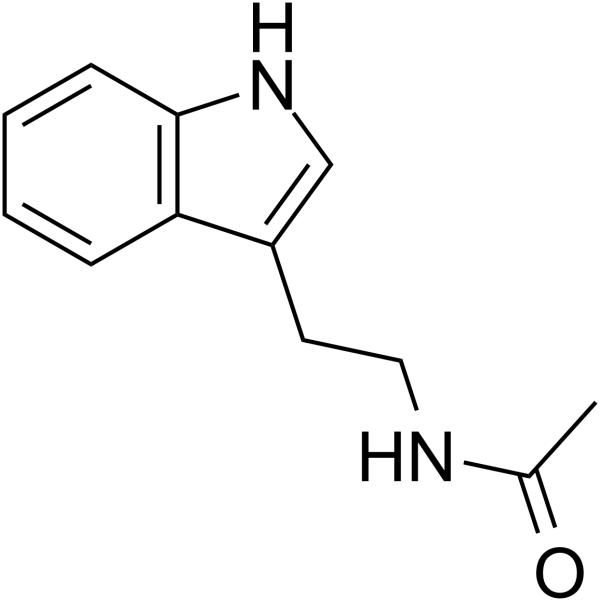
N-Acetyltryptamine (N10-Acetyltryptamine) is a mixed agonist-antagonist of the melatonin receptor. N-Acetyltryptamine inhibits acetylserotonin methyltransferase, blocks the conversion of N-acetylserotonin to melatonin, and inhibits neuronal firing activity in suprachiasmatic nucleus neurons. N-Acetyltryptamine is a physiological constituent of mammalian blood. N-Acetyltryptamine is a metabolite of tryptamine in Bacillus cereus .
loading...
    loading...
Cat. No.: HY-125042
CAS No.: 130756-15-9
Target:  

Bacterial

Research Areas:  

Infection

Sarothralin G is an antibacterial compound isolated from Hypericum japonicum Thunb. (Japanese spurfle). The structure of Sarothralin G contains phenolic and aromatic acid moieties and shows excellent antibacterial activity against Gram-positive bacteria such as Staphylococcus aureus, Bacillus subtilis and Nocardia spp., which is stronger than Sarothralen A, B and Saroaspidin A, B, C. Sarothralin G exhibits significant antibacterial potential.
loading...
    loading...
Cat. No.: HY-125620
CAS No.: 274913-71-2
Rubiginone D2 is an antibiotic, which exhibits antimicrobial activities against Bacillus subtilis, Staphylococcus aureus and Escherichia coli. Rubiginone D2 exhibits antitumor efficacy, inhibits proliferations of cancer cells HM02, Kato III, HepG2 and MCF7, with GI50s of 0.1, 0.7, <0.1 and 7.5 μM, respectively .
loading...
    loading...
Cat. No.: HY-158987
CAS No.: 1050202-63-5
Synonyms: APBADP
Target:  

Endogenous Metabolite

Research Areas:  

Metabolic Disease

Adenosine phosphonobutyric, 2'(3'), 5'-diposphate (APBADP) is an adenylosuccinate lyase substrate analog and competitive inhibitor. Adenosine phosphonobutyric, 2'(3'), 5'-diposphate binds to the tetramers of *Bacillus subtilis* adenylosuccinate lyase and wild-type human adenylosuccinate lyase. Adenosine phosphonobutyric, 2'(3'), 5'-diposphate can be used for research on adenylosuccinate lyase deficiency .
loading...
    loading...
Cat. No.: HY-164123
CAS No.: 2001602-07-7
Target:  

Bacterial

Research Areas:  

Infection

Antibiofilm agent-9 (Compound 4) is a pyrrolomycin derivative with antibacterial activity. Antibiofilm agent-9 inhibits Bacillus anthracis with MIC of 0.031 μg/mL. Antibiofilm agent-9 exhibits antibiofilm activity with 84% biofilm inhibition (24 h, 8.0 μg/mL). Antibiofilm agent-9 exhibits a good pharmacokinetic characters in mouse model .
loading...
    loading...
Cat. No.: HY-N15479
Nanangenine F is a drimane sesquiterpenoid with weak antibacterial and anticancer activities. Nanangenine F inhibits Bacillus subtilis (ATCC 6633) with an IC50 of 78 µg/mL. Nanangenine F inhibits NS-1, DU-145, MCF-7 and human fibroblast NFF cells with IC50s of 49 µg/mL, 95 µg/mL, 49 µg/mL, and 84 µg/mL, respectively .
loading...
    loading...
Cat. No.: HY-N15640
CAS No.: 62311-75-5
Synonyms: (-)-Filiformin
Filiformin ((-)-Filiformin) is a sesquiterpene compound that can be isolated from Laurencia filiformis forma heteroclada. Filiformin exhibits certain cytotoxicity against P388 and BSC-1 cells. Filiformin has antimicrobial activity against Bacillus subtilis, Trichophyton mentagrophytes and Candida albicans. In addition, Filiformin can inhibit oxygen uptake in isolated rat liver mitochondria at a concentration of 150 μM .
loading...
    loading...
Cat. No.: HY-P5618
Target:  

Bacterial

Research Areas:  

Infection

Maximin H2 is an antimicrobial peptide derived from the skin secretions of Chinese red belly toad Bombina maxima. Maximin H2 has activity against Escherichia coli ATCC25922, Staphylococcus aureus ATCC2592, Bacillus pyocyaneus CMCCB1010 and Candida albicans ATCC2002, the MIC values are 20, 2, 4, 2 μg/ml, respectively .
loading...
    loading...
Cat. No.: HY-P5619
CAS No.: 853262-62-1
Target:  

Bacterial

Research Areas:  

Infection

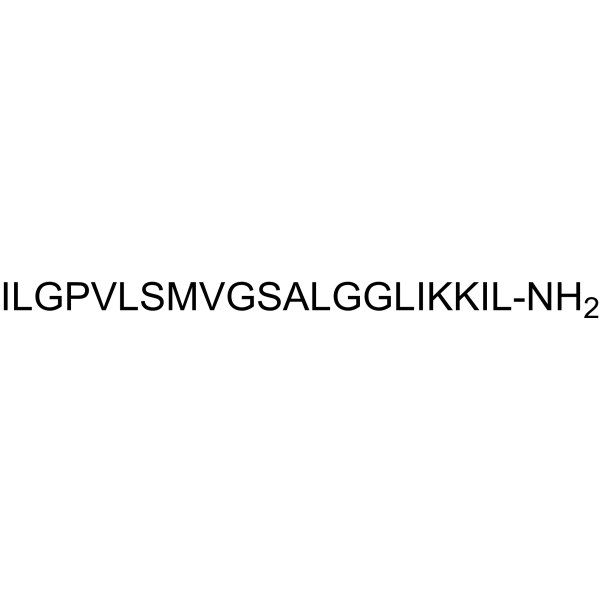
Maximin H3 is an antimicrobial peptide derived from the skin secretions of Chinese red belly toad Bombina maxima. Maximin H3 has activity against Escherichia coli ATCC25922, Staphylococcus aureus ATCC2592, Bacillus pyocyaneus CMCCB1010 and Candida albicans ATCC2002, the MIC values are 20, 10, 20, 5 μg/ml, respectively .
loading...
    loading...
Cat. No.: HY-P5655
Target:  

Bacterial

Research Areas:  

Infection

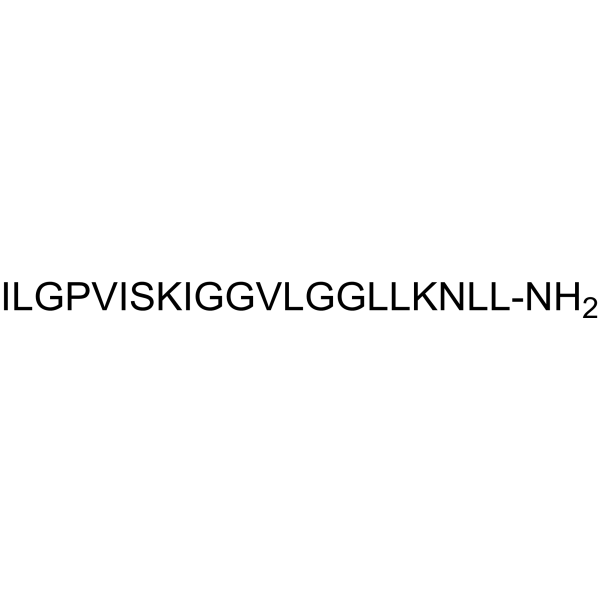
Maximin H4 is an antimicrobial peptide derived from the skin secretions of Chinese red belly toad Bombina maxima. Maximin H4 has activity against Escherichia coli ATCC25922, Staphylococcus aureus ATCC2592, Bacillus pyocyaneus CMCCB1010 and Candida albicans ATCC2002, the MIC values are 12, 6, 12, 6 μg/ml, respectively .
loading...
    loading...
Cat. No.: HY-W004263
CAS No.: 629-96-9
Synonyms: Arachidyl alcohol
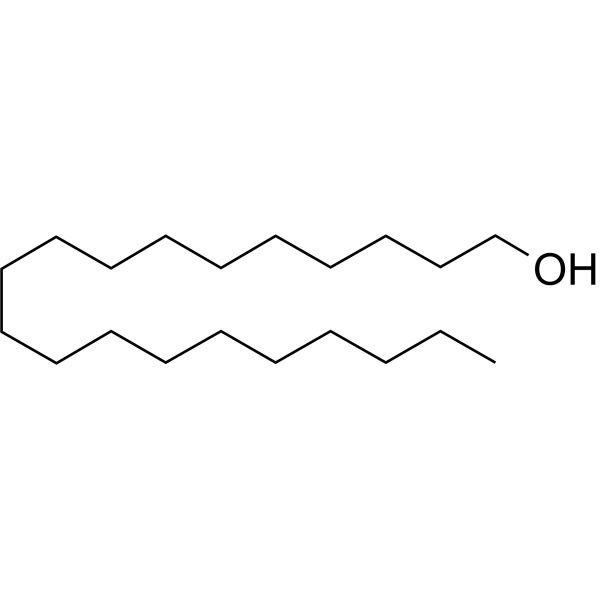
1-Eicosanol (Arachidyl alcohol) is a long-chain fatty alcohol and volatile organic compound that can be isolated from the leaves of Leea indica and produced by Bacillus velezensis ZJ1. 1-Eicosanol inhibits mycelial growth of Alternaria solani and Botrytis cinerea. 1-Eicosanol is applicable to research related to tomato early blight and tomato gray mold .
loading...
    loading...
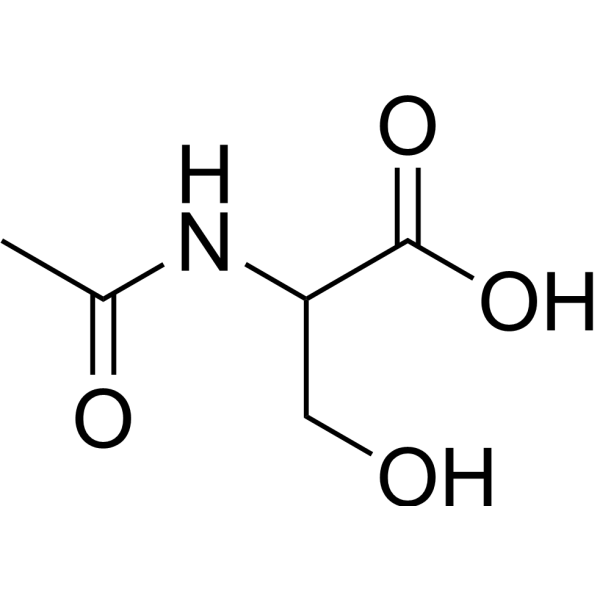
Cat. No.: HY-W142092
CAS No.: 97-14-3
Research Areas:  

Others

N-Acetyl-DL-serine is a hydrophobic amino acid that is synthesized in the body and can be found as a free form or as a salt with malonate, phosphate, or acetate. N-Acetyl-DL-serine has antimicrobial activity against Bacillus cereus and Staphylococcus aureus. N-Acetyl-DL-serine has also been used for the immobilization of DNA fragments on solid surfaces and can be used for protein synthesis and optical detection of DNA strands .
loading...
    loading...
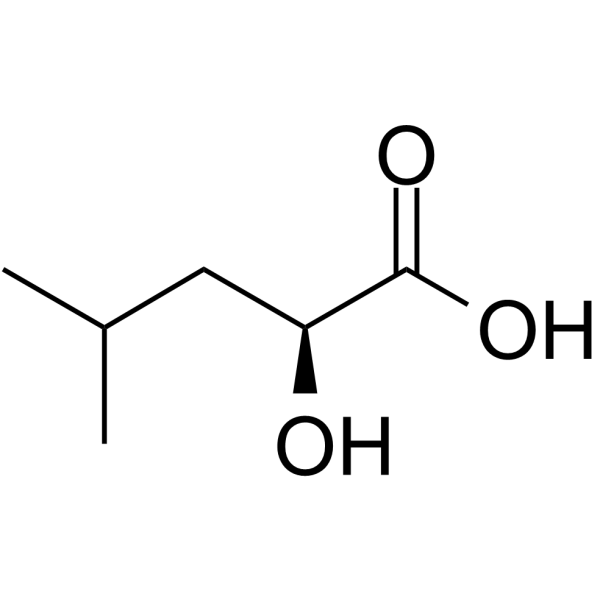
Cat. No.: HY-30215
CAS No.: 13748-90-8
Synonyms: (S)-2-Hydroxy-4-methylpentanoic acid
(S)-Leucic acid ((S)-2-Hydroxy-4-methylpentanoic acid) is an α-hydroxy acid found in the fermentation products of Bacillus granulobacter pectinovorum. (S)-Leucic acid is an isomer of Leucic acid (HY-30216A) and a leucine metabolite. (S)-Leucic acid acts as a D-unit subunit precursor in the biosynthesis of cryptophycins in the Nostoc cyanobacterial symbiont. (S)-Leucic acid is used in metabolism-related studies .
loading...
    loading...

