2887 Results for "

Interaction

" in MedChemExpress (MCE) Product Catalog:
Products (2887)

2887 Results for "Interaction" in MCE Product Catalog:

Cat. No.: HY-L152
5,077 compounds

19F-NMR has proved to be a detection mode in fragment-based drug discovery (FBDD) for studies of protein structure and interactions. 19F shows high sensitivity for NMR detection, and the exquisite sensitivity of 19F chemical shifts and linewidths to ligand binding all make it a valuable approach in FBDD.F (Fluorine) -Fragments can be used for 19F-NMR detection after binding to target proteins, and can be used as an effective 19F-NMR tool for FBDD.

MCE designs a unique collection of 5,077 F-fragments, all of which obey a heuristic rule called the “Rule of Three (RO3)”, in which molecular weight ≤300 Da, the number of hydrogen bond donors (H-donors) ≤3, the number of hydrogen bond acceptors (H-acceptors) is ≤3 and cLogP is ≤3. This F-fragments library is an important source of lead-like drugs.

Cat. No.: HY-L137
124 compounds

Targeted protein degradation(TPD) is a novel and promising approach to new drug discovery and development. It shows great potential for treating diseases with “undruggable” pathogenic protein targets and for overcoming drug resistance. Molecular glues and PROTACs are both targeted protein degraders that have attracted the most attention.

Molecular glues are small molecular degraders that mainly induce novel interaction between an E3 ligase and a target protein to form a ternary complex, leading to protein ubiquitination and subsequent proteasome degradation. Compared with PROTACs, molecular glues generally possess more favorable drug-like properties, such as lower MW, higher cell permeability, and better oral absorption. Molecular glues are emerging as a promising new therapeutic strategy.

MCE supplies a unique collection of 124 molecular glues which target various proteins. MCE Molecular Glue Compound Library is a useful tool to conduct scientific research and disease mechanism study.

Cat. No.: HY-101140R
CAS No.: 1799974-70-1
KI696 (Standard) is the analytical standard of KI696 (HY-101140). This product is intended for research and analytical applications. KI696 is a selective KEAP1/NRF2 protein-protein interaction inhibitor with a human Kd value of 1.3 nM. KI696 acts by competitively occupying the NRF2-binding pocket of the KEAP1 Kelch domain. KI696 blocks KEAP1-mediated ubiquitination and degradation of NRF2, promotes the translocation of NRF2 to the nucleus, activates the expression of downstream antioxidant genes, increases intracellular glutathione levels, and alleviates oxidative stress-induced cell damage and inflammatory cell infiltration in the lungs. KI696 reduces ozone-induced pulmonary oxidative damage and inflammatory cell accumulation in rats, and upregulates pulmonary antioxidant genes. KI696 can be used in research related to chronic obstructive pulmonary disease, oxidative stress and inflammation .
loading...
    loading...
Cat. No.: HY-109056A
CAS No.: 867365-40-0
Synonyms: R-1206 sodium
Elsulfavirine sodium (R-1206) is an orally active human carbonic anhydrase (carbonic anhydrase, CA) inhibitor and an allosteric inhibitor of HIV-1 non-nucleoside reverse transcriptase (NNRT). Elsulfavirine sodium also targets and blocks the interaction between adenylosuccinate lyase (ADSL) and insulin-induced gene proteins INSIG1/2, blocks SREBP-1-mediated de novo lipid synthesis, and inhibits the proliferation of liver cancer cells. The combination of Elsulfavirine sodium and Lenvatinib (HY-10981) produces a synergistic anti-tumor effect. Elsulfavirine sodium is converted into the active metabolite VM1500A in vivo, blocks the DNA polymerase activity of reverse transcriptase, and inhibits HIV-1 replication. Elsulfavirine sodium exhibits a Ki of 1960 nM-52400 nM against human carbonic anhydrase isoforms including I, VII, VI, VA, VB, IX, XIII, XIV. Elsulfavirine sodium is used in studies related to HIV-1 infection and liver cancer .
loading...
    loading...
Cat. No.: HY-124857
CAS No.: 26927-01-5
Purity:  98%
Synonyms: 7-Desacetoxy-6,7-dehydrogedunin
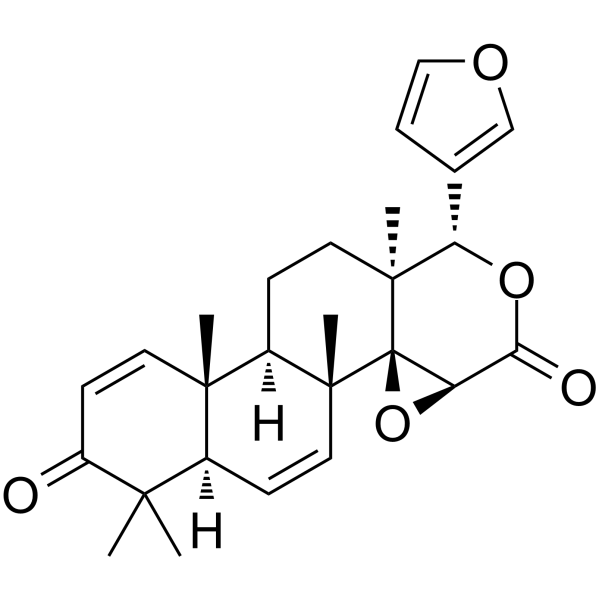
7DG (7-Desacetoxy-6,7-dehydrogedunin) is a PKR inhibitor, P2X7 purinergic receptor inhibitor, and skin-lightening agent. 7DG binds outside the ATP-catalytic domain of PKR, blocks the kinase activity-independent protein-protein interactions of PKR, inhibits the phosphorylation and activity of PKR, disrupts ASC assembly and caspase-1 activation, and suppresses the activation of the NLRP1 inflammasome. 7DG inhibits pyroptosis, suppresses the ATP-P2X7 signaling pathway, and abolishes ATP-induced increases in the expression levels of MITF, tyrosinase, PMEL/gp100, and melanin content. 7DG exerts skin-lightening effects in cultured skin in vitro. 7DG can be used in research related to chronic obstructive pulmonary disease, gout, type 2 diabetes, Alzheimer's disease, and hyperpigmentary skin disorders .
loading...
    loading...
Cat. No.: HY-149101
CAS No.: 86-04-4
Synonyms: IDP; Inosine-5'-diphosphoric acid
Target:  

c-Myc Apoptosis

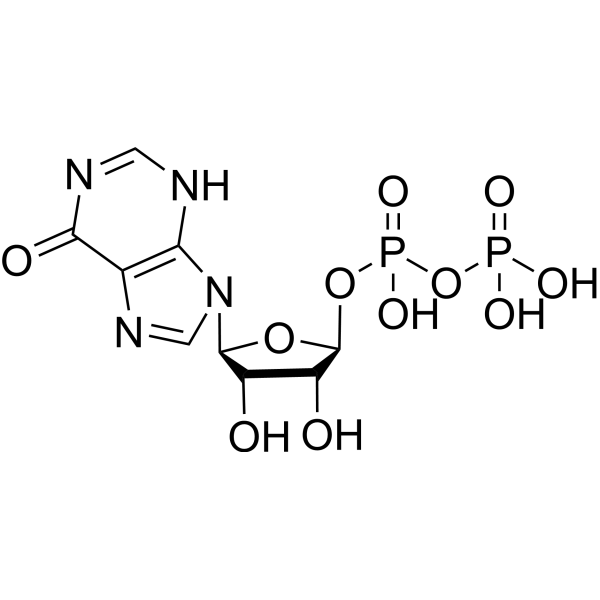
Inosine-5'-diphosphate (IDP) is a decoy substrate of NM23-H2. Inosine-5'-diphosphate has a superior bond capacity on GDP-binding pocket of NM23-H2 (KD: 5.0 μM). Inosine-5'-diphosphate abrogates c-MYC transcription, induces apoptosis and G2/M cell cycle arrest by disrupting NM23-H2-Pu27-GQ interactions without affecting NM23-H2-mediated kinase properties. Inosine-5'-diphosphate has antihypoxic, antihyperthermic and antiarrhythmic activity and protects animals against the noxious effects of γ-irradiation. Inosine-5'-diphosphate can be used for cancers like Burkitt's lymphoma and cardiovascular diseases research .
loading...
    loading...
Cat. No.: HY-156827
CAS No.: 3079093-16-3
Purity:  98.08%
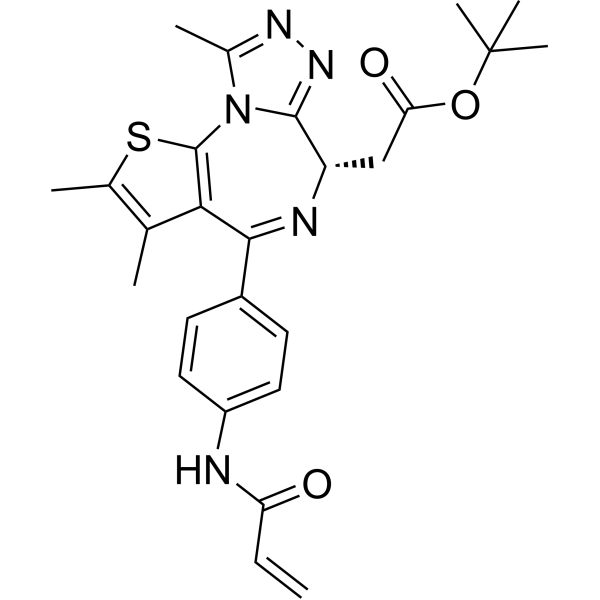
MMH1 is a novel BRD4 molecular glue degrader. MMH1 functions by recruiting the CUL4 DCAF16 ligase to the second bromodomain of BRD4 (BRD4 BD2). MMH1 binds to the JQ1-binding site of BRD4 BD2, acts as a template to covalently modify Cys58 of DCAF16, stabilizes the BRD4-DCAF16 ternary complex, and thereby promotes BRD4 degradation via the CRL4DCAF16 ubiquitin ligase pathway. Using BRD4 BD2 as a structural template, MMH1 covalently modifies Cys87 of GAK and induces the GAK-BRD4 BD2 interaction. Through its covalent mechanism, MMH1 exhibits sustained BRD4 degradation activity, and shows selective degradation activity for BRD4 BD2 over BRD4 BD1 .
loading...
    loading...
Cat. No.: HY-157189A
Synonyms: GPR132 antagonist 1 (dihydrocholide)
Target:  

G2A (GPR132)

Research Areas:  

Metabolic Disease

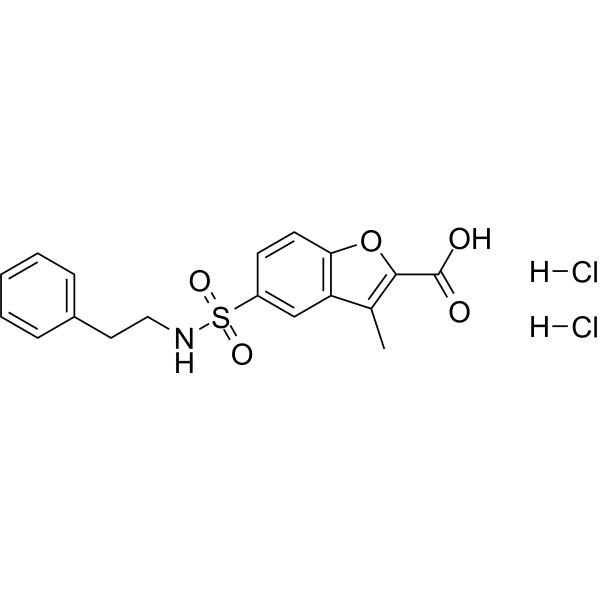
NOX-6-18 (dihydrocholide) (GPR132 antagonist 1 (diHYdrocholide)) is a GPR132 antagonist with an IC50 of 15.17 nM against the human target. NOX-6-18 (dihydrocholide) inhibits GPR132 activation via interaction with non-conserved residues, blocks activities induced by endogenous agonists and 9 (S)-HODE, and exhibits selectivity for other fatty acid-binding GPCRs. NOX-6-18 (dihydrocholide) regulates macrophage reprogramming, alleviates inflammatory responses, downregulates inflammatory markers and signaling pathways, and reduces the degree of hepatic steatosis and hepatic triglyceride levels. NOX-6-18 (dihydrocholide) regulates metabolic homeostasis, reduces weight gain, enhances glucose metabolism, improves glucose tolerance, decreases fasting blood glucose and insulin levels, and partially reverses reductions in energy expenditure and respiratory quotient. NOX-6-18 (dihydrocholide) can be used in the research of type 2 diabetes .
loading...
    loading...
Cat. No.: HY-171978
Target:  

Adrenergic Receptor

Research Areas:  

Cardiovascular Disease

LM-189 is a β2-adrenergic receptor (β2AR) ligand and G protein-biased modulator with a human β2AR Ki of 0.063 nM.LM-189 promotes β2AR coupling to Gαs and Gαi heterotrimers, stabilizes distinct β2AR conformations including a TM6 outward state, and increases β2AR ICL2 dynamics.LM-189 restricts β2AR ligand-binding pocket conformational heterogeneity, stabilizes polar ligand-receptor interaction networks, and exhibits bias toward Gαi signaling over Gαs signaling.LM-189 enabled cryo-EM structural characterization of the β2AR-Gi complex.LM-189 can be used for the research of congestive heart failure .
loading...
    loading...
Cat. No.: HY-180269
Research Areas:  

Infection

Anti-Influenza agent 10 (Compound 41) is an influenza A virus RNA-dependent RNA polymerase (RdRp) inhibitor. Anti-Influenza agent 10 exhibits potent antiviral activity against A/PR/8/34(H1N1) with an IC50 of 0.29μM and a KD of 4.11 μM. Anti-Influenza agent 10 can inhibit the assembly of the viral RdRp complex by disrupting the protein interaction between PA and PB1 subunits, thereby blocking the transcription and replication of the viral genome. Anti-Influenza agent 10 shows significant broad-spectrum effects on multiple influenza virus strains, such as H3N2, H3N8 and H9N2 with IC50 values of 3.96, 1.91 and 1.45 μM. Anti-Influenza agent 10 can be used for the research of influenza A Virus Infection .
loading...
    loading...
Cat. No.: HY-183335
Research Areas:  

Cancer

Anticancer agent 321 is a Smoothened (SMO) inhibitor with a human IC50 of 0.12 μM, enhanced aqueous solubility, good plasma and metabolic stability, moderate therapeutic index, preliminary safety profile, and moderate oral bioavailability in rats.Anticancer agent 321 binds to SMO’s 7-transmembrane helical channel, forming hydrogen bonds with Asp384 and hydrophobic/π-π interactions with His470, Phe391, Tyr394, stabilizing SMO’s inactive conformation to inhibit Hedgehog/GLI signaling.Anticancer agent 321 inhibits proliferation, suppresses colony formation, induces apoptosis, and downregulates Hedgehog/GLI pathway target genes GLI1, GLI2, Ptch1, HHip in cancer cells.Anticancer agent 321 inhibits tumor growth, downregulates Ki67 and SOX2, and upregulates cleaved-caspase 3 in tumor tissues.Anticancer agent 321 can be used for the research of cutaneous squamous cell carcinoma .
loading...
    loading...
Cat. No.: HY-184600
Reactive oxygen species responsive hydrogels are a novel class of smart hydrogels, formed by the cross-linking of ROS-responsive modules through covalent, coordination, or supramolecular interactions. Due to the introduction of these ROS-responsive modules, these hydrogels exhibit a sensitive response to the oxidative stress microenvironment present in organisms. PVA-TSPBA hydrogel is a hydrogel formed by the cross-linking polymerization of polyvinyl alcohol (PVA) and the reactive oxygen species-sensitive cross-linking agent N1-(4-benzyl borate)-N3-(4-phenyl borate)N1,N1,N3,N3-tetramethyl-1,3-propanediamine (TSPBA). This hydrogel consists of two parts: a boric acid precursor (TSPBA) and an aqueous solution of PVA. The boric acid bonds on TSPBA and the hydroxyl groups on PVA rapidly cross-link to form borate ester bonds, thus forming the hydrogel.
loading...
    loading...
Cat. No.: HY-187200
Research Areas:  

Infection

SP-393D is an amidoxime-based prodrug inhibitor targeting dengue virus NS2B/NS3. The EC50 values of SP-393D in Huh7 cells infected with DENV-1, DENV-2, DENV-3 and DENV-4 are 1.41, 0.066, 0.66 and 0.071 μM, respectively, while its CC50 against Huh7 cells is >100 μM. SP-393D exhibits pan-serotypic activity against dengue virus serotypes 1, 2, 3 and 4. SP-393D binds to the allosteric pocket of dengue virus NS2B/NS3 protease and generates additional hydrogen bonding interactions. SP-393D can be used in studies related to dengue virus infection .
loading...
    loading...
Cat. No.: HY-78985S
CAS No.: 62790-27-6
Synonyms: Trimesic acid-d3
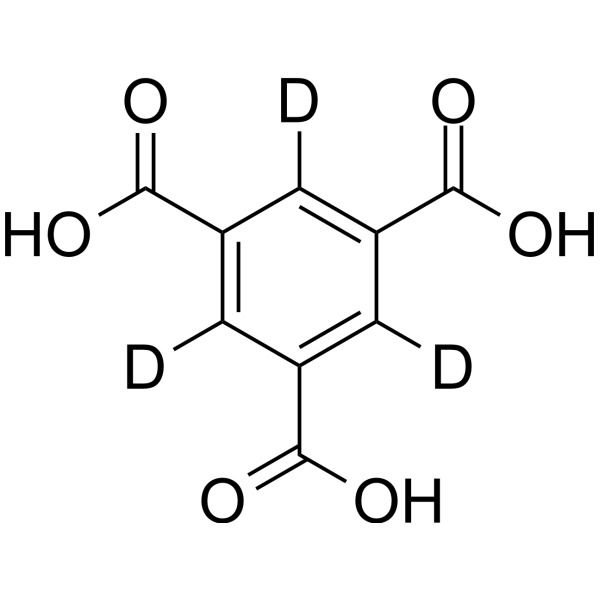
Benzene-1,3,5-tricarboxylic acid-d3 (Trimesic acid-d3) is the deuterium labeled Benzene-1,3,5-tricarboxylic acid (HY-78985). Benzene-1,3,5-tricarboxylic acid (Trimesic acid) is a rigid planar small-molecule scaffold and crosslinker. Benzene-1,3,5-tricarboxylic acid induces bicyclic peptides to adopt a planar conformation, so as to maximize surface area and bind to the flat protein surfaces involved in protein-protein interactions. Benzene-1,3,5-tricarboxylic acid forms ionic crosslinks, hydrogen bonds and π-π bonds with chitosan, thereby constructing a hydrogel network. Benzene-1,3,5-tricarboxylic acid endows chitosan hydrogel systems with specific mechanical properties, enabling sustained release of cancer therapeutic drugs including 5-Fluorouracil (HY-90006) .
loading...
    loading...
Cat. No.: HY-D3088
Research Areas:  

Others

CQPP is a Fluorescent probe designed for monitoring polarity changes in the cellular microenvironment, including polarity tracking of lipid droplets/nuclei during ferroptosis. CQPP exhibits ratiometric fluorescence emission and fluorescence lifetime variations in response to polarity changes; a nonpolar environment stimulates fluorescence from the locally excited (LE) state, while a polar environment drives solvation relaxation to the intramolecular charge transfer (ICT) state, which attenuates the LE emission at ~470 nm and simultaneously enhances the ICT emission at ~670 nm. CQPP binds to intranuclear DNA through electrostatic interactions and hydrogen bonds in the DNA minor groove, which enhances its emission at ~670 nm and prolongs its fluorescence lifetime. CQPP can simultaneously target lipid droplets (green LE fluorescence) and the nucleus (red ICT fluorescence). The detection wavelengths of CQPP are Ex/Em = 405/470 nm and Ex/Em = 405/670 nm, and it also supports fluorescence lifetime imaging via 810 nm two-photon excitation .
loading...
    loading...
Cat. No.: HY-N0481R
CAS No.: 6812-81-3
Roburic acid (Standard) is the analytical standard of Roburic acid. This product is intended for research and analytical applications. Roburic acid acts as an anti-inflammatory, anti-tumor and osteoclastogenesis inhibitor, with a Ki of 7.066 μM against human TNF, an IC50 of 9 μM against human COX-2, and an IC50 of 5 μM against ovine COX-1. Roburic acid reduces the production of inflammatory mediators such as NO and IL-6 in macrophages by inhibiting the NF-κB and MAPK (p38/JNK) pathways. By competitively inhibiting the TNF-TNF-R1 interaction, Roburic acid blocks the downstream NF-κB signaling pathway, thereby inducing cell cycle arrest and apoptosis in cancer cells. Roburic acid specifically inhibits osteoclastogenesis and bone resorption by suppressing the RANKL/TRAF6/NF-κB/NFATc1 axis. Roburic acid can be used in research related to osteolytic diseases such as osteoporosis, colorectal cancer and inflammatory diseases.
loading...
    loading...
Cat. No.: HY-N0565C
CAS No.: 94088-85-4
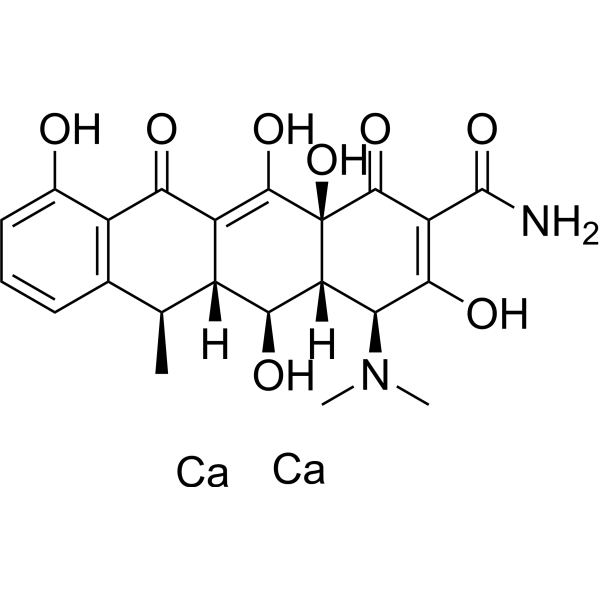
Doxycycline calcium is an orally active highly lipophilic, tissue-permeable MMP inhibitor with broad-spectrum antibacterial activity. Doxycycline calcium is also a semi-synthetic antibiotic with chelating properties, which blocks bacterial protein synthesis and inhibits extracellular matrix degradation through interactions with zinc and calcium atoms. Doxycycline calcium also inhibits mitochondrial biogenesis, translation, and the expression of respiratory chain proteins. Doxycycline calcium induces apoptosis, inhibits autophagy and EMT, downregulates stem cell markers, and activates the PI3K-AKT pathway, thereby effectively inhibiting the viability and proliferation of cancer cells such as breast cancer cells. Doxycycline calcium also promotes the survival and self-renewal of embryonic stem cells and neural stem cells, and reduces the frequency of medium changes in culture. Doxycycline calcium has been applied in studies related to breast cancer, prostate cancer, bladder cancer, and other cancers .
loading...
    loading...
Cat. No.: HY-N0565D
CAS No.: 83038-87-3
Doxycycline fosfatex is an orally active highly lipophilic, tissue-permeable MMP inhibitor with broad-spectrum antibacterial activity. Doxycycline fosfatex is also a semi-synthetic antibiotic with chelating properties, which blocks bacterial protein synthesis and inhibits extracellular matrix degradation through interactions with zinc and fosfatex atoms. Doxycycline fosfatex also inhibits mitochondrial biogenesis, translation, and the expression of respiratory chain proteins. Doxycycline fosfatex induces apoptosis, inhibits autophagy and EMT, downregulates stem cell markers, and activates the PI3K-AKT pathway, thereby effectively inhibiting the viability and proliferation of cancer cells such as breast cancer cells. Doxycycline fosfatex also promotes the survival and self-renewal of embryonic stem cells and neural stem cells, and reduces the frequency of medium changes in culture. Doxycycline fosfatex has been applied in studies related to breast cancer, prostate cancer, bladder cancer, and other cancers .
loading...
    loading...
Cat. No.: HY-P10984
CAS No.: 206536-96-1
FNIII14 is a β1-integrin inhibitory peptide. FNIII14 induces the conformational shift of β1-integrin from the active form to the inactive form, blocks integrin-mediated signaling pathways, disrupts the interaction between VLA-4 and fibronectin, inhibits the phosphorylation of FAK/Akt, suppresses cell adhesion, fibronectin fibril formation and chondrocyte proliferation, induces chondrocyte apoptosis and cartilage degeneration, upregulates the pro-apoptotic protein Bim, and binds to membrane-bound eEF1A. FNIII14 reversibly disrupts cell adhesion without reducing cell viability, accelerates adipocyte differentiation, and loosens tumor matrix architecture to enhance the permeability of nanotherapeutic agents. FNIII14 can be used in research related to neuroblastoma, pancreatic cancer, acute myeloid leukemia, colitis-associated colorectal cancer, osteoarthritis, and atherosclerosis .
loading...
    loading...
Cat. No.: HY-P11928
CAS No.: 3121532-43-9
Target:  

CCR ERK

Research Areas:  

Cancer

TC6-D3 is a proteolysis-resistant peptide and also a CC chemokine receptor 7 (CCR7) inhibitor, with a Kd value of 403 nM against mouse targets. TC6-D3 blocks the interaction between CCR7 and its ligands CCL19 and CCL21, and inhibits the activation of the ERK1/2 pathway. TC6-D3 reduces the migratory capacity of tumor cells in vitro. TC6-D3 inhibits tumor growth and lymph node metastasis in vivo. TC6-D3 restores T cell cytotoxicity, promotes CD8+ T cell infiltration, and enhances anti-tumor immune responses. TC6-D3 can be used in studies related to lymph node metastasis .
loading...
    loading...

