385 Results for "

cortex

" in MedChemExpress (MCE) Product Catalog:
Products (385)

385 Results for "cortex" in MCE Product Catalog:

Cat. No.: HY-N6619
CAS No.: 89505-76-0
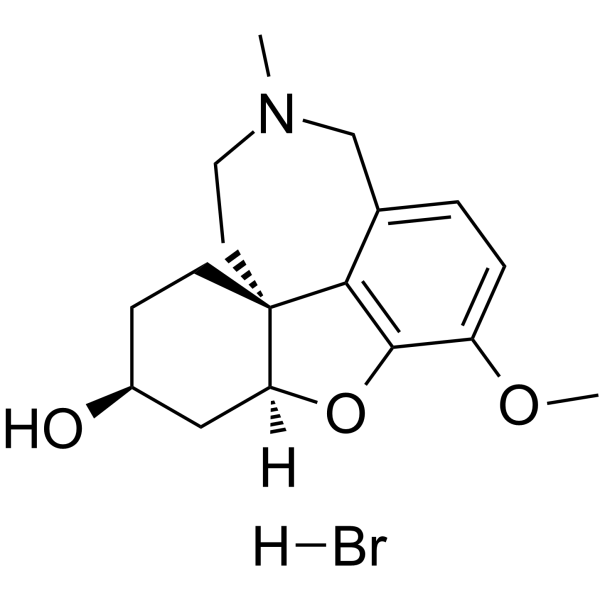
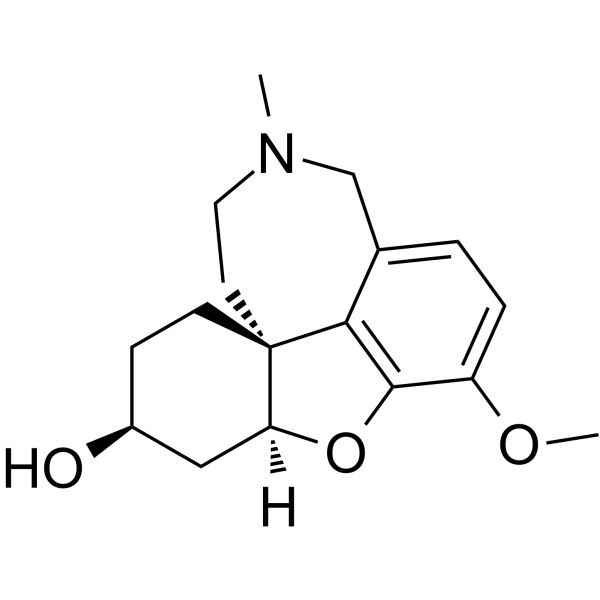
Lycoramine hydrobromide is a blood-brain barrier-penetrating Acetylcholinesterase inhibitor and Galanthamine (HY-76299) derivative. Lycoramine hydrobromide induces Amyloid-beta plaque clearance. Lycoramine hydrobromide induces reversal of cognitive decline and memory improvement. Lycoramine hydrobromide can be used for research on Alzheimer's disease and myasthenia gravis .
loading...
    loading...
Cat. No.: HY-N6619A
CAS No.: 21133-52-8
Lycoramine is a blood-brain barrier-penetrating Acetylcholinesterase inhibitor and Galanthamine (HY-76299) derivative. Lycoramine induces Amyloid-beta plaque clearance. Lycoramine induces reversal of cognitive decline and memory improvement. Lycoramine can be used for research on Alzheimer's disease and myasthenia gravis .
loading...
    loading...
Cat. No.: HY-119684
CAS No.: 1639809-46-3
Purity:  97.20%
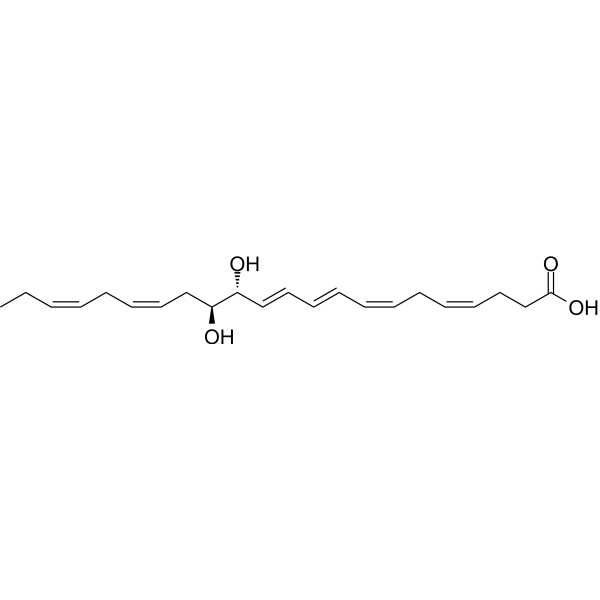
Maresin 2 is an anti-inflammatory and pro-resolving mediator. Maresin 2 drives intestinal epithelial cell migration by activating the focal cell-matrix adhesion signaling pathway in primary human intestinal epithelial cells, thereby promoting mucosal wound repair. Maresin 2 alleviates nociceptive and anxiety-like behaviors in rats with type 1 diabetes by inhibiting IL-1β in the spinal cord and prefrontal cortex. Maresin 2 attenuates allergic airway inflammation in mice by inhibiting the activation of the NLRP3 inflammasome, Th2-type immune responses, and oxidative stress. Maresin 2 inhibits inflammatory and neuropathic trigeminal neuralgia and reduces neuronal activation in the trigeminal ganglion. Maresin 2 promotes inflammation resolution and mucosal repair after DSS-induced colitis or biopsy-induced colonic mucosal injury .
loading...
    loading...
Cat. No.: HY-120657
CAS No.: 1481636-31-0
Purity:  99.88%
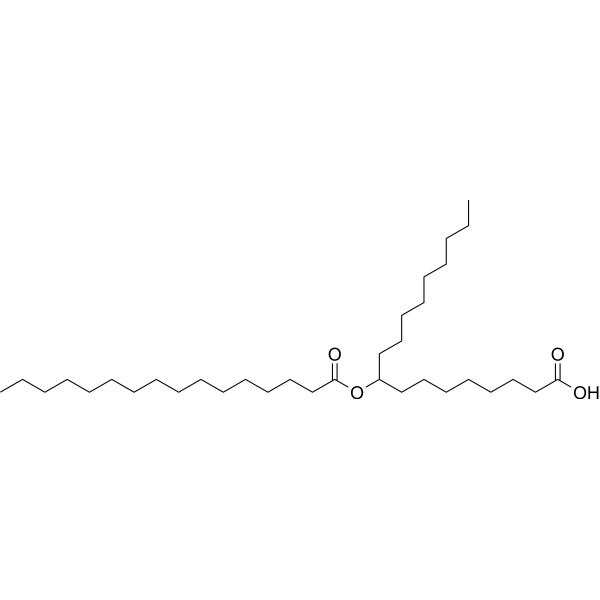
9-PAHSA is an orally active endogenous GPR120 agonist (EC50=18 μM). 9-PAHSA significantly inhibits LPS-induced inflammatory responses by blocking the NF-κB pathway. 9-PAHSA induces adipocyte browning, enhances glucose uptake and reduces lipid accumulation, while improving mitochondrial function and the survival rate of steatotic hepatocytes. In terms of neuroprotection, 9-PAHSA regulates the expression of REST and BDNF in the prefrontal cortex of diabetic mice, and effectively prevents spatial working memory deficits and abnormal social behaviors. 9-PAHSA does not directly regulate insulin secretion or improve systemic insulin sensitivity, and possesses specific anti-inflammatory, metabolic regulatory and neuroprotective properties. 9-PAHSA can be used in the research of diabetes-related cognitive impairment, obesity and non-alcoholic fatty liver disease .
loading...
    loading...
Cat. No.: HY-B0561S4
Spironolactone-d6-1 is the deuterium labeled Spironolactone (HY-B0561). Spironolactone is an aldosterone antagonist that acts on the aldosterone mineralocorticoid receptor (IC50=24 nM) and androgen receptor (IC50=77 nM), promotes podocyte autophagy and regulates pain. Spironolactone improves hypertension-related vascular hypertrophy and remodeling by reducing angiotensin II (Ang II)-induced inflammation, reduces aldosterone-induced vascular and soft tissue calcification through PIT1-dependent signaling, and alleviates vascular dysfunction in type II diabetic mice by reducing oxidative stress and restoring NO/GC signaling; at low concentrations, it and its metabolites can interfere with aldosterone biosynthesis in the adrenal cortex and inhibit voltage-dependent Ca 2+ channels to exert antihypertensive effects .
loading...
    loading...
Cat. No.: HY-P3801
CAS No.: 77128-69-9
Synonyms: DiMe-C7
[Glp5,(Me)Phe8,Sar9] Substance P (5-11) (DiMe-C7) is a Substance P (HY-P0201) analogue that has approximately the same effects as Substance P (HY-P0201) on neurokinin 1 receptor (NK1R) in rat brain, but with a much longer duration of action. [Glp5,(Me)Phe8,Sar9] Substance P (5-11) selectively activates dopamine metabolism in the mesencephalon and midbrain cortex of the rat brain. [Glp5,(Me)Phe8,Sar9] Substance P (5-11) also increases motor activity and induces recovery of addictive agent-seeking behavior in rats .
loading...
    loading...
Cat. No.: HY-100027
CAS No.: 127500-84-9
Research Areas:  

Neurological Disease

Ro 41-1049 is a highly selective, reversible MAO-A inhibitor. Ro 41-1049 effectively blocks the Quinpirole (HY-B1752)-induced increase in dopamine D2-like receptor density in the nucleus accumbens and alters the pattern of behavioral sensitization, shifting animals' responses from enhanced motor activity to immobile self-directed gaping behavior. Tritium-labeled Ro 41-1049 serves as a high-affinity radioligand, enabling accurate mapping of the distribution and abundance of MAO-A in the central nervous system, peripheral organs, and human brain via quantitative enzyme autoradiography. Ro 41-1049 can be used for basic research on depression and other related diseases .
loading...
    loading...
Cat. No.: HY-100027A
CAS No.: 127917-66-2
Purity:  99.96%
Research Areas:  

Neurological Disease

Ro 41-1049 hydrochloride is a highly selective, reversible MAO-A inhibitor. Ro 41-1049 hydrochloride effectively blocks the Quinpirole (HY-B1752)-induced increase in dopamine D2-like receptor density in the nucleus accumbens and alters the pattern of behavioral sensitization, shifting animals' responses from enhanced motor activity to immobile self-directed gaping behavior. Tritium-labeled Ro 41-1049 hydrochloride serves as a high-affinity radioligand, enabling accurate mapping of the distribution and abundance of MAO-A in the central nervous system, peripheral organs, and human brain via quantitative enzyme autoradiography. Ro 41-1049 hydrochloride can be used for basic research on depression and other related diseases .
loading...
    loading...
Cat. No.: HY-15498R
CAS No.: 1289023-67-1
Synonyms: BMS-927711 (Standard); BHV-3000 (Standard)
Research Areas:  

Neurological Disease

Rimegepant (Standard) is the analytical standard of Rimegepant (HY-15498). This product is intended for research and analytical applications. Rimegepant (BMS-927711; BHV-3000) is an orally bioavailable and blood-brain barrier permeable antagonist of CGRP and AMY1 receptors, with a pIC50 of 8.01 and a Ki of 0.027 nM for human CGRP receptors. Rimegepant antagonizes cAMP production induced by αCGRP, βCGRP and amylin at CGRP and AMY1 receptors in humans, rats and mice, as well as at rat AMY3 receptors. Rimegepant can be used in research related to migraine .
loading...
    loading...
Cat. No.: HY-184666
CAS No.: 85118-43-0
Synonyms: Sgd 144/8
Target:  

Adrenergic Receptor

Research Areas:  

Cardiovascular Disease

Fluprofylline (Sgd 144/8) is a selective α1-adrenergic receptor antagonist with a pIC50 of 7.55. Fluprofylline attenuates the pressor response induced by 5-HT (HY-B1473A). Fluprofylline can be used in hypertension research .
loading...
    loading...
Cat. No.: HY-N17415
CAS No.: 150394-23-3
Lyciumin C is a monocyclic octapeptide containing a novel C-N linkage between tryptophan N1 and glycine Cα, and can be found in the root bark of Lycium chinense MILL .
loading...
    loading...
Cat. No.: HY-W203728
CAS No.: 14403-45-3
L-β-Imidazolelactic acid is an inhibitor of Cholinesterase and Monoamine oxidase, and also the final metabolite of L-Histidine (HY-N0832). L-β-Imidazolelactic acid increases the activity of Superoxide dismutase. L-β-Imidazolelactic acid is applicable to research related to liver cirrhosis and histidinemia .
loading...
    loading...
Cat. No.: HY-12760
CAS No.: 26844-12-2
Purity:  99.80%
Synonyms: Indoramine; Wy 21901
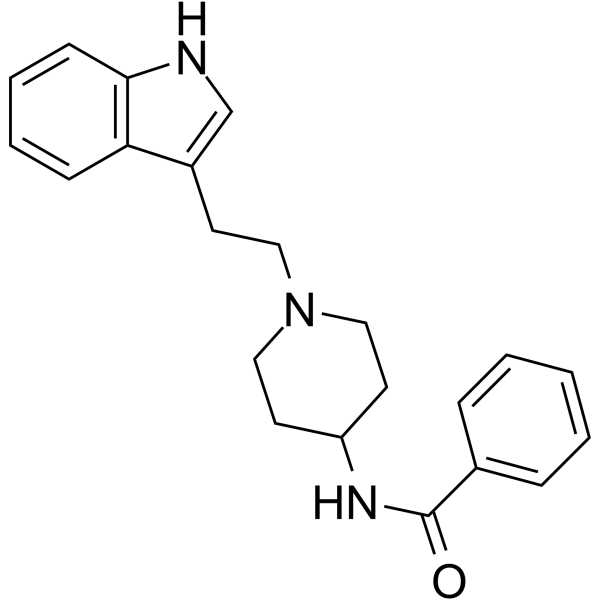
Indoramin (Wy 21901) is a competitive and selective α1-adrenoceptor antagonist. Indoramin reduces peripheral vascular resistance, blood pressure, heart rate and myocardial contractility in experimental animals. Under hypoxic conditions, Indoramin increases ATP synthesis in brain tissue, maintains cerebral ATP levels, and alleviates hypoxia-related swelling of synaptosomes, cerebral microvessels and the whole brain. Indoramin can be used in studies related to hypertension, cardiovascular regulation and cerebral hypoxia .
loading...
    loading...
Cat. No.: HY-135741
CAS No.: 2012536-16-0
Purity:  98.77%
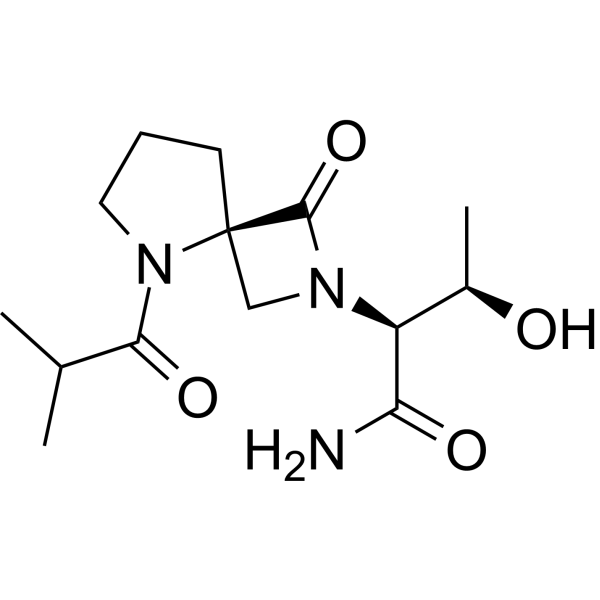
NYX-2925 is an orally active, blood-brain barrier-permeable NMDAR modulator, with EC50 values of 55 pM, 28 fM, 11 pM and 55 pM against NR2A, NR2B, NR2C and NR2D, respectively . NYX-2925 enhances synaptic plasticity, long-term potentiation, metaplasticity, structural plasticity, learning ability, memory capacity and circadian rhythm amplitude. NYX-2925 regulates the signaling pathways of Src kinase, EIF2, mTOR, CDK5 and protein kinase A (PKA). NYX-2925 increases the levels of PSD-95, GluA1, activated Src and synaptic GluN2B . NYX-2925 is used in the research of neuropathic pain, fibromyalgia, painful diabetic peripheral neuropathy, post-traumatic stress disorder, cognitive impairment, depression, age-related cognitive decline and NMDAR-mediated central nervous system diseases .
loading...
    loading...
Cat. No.: HY-N17413
CAS No.: 1357469-94-3
(-)-γ-Cuparenol is a sesquiterpene compound with an IC50 of 23.6 μg/mL against porcine Na +/K +-ATPase. (-)-γ-Cuparenol reduces phytohemagglutinin (PHA)-induced activation of NF-AT and NF-κB in Jurkat cells. (-)-γ-Cuparenol inhibits the growth of Gram-positive bacteria and some Gram-negative bacteria. (-)-γ-Cuparenol exhibits weak inhibitory activity against Candida albicans. (-)-γ-Cuparenol is applicable for research related to immunoregulation, cardiovascular diseases and bacterial infections .
loading...
    loading...
Cat. No.: HY-N21559
CAS No.: 67172-84-3
Kuwanon D is a prenylated flavanone found in the root bark of Morus alba L. Kuwanon D is predicted to be a high-affinity binder of SARS-CoV-2 main protease (Mpro), with favorable bioavailability and compliance with Lipinski's Rule of Five. Kuwanon D is an active component of Morus alba root bark identified as a lung cancer-related gene-targeting compound through network pharmacology screening. Kuwanon D is applicable to research related to COVID-19 and lung cancer .
loading...
    loading...
Cat. No.: HY-W770410
CAS No.: 2748638-71-1
9-PAHSA- 13C4 is 13C-labeled 9-PAHSA. 9-PAHSAis an orally active endogenous GPR120 agonist (EC50=18 μM). 9-PAHSAsignificantly inhibits LPS-induced inflammatory responses by blocking the NF-κB pathway. 9-PAHSAinduces adipocyte browning, enhances glucose uptake and reduces lipid accumulation, while improving mitochondrial function and the survival rate of steatotic hepatocytes. In terms of neuroprotection, 9-PAHSAregulates the expression of REST and BDNF in the prefrontal cortex of diabetic mice, and effectively prevents spatial working memory deficits and abnormal social behaviors. 9-PAHSAdoes not directly regulate insulin secretion or improve systemic insulin sensitivity, and possesses specific anti-inflammatory, metabolic regulatory and neuroprotective properties. 9-PAHSAcan be used in the research of diabetes-related cognitive impairment, obesity and non-alcoholic fatty liver disease .
loading...
    loading...
Cat. No.: HY-176533
CAS No.: 3107268-28-7
Target:  

LPL Receptor

Research Areas:  

Neurological Disease

S1PR5-IN-1 (Compound 7a) is a highly selective S1PR5 antagonist and orally bioavailable inhibitor with a human S1PR5 IC50 of 85.4 nM and human S1PR5 Kd of 2.173 nM.S1PR5-IN-1 binds to S1PR5 and inhibits natural killer cell migration toward sphingosine-1-phosphate.S1PR5-IN-1 can be used for the research of multiple sclerosis .
loading...
    loading...
Cat. No.: HY-179646
CAS No.: 3122563-80-5
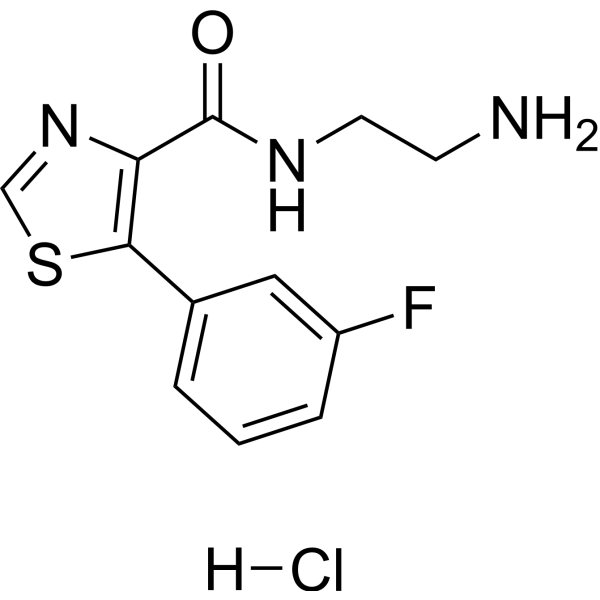
CIAC101 is a potent and brain-penetrant TLR4 antagonist with an IC50 of 17.0 nM in NO assay. CIAC101 blocks Lipopolysaccharides (HY-D1056) (LPS)-induced NF-κB activation and reduces the expression of pro-inflammatory mediators (iNOS, IL-1β, TNF-α, and IL-6). CIAC101 robust antineuroinflammatory activity with efficacy against drug-evoked neurobehavioral adaptations. CIAC101 can be used for the research of addiction and neurological disease .
loading...
    loading...
Cat. No.: HY-187560
Target:  

5-HT Receptor

Research Areas:  

Neurological Disease

VCU-1012 is a serotonin 2A receptor (5-HT2AR) agonist, with a pEC50 of 5.81 and a pKi of 5.75 against human receptors. VCU-1012 binds to the canonical orthosteric binding pocket of 5-HT2AR, triggers intracellular calcium release and Gαq protein dissociation, and its agonistic activity depends on specific amino acid residues in the receptor binding pocket. VCU-1012 can be used in research related to depression, anxiety disorders, and chemotherapy-induced mood disorders .
loading...
    loading...