336 Results for "

MRSA

" in MedChemExpress (MCE) Product Catalog:
Products (336)

336 Results for "MRSA" in MCE Product Catalog:

1
1 Cited Publications
Cat. No.: HY-A0097
CAS No.: 61036-62-2
Synonyms: Antibiotic MDL-507; MDL-507
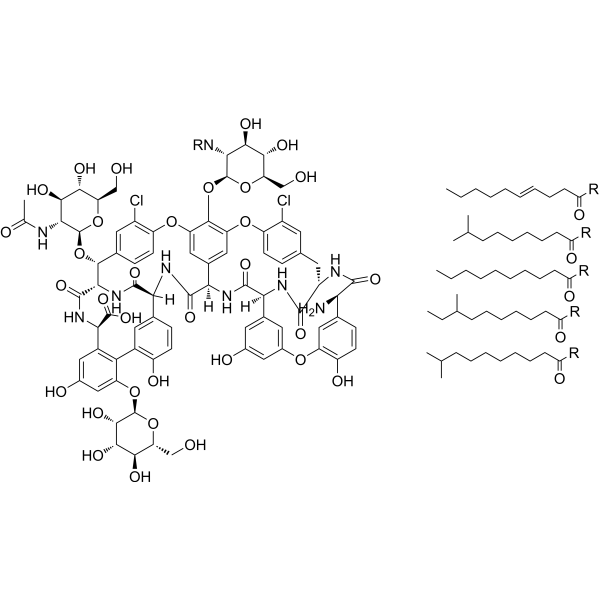
Teicoplanin is a glycopeptide antibiotic indicated for use in serious infections caused by Gram-positive bacteria, including Methicillin-resistant Staphylococcus aureus and Enterococcus aureus.Teicoplanin shows antiviral activity for HIV-1, SARS-CoV1 and SARS-CoV2. Teicoplanin sodium shows anti-MRSA activity .
loading...
    loading...
1
1 Cited Publications
Cat. No.: HY-B0958
CAS No.: 12650-69-0
Synonyms: BRL-4910A; Pseudomonic acid
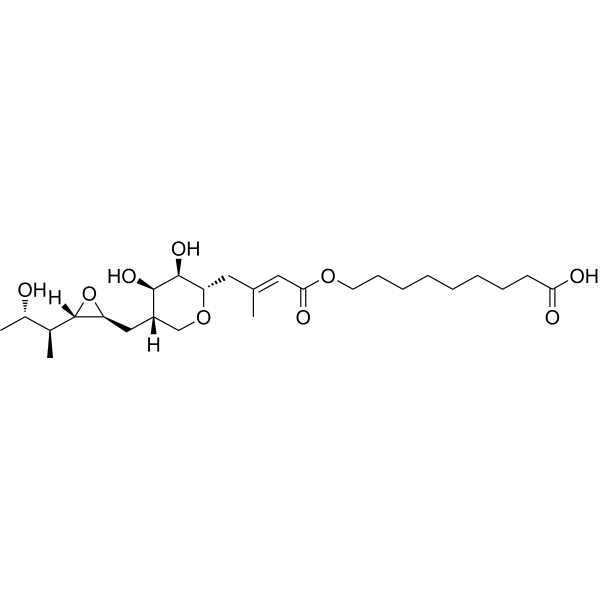
Mupirocin is an antibiotic. Mupirocin inhibits bacterial isoleucyl-tRNA synthetase, blocking protein synthesis. Mupirocin has high activity against Gram-positive bacteria such as Staphylococcus and Streptococcus, as well as some Gram-negative bacteria (such as Haemophilus influenzae). Mupirocin can be used in the research of diseases such as skin infections (such as MRSA infections) and chronic sinusitis .
loading...
    loading...
1
1 Cited Publications
Cat. No.: HY-164051
CAS No.: 850935-88-5
Target:  

Bacterial

Research Areas:  

Infection

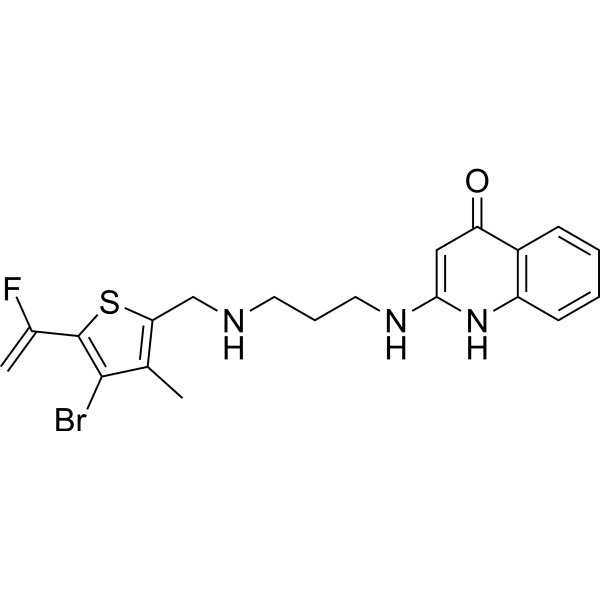
1650-M15 is an inhibitor of lipoteichoic acid synthase (LtaS). It has inhibitory activity against Gram-positive bacteria but has no significant inhibitory effect against Gram-negative bacteria. The IC50s of 1650-M15 against MRSA and MSSA are 62.44 μM and 66.42 μM, respectively, and the MICs are both 200 μM .
loading...
    loading...
1
1 Cited Publications
Cat. No.: HY-W108875
CAS No.: 73346-79-9
Synonyms: BRL-4910A lithium; Pseudomonic acid lithium
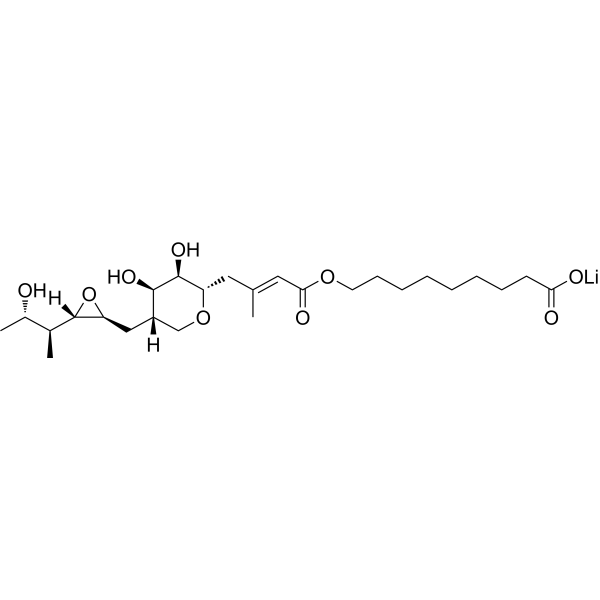
Mupirocin lithium is an antibiotic. Mupirocin lithium inhibits bacterial isoleucyl-tRNA synthetase, blocking protein synthesis. Mupirocin lithium has high activity against Gram-positive bacteria such as Staphylococcus and Streptococcus, as well as some Gram-negative bacteria (such as Haemophilus influenzae). Mupirocin lithium can be used in the research of diseases such as skin infections (such as MRSA infections) and chronic sinusitis .
loading...
    loading...
1
1 Cited Publications
Cat. No.: HY-B1924
CAS No.: 213997-73-0
Synonyms: N-Demethylvancomycin monohydrochloride; NVCM monohydrochloride
Target:  

Bacterial

Research Areas:  

Infection

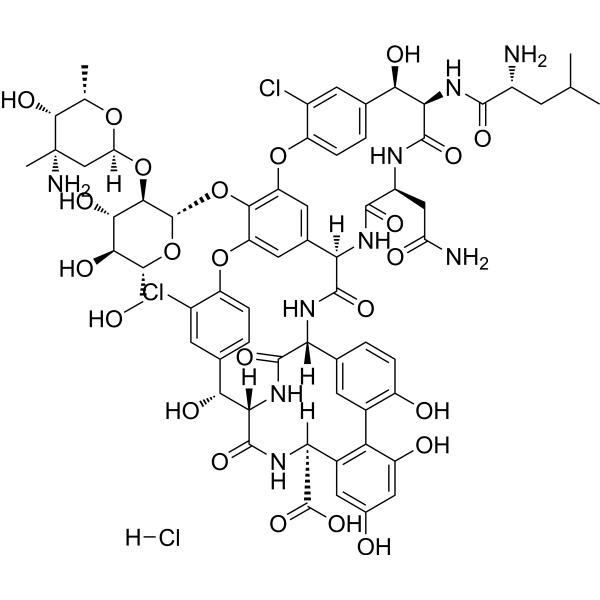
Norvancomycin hydrochloride is a cell wall synthesis inhibitor targeting peptidoglycan precursors of Gram-positive bacteria and cannot pass the blood-brain barrier. Norvancomycin hydrochloride can competitively bind to peptidoglycan precursors, irreversibly inhibit bacterial cell wall synthesis, and exert antibacterial activity. Norvancomycin hydrochloride is mainly used in the study of Gram-positive bacterial infections, especially infections caused by methicillin-resistant Staphylococcus aureus (MRSA) and methicillin-resistant Staphylococcus epidermidis (MRSE). Norvancomycin hydrochloride can also be incorporated into the bionic calcium phosphate coating of titanium implants to enhance antibacterial activity and inhibit postoperative orthopedic infections .
loading...
    loading...
1
1 Cited Publications
Cat. No.: HY-N0853A
CAS No.: 18674-16-3
Synonyms: Alisol A 24-monoacetate; Alisol A monoacetate
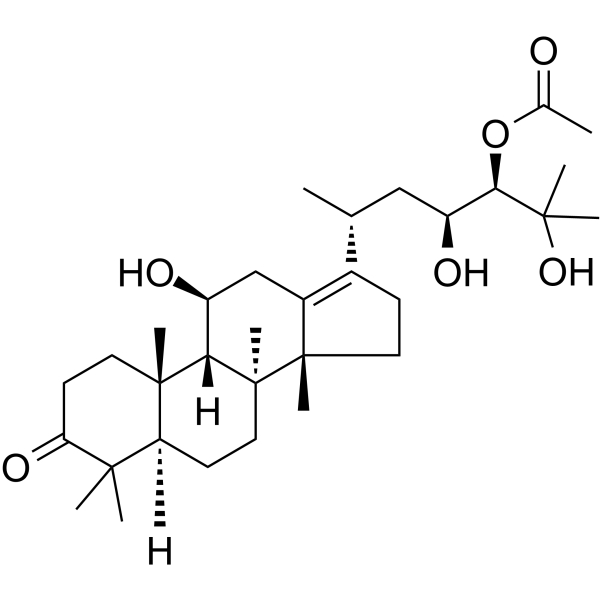
Alisol A 24-acetate (Alisol A monoacetate) is an orally active derivative of protostane-type tetracyclic triterpenoid. Alisol A 24-acetate upregulates the expression of adiponectin, AMPKα, CPT1, and ACOX1; downregulates the expression of SREBP-1c, ACC, FAS, Bcl-2, Bcl-xl, PPAR-γ, perilipin A, and NFATc1; inhibits the activity of PI3K/Akt/mTOR and HMGR; and activates the PKA and ERK signaling pathways. Alisol A 24-acetate regulates cell apoptosis (apoptosis), autophagy (Autophagy, hepatic lipid accumulation, inflammatory response, neuroprotection, MRSA membrane integrity, and osteoclast differentiation. Alisol A 24-acetate can be used in research related to non-alcoholic fatty liver disease, nephrotoxicity, obesity, global cerebral ischemia-reperfusion injury, bacterial infection, and osteoporosis .
loading...
    loading...
Cat. No.: HY-18702
CAS No.: 1200443-21-5
Target:  

Bacterial

Research Areas:  

Infection

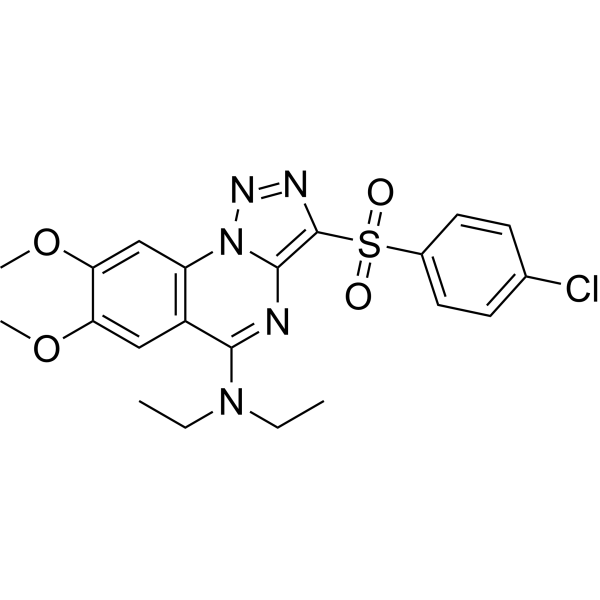
Targocil functions as a bacteriostatic inhibitor of wall teichoic acid (WTA) biosynthesis which can inhibit the growth of methicillin-susceptible S. aureus (MSSA) and methicillin-resistant S. aureus (MRSA) with MIC90s of 2 μg/ mL for both MRSA and MSSA.
loading...
    loading...
Cat. No.: HY-W041988
CAS No.: 145038-49-9
Target:  

Bacterial

Research Areas:  

Infection

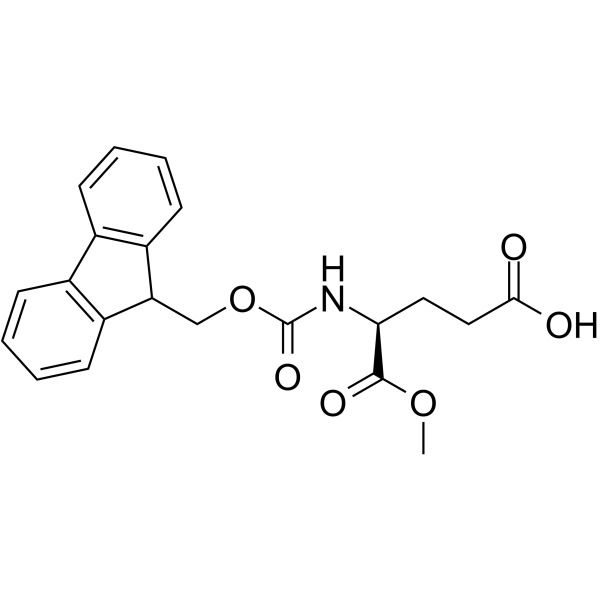
Fmoc-Glu-OMe is a glutamic acid derivative. Fmoc-Glu-OMe exhibits significant antibacterial activity and excellent gelation properties in silver nitrate (AgNO3) solution. Fmoc-Glu-OMe promotes wound healing in rat models and eliminates bacteria in MRSA-infected rat wound models. Fmoc-Glu-OMe can be used in studies related to wound infections and MRSA-infected wounds .
loading...
    loading...
Cat. No.: HY-P3361A
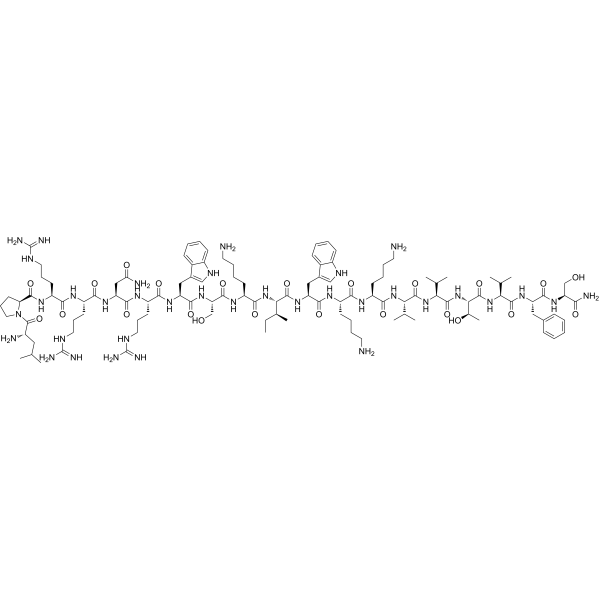
IDR-1018 acetate is an innate defense regulator conjugate, with MICs of 16 μg/mL for MRSA USA300 LAC, MRSA SAP 0017 and S. epidermidis ATCC14990. IDR-1018 acetate can be used to synthesis V-IDR1018 (vancomycin-innate defense regulator conjugate) .
loading...
    loading...
Cat. No.: HY-14784
CAS No.: 757942-43-1
Purity:  99.6%
Synonyms: REP8839
Target:  

Bacterial

Research Areas:  

Infection

Bederocin (REP8839) is a Methionyl-tRNA synthetase inhibitor. Bederocin can be used in research of bacterial infection, including S. aureus and MRSA .
loading...
    loading...
Cat. No.: HY-RS18248
Research Areas:  

Others

Msr1 Mouse Pre-designed siRNA Set A contains three designed siRNAs for Msr1 gene (Mouse), as well as a negative control, a positive control, and a FAM-labeled negative control.

loading...
    loading...
Cat. No.: HY-N8151
CAS No.: 6812-98-2
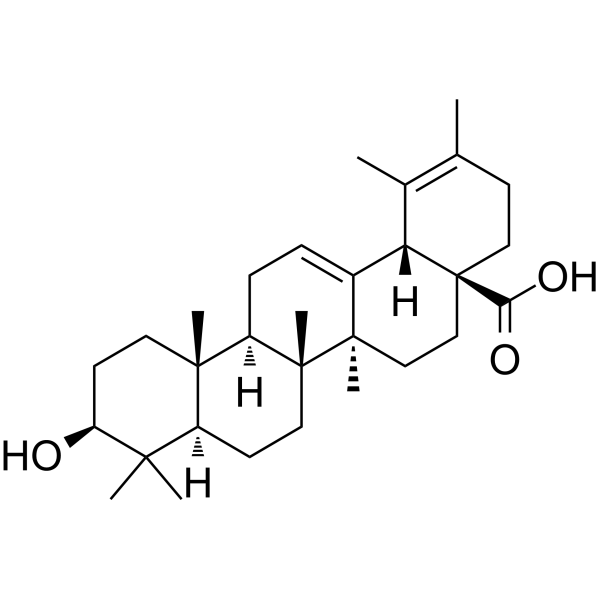
Sanguisorbigenin is a natural antibacterial agent that inhibits methicillin-resistant S. aureus (MRSA) .
loading...
    loading...
Cat. No.: HY-P3361
CAS No.: 1453221-07-2
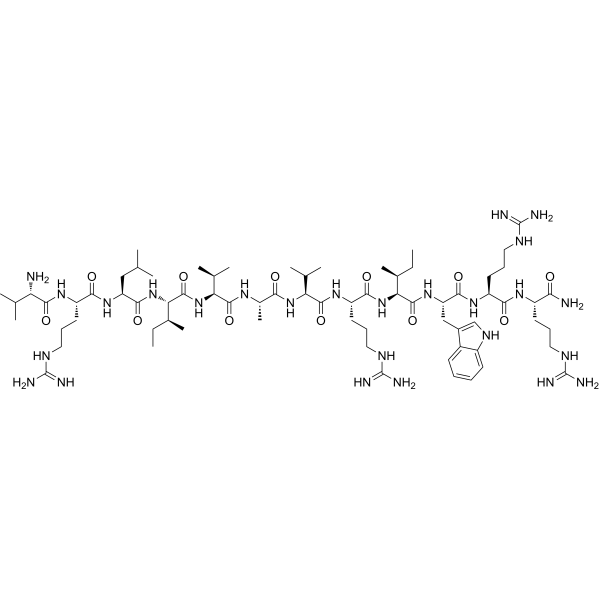
IDR-1018 is an innate defense regulator conjugate, with MICs of 16 μg/mL for MRSA USA300 LAC, MRSA SAP 0017 and S. epidermidis ATCC14990. IDR-1018 can be used to synthesis V-IDR1018 (vancomycin-innate defense regulator conjugate) .
loading...
    loading...
Cat. No.: HY-N3515
CAS No.: 286461-76-5
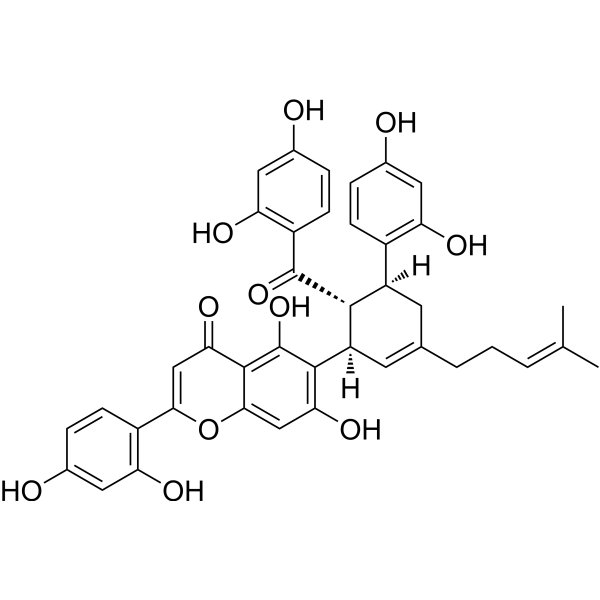
Multicaulisin, a new Diels-Alder type adduct from Morus multicaulis roots, potently effects against Staphylococcus aureus (MRSA) isolates. Multicaulisin is an antibacterial agent and has the potential for MRSA infections research .
loading...
    loading...
Cat. No.: HY-14738
CAS No.: 229016-73-3
Synonyms: TAK-599 free acid; PPI0903 free acid
Target:  

Bacterial Antibiotic

Research Areas:  

Infection

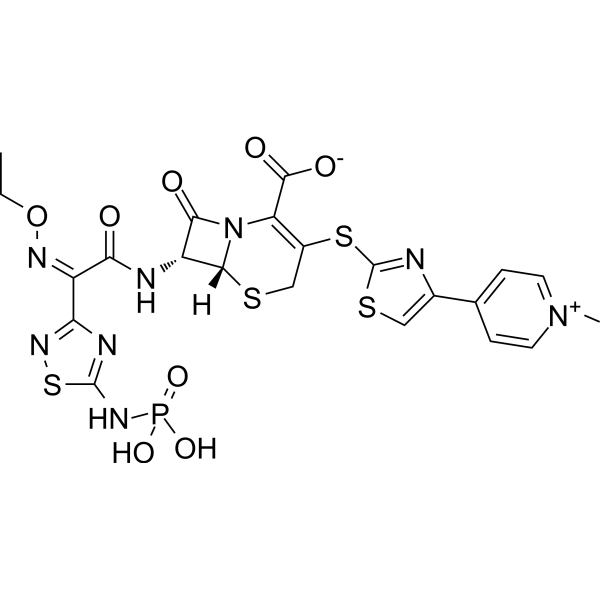
Ceftaroline fosamil (inner) (TAK-599 free acid), a cephalosporin derivative, is an N-phosphono proagent of anti-methicillin-resistant Staphylococcus aureus (MRSA) T-91825. Ceftaroline fosamil (inner) can be used for the research of MRSA infection .
loading...
    loading...
Cat. No.: HY-P5545
Target:  

Bacterial

Research Areas:  

Infection

Lynronne-1 is an antimicrobial peptide. Lynronne-1 is active against Gram-positive bacterials, including MDR strains (MIC: 8-32 μg/mL for methicillin-resistant MRSA strains). Lynronne-1 reduces the bacterial load in MRSA infected wound murine model. Lynronne-1 is also effective against P. aeruginosa infection .
loading...
    loading...
Cat. No.: HY-178912
Anti-MRSA agent 39 is an orally active ClpX modulator that binds Staphylococcus aureus caseinolytic protease X (SaClpX) with high affinity (Kd = 3.6 μM). Anti-MRSA agent 39 exerts antibacterial effects through temperature-dependent inhibition of cell division. Anti-MRSA agent 39 elicits profound metabolic dysregulation in methicillin-resistant Staphylococcus aureus (MRSA), manifesting as significantly reduced ATP levels, elevated reactive oxygen species (ROS), and decreased NAD+/NADH ratio, and accelerates bacterial lysis rates in MRSA ATCC 33591. Anti-MRSA agent 39 significantly increases the proportion of MRSA cells in the mitotic phase, and the cells exhibit obvious morphological abnormalities. Anti-MRSA agent 39 can be used for the study of invasive MRSA infections .
loading...
    loading...
Cat. No.: HY-178949
Research Areas:  

Infection

MRSA antibiotic 3 (Compound C8) is a small-molecule antibiotic active against Methicillin (HY-121544)-resistant Staphylococcus aureus (MRSA), showing a MIC of 0.5 μg/mL against the standard S. aureus strain (ATCC 29213). MRSA antibiotic 3 potently inhibits the ATPase activity of S. aureus DNA gyrase with an IC50 of 0.32 μM. MRSA antibiotic 3 exhibits strong inhibitory activity against five clinical MRSA isolates, with MIC values ranging from 0.5 to 1 μg/mL. MRSA antibiotic 3 demonstrates negligible cytotoxicity at effective antibacterial concentrations and causes no hemolysis in erythrocytes even at extremely high concentrations. MRSA antibiotic 3 shows significant protective effects in both Galleria mellonella infection and murine sepsis models .
loading...
    loading...
Cat. No.: HY-178476
CAS No.: 3096122-10-7
Research Areas:  

Infection

Anti-MRSA agent 36 (Compound III13) is an antibacterial agent with strong anti MRSA activity (MIC = 1 μg/mL). Anti-MRSA agent 36 targets phosphatidylglycerol (PG) on bacterial membranes, disrupting membrane integrity, leading to DNA leakage and increased ROS. Anti-MRSA agent 36 has advantages such as low cytotoxicity, low hemolysis, difficulty in inducing drug resistance, and good plasma stability. Anti-MRSA agent 36 can be used for the study of skin abscess and systemic infection models .
loading...
    loading...
Cat. No.: HY-175376
Target:  

Antibiotic Bacterial

Research Areas:  

Infection

QPyN16Th is an N-palmitoylated cationic thiazolidine antibiotic. QPyN16Th is selectively active against the Gram-positive bavteria E. faecalis, S. aureus and MRSA with an MIC of 1.95 μM over gram-negative bacteria. QPyN16Th can induce membrane permeabilization and depolarization and ROS production in MRSA. QPyN16Th increases the survival of zebrafish model of intramuscular MRSA infection .
loading...
    loading...

