
3270 Results for "

intracellular Cu2 imaging

" in MedChemExpress (MCE) Product Catalog:
Products (3270)

3270 Results for "intracellular Cu2 imaging" in MCE Product Catalog:

48
48 Cited Publications
Cat. No.: HY-D1374
CAS No.: 1144107-82-3
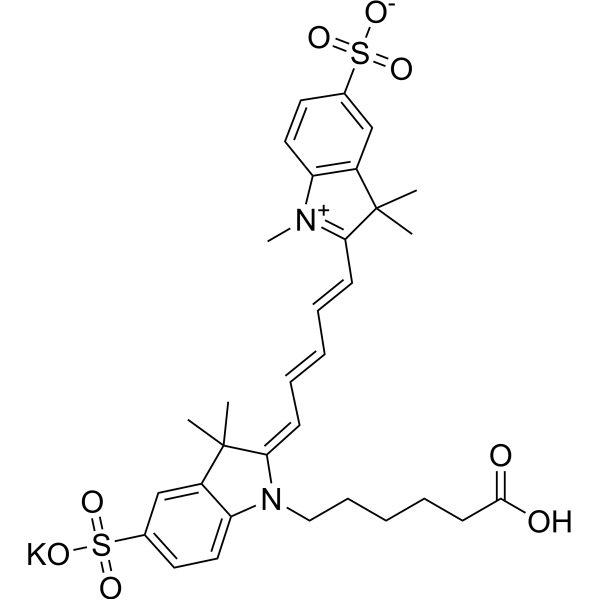
Sulfo-Cy5 carboxylic acid potassium is a Cy5 derivative that can be used for chemical synthesis. Cy5 is a red fluorescent label dye for imaging (Ex/Em=642/670 nm) .
loading...
    loading...
42
42 Cited Publications
Cat. No.: HY-K0314

MCE ATP Assay Kit provides a rapid method to measure intracellular ATP. The kit is suitable for ATP determination in cells, tissue, and other biological samples.

loading...
    loading...
40
40 Cited Publications
Cat. No.: HY-19608
CAS No.: 942206-85-1
GSK1016790A is a potent and selective transient receptor potential vanilloid 4 (TRPV4) channel agonist. GSK1016790A can elicit Ca 2+ influx and elevate intracellular Ca 2+ in HEK cells [2].
loading...
    loading...
38
38 Cited Publications
Cat. No.: HY-B1645
CAS No.: 1185-57-5
Synonyms: Ammonium ferric citrate; FAC
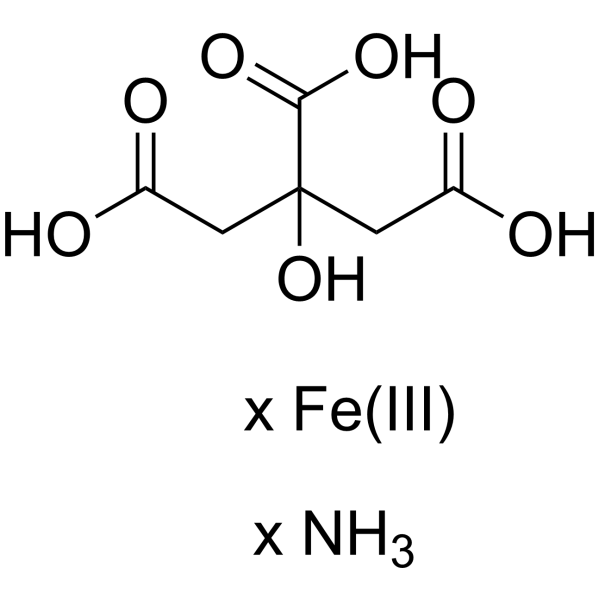
Ammonium iron(III) citrate (Ammonium ferric citrate), a physiological form of nonetransferrin-bound iron, induces intracellular iron overload to cause ferroptosis . Ammonium iron(III) citrate can enhance protein production [2].
loading...
    loading...
37
37 Cited Publications
Cat. No.: HY-141511
CAS No.: 874748-20-6
Purity:  97.74%
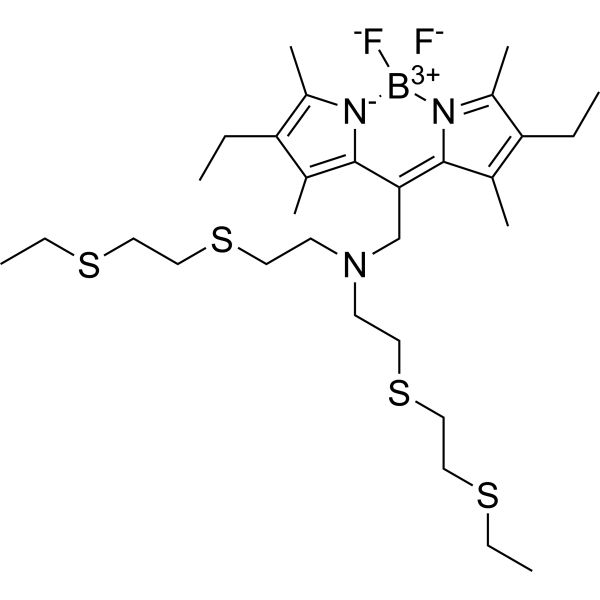
Coppersensor-1 (CS1) is a membrane-permeable fluorescent dye. Coppersensor-1 has a picomolar affinity for Cu + with high selectivity over competing cellular metalions. Coppersensor-1 as a probe, can selective and sensitive detection of copper(I) ions (Cu +) in biological samples, including live cells. Coppersensor-1 can be used for the research of imaging of severe diseases such as cancer, cardiovascular disorders and neurogenerative diseases .
loading...
    loading...
35
35 Cited Publications
Cat. No.: HY-D1913
Fe2Orange is a Fe 2+ selective probe with an excitation wavelength of 543 nm and an emission wavelength of 580 nm. Fe2Orange emits fluorescence after binding to intracellular Fe 2+, thereby achieving specific labeling of Fe 2+. Fe2Orange is used to detect the content and distribution of Fe 2+ in cells .
loading...
    loading...
32
32 Cited Publications
Cat. No.: HY-K2005

High Sensitivity ECL Kit enables low picogram detection of antigen by oxidizing luminol in the presence of HRP and peroxide. This reaction produces a prolonged chemiluminescence which can be visualized on X-ray film or digital imaging systems. The 100 mL is defined as the base specification. All larger sizes correspond to incremental volumes of this base.

loading...
    loading...
32
32 Cited Publications
Cat. No.: HY-128643
CAS No.: 2374782-02-0
Purity:  98.29%
Target:  

FAP

Research Areas:  

Cancer

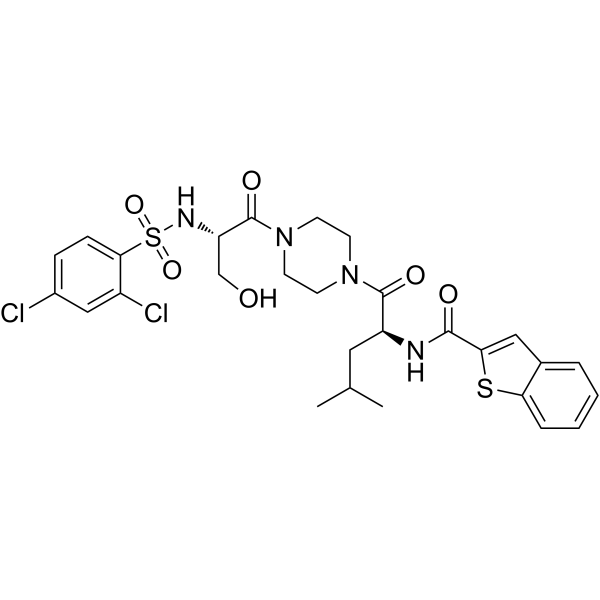
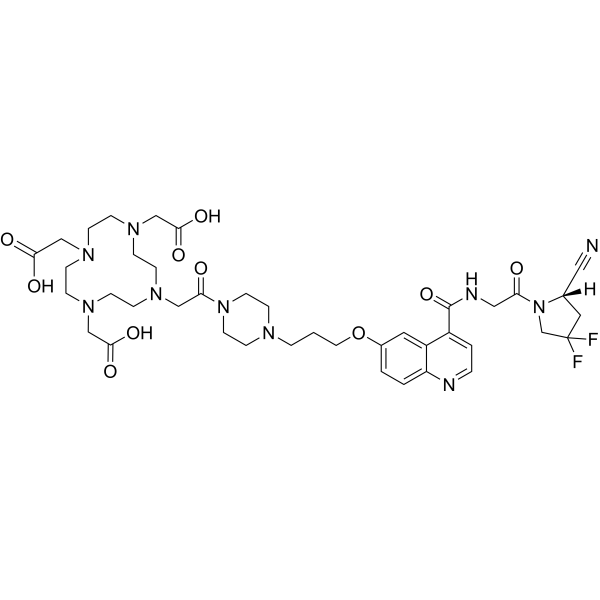
FAPI-4 is a potent fibroblast activation protein (FAP) inhibitor for the targeting FAP. FAPI-4 can be used in cancer research. 68Ga-FAPI-4 PET/CT is a promising new diagnostic method for imaging various kinds of cancer, with good tumor-to-background contrast ratios [2].
loading...
    loading...
31
31 Cited Publications
Cat. No.: HY-19824
CAS No.: 18550-98-6
Target:  

Autophagy

Research Areas:  

Cancer

3PO is an inhibitor of PFKFB3. 3PO attenuates the proliferation of several cancer cell lines with IC50s of 1.4-24 μmol/L. 3PO suppresses glucose uptake and decreases the intracellular concentration of Fru-2,6-BP, lactate, ATP, NAD + and NADH. 3PO can be used for the research of cancer .
loading...
    loading...
30
30 Cited Publications
Cat. No.: HY-107433
CAS No.: 3039-71-2
Purity:  99.77%
Research Areas:  

Infection Neurological Disease

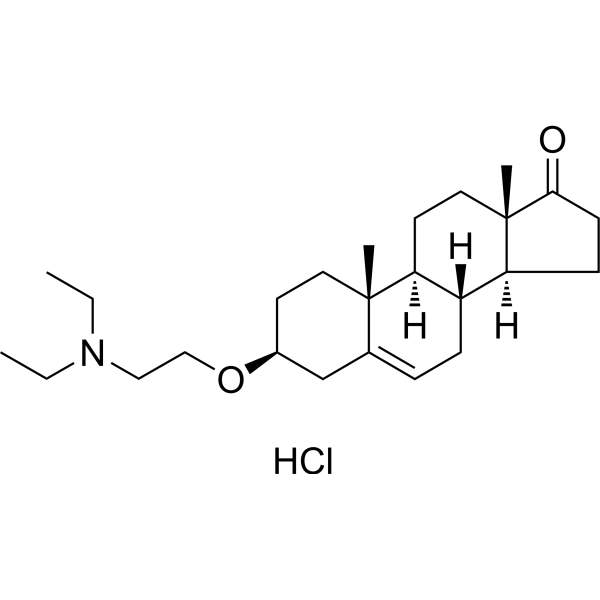
U18666A, an intra-cellular cholesterol transport inhibitor, inhibits replication of Ebola virus, dengue virus, and human hepatitis C virus .
loading...
    loading...
30
30 Cited Publications
Cat. No.: HY-B1511
CAS No.: 60-92-4
Synonyms: Cyclic adenosine monophosphate; Adenosine cyclic 3', 5'-monophosphate; cAMP
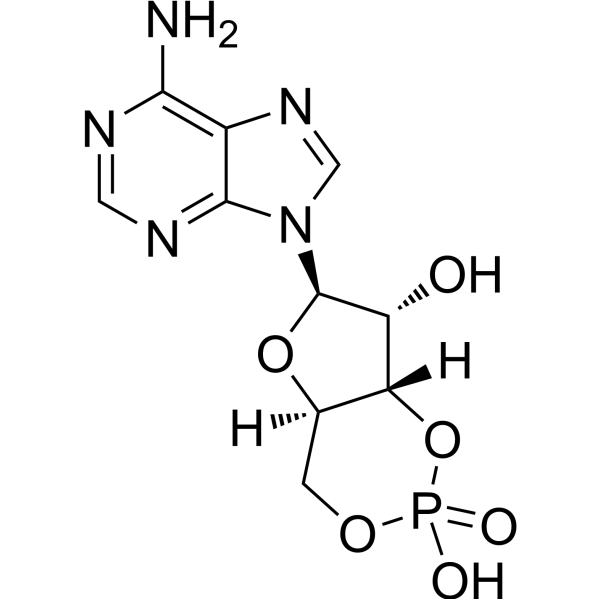
Cyclic AMP (Cyclic adenosine monophosphate), adenosine triphosphate derivative, is an intracellular signaling molecule responsible for directing cellular responses to extracellular signals. Cyclic AMP is an important second messenger in many biological processes [2] .
loading...
    loading...
30
30 Cited Publications
Cat. No.: HY-B1511A
CAS No.: 37839-81-9
Synonyms: Cyclic adenosine monophosphate sodium; Adenosine cyclic 3', 5'-monophosphate sodium; cAMP sodium
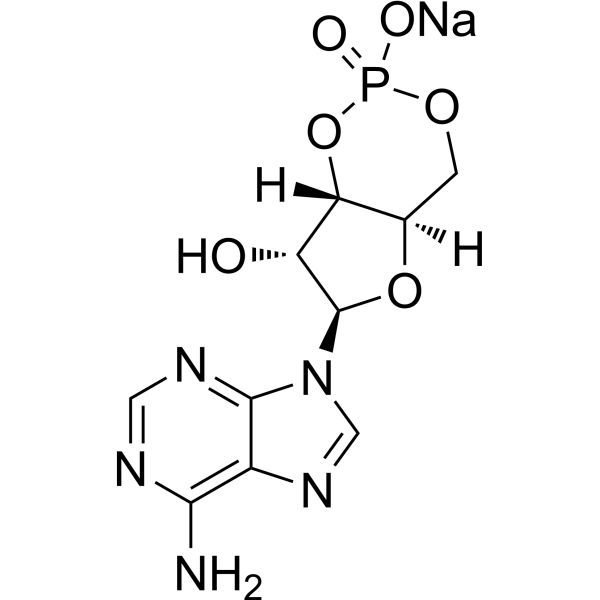
Cyclic AMP (Cyclic adenosine monophosphate) sodium, adenosine triphosphate derivative, is an intracellular signaling molecule responsible for directing cellular responses to extracellular signals. Cyclic AMP sodium is an important second messenger in many biological processes [2] .
loading...
    loading...
29
29 Cited Publications
Cat. No.: HY-100001
CAS No.: 130495-35-1
Purity:  ≥99.01%
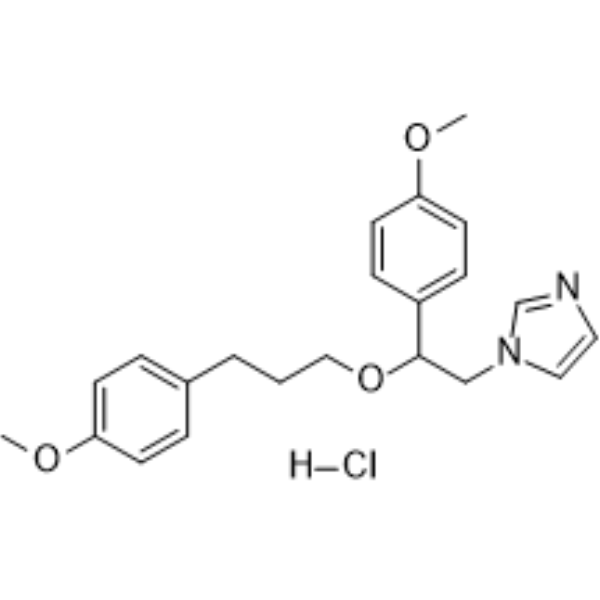
SKF-96365 hydrochloride is a TRPC channel antagonist and store-operated calcium entry (SOCE) inhibitor. SKF-96365 hydrochloride reduces calcium ion influx by inhibiting the activity and expression of TRPC6, STIM1 and Orai1. SKF-96365 hydrochloride inhibits voltage-gated sodium current (cardiac INa/NaV1.5) and slows myocardial conduction. SKF-96365 hydrochloride inhibits phosphorylation/activation of CaMKIIγ and suppresses the downstream AKT signaling pathway. SKF-96365 hydrochloride induces G2/M phase cell cycle arrest, apoptosis and cytoprotective autophagy in colorectal cancer cells. SKF-96365 hydrochloride alleviates allergic rhinitis symptoms by reducing inflammatory cytokine levels. SKF-96365 hydrochloride reduces intracellular calcium overload, inhibits Homer1 expression, prevents nuclear damage and suppresses apoptosis. SKF-96365 hydrochloride inhibits the growth of colorectal cancer xenografts in nude mice . SKF-96365 hydrochloride is applicable to research related to allergic rhinitis, colorectal cancer, Parkinson's disease, persistent spontaneous nociception and hyperalgesia [2] .
loading...
    loading...
29
29 Cited Publications
Cat. No.: HY-125942
CAS No.: 162849-90-3
SKF-96365 is a TRPC channel antagonist and store-operated calcium entry (SOCE) inhibitor. SKF-96365 reduces calcium ion influx by inhibiting the activity and expression of TRPC6, STIM1 and Orai1. SKF-96365 inhibits voltage-gated sodium current (cardiac INa/NaV1.5) and slows myocardial conduction. SKF-96365 inhibits phosphorylation/activation of CaMKIIγ and suppresses the downstream AKT signaling pathway. SKF-96365 induces G2/M phase cell cycle arrest, apoptosis and cytoprotective autophagy in colorectal cancer cells. SKF-96365 alleviates allergic rhinitis symptoms by reducing inflammatory cytokine levels. SKF-96365 reduces intracellular calcium overload, inhibits Homer1 expression, prevents nuclear damage and suppresses apoptosis. SKF-96365 inhibits the growth of colorectal cancer xenografts in nude mice . SKF-96365 is applicable to research related to allergic rhinitis, colorectal cancer, Parkinson's disease, persistent spontaneous nociception and hyperalgesia [2] .
loading...
    loading...
28
28 Cited Publications
Cat. No.: HY-100202
CAS No.: 16858-02-9
Purity:  99.91%
Synonyms: TPEDA
Research Areas:  

Cancer

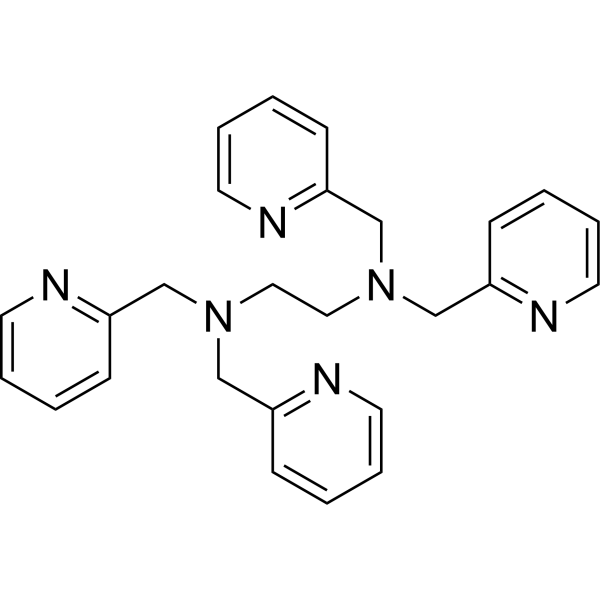
TPEN (TPEDA) is a specific cell-permeable heavy metal chelator. TPEN has a higher affinity for Zn 2+, but a lower affinity for Mg 2+ and Ca 2+. TPEN induces DNA damage and increases intracellular ROS production. TPEN also inhibits cell proliferation and induces apoptosis [2] .
loading...
    loading...
26
26 Cited Publications
Cat. No.: HY-N6687
CAS No.: 52665-69-7
Synonyms: A-23187; Antibiotic A-23187
Calcimycin (A-23187) is an antibiotic and a unique divalent cation ionophore (like calcium and magnesium). Calcimycin induces Ca 2+-dependent cell death by increasing intracellular calcium concentration. Calcimycin inhibits the growth of Gram-positive bacteria and some fungi. Calcimycin also inhibits the activity of ATPase and uncouples oxidative phosphorylation (OXPHOS) of mammalian cells. Calcimycin induces apoptosis and autophagy [2] .
loading...
    loading...
25
25 Cited Publications
Cat. No.: HY-100900
CAS No.: 1991986-30-1
Purity:  99.96%
Target:  

Deubiquitinase

Research Areas:  

Cancer

ML364 is a selective ubiquitin specific peptidase 2 (USP2) inhibitor (IC50=1.1 μM) with anti-proliferative activity, which direct binds to USP2 (Kd=5.2 μM), induces an increase in cellular cyclin D1 degradation and causes cell cycle arrest. ML364 increases the levels of mitochondrial ROS and decreases in the intracellular content of ATP [2].
loading...
    loading...
25
25 Cited Publications
Cat. No.: HY-14909
CAS No.: 218600-44-3
Purity:  99.50%
Synonyms: CDDO; RTA 401
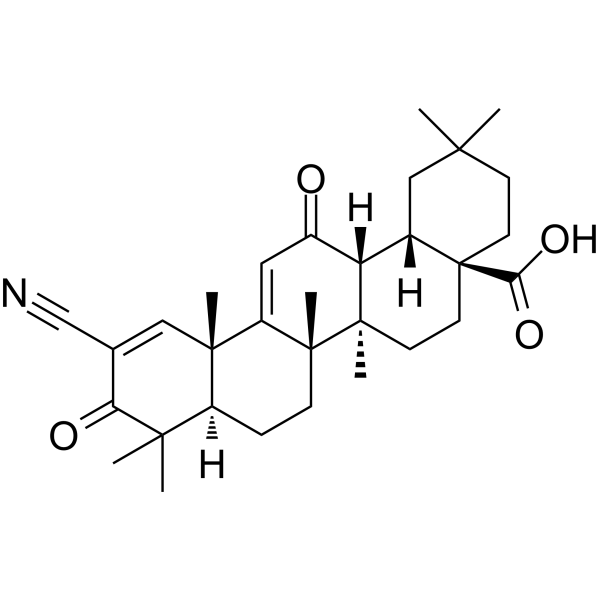
Bardoxolone (CDDO; RTA 401) is a Nrf2 activator. Bardoxolone shows anti-SARS-CoV-2 3CLpro with IC50 of 27.99 μM. Bardoxolone activates the Nrf2 pathway and inhibits the NF-κB pathway. Bardoxolone can induce cells differentiation, apoptosis and shows antiproliferative activity against cancer cells. Bardoxolone can increase ROS and decrease intracellular GSH levels. Bardoxolone inhibits Z-VAD-FMK (HY-16658B)-induced necroptosis. Bardoxolone can be used for the research of cancer, inflammation and infection, such as SARS-CoV infection and glioblastoma [2] .
loading...
    loading...
25
25 Cited Publications
Cat. No.: HY-B1302
CAS No.: 6151-40-2
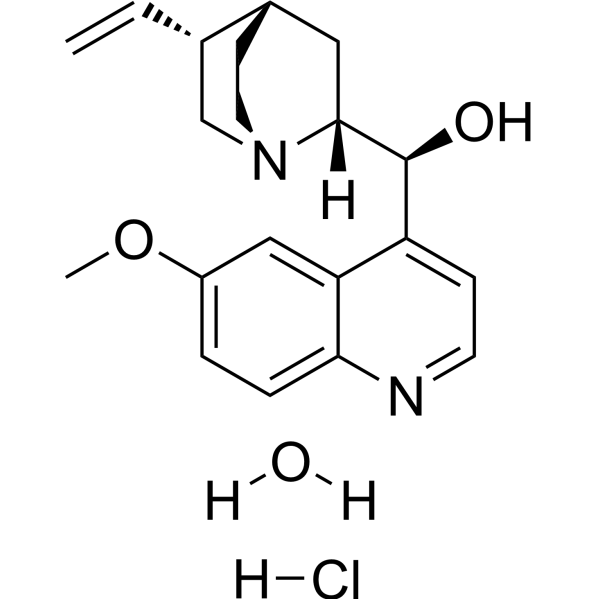
Quinidine hydrochloride monohydrate is an orally active antiarrhythmic agent. Quinidine hydrochloride monohydrate reduces the expression level of P-gp, inhibits P-gp-mediated efflux, increases the intracellular accumulation of P-gp substrates, induces PARP cleavage and Caspase-3 activation, and elevates the proportion of Apoptotic cells at the sub-G1 phase. Quinidine hydrochloride monohydrate exerts sustained block and open-channel block effects on IK(f). Quinidine hydrochloride monohydrate alters the urinary metabolic ratio of Amphetamine, modulates the Pentylenetetrazol-induced seizure threshold, and regulates the anticonvulsant effect of Dextromethorphan. Quinidine hydrochloride monohydrate can be used in studies related to uterine sarcoma and seizures [2] .
loading...
    loading...
24
24 Cited Publications
Cat. No.: HY-B1751
CAS No.: 56-54-2
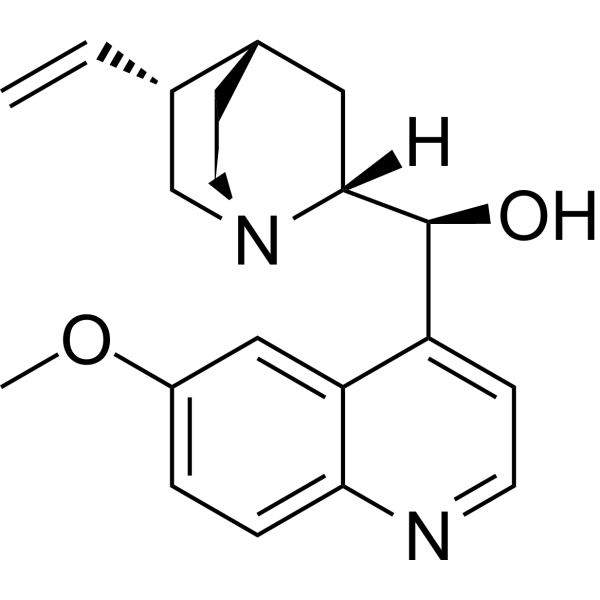
Quinidine (15% dihydroquinidine) is an orally active antiarrhythmic agent. Quinidine (15% dihydroquinidine) reduces the expression level of P-gp, inhibits P-gp-mediated efflux, increases the intracellular accumulation of P-gp substrates, induces PARP cleavage and Caspase-3 activation, and elevates the proportion of Apoptotic cells at the sub-G1 phase. Quinidine (15% dihydroquinidine) exerts sustained block and open-channel block effects on IK(f). Quinidine (15% dihydroquinidine) alters the urinary metabolic ratio of Amphetamine, modulates the Pentylenetetrazol-induced seizure threshold, and regulates the anticonvulsant effect of Dextromethorphan. Quinidine (15% dihydroquinidine) can be used in studies related to uterine sarcoma and seizures [2] .
loading...
    loading...

