92 Results for "

movement

" in MedChemExpress (MCE) Product Catalog:
Products (92)

92 Results for "movement" in MCE Product Catalog:

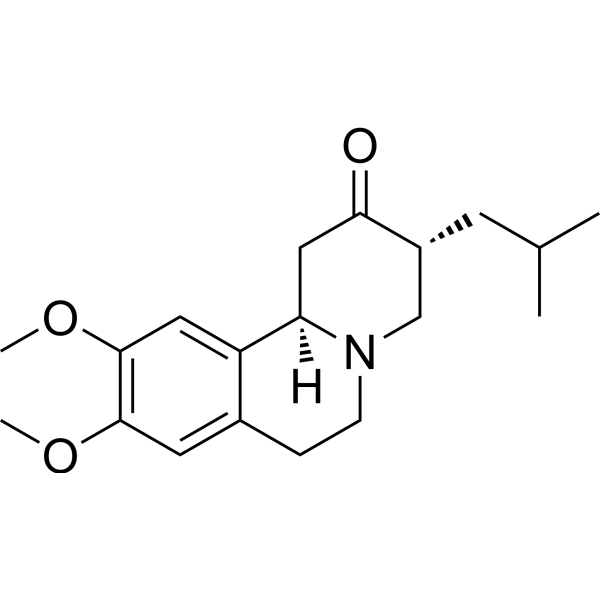
Cat. No.: HY-B0590B
CAS No.: 1026016-83-0
Synonyms: (+)-TBZ; (3R,11bR)-TBZ; (3R,11bR)-Tetrabenazine
Target:  

Monoamine Transporter

Research Areas:  

Cancer

(+)-Tetrabenazine ((+)-TBZ) is the enantiomer of Tetrabenazine (HY-B0590) and is also a Vesicular Monoamine Transporter 2 (VMAT2) inhibitor with a rat Ki of 4.61 nM. (+)-Tetrabenazine inhibits monoamine uptake into granular vesicles of presynaptic neurons. (+)-Tetrabenazine is 3 times more active than (-)-Tetrabenazine. (+)-Tetrabenazine can be used for the research of Huntington's disease and hyperkinetic movement disorders (including chorea) .
loading...
    loading...
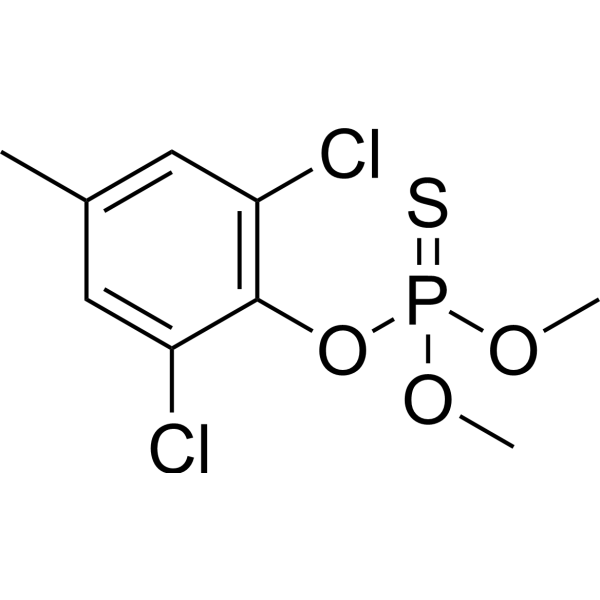
Cat. No.: HY-B2053
CAS No.: 57018-04-9
Research Areas:  

Infection

Tolclofos-methyl is an organophosphorus fungicide. Tolclofos-methyl undergoes photoinduced oxidative degradation to form oxo-analog derivatives. Tolclofos-methyl inhibits spore division in fungi and oomycetes, induces cytoplasmic leakage, and interferes with flagellar movement. Tolclofos-methyl is rapidly metabolized and excreted in rodents. Tolclofos-methyl can be used in studies related to fungal infections .
loading...
    loading...
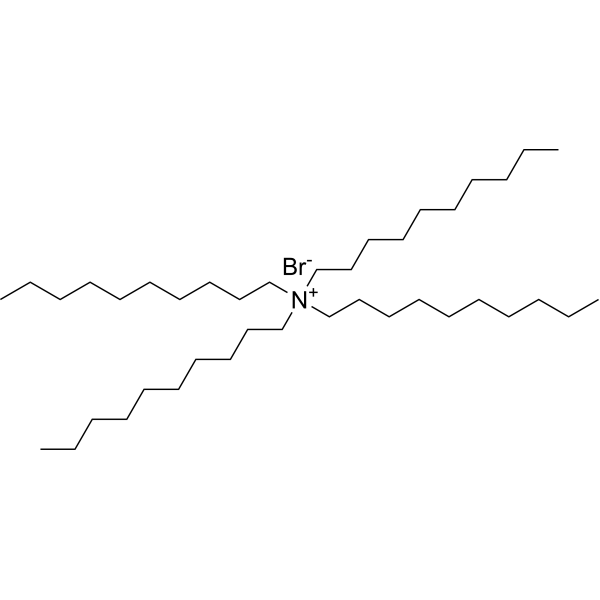
Cat. No.: HY-W013076
CAS No.: 14937-42-9
Synonyms: tetra(decyl)ammonium bromide
Tetrakis(decyl)ammonium bromide is a compound belonging to the class of quaternary ammonium compounds. It is a salt with cationic properties and is used in various industrial and biomedical applications. Tetrakis(decyl)ammonium bromide is commonly used as an emulsifier, solubilizer and antimicrobial agent in personal care products, cleansers and pharmaceutical formulations. It is also used as a phase transfer catalyst in organic synthesis reactions, facilitating the movement of reactants between immiscible phases.
loading...
    loading...
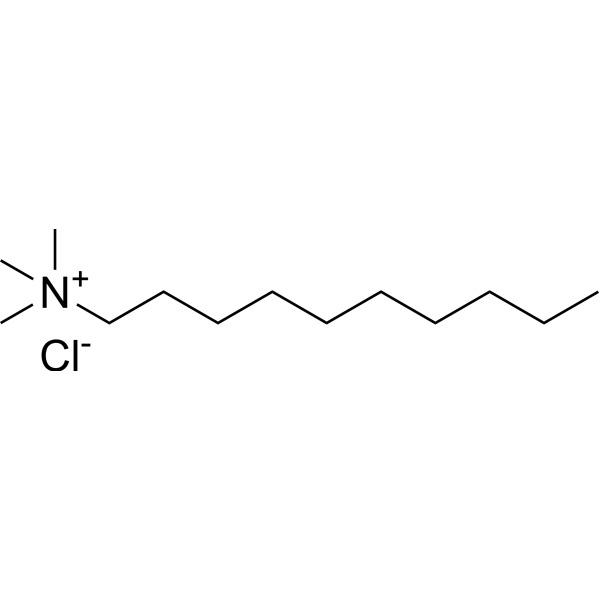
Cat. No.: HY-W012167
CAS No.: 10108-87-9
N,N,N-Trimethyldecan-1-aminium chloride is a compound belonging to the class of quaternary ammonium compounds. It is a salt with cationic properties and thus useful in various industrial and biomedical applications. Decyltrimethylammonium chloride is commonly used as a surfactant, emulsifier and disinfectant in personal care products, detergents, textiles and pharmaceutical formulations. It is also used as a phase transfer catalyst in organic synthesis reactions, which involves facilitating the movement of reactants between immiscible phases.
loading...
    loading...
Cat. No.: HY-W015050
CAS No.: 610-49-1
Synonyms: 1-Aminoanthracene
1-Anthramine (1-aminoanthracene) is a fluorescent general anesthetic. potentiates GABAergic transmission with Kd = 0.1 mM, for binding to the general anesthetic site in horse spleen apoferritin (HSAF). 1-Anthramine fluorescence is enhanced when bound to HSAF. 1-Anthramine potentiates chloride currents elicited by GABA. 1-Anthramine can reversibly inhibit the movement of Xenopus laevis, with an EC50 value of 16 μM .
loading...
    loading...
Cat. No.: HY-N10103
CAS No.: 61328-41-4
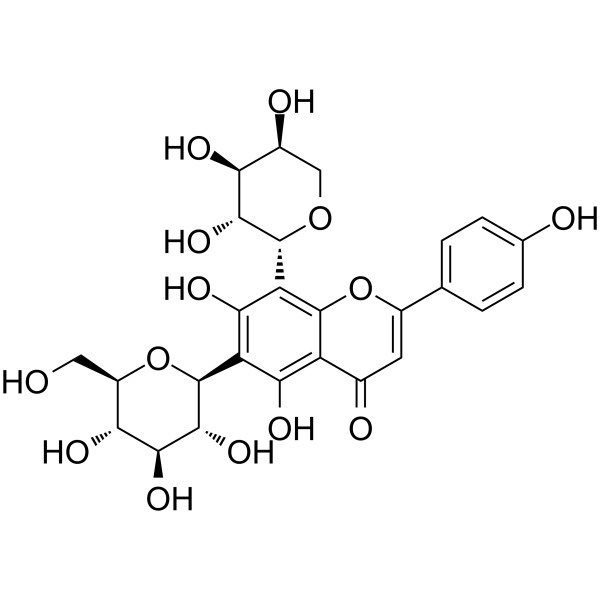
Neoschaftoside is a C-glycosyl flavonoid EGFR modulator, antifungal agent, and piercing-sucking stimulant for planthoppers. Neoschaftoside forms stable EGFR complexes, restricts global protein movement, enhances related dynamic processes, and inhibits tumor progression. Neoschaftoside interacts with EGFR core regulatory genes associated with lung cancer. Neoschaftoside inhibits Botrytis cinerea. Neoschaftoside can be used in research related to lung cancer and Botrytis cinerea infections .
loading...
    loading...
Cat. No.: HY-112874
CAS No.: 847998-92-9
Synonyms: BMS-687681
Target:  

CCR

BMS-681 is an orthosteric antagonist of CC chemokine receptor 2 (CCR2). BMS-681 restricts the movement of the extracellular end of TM6 by stabilizing TM7. TM7 and TM6 are the main components of the orthosteric binding site. BMS-681 can be used to study inflammatory neurodegenerative diseases and cancer .
loading...
    loading...
Cat. No.: HY-W012412
CAS No.: 5810-42-4
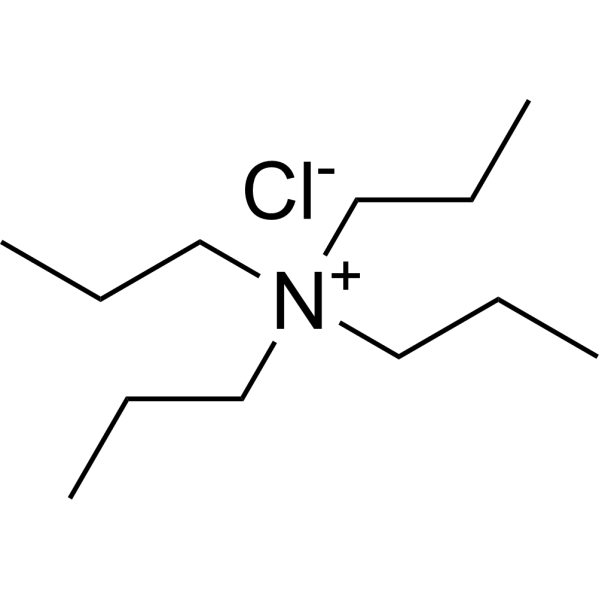
Tetrapropylammonium chloride is a compound belonging to the class of quaternary ammonium compounds. It is a salt with cationic properties and is used in various industrial and biomedical applications. Tetrapropylammonium chloride is commonly used as a phase transfer catalyst to facilitate the movement of reactants between immiscible phases in organic synthesis reactions. It is also used as a surfactant in the formulation of personal care products, detergents, textiles and pharmaceuticals. Additionally, it is used in the production of certain types of polymers and resins.
loading...
    loading...
Cat. No.: HY-12301
CAS No.: 1224846-01-8
Purity:  98.83%
Research Areas:  

Neurological Disease

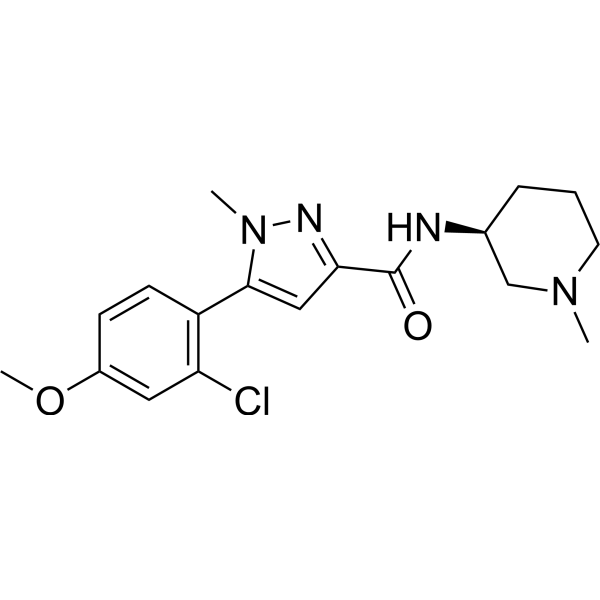
MK-3697 is an orally active orexin 2 receptor (OX2R) antagonist, with an IC50 value of 16 nM and a Ki value of 1.1 nM against human OX2R. MK-3697 blocks the wake-promoting OX2R signaling pathway, reduces active wake time, and increases slow-wave sleep and rapid eye movement sleep time in mice, rats and dogs. MK-3697 can be used for research on insomnia .
loading...
    loading...
Cat. No.: HY-149483
CAS No.: 2919851-73-1
Target:  

nAChR

Research Areas:  

Neurological Disease

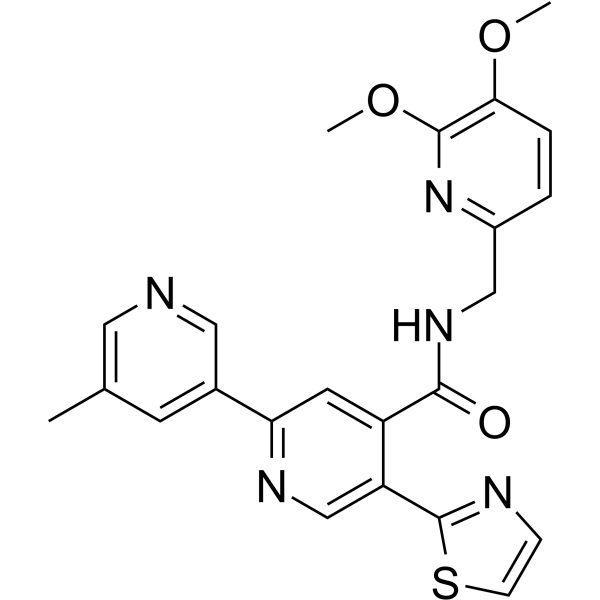
CVN417 is an orally active α6 subunit-containing nAChR antagonist, modulating phasic dopaminergic neurotransmission in an impulse-dependent manner. CVN417 inhibits Ca(2+) effluents mediated by nAChR subunits with IC50s of 0.086 μM (α6), 2.56 μM (α3) and 0.657 μM (α4), respectively. CVN417 attenuates resting tremor in Rodent models, displays the potential to improve movement dysfunction, in conditions such as Parkinson's disease .
loading...
    loading...
Cat. No.: HY-141554
CAS No.: 3466-75-9
Purity:  99.23%
Synonyms: DHTBZ
Target:  

Monoamine Transporter

Research Areas:  

Neurological Disease

Dihydrotetrabenazine (DHTBZ) is the active metabolite of Tetrabenazine (HY-B0590). Dihydrotetrabenazine is the inhibitor for human vesicular monoamine transporter 2 (VMAT2), that reduces monoamine content in presynaptic neurons, and can be used in movement disorder research .
loading...
    loading...
Cat. No.: HY-N3931
CAS No.: 34274-91-4
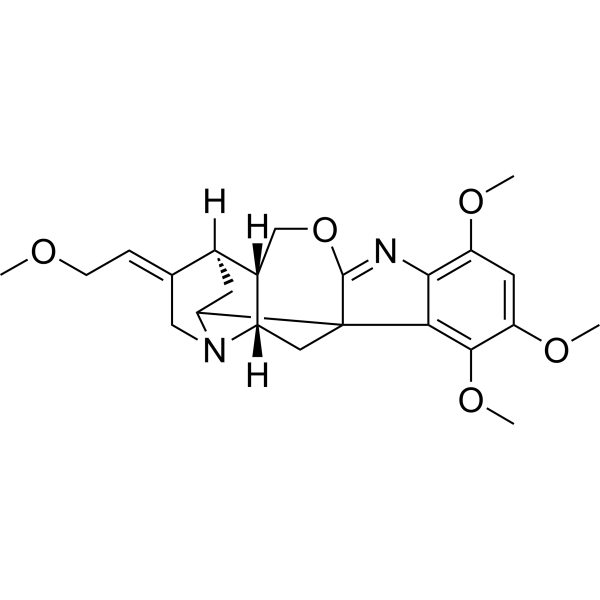
Gardneramine is an orally active alkaloid that acts like papaverine. Gardneramine has peripheral vascular diastolic effect, direct inhibition on myocardium and central inhibition. Gardneramine showed antihypertensive, vasodilatation and atrial inhibition effects in rabbit, dog and guinea pig models, respectively. Gardneramine also inhibits the movement of smooth muscle organs such as the stomach and intestines .
loading...
    loading...
Cat. No.: HY-P10360
CAS No.: 2816095-52-8
Target:  

α-synuclein

Research Areas:  

Neurological Disease

Tat-βsyn-degron is an α-synuclein knockdown peptide that effectively degrades α-synuclein protein via the proteasome pathway. Tat-βsyn-degron effectively reduces α-synuclein protein levels in primary rat cortical neuron cultures. In a Parkinson's mouse toxicity model, Tat-βsyn-degron can alleviate parkinsonian toxin-induced neuronal damage and movement disorders .
loading...
    loading...
Cat. No.: HY-B1277A
CAS No.: 144-11-6
Trihexyphenidyl is a selective and orally active M1 muscarinic receptor antagonist with an IC50 of 3.7 nM for rat cerebral cortex M1 muscarinic receptors. Trihexyphenidyl modulates cholinergic activity, countering acetylcholine supersensitivity in neural pathways. Trihexyphenidyl improves movement disorder, inhibits McN-A-343 (HY-107648)-induced pressor responses, vagally-induced bradycardia and vasodilatation. Trihexyphenidyl can be used for the research of Parkinson's disease. .
loading...
    loading...
Cat. No.: HY-116919
CAS No.: 511306-37-9
Target:  

Lipoxygenase

Research Areas:  

Cardiovascular Disease

MLS000536924 is a potent and selective inhibitor of human epithelial 15-lipoxygenase-2 with competitive activity. MLS000536924 exhibits more than 50-fold selectivity in inhibiting h15-LOX-2 and can be effectively applied to study its role in atherosclerosis, cystic fibrosis, and ferroptosis. The binding mode of MLS000536924 shows stronger restriction of protein movement than other inhibitors, further verifying its higher biological activity .
loading...
    loading...
Cat. No.: HY-W017933
CAS No.: 21850-12-4
Synonyms: Octahydro-1H-isoindole; Perhydroisoindole; Hexahydroisoindoline
Octahydroisoindole (Perhydroisoindole) is a substance P antagonist that can cross the blood-brain barrier and is useful for the study of movement disorders associated with central nervous system diseases .
loading...
    loading...
Cat. No.: HY-W854295
CAS No.: 899827-36-2
Synonyms: PtdIns-(1,2-dioctanoyl) sodium
Target:  

P-glycoprotein

Research Areas:  

Cancer

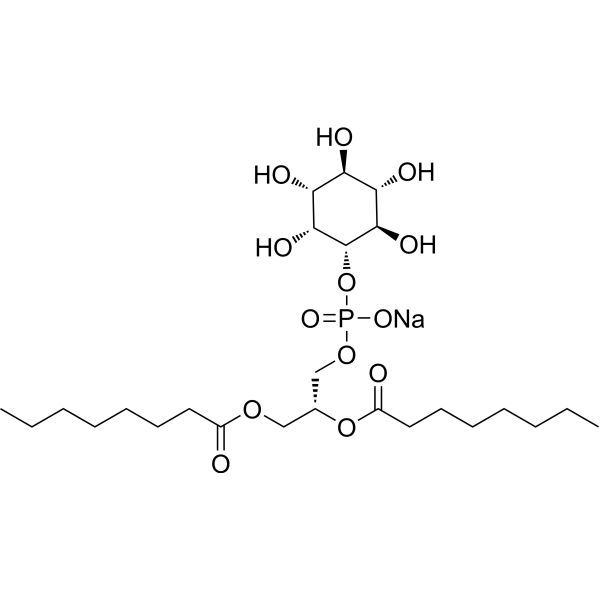
Phosphatidylinositol-1,2-dioctanoyl sodium significantly inhibits transmembrane P-gp transport in a reproducible, cell line-independent, and substrate-independent manner. Phosphatidylinositol-1,2-dioctanoyl sodium plays an important role in signal transduction and cell movement .
loading...
    loading...
Cat. No.: HY-W010900
CAS No.: 4328-13-6
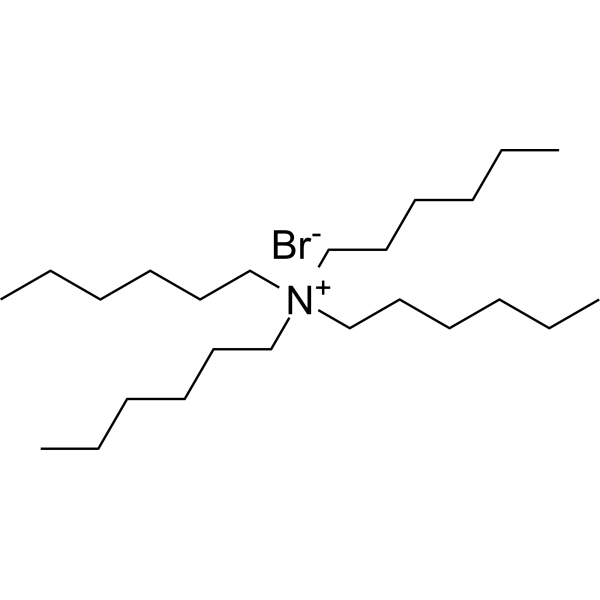
Tetrahexylammonium bromide is a compound that belongs to the class of quaternary ammonium compounds. It is a salt with cationic properties and thus useful in various industrial and biomedical applications. Tetrahexylammonium bromide is commonly used as a phase transfer catalyst to facilitate the movement of reactants between immiscible phases in various organic synthesis reactions. It is also used as a surfactant and emulsifier in the formulation of detergents, personal care products and pharmaceuticals.
loading...
    loading...
Cat. No.: HY-153091
CAS No.: 105565-56-8
Purity:  98.96%
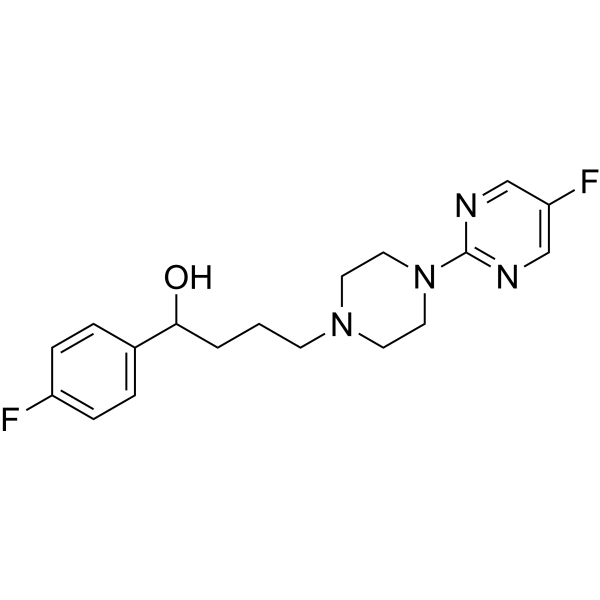
BMY 14802 is a sigma-1 receptor (σ1R) antagonist, as well as an agonist at serotonin (5-HT) 1A and adrenergic alpha-1 receptors. BMY 14802 inhibits abnormal involuntary movement (AIM) in rat Parkinson's disease (PD) model, with down-regulating the expression of AIM .
loading...
    loading...
Cat. No.: HY-170475
CAS No.: 16977-53-0
Synonyms: 5-Methoxy-N-methyl-N-ethyltryptamine
Target:  

5-HT Receptor

Research Areas:  

Neurological Disease

5-MeO-MET (5-Methoxy-N-methyl-N-ethyltryptamine) is a 5-methoxytryptamines compound. 5-MeO-MET is the agonist of 5-HT1A and 5-HT2A. 5-MeO-MET can inhibit the movement of mice and has a sedative effect .
loading...
    loading...

