46 Results for "

Sustained release

" in MedChemExpress (MCE) Product Catalog:
Products (46)

46 Results for "Sustained release" in MCE Product Catalog:

Cat. No.: HY-Y0850U2
CAS No.: 9002-89-5
Synonyms: Polyvinyl alcohol (Mw 130000, 87-89% hydrolyzed, ~2700 polymerization); Poly(Ethenol) (Mw 130000, 87-89% hydrolyzed, ~2700 polymerization)
PVA (Polyvinyl alcohol; Poly(Ethenol)) (Mw 130000, 87-89% hydrolyzed, ~2700 polymerization) is a non-toxic, biodegradable, and highly biocompatible semicrystalline synthetic polymer. PVA (Mw 130000, 87-89% hydrolyzed, ~2700 polymerization) acts as a coating agent to improve tableting performance, and can be cross-linked with sodium trimetaphosphate to prepare tubular vascular grafts or form hydrogels for use as artificial articular cartilage and sustained-release matrices for growth factors. PVA (Mw 130000, 87-89% hydrolyzed, ~2700 polymerization) enhances the redox cycle of iron species in photo-assisted Fenton reactions to simultaneously generate hydrogen peroxide and degrade pollutants, enabling integrated sustainable waste management and water treatment. PVA (Mw 130000, 87-89% hydrolyzed, ~2700 polymerization) is used in the manufacture of biodegradable films and in studies of dry or minimally invasive ex vivo wounds, but cannot form freeze-thaw cross-linked solid sheets for wound dressings .
loading...
    loading...
Cat. No.: HY-148527
CAS No.: 1347232-69-2
Synonyms: AZD8999
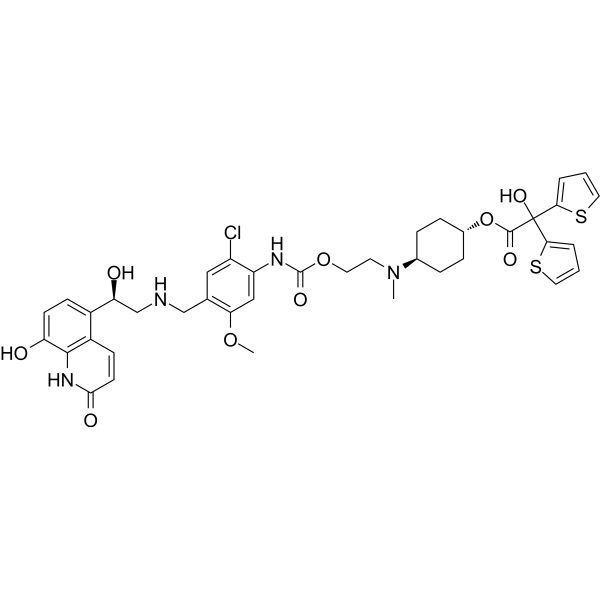
LAS190792 is a bifunctional muscarinic acetylcholine receptor (mAChR) antagonist and β2-adrenergic receptor agonist. LAS190792 has a pIC50 of 8.8 against human M3 muscarinic receptor and a pIC50 of 9.1 against human β2-adrenergic receptor. LAS190792 exhibits vasodilatory and anti-inflammatory activities, and induces sustained bronchodilation in dogs. LAS190792 inhibits the release of IL-8, MMP9, IL-1β and GM-CSF from lipopolysaccharide-stimulated neutrophils. LAS190792 can be used in research related to respiratory system diseases .
loading...
    loading...
Cat. No.: HY-176783
CAS No.: 3080315-83-6
Research Areas:  

Neurological Disease

GNE-5152 is an orthosteric SARM1 base-exchange (BE) inhibitor. GNE-5152 sustainably activates SARM1 at subinhibitory concentrations under mildly activating conditions, and this synergistic adverse effect increases NAD consumption, induces axon degradation and neurodegeneration and releases neurofilament-light (NfL) in cortical neurons. GNE-5152 can be used for neurodegenerative diseases research .
loading...
    loading...
Cat. No.: HY-W013807R
CAS No.: 109-43-3
Synonyms: Dibutyl decanedioate (Standard)
Research Areas:  

Others

Dibutyl sebacate (Standard) (Dibutyl decanedioate (Standard)) is the analytical standard of Dibutyl sebacate (HY-W013807). This product is intended for research and analytical applications. Dibutyl sebacate (Dibutyl decanedioate) is a PVC eco-friendly plasticizer. Dibutyl sebacate plasticizes Eudragit RS 30D, reducing the glass transition temperature and minimum film-forming temperature for sustained-release coatings, with no aging effect .
loading...
    loading...
Cat. No.: HY-W016773
CAS No.: 112-47-0
1,10-Decanediol is a diol compound that can react with α-ketoglutarate (aKG) to generate polymeric microparticles (termed paKG MPs) for the sustained release of aKG, thereby promoting immunosuppressive regulation. Additionally, paKG MPs can bind to dendritic cells (DCs), reducing their glycolysis and mitochondrial respiration in vitro. These metabolic changes lead to the modulation of MHC-II and CD86 expression in DCs and alter the frequency of regulatory T cells (Tregs) as well as T-helper type 1/2/17 cells in vitro. 1,10-Decanediol can be used in research within the field of immunometabolism. can be used as a surfactant/stabilizer in the synthesis of nanomaterials .
loading...
    loading...
Cat. No.: HY-27979
CAS No.: 9010-88-2
Research Areas:  

Others

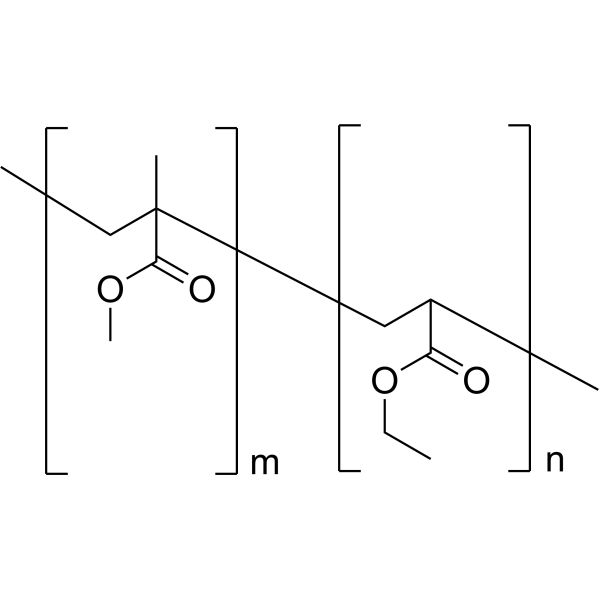
Ethyl acrylate-methyl methacrylate copolymer can be used as an excipient, such as sustained-release coating materials, matrix sustained-release tablet binders and retarders. Pharmaceutical excipients, or pharmaceutical auxiliaries, refer to other chemical substances used in the pharmaceutical process other than pharmaceutical ingredients. Pharmaceutical excipients generally refer to inactive ingredients in pharmaceutical preparations, which can improve the stability, solubility and processability of pharmaceutical preparations. Pharmaceutical excipients also affect the absorption, distribution, metabolism, and elimination (ADME) processes of co-administered drugs .
loading...
    loading...
Cat. No.: HY-W888515
Research Areas:  

Neurological Disease

mPEG-PCL is an amphiphilic biodegradable block copolymer composed of hydrophilic methoxy poly (ethylene glycol) (mPEG) and hydrophobic poly (ε-caprolactone) (PCL). mPEG-PCL possesses excellent biocompatibility and can form delivery carriers such as micelles and nanoparticles. Through its amphiphilic block structure, mPEG-PCL forms nanocarriers and encapsulates hydrophobic molecules, thereby enhancing the loading capacity of hydrophobic molecules, reducing burst release, and achieving sustained release. mPEG-PCL can be used in research on nanodelivery, tissue engineering, and ocular delivery systems related to age-related macular degeneration (AMD) .
loading...
    loading...
Cat. No.: HY-W442049
CAS No.: 893412-73-2
Synonyms: HPR
Target:  

RAR/RXR

Research Areas:  

Inflammation/Immunology

Hydroxypinacolone retinoate (HPR) is a direct-binding agonist of retinoic acid receptor (RAR). Hydroxypinacolone retinoate has low irritation and high stability; when formulated into nanoparticles, its transdermal efficiency is enhanced, allowing it to penetrate deep into the dermis and achieve sustained release. When used in combination with Retinyl propionate, hydroxypinacolone retinoate promotes fibroblast proliferation and upregulates the gene expression of type IV collagen, CRBP-I and RARB. Hydroxypinacolone retinoate can be used in research related to skin wrinkles and skin aging .
loading...
    loading...
Cat. No.: HY-107717
CAS No.: 1227675-52-6
Target:  

iGluR

Research Areas:  

Neurological Disease

MNI-caged-NMDA is a light-sensitive amino acid with rapid release properties suitable for use in the study of fast synaptic receptor mechanisms. MNI-caged-NMDA shows metered release of NMDA receptors, inducing rapid and sustained receptor activation in cerebellar interneurons. MNI-caged-NMDA is able to achieve rapid transient responses and generate large inward currents by local laser photolysis. The use of MNI-caged-NMDA can effectively study neurotransmitter signaling and its inhibitory effects on GABA-A receptors .
loading...
    loading...
Cat. No.: HY-136642R
CAS No.: 807-38-5
Fluocinolone (Standard) is the analytical standard of Fluocinolone (HY-136642). This product is intended for research and analytical applications. Fluocinolone is a potent steroid with highly selective glucocorticoid receptor agonist activity. Fluocinolone stabilizes the blood-retinal barrier by enhancing endothelial tight junctions, inhibiting the VEGF pathway and inflammatory factors. Fluocinolone has high lipophilicity, enabling long-term sustained release in the vitreous. Fluocinolone is used in research related to dermatological diseases, diabetic macular edema, uveitis and oral lichen planus .
loading...
    loading...
Cat. No.: HY-159744
Research Areas:  

Inflammation/Immunology

Liposomal adjuvant (M103) is mainly composed of phospholipids and prepared with highly purified immunostimulatory substances (polysaccharides), with a pH value of 6.2-6.8. This adjuvant is safe, non-toxic, and metabolizable. It can induce cellular and humoral immunity, has a sustained-release effect, and can prolong the residence time of antigens in the body. This adjuvant is suitable for various veterinary vaccines, including inactivated vaccines and genetically engineered subunit vaccines. It is recommended for use in rabies, porcine circovirus, , foot-and-mouth disease (FMD), and blue ear disease, etc.
loading...
    loading...
Cat. No.: HY-W016773S
CAS No.: 347841-78-5
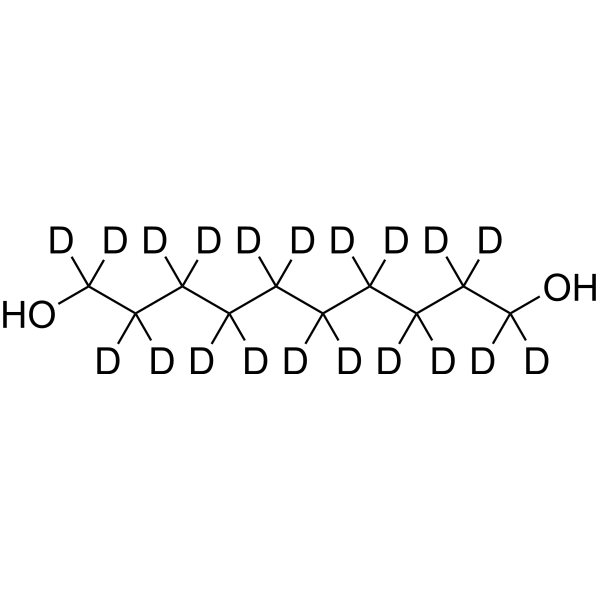
1,10-Decanediol-d20 is the deuterium labeled 1,10-Decanediol . 1,10-Decanediol is a diol compound that can react with α-ketoglutarate (aKG) to generate polymeric microparticles (termed paKG MPs) for the sustained release of aKG, thereby promoting immunosuppressive regulation. Additionally, paKG MPs can bind to dendritic cells (DCs), reducing their glycolysis and mitochondrial respiration in vitro. These metabolic changes lead to the modulation of MHC-II and CD86 expression in DCs and alter the frequency of regulatory T cells (Tregs) as well as T-helper type 1/2/17 cells in vitro. 1,10-Decanediol can be used in research within the field of immunometabolism. can be used as a surfactant/stabilizer in the synthesis of nanomaterials .
loading...
    loading...
Cat. No.: HY-78985S
CAS No.: 62790-27-6
Synonyms: Trimesic acid-d3
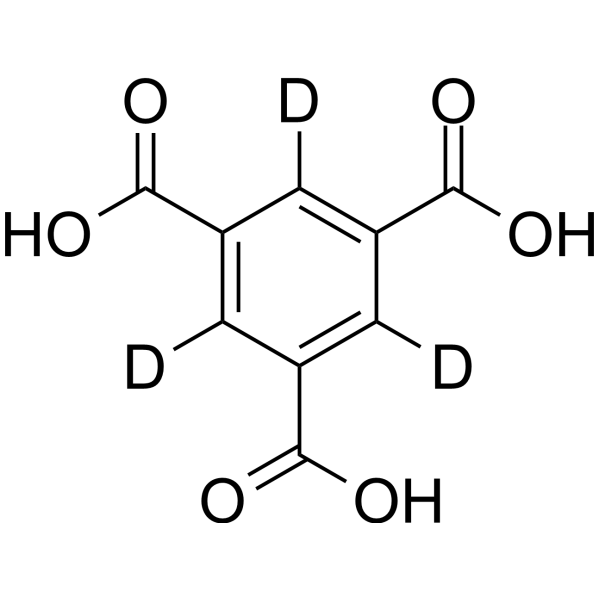
Benzene-1,3,5-tricarboxylic acid-d3 (Trimesic acid-d3) is the deuterium labeled Benzene-1,3,5-tricarboxylic acid (HY-78985). Benzene-1,3,5-tricarboxylic acid (Trimesic acid) is a rigid planar small-molecule scaffold and crosslinker. Benzene-1,3,5-tricarboxylic acid induces bicyclic peptides to adopt a planar conformation, so as to maximize surface area and bind to the flat protein surfaces involved in protein-protein interactions. Benzene-1,3,5-tricarboxylic acid forms ionic crosslinks, hydrogen bonds and π-π bonds with chitosan, thereby constructing a hydrogel network. Benzene-1,3,5-tricarboxylic acid endows chitosan hydrogel systems with specific mechanical properties, enabling sustained release of cancer therapeutic drugs including 5-Fluorouracil (HY-90006) .
loading...
    loading...
Cat. No.: HY-119705
CAS No.: 15180-00-4
Research Areas:  

Neurological Disease

Prednival is a glucocorticoid. Prednival is used in studies of sustained-release ocular drug delivery .
loading...
    loading...
Cat. No.: HY-B2180
CAS No.: 2893-78-9
Research Areas:  

Infection

Dichloroisocyanurate sodium is a synthetic organochlorine compound belonging to triazine derivatives, and is commonly used as a disinfectant and biocide. Dichloroisocyanurate sodium can release hypochlorous acid to inactivate waterborne bacteria, viruses, helminths and protozoa, and can act as a hypochlorous acid reservoir to provide sustained biocidal protection .
loading...
    loading...
Cat. No.: HY-P12121
CAS No.: 932013-61-1
Target:  

Bacterial

Research Areas:  

Infection Cancer

HB43 is a synthetic amphipathic cationic α-helical peptide, as well as an antibacterial/anticancer peptide. HB43 reduces the number of Methicillin (HY-121544)-resistant Staphylococcus aureus in biofilms in a dose-dependent manner. When loaded into chitosan nanoparticles, it achieves sustained release, and this effect is particularly pronounced under acidic conditions .
loading...
    loading...
Cat. No.: HY-N17738
CAS No.: 194737-13-8
Acetyljujuboside B is a saponin. Acetyljujuboside B can be isolated from seeds of Zizyphus jujuba Mill. var. spinosa. Acetyljujuboside B inhibits Ca 2+ influx. Acetyljujuboside B shows only sustained vasorelaxant effects, with no transient effect on NE-induced vasoconstrictions. Acetyljujuboside B inhibits histamine release from rat peritoneal exudate cells induced by the antigen-antibody reaction .
loading...
    loading...
Cat. No.: HY-185390
Synonyms: Liposomal verteporfin
Liposomal verteporfin is a liposome-encapsulated form of Verteporfin (HY-B0146). Verteporfin is a photosensitizer used in photodynamic therapy, which generates reactive oxygen species (ROS) upon irradiation at 690 nm to mediate photodynamic effects. Liposomal verteporfin can promote the release of Oxaliplatin (HY-17371) from endolysosomes via photochemical internalization (PCI), prolong the drug circulation time and enable sustained release, accumulate the drug in neovascular vessels, and enhance its cytotoxicity in tumor models. Liposomal verteporfin can be used in studies related to neovascular eye diseases and pancreatic cancer [1][2] [3].
loading...
    loading...
Cat. No.: HY-107632R
CAS No.: 106740-09-4
GYY4137 (Standard) is the analytical standard of GYY4137 (HY-107632). This product is intended for research and analytical applications. GY4137 is a sustained-release H2S donor possessing vasodilatory, antihypertensive, and anti-inflammatory activities. GY4137 can inhibit cell growth, induce apoptosis, and cause cell cycle arrest by blocKing the STAT3 pathway, demonstrating potent anticancer activity .
loading...
    loading...

