459 Results for "

PROTAC compound

" in MedChemExpress (MCE) Product Catalog:
Products (459)

459 Results for "PROTAC compound" in MCE Product Catalog:

Cat. No.: HY-161709
CAS No.: 2452019-67-7
Research Areas:  

Cancer

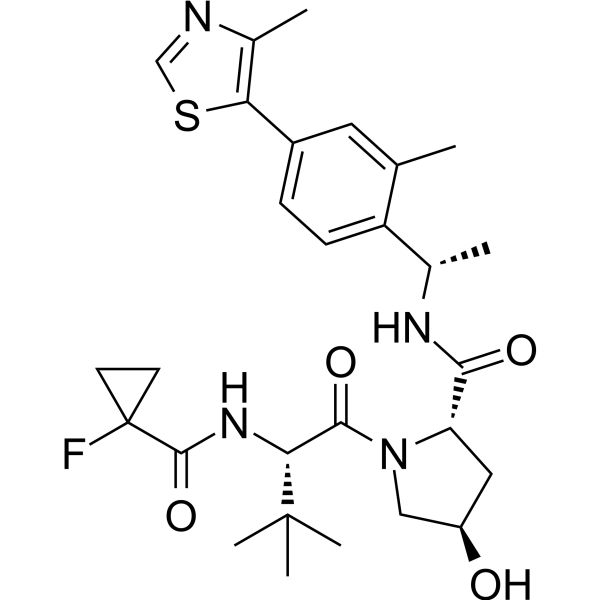
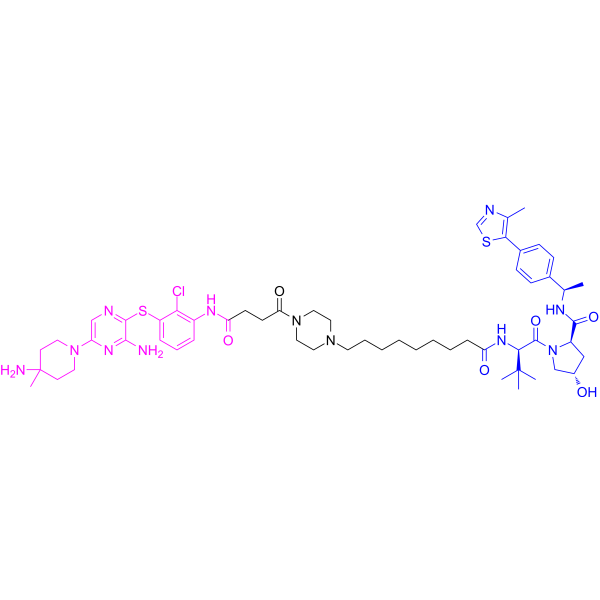
FLT3/CDKs ligand-1 (Compound 14) is a ligand for target protein, which promotes the degradation of cyclin-dependent kinase (CDK) and the FMS-like tyrosine kinase 3 (FLT3), inhibits FLT3/CDK related proliferations and survivals of leukemia cells. LT3/CDKs ligand-1 can be used for synthesis of PROTAC FLT3/CDKs degrader-1 (HY-161708) .
loading...
    loading...
Cat. No.: HY-178215
CAS No.: 3099581-65-1
Target:  

PROTACs

Research Areas:  

Cancer

BRM/BRG1 ligand 4 (Compound 6) is a SMARCA2/4 PROTAC degrader. BRM/BRG1 ligand 4 exhibits potent degradation activity against both SMARCA2 and SMARCA4 in HeLa cells, with DC50 less than 0.1 nM. BRM/BRG1 ligand 4 can be used for the study of cancers associated with SMARCA2/SMARCA4 abnormalities or SWI/SNF mutations .
loading...
    loading...
Cat. No.: HY-180550
Target:  

PROTACs RET Trk Receptor

Research Areas:  

Endocrinology Cancer

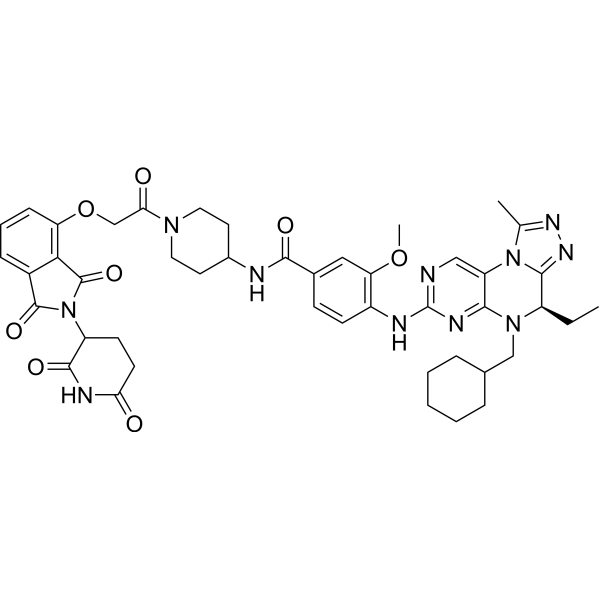
ZW-18-116 (compound 9) is a dual-target PROTAC degrader for the oncoproteins TRKA and RET. ZW-18-116 induces the degradation of oncoproteins TRKA and RET by recruiting the CRBN E3 ligase. ZW-18-116 exhibits potent anti-proliferative activity in various cancer cell lines harboring RET or TRKA fusions. ZW-18-116 can be used for RET or TRKA-derived cancer research, such as thyroid, lung, and colon cancers .
loading...
    loading...
Cat. No.: HY-L137
124 compounds

Targeted protein degradation(TPD) is a novel and promising approach to new drug discovery and development. It shows great potential for treating diseases with “undruggable” pathogenic protein targets and for overcoming drug resistance. Molecular glues and PROTACs are both targeted protein degraders that have attracted the most attention.

Molecular glues are small molecular degraders that mainly induce novel interaction between an E3 ligase and a target protein to form a ternary complex, leading to protein ubiquitination and subsequent proteasome degradation. Compared with PROTACs, molecular glues generally possess more favorable drug-like properties, such as lower MW, higher cell permeability, and better oral absorption. Molecular glues are emerging as a promising new therapeutic strategy.

MCE supplies a unique collection of 124 molecular glues which target various proteins. MCE Molecular Glue Compound Library is a useful tool to conduct scientific research and disease mechanism study.

Cat. No.: HY-156106
CAS No.: 3033117-53-9
Purity:  99.78%
VHL-IN-1 (Compound 30) is an E3 ligase VHL inhibitor with a Kd value of 37 nM. VHL-IN-1 blocks VHL-mediated ubiquitination and degradation of HIF-1α. VHL-IN-1 stabilizes the protein levels of HIF-1α and hydroxylated HIF-1α, and induces the transcriptional activity of HIF-1α. VHL-IN-1 can be used for PROTAC development. VHL-IN-1 is applicable for cancer research .
loading...
    loading...
Cat. No.: HY-W008425
CAS No.: 10160-24-4
Synonyms: 7-Bromoheptan-1-ol
Research Areas:  

Cancer

7-Bromo-1-heptanol (7-Bromoheptan-1-ol) acts as a HaloTag-GPSM2 inhibitor and an organic synthesis intermediate. It forms a covalent irreversible bond with HaloTag-GPSM2, thereby blocking the subsequent labeling effect of fluorescent HaloTag ligands and enabling pulse-chase analysis of protein turnover. 7-Bromo-1-heptanol can be used to synthesize PROTAC BET degraders and multivalent glycoporphyrin antiviral compounds. It is applicable to cancer-related research .
loading...
    loading...
Cat. No.: HY-153519
CAS No.: 2869057-11-2
Research Areas:  

Cancer

WWL0245 is a potent and seletive BRD4 PROTAC. WWL0245 selectively degrades BRD4 with sub-nanomolar DC50 (<1 nM) than BRD2/3 and PLK1 ( DC50>1 μM). WWL0245 shows excellent selective cytotoxicity in the BETi sensitive cancer cell lines, including AR-positive prostate cancer cell lines. WWL0245 is a promising drug candidate for AR-positive prostate cancer research and a valuable tool compound to study the biological function of BRD4 .
loading...
    loading...
Cat. No.: HY-161131
CAS No.: 2399455-71-9
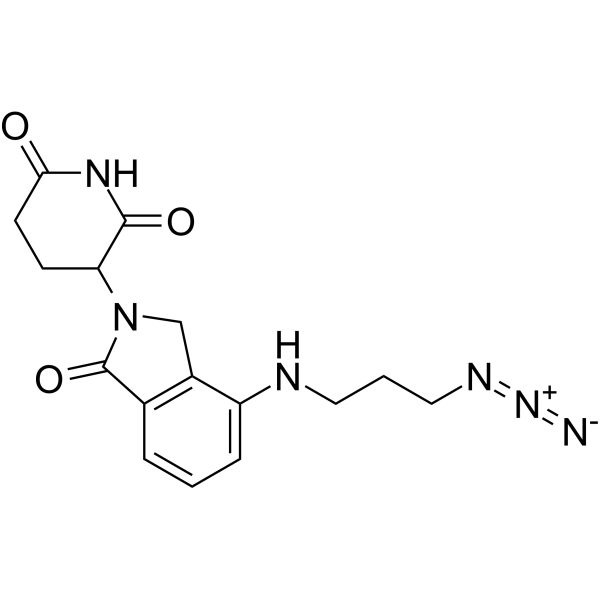
Lenalidomide 4'-alkyl-C3-azide (compound 4a) is a click chemical modified Lenalidomide (HY-A0003) that can be used to synthesize PROTACs. Lenalidomide is an orally active immunomodulator and a ligand for the ubiquitin E3 ligase cereblon (CRBN). Lenalidomide 4'-alkyl-C3-azide contains an Azide group and can undergo copper-catalyzed azide-alkyne cycloaddition reaction (CuAAc) with molecules containing Alkyne groups. Strain-promoted alkyne-azide cycloaddition reactions (SPAAC) can also occur with molecules containing DBCO or BCN groups .
loading...
    loading...
Cat. No.: HY-L256
100 compounds

In modern drug discovery and chemical biology research, the azide group (-N3) is an important functional moiety that is widely used in click chemistry, biomolecular labeling, drug delivery systems, and prodrug design due to its unique reactivity and bioorthogonality.

The MCE Azide Structural Compound Library contains 100 compounds featuring -N3 functional groups. It is designed for the construction of click chemistry reaction systems and the subsequent development of functional molecules. This library enables the rapid assembly of targeting ligands, linkers, and functional molecular modules, thereby accelerating PROTAC assembly, optimization of antibody-drug conjugate (ADC) linkers, and the development of biological labeling probes. In addition, the high reaction selectivity and excellent biocompatibility of the azide group allow it to maintain stable reactivity even in complex biological environments, improving controllability and efficiency in drug design. It serves as an indispensable molecular tool in modern medicinal chemistry and chemical biology research.

Cat. No.: HY-145177
CAS No.: 1799711-31-1
Purity:  98.43%
Research Areas:  

Cancer

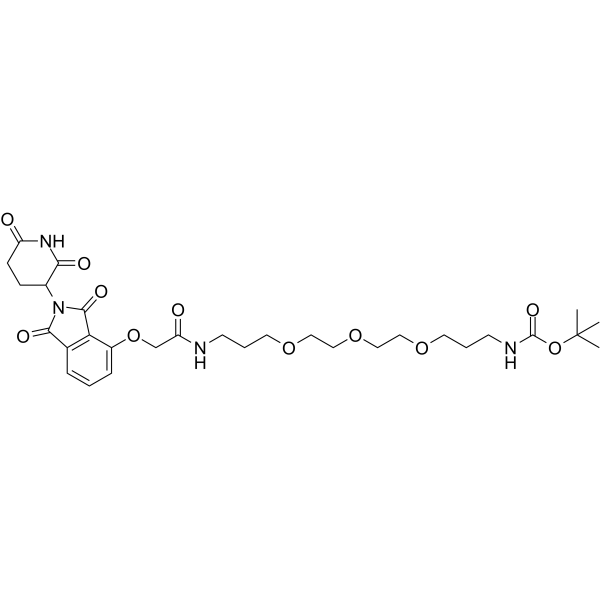
Thalidomide-O-amido-CH2-PEG3-CH2-NH-Boc is a synthesized E3 ligase ligand-linker conjugate. Thalidomide-O-amido-CH2-PEG3-CH2-NH-Boc incorporates the Thalidomide based cereblon ligand and a linker. Thalidomide-O-amido-CH2-PEG3-CH2-NH-Boc can be used for the synthesis of PROTAC BET degrader . (From patent WO2017180417A1 compound s7).
loading...
    loading...
Cat. No.: HY-145703
CAS No.: 2740582-16-3
Purity:  99.76%
Target:  

PROTACs Drug Isomer

Research Areas:  

Others

SHP2-D26 isomer-1 (Compound 26) is an isomer of SHP2-D26 (HY-145162). SHP2-D26 is the first highly potent SHP2 PROTAC degrader. The induction of SHP2 degradation by SHP2-D26 requires binding to VHL-1 and SHP2 proteins, and is dependent on ubiquitin-like modification and the proteasome. SHP2-D26 can be used in the research of esophageal cancer and acute myeloid leukemia .
loading...
    loading...
Cat. No.: HY-180329
CAS No.: 2417296-83-2
Target:  

PROTACs Raf ERK

CG 858-Neg (compound 13) is a negative control for Thalidomide (HY-14658)-derived PROTAC degraders, targeting BRAF and BRAF V600E with Ki values ​​of 9.5 nM and 14.4 nM, respectively. CG 858-Neg inhibits downstream ERK phosphorylation and suppresses BRAF V600E-driven melanoma (e.g., A375 cells, IC50=492 nM) and colorectal cancer (e.g., HT-29 cells, IC50=459 nM) cells. CG 858-Neg can be used in research related to melanoma and colorectal cancer .
loading...
    loading...
Cat. No.: HY-168694
Research Areas:  

Cancer

E3 Ligase Ligand-linker Conjugate 147 is a conjugate of E3 ligase ligand and PROTAC Linker, which can be used to synthesize BRD9 Degrader-1 (HY-156401) (Compound 13-7) . E3 Ligase Ligand-linker Conjugate 147 is composed of the E3 ligase ligand BRD9 ligand-7 (HY-168695) and the PROTA linker 2-((1R,5S,6s)-3-Azabicyclo[3.1.0]hexan-6-yl)ethan-1-ol (HY-W763939).
loading...
    loading...
Cat. No.: HY-149924
CAS No.: 3033993-13-1
Purity:  95.87%
Target:  

PROTACs IAP Apoptosis

Research Areas:  

Cancer

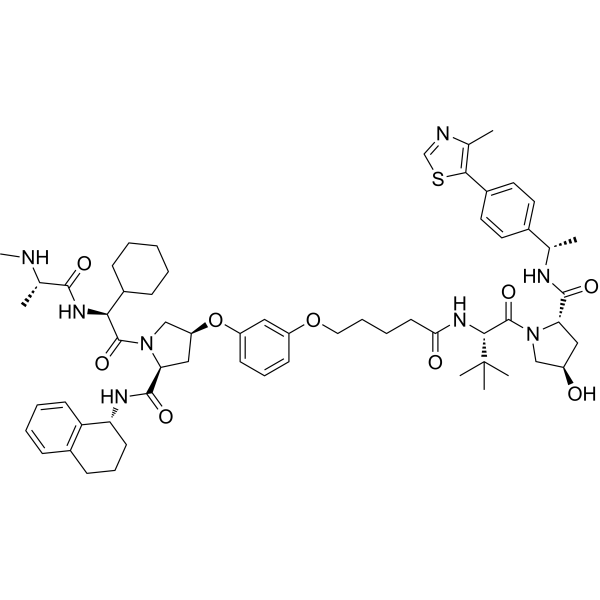
CST626 is a PROTAC degrader targeting IAP, with DC50 values of 0.7 nM, 2.4 nM and 6.2 nM against XIAP, cIAP1 and cIAP2, respectively. This compound recruits the VHL E3 ubiquitin ligase to form a heterotrimeric complex, thereby inducing ubiquitination and proteasomal degradation of the target proteins. CST626 also exhibits certain degrading activity against VHL30 and VHL19. CST626 inhibits the proliferation and induces apoptosis of various hematologic tumor cell lines, and its anti-tumor effect is further enhanced when used in combination with TNF-α. CST626 can be used in research related to multiple myeloma, acute myeloid leukemia and diffuse large B-cell lymphoma .
loading...
    loading...
Cat. No.: HY-187390
BRD4 RIMTAC-1 is a BRD4 PROTAC degrader based on the RIPK1-mediated targeted chimera (RIMTAC) technology. It hijacks the endogenous RIPK1-VHL complex via the RIPK1 inhibitor moiety to indirectly recruit the VHL E3 ligase, forming a BRD4-Compound 10-RIPK1-VHL quaternary complex, and degrades BRD4 through the ubiquitin-proteasome system (UPS). BRD4 RIMTAC-1 exhibits selectivity over other BET proteins, induces concentration- and time-dependent, reversible post-translational degradation of BRD4 without altering the target mRNA level. BRD4 RIMTAC-1 potently induces endogenous BRD4 degradation in RAW264.7 and HEK-293T cells, with DC50 values of 179.1 nM and 54.12 nM, respectively. BRD4 RIMTAC-1 can be used for the research of cancer and inflammation-related diseases .
loading...
    loading...
Cat. No.: HY-L258
437 compounds

In modern medicinal chemistry and chemical biology research, alkyne (-C≡C-) structures play an important role in click chemistry, bioorthogonal labeling, and the construction of functional molecules due to their unique linear geometry and high reactivity. In particular, driven by the development of copper-catalyzed azide-alkyne cycloaddition (CuAAC) and copper-free click reactions (SPAAC), terminal alkyne groups have become important “chemical handles” for building complex biomolecular systems.

The MCE Alkyne Compound Library contains 437 compounds designed for the construction of click chemistry reaction systems and the development of diverse functional molecules. In drug discovery, these structures serve as key reactive sites that can efficiently undergo click reactions with azide groups, enabling modular assembly of PROTAC molecules, construction of ADC linkers, and rapid synthesis of bioorthogonal labeling probes. In addition, alkyne groups exhibit high stability, mild reaction conditions, and excellent biocompatibility, allowing them to maintain reactivity in complex biological environments. This contributes to improved efficiency and controllability in drug development, making them indispensable chemical building blocks in modern drug design and functional molecular engineering.

Cat. No.: HY-130652
CAS No.: 2271036-46-3
Research Areas:  

Cancer

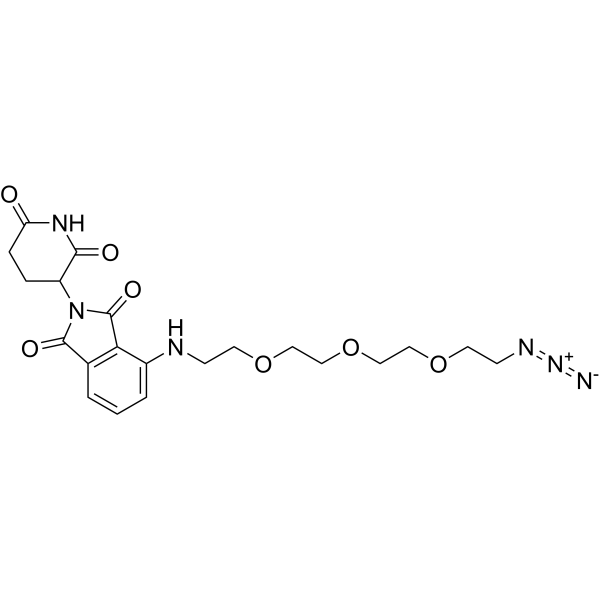
Pomalidomide 4'-PEG3-azide is a synthesized E3 ligase ligand-linker conjugate that incorporates the Pomalidomide-based cereblon ligand and a linker. Pomalidomide 4'-PEG3-azide can be used for the synthesis of iRucaparib-TP3 (Compound 3). iRucaparib-TP3 is a highly efficient PARP1?degrader based on Rucaparib by using the PROTAC approach . Pomalidomide 4'-PEG3-azide is a click chemistry reagent, it contains an Azide group and can undergo copper-catalyzed azide-alkyne cycloaddition reaction (CuAAc) with molecules containing Alkyne groups. It can also undergo strain-promoted alkyne-azide cycloaddition (SPAAC) reactions with molecules containing DBCO or BCN groups.
loading...
    loading...
Cat. No.: HY-143346
CAS No.: 2361138-33-0
Purity:  98.73%
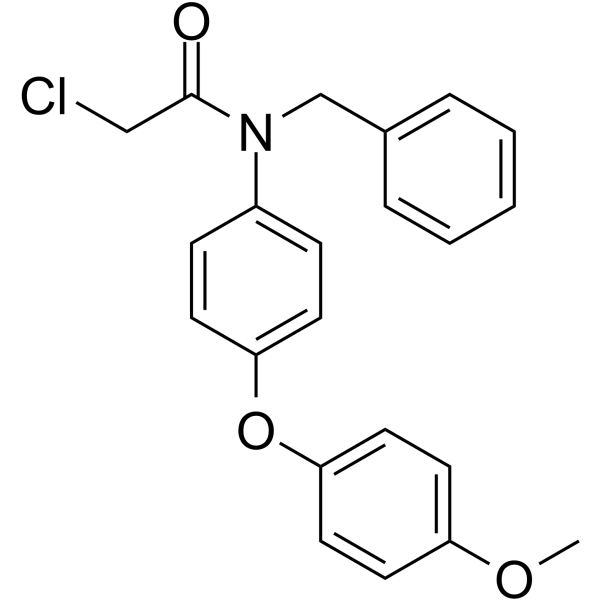
CCW16 is a non-selective cysteine-reactive covalent ligand and an RNF4 E3 ubiquitin ligase recruiter with an IC50 of 1.8 μM against human RNF4[. CCW16 covalently modifies accessible cysteine residues on RNF4, PRDX1, PRDX2, and PRDX6, attenuating the peroxide-scavenging activity of peroxiredoxins. CCW16 induces oxidative stress through upregulation of HMOX1 and NRF2, and triggers ferroptosis via lipid peroxidation and ROS signaling pathways in an RNF4-independent manner. CCW16 serves as an RNF4-recruiting moiety; it does not induce RNF4 degradation when used alone and can be used to synthesize protein degraders, such as the PROTAC compound CCW 28-3 (HY-156774). CCW16 can be used for research on acute myeloid leukemia and hepatocellular carcinoma .
loading...
    loading...
Cat. No.: HY-L918
317 compounds

Targeted Protein Degradation (TPD) is a novel and promising approach to drug development. It shows great potential for targeting proteins traditionally considered "undruggable" due to the lack of enzymatic function and absence of binding sites by tagging them for degradation or recruiting natural degradation mechanisms.

Molecular glues are a type of small-molecule degraders that primarily induce novel interactions between E3 ubiquitin ligases and target proteins, forming ternary complexes that lead to protein ubiquitination and subsequent proteasomal degradation. Compared with PROTACs, molecular glues generally have lower molecular weights, higher cell permeability, and better drug-like properties. Additionally, the design of molecular glues is relatively simple, without the requirements for complex linkers and ligand optimization. As a result, molecular glues have gradually emerged as a promising therapeutic approach for various diseases.

Multiple types of molecular glues have been reported previously. Analysis of co-crystal complex structures reveals that CRBN-related molecular glues are more versatile. Therefore, MCE researchers select active molecules related to these targets as probes for artificial intelligence (AI) screening.Subsequently, molecular docking technology was used to verify whether the screened molecules retained the key pharmacophore features. Ultimately, we obtained 317 molecular glue analogs, and these compounds serve as powerful tools for the research of molecular glues.

