502 Results for "

aromatic

" in MedChemExpress (MCE) Product Catalog:
Products (502)

502 Results for "aromatic" in MCE Product Catalog:

Cat. No.: HY-L0122V
1,122 compounds
Several CNS multi-parameter scoring approaches have been reported: CNS-MPO, CNS-MPO V.2, CNS-TEMPO, which suggesting an algorithm to predict CNS-ike properties of new chemical entities. We have applied these scoring algorithms to select macrocycles satisfying multiple cut-offs and structural desirability criteria. The resulting set consists of 1,122 macrocyclic compounds with CNS-MPO > 4, CNS-MPO.v2 > 4, and CNS-TEMPO < 4 for CNS-related drug discovery and research.
Cat. No.: HY-103084
CAS No.: 2109805-65-2
Research Areas:  

Cardiovascular Disease

PDE5-IN-1 is an orally active, selective PDE5 inhibitor with an IC50 of 5.6 nM. PDE5-IN-1 forms hydrogen bond interactions with the Q817 residue in the catalytic domain of PDE5, and aromatic π-π stacking interactions with the F820 residue. PDE5-IN-1 exerts anti-cardiac hypertrophy and vasodilatory effects, reduces mean pulmonary arterial pressure and right ventricular hypertrophy index. PDE5-IN-1 can be used in the research of pulmonary arterial hypertension .
loading...
    loading...
Cat. No.: HY-135081
CAS No.: 261766-23-8
Synonyms: N-4AIA
Target:  

COX

Research Areas:  

Others

N-(4-acetamidophenyl)-indomethacin amide (N-4-AIA) is one of several aromatic amides of indomethacin reported to be potent and selective reversible inhibitors of COX-2.1 N-4-AIA inhibits human recombinant and ovine COX-2 with IC50 values of 0.12 and 0.625 μM, respectively. It is about 400 times less potent as an inhibitor of human recombinant COX-1 and 80 times less potent as an inhibitor of ovine COX-1 than ovine COX-2.
loading...
    loading...
Cat. No.: HY-136913R
CAS No.: 69617-84-1
Synonyms: (Rac)-Betuligenol (Standard)
(Rac)-Rhododendrol (Standard) ((Rac)-Betuligenol (Standard)) is the analytical standard of (Rac)-Rhododendrol (HY-136913). This product is intended for research and analytical applications. (Rac)-Rhododendrol ((Rac)-Betuligenol) is an aromatic compound with pro-oxidant activity. (Rac)-Rhododendrol may be useful in the suppression of liver diseases. (Rac)-Rhododendrol can be toxic to melanocytes, leading to cell death. The metabolite of (Rac)-Rhododendrol, RD-quinone, is cytotoxic and causes enzyme inactivation and endoplasmic reticulum stress by binding to thiol proteins. (Rac)-Rhododendrol-derived melanin exhibits potent pro-oxidant activity and may cause oxidative stress .
loading...
    loading...
Cat. No.: HY-E72103
Target:  

Cytochrome P450

Research Areas:  

Others

Human CYP1A1, Reductase+b5 refers to a near-physiological recombinant microsomal system co-expressed in insect cells, consisting of human cytochrome P450 1A1, NADPH-P450 oxidoreductase (CPR) and cytochrome b5. Human CYP1A1 is a human cytochrome P450 subtype belonging to the CYP1 family, as well as a major metabolic enzyme. Its expression is concentrated in tissues such as lung, breast, placenta and endometrium, and it can metabolize polycyclic aromatic hydrocarbons and estrogens into carcinogenic intermediates with DNA-damaging activity .
loading...
    loading...
Cat. No.: HY-N0761A
CAS No.: 25522-33-2
Synonyms: trans-3-Hydroxy-4-methoxycinnamic acid
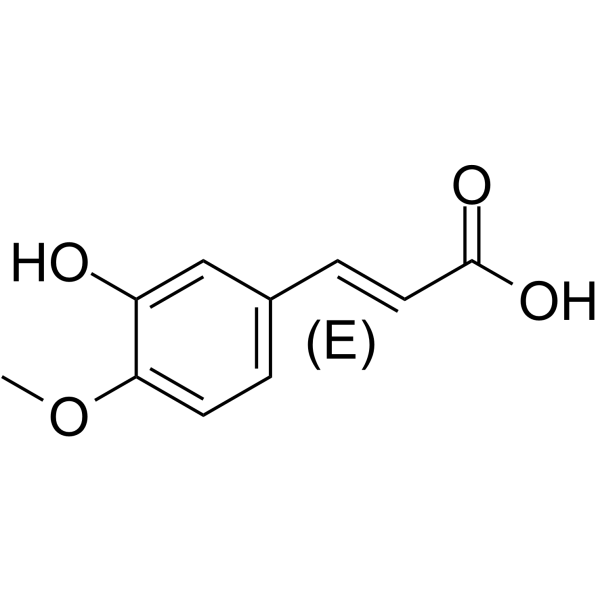
trans-Isoferulic acid (trans-3-Hydroxy-4-methoxycinnamic acid) is an aromatic acid that exhibits anti-inflammatory activity. trans-Isoferulic acid dephosphorylates PI3K/Akt, suppresses LPS (HY-D1056)-induced NF-κB activation, enhances Nrf2 activity, downregulates iNOS and COX-2 expression, induces HO-1 expression, inhibits NO and PGE2 production, and scavenges hydroperoxyl radical. trans-Isoferulic acid can be used for research of inflammatiory diseases .
loading...
    loading...
Cat. No.: HY-W002114
CAS No.: 2374-03-0
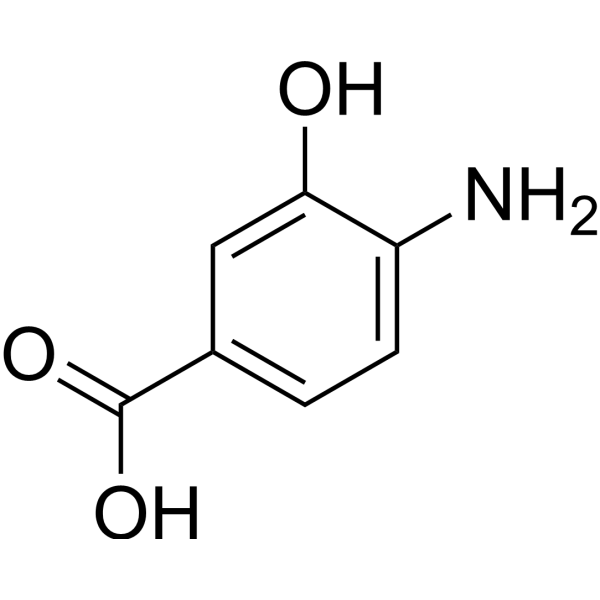
4-Amino-3-hydroxybenzoic acid is an aromatic substrate degradable by Bordetella sp. strain 10d. 4-Amino-3-hydroxybenzoic acid can serve as a carbon source, nitrogen source and energy source for the growth of Bordetella sp. strain 10d. 4-Amino-3-hydroxybenzoic acid acts as a substrate for 2-amino-5-carboxymuconate-6-semialdehyde deaminase and 4-amino-3-hydroxybenzoate 2,3-dioxygenase .
loading...
    loading...
Cat. No.: HY-W006416R
CAS No.: 488-23-3
Research Areas:  

Others

1,2,3,4-Tetramethylbenzene (Standard) is the analytical standard substance of 1,2,3,4-Tetramethylbenzene. This product is used for research and analytical applications. 1,2,3,4-Tetramethylbenzene is an aromatic hydrocarbon. 1,2,3,4-Tetramethylbenzene can serve as a molecular marker indicating the input of photosynthetic sulfur bacteria (especially green sulfur bacteria) in ancient sedimentary environments, reflecting the static marine environment of the source rock deposition. 1,2,3,4-Tetramethylbenzene can also be used as a drug intermediate.
loading...
    loading...
Cat. No.: HY-W010155R
CAS No.: 526-55-6
Synonyms: Indole-3-ethanol (Standard)
Tryptophol (Standard) (Indole-3-ethanol (Standard)) is an analytical standard of Tryptophol (HY-W010155). This product is intended for use in research and analytical applications.Tryptophol is an aromatic alcohol and secondary metabolite produced by microorganisms. Tryptophol induces Apoptosis and cleavage of caspase-8. Tryptophol inhibits Cunninghamella blakesleeana biofilm. Tryptophol has anti-phage infection, biofilm formation regulation, anti-inflammatory, hemolytic, sleep induction, temperature change, seizure susceptibility and immune regulation activities. Tryptophol is used in the research of African trypanosomiasis, sleep disorders, epilepsy.
loading...
    loading...
Cat. No.: HY-W011727R
CAS No.: 853645-22-4
Synonyms: Pyridoxal phosphate hydrate (Standard)
Pyridoxal 5'-phosphate (hydrate) (Standard) is the analytical standard of Pyridoxal 5'-phosphate (hydrate) (HY-W011727). This product is intended for research and analytical applications. Pyridoxal 5'-phosphate hydrate, the active form of vitamin B6, is an essential cofactor for multiple enzymes, including aromatic l-amino acid decarboxylase that catalyzes the final stage in the production of the neurotransmitters dopamine and serotonin. Pyridoxal 5'-phosphate hydrate is the most important coenzyme variant in the process of vitamin B6 intracellular phosphorylation and is interconvertible with other variants, including pyridoxine 5′‐phosphate (PNP) and pyridoxamine 5′-phosphate (PMP) .
loading...
    loading...
Cat. No.: HY-W016103R
CAS No.: 86-48-6
1-Hydroxy-2-naphthoic acid (Standard) is an analytical standard for 1-Hydroxy-2-naphthoic acid (HY-W016103). This product is intended for research and analytical applications. 1-Hydroxy-2-naphthoic acid is a ubiquitous bicyclic intermediate metabolite in the microbial degradation process of polycyclic aromatic hydrocarbons (PAHs). 1-Hydroxy-2-naphthoic acid can be converted into 1,2-naphthalenediol, which enters the naphthalene degradation pathway and participates in the tricarboxylic acid (TCA) cycle to achieve complete mineralization.
loading...
    loading...
Cat. No.: HY-W035904
CAS No.: 539-80-0
Synonyms: Cycloheptatrienone
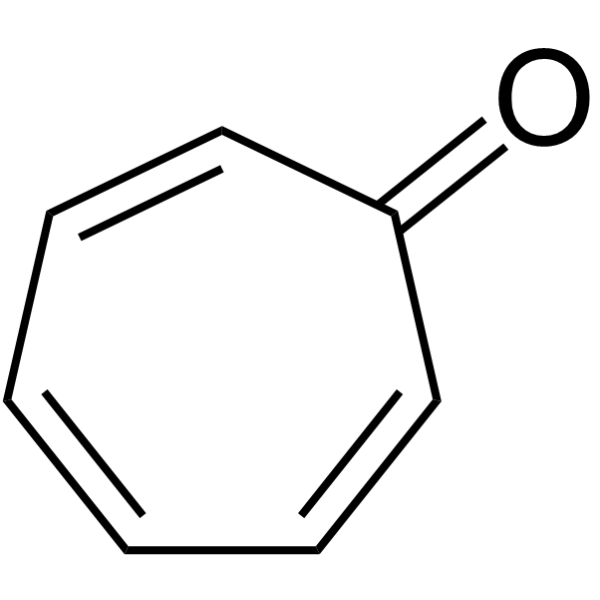
Tropone (Cycloheptatrienone) is a non-benzenoid aromatic natural product that acts as a membrane reverse transporter and metal chelator. Tropone disrupts the proton motive force by affecting the transmembrane proton gradient and functions as a quorum sensing signal through LuxR-type transcriptional regulators. Tropone exhibits broad-spectrum antibiotic, anticancer, algicidal, and probiotic activities. As a virulence factor toxic to rice seedlings, Tropone promotes biofilm formation in Burkholderia plantarii and induces neurotoxicity involving mitochondrial and cytoskeletal damage, increased Ca 2+ influx, and oxidative stress. Tropone is used in the study of bacterial infections .
loading...
    loading...
Cat. No.: HY-W114420
CAS No.: 17028-03-4
Target:  

PKC Drug Derivative

Research Areas:  

Cancer

3-Methyl-L-tyrosine is a derivative of L-Tyrosine (HY-N0473). Structurally, 3-Methyl-L-tyrosine features a methyl modification at the third position of the aromatic ring of L-Tyrosine. As a substrate for the protein tyrosine kinase Csk, 3-Methyl-L-tyrosine's relative catalytic efficiency (kcat/Km) is 38% of L-Tyrosine, indicating that the methyl modification impacts the processing efficiency of Gsk significantly. 3-Methyl-L-tyrosine helps to deepen the understanding of Gsk's molecular recognition mechanisms of its substrates, which is crucial for developing specific inhibitors targeting Gsk .
loading...
    loading...
Cat. No.: HY-W585976
CAS No.: 58917-67-2
Research Areas:  

Cancer

Benzo[a]pyrene diol epoxide is a carcinogen present in tobacco smoke as well as in environmental pollution. Benzo[a]pyrene diol epoxide is a metabolite of benzo[a]pyrene (BaP) , which is polycyclic aromatic hydrocarbon (PAH) . Benzo[a]pyrene diol epoxide induces esophageal carcinogenesis. Benzo[a]pyrene diol epoxide may act to induce activation of ERKs and p38 MAPK marked by an increased level of phosphorylation of both the ERKs and p38 MAPK which corresponds with the increased activation of both kinases as evidenced by increased phsosphorylation of their substrates Elk-1 and ATF-2, respectively.
loading...
    loading...
Cat. No.: HY-W738270
CAS No.: 1173022-44-0
Synonyms: 3,4-Dimethoxy[7-13C]-benzaldehyde
Veratraldehyde- 13C (3,4-Dimethoxy[7- 13C]-benzaldehyde) is the 13C-labeled Veratraldehyde (HY-N1096). Veratraldehyde is an orally active aromatic compound and antibacterial agent. Veratraldehyde can be isolated from essential oils of plants such as peppermint and ginger. Veratraldehyde targets the PilY1 protein. Veratraldehyde has antibacterial activity against Pseudomonas aeruginosa. Veratraldehyde has a repellent effect against mosquitoes and ticks. Veratraldehyde can be used as a flavoring agent .
loading...
    loading...
Cat. No.: HY-Y0075
CAS No.: 66-99-9
2-Naphthaldehyde belongs to naphthalene-based bis-aromatic aldehyde compounds. 2-Naphthaldehyde scavenges DPPH and ABTS + free radicals, and exerts reductive effects by donating hydrogen atoms to interrupt free radical chain reactions. 2-Naphthaldehyde inhibits the growth and proliferation of colon cancer cells. 2-Naphthaldehyde serves as a substrate for NAD +-dependent salicylaldehyde dehydrogenase from Pseudomonas strain C6 and is catalytically oxidized. 2-Naphthaldehyde acts as a precursor material for the chemical synthesis of antioxidant Schiff bases .
loading...
    loading...
Cat. No.: HY-B0863S5
CAS No.: 2732154-65-1
Glyphosate- 13C, 15N-1 is the 13C- and 15N-labeled Glyphosate (HY-B0863). Glyphosate, a non-selective systemic biocide with broad-spectrum activity, is an herbicidal derivative of the amino acid glycine. Glyphosate inhibits the enzymatic activity of the 5-endopyruvylshikimate 3-phosphate synthase (EPSPS) in the shikimic acid pathway, preventing the synthesis of the aromatic amino acids tyrosine, phenylalanine, and tryptophan. Glyphosate induces oxidative stress, neuroinflammation, and mitochondrial dysfunction, processes that lead to neuronal death by autophagia, necrosis, or apoptosis, as well as the appearance of behavioral and motor disorders .
loading...
    loading...
Cat. No.: HY-N0060BR
CAS No.: 537-98-4
Synonyms: (E)-Coniferic acid (Standard)
(E)-Ferulic acid (Standard) is the analytical standard of (E)-Ferulic acid. This product is intended for research and analytical applications. (E)-Ferulic acid is an isomer of ferulic acid, an aromatic compound abundant in plant cell walls. (E)-Ferulic acid causes phosphorylation of β-catenin (β-catenin), leading to proteasome degradation, increasing the expression of pro-apoptotic factor Bax and reducing pro-apoptotic factor Expression of the survival factor survivin. (E)-Ferulic acid can effectively remove reactive oxygen species (ROS) and inhibit lipid peroxidation. (E)-Ferulic acid exerts antiproliferative and antimigratory effects in the human lung cancer cell line H1299.
loading...
    loading...
Cat. No.: HY-N16431
CAS No.: 165133-85-7
NFAT-133 is an aromatic polyketide with immunosuppressive and antidiabetic activity. NFAT-133 activates the AMPK pathway, promoting glucose uptake in L6 muscle fibers, thereby resisting diabetes. NFAT-133 inhibits the transcriptional activity of activated T-cell nuclear factor (NFAT), thereby suppressing the expression of IL-2 and the proliferation of T cells, demonstrating an immunosuppressive effect. NFAT-133 does not exhibit antibacterial activity or cytotoxicity, but it can weaken the production of NO in RAW264.7 cells induced by Lipopolysaccharide (LPS) (HY-D1056) .
loading...
    loading...
Cat. No.: HY-N9934R
CAS No.: 2922-42-1
Synonyms: 3-DHS (Standard); 5-Dehydroshikimic acid (Standard)
(-)-3-Dehydroshikimic acid (Standard) (3-DHS (Standard)) is the analytical standard of (-)-3-Dehydroshikimic acid (HY-N9934). This product is intended for research and analytical applications. (-)-3-Dehydroshikimic acid (3-DHS) is an intermediate of the Shikimate pathway. (-)-3-Dehydroshikimic acid is found in vegetables and fruits. (-)-3-Dehydroshikimic acid accumulates in bacterial mutants, serves as a precursor of aromatic metabolites, and competitively interferes with the growth response of mutant bacteria to Shikimic acid (HY-N0130). (-)-3-Dehydroshikimic acid exhibits weak antioxidant activity in liposomes and corn oil oil-in-water emulsions .
loading...
    loading...

