502 Results for "

aromatic

" in MedChemExpress (MCE) Product Catalog:
Products (502)

502 Results for "aromatic" in MCE Product Catalog:

Cat. No.: HY-W015616R
CAS No.: 2550-26-7
Synonyms: 4-Penylbutan-2-one (Standard)
Benzylacetone (4-Penylbutan-2-one) (Standard) is the analytical standard of Benzylacetone (HY-W015616). This product is intended for research and analytical applications. Benzylacetone is an aromatic compound. Benzylacetone is a mushroom tyrosinase inhibitor with an IC50 of 2.8 mM, a Ki of 1.25 mM for monophenolase and an IC50 of 0.6 mM, a Ki of 0.39 mM for diphenolase. Benzylacetone inhibits free mushroom tyrosinase and enzyme-substrate complex. Benzylacetone acts as an appetite enhancer via olfactory stimulation, reduces spontaneous locomotor activity, induces weight gain. Benzylacetone exhibits repellent, fumigant, and contact toxicity against Tribolium castaneum adults .
loading...
    loading...
Cat. No.: HY-168992
Research Areas:  

Neurological Disease Cancer

UNC6535 is a covalent ligand targeting the SETDB1 triple Tudor domain (3TD) with negative allosteric modulator properties, with an IC50 of 3.4 μM and a Kd of 4.2 μM. UNC6535 inhibits the methyltransferase activity of recombinant SETDB1 protein lacking the 3TD domain. UNC6535 reversibly binds to the aromatic cages of both TD2 and TD3 subdomains of SETDB1 3TD simultaneously, displacing the endogenous H3K9Me2K14Ac histone tail ligand. UNC6535 can be used in research on cancer and neurodegenerative diseases .
loading...
    loading...
Cat. No.: HY-50097
CAS No.: 55289-36-6
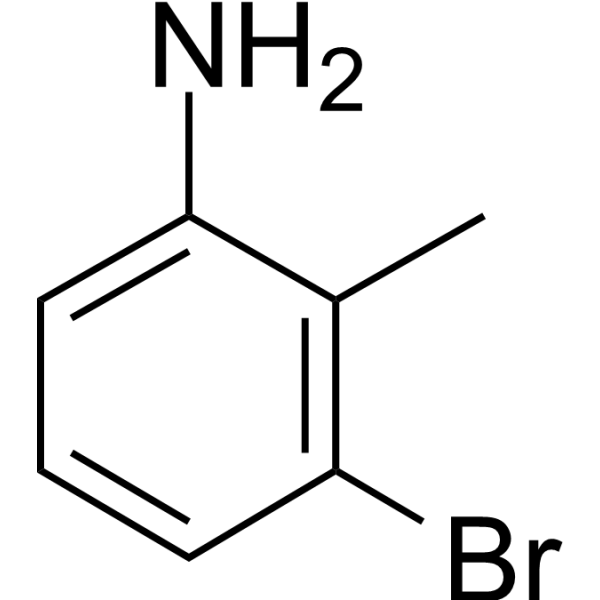
3-Bromo-2-methylaniline is an aromatic amine compound and aniline derivative that serves as a starting material and synthetic precursor. 3-Bromo-2-methylaniline acts as a starting material for the synthesis of 4-bromo-1H-indazole and racemic 3,9-dibromo-4,10-dimethyl-6H,12H-5,11-methanodibenzodiazocine. It also serves as a precursor for the regioselective bromination and subsequent deamination to synthesize 1,2-dibromo-3-methylbenzene .
loading...
    loading...
Cat. No.: HY-N0060BS
CAS No.: 860605-59-0
Synonyms: (E)-Coniferic acid-d3
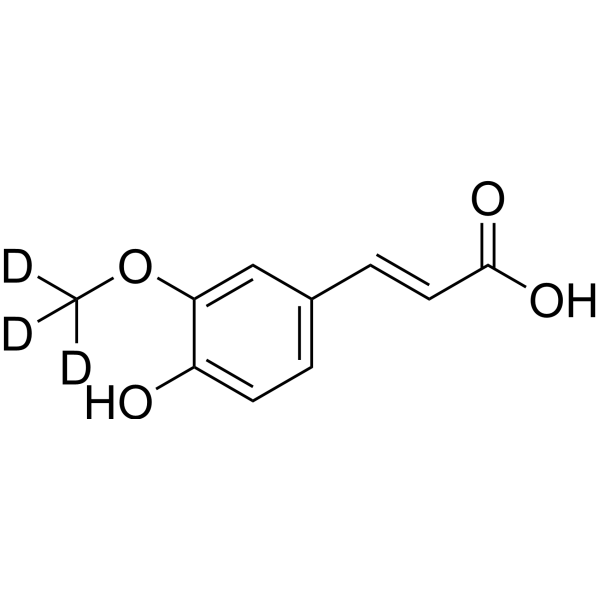
(E)-Ferulic acid-d3 is the deuterium labeled (E)-Ferulic acid. (E)-Ferulic acid is a isomer of Ferulic acid which is an aromatic compound, abundant in plant cell walls. (E)-Ferulic acid causes the phosphorylation of β-catenin, resulting in proteasomal degradation of β-catenin and increases the expression of pro-apoptotic factor Bax and decreases the expression of pro-survival factor survivin. (E)-Ferulic acid shows a potent ability to remove reactive oxygen species (ROS) and inhibits lipid peroxidation. (E)-Ferulic acid exerts both anti-proliferation and anti-migration effects in the human lung cancer cell line H1299 .
loading...
    loading...
Cat. No.: HY-P992345

Target:  

Trk Receptor

Research Areas:  

Neurological Disease

DS002 is a human monoclonal antibody targeting NGF/bNGF, with an IC50 of 6.60 nM against human NGF, 1.98 nM against rat NGF, and 8.46 nM against mouse NGF. DS002 blocks NGF-TrkA binding, interrupts pain signal transduction, inhibits TrkA-mediated downstream signaling pathways, and alters aromatic amino acid metabolic pathways. DS002 inhibits cancer cell proliferation. DS002 exerts a preventive effect on Paclitaxel-, Cisplatin- and Vincristine-induced peripheral neuropathy in rats. DS002 can be used in studies related to chronic pain and chemotherapy-induced peripheral neuropathy .
loading...
    loading...
Cat. No.: HY-P992360

Target:  

GABA Receptor

Research Areas:  

Neurological Disease Cancer

GT-002 is a partial positive allosteric modulator targeting the α3 subtype of GABAA receptors, as well as a specific binder of tumor-associated TF-glycosylated LYPD3. GT-002 mildly enhances GABA-induced chloride currents by binding to the benzodiazepine site of GABAA receptors, thereby alleviating prefrontal hypofunction and improving cognitive, memory and social interaction abilities. GT-002 can be used in research related to schizophrenia spectrum disorders, various squamous cell carcinomas, colorectal cancer, non-small cell lung cancer, and aromatic L-amino acid decarboxylase deficiency .
loading...
    loading...
Cat. No.: HY-W001251R
CAS No.: 1132-21-4
3,5-Dimethoxybenzoic acid (Standard) is the analytical standard of 3,5-Dimethoxybenzoic acid (HY-W001251). This product is intended for research and analytical applications. 3,5-Dimethoxybenzoic acid is an aromatic organic acid and antifungal agent. 3,5-Dimethoxybenzoic acid can also be used as an intermediate for anticancer agents. 3,5-Dimethoxybenzoic acid can be isolated from the leaves of Melia azedarach. 3,5-Dimethoxybenzoic acid exhibits antifungal activity against A. rabiei with an MIC of 0.125 mg/mL. 3,5-Dimethoxybenzoic acid has anti-wrinkle, anti-inflammatory, antioxidant, and skin regeneration effects .
loading...
    loading...
Cat. No.: HY-W003445R
CAS No.: 14348-38-0
4-Bromo-3-hydroxybenzoic acid (Standard) is the analytical standard of 4-Bromo-3-hydroxybenzoic acid (HY-W003445). This product is intended for research and analytical applications. 4-Bromo-3-hydroxybenzoic acid is a metabolite of Brocresine and a histidine decarboxylase (HDC) inhibitor with IC50s of 1 mM for both rat fetal and rat gastric HDC. 4-Bromo-3-hydroxybenzoic acid also inhibits aromatic-L-amino acid decarboxylase from hog kidney and rat gastric mucosa in vitro with IC50s of 1 mM for both enzymes .
loading...
    loading...
Cat. No.: HY-W010062R
CAS No.: 1878-66-6
4-Chlorophenylacetic acid (Standard) is the analytical standard of 4-Chlorophenylacetic acid (HY-W010062). This product is intended for research and analytical applications. 4-Chlorophenylacetic acid is an aromatase antagonist. 4-Chlorophenylacetic acid inhibits estrogen-induced breast tumorigenesis by blocking estrogen conversion. 4-Chlorophenylacetic acid also serves as the sole carbon and energy source for Pseudomonas sp. CBS3; it is degraded via dechlorination and aromatic ring cleavage pathways, and induces the synthesis of protocatechuate 2,3-dioxygenase. 4-Chlorophenylacetic acid can be applied to studies related to estrogen-induced breast tumors and bacterial degradation pathways .
loading...
    loading...
Cat. No.: HY-W012278
CAS No.: 56-55-3
Synonyms: Tetraphene
Benz[a]anthracene (Tetraphene) is a polycyclic aromatic hydrocarbon pollutant and also a ligand of aryl hydrocarbon receptor 2 (AHR2), with a pIC50 of 7.319. Benz[a]anthracene can be detected in spruce needles near aluminum smelters. Exposure to Benz[a]anthracene during zebrafish embryonic stage activates the AHR-CYP1A signaling pathway and induces AHR2 expression, leading to social behavioral deficits that persist into adulthood, accompanied by impaired neuro-immune interaction, while anxiety levels remain unaffected. Benz[a]anthracene can be used in studies related to PAH environmental toxicology, developmental neurotoxicity and biodegradation .
loading...
    loading...
Cat. No.: HY-W019599
CAS No.: 14173-39-8
Synonyms: L-PCPA
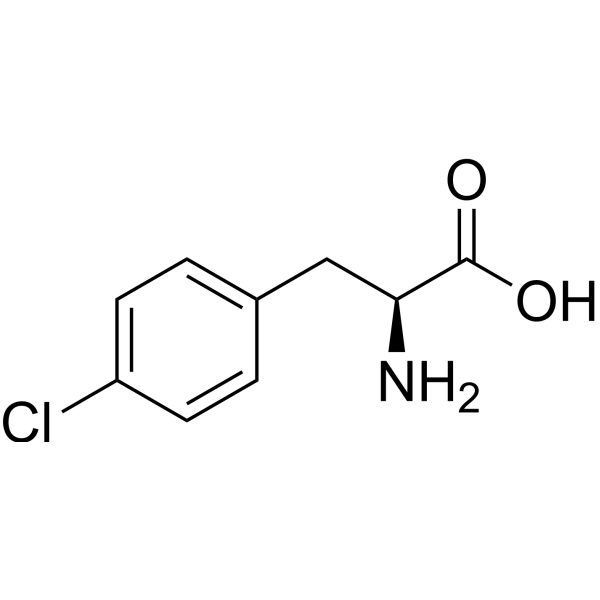
4-Chloro-L-phenylalanine (L-PCPA) is a tryptophan hydroxylase inhibitor targeting TPH1 and TPH2, with the activity of blocking serotonin biosynthesis. 4-Chloro-L-phenylalanine reduces the levels of serotonin and its metabolites in the brain without impairing the survival of serotonergic neurons. 4-Chloro-L-phenylalanine enhances anhedonic, depression-like and anxiety-like behaviors in mice with depleted noradrenergic and dopaminergic neurons. 4-Chloro-L-phenylalanine acts as a decarboxylation substrate for aromatic L-amino acid decarboxylase from Bacillus atrophaeus. 4-Chloro-L-phenylalanine can be used in studies related to Parkinson's disease .
loading...
    loading...
Cat. No.: HY-W026772S1
CAS No.: 35782-21-9
Fluorene-d8 is the deuterium labeled Fluorene (HY-W026772). Fluorene is an orally active polycyclic aromatic hydrocarbon (PAH) and a precursor to other fluorene-based compounds. Fluorene and its derivatives serve as dye precursors for fluorene synthesis. In A549 cells, Fluorene induces oxidative stress and inflammatory responses by increasing ROS and SOD generation, exacerbating lipid peroxidation, modulating antioxidant enzyme activity, and upregulating the expression of pro-inflammatory factors TNF-α and IL-6. In vivo, Fluorene exhibits anxiolytic activity. Fluorene holds potential for research in inflammation and neurological disorders .
loading...
    loading...
Cat. No.: HY-W750342
CAS No.: 75238-45-8
Synonyms: Indole-3-ethanol-d4
Tryptophol-d4 (Indole-3-ethanol-d4) is the deuterium labeled Tryptophol (HY-W010155). Tryptophol is an aromatic alcohol and secondary metabolite produced by microorganisms. Tryptophol induces apoptosis and cleavage of caspase-8. Tryptophol inhibits Cunninghamella blakesleeana biofilm. Tryptophol has anti-phage infection, biofilm formation regulation, anti-inflammatory, hemolytic, sleep induction, temperature change, seizure susceptibility and immune regulation activities. Tryptophol is used in the research of African trypanosomiasis, sleep disorders, epilepsy .
loading...
    loading...
Cat. No.: HY-W777458
CAS No.: 1189497-69-5
Fluorene- 13C6 is the 13C-labeled Fluorene (HY-W026772). Fluorene is an orally active polycyclic aromatic hydrocarbon (PAH) and a precursor to other fluorene-based compounds. Fluorene and its derivatives serve as dye precursors for fluorene synthesis. In A549 cells, Fluorene induces oxidative stress and inflammatory responses by increasing ROS and SOD generation, exacerbating lipid peroxidation, modulating antioxidant enzyme activity, and upregulating the expression of pro-inflammatory factors TNF-α and IL-6. In vivo, Fluorene exhibits anxiolytic activity. Fluorene holds potential for research in inflammation and neurological disorders .
loading...
    loading...
Cat. No.: HY-128407
CAS No.: 1075-06-5
Purity:  ≥95.0%
Synonyms: Phenylglyoxal hydrate
Target:  

Drug Intermediate

Research Areas:  

Others

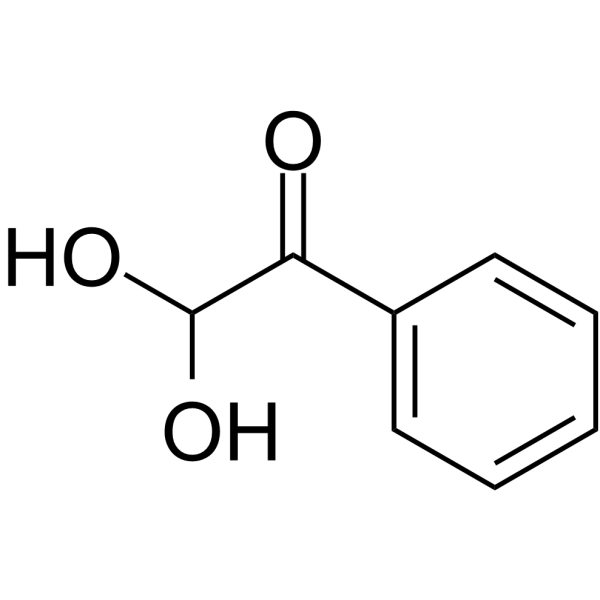
2,2-Dihydroxy-1-phenylethan-1-one (Phenylglyoxal hydrate) is a phenylglyoxal-based, antioxidant drug synthesis intermediate. 2,2-Dihydroxy-1-phenylethan-1-one serves as a starting material for the synthesis of aromatic amines or aliphatic amines. It can be used to synthesize polysubstituted pyrrolo[3,2-c]pyridin-4-one derivatives, and also acts as a key structural unit in the microwave-assisted cascade synthesis of substituted 2-methyl-7-aryl-6H-thiazoloindole compounds .
loading...
    loading...
Cat. No.: HY-P2834
CAS No.: 9014-06-6
Synonyms: PGA
Research Areas:  

Others

Penicillin amidase, E. coli (Immobilized) (PGA) is an amidohydrolase commonly used in industrial biocatalysis. Penicillin amidase, E. coli (Immobilized) serves as a starting material in the synthesis of semi-synthetic penicillins. Penicillin amidase, E. coli (Immobilized) promotes the production of semi-synthetic β-lactam antibiotics, participates in peptide synthesis, and catalyzes the formation of chiral compounds. Penicillin amidase, E. coli (Immobilized) is regulated by temperature and phenylacetic acid in E. coli. In free E. coli, it participates in the assimilation of aromatic compounds as a carbon source. Penicillin amidase, E. coli (Immobilized) is hypothesized to act as a scavenging enzyme for phenylacetyl-containing compounds in microbial metabolism and is associated with bacterial quorum sensing .
loading...
    loading...
Cat. No.: HY-P2915A
Research Areas:  

Infection

Protocatechuate 3,4-Dioxygenase, Bacteria is a dioxygenase. Protocatechuate 3,4-Dioxygenase, Bacteria belongs to the non-heme iron dioxygenase class. Protocatechuate 3,4-Dioxygenase, Bacteria catalyzes the cleavage of the aromatic ring of 3,4-dihydroxybenzoate, attaching two atoms of molecular oxygen to the compound to generate β-carboxy-cis,cis-muconate. Protocatechuate 3,4-Dioxygenase, Bacteria is a key enzyme in the β-ketoadipic acid pathway. Protocatechuate 3,4-Dioxygenase, Bacteria is found in marine bacteria associated with Roseobacter. Protocatechuate 3,4-Dioxygenase, Bacteria can be isolated from Pseudomonas aeruginosa .
loading...
    loading...
Cat. No.: HY-W739372
CAS No.: 25704-18-1
Research Areas:  

Others

Poly (sodium 4-styrenesulfonate) is an anionic cation-exchange polyelectrolyte and metal ion binding/retention agent. It selectively retains Cr III and Fe II under pH 1 conditions, and its retention effect on all tested metal ions is enhanced under higher pH conditions. Poly (sodium 4-styrenesulfonate) inhibits nanosheet aggregation through edge-face interactions between aromatic rings and the graphite surface, thereby stabilizing the dispersion of reduced graphene oxide nanosheets. When incorporated into the mixed Nafion coating of bismuth film electrodes, Poly (sodium 4-styrenesulfonate) improves the reproducibility, stability, sensitivity, and anti-fouling capability for trace metal detection .
loading...
    loading...
Cat. No.: HY-Y1094
CAS No.: 12092-47-6
Synonyms: Chloro(1,5-cyclooctadiene)rhodium(I) dimer
Research Areas:  

Cardiovascular Disease Cancer

[Rh(cod)Cl]2 (Chloro (1,5-cyclooctadiene) rhodium (I) dimer) is an organometallic rhodium (I) dimer precursor and platelet aggregation inhibitor. [Rh(cod)Cl]2 inhibits PAF-induced aggregation in washed rabbit platelets. [Rh(cod)Cl]2 inhibits aggregation induced by PAF, Thrombin, ADP and Collagen in human platelet-rich plasma. [Rh(cod)Cl]2 acts as a catalyst precursor for the hydrogenation of aromatic hydrocarbons, phenols, olefins and BINOL derivatives. [Rh(cod)Cl]2 is used in the research of cardiovascular diseases such as thromboinflammation-related disorders, tumor metastasis and atherosclerosis .
loading...
    loading...
Cat. No.: HY-Y1771R
CAS No.: 119-67-5
Synonyms: Phthalaldehydic acid (Standard)
2-Carboxybenzaldehyde (Standard) (Phthalaldehydic acid (Standard)) is the analytical standard of 2-Carboxybenzaldehyde (HY-Y1771). This product is intended for research and analytical applications. 2-Carboxybenzaldehyde (Phthalaldehydic acid) is a key intermediate metabolite in the biodegradation process of polycyclic aromatic hydrocarbons, and also a specific substrate for CBA reductase and NAD-dependent 2-carboxybenzaldehyde dehydrogenase. 2-Carboxybenzaldehyde undergoes regioselective reduction via CBA reductase in mammalian tissues to produce 2-hydroxymethylbenzoic acid. 2-Carboxybenzaldehyde is converted to phthalic acid by NAD-dependent dehydrogenase during bacterial degradation. 2-Carboxybenzaldehyde can be used in relevant research in fields such as organic synthesis .
loading...
    loading...