485 Results for "

insect morphogenesis

" in MedChemExpress (MCE) Product Catalog:
Products (485)

485 Results for "insect morphogenesis" in MCE Product Catalog:

Cat. No.: HY-W585885
CAS No.: 19945-61-0
(3E)-4,8-Dimethylnona-1,3,7-triene, a sesquiterpene, is the major herbivore-induced plant volatile that help in defense directly by acting as repellants and indirectly by recruiting insects' natural enemies. (3E)-4,8-Dimethylnona-1,3,7-triene attractes Asian corn borer (ACB, Ostrinia furnacalis) larvae. External supplementation with (3E)-4,8-Dimethylnona-1,3,7-triene hampered the larvae's ability to locate pre-infested maize.
loading...
    loading...
Cat. No.: HY-W782193
CAS No.: 55320-91-7
Synonyms: 6-Methyl-5-hepten-2-one-d5
Sulcatone-d5 (6-Methyl-5-hepten-2-one-d5) is the deuterium labeled Sulcatone (HY-W010435). Sulcatone (6-Methyl-5-hepten-2-one) is a plant-derived volatile organic compound with activities such as insecticidal, antifungal, and blood pressure-lowering effects. Sulcatone also serves as an insect pheromone and an endogenous metabolite, which can be found in feces. Changes in Sulcatone levels can be used for the auxiliary diagnosis of ulcerative colitis .
loading...
    loading...
Cat. No.: HY-15130
CAS No.: 17885-08-4
Purity:  ≥98.0%
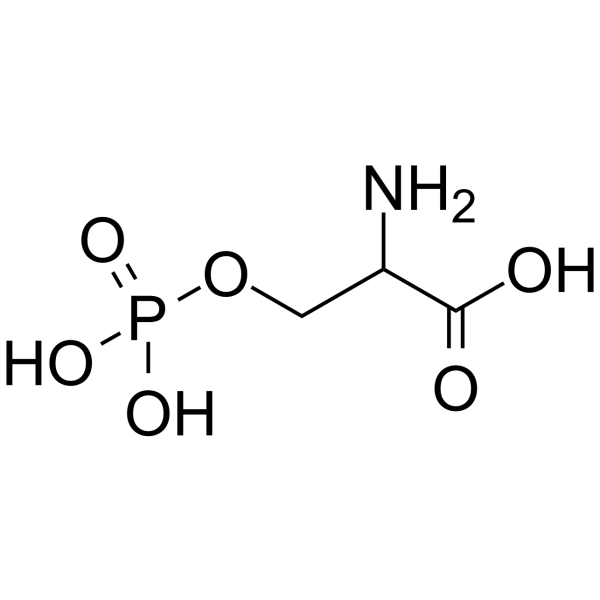
DL-O-Phosphoserine is a normal metabolite in human biofluids and is a mixture of phosphoserine with two stereochemical structures (D-type and L-type O-phospho-serine). O-phospho-L-serine is a competitive inhibitor of serine racemase and phagocytosis. O-phospho-L-serine inhibits the enzymatic reaction by competing with the active site of serine racemase, thereby affecting the production of D-serine. O-phospho-L-serine also mimics the phosphatidylserine head group, binds to the phosphatidylserine receptor, interferes with phagocytic signal transduction, and partially blocks the phagocytosis of apoptotic cells by cells. O-phospho-L-serin can be used in the research of retinal regeneration, bone repair, and insect growth and development .
loading...
    loading...
Cat. No.: HY-B0822S1
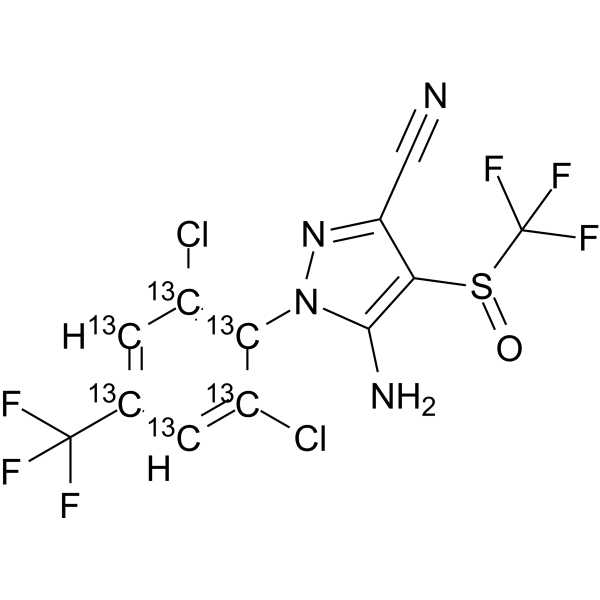
Fipronil- 13C6 is the 13C-labeled Fipronil. Fipronil is an insecticide that acts as a selective antagonist of insect GABA receptors (IC50s = 30 nM and 1,600 nM for cockroach and rat receptors, respectively). Fipronil also inhibits desensitizing and non-desensitizing glutamate-induced chloride currents in cockroach neurons (IC50s = 800 nM and 10 nM, respectively). Fipronil induces activity of the cytochrome P450 (CYP) isoforms CYP1A1/2, CYP2B1/2, and CYP3A1/2 in isolated rat liver microsomes.
loading...
    loading...
Cat. No.: HY-N12851
CAS No.: 2492-43-5
Synonyms: (E)-4-Oxo-2-hexenal
4-OHE ((E)-4-Oxo-2-hexenal) is a mutagen formed by omega-3 lipid peroxidation. 4-OHE reacts with deoxyguanosine, deoxycytidine and 5-methyldeoxycytidine to form covalent adducts. 4-OHE induces apoptosis and exhibits genotoxicity. 4-OHE inhibits the growth of Gram-positive and Gram-negative bacteria, which correlates with its electrophilic reactivity towards nucleophilic biomolecules. 4-OHE is a chemical defense component of Dolycoris baccarum (sloe bug), and acts as a deterrent and toxin against insect predators .
loading...
    loading...
Cat. No.: HY-W099803
CAS No.: 34010-21-4
Research Areas:  

Endocrinology

(Z)-11-Hexadecenyl acetate is a component of insect sex pheromones, which elicits electroantennogram responses in male Plutella xylostella and induces their wing-fanning and claspers-exposing behaviors. (Z)-11-Hexadecenyl acetate also serves as a sex pheromone component of Spodoptera exigua and Chilo suppressalis. When used in combination with other pheromones, (Z)-11-Hexadecenyl acetate significantly enhances the attraction effect on male Tryporyza incertulas, and it exists in trace amounts in the eluate of the ovipositor of female Tryporyza incertulas. (Z)-11-Hexadecenyl acetate shows no attraction effect on male Cnaphalocrocis medinalis and exhibits species specificity .
loading...
    loading...
Cat. No.: HY-N6935
CAS No.: 517-44-2
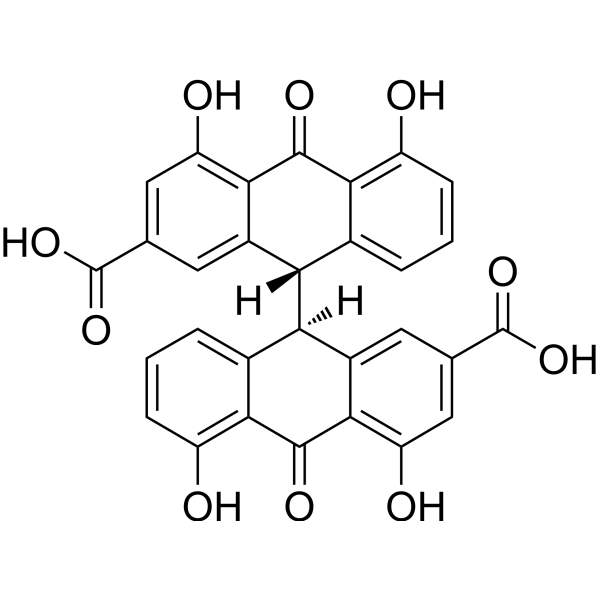
Sennidin B is an anthraquinone compound isolated from Cassia angustifolia. Sennidin B is a DPP-4 inhibitor with an IC50 of 39.39 μM. Sennidin B is an insect chitinase inhibitor with a Ki of 80 nM against OfChi-h. Sennidin B competitively inhibits chitinase activity by forming π-π stacking interactions with key tryptophan residues in the active site through a folded conformation. Sennidin B activates PI3K/Akt to promote glucose uptake in adipocytes. Sennidin B can be used for the development of biopesticides and research on type 2 diabetes and metabolism-related signaling pathways .
loading...
    loading...
Cat. No.: HY-W130074R
CAS No.: 1686-14-2
α-Pinene oxide (Standard) is the analytical standard of α-Pinene oxide (HY-W130074). This product is intended for research and analytical applications. α-Pinene oxide is a type of monoterpene epoxidation intermediate. α-Pinene oxide is produced via the cytochrome P-450-mediated oxidation pathway in Dendroctonus terebrans body microsomes and rat liver microsomes, and can be further converted into alcohols, ketones and insect pheromone derivatives. α-Pinene oxide can generate the perfume intermediate myrtenal. α-Pinene oxide is used in studies related to terpenoid metabolism and perfume synthesis .
loading...
    loading...
Cat. No.: HY-W585959
CAS No.: 62235-06-7
(E,E)-4,8,12-Trimethyl-1,3,7,11-tridecatetraene (TMTT), a sesquiterpene, is the major herbivore-induced plant volatile that help in defense directly by acting as repellants and indirectly by recruiting insects' natural enemies. (E,E)-4,8,12-Trimethyl-1,3,7,11-tridecatetraene attractes Asian corn borer (ACB, Ostrinia furnacalis) larvae. External supplementation with (E,E)-4,8,12-Trimethyl-1,3,7,11-tridecatetraene hampered the larvae's ability to locate pre-infested maize .
loading...
    loading...
Cat. No.: HY-119649R
CAS No.: 158062-67-0
Synonyms: IKI220 (Standard)
Flonicamid (Standard) (IKI220 (Standard)) is the analytical standard of Flonicamid (HY-119649). This product is intended for research and analytical applications. Flonicamid (IKI220) is an antifeedant Insecticide active against Hemiptera, Thysanoptera, and piercing-sucking pests including aphids of all species, developmental stages and morphs. Flonicamid inhibits the inward rectifier potassium channel NlKir1, blocking stylet penetration, salivation, sap feeding, honeydew secretion, and fluid secretion by isolated Malpighian tubules. Flonicamid reduces renal excretory function in female Culex pipiens pallens. Flonicamid rapidly disrupts insect feeding behavior without neurotoxic poisoning symptoms, induces irreversible starvation, and increases the mortality of nymph progeny of adult aphids exposed to this agent .
loading...
    loading...
Cat. No.: HY-W010607R
CAS No.: 928-96-1
Synonyms: (Z)-3-Hexen-1-ol (Standard)
cis-3-Hexen-1-ol (Standard) is the analytical standard of cis-3-Hexen-1-ol. This product is intended for research and analytical applications. cis-3-Hexen-1-ol ((Z)-3-Hexen-1-ol) is a green grassy smelling compound found in many fresh fruits and vegetables. cis-3-Hexen-1-ol is widely used as an added flavor in processed food to provide a fresh green quality. cis-3-Hexen-1-ol is an attractant to various insects .
loading...
    loading...
Cat. No.: HY-119649S
CAS No.: 2483830-60-8
Purity:  ≥98.0%
Synonyms: IKI220-15N18O
Flonicamid- 15N, 18O (IKI220- 15N, 18O) is the 18O , 15N-labeled Flonicamid (HY-119649). Flonicamid (IKI220) is an antifeedant Insecticide active against Hemiptera, Thysanoptera, and piercing-sucking pests including aphids of all species, developmental stages and morphs. Flonicamid inhibits the inward rectifier potassium channel NlKir1, blocking stylet penetration, salivation, sap feeding, honeydew secretion, and fluid secretion by isolated Malpighian tubules. Flonicamid reduces renal excretory function in female Culex pipiens pallens. Flonicamid rapidly disrupts insect feeding behavior without neurotoxic poisoning symptoms, induces irreversible starvation, and increases the mortality of nymph progeny of adult aphids exposed to this agent .
loading...
    loading...
Cat. No.: HY-120253
CAS No.: 203313-25-1
Purity:  94.20%
Synonyms: BY-108330
Spirotetramat (BY-108330) is an orally active Insecticide and lipid biosynthesis inhibitor. Spirotetramat regulates the activities of superoxide dismutase (SOD) and glutathione peroxidase (GSH-Px), with short-term exposure increasing their activities and long-term exposure altering their activities. Spirotetramat induces the activity and mRNA expression of carboxylesterase (CarE). Spirotetramat induces oxidative stress and lipid peroxidation in tadpoles. Spirotetramat is toxic to amphibian tadpoles and exhibits sublethal/non-lethal toxicity to amphibians. Spirotetramat causes death in immature psyllids, aphids, scale insects, mealybugs, whiteflies and thrips, and shows a high lethal rate against Cacopsylla pyri nymphs. Spirotetramat reduces the fecundity of Aphis gossypii. Spirotetramat induces tolerance in the offspring of exposed Aphis gossypii, and acts on Myzus persicae, Bemisia tabaci and Tetranychus urticae .
loading...
    loading...
Cat. No.: HY-N6656R
CAS No.: 6093-68-1
6-Hydroxycoumarin (Standard) is the analytical standard of 6-Hydroxycoumarin (HY-N6656). This product is intended for research and analytical applications. 6-Hydroxycoumarin is a plant-derived secondary metabolite of the coumarin class, possessing insecticidal, antitumor, and other biological activities . 6-Hydroxycoumarin targets the midgut tissue of the red imported fire ant (Solenopsis invicta), inhibits CYP450, induces elevated activities of GST, CarE, and SOD, disrupts mitochondrial ultrastructure, triggers apoptosis, and also impairs insect neuromuscular behavior. 6-Hydroxycoumarin exhibits photoallergic properties and serves as an intermediate for the synthesis of isoxazolyl and triazolyl derivatives. 6-Hydroxycoumarin is applicable to research related to red imported fire ant control .
loading...
    loading...
Cat. No.: HY-W017141S
CAS No.: 588732-63-2
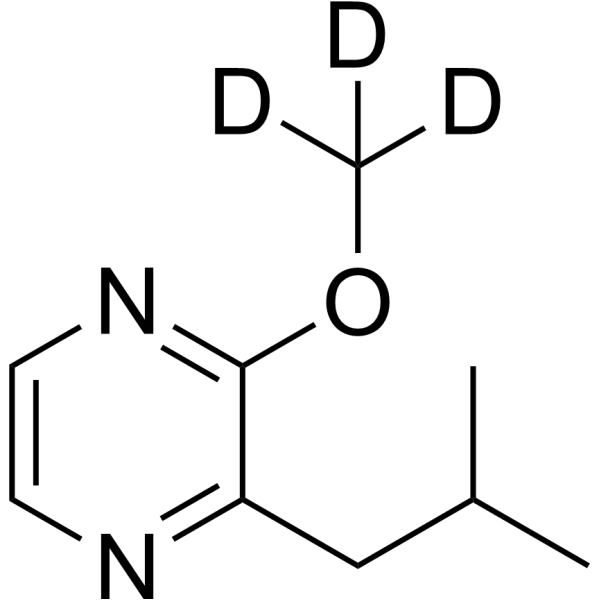
2-Isobutyl-3-methoxypyrazine-d3 is the deuterium labeled 2-Isobutyl-3-methoxypyrazine. 2-Isobutyl-3-methoxypyrazine is a male-specific aggregation pheromone released by the Portuguese leaf beetle Labidostomis lusitanica. 2-Isobutyl-3-methoxypyrazine induces dose-dependent electroantennographic responses in the antennae of both male and female Labidostomis lusitanica, with the overall response intensity of females being higher than that of males. 2-Isobutyl-3-methoxypyrazine induces positive chemotactic behavior, and exerts a repellent effect on male Labidostomis lusitanica at high doses. 2-Isobutyl-3-methoxypyrazine can be used in insect ecology research .
loading...
    loading...
Cat. No.: HY-W331198
CAS No.: 122454-29-9
Target:  

Insecticide Ferroptosis

Research Areas:  

Infection

Tralopyril is an orally active, blood-brain barrier-penetrating antifouling insecticide and endocrine disruptor. By interfering with the thyroid hormone system and mitochondrial oxidative phosphorylation, Tralopyril downregulates the transcription of genes such as TRHR, Nkx2.1, TRα and induces ferroptosis. Tralopyril disrupts amino acid, energy and lipid metabolism, exhibits significant skeletal and reproductive toxicity, and causes developmental damage. Tralopyril has a long half-life in vivo and wide tissue distribution, posing potential risks to aquatic organisms and human health. Tralopyril shows species specificity in in vitro liver microsomal metabolism, exerts lethal effects on target insects and laboratory animals, and is commonly used in studies of chlorfenapyr poisoning and related toxic mechanisms .
loading...
    loading...
Cat. No.: HY-B0633D
CAS No.: 9067-32-7
Hyaluronic acid sodium (MW 200-1560) is a biopolymer composed of repeating disaccharide units, with a molecular weight of 200-1560. Hyaluronic acid sodium is a major component of the extracellular matrix (ECM). It is synthesized on the plasma membrane. Hyaluronic acid sodium exerts its effects by binding to receptors CD44 and RHAMM. Hyaluronic acid sodium activates PI3K-Akt signaling. Hyaluronic acid sodium also enhances cell invasion and angiogenesis by promoting or stimulating the binding of proteolytic MMP-9 to the cell surface. Elevated hyaluronic acid levels are associated with tumor cell growth, adhesion, migration, invasion, and angiogenesis in digestive system cancers. Hyaluronic acid sodium is involved in tissue remodeling and rapid cell proliferation in several physiological processes, including embryonic morphogenesis and wound healing. Hyaluronic acid sodium can be used as a regulator of cancer-associated lymphangiogenesis. Hyaluronic acid sodium can be used as a drug delivery carrier for sodium butyrate, enhancing its anti-proliferative activity against breast cancer cell lines. Hyaluronic acid sodium can lubricate the corneal endothelium. Hyaluronic acid sodium can improve tissue hydration and enhance the resistance of cells to mechanical damage. Hyaluronic acid sodium has been conjugated with antibodies to ensure that the active compound continues to exert its effects at the site of inflammation. Hyaluronic acid sodium can be used in research in the fields of osteoarthritis, ophthalmology, cosmetic dermatology, oncology, and liver diseases .
loading...
    loading...
Cat. No.: HY-B0633E
CAS No.: 9004-61-9
Synonyms: Hyaluronan, low endotoxin; Hyaluronate, low endotoxin
Hyaluronic acid, low endotoxin (Hyaluronan, low endotoxin) is a biopolymer composed of repeating disaccharide units containing low levels of endotoxin. Hyaluronic acid is a major component of the extracellular matrix (ECM). It is synthesized on the plasma membrane. Hyaluronic acid exerts its effects by binding to receptors CD44 and RHAMM. Hyaluronic acid activates PI3K-Akt signaling. Hyaluronic acid also enhances cell invasion and angiogenesis by promoting or stimulating the binding of proteolytic MMP-9 to the cell surface. Elevated hyaluronic acid levels are associated with tumor cell growth, adhesion, migration, invasion, and angiogenesis in digestive system cancers. Hyaluronic acid is involved in tissue remodeling and rapid cell proliferation in several physiological processes, including embryonic morphogenesis and wound healing. Hyaluronic acid can be used as a regulator of cancer-associated lymphangiogenesis. Hyaluronic acid can be used as a drug delivery carrier for sodium butyrate, enhancing its anti-proliferative activity against breast cancer cell lines. Hyaluronic acid can lubricate the corneal endothelium. Hyaluronic acid can improve tissue hydration and enhance the resistance of cells to mechanical damage. Hyaluronic acid has been conjugated with antibodies to ensure that the active compound continues to exert its effects at the site of inflammation. Hyaluronic acid can be used in research in the fields of osteoarthritis, ophthalmology, cosmetic dermatology, oncology, and liver diseases .
loading...
    loading...
Cat. No.: HY-B0874R
CAS No.: 67375-30-8
Synonyms: FMC 45497 (Standard); Fendona (Standard); WL 85871 (Standard)
Alpha-Cypermethrin (Standard) (FMC 45497 (Standard); Fendona (Standard); WL 85871 (Standard)) is the analytical standard of Alpha-Cypermethrin (HY-B0874). This product is intended for research and analytical applications. Alpha-Cypermethrin (FMC 45497; Fendona; WL 85871) is a type II pyrethroid insecticide. Alpha-Cypermethrin acts by delaying the inactivation of voltage-gated sodium channels, prolonging sodium tail currents, and triggering repetitive neural discharges. Alpha-Cypermethrin exhibits knockdown and lethal activity against target insects such as Musca domestica and Anopheles culicifacies. Alpha-Cypermethrin induces neurotoxicity in mammals, alters placental and fetal neurodevelopment, and causes acute mortality in fish. Alpha-Cypermethrin can be used in studies related to neurotoxicity, vector-borne diseases, and malaria .
loading...
    loading...
Cat. No.: HY-N6935R
CAS No.: 517-44-2
Sennidin B Standard is the analytical standard of Sennidin B (HY-N6935). This product is intended for research and analytical applications. Sennidin B is an anthraquinone compound isolated from Cassia angustifolia. Sennidin B is a DPP-4 inhibitor with an IC50 of 39.39 μM. Sennidin B is an insect chitinase inhibitor with a Ki of 80 nM against OfChi-h. Sennidin B competitively inhibits chitinase activity by forming π-π stacking interactions with key tryptophan residues in the active site through a folded conformation. Sennidin B activates PI3K/Akt to promote glucose uptake in adipocytes. Sennidin B can be used for the development of biopesticides and research on type 2 diabetes and metabolism-related signaling pathways .
loading...
    loading...

