521 Results for "

pollen wall

" in MedChemExpress (MCE) Product Catalog:
Products (521)

521 Results for "pollen wall" in MCE Product Catalog:

Cat. No.: HY-184414A
Research Areas:  

Cancer

BMS-135-L-Lys TFA is a dual-cation prodrug derived from CK2 inhibitor BMS-135 (HY-181022) through esterification with L-lysine using a secondary alcohol. BMS-135-L-Lys TFA achieves enhanced solubility by maintaining protonation of the ε-amino group of the Lys side chain at intestinal pH. BMS-135-L-Lys TFA is released in situ by intestinal wall esterase from the parent drug, significantly increasing the oral bioavailability of the parent drug and overcoming the non-linear pharmacokinetic problem when the dose of the parent drug is increased. BMS-135-L-Lys TFA can be used in related research on colon cancer and lung cancer .
loading...
    loading...
Cat. No.: HY-184414B
Research Areas:  

Cancer

BMS-135-L-Lys dihydrochloride is a dual-cation prodrug derived from CK2 inhibitor BMS-135 (HY-181022) through esterification with L-lysine using a secondary alcohol. BMS-135-L-Lys dihydrochloride achieves enhanced solubility by maintaining protonation of the ε-amino group of the Lys side chain at intestinal pH. BMS-135-L-Lys dihydrochloride is released in situ by intestinal wall esterase from the parent drug, significantly increasing the oral bioavailability of the parent drug and overcoming the non-linear pharmacokinetic problem when the dose of the parent drug is increased. BMS-135-L-Lys dihydrochloride can be used in related research on colon cancer and lung cancer .
loading...
    loading...
Cat. No.: HY-B1128AR
CAS No.: 30034-03-8
Synonyms: Cephamandole sodium (Standard)
Research Areas:  

Infection

Cefamandole (sodium) (Standard) is the analytical standard of Cefamandole (sodium). This product is intended for research and analytical applications. Cefamandole (Cephamandole) sodium is a semi-synthetic second-generation cephalosporin antibiotic with broad-spectrum antimicrobial activity. Cefamandole sodium is resistant to hydrolysis by β-lactamases produced by some Gram-negative bacteria. Cefamandole sodium kills Gram-positive cocci and various Gram-negative bacilli mainly by inhibiting cell wall synthesis, but it is inactive against Pseudomonas, Proteus vulgaris and Providencia stuartii, and its efficacy is affected by inoculum size. The plasma elimination half-life of Cefamandole sodium in rats is only 0.4 h, it is mainly excreted in urine in biologically active form, and it hardly penetrates the non-inflamed blood-brain barrier. Cefamandole sodium is widely used in studies related to bacterial infections .
loading...
    loading...
Cat. No.: HY-D3389
sCy5DL-amide is an amidated fluorescent D-amino acid conjugated to Sulfo-Cyanine 5, and a peptidoglycan labeling agent. sCy5DL-amide incorporates into bacterial peptidoglycan cell wall via transpeptidase-mediated reactions, replacing the fourth or fifth D-amino acid of the peptidoglycan stem peptide for visualization of nascent peptidoglycan biosynthesis. sCy5DL-amide produces clear cell outline, septum labeling, and high localization density in Bacillus subtilis, including a 'V-shape' pattern at cell-cell contact areas. sCy5DL-amide exhibits robust incorporation into Gram-positive bacteria and mycobacteria, with reduced incorporation into Gram-negative bacteria (Ex/Em = 646/666 nm) .
loading...
    loading...
Cat. No.: HY-N7101R
CAS No.: 87239-81-4
Synonyms: U-76,252 (Standard); CS-807 (Standard)
Cefpodoxime Proxetil (Standard) is the analytical standard of Cefpodoxime Proxetil. This product is intended for research and analytical applications. Cefpodoxime Proxetil is an orally active broad spectrum third-generation cephalosporin with potent antibacterial activity against both Gram-positive and Gram-negative bacteria including staphylococci, streptococci, Haemophilus influenzae, Neisseria gonorrhoeae, Escherichia coli, Klebsiella pnuemoniae, Citrobacter spp, and Proteus spp. Cefpodoxime Proxetil binds to penicillin binding proteins (PBPs), which inhibits peptidoglycan synthesis, finally results in interfering bacterial cell wall biosynthesis. Cefpodoxime Proxetil can be used against skin structure infections, acute otitis media, pharyngitis, tonsillitis, upper respiratory tract infection, urinary tract infections and sexually transmitted diseases .
loading...
    loading...
Cat. No.: HY-P2200
CAS No.: 164802-68-0
Synonyms: BMY-29304
Target:  

HIV Antibiotic

Research Areas:  

Infection Inflammation/Immunology

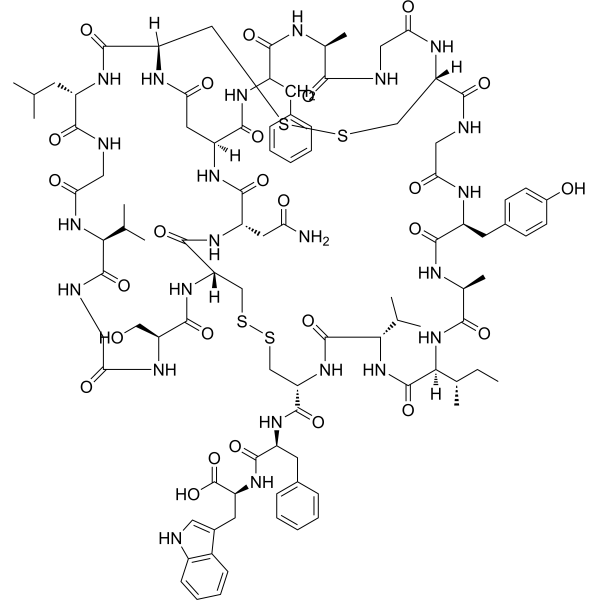
Siamycin I (BMY-29304), a 21-residue tricyclic peptide, is a secondary metabolite in actinomycetes. Siamycin I is a HIV fusion inhibitor with ED50s of 0.05 to 5.7 μM for acute HIV type 1 (HIV-1) and HIV-2 infections. Siamycin I inhibits the gelatinase and gelatinase biosynthesis-activating pheromone (GBAP) signaling via the FsrC-FsrA two-component regulatory system in a noncompetitive manner. Siamycin I suppresses the expression of both fsrBDC and gelE-sprE transcripts. Siamycin I, a lasso peptide, interacts with lipid II and inhibits cell wall biosynthesis. Siamycin I, an antibiotic, has the potential for enterococcal infections research .
loading...
    loading...
Cat. No.: HY-W747508
CAS No.: 58814-86-1
Target:  

Fungal Antibiotic

Research Areas:  

Infection

Aculeacin A is a β-1,3-glucan synthase inhibitor. Aculeacin A is an antifungal antibiotic. Aculeacin A inhibits cell wall glucan synthesis in growing yeast cells, induces cell lysis, osmotic fragility, cell aggregation and abnormal cell morphology, without affecting the synthesis of proteins, nucleic acids or mannan. Aculeacin A acts only on growing yeast cells and has a narrow antifungal spectrum, mainly targeting Candida and Torulopsis species. Aculeacin A shows reduced activity in human serum and exhibits a paradoxical dose-response pattern. Aculeacin A has an inoculum effect against some Candida albicans strains, and its activity is pH-stable. Aculeacin A can be used in studies of fungal infections, such as those caused by Candida, Torulopsis and other species .
loading...
    loading...
Cat. No.: HY-E0224
compounds
0.5 mL Storage Tube, Three-Code Tube, External Thread with Screw Cap, Compatible with SBS- 96-Well Racks. This product is made from high-quality PP material, suitable for ultra-low temperature storage, with excellent weather resistance. Free from DNase and RNase, and can be sterilized by irradiation. The bottom of the tube features a unique QR code, while the side wall has a 1D linear barcode and directly readable numeric code, all three codes are identical and unique. The codes are laser-etched, scratch-resistant, not easy to fall off, and have high contrast for easy reading. The accompanying tube rack (HY-E0225) is made of the same material as the tube, effectively preventing uneven expansion issues during freeze-thaw cycles.
Cat. No.: HY-L049
1,994 compounds

Antibacterial agents are a group of materials that fight against pathogenic bacteria. Thus, by killing or reducing the metabolic activity of bacteria, their pathogenic effect in the biological environments will be minimized. The most widely used antibacterial agents exert their effects on bacterial cell wall synthesis, protein synthesis, DNA replication and metabolic pathways. However, resistance to antimicrobial agents has become a major source of morbidity and mortality worldwide. The main mechanisms of resistance are limiting uptake of a drug, modification of a drug target, inactivation of a drug, and active efflux of a drug. Therefore, it is an urgent need to develop new drugs targeted at resistant organisms.

MCE offers a unique collection of 1,994 compounds with validated antibacterial activities. MCE antibacterial compound library is an effective tool for drug repurposing screening, combination screening and biological investigation.

Cat. No.: HY-117200
CAS No.: 351062-08-3
Purity:  ≥98.0%
Synonyms: Nec-7
Necrostatin-7 (Nec-7) is a Necroptosis inhibitor with an EC50 of 10.6 μM. Necrostatin-7 inhibits signal transduction from RANK to NFATc1 without affecting the activation of MAPK or NF-κB. Necrostatin-7 suppresses the expression levels of Acp5, Atp6v0d2, Ctsk and Dcstamp. Necrostatin-7 reduces myocardial infarction size, ameliorates adverse left ventricular remodeling, decreases myocardial wall stress, reduces the amount and length of scar tissue, and improves left ventricular function. Necrostatin-7 exerts cardioprotective effects in a rat model of permanent coronary artery occlusion. Necrostatin-7 can be used in research related to osteolytic bone diseases and myocardial infarction .
loading...
    loading...
Cat. No.: HY-18729B
CAS No.: 141968-19-6
Synonyms: NG-Nitro-D-arginine methyl ester
D-NAME (NG-Nitro-D-arginine methyl ester) is an orally active enantiomer of L-NAME (HY-18729). D-NAME inhibits Nitric oxide synthase activity in myocardium and aorta (Note: D-NAME was once classified as an inactive substance and used as a negative control in nitric oxide synthase inhibition studies), induces increases in systolic blood pressure and mean arterial blood pressure, reduces mesenteric arterial conductance, elevates the ratio of left ventricular weight to body weight, induces myocardial fibrosis, increases the cross-sectional area of aortic wall, enhances mesenteric vasodilation induced by nitrovasodilators, and releases nitric oxide via its guanidino nitro group. D-NAME has no effect on ovalbumin-induced pulmonary eosinophilia in sensitized mice. D-NAME can be used in hypertension-related research .
loading...
    loading...
Cat. No.: HY-19882
CAS No.: 941285-15-0
Research Areas:  

Infection

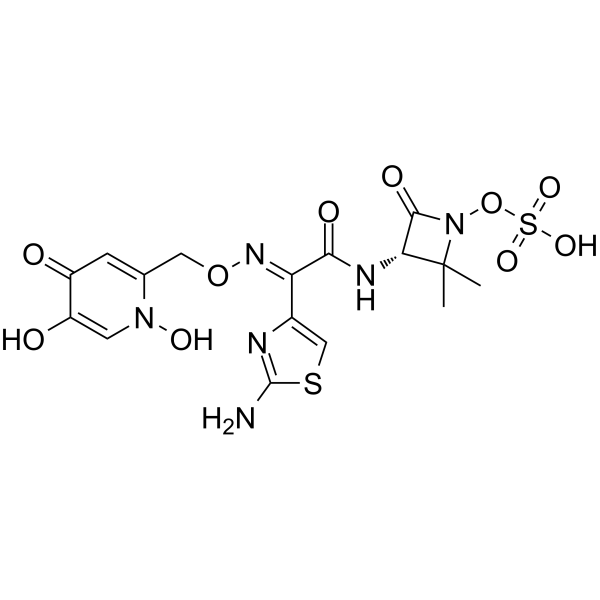
BAL-30072 is a siderophore-bearing monocyclic β-lactam antibiotic with antibacterial activity. BAL-30072 inhibits penicillin-binding proteins 1a, 1b, and 3, thereby disrupting bacterial cell wall synthesis. BAL-30072 inhibits mitochondrial electron transport chain complex II and complex III, while also inhibiting glycolysis and mitochondrial fatty acid β-oxidation. BAL-30072 induces mitochondrial ROS production, cellular ATP depletion, reduces mitochondrial membrane potential, and triggers hepatocyte apoptosis via caspase-3/7 activation. BAL-30072 is a substrate of the hepatic uptake transporters OAT1 and OAT3. BAL-30072 can be used in research related to bacterial infections .
loading...
    loading...
Cat. No.: HY-DY2041
Target:  

Fluorescent Dye

Research Areas:  

Infection

Callose Staining Solution (Aniline Blue, Bright-Field Method) is a fluorescent dye used for detecting callose in plant tissues, green algal cell walls, plant cells, and protoplasts. Callose Staining Solution (Aniline Blue, Bright-Field Method) specifically binds to callose, a β-(1,3)-D-glucan polymer, and exhibits blue-green fluorescence under alkaline conditions with reduced background staining and non-toxicity to living cells. Callose Staining Solution (Aniline Blue, Bright-Field Method) is suitable for observation under UV or epifluorescence microscopy (Ex/Em = 365-370/397-509 nm). Callose Staining Solution (Aniline Blue, Bright-Field Method) can be used in studies related to the visualization of callose deposition in plants .
loading...
    loading...
Cat. No.: HY-N6663R
CAS No.: 13466-78-9
3-Carene (Standard) is the analytical standard of 3-Carene (HY-N6663). This product is intended for research and analytical applications. 3-Carene is an orally active TCA cycle enzyme inhibitor. 3-Carene inhibits succinate dehydrogenase and malate dehydrogenase as well as pyruvate kinase, disrupting energy metabolism. 3-Carene disrupts cell wall and cell membrane integrity, leading to potassium ion leakage, protein leakage, membrane depolarization, ATP depletion, morphological disruption, and cell lysis. 3-Carene interferes with amino acid metabolism, pantothenate and CoA biosynthesis, purine and pyrimidine metabolism, and aminoacyl-tRNA biosynthesis. 3-Carene enhances GABA receptor-mediated synaptic responses. 3-Carene can be used in research on bacterial infections, inflammation, anxiety, and sleep disorders .
loading...
    loading...
Cat. No.: HY-P11909
Research Areas:  

Infection

3-WP is a linear 20-peptide with a C-terminal amidation modification. 3-WP acts on lipoteichoic acid (LTA) and disrupts cell wall permeability, induces intracellular reactive oxygen species (ROS) accumulation in a dose-dependent manner, and simultaneously inhibits respiratory chain dehydrogenase activity and intracellular ATP synthesis, thereby interfering with bacterial energy metabolism and exerting Bacterial antibacterial effects. The combination of 3-WP and Melittin (HY-P0233) exerts synergistic antibacterial effects against Gram-positive bacteria, reduces the required dosage of Melittin, and thus improves the cell selectivity of Melittin. 3-WP can serve as a peptide adjuvant for Melittin in food storage scenarios. 3-WP can be used in the research of foodborne diseases caused by methicillin-resistant Staphylococcus aureus .
loading...
    loading...
Cat. No.: HY-U00380
CAS No.: 102507-71-1
Research Areas:  

Infection

Tigemonam is an orally active monobactam antibiotic with a Ki of 0.86 μM against Enterobacter cloacae P99 β-lactamase and 50.8 μM against Escherichia coli TEM-1 β-lactamase. Tigemonam binds to penicillin-binding proteins 1a, 3, and 4, inhibits bacterial cell wall synthesis, and exhibits bactericidal activity against aerobic gram-negative bacteria including Enterobacteriaceae, Haemophilus influenzae, and Neisseria gonorrhoeae. Tigemonam resists hydrolysis by multiple β-lactamase enzymes, reduces bacterial load in systemic, pyelonephritic, lung, and thigh muscle infections in rodents, and shows minimal difference between minimum inhibitory and bactericidal concentrations. Tigemonam can be used for the research of gram-negative bacterial infections, acute pyelonephritis, lung infection, and thigh muscle infection .
loading...
    loading...
Cat. No.: HY-L067
748 compounds

Antibiotics are types of antimicrobial products used for the treatment and prevention of bacterial infections. Antibiotics can kill or inhibit bacterial growth. Although the target of an antibiotic is bacteria, some antibiotics also attack fungi and protozoans. However, antibiotics rarely have an effect on viruses. The major mechanism underlying antibiotics is the inhibition or regulation of enzymes involved in cell wall biosynthesis, nucleic acid metabolism and repair, protein synthesis, or disruption of membrane structure. Many of these cellular functions targeted by antibiotics are most active in multiplying cells. Since there is often overlap in these functions between prokaryotic bacterial cells and eukaryotic mammalian cells, it is not surprising that some antibiotics have also been found to be useful as anticancer agents.

MCE supplies a unique collection of 748 antibiotics, including penicillins, cephalosporins, tetracyclines, macrolides, etc. MCE Antibiotics Library is a useful tool for anti-bacterial or anti-cancer drugs discovery.

Cat. No.: HY-15651A
CAS No.: 1240425-05-1
Synonyms: AZD9668 tosylate
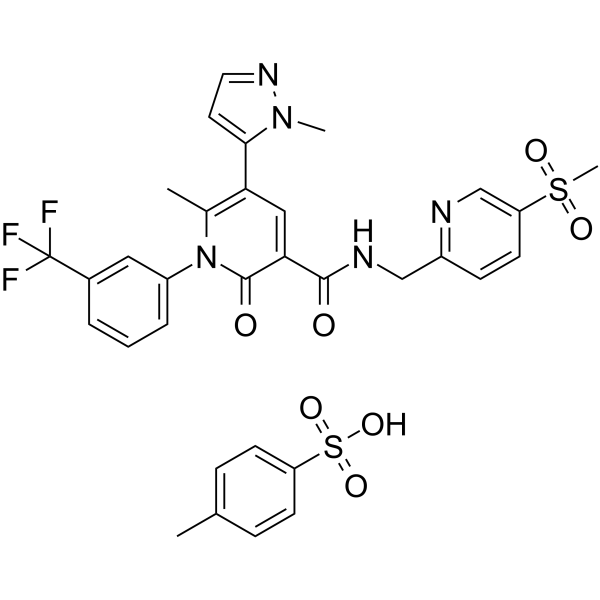
Alvelestat tosylate (AZD9668 tosylate) is an orally active, selective inhibitor of neutrophil elastase. Alvelestat tosylate reduces elastase activity, myeloperoxidase release, neutrophil recruitment and activation, and calcium phosphate precipitation; promotes smooth muscle cell colonization and collagen deposition; and inhibits the formation of neutrophil extracellular traps (NETs) as well as NET-derived neutrophil elastase activity. Alvelestat tosylate restores endothelial dysfunction, regulates antioxidant factors, improves the expression of endothelial tight junctions, reduces vascular leakage, and accelerates wound healing. Alvelestat tosylate prevents pulmonary hemorrhage, matrix protein degradation, airspace enlargement, and small airway wall remodeling; and alleviates cigarette-induced inflammatory responses. Alvelestat tosylate inhibits the growth of abdominal aortic aneurysms exacerbated by Porphyromonas gingivalis. Alvelestat tosylate can be used in research related to chronic obstructive pulmonary disease, abdominal aortic aneurysm, radiation-induced skin injury, and bronchiectasis .
loading...
    loading...
Cat. No.: HY-15651B
CAS No.: 1240425-11-9
Synonyms: AZD9668 hydrochloride
Alvelestat hydrochloride (AZD9668 hydrochloride) is an orally active, selective inhibitor of neutrophil elastase. Alvelestat hydrochloride reduces elastase activity, myeloperoxidase release, neutrophil recruitment and activation, and calcium phosphate precipitation; promotes smooth muscle cell colonization and collagen deposition; and inhibits the formation of neutrophil extracellular traps (NETs) as well as NET-derived neutrophil elastase activity. Alvelestat hydrochloride restores endothelial dysfunction, regulates antioxidant factors, improves the expression of endothelial tight junctions, reduces vascular leakage, and accelerates wound healing. Alvelestat hydrochloride prevents pulmonary hemorrhage, matrix protein degradation, airspace enlargement, and small airway wall remodeling; and alleviates cigarette-induced inflammatory responses. Alvelestat hydrochloride inhibits the growth of abdominal aortic aneurysms exacerbated by Porphyromonas gingivalis. Alvelestat hydrochloride can be used in research related to chronic obstructive pulmonary disease, abdominal aortic aneurysm, radiation-induced skin injury, and bronchiectasis .
loading...
    loading...
Cat. No.: HY-B1325
CAS No.: 64544-07-6
Target:  

Bacterial Antibiotic

Research Areas:  

Infection Inflammation/Immunology

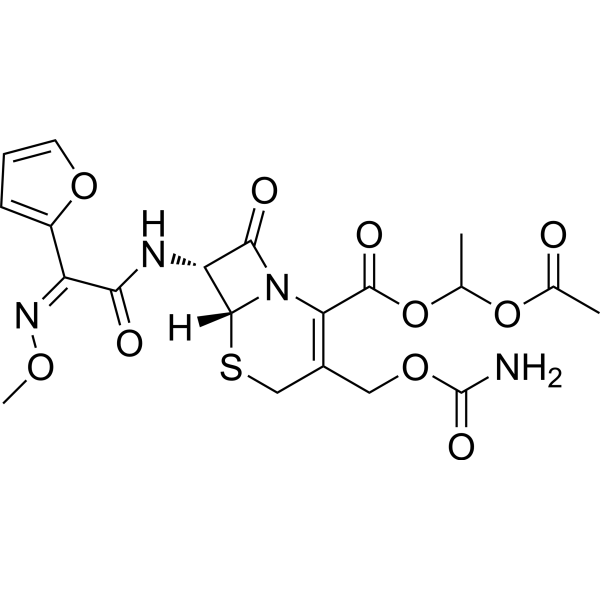
Cefuroxime axetil is an orally effective broad-spectrum β-lactam antibiotic that targets bacterial penicillin-binding proteins (PBPs, such as PBP3 and PBP1). Cefuroxime axetil inhibits cell wall synthesis, leading to bacterial lysis and death, with a minimum inhibitory concentration (MIC) of 0.12-4 mg/L for non-typeable Haemophilus influenzae (NTHi). Cefuroxime axetil is hydrolyzed by esterase to the active ingredient Cefuroxime (HY-B1256A) after oral absorption. Topical administration of Cefuroxime via bioadhesive nanoparticles (BNPs) can prolong the drug's retention time in the middle ear (≥7 days). Cefuroxime axetil can be used in the study of otitis media (especially NTHi infection). Cefuroxime axetil can achieve precise antibacterial effects through oral or topical nano-delivery systems, reducing systemic exposure and the risk of antibiotic resistance .
loading...
    loading...

