

5492 Results for "

STR/ort mice

" in MedChemExpress (MCE) Product Catalog:
Products (5492)

5492 Results for "STR/ort mice" in MCE Product Catalog:

Cat. No.: HY-D3152
CAS No.: 2361979-91-9
NRh-Cu is a highly sensitive near-infrared fluorescence turn-on indicator and Cu 2+-selective probe (λex=680 nm, λem=740 nm). When NRh-Cu interacts with Cu 2+, it undergoes a structural transition from a non-fluorescent spirocyclic state to a fluorescent ring-opened state, which drives the enhancement of fluorescence emission. NRh-Cu can be used for Cu 2+ imaging in live cells and in vivo .
loading...
    loading...
Cat. No.: HY-N0120
CAS No.: 65914-17-2
Synonyms: (E/Z)-Piceid
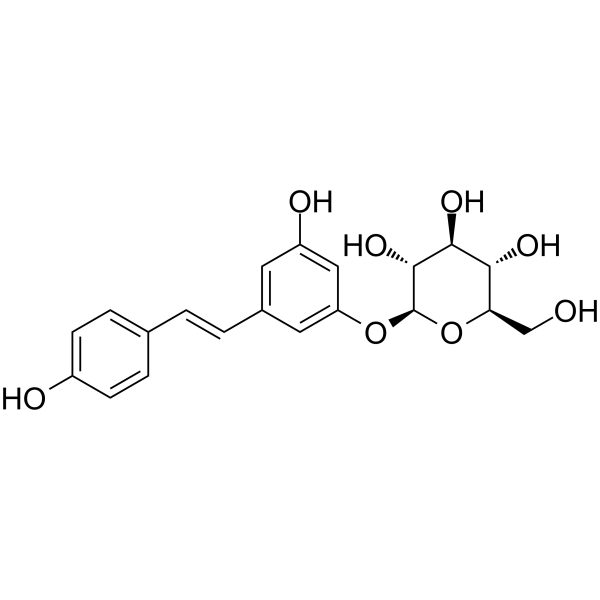
(E/Z)-Polydatin ((E/Z)-Piceid) is a mixture of the E/Z configurations of Polydatin (HY-N0120A). Polydatin can be isolated from Polygonum cuspidatum, grapes, peanuts, red wine, hop pellets, cocoa-containing products and chocolate products. Polydatin exhibits multiple biological properties, such as anti-platelet aggregation, anti-low-density lipoprotein oxidation, cardioprotective activity, anti-inflammatory and immunomodulatory functions. Polydatin shows favorable cytotoxic effects against various tumor cell lines, including cervical cancer cells, liver cancer cells, and nasopharyngeal carcinoma cells .
loading...
    loading...
Cat. No.: HY-N0597R
CAS No.: 32791-84-7
Panaxatriol (Standard) is the analytical standard of Panaxatriol. This product is intended for research and analytical applications. Panaxatriol is an orally active dammarane-type tetracyclic triterpene sapogenin. Panaxatriol enhances the phosphorylation levels of Akt, insulin receptor and p70S6K in skeletal muscle. Panaxatriol reduces the mRNA expression level of Atrogin1 in skeletal muscle. Panaxatriol induces apoptosis, pre-G1 cell cycle arrest and increased intracellular ROS levels in prostate cancer cells, decreases mitochondrial membrane potential, inhibits cell migration and reduces colony formation. Panaxatriol can be used in research related to insulin resistance, myocardial ischemia/reperfusion injury and prostate cancer .
loading...
    loading...
Cat. No.: HY-N11630
CAS No.: 97134-11-7
Pinellic acid is an orally active adjuvant for intranasal influenza vaccines. Pinellic acid can be extracted from the tubers of Pinellia ternata Breitenbach. When administered intranasally in combination with influenza HA vaccine, Pinellic acid slightly increases the titers of antiviral IgG antibodies in bronchoalveolar lavage fluid and serum. Pinellic acid shows no hemolytic activity. Pinellic acid can be used in studies related to influenza virus infection .
loading...
    loading...
Cat. No.: HY-N15871
CAS No.: 231615-77-3
Target:  

Liposome

Research Areas:  

Others

18:1 DGS-NTA(Ni) is a nickel chelating lipid. 18:1 DGS-NTA(Ni) has high affinity for histidine-tags and can bind histidine tags of recombinant proteins. 18:1 DGS-NTA(Ni) can be used for preparation of liposomes and nanosize multilamellar vesicles (NMVs) which are used in protein and peptide binding studies and antigen delivery .
loading...
    loading...
Cat. No.: HY-NP229
DNP-BSA is a multivalent antigen and protein-binding reagent. DNP-BSA binds to subdomain IIA (Site I) of bovine serum albumin via predominantly hydrophobic forces, with spontaneous complex formation via combined dynamic and static quenching. DNP-BSA induces cross-linking of IgE-bound FceRI, triggering tyrosine phosphorylation of FceRI β and γ subunits. DNP-BSA binds to anti-DNP IgE via its DNP groups, forming cross-links between IgE-FceRI complexes, with most DNP groups initially unavailable but transiently exposed for binding. DNP-BSA induces FITC fluorescence quenching in FITC-labeled anti-DNP IgE, proportional to occupied IgE Fab binding sites. DNP-BSA can be used for the research of allergy, inflammation, and contact sensitivity (allergic contact dermatitis) .
loading...
    loading...
Cat. No.: HY-P0009S1
Synonyms: SB-75-d10
Cetrorelix-d10 (SB-75-d10) is the d10-labeled Cetrorelix (HY-P0009). Cetrorelix is a competitive gonadotropin-releasing hormone receptor (GnRHR) antagonist with a Kd of 0.19 nM. Cetrorelix inhibits the secretion of luteinizing hormone (LH) and follicle-stimulating hormone (FSH), thereby suppressing the secretion of downstream sex steroids. Cetrorelix prevents ovulation, induces reversible reproductive shutdown and azoospermia, reduces ovarian fibrosis, improves superovulation outcomes, and inhibits chemotherapy-induced mitochondria-dependent apoptosis. Cetrorelix is applicable for fertility assistance research .
loading...
    loading...
Cat. No.: HY-P10427
DV1 is a CXCR4 inhibitor with anti-proteolytic properties that specifically blocks the binding of SDF-1α to its receptor. DV1 inhibits the migration of breast cancer cells and enables the targeted delivery of avidin-PLGA nanoparticles to CXCR4-expressing cancer cells. DV1 not only effectively suppresses the progression of metastatic breast cancer in mouse models, but also preferentially accumulates in brain tumor tissues rather than normal brain tissues, showing potential for inhibiting intracranial tumor metastasis. As a humoral immune stimulant, DV1 induces the production of specific IgG, neutralizing antibodies and cellular immune responses, thereby providing the host with protection against lethal challenges. DV1 has been applied to studies on CXCR4-expressing cancers, glioblastoma, dengue fever and other related diseases .
loading...
    loading...
Cat. No.: HY-P10449
CAS No.: 3098205-40-1
Target:  

Inhibitory Antibodies

Research Areas:  

Inflammation/Immunology Cancer

M2 Peptide is a peptide targeting M2-like tumor-associated macrophages (TAMs). M2 Peptide is used to carry drugs or small interfering RNA (siRNA) to promote the repolarization of M2-like macrophages to M1-like macrophages, thereby altering the immunosuppressive state in the tumor microenvironment and enhancing the anti-tumor immune response. M2 Peptide can be used to study the effect of macrophage polarization and how this polarization change affects tumor growth and metastasis .
loading...
    loading...
Cat. No.: HY-P10927
Synonyms: BRINP2-related peptide
Target:  

AP-1 PKA

Research Areas:  

Metabolic Disease

BRP is a 12-peptide derived from BRINP2 that can cross the blood-brain barrier. BRP induces the central activation of FOS in neuronal cells via the cAMP-PKA-CREB signaling pathway. BRP exerts anorectic and anti-obesity effects without triggering nausea or aversive responses. The action of BRP is independent of the leptin, GLP-1 receptor and melanocortin 4 receptor pathways. BRP is applicable to obesity-related research .
loading...
    loading...
Cat. No.: HY-P10927A
Synonyms: BRINP2-related peptide TFA
Target:  

PKA AP-1

Research Areas:  

Metabolic Disease

BRP (BRINP2-related peptide) TFA is a 12-peptide derived from BRINP2 that can cross the blood-brain barrier. BRP TFA induces the central activation of FOS in neuronal cells via the cAMP-PKA-CREB signaling pathway. BRP TFA exerts anorectic and anti-obesity effects without triggering nausea or aversive responses. The action of BRP TFA is independent of the leptin, GLP-1 receptor and melanocortin 4 receptor pathways. BRP TFA is applicable to obesity-related research .
loading...
    loading...
Cat. No.: HY-P11274A
Synonyms: Amycretin sodium; NN 9487 sodium
Research Areas:  

Metabolic Disease

Zenagamtide (Amycretin; NN 9487) sodium is an orally active, blood-brain barrier permeable triple agonist that targets GLP-1, amylin (Amylin Receptor) and calcitonin receptor (Calcitonin Receptor). Zenagamtide sodium is a single peptide consisting of 68 amino acids that can target brain regions regulating food intake, significantly suppress appetite and reduce energy intake. Therefore, Zenagamtide sodium improves body weight, waist circumference, glycated hemoglobin and lipid profile, and also alleviates the histological features of metabolic dysfunction-associated steatotic liver disease (MASLD) and enhances insulin sensitivity. Zenagamtide sodium may cause transient increases in heart rate and fluctuations in serum calcium levels, but it is an important compound for the study of overweight, obesity, insulin resistance and related metabolic diseases .
loading...
    loading...
Cat. No.: HY-P11781
CAS No.: 875142-27-1
Target:  

EGFR

Research Areas:  

Cancer

HW12 is a scrambled peptide control with no EGFR ligand activity. HW12 shows low cellular uptake levels in EGFR-positive cells. HW12 exerts weak growth inhibitory effects on pancreatic cancer. HW12 serves as a scrambled peptide control for EGFR-targeted GE11 (HY-P10128)-conjugated mixed micelles. HW12 can be used in pancreatic cancer research .
loading...
    loading...
Cat. No.: HY-P11937
Target:  

Glycoprotein VI

Research Areas:  

Cancer

ALLANHEELFQTGGGSC is a Glypican-3 (GPC3) targeting peptide that can be conjugated to fluorescent dyes via cysteine residues. ALLANHEELFQTGGGSC consists of a 12-amino-acid GPC3-binding peptide (ALLANHEELFQT) and a C-terminal GGGSC linker. ALLANHEELFQTGGGSC dose-dependently competes with and inhibits the binding of GPC3-targeting fluorescent probes to Hep3B hepatocellular carcinoma cells. ALLANHEELFQTGGGSC can be used for the construction of GPC3-targeted molecular probes and hepatocellular carcinoma-related research .
loading...
    loading...
Cat. No.: HY-P11969
Research Areas:  

Cancer

10YX is a cyclic peptide probe targeting glypican-3 (GPC3) (Kd = 300.4 nM for human GPC3). It achieves tumor targeting by binding to GPC3 sitemap2 and serves as a PET imaging probe for tumor visualization and intrahepatic lesion localization. 10YX is useful for research on hepatocellular carcinoma .
loading...
    loading...
Cat. No.: HY-P5448
CAS No.: 159507-82-1
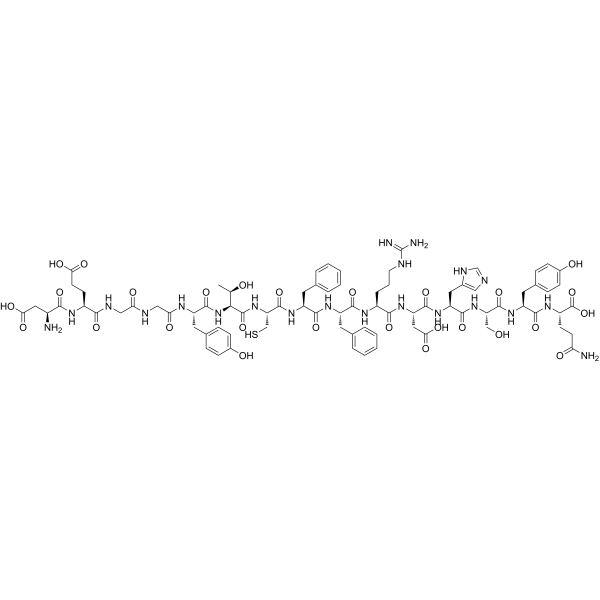
MOG (92-106), mouse, rat is a 15-peptide encephalitogenic epitope composed of amino acid residues 92-106 of myelin oligodendrocyte glycoprotein (MOG). MOG (92-106), mouse, rat serves as an I-A s-restricted CD4 + T cell antigen. MOG (92-106), mouse, rat also induces extensive B cell responses against secondary myelin antigens such as MBP and PLP. MOG (92-106), mouse, rat is applicable to studies on multiple sclerosis, EAE, autoimmune demyelination, and antigen-specific T/B cell responses .
loading...
    loading...
Cat. No.: HY-P990914
CAS No.: 2865822-82-6
Synonyms: GS-1811; JTX-1811

Target:  

CCR

Research Areas:  

Inflammation/Immunology Cancer

Denikitug (GS-1811; JTX-1811) is a humanized monoclonal antibody against CCR8 receptor with a KD of 16.8 pM. Denikitug specifically binds to human CCR8, inhibits CCL1-induced downstream CCR8 signaling. Denikitug selectively depletes cells expressing CCR8 via antibody-dependent cellular cytotoxicity (ADCC). Denikitug promotes anti-tumor immunity and can be used for the research of cancer and immunology .
loading...
    loading...
Cat. No.: HY-P992080

Target:  

Influenza Virus

Research Areas:  

Infection

Anti-Flu A (H7N9) HA/Hemagglutinin Antibody (m826) is a humanized monoclonal antibody targeting H7N9. Anti-Flu A (H7N9) HA/Hemagglutinin Antibody (m826) induces antibody-dependent cellular cytotoxicity (ADCC) against cells expressing H7N9 HA. Anti-Flu A (H7N9) HA/Hemagglutinin Antibody (m826) is applicable to studies related to H7N9 avian influenza virus infection .
loading...
    loading...
Cat. No.: HY-P992356

Target:  

Topoisomerase

Research Areas:  

Cancer

GENA-104A16 is a humanized monoclonal antibody targeting CNTN4, with multiple functions including immunostimulation, cytotoxicity and immunoregulation. By binding to CNTN4, GENA-104A16 blocks its interaction with APP, thereby restoring T cell function, inducing tumor cell death and regulating tumor-infiltrating immune cell populations. GENA-104A16 also exerts topoisomerase I inhibitory activity via the payload Exatecan (HY-13631). GENA-104A16 can be used in research related to colon cancer liver metastasis and other CNTN4-expressing solid tumors .
loading...
    loading...
Cat. No.: HY-P99529
CAS No.: 1804910-11-9
Synonyms: BAX1810; TAK-752; SM101

Target:  

Fc Receptor (FcR)

Research Areas:  

Inflammation/Immunology

Valziflocept (BAX1810) is a recombinant soluble human FcγRIIb receptor that targets Fc and FcγR. FcγRs bind to and neutralize pathogenic IgG, thereby acting as a "decoy" or "scavenger" receptor that reduces the severity of autoimmune diseases. Valziflocept is used in research on autoimmune diseases such as systemic lupus erythematosus (SLE) .
loading...
    loading...

