67 Results for "

DNA fragmentation

" in MedChemExpress (MCE) Product Catalog:
Products (67)

67 Results for "DNA fragmentation" in MCE Product Catalog:

Cat. No.: HY-W726390
CAS No.: 134720-04-0
Target:  

Adrenergic Receptor

Research Areas:  

Neurological Disease

2-(4-(2-Hydroxy-3-(isopropyl(nitroso)amino)propoxy)phenyl)acetamide is a genotoxic derivative of Atenolol (HY-17498) that can induce DNA fragmentation in rat hepatocytes when used at concentrations ranging from 0.1 to 1 mM.
loading...
    loading...
Cat. No.: HY-117249
CAS No.: 104958-90-9
Synonyms: AK-2123
Target:  

Apoptosis Caspase

Research Areas:  

Cancer

Sanazole (AK-2123) is a hypoxic cell radiosensitizer. Sanazole enhances radiation-induced DNA strand breaks. In mouse fibroblast tumors, Sanazole increases nuclear condensation and fragmentation, as well as elevates caspase-3 activity, thereby enhancing radiation-induced apoptosis .
loading...
    loading...
Cat. No.: HY-W747533
CAS No.: 170926-06-4
Synonyms: C8 Ceramine; Ceramine (d18:1/8:0)
Target:  

Drug Derivative

Research Areas:  

Others

C8 Ceramine is an analog of ceramide in which the carbonyl group of the ceramide is replaced by a methylene group. At a concentration of 10 μM, C8 ceramine induces maximal DNA fragmentation in U937 cells after 6 hours of incubation, compared to 12 hours for C8 ceramide.
loading...
    loading...
Cat. No.: HY-N8248A
CAS No.: 22768-95-2
Target:  

Topoisomerase

Research Areas:  

Cancer

(-)-Eleutherin is a pyranonaphthoquinone derivative that exhibits cytotoxic activity by inhibiting DNA topoisomerase II. (-)-Eleutherin has been shown to have promising potential as a medicinal compound due to its association with naphthoquinones. (-)-Eleutherin demonstrates significant DNA fragmentation rates, indicating its strong cytotoxic effects on cells. Additionally, (-)-Eleutherin possesses higher antioxidant potential compared to control samples, contributing to its therapeutic efficacy.
loading...
    loading...
Cat. No.: HY-147867
CAS No.: 2415311-84-9
Target:  

MMP

Research Areas:  

Cancer

MMP-2/9-IN-1 (Compound 4a) is a potent dual MMP-2 and MMP-9 inhibitor with IC50 values of 56 nM and 38 nM, respectively. MMP-2/9-IN-1 inhibits tumor growth, strongly induces cancer cell apoptosis, inhibits cell migration, and suppresses cell cycle progression leading to DNA fragmentation .
loading...
    loading...
Cat. No.: HY-168164
CAS No.: 53484-50-7
Research Areas:  

Cancer

4-Methoxycinnamyl alcohol is an anticancer compound with cytotoxic activity against MCF-7, HeLa, and DU145 cancer cell lines with IC50 values of 14.24, 7.82, and 22.10 μg/mL, respectively. 4-Methoxycinnamyl alcohol showed the ability to induce cell necrosis, rather than apoptosis, after a 48-hour DNA fragmentation assay. 4-Methoxycinnamyl alcohol was isolated from Foeniculum vulgare .
loading...
    loading...
Cat. No.: HY-A0170R
CAS No.: 147059-72-1
Trovafloxacin (Standard) is the analytical standard of Trovafloxacin. This product is intended for research and analytical applications. Trovafloxacin is a broad-spectrum quinolone antibiotic with potent activity against Gram-positive, Gram-negative and anaerobic organisms. Trovafloxacin blocks the DNA gyrase and topoisomerase IV activity. Trovafloxacin is also a potent, selective and orally active pannexin 1 channel (PANX1) inhibitor with an IC50 of 4 μM for PANX1 inward current. Trovafloxacin does not inhibit connexin 43 gap junction or PANX2. Trovafloxacin leads to dysregulated fragmentation of apoptotic cells by inhibiting PANX1 .
loading...
    loading...
Cat. No.: HY-N8617
CAS No.: 135247-94-8
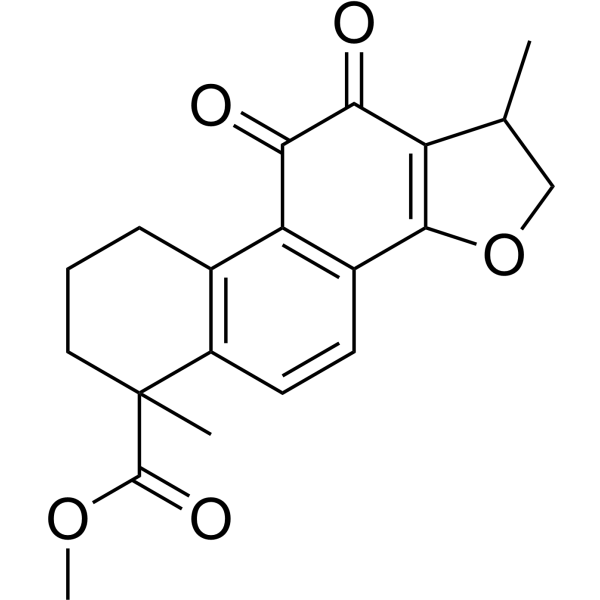
Trijuganone C is a tanshinone-type diterpenoid compound. Trijuganone C can be isolated from the roots of Salvia miltiorrhiza Bunge. Trijuganone C induces chromatin condensation, DNA fragmentation, activation of Caspase-3, -8 and -9, as well as cleavage of PARP. Trijuganone C activates Bid and Bax, leading to loss of mitochondrial membrane potential and inducing the release of cytochrome c from mitochondria into the cytosol. Trijuganone C exerts antiproliferative effects through Apoptosis induction mediated by Mitochondrial dysfunction and Caspase activation. Trijuganone C exhibits significant antiproliferative activity against leukemia cells and colon cancer cells .
loading...
    loading...
Cat. No.: HY-116692
CAS No.: 582314-48-5
Apoptosis inducer 34 (Compound 4) is a small molecule compound that induces apoptosis by directly activating the intrinsic apoptotic pathway. Apoptosis inducer 34 promotes Apaf-1 oligomerization to form mature apoptosomes, thereby activating caspase-9 and caspase-3. It significantly activates the apoptotic pathway in Jurkat cells by enhancing the cytochrome c-dependent apoptotic signaling pathway, inducing PARP cleavage and chromosomal DNA fragmentation. Furthermore, Apoptosis inducer 34 exhibits low toxicity to normal cells, demonstrating potential for selective targeting of cancer cells. Apoptosis inducer 34 is a promising candidate for studying cancer related to apoptotic pathways .
loading...
    loading...
Cat. No.: HY-N3055
CAS No.: 31685-80-0
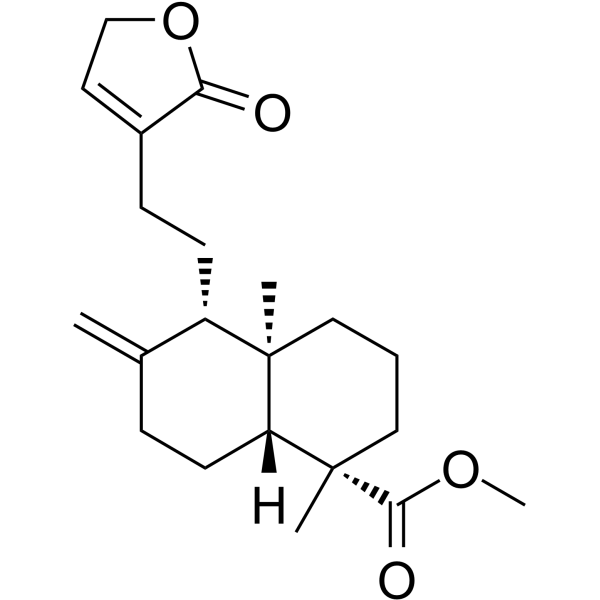
Pinusolide is an AMPK activator and PAF receptor antagonist. Pinusolide activates AMPK, phosphorylates ACC, enhances IRS-1 tyrosine phosphorylation, boosts glucose uptake, and modulates insulin signaling. Pinusolide inhibits caspase-3/7 activation, intracellular calcium elevation, reactive oxygen species overproduction, lipid peroxidation, and tumor cell proliferation. Pinusolide stabilizes superoxide dismutase activity, reduces apoptotic hallmarks, induces mitochondrial pathway apoptosis, and triggers DNA fragmentation. Pinusolide can be used for the research of type 2 diabetes, neurodegenerative diseases, acute lymphoblastic leukemia, acute myeloid leukemia, and Burkitt lymphoma .
loading...
    loading...
Cat. No.: HY-W271506
CAS No.: 10135-38-3
Synonyms: 3,3,5,5-Tetramethyl-1-pyrroline 1-oxide
TMPO (3,3,5,5-Tetramethyl-1-pyrroline 1-oxide) is a spin trap targeting free radicals. TMPO is capable of scavenging superoxide, hydroxyl radicals and inhibits thymocyte apoptosis with EC50 values of 19.1 mM (MPS-induced) to 30.7 mM (Etoposide-induced) for inhibiting DNA fragmentation. TMPO reacts with intracellular free radicals to form stable nitroxide radical products, reducing oxidative stress (e.g., decreasing peroxide levels, maintaining glutathione content) and blocking oxidative events in the apoptotic pathway. TMPO is promising for research of apoptosis in immune cells like thymocytes .
loading...
    loading...
Cat. No.: HY-W777393
CAS No.: 1189992-05-9
Synonyms: 7-Hydroxycoumarin-13C6; Hydrangin-13C6; NSC 19790-13C6
Umbelliferone- 13C6 (7-Hydroxycoumarin- 13C6) is the 13C-labeled Umbelliferone (HY-N0573). Umbelliferone (7-Hydroxycoumarin), a natural orally active product of the coumarin family, is a fluorescing compound which can be used as a sunscreen agent. Umbelliferone induces cell cycle arrest, apoptosis and DNA fragmentation in HepG2 cells. Umbelliferone exhibits significant anticancer effects. Umbelliferone attenuates the alteration characteristics of allergic airway inflammation. Umbelliferone displays the neuroprotective effects and cross the blood-brain barrier. Umbelliferone exhibits anti-inflammatory and antioxidant effects in chronic alcohol-fed rats .
loading...
    loading...
Cat. No.: HY-P700499
Purity:  ≥ 90%, as determined by reducing SDS-PAGE.
Synonyms: DFFA; DNA fragmentation Factor, 45kDa, Alpha Polypeptide; DNA fragmentation Factor Subunit Alpha; DNA fragmentation Factor 45 KDa Subunit; DFF-45; Inhibitor Of CAD; DFF45; DNA fragmentation Factor, 45 KD, Alpha Polypeptide; ICAD; DNA fragmentation Factor,
Species:  
Human
Source:  
E. coli
loading...
    loading...
Cat. No.: HY-P7814
Purity:  ≥ 90%, as determined by reducing SDS-PAGE.
Synonyms: DFFA; DNA fragmentation Factor, 45kDa, Alpha Polypeptide; DNA fragmentation Factor Subunit Alpha; DNA fragmentation Factor 45 KDa Subunit; DFF-45; Inhibitor Of CAD; DFF45; DNA fragmentation Factor, 45 KD, Alpha Polypeptide; ICAD; DNA fragmentation Factor,
Species:  
Human
Source:  
E. coli
loading...
    loading...
Cat. No.: HY-P82517
Synonyms: DFFA; DFF1; DFF45; H13; DNA fragmentation factor subunit alpha; DNA fragmentation factor 45 kDa subunit; DFF-45; Inhibitor of CAD; ICAD

Host:  

Rabbit

Application:  

WB, IHC-P, ICC/IF, IP, FC

Reactivity:  

Human

loading...
    loading...
Cat. No.: HY-169795
CAS No.: 175892-43-0
Target:  

Apoptosis

Research Areas:  

Cancer

C8 D-threo Ceramide (d18:1/8:0) is a sphingolipid analog that can effectively induce apoptosis in U937 cells and cause fragmentation of nucleosomal DNA .
loading...
    loading...
Cat. No.: HY-126473
CAS No.: 70010-76-3
Target:  

Parasite Apoptosis

Research Areas:  

Infection Inflammation/Immunology

NE97220 is a biochemical reagent. NE97220 induces macrophage apoptosis and reduces their viability, leading to internucleosomal DNA fragmentation. NE97220 inhibits the growth of Trypanosoma brucei rhodesiense . NE97220 is used in research on human African trypanosomiasis and immune-related studies .
loading...
    loading...
Cat. No.: HY-W714212
CAS No.: 33245-39-5
Fluchloralin is a dinitroaniline herbicide that effectively controls annual gramineous and broadleaf weeds primarily by inhibiting tubulin synthesis and cell division . Fluchloralin exhibits cytotoxicity and genotoxicity, and promotes cell apoptosis by activating apoptotic signaling proteins, forming DNA ladder bands, inducing cell shrinkage and nuclear fragmentation .
loading...
    loading...
Cat. No.: HY-171171
CAS No.: 2649242-85-1
Target:  

DNA/RNA Synthesis

Research Areas:  

Cancer

NERx 329 is a replication protein A (RPA) inhibitor with an IC50 of 4.9 μM. NERx 329 blocks the interaction between RPA and single-stranded DNA, and induces functional RPA depletion, loss of single-stranded DNA gap protection, chromosome fragmentation and cell death. NERx 329 inhibits the DNA damage response signaling pathway, exhibits broad single-agent anticancer activity, and enhances the activity of DNA-damaging agents. NERx 329 can be used in research related to brca1-deficient breast cancer, non-small cell lung cancer, and brca1-deficient ovarian cancer .
loading...
    loading...
Cat. No.: HY-117208
CAS No.: 748786-57-4
Research Areas:  

Cancer

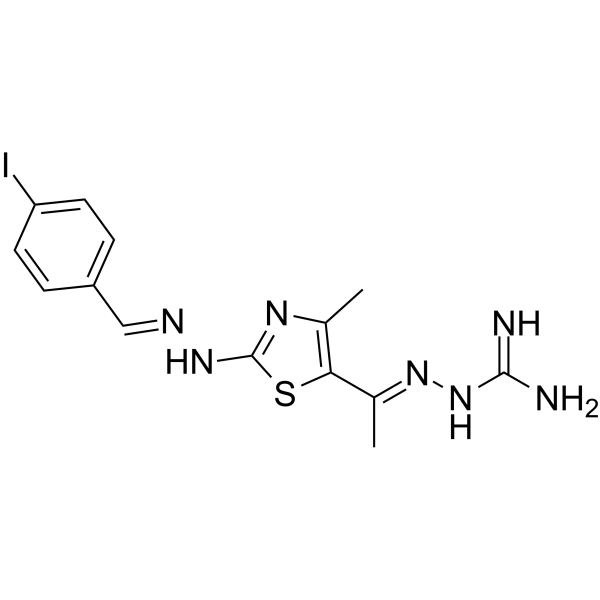
TLSC702 is a human glyoxalase I (hGLO I) inhibitor with an IC50 of 2.0 μM. TLSC702 inhibits the activity of human glyoxalase I, thereby leading to the accumulation of methylglyoxal and its derived advanced glycation end products. TLSC702 inhibits tumor cell proliferation, induces apoptotic morphological changes, internucleosomal DNA fragmentation and PARP cleavage in tumor cells. TLSC702 can be used in research related to leukemia and lung cancer .
loading...
    loading...

