61 Results for "

coactivators

" in MedChemExpress (MCE) Product Catalog:
Products (61)

61 Results for "coactivators" in MCE Product Catalog:

Cat. No.: HY-121582
CAS No.: 380537-35-9
Synonyms: (E)-EPH 116
Target:  

Drug Isomer

Research Areas:  

Cancer

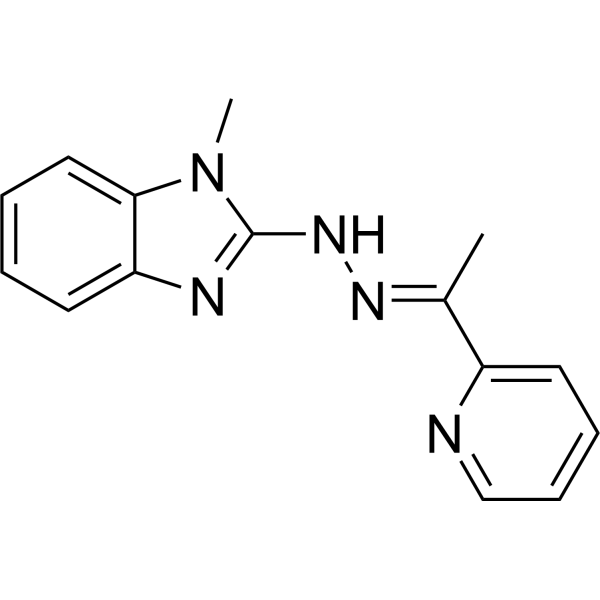
(E)-SI-2 is an isomer of SI-2, an inhibitor of the steroid receptor coactivator SRC-3. SI-2 has anticancer activity and increases the number of cytotoxic immune cells in mice with breast cancer .
loading...
    loading...
Cat. No.: HY-100855
CAS No.: 108181-00-6
Research Areas:  

Cancer

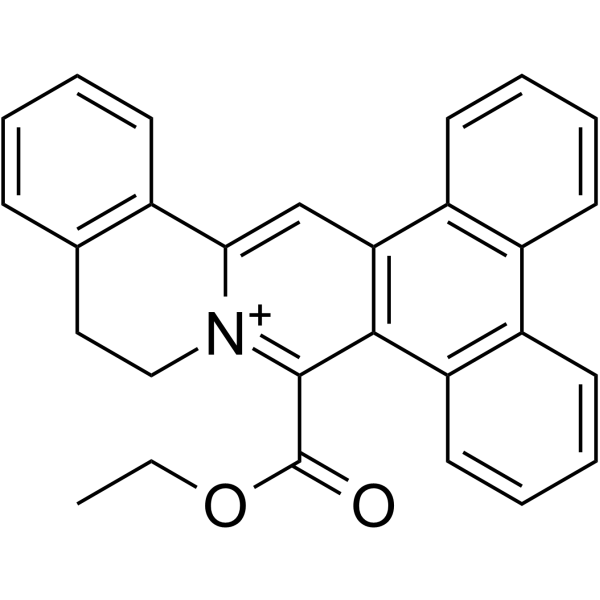
DC_C66 is a cell-permeable, selective coactivator associated arginine methyltransferase 1 (CARM1) inhibitor with an IC50 of 1.8 μM. DC_C66 has a good selectivity for CARM1 against PRMT1 (IC50=21 μM), PRMT6 (IC50= 47μM), and PRMT5 .
loading...
    loading...
Cat. No.: HY-19625A
CAS No.: 296792-62-6
Research Areas:  

Cancer

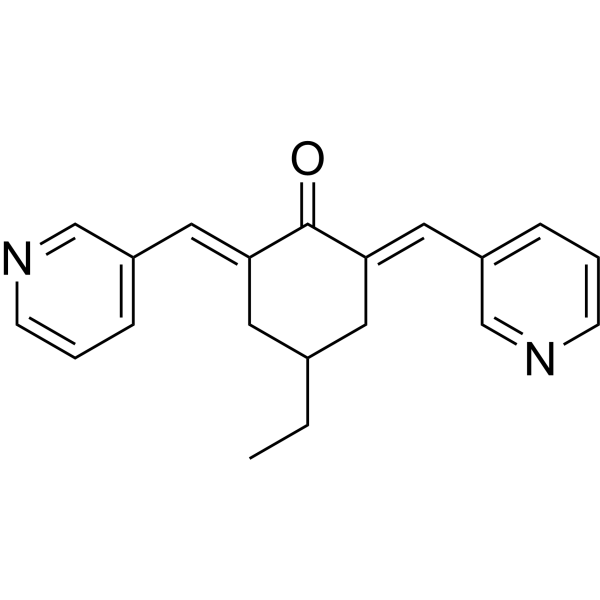
(E/Z)-MCB-613 is a pan-Steroid Receptor Coactivator (SRC) stimulator. (E/Z)-MCB-613 overstimulates SRC activity in cancer cells resulting in excessive generation of reactive oxygen species (ROS), leading to cell stress and death by a process called paraptosis. (E/Z)-MCB-613 is a cytotoxic molecule that plays an important role in cancer .
loading...
    loading...
Cat. No.: HY-P10843
Target:  

Estrogen Receptor/ERR

Research Areas:  

Cancer

R4K1 is a cell-permeable stapled peptide. R4K1 binds to the estrogen receptor (ER) α with high affinity and inhibits its interaction with coactivators. R4K1 can enter breast cancer cells to regulate gene transcription and inhibit cell proliferation. R4K1 can be used in the study of cancer .
loading...
    loading...
Cat. No.: HY-117182
CAS No.: 233268-81-0
LG190178 is a non-steroidal vitamin D receptor (VDR) ligand that can induce the formation of heterodimer complexes between VDR and retinoid X receptor (RXR), stabilizing the agonistic conformation of the VDR ligand-binding domain and promoting its interaction with co-activators. LG190178 has functions in regulating calcium homeostasis, bone mineralization, as well as cell proliferation, differentiation, and apoptosis, making it useful for research in psoriasis, osteoporosis, and cancer .
loading...
    loading...
Cat. No.: HY-175421
Research Areas:  

Cancer

ArMan is a co-activator of DC-SIGN (CD209) and TLR7. ArMan can selectively bind to DC-SIGN, promoting receptor-mediated endocytosis of the virus-like particle (VLP) platform, thereby enhancing co-binding with TLR7. ArMan can drive dendritic cell activation, shifting the immune response from humoral immunity to type 1 cellular immunity. ArMan can be used in melanoma research .
loading...
    loading...
Cat. No.: HY-131445A
Purity:  99.91%
SS-RJW100 is a enantiomer of RJW100, which is a racemic agonist of nuclear receptor liver receptor homolog 1 (LRH-1) and steroidogenic factor 1 (SF-1). SS-RJW100 promotes recruitment of coregulator protein fragments in vitro, recruits the transcriptional intermediary factor 2 (Tif2) coactivator to LRH-1. SS-RJW100 diminishes LRH-1 allosteric activation networks, shows poor thermal stability .
loading...
    loading...
Cat. No.: HY-14863
CAS No.: 250384-82-8
Synonyms: CTA-018
Target:  

VD/VDR Cytochrome P450

Research Areas:  

Others Endocrinology

Lunacalcipol (CTA-018), as a vitamin D analogue, has a dual role in the pathogenesis of Chronic Kidney Disease (CKD), as an agonist of vitamin D receptor and an antagonist of cytochrome P450 enzyme 24-hydroxylase. Lunacalcipol binds to VDR and regulates transcriptional activity of VDR by influencing ligand binding affinity, ligand-dependent coactivator recruitment or inhibitory factor dissociation, efficiency of ligand entry into target cells, tissue specificity and different metabolism of ligand. Lunacalcipol can be used in the study of CKD, especially Secondary Hyperparathyroidism (sHPT) .
loading...
    loading...
Cat. No.: HY-126969
CAS No.: 870095-15-1
Target:  

PPAR

Research Areas:  

Metabolic Disease

C333H is a selective PPARγ modulator with insulin-sensitizing and hypoglycemic activities. C333H exhibits similar insulin-sensitizing effects to thiazolidinediones (TZDs) in diabetic mouse models without significantly increasing body weight or adipose tissue weight. C333H increases circulating high molecular weight adiponectin isoform levels in diabetic db/db mice, reduces serine phosphorylation of PPARγ 273 in brown adipose tissue, and selectively modulates the expression of specific PPARγ target genes in adipose tissue. Express. C333H exhibits weak recruitment of co-activators and weak dissociation of co-repressors in vitro. These properties suggest that C333H may be a potential inhibitor of type 2 diabetes .
loading...
    loading...
Cat. No.: HY-17538R
CAS No.: 49671-76-3
ZLN005 (Standard) is the analytical standard of ZLN005 (HY-17538). This product is intended for research and analytical applications. ZLN005 is a potent activator of peroxisome proliferator-activated receptor-γ coactivator-1α (PGC-1α) .
loading...
    loading...
Cat. No.: HY-101491R
CAS No.: 2095432-55-4
Research Areas:  

Metabolic Disease

SR-18292 (Standard) is the analytical standard of SR-18292 (HY-101491). This product is intended for research and analytical applications. SR-18292 is a PPAR gamma coactivator-1α (PGC-1α) inhibitor, which increases PGC-1α acetylation, suppresses gluconeogenic gene expression and reduces glucose production in hepatocytes.
loading...
    loading...
Cat. No.: HY-W585171
CAS No.: 2504234-93-7
Target:  

Ligands for E3 Ligase

Research Areas:  

Cancer

CRBN ligand-896 (CRBN-1) is a E3 ligase ligand of PROTAC that can be used to synthesize PROTAC degraders targeting the epigenetic coactivator p300 .
loading...
    loading...
Cat. No.: HY-100565R
CAS No.: 1821908-48-8
Research Areas:  

Cancer

SGC2085 (Standard) is the analytical standard of SGC2085 (HY-100565). This product is intended for research and analytical applications. SGC2085 is a potent and selective inhibitor of coactivator associated arginine methyltransferase 1 (CARM1) with an IC50 of 50 nM. SGC2085 also selectively inhibits PRMT6 with an IC50 value of 5.2 μM, but not other PRMT proteins .
loading...
    loading...
Cat. No.: HY-160126
CAS No.: 2154373-60-9
Target:  

LXR

Research Areas:  

Others

27-Norcholestenoic acid is an inverse agonist of LXRβ and LXRα that decreases basal luciferase activity and inhibits agonist-induced transactivation. 27-Norcholestenoic acid induces conformational changes in the AF-2 domain that favor corepressor over coactivator recruitment, thereby destabilizing the active receptor conformation. 27-Norcholestenoic acid downregulates FASN and SREBP-1a/c gene expression .
loading...
    loading...
Cat. No.: HY-121511
CAS No.: 2101206-36-2
Research Areas:  

Cancer

EML631 is a SPIN1 inhibitor with a Kd of 3-7 μM. EML631 interacts with the second Tudor domain of SPIN1 and blocks its ability to read the H3K4me3 histone mark. EML631 inhibits the coactivator activity of SPIN1 in the Wnt signaling pathway and reduces the activity of Wnt response reporter genes. EML631 can be used in cancer-related research .
loading...
    loading...
Cat. No.: HY-125675
CAS No.: 2027540-49-2
Target:  

Estrogen Receptor/ERR

Research Areas:  

Cancer

VPC-16606 is a selective inhibitor targeting the activation function 2 (AF2) domain of estrogen receptor α (ERα). VPC-16606 blocks the interaction between ERα and coactivators, inhibits the activity of both wild-type and clinically drug-resistant mutant ERα, and exerts inhibitory effects on hormone-resistant breast cancer cells. VPC-16606 can be used in breast cancer research .
loading...
    loading...
Cat. No.: HY-187505
CAS No.: 3052796-86-5
Research Areas:  

Metabolic Disease

ZG-2585 is an orally active and selective thyroid hormone receptor β (THRβ) agonist. ZG-2585 selectively activates THRβ over THRα, driving allosteric conformational changes and coactivator recruitment. ZG-2585 reduces body weight, hepatic steatosis and lipid accumulation in a Western diet-induced metabolic disorder model. ZG-2585 can be used for the research of metabolic disorders, including obesity, dyslipidemia and metabolic dysfunction-associated steatohepatitis .
loading...
    loading...
Cat. No.: HY-N1749
CAS No.: 130395-82-3
2-Oxokolavenol is a selective agonist targeting the farnesoid X receptor (FXR), with an EC50 of ~3.7 μM. 2-Oxokolavenol exerts its activity against Acetaminophen (HY-66005)-induced hepatocyte damage in an FXR-dependent manner by binding to the FXR ligand-binding pocket, recruiting co-activators, and inducing FXR transcriptional activity. 2-Oxokolavenol can be naturally extracted from Aglaia spectabilis (a plant of the Aglaia genus in the Meliaceae family) and can be used in research related to liver diseases .
loading...
    loading...
Cat. No.: HY-187225
Research Areas:  

Cancer

NCP07 is a PROTAC degrader targeting the coactivator-binding site (CBS) of ERα. NCP07 induces the formation of the ERα-NCP07-VHL ternary complex and promotes ERα degradation via the ubiquitin-proteasome system. NCP07 induces apoptosis and cell cycle arrest in endocrine therapy-resistant breast cancer cells. NCP07 inhibits the proliferation of wild-type and ESR1-mutant breast cancer cells. NCP07 is applicable to breast cancer-related research .
loading...
    loading...
Cat. No.: HY-182046
CAS No.: 2930131-74-9
HD202A is an orally active, selective dual inhibitor of MNK1/MNK2 (with IC50 values of 6.09 nM and 8.06 nM, and Kd values of 1.913 μM and 5.244 μM, respectively) that inhibits the MNK-eIF4E signaling pathway. By downregulating perilipin 2 and SCD1, while upregulating adipose triglyceride lipase and PPARγ coactivator 1α, HD202A enhances mitochondrial fatty acid oxidation and redox homeostasis. HD202A effectively suppresses body weight gain, hepatic lipid accumulation and elevation of serum lipids, significantly improves glucose tolerance and insulin sensitivity of the organism, and ameliorates inflammatory features. With these comprehensive pharmacological activities, HD202A exhibits great application potential in studies of metabolic dysfunction-associated steatotic liver disease .
loading...
    loading...

