

490 Results for "

competitive binding

" in MedChemExpress (MCE) Product Catalog:
Products (490)

490 Results for "competitive binding" in MCE Product Catalog:

4
4 Cited Publications
Cat. No.: HY-N0806
CAS No.: 14215-86-2
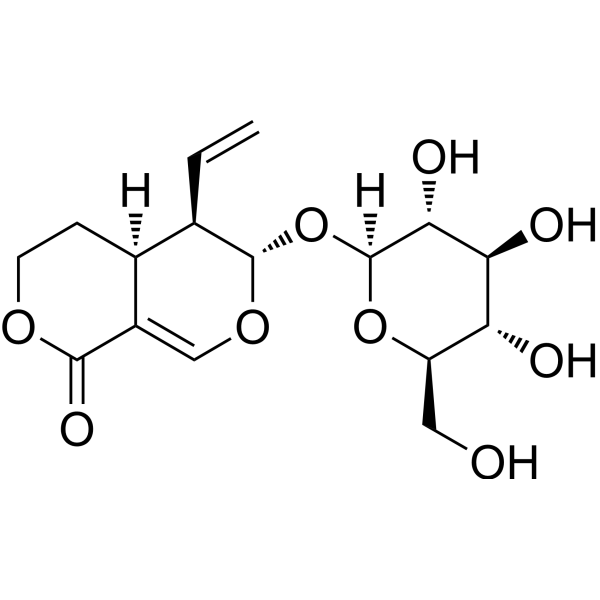
Sweroside is an iridoid glycoside that targets multiple targets, including the Keap1/Nrf2 axis, NLRP3 inflammasome, SIRT1, NF-κB, AMPK/mTOR pathway, and caspase family. Sweroside promotes Nrf2 nuclear translocation by competitively binding to Keap1. Sweroside also inhibits oxidative stress and NLRP3-mediated pyroptosis by activating Nrf2, inhibits NF-κB inflammatory pathway by activating SIRT1, and promotes autophagy and induces caspase-dependent apoptosis via the AMPK/mTOR pathway. Sweroside has antioxidant, anti-inflammatory, anti-apoptotic, and lipid metabolism regulating activities, and can be used in the research of myocardial ischemia-reperfusion injury, leukemia, acute lung injury, non-alcoholic fatty liver disease, and other fields .
loading...
    loading...
4
4 Cited Publications
Cat. No.: HY-108831
CAS No.: 189261-10-7
Purity:  99.10%
Natalizumab (AN100226; BG00002) is a humanized monoclonal IgG4 antibody inhibitor that selectively targets α4 integrin (CD49d). It blocks the interaction of integrins such as α4β1 (VLA-4) with vascular cell adhesion molecule VCAM-1, intercellular adhesion molecule ICAM-1, and fibronectin by competitively binding to the α4 subunit. Natalizumab inhibits the adhesion, retention, and transendothelial migration of immune cells (such as CD4 + T cells), reducing the infiltration of inflammatory cells into the central nervous system or lesion sites, thus exerting anti-inflammatory and immunomodulatory activity. Natalizumab is used in the study of relapsing-remitting multiple sclerosis (RRMS) and also has applications in the study of autoimmune or inflammation-related diseases such as Crohn's disease, B-cell lymphoma, and non-infectious uveitis. Natalizumab can also prevent lymphocytes from entering the central nervous system, thereby preventing acute demyelinating relapses .
loading...
    loading...
4
4 Cited Publications
Cat. No.: HY-108831A
CAS No.: 189261-10-7
Purity:  98.72%
Synonyms: AN100226; BG00002
Natalizumab (Anti-CD49d) (AN100226; BG00002) Solution is a humanized monoclonal IgG4 antibody inhibitor that selectively targets α4 integrin (CD49d), blocking the interaction of integrins such as α4β1 (VLA-4) with vascular cell adhesion molecule VCAM-1, intercellular adhesion molecule ICAM-1, and fibronectin by competitively binding to the α4 subunit. Natalizumab solution inhibits the adhesion, retention, and transendothelial migration of immune cells (such as CD4 + T cells), reducing the infiltration of inflammatory cells into the central nervous system or lesion sites, thereby exerting anti-inflammatory and immunomodulatory activity. Natalizumab (Anti-CD49d) solution is used in the study of relapsing-remitting multiple sclerosis (RRMS) and is also applied in the research of autoimmune or inflammation-related diseases such as Crohn's disease, B-cell lymphoma, and non-infectious uveitis. Natalizumab (Anti-CD49d) can also prevent lymphocytes from entering the central nervous system, thus preventing acute demyelinating relapses .
loading...
    loading...
3
3 Cited Publications
Cat. No.: HY-13945
CAS No.: 362003-83-6
Purity:  99.73%
Target:  

Apoptosis

Research Areas:  

Cancer

NVP 231 is a potent, specific, and reversible ceramide kinase (CerK) inhibitor(IC50=12 nM) that competitively inhibits binding of ceramide to CerK . NVP 231 induces cell apoptosis by increasing DNA fragmentation and caspase-3 and caspase-9 cleavage .
loading...
    loading...
3
3 Cited Publications
Cat. No.: HY-13503
CAS No.: 152044-53-6
Purity:  99.81%
Synonyms: Epo A
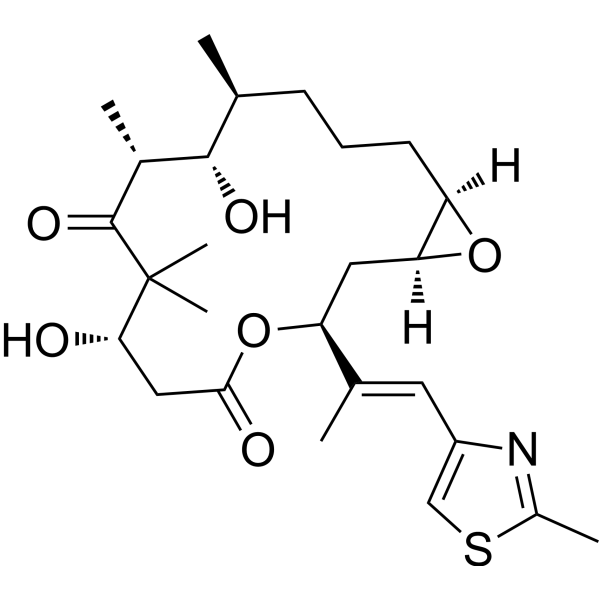
Epothilone A is a competitive inhibitor of the binding of [ 3H] paclitaxel to tubulin polymers, with a Ki of 0.6-1.4 μM.
loading...
    loading...
3
3 Cited Publications
Cat. No.: HY-139979
CAS No.: 2851040-81-6
Purity:  99.73%
Target:  

Deubiquitinase

Research Areas:  

Cancer

USP5-IN-1 (compound 64) is a selective competitive inhibitor of USP5 zinc finger ubiquitin binding domain (ZnF-UBD) (KD=2.8 μM). USP5-IN-1 competitively blocks the binding of ubiquitin to ZnF-UBD, inhibits the catalytic activity of USP5, and thus hinders the hydrolysis of ubiquitin chains. USP5-IN-1 can inhibit USP5 cleavage of Lys48-linked diubiquitin substrates in vitro and is a potential USP5 chemical probe and potential inhibitor of USP5-related cancers.
loading...
    loading...
3
3 Cited Publications
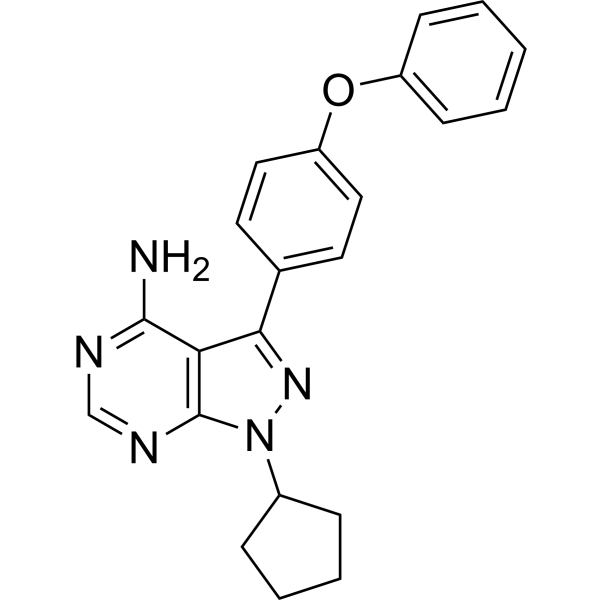
Cat. No.: HY-18010
CAS No.: 330786-25-9
Target:  

Btk BCRP

Research Areas:  

Inflammation/Immunology

PCI 29732 is a potent, orally active, reversible BTK inhibitor with Ki app values of 8.2, 4.6, and 2.5 nM for BTK, Lck and Lyn, respectively. PCI 29732 shows only modest inhibitory activity against Itk, another Tec family kinase. PCI 29732 inhibits the function of ABCG2 by competitively binding to the ATP-binding site of ABCG2 .
loading...
    loading...
3
3 Cited Publications
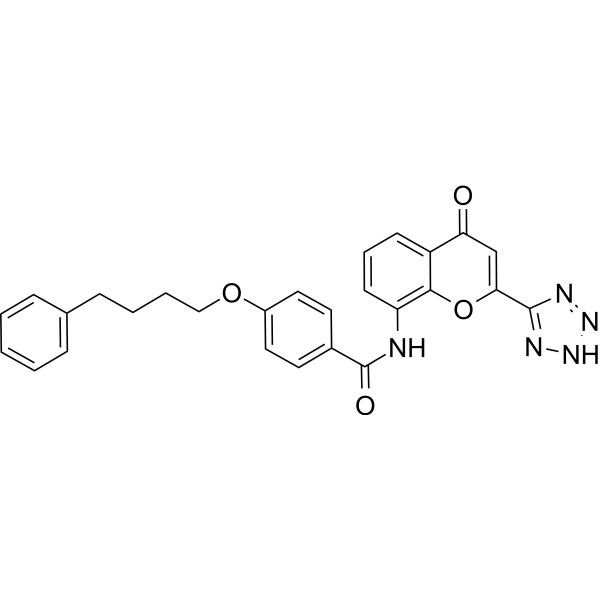
Cat. No.: HY-B0290
CAS No.: 103177-37-3
Synonyms: ONO-1078
Target:  

Leukotriene Receptor

Research Areas:  

Inflammation/Immunology

Pranlukast is a highly potent, selective and competitive antagonist of peptide leukotrienes. Pranlukast inhibits [ 3H]LTE4, [ 3H]LTD4, and [ 3H]LTC4 bindings to lung membranes with Kis of 0.63±0.11, 0.99±0.19, and 5640±680 nM, respectively.
loading...
    loading...
3
3 Cited Publications
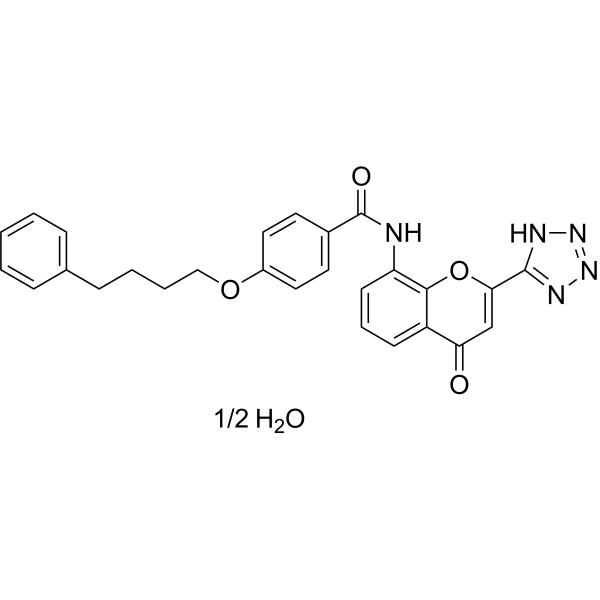
Cat. No.: HY-B0290A
CAS No.: 150821-03-7
Synonyms: ONO-1078 hemihydrate
Target:  

Leukotriene Receptor

Research Areas:  

Inflammation/Immunology

Pranlukast hemihydrate is a highly potent, selective and competitive antagonist of peptide leukotrienes. Pranlukast inhibits [ 3H]LTE4, [ 3H]LTD4, and [ 3H]LTC4 bindings to lung membranes with Kis of 0.63±0.11, 0.99±0.19, and 5640±680 nM, respectively.
loading...
    loading...
3
3 Cited Publications
Cat. No.: HY-13299
CAS No.: 1001917-37-8
Purity:  98.34%
Target:  

c-Met/HGFR

Research Areas:  

Cancer

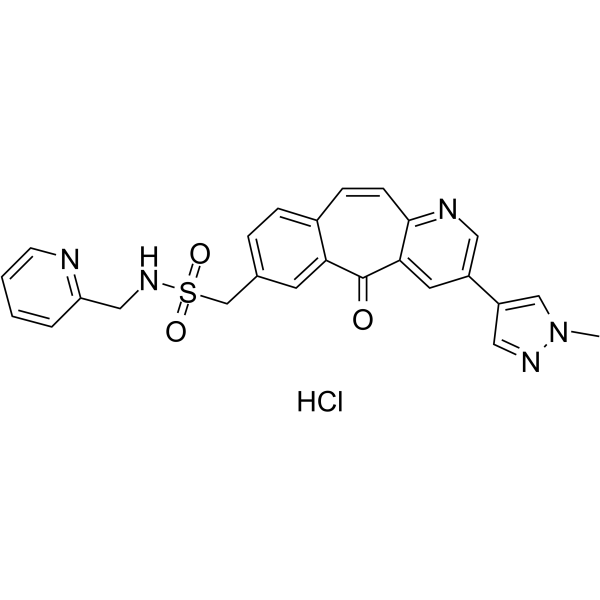
MK-8033 is an orally active ATP competitive c-Met/Ron dual inhibitor (IC50s: 1 nM (c-Met),7 nM (Ron)), with preferential binding to the activated kinase conformation. MK-8033 can be used in the research of cancers, such as breast and bladder cancers, non-small cell lung cancers (NSCLCs) .
loading...
    loading...
3
3 Cited Publications
Cat. No.: HY-13299A
CAS No.: 1283000-43-0
Purity:  99.86%
Target:  

c-Met/HGFR

Research Areas:  

Cancer

MK-8033 hydrochloride is an orally active ATP competitive c-Met/Ron dual inhibitor (IC50s: 1 nM (c-Met),7 nM (Ron)), with preferential binding to the activated kinase conformation. MK-8033 hydrochloride can be used in the research of cancers, such as breast and bladder cancers, non-small cell lung cancers (NSCLCs) .
loading...
    loading...
3
3 Cited Publications
Cat. No.: HY-128744
CAS No.: 4408-78-0
Purity:  ≥98.0%
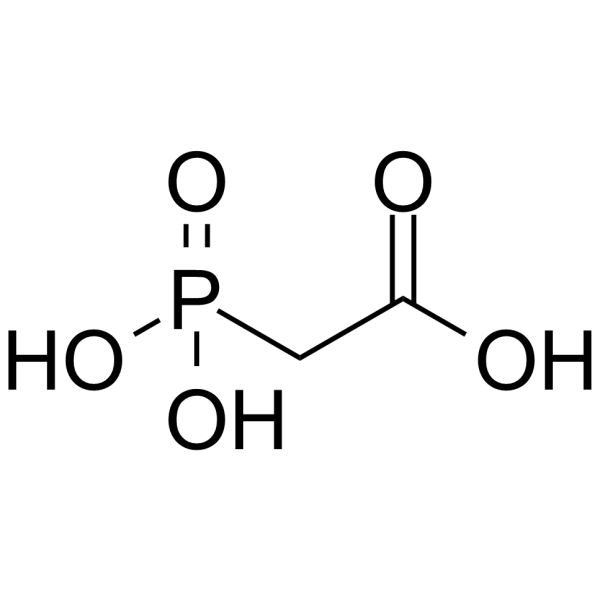
Phosphonoacetic acid is a potent antiviral agent. Phosphonoacetic acid inhibits a variety of herpesviruses, orthopoxviruses, and retroviruses. Phosphonoacetic acid strongly inhibits viral and cellular DNA polymerase, reverse transcriptase, and terminal deoxynucleotidyl transferase activities in a non-competitive or uncompetitive manner by binding to the pyrophosphate site of the enzyme. Phosphonoacetic acid is useful for research related to lymphoid leukemia, herpesvirus infection, and vaccinia virus skin lesions .
loading...
    loading...
3
3 Cited Publications
Cat. No.: HY-D0939
CAS No.: 2610-05-1
Synonyms: Chicago Sky Blue 6B
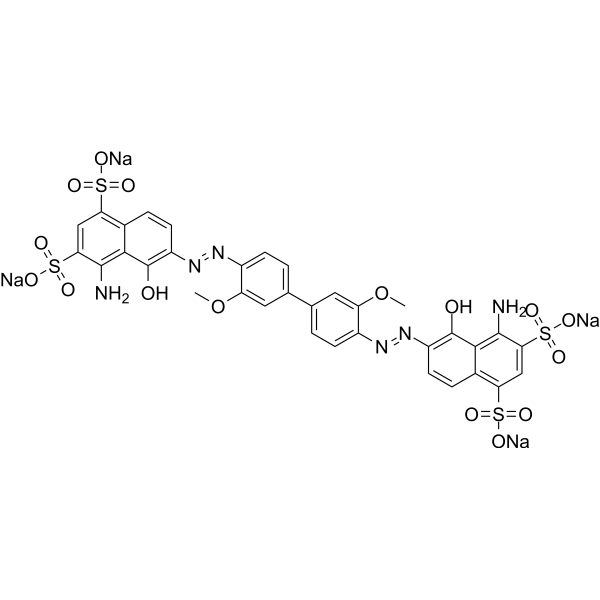
Direct Blue 1 (Chicago Sky Blue 6B) is a complex dye for background autofluorescence in immunofluorescence histochemistry. Direct Blue 1 is a potent and competitive VGLUT inhibitor. Direct Blue 1 can inhibit the Aβ-binding small molecule PrP ligand. Direct Blue 1 has anti-inflammatory activity .
loading...
    loading...
3
3 Cited Publications
Cat. No.: HY-19347
CAS No.: 890190-22-4
Synonyms: WD-Repeat Protein 5-0103
Target:  

WDR5

Research Areas:  

Neurological Disease Cancer

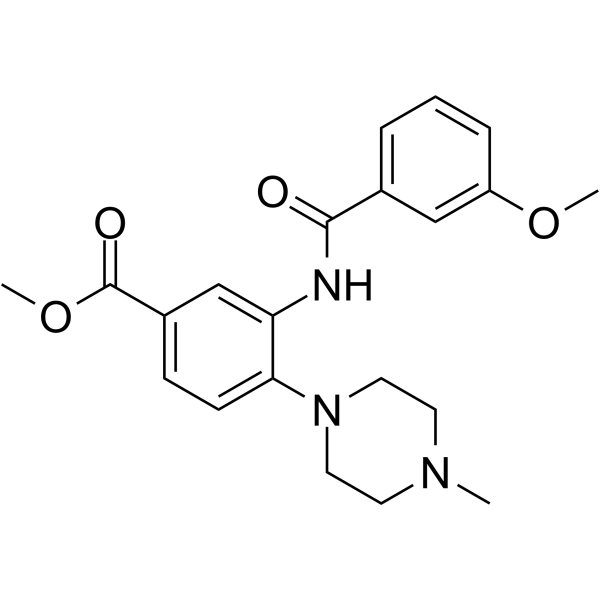
WDR5-0103 (WD-Repeat Protein 5-0103) is a potent and selective WD repeat-containing protein 5 (WDR5) antagonist with a Kd of 450 nM. WDR5-0103 competitively binds to the peptide-binding pocket of WDR5, blocking the interaction between WDR5 and mixed-lineage leukemia (MLL) protein and inhibiting the methyltransferase activity of MLL. WDR5-0103 is mainly used in the research of cancer and neurodegenerative diseases .
loading...
    loading...
3
3 Cited Publications
Cat. No.: HY-15466
CAS No.: 1007207-67-1
Purity:  99.01%
Synonyms: CH5132799
Target:  

PI3K Apoptosis mTOR Akt

Research Areas:  

Cancer

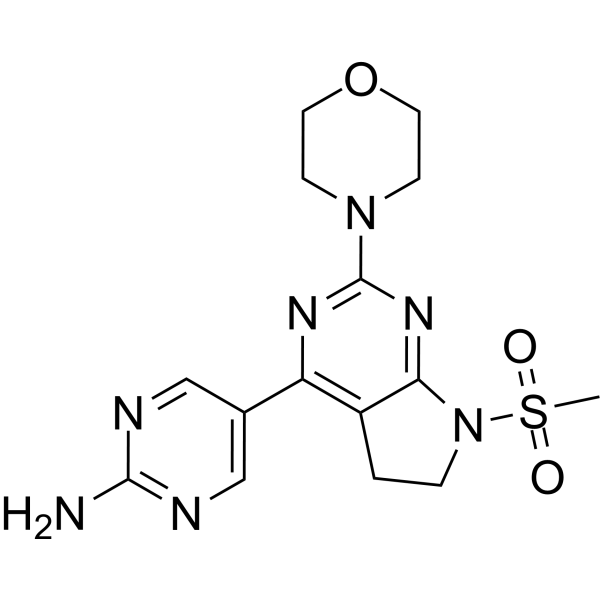
Izorlisib (CH5132799) is an orally active, selective Class I PI3K inhibitor with an IC50 value of 14 nM against PI3Kα. Izorlisib specifically inhibits Class I PI3K (particularly PI3Kα and its mutants) and blocks the PI3K/Akt/mTOR pathway; this leads to cell cycle arrest at the G1 phase and apoptosis without triggering feedback activation of Akt by competitively binding to the ATP-binding site of PI3K. Izorlisib can be used in research on cancers harboring PIK3CA mutations or PTEN loss (such as breast, ovarian, prostate, and endometrial cancers) .
loading...
    loading...
3
3 Cited Publications
Cat. No.: HY-109061
CAS No.: 1903008-80-9
Purity:  99.87%
Synonyms: YH25448; GNS-1480
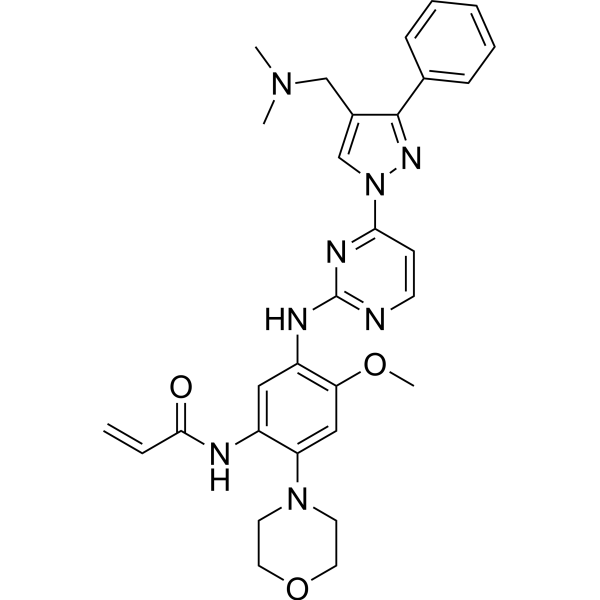
Lazertinib (YH25448; GNS-1480) is an orally active, blood-brain barrier permeable third-generation EGFR tyrosine kinase inhibitor, as well as an ABCB1/ABCG2 inhibitor and a TRPA1 activator. Lazertinib exhibits IC50 values of 0.4 mM and 0.2 mM against human ABCB1 and ABCG2, respectively. By inhibiting mutant EGFR signaling, EGFR phosphorylation and the downstream ERK/AKT pathway, as well as upregulating surface expression of EGFR/MET, Lazertinib induces cell cycle arrest, apoptosis, spontaneous calcium responses, hyperexcitability of dorsal root ganglion (DRG) neurons, and TRPA1-dependent pain-like behaviors. Lazertinib competitively binds to the substrate-binding sites of ABCB1/ABCG2, stimulates their ATPase activity without altering their expression or plasma membrane localization, thereby enhancing ADCC activity, acting as a chemosensitizer, and reversing ABCB1-mediated multidrug resistance. It exerts antitumor activity as a single agent or in combination with other drugs. Lazertinib is applicable to research related to non-small cell lung cancer, multidrug-resistant cancers, and paresthesia .
loading...
    loading...
3
3 Cited Publications
Cat. No.: HY-109061B
CAS No.: 2247995-37-3
Synonyms: YH25448 mesylate; GNS-1480 mesylate
Research Areas:  

Cancer

Lazertinib (YH25448; GNS-1480) mesylate is an orally active, blood-brain barrier permeable third-generation EGFR tyrosine kinase inhibitor, as well as an ABCB1/ABCG2 inhibitor and a TRPA1 activator. Lazertinib mesylate exhibits IC50 values of 0.4 mM and 0.2 mM against human ABCB1 and ABCG2, respectively. By inhibiting mutant EGFR signaling, EGFR phosphorylation and the downstream ERK/AKT pathway, as well as upregulating surface expression of EGFR/MET, Lazertinib mesylate induces cell cycle arrest, apoptosis, spontaneous calcium responses, hyperexcitability of dorsal root ganglion (DRG) neurons, and TRPA1-dependent pain-like behaviors. Lazertinib mesylate competitively binds to the substrate-binding sites of ABCB1/ABCG2, stimulates their ATPase activity without altering their expression or plasma membrane localization, thereby enhancing ADCC activity, acting as a chemosensitizer, and reversing ABCB1-mediated multidrug resistance. It exerts antitumor activity as a single agent or in combination with other drugs. Lazertinib mesylate is applicable to research related to non-small cell lung cancer, multidrug-resistant cancers, and paresthesia .
loading...
    loading...
2
2 Cited Publications
Cat. No.: HY-P2244
CAS No.: 1659305-78-8
Target:  

YAP

Research Areas:  

Cancer

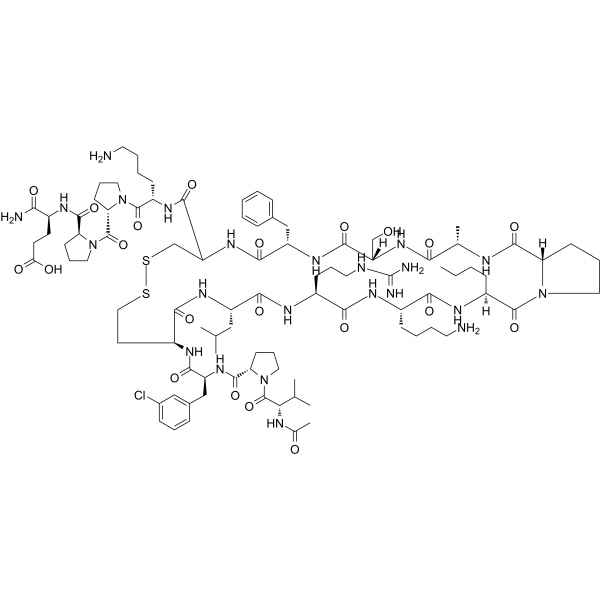
YAP-TEAD-IN-1 is a potent and competitive inhibitor of?YAP–TEAD interaction (IC50=25 nM). YAP-TEAD-IN-1 is a 17mer peptide and shows a higher the binding affinity to TEAD1 (Kd=15 nM) than YAP (50-171) (Kd=40 nM) .
loading...
    loading...
2
2 Cited Publications
Cat. No.: HY-P2244A
CAS No.: 1659305-79-9
Target:  

YAP

Research Areas:  

Cancer

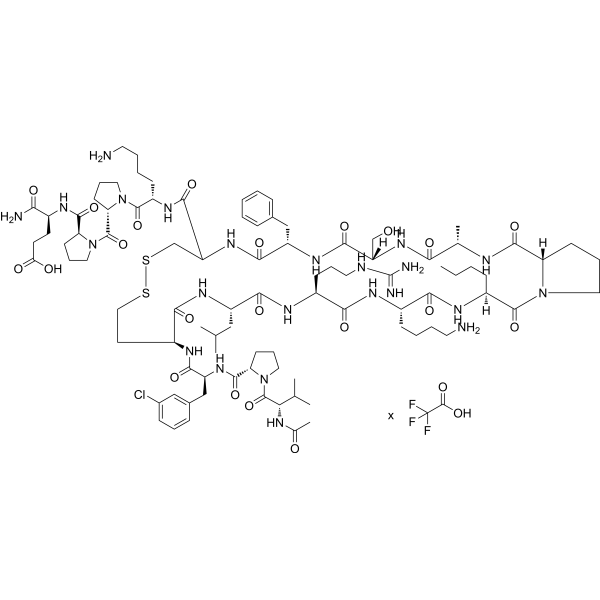
YAP-TEAD-IN-1 TFA is a potent and competitive peptide inhibitor of YAP-TEAD interaction (IC50=25 nM). YAP-TEAD-IN-1 TFA is a 17mer peptide and shows a higher the binding affinity to TEAD1 (Kd=15 nM) than YAP (50-171) (Kd= 40 nM) .
loading...
    loading...
2
2 Cited Publications
Cat. No.: HY-108474
CAS No.: 152946-68-4
Purity:  98.38%
Synonyms: AG 337
Target:  

Thymidylate Synthase

Research Areas:  

Cancer

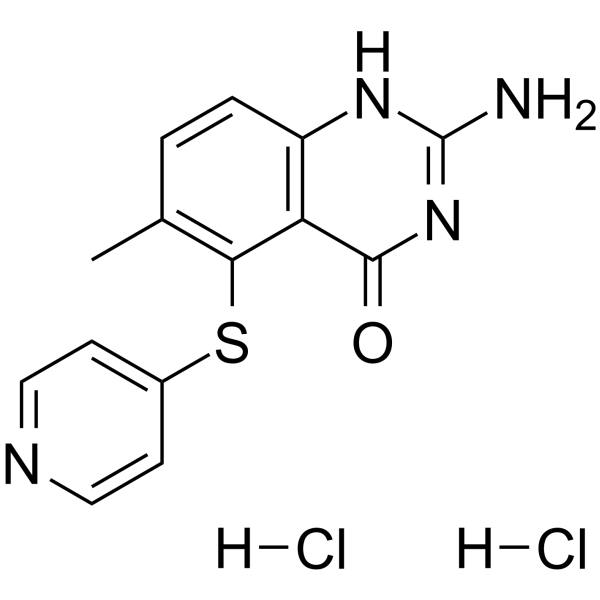
Nolatrexed dihydrochloride (AG 337) is an orally active and non-competitive lipophilic inhibitor of thymidylate synthase with a Ki of 11 nM for human thymidylate synthase. Nolatrexed dihydrochloride interacts at the folate cofactor binding site of the enzyme. Nolatrexed dihydrochloride increases sulfotransferases. Nolatrexed dihydrochloride induces cell cycle arrest in S phase of cancer cells. Nolatrexed dihydrochloride exhibits anticancer activity against cervical cancer.
loading...
    loading...

