1620 Results for "

prostatic

" in MedChemExpress (MCE) Product Catalog:
Products (1620)

1620 Results for "prostatic" in MCE Product Catalog:

14
14 Cited Publications
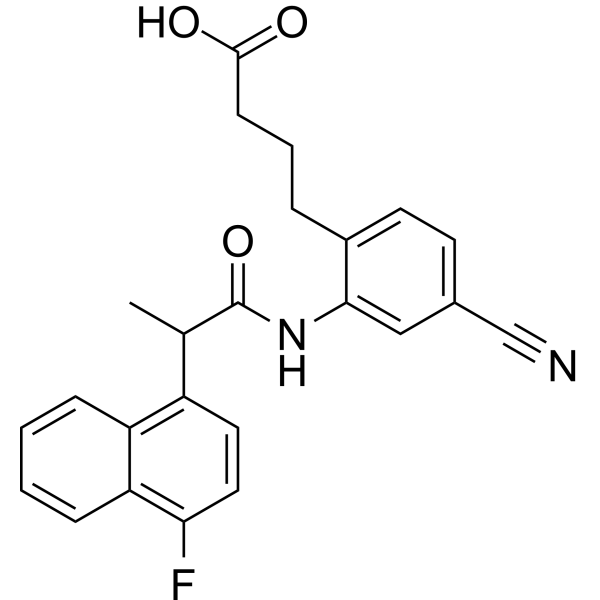
Cat. No.: HY-50901
CAS No.: 402473-54-5
Synonyms: AE 3-208
Research Areas:  

Endocrinology Cancer

ONO-AE3-208 is a selective and orally active EP4 receptor antagonist with a Ki of 1.3 nM. ONO-AE3-208 shows less potently affects EP3, FP, and TP receptors (Ki of 30 nM, 790 nM, and 2400 nM, respectively). ONO-AE3-208 suppresses cell invasion, migration, and metastasis of prostate cancer .
loading...
    loading...
13
13 Cited Publications
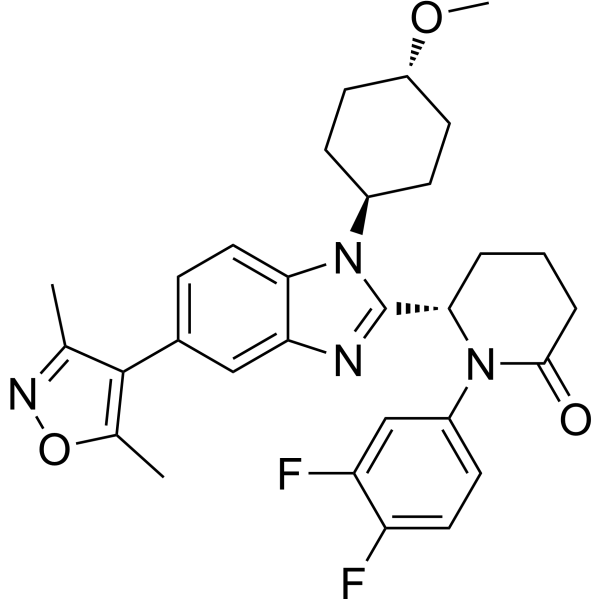
Cat. No.: HY-111784
CAS No.: 2222941-37-7
Purity:  99.94%
Synonyms: CCS1477
Inobrodib (CCS1477) is an orally active, potent, and selective inhibitor of the p300/CBP bromodomain. Inobrodib binds to p300 and CBP with Kd values of 1.3 and 1.7 nM, respectively, and with 170/130-fold selectivity compared with BRD4 with a Kd of 222 nM. CCS1477 inhibits cell proliferation in prostate cancer cell lines and decreases androgen receptor (AR)- and C-MYC-regulated gene expression .
loading...
    loading...
12
12 Cited Publications
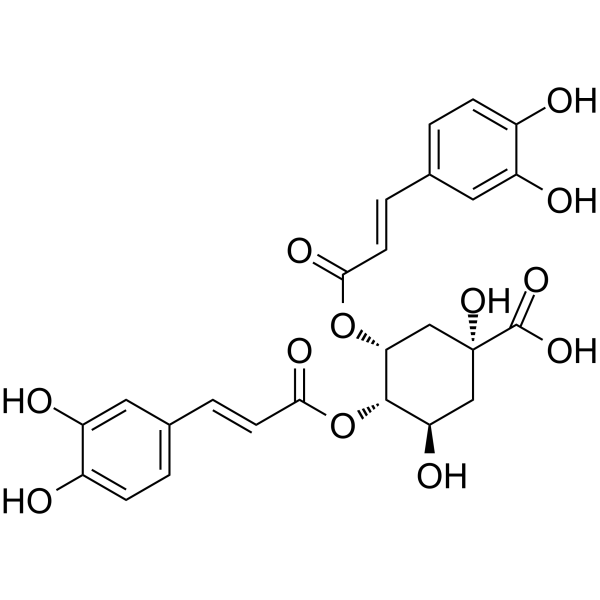
Cat. No.: HY-N0058
CAS No.: 57378-72-0
Synonyms: Isochlorogenic acid C; 4,5-diCQA
4,5-Dicaffeoylquinic acid (Isochlorogenic acid C) is an antioxidant, can be isolated from Gynura divaricata and Laggera alata. 4,5-Dicaffeoylquinic acid reduces islet cell apoptosis and improves pancreatic function in type 2 diabetic mice, and has obvious inhibitory activities against yeast α-glucosidase. 4,5-Dicaffeoylquinic acid inhibits prostate cancer cells through cell cycle arrest. 4,5-Dicaffeoylquinic acid also has anti-apoptotic, anti-injury and anti-hepatitis B virus effects .
loading...
    loading...
12
12 Cited Publications
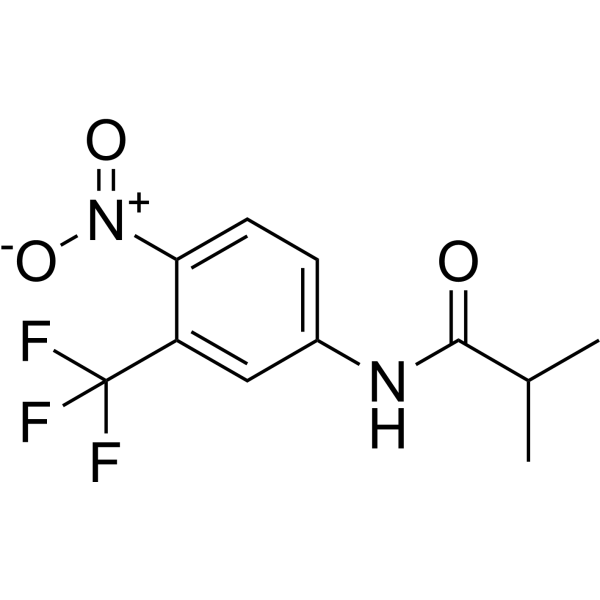
Cat. No.: HY-B0022
CAS No.: 13311-84-7
Synonyms: SCH 13521
Target:  

Androgen Receptor

Research Areas:  

Cancer

Flutamide is an Androgen Receptor antagonist with Ki=55 nM. Flutamide inhibits prostate cancer progression and has synergistic effects with Docetaxel (HY-B0011). Flutamide also has the potential to protect against hyperthermia-induced multiple organ dysfunction syndrome .
loading...
    loading...
11
11 Cited Publications
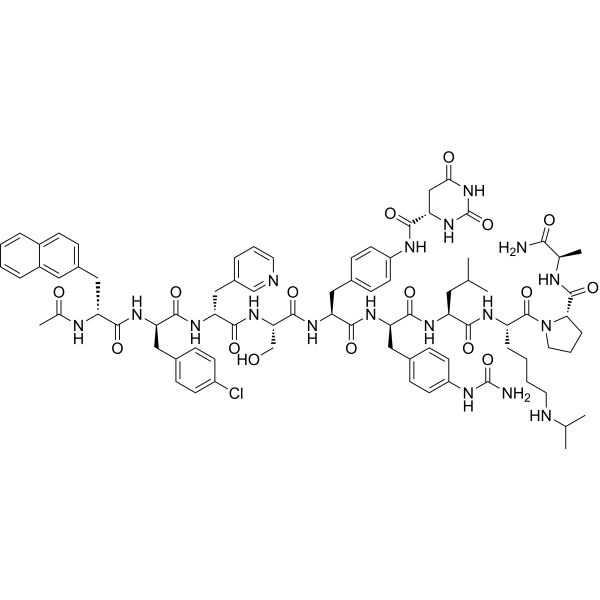
Cat. No.: HY-16168
CAS No.: 934016-19-0
Synonyms: FE 200486
Target:  

GnRH Receptor

Research Areas:  

Cancer

Degarelix acetate (FE 200486) is a decapeptide that shows high affinity/selectivity to human gonadotropin-releasing hormone (GnRH) receptor (IC50 = 3 nM). Degarelix acetate (FE 200486) is used for the research of prostate cancer .
loading...
    loading...
11
11 Cited Publications
Cat. No.: HY-16168A
CAS No.: 214766-78-6
Synonyms: FE 200486 free base
Target:  

GnRH Receptor Apoptosis

Research Areas:  

Endocrinology Cancer

Degarelix acetate (FE 200486) is a decapeptide that shows high affinity/selectivity to human gonadotropin-releasing hormone (GnRH) receptor (IC50 = 3 nM). Degarelix acetate Degarelix acetate (FE 200486) is used for the research of prostate cancer .
loading...
    loading...
11
11 Cited Publications
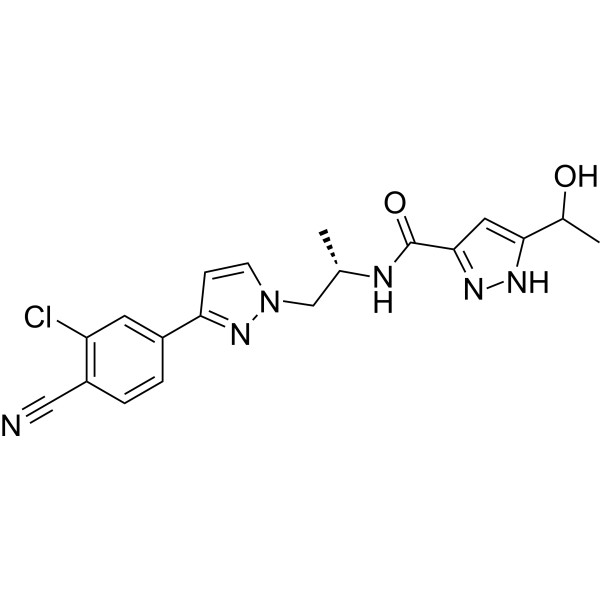
Cat. No.: HY-16985
CAS No.: 1297538-32-9
Synonyms: ODM-201; BAY-1841788
Target:  

Androgen Receptor

Research Areas:  

Cancer

Darolutamide (ODM-201) is an orally active competitive androgen receptor (AR) antagonist. Darolutamide has a Ki of 11 nM for rat wild-type AR (wtAR) and IC50 of 26 nM for human wild-type AR (hAR)-mediated transcriptional activation . Darolutamide inhibits testosterone-induced AR nuclear translocation and transcriptional activation . Darolutamide exerts selective effects on AR-positive cells by inhibiting AR-dependent signaling pathways, and its active metabolite retains full antagonistic activity against AR mutants . Darolutamide can be used for the research of prostate cancer, including androgen receptor-dependent prostate cancer .
loading...
    loading...
10
10 Cited Publications
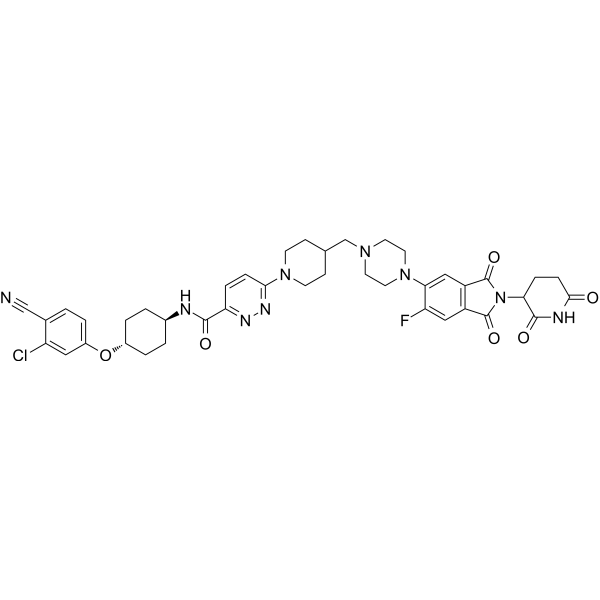
Cat. No.: HY-138641
CAS No.: 2222112-77-6
Purity:  98.99%
Synonyms: ARV-110
Research Areas:  

Cancer

Bavdegalutamide (ARV-110) is an orally active, specific androgen receptor (AR) PROTAC degrader. Bavdegalutamide promotes ubiquitination and degradation of AR. Bavdegalutamide can be used for the research of prostate cancer .
loading...
    loading...
10
10 Cited Publications
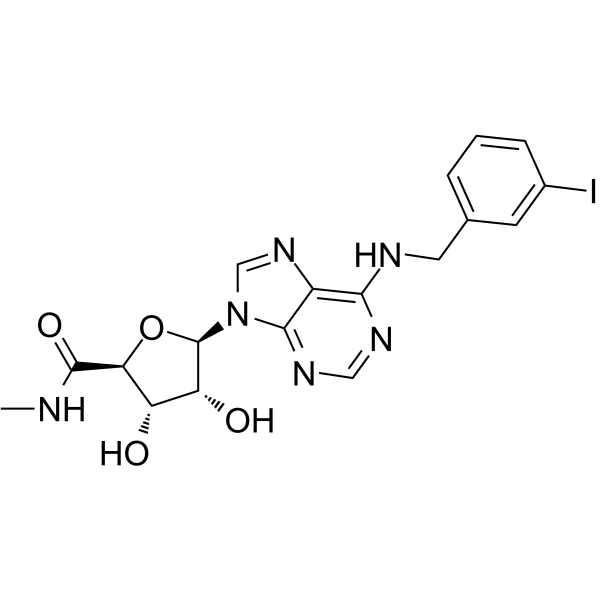
Cat. No.: HY-13591
CAS No.: 152918-18-8
Purity:  99.01%
Synonyms: IB-MECA; CF-101
Piclidenoson (IB-MECA) is a first-in-class, orally active and selective A3 adenosine receptor (A3AR) agonist. Piclidenoson exhibits antiproliferative effect and induces apoptosis in different cancer cell types like melanoma, leukemia. Piclidenoson can be used for the research of autoimmune inflammatory diseases and COVID-19 .
loading...
    loading...
9
9 Cited Publications
Cat. No.: HY-17423
CAS No.: 136470-78-5
Research Areas:  

Infection Cancer

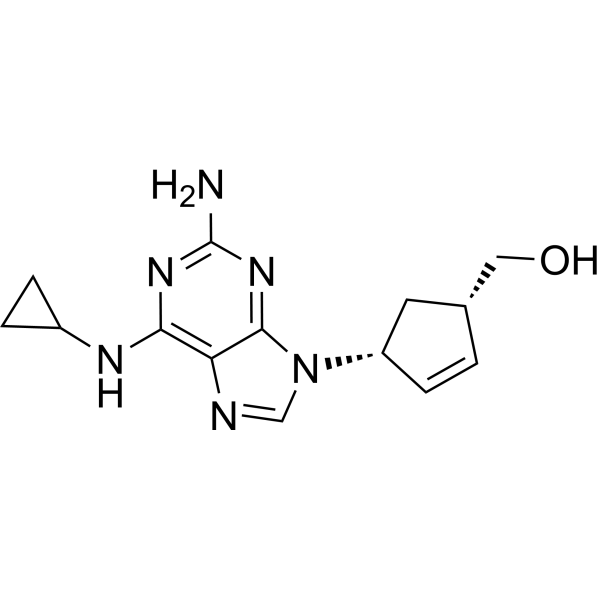
Abacavir is an orally active and competitive nucleoside reverse transcriptase inhibitor. Abacavir can inhibits the replication of HIV. Abacavir shows anticancer activity in prostate cancer cell lines. Abacavir can trespass the blood-brain-barrier and suppresses telomerase activity .
loading...
    loading...
9
9 Cited Publications
Cat. No.: HY-17423B
CAS No.: 216699-07-9
Research Areas:  

Infection Cancer

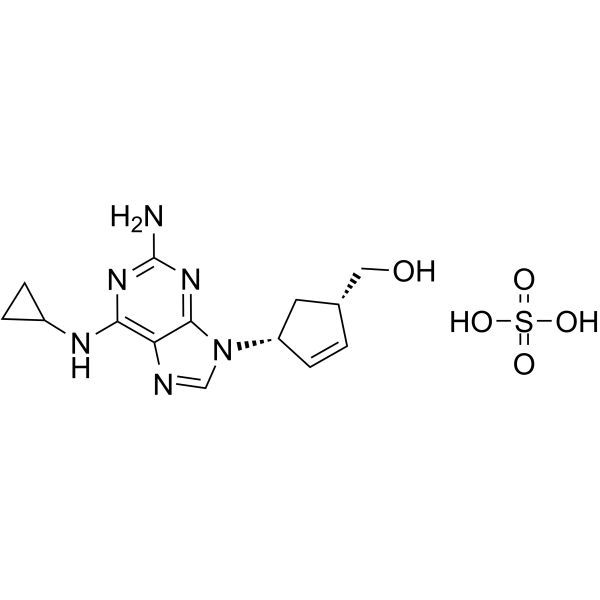
Abacavir monosulfate is a competitive, orally active nucleoside reverse transcriptase inhibitor. Abacavir monosulfate can inhibits the replication of HIV. Abacavir monosulfate shows anticancer activity in prostate cancer cell lines. Abacavir monosulfate can trespass the blood-brain-barrier and suppresses telomerase activity .
loading...
    loading...
9
9 Cited Publications
Cat. No.: HY-17423A
CAS No.: 188062-50-2
Synonyms: Abacavir Hemisulfate; ABC sulfate
Research Areas:  

Infection Cancer

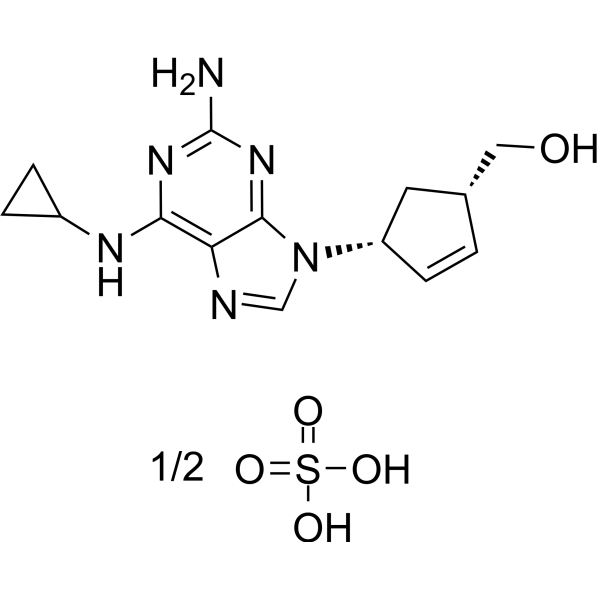
Abacavir sulfate (Abacavir Hemisulfate) is a competitive, orally active nucleoside reverse transcriptase inhibitor. Abacavir sulfate can inhibits the replication of HIV. Abacavir sulfate shows anticancer activity in prostate cancer cell lines. Abacavir sulfate can trespass the blood-brain-barrier and suppresses telomerase activity .
loading...
    loading...
9
9 Cited Publications
Cat. No.: HY-B0371
CAS No.: 63590-64-7
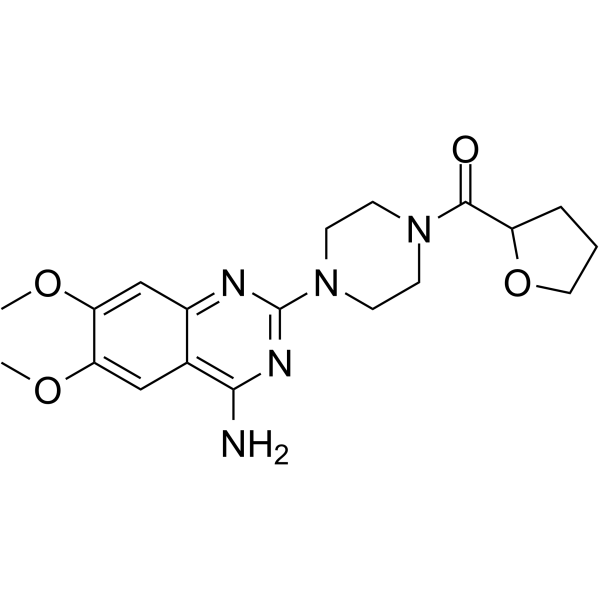
Terazosin is a quinazoline derivative and a competitive and orally active α1-adrenoceptor antagonist. Terazosin works by relaxing blood vessels and the opening of the bladder. Terazosin has the potential for benign prostatic hyperplasia (BPH) and high blood pressure treatment .
loading...
    loading...
9
9 Cited Publications
Cat. No.: HY-B0371F
CAS No.: 63074-08-8
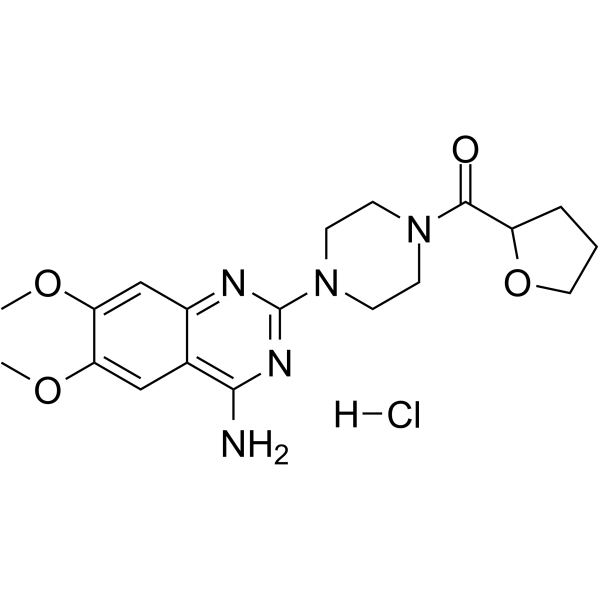
Terazosin hydrochloride is a quinazoline derivative and a competitive and orally active α1-adrenoceptor antagonist. Terazosin hydrochloride works by relaxing blood vessels and the opening of the bladder. Terazosin hydrochloride has the potential for benign prostatic hyperplasia (BPH) and high blood pressure treatment .
loading...
    loading...
9
9 Cited Publications
Cat. No.: HY-B0371A
CAS No.: 70024-40-7
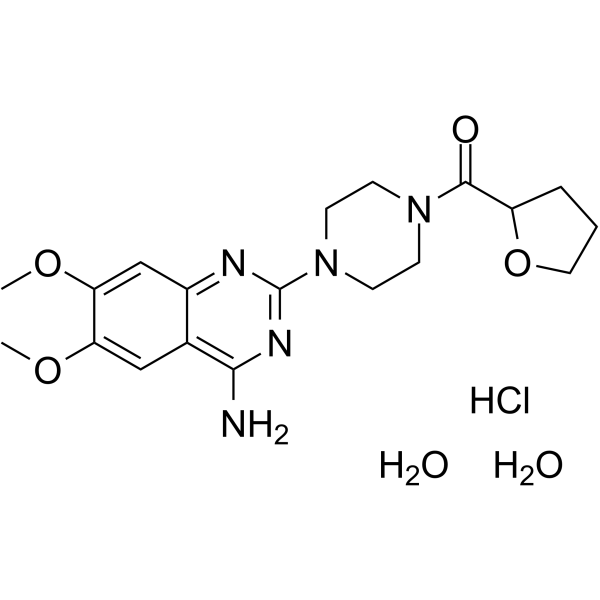
Terazosin hydrochloride dihydrate is a quinazoline derivative and a competitive and orally active α1-adrenoceptor antagonist. Terazosin hydrochloride dihydrate works by relaxing blood vessels and the opening of the bladder. Terazosin hydrochloride dihydrate has the potential for benign prostatic hyperplasia (BPH) and high blood pressure treatment .
loading...
    loading...
9
9 Cited Publications
Cat. No.: HY-B1320
CAS No.: 6385-02-0
Synonyms: Meclofenamate sodium
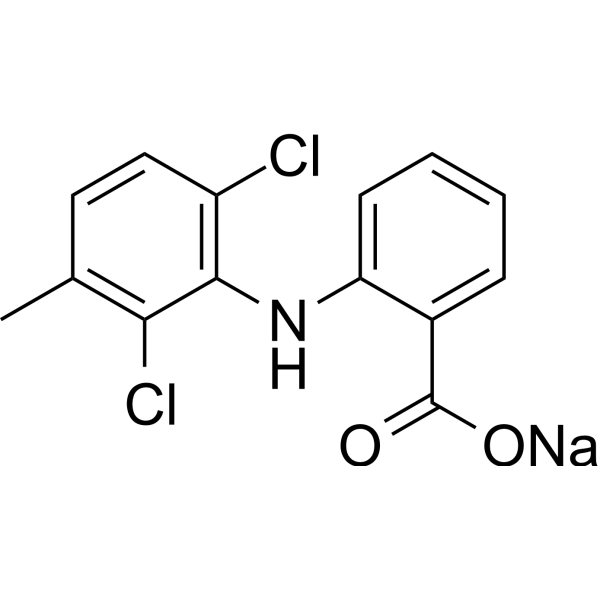
Meclofenamic acid (Meclofenamate) sodium is a non-steroidal anti-inflammatory agent (NSAID). Meclofenamic acid sodium is a non-selective gap-junction blocker and a highly selective inhibitor of fat - and obesity-related enzyme (FTO). Meclofenamic acid sodium has anti-inflammatory and antitumor activities .
loading...
    loading...
8
8 Cited Publications
Cat. No.: HY-138280
CAS No.: 897326-30-6
Purity:  99.82%
Target:  

HSP

Research Areas:  

Cancer

DTHIB is a direct and selective heat shock factor 1 (HSF1) inhibitor with a Kd of 160 nM for DTHIB binding to the HSF1 DNA binding domain (DBD). DTHIB inhibits HSF1 cancer gene signature (HSF1 CaSig) and selectively stimulates degradation of nuclear HSF1. DTHIB has potently anticancer activities and can be used for prostate cancer research .
loading...
    loading...
8
8 Cited Publications
Cat. No.: HY-111152
CAS No.: 912798-42-6
Purity:  99.89%
Target:  

STAT

Research Areas:  

Cancer

ML115, a molecular probe of the signal transducer, is a selective STAT3 agonist, with an EC50 of 2 nM. ML115 increases the expression of BCL3, a known STAT3-dependent oncogene. ML115 is inactive against the related STAT1, STAT5 and NF-κB anti-targets. ML115 counteracts the effects of Ginsenoside Rc (HY-N0042) on cell viability and inflammatory responses in LPS (HY-D1056)-stimulated H9c2 and RAW264.7 cells, while altering oxidative stress markers. ML115 can be used for the study of breast and prostate cancers .
loading...
    loading...
8
8 Cited Publications
Cat. No.: HY-14197
CAS No.: 17780-72-2
Purity:  99.76%
Synonyms: M&B 9302
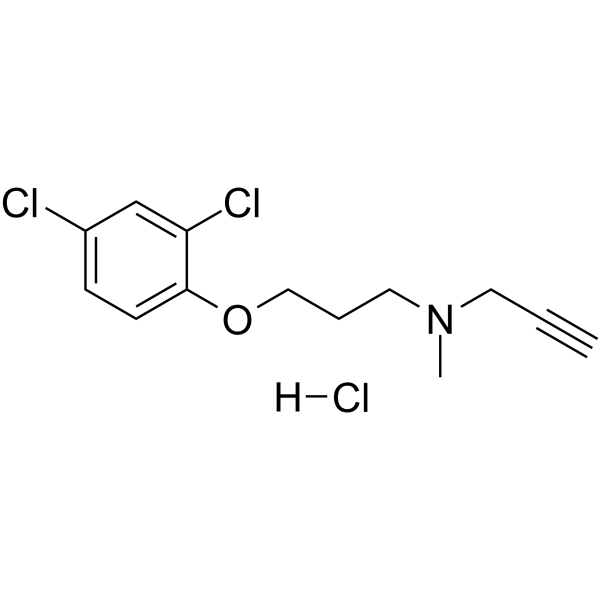
Clorgyline (M&B 9302) is a selective, irreversible monoamine oxidase A (MAO-A) inhibitor that can cross the blood-brain barrier and exhibits activity against the 5-HT Receptor at very high doses. Clorgyline regulates monoamine neurotransmitter levels, the release of dopamine and acetylcholine, the uptake and effects of Tyramine (HY-W007606), noradrenergic function, circadian locomotor activity rhythms, feeding behavior, and body weight. Clorgyline induces tumor-suppressive transcriptional programs, secretory differentiation, androgen signaling regulation, Bcl-2 expression, and radioprotective effects in non-malignant cells. Clorgyline is used in the research of high-grade prostate cancer, Huntington's disease, major affective disorder, radiation-induced normal tissue toxicity, and obesity .
loading...
    loading...
8
8 Cited Publications
Cat. No.: HY-14197A
CAS No.: 17780-75-5
Purity:  99.92%
Synonyms: M&B 9302 hydrochloride
Clorgyline hydrochloride (M&B 9302 hydrochloride) is a selective, irreversible monoamine oxidase A (MAO-A) inhibitor that can cross the blood-brain barrier and exhibits activity against the 5-HT Receptor at very high doses. Clorgyline hydrochloride regulates monoamine neurotransmitter levels, the release of dopamine and acetylcholine, the uptake and effects of Tyramine (HY-W007606), noradrenergic function, circadian locomotor activity rhythms, feeding behavior, and body weight. Clorgyline hydrochloride induces tumor-suppressive transcriptional programs, secretory differentiation, androgen signaling regulation, Bcl-2 expression, and radioprotective effects in non-malignant cells. Clorgyline hydrochloride is used in the research of high-grade prostate cancer, Huntington's disease, major affective disorder, radiation-induced normal tissue toxicity, and obesity .
loading...
    loading...

