75 Results for "

Li diffusion

" in MedChemExpress (MCE) Product Catalog:
Products (75)

75 Results for "Li diffusion" in MCE Product Catalog:

Cat. No.: HY-124286
CAS No.: 1675245-06-3
Synonyms: C14-9Z-HSL
Target:  

Bacterial

Domaines de recherche:  

Inflammation/Immunology

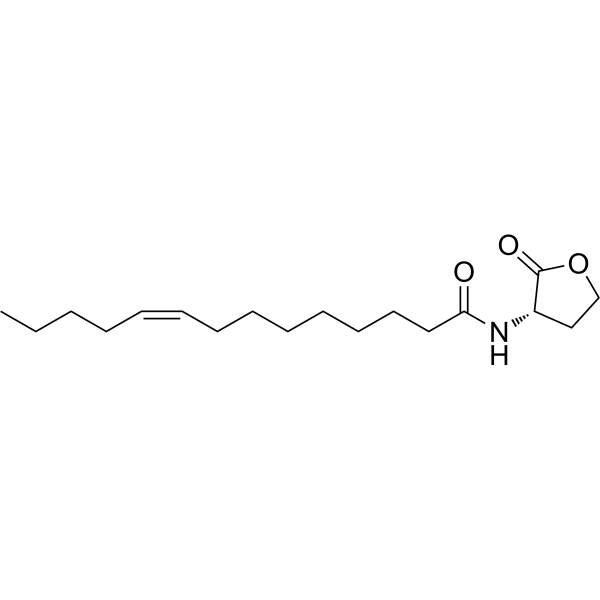
N-cis-Tetradec-9Z-enoyl-L-homoserine lactone (C14-9Z-HSL) is an autoinducer in C. rodentium, that serves as signal molecule, coordinates the gene expression and behaviors through diffusion into cells of different bacterial species .
loading...
    loading...
Cat. No.: HY-167702
CAS No.: 81397-67-3
Target:  

GABA Receptor

Domaines de recherche:  

Neurological Disease

(Rac)-Acetoxyvalerenic acid is a derivative of valerenic acid that acts as a GABA (A) receptor modulator, potentially providing sedative and sleep-enhancing effects. (Rac)-Acetoxyvalerenic acid exhibits slower permeability across the blood-brain barrier compared to diazepam, indicating that its transport may rely on an unidentified pathway rather than transcellular passive diffusion.
loading...
    loading...
Cat. No.: HY-W320538
CAS No.: 46492-08-4
Target:  

Fungal

Domaines de recherche:  

Infection

Benz[g]isoquinoline-5,10-dione, an active component isolated from the ethanolic extract of the aerial parts of Mitracarpus scaber, demonstrates notable in vitro inhibitory activity against AIDS-related pathogens, along with significant antibacterial and antifungal properties, as evidenced by the agar well-diffusion assay.
loading...
    loading...
Cat. No.: HY-131340
CAS No.: 3029936-02-2
Domaines de recherche:  

Inflammation/Immunology

LASSBio-1632 is a new anti-asthmatic lead candidate associated with selective inhibition of PDE4A and PDE4D isoenzymes and blockade of airway hyper-reactivity (AHR) and TNF-α production in the lung tissue. LASSBio-1632 (7j) displays high experimental BBB permeability across BBB through passive diffusion .
loading...
    loading...
Cat. No.: HY-12807A
CAS No.: 1781834-93-2
Synonyms: 5-Fluoro-2-indolyl deschlorohalopemide hydrochloride
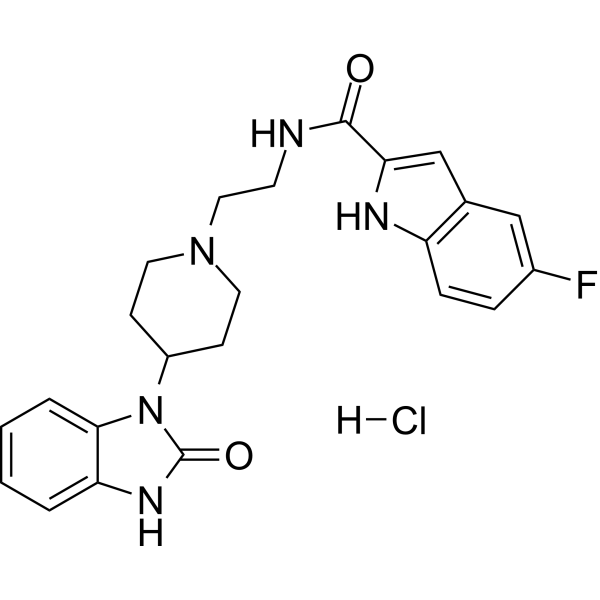
FIPI hydrochloride is a phospholipase D (PLD) inhibitor with an IC50 for PLD1 and PLD2 of about 25 nM. FIPI hydrochloride regulates cytoskeletal recombination, cell diffusion and chemotaxis. FIPI hydrochloride can be used in cancer research. In addition, FIPI hydrochloride can enhance the secretion and aggregation of platelet dense particles, inhibit thrombosis, reduce ischemic stroke infarct volume and improve nerve function .
loading...
    loading...
Cat. No.: HY-130317
CAS No.: 677354-24-4
Synonyms: trans-δ2-11-Methyl-dodecenoic acid
Target:  

Fungal

Domaines de recherche:  

Infection

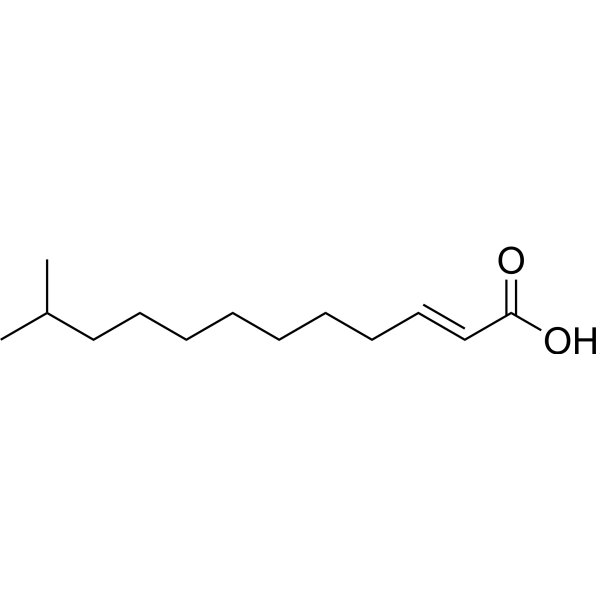
trans-11-Methyl-2-dodecenic acid is a isomer of cis-11-Methyl-2-dodecenoic acid (HY-134215). cis-11-Methyl-2-dodecenoic acid is a quorum sensing (QS) signal that acts as a diffusion signaling factor (DSF) in extracellular microbial and fungal communication systems .
loading...
    loading...
Cat. No.: HY-N0406R
CAS No.: 861691-37-4
2"-O-beta-L-galactopyranosylorientin (Standard) is the analytical standard of 2"-O-beta-L-galactopyranosylorientin. This product is intended for research and analytical applications. 2"-O-beta-L-galactopyranosylorientin is extracted from the flowers of Trollius ledebouri. 2"-O-beta-L-galactopyranosylorientin involves transporter mediated efflux in addition to passive diffusion and is the substrate of multidrug resistance protein 2 (MRP2). Anti-inflammatory effect .
loading...
    loading...
Cat. No.: HY-118205
CAS No.: 637772-75-9
Target:  

Bacterial

Domaines de recherche:  

Infection

SCH-538415 is a novel acyl carrier protein synthase inhibitor isolated from an unknown bacterial microorganism. The structural elucidation of compound 1 was completed by analyzing spectral data including UV, MS and 2D-NMR spectra. Compound 1 showed inhibitory activity in the acyl carrier protein synthase (AcpS) test with an IC50 value of 4.19 μM and exhibited antibacterial activity against Staphylococcus aureus in the agar diffusion test.
loading...
    loading...
Cat. No.: HY-B0377G
CAS No.: 76824-35-6
Synonyms: MK-208 (GMP)
Famotidine GMP (MK-208 GMP) is Famotidine (HY-B0377) produced in GMP guideline. Famotidine is an orally active and highly selective histamine H2 receptor antagonist. It inhibits gastric acid secretion by blocking the Gs signaling pathway, and regulates intracellular cAMP and ERK pathways. Famotidine inhibits TLR3-mediated inflammatory pathways, and reduces the expression of various inflammatory mediators and interferon-related genes. Famotidine scavenges DPPH and nitric oxide free radicals, alleviates oxidative stress damage in gastric tissue, inhibits proMMP-9, improves vascular endothelial permeability, and restores the normal physiological functions of neutrophils and eosinophils. Famotidine crosses intestinal epithelial cells via facilitated diffusion and passive diffusion, blocks paracellular cation transport, and increases intestinal transepithelial electrical resistance. Famotidine reduces serum levels of transaminases and alkaline phosphatase, exerts analgesic effects and gastric protective effects simultaneously. Famotidine can be used in studies related to COVID-19, liver injury and acute gastric ulcer .
loading...
    loading...
Cat. No.: HY-149211
Domaines de recherche:  

Neurological Disease

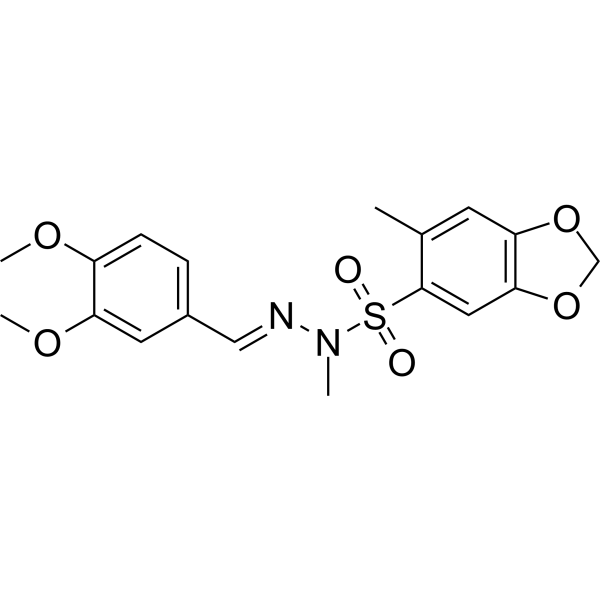
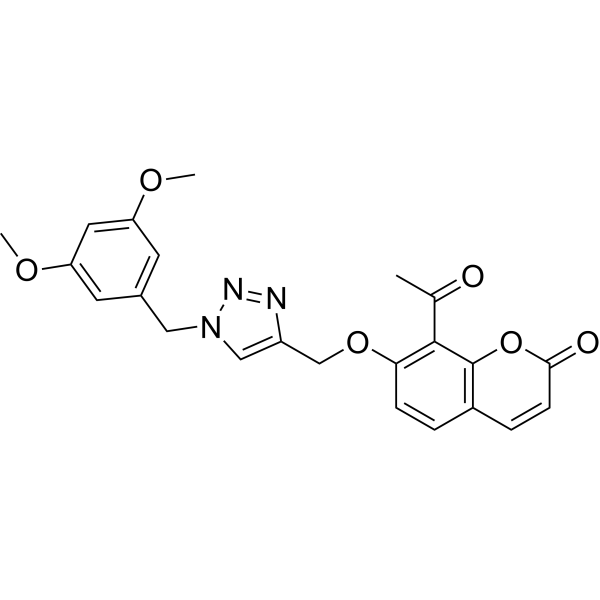
AChE/BChE-IN-12 (compound 10b), a 3,5-dimethoxy analogue, is a potent AChE, BChE, and β-secretase-1 (BACE-1) inhibitor, with IC50 values of 2.57, 3.26, and 10.65 μM, respectively. AChE/BChE-IN-12 crosses the blood-brain barrier via passive diffusion and inhibits the self-aggregation of amyloid-β monomers. AChE/BChE-IN-12 can be used for Alzheimer’s disease (AD) research .
loading...
    loading...
Cat. No.: HY-B0377R
CAS No.: 76824-35-6
Synonyms: MK-208 (Standard)
Famotidine (Standard) (MK-208 (Standard)) is the analytical standard of Famotidine (HY-B0377). This product is intended for research and analytical applications. Famotidine (MK-208) is an orally active and highly selective histamine H2 receptor antagonist. It inhibits gastric acid secretion by blocking the Gs signaling pathway, and regulates intracellular cAMP and ERK pathways. Famotidine inhibits TLR3-mediated inflammatory pathways, and reduces the expression of various inflammatory mediators and interferon-related genes. Famotidine scavenges DPPH and nitric oxide free radicals, alleviates oxidative stress damage in gastric tissue, inhibits proMMP-9, improves vascular endothelial permeability, and restores the normal physiological functions of neutrophils and eosinophils. Famotidine crosses intestinal epithelial cells via facilitated diffusion and passive diffusion, blocks paracellular cation transport, and increases intestinal transepithelial electrical resistance. Famotidine reduces serum levels of transaminases and alkaline phosphatase, exerts analgesic effects and gastric protective effects simultaneously. Famotidine can be used in studies related to COVID-19, liver injury and acute gastric ulcer .
loading...
    loading...
Cat. No.: HY-B0377S1
Synonyms: MK-208-13C
Famotidine- 13C (MK-208- 13C) is the 13C-labeled Famotidine (HY-B0377). Famotidine (MK-208) is an orally active and highly selective histamine H2 receptor antagonist. It inhibits gastric acid secretion by blocking the Gs signaling pathway, and regulates intracellular cAMP and ERK pathways. Famotidine inhibits TLR3-mediated inflammatory pathways, and reduces the expression of various inflammatory mediators and interferon-related genes. Famotidine scavenges DPPH and nitric oxide free radicals, alleviates oxidative stress damage in gastric tissue, inhibits proMMP-9, improves vascular endothelial permeability, and restores the normal physiological functions of neutrophils and eosinophils. Famotidine crosses intestinal epithelial cells via facilitated diffusion and passive diffusion, blocks paracellular cation transport, and increases intestinal transepithelial electrical resistance. Famotidine reduces serum levels of transaminases and alkaline phosphatase, exerts analgesic effects and gastric protective effects simultaneously. Famotidine can be used in studies related to COVID-19, liver injury and acute gastric ulcer .
loading...
    loading...
Cat. No.: HY-W777002
CAS No.: 1185241-48-8
Synonyms: MK-208-13C3
Famotidine- 13C3 (MK-208- 13C3) is the 13C3-labeled Famotidine (HY-B0377). Famotidine (MK-208) is an orally active and highly selective histamine H2 receptor antagonist. It inhibits gastric acid secretion by blocking the Gs signaling pathway, and regulates intracellular cAMP and ERK pathways. Famotidine inhibits TLR3-mediated inflammatory pathways, and reduces the expression of various inflammatory mediators and interferon-related genes. Famotidine scavenges DPPH and nitric oxide free radicals, alleviates oxidative stress damage in gastric tissue, inhibits proMMP-9, improves vascular endothelial permeability, and restores the normal physiological functions of neutrophils and eosinophils. Famotidine crosses intestinal epithelial cells via facilitated diffusion and passive diffusion, blocks paracellular cation transport, and increases intestinal transepithelial electrical resistance. Famotidine reduces serum levels of transaminases and alkaline phosphatase, exerts analgesic effects and gastric protective effects simultaneously. Famotidine can be used in studies related to COVID-19, liver injury and acute gastric ulcer .
loading...
    loading...
Cat. No.: HY-122980
CAS No.: 120243-02-9
Synonyms: (S)-MyxocheLin A
Target:  

Lipoxygenase

Domaines de recherche:  

Infection

Myxochelin A is a microbial metabolite that has been found in A. disciformis and has diverse biological activities. It is active against Gram-positive bacteria, including B. cereus, S. aureus, and M. luteus, but not Gram-negative bacteria or fungi in an agar diffusion assay when used at a concentration of 80 μg/disc. Myxochelin A inhibits 5-lipoxygenase (5-LO) activity with an IC50 value of 1.9 μM for the recombinant human enzyme. It is cytotoxic to 26-L5 colon cancer cells when used at a concentration of 3 μg/mL.
loading...
    loading...
Cat. No.: HY-W040074
CAS No.: 23273-91-8
Synonyms: Diglycine hydrochloride hydrate; Gly-Gly (HCl H2O)
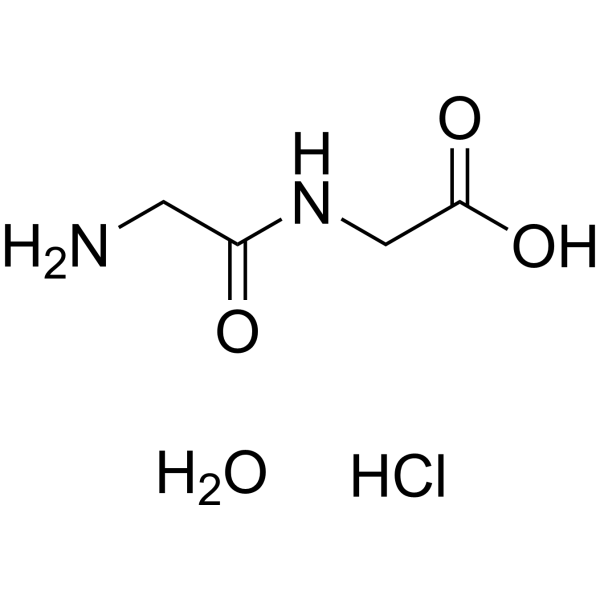
Glycylglycine hydrochloride hydrate is a non-selective Glycylglycine hydrochloride hydrate dipeptidase substrate and iNOS inhibitor. Glycylglycine hydrochloride hydrate can cross the cell membrane by passive diffusion and is hydrolyzed to glycine in the cell, participating in energy metabolism and antioxidant processes. Glycylglycine hydrochloride hydrate promotes spermatogonial stem cells (SSCs) proliferation, inhibits astrocyte overactivation and reduces nitric oxide (NO) release, while upregulating the expression of neurotrophic factors (such as PDGFA, FGF2, CNTF) to support nerve myelin repair. Glycylglycine hydrochloride hydrate can be used to study male reproductive biology (such as SSCs proliferation regulation) and neurodegenerative diseases (such as neuroprotective mechanisms in multiple sclerosis) .
loading...
    loading...
Cat. No.: HY-128443R
CAS No.: 122-19-0
Synonyms: BDMSAC (Standard)
Domaines de recherche:  

Others

Benzyldimethylstearylammonium chloride (Standard) (BDMSAC (Standard)) is the analytical standard of Benzyldimethylstearylammonium chloride (HY-128443). This product is intended for research and analytical applications. Benzyldimethylstearylammonium chloride is a quaternary ammonium cationic surfactant and a mixed-type corrosion inhibitor. Benzyldimethylstearylammonium chloride adsorbs onto the surface of cold-rolled steel through a combined effect of physisorption and chemisorption, forming a hydrophobic protective barrier that blocks active sites and restricts the diffusion of corrosive media, while simultaneously inhibiting the anodic iron dissolution reaction and the cathodic hydrogen evolution reaction, and reducing the corrosion rate in acidic media. Benzyldimethylstearylammonium chloride is used in research related to various fields such as fungicides, wastewater treatment, and detergents .
loading...
    loading...
Cat. No.: HY-B0396R
CAS No.: 161715-24-8
Synonyms: L084 (Standard)
Domaines de recherche:  

Infection

Tebipenem pivoxil (Standard) (L084 (Standard)) is the analytical standard of Tebipenem pivoxil (HY-B0396). This product is intended for research and analytical applications. Tebipenem pivoxil (L084 hydrobromide) is an orally active carbapenem Antibiotic. Tebipenem pivoxil acts as a substrate of OATP1A2 with high affinity for this transporter (Km = 41.1 μM) . Tebipenem pivoxil achieves intestinal absorption via carrier-mediated uptake and simple diffusion. Tebipenem pivoxil inhibits the growth of Gram-positive bacteria, Gram-negative bacteria, multidrug-resistant bacteria, and pathogens producing extended-spectrum β-lactamases. Tebipenem pivoxil eliminates intestinal infection pathogens and reduces mortality in septic mice. Tebipenem pivoxil can be used in research related to bacterial pneumonia, severe gastrointestinal infections, bacterial sepsis, complicated urinary tract infections, and acute pyelonephritis .
loading...
    loading...
Cat. No.: HY-W587665
CAS No.: 2496-92-6
Target:  

Insecticide

Domaines de recherche:  

Infection

Demeton-S sulfoxide is a systemic insecticide. When Demeton-S sulfoxide is topically applied to cotton stems, it is absorbed and transported to cotton leaves, whereas its penetration and diffusion capabilities are limited when it is topically applied to young lemon leaves .
loading...
    loading...
Cat. No.: HY-130562
CAS No.: 2444-65-7
Synonyms: 4-Des-dimethylaminotetracycLine; 4-De(dimethylamino)-tc; CMT-1
Target:  

Antibiotic Bacterial

Domaines de recherche:  

Others

DDA-tetracycline is a tetracycline derivative (4-des-dimethylaminotetracycline, also called CMT-1) .DDA-tetracycline is subject to conflicting classification, with one source noting no definitive identity or classification, and specifying the abbreviation 'DDA' may refer to the disk diffusion agar method rather than the reagent itself .
loading...
    loading...
Cat. No.: HY-D3485
CAS No.: 216854-76-1
Dexamethasone fluorescein is a fluorescently labeled steroid conjugate that binds to glucocorticoid receptors. Dexamethasone fluorescein binds to glucocorticoid receptors. Dexamethasone fluorescein serves as a marker for evaluating the delivery of drugs via subconjunctival injection and intratympanic administration. Sustained transscleral diffusion is achieved when Dexamethasone fluorescein is delivered via fibrin sealant. Dexamethasone fluorescein can be used to investigate the binding and localization of glucocorticoid receptors .
loading...
    loading...