1089 Results for "

Red

" in MedChemExpress (MCE) Product Catalog:
Products (1089)

1089 Results for "Red" in MCE Product Catalog:

8
8 Cited Publications
Cat. No.: HY-101878
CAS No.: 60311-02-6
Purity:  99.72%
Synonyms: Sulforhodamine 101; SR101
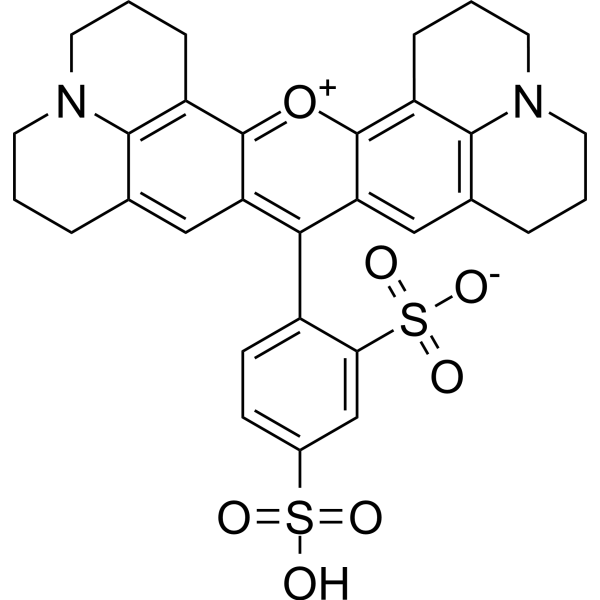
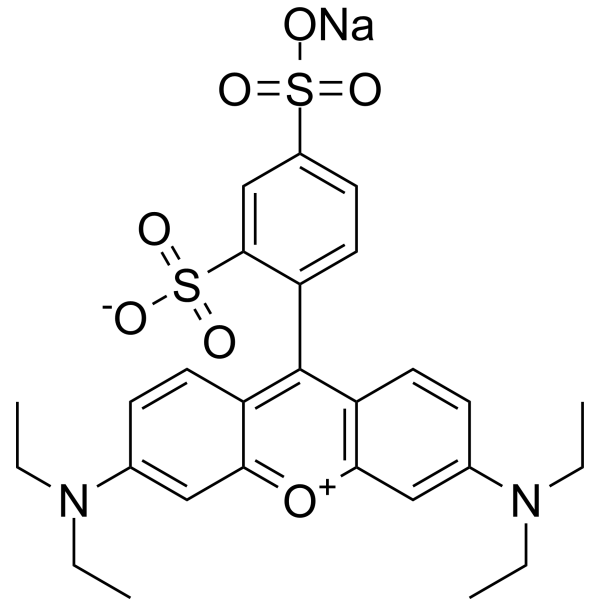
Texas Red (Sulforhodamine 101) is an amphoteric rhodamine red fluorescent dye (excitation/emission: 586/605 nm). Texas Red is used extensively for investigating neuronal morphology and acts as acell type-selective fluorescent marker of astrocytes bothin vivoand in slice preparations .
loading...
    loading...
7
7 Cited Publications
Cat. No.: HY-110082
CAS No.: 130-89-2
Quinine hydrochloride is an alkaloid extracted from cinchona bark and exhibits oral activity, acting as a potassium channel inhibitor. Quinine hydrochloride modulates the tolerance of red blood cells and presents dose-dependent toxicity and embryonic effects. Quinine hydrochloride is a typical hemolysin that directly lyses red blood cells, with cellular components of red blood cell membranes as its action targets. Quinine hydrochloride disrupts red blood cell membranes and induces hemolysis at high concentrations, while merely weakening the anti-hemolytic capacity of red blood cells at low concentrations. Quinine hydrochloride continuously reduces red blood cell tolerance after in vivo administration, and high doses can also alter blood cell counts. Quinine hydrochloride can be applied to researches related to red blood cell hemolysis, cancer and malaria .
loading...
    loading...
7
7 Cited Publications
Cat. No.: HY-B0109A
CAS No.: 130693-82-2
Synonyms: L671152 hydrochloride; MK507 hydrochloride
Target:  

Carbonic Anhydrase

Research Areas:  

Cardiovascular Disease Others

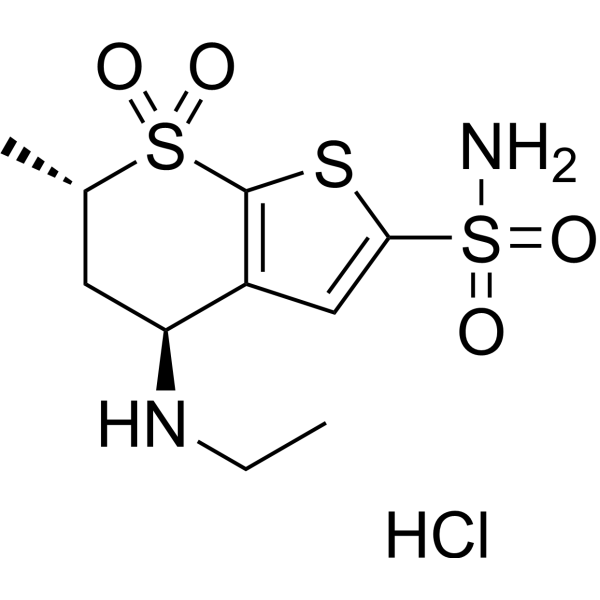
Dorzolamide (L671152) hydrochloride is a potent carbonic anhydrase II inhibitor, with IC50 values of 0.18 nM and 600 nM for red blood cell CA-II and CA-I respectively. Dorzolamide possesses anti-tumor activity .
loading...
    loading...
7
7 Cited Publications
Cat. No.: HY-K1079

MCE One Step TUNEL Apoptosis Detection Kit (Cyanine 3) provides a rapid and convenient method to detect cell apoptosis. After staining cells with this kit, live cells have no fluorescence, apoptosis cells show red fluorescence.

loading...
    loading...
6
6 Cited Publications
Cat. No.: HY-117468
CAS No.: 2609-88-3
Purity:  98.00%
Target:  

Fluorescent Dye

Research Areas:  

Others

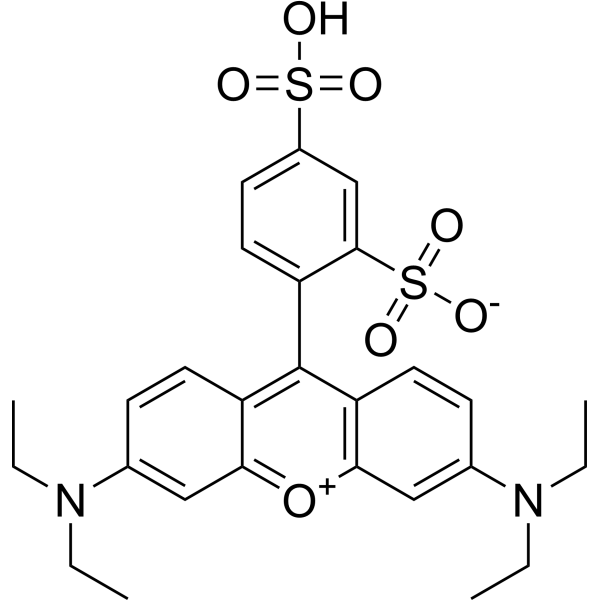
Lissamine rhodamine B is a red-fluorescent dye, it is a derivative of rhodamine. Lissamine rhodamine B can be used as a fluorescent probe to develop competitive aptamer fluorescence anisotropy/polarization (FA/FP) assays .
loading...
    loading...
6
6 Cited Publications
Cat. No.: HY-D0974
CAS No.: 3520-42-1
Synonyms: Acid Red 52; Kiton Red 620
Sulforhodamine B sodium salt is a fluorescent dye with uses spanning from laser-induced fluorescence (LIF) to the quantification of cellular proteins of cultured cells.
loading...
    loading...
6
6 Cited Publications
Cat. No.: HY-D1594
CAS No.: 217190-24-4
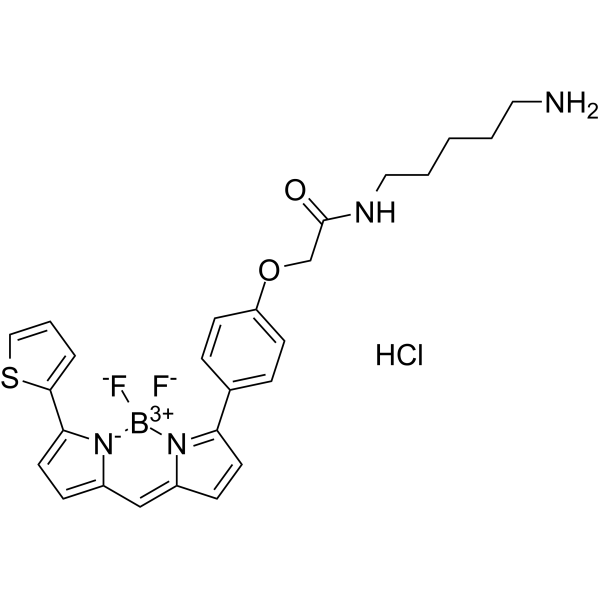
BODIPY TR Cadaverine, a cadaverine derivative, is a red fluorescent dye. BODIPY TR Cadaverine can be used in a a highly sensitive and robust fluorescent displacement assay, which binds to native LPS strongly, specifically recognizing lipid A, and is competitively displaced by compounds displaying an affinity for lipid A .
loading...
    loading...
6
6 Cited Publications
Cat. No.: HY-K3009

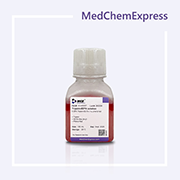
MCE 0.25% Trypsin-EDTA (1×), Phenol Red-Free, is prepared by dissolving trypsin powder (a mixture of proteases from porcine pancreas, irradiated and sterilized) and EDTA in a calcium- and magnesium-free balanced salt solution. It is filter-sterilized and can be directly used for the dissociation of cultured cells and tissues. The 100 mL is defined as the base specification. All larger sizes correspond to incremental volumes of this base.

loading...
    loading...
5
5 Cited Publications
Cat. No.: HY-D1431
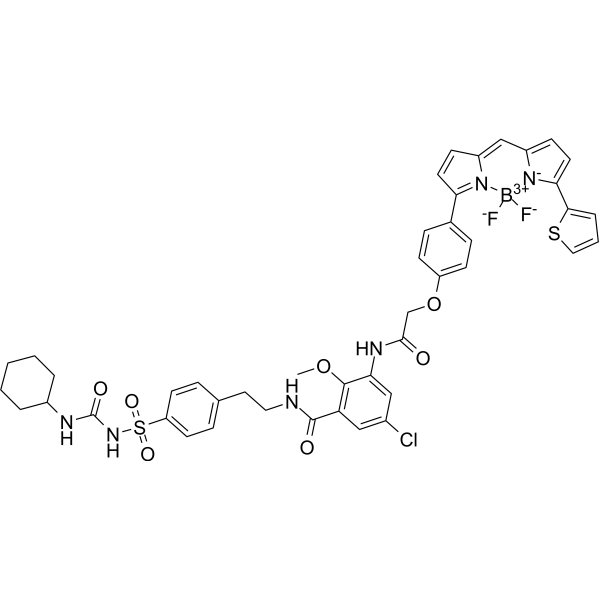
ER-Tracker dye is a derivative of BODIPY series dyes coupled with Glibenclamide (HY-15206), highly selective binding to the endoplasmic reticulum, non-toxic to cells at low concentrations, this type of dye is an environmentally sensitive probe, and formaldehyde treatment can still retain part of the fluorescence, with high fluorescence life, good extinction coefficient and other characteristics. Glibenclamide is an atp-dependent K + channel blocker (Kir6, KATP) and CFTR Cl-channel blocker that binds in the endoplasmic reticulum. ER-Tracker is not suitable for staining cells after fixation. Ex/Em=587/615 nm .
loading...
    loading...
5
5 Cited Publications
Cat. No.: HY-D2270
CAS No.: 2764890-88-0
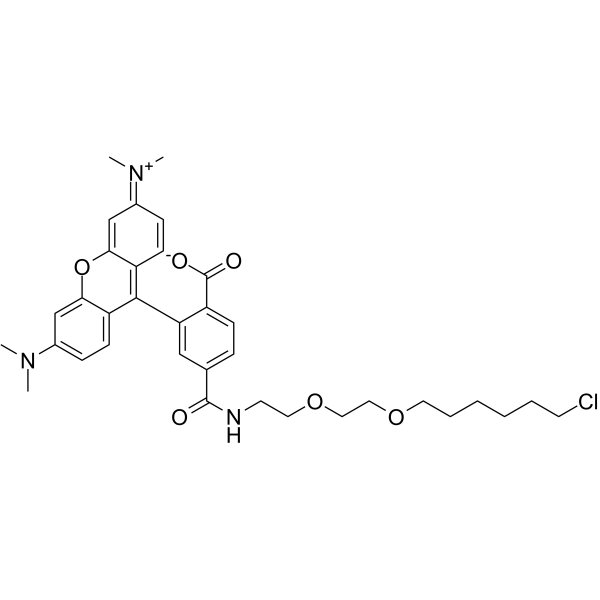
Halo tag TMR is a red fluorescent dye composed of Halo tag ligand molecules and TMR (TAMRA). Halo tag can quickly and stably covalently bind to Halo protein with high specificity and affinity (Ex/Em = 550/576 nm) .
loading...
    loading...
5
5 Cited Publications
Cat. No.: HY-K3007

MCE 0.25% Trypsin-EDTA (1x), phenol red consists of dried trypsin powder dissolved in EDTA. MCE Trypsin hydrolyzes intercellular proteins and disperses primary tissues or adherent cells into individual cells, and can be widely used for cell dissociation, cell culture passaging and primary tissue dissociation. The 100 mL is defined as the base specification. All larger sizes correspond to incremental volumes of this base.

loading...
    loading...
5
5 Cited Publications
Cat. No.: HY-N0908
CAS No.: 186763-78-0
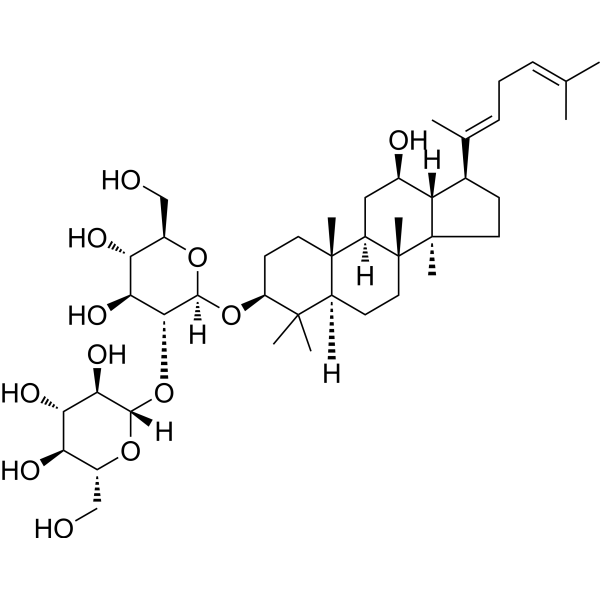
Ginsenoside Rg5 is the main component of Red ginseng and IGF-1R agonist. Ginsenoside Rg5 compets for the binding site of IGF-1R and blocks the binding of IGF-1 to IGF-1R (IC50 about 90 nM). Ginsenoside Rg5 also inhibits the mRNA expression of COX-2 via suppression of the DNA binding activities of NF-κB p65.
loading...
    loading...
5
5 Cited Publications
Cat. No.: HY-133129
CAS No.: 2225938-17-8
Purity:  98.92%
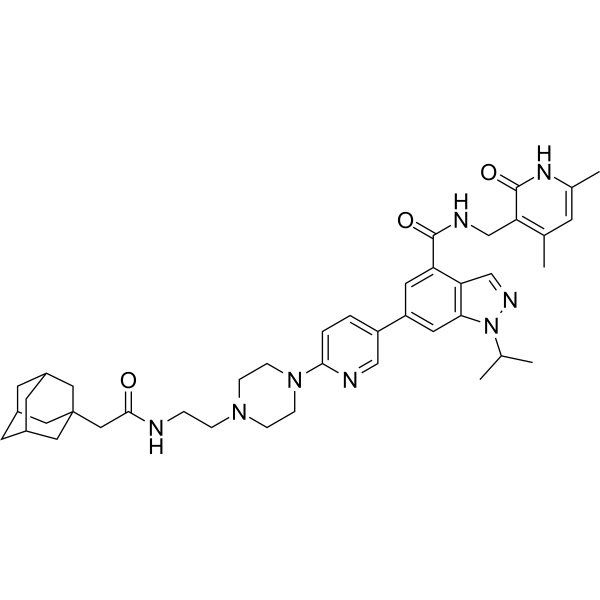
MS1943 is an orally active selective HyT degrader of EZH2 that effectively reduces EZH2 levels in cells. MS1943 has anticancer activity and exhibits cytotoxic effects in a variety of TNBC cells while sparing normal cells. In addition, MS1943 maintains high potency (IC50=120 nM) in inhibiting EZH2 methyltransferase activity and is highly selective for EZH2. (Structure Note: RED, EZH2 ligand (HY-148458); Blue, Hyt (HY-W001578)) .
loading...
    loading...
5
5 Cited Publications
Cat. No.: HY-125878
CAS No.: 2381320-35-8
Purity:  99.89%
Synonyms: SGK3-PROTAC1
Target:  

PROTACs SGK

Research Areas:  

Cancer

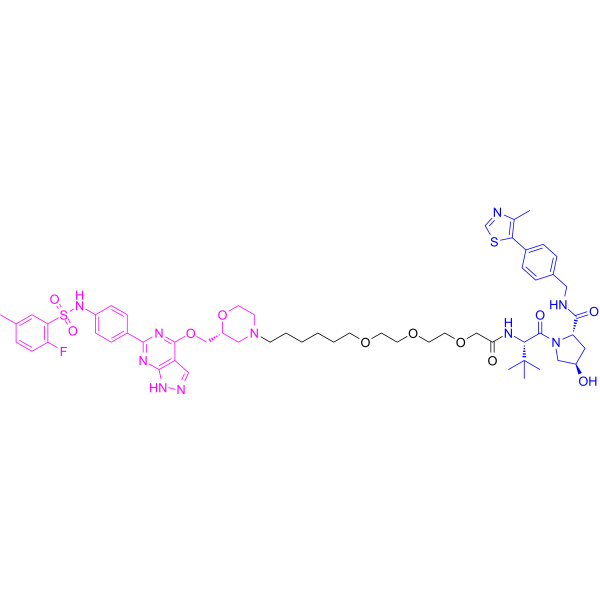
PROTAC SGK3 degrader-1 (SGK3-PROTAC1), a chemical probe, is a von Hippel-Lindau ligand-based SKG3 PROTAC composed of a PEG3-C4-OBn (HY-130620) alkyl linker, an SGK3 degrader (red structure), and a VHL ligand (HY-150803, blue structure). PROTAC SGK3 degrader-1 (0.3 μM) induced 50% endogenous SGK3 degradation within 2 hours, and 80% SGK3 degradation was observed at 8 hours, accompanied by loss of phosphorylation of NDRG1 (SGK3 substrate) .
loading...
    loading...
5
5 Cited Publications
Cat. No.: HY-D0093
CAS No.: 61926-22-5
Synonyms: EthD-1
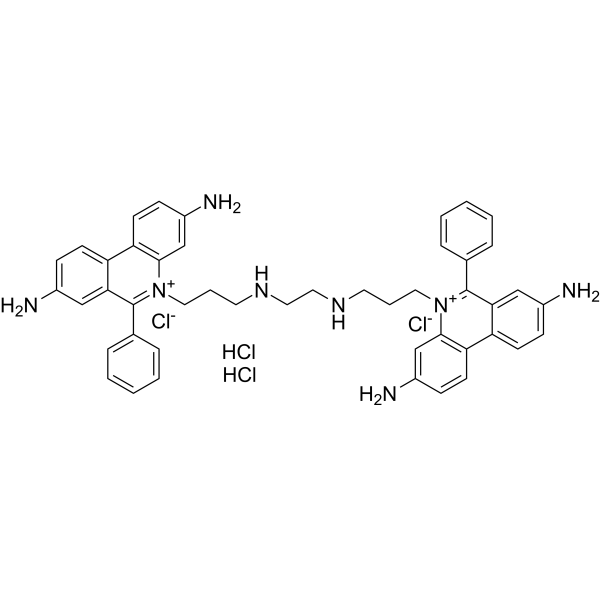
Ethidium homodimer (EthD-1) is a high-affinity fluorescent nucleic acid dye commonly used to stain mammals, bacteria, yeast, and fungi. Ethidium homodimer binds to DNA or RNA, enhancing fluorescence more than 30 times. The Ethidium homodimer has a strong positive charge, so it cannot cross cell membranes and stain living cells; But the Ethidium homodimer can cross the disordered region of the dead cell membrane to reach the nucleus and embed the DNA double strand to produce red fluorescence. Therefore, Ethidium homodimer is a relatively sensitive nucleic acid stain that can accurately detect nucleic acids in solution or in decomposing cells. Ethidium homodimer binds DNA, Ex/Em=528/617 nm .
loading...
    loading...
4
4 Cited Publications
Cat. No.: HY-K1007

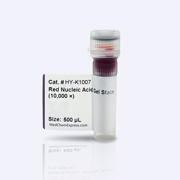
MCE Red Nucleic Acid Gel Stain (10,000×) is a nucleic acid stain that can be used as a safer alternative to the traditional ethidium bromide (EB) stain for detecting nucleic acids in agarose gels or polyacrylamide gels.

loading...
    loading...
4
4 Cited Publications
Cat. No.: HY-D0236
CAS No.: 573-58-0
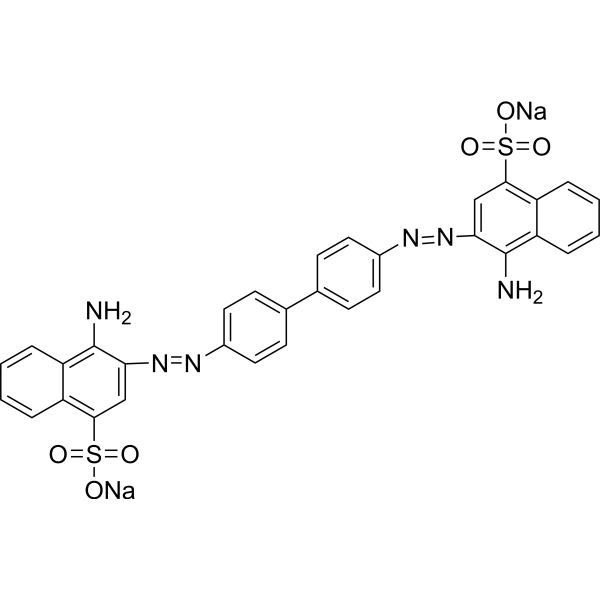
Congo Red is an azo dye. Congo Red (CR) binding been used as a diagnostic test for the presence of amyloid in tissue sections.
loading...
    loading...
4
4 Cited Publications
Cat. No.: HY-D2449
DQ-BSA-Red is a bovine serum albumin labeled with a red fluorescent dye that can be used to detect lysosomal activity. The excitation wavelength and emission wavelength of DQ-BSA-Red are 590 nm and 620 nm, respectively. The BSA molecule in DQ-BSA-Red is labeled with high concentration of red fluorescent dye in multiple sites, which shows high fluorescence self-inhibition. Once DQ-BSA-RED enters the lysosome, DQ-BSA is cleaved by lysosomal proteases, resulting in unquenched and released fluorescent fragments, emitting bright fluorescence. Inactivated lysosomes are unable to degrade the BSA protein and thus have a lower or even no fluorescent signal .
loading...
    loading...
4
4 Cited Publications
Cat. No.: HY-N8377
CAS No.: 205687-01-0
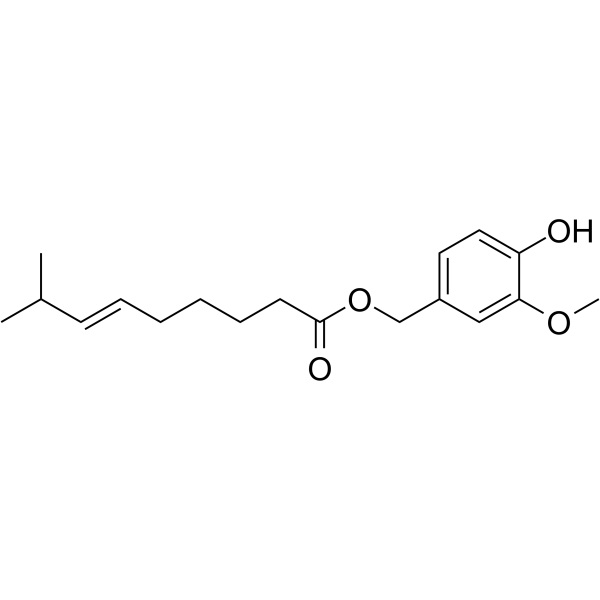
Capsiate, as a capsaicin analogue extracted from a non-pungent cultivar of CH-19 sweet red pepper, is an orally active agonist of TRPV1 .
loading...
    loading...
4
4 Cited Publications
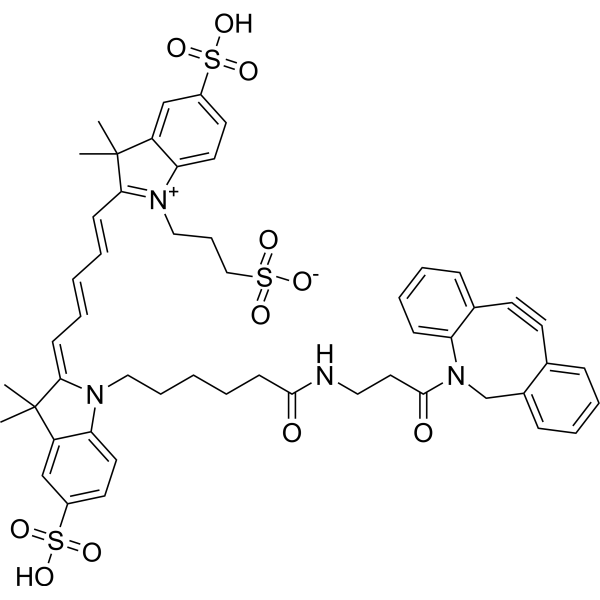
Cat. No.: HY-D1068
CAS No.: 1564286-24-3
Synonyms: DBCO-Sulfo-Cy5
Cy5-DBCO (DBCO-Sulfo-Cy5) is a near-infrared (NIR)red fluorescent dye with λabsand λem of 646nm and 670 nm, respectively. Cy5-DBCO (DBCO-Sulfo-Cy5) is not suitable for staining intracellular components of permeabilezed cell, it may exhibits a high background. Cy5-DBCO is a click chemistry reagent, it contains a DBCO group that can undergo strain-promoted alkyne-azide cycloaddition (SPAAC) with molecules containing Azide groups.
loading...
    loading...

