709 Results for "

stem cell

" in MedChemExpress (MCE) Product Catalog:
Products (709)

709 Results for "stem cell" in MCE Product Catalog:

Art. -Nr.: HY-K6301

MCE Human iPSC/ESC Cortical Brain Organoid Induction Differentiation Kit is a standardized culture system specifically designed to recapitulate the developmental processes and functional features of the human cerebral cortex through forebrain ventralization-based signaling regulation. By sequentially activating the Wnt/β-catenin pathway and gradually inhibiting BMP/Smad signaling, this system efficiently drives human pluripotent stem cells (PSC) to differentiate into high-purity glutamatergic neurons (VGLUT1/2+ > 85%), while simultaneously promoting the formation of Pax6+/BLBP+ radial glial cells that establish a biomimetic ventricular-zone–like structure.

loading...
    loading...
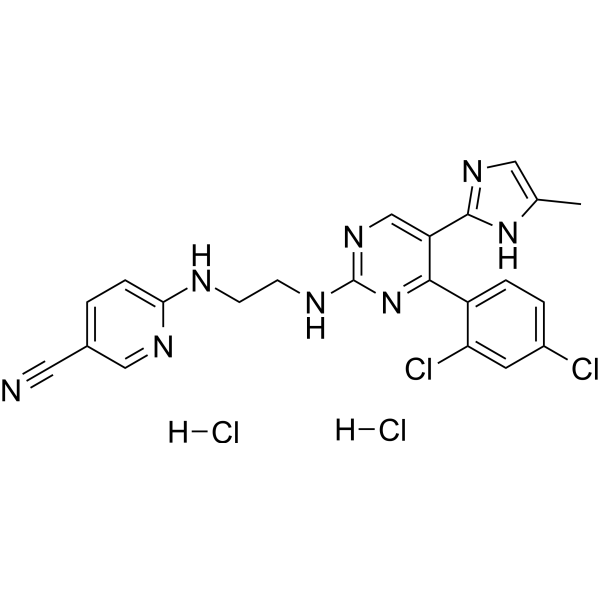
Art. -Nr.: HY-108417
CAS. Nr.: 1332329-27-7
Target:  

STAT JAK Bcr-Abl

Forschungsgebiete:  

Cancer

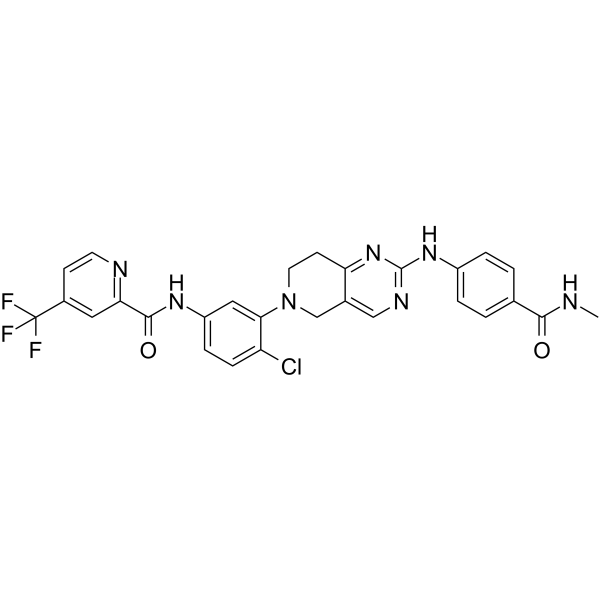
Debio 0617B, a multi-kinase inhibitor, reduces maintenance and self-renewal of primary human AML CD34 + stem/progenitor cells. Debio 0617B has a unique profile targeting key kinases upstream of STAT3/STAT5 signaling such as JAK, SRC, ABL, and class III/V receptor tyrosine kinases (TKs). Debio 0617B has documented efficacy in STAT3-driven solid tumors .
loading...
    loading...
Art. -Nr.: HY-115630
CAS. Nr.: 2361988-77-2
Reinheit:  99.82%
Forschungsgebiete:  

Cancer

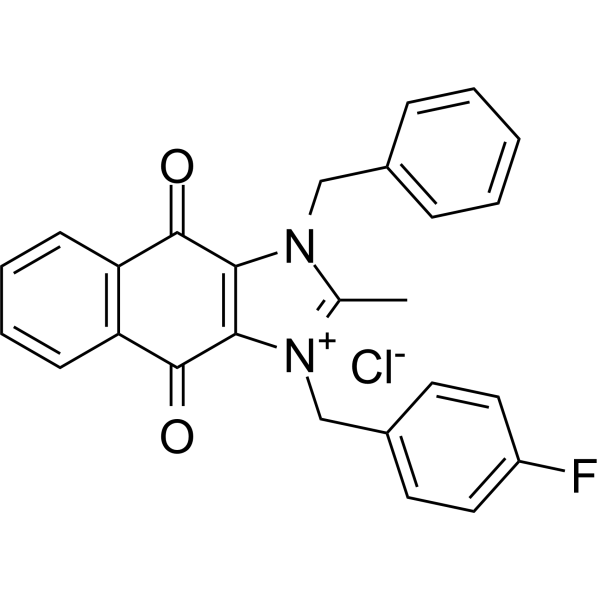
cRIPGBM chloride, an orally active, proapoptotic derivative. cRIPGBM can be generated from glioblastoma multiforme (GBM) cancer stem cells (CSCs). cRIPGBM(chloride) targets to receptor-interacting protein kinase 2 (RIPK2) to induce caspase 1-dependent apoptosis. cRIPGBM(chloride) suppresses the formation of RIPK2/TAK1 (prosurvival complex), and increases the formation of RIPK2/caspase 1 (proapoptotic complex). cRIPGBM(chloride) exerts potent anti-tumor activity in vivo in animal models .
loading...
    loading...
Art. -Nr.: HY-116461
CAS. Nr.: 794572-10-4
Reinheit:  99.57%
Synonyms: CID2440433
Target:  

GPR55

Forschungsgebiete:  

Neurological Disease

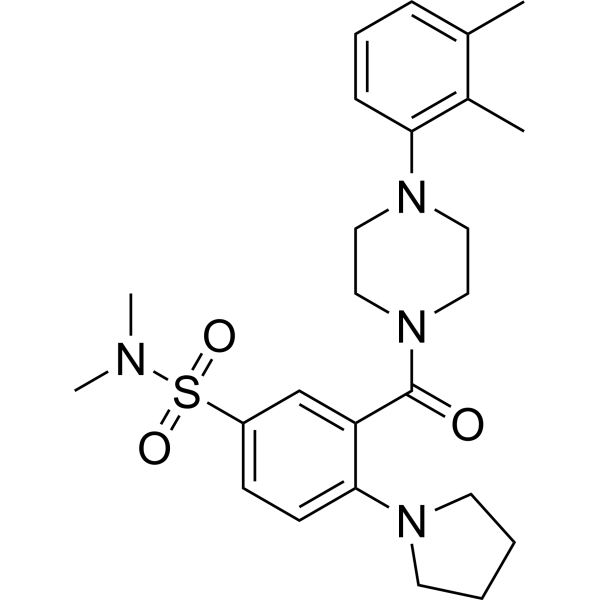
ML-184 (CID244033) is a selective GPR55 agonist with an EC50 of 250 nM, more than 100-fold selectivity for GPR55 over GPR35, CB1, and CB2. ML-184 induces ERK1/2 phosphorylation and PKCβII translocation to the plasma membrane via activation of GPR55. ML-184 (CID2440433) increases the proliferation of neural stem cells and promotes neuronal differentiation in vitro .
loading...
    loading...
Art. -Nr.: HY-137042
CAS. Nr.: 1223357-57-0
Reinheit:  98.15%
Synonyms: Alkyne-Cy5
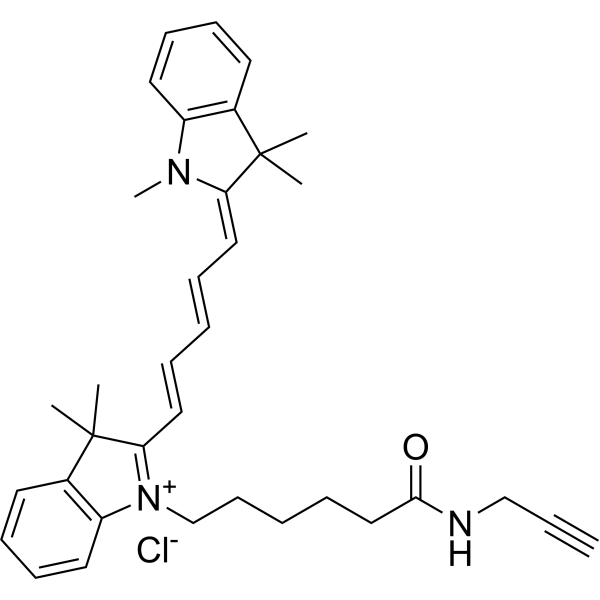
Cyanine5 alkyne (Alkyne-Cy5) is a fluorescent dye used to label azide proteins and can be used to analyse post-translational modifications of proteins, glycosylation etc. Cyanine5 alkyne can also be used as a mitochondrial OXPHOS inhibitor to inhibit the growth of cancer stem cells (CSC) . Cyanine5 alkyne is a click chemistry reagent, it contains an Alkyne group and can undergo copper-catalyzed azide-alkyne cycloaddition (CuAAc) with molecules containing Azide groups.
loading...
    loading...
Art. -Nr.: HY-13894R
CAS. Nr.: 146535-11-7
Synonyms: AG1296 (Standard)
Tyrphostin AG1296 (Standard) is the analytical standard of Tyrphostin AG1296. This product is intended for research and analytical applications. Tyrphostin AG1296 is a potent and selective inhibitor of platelet-derived growth factor receptor (PDGFR), with an IC50 of 0.8 μM. Tyrphostin AG1296 inhibits signaling of human PDGF α- and β-receptors as well as of the related stem cell factor receptor (c-Kit). Tyrphostin AG1296 is also a potent inhibitor of FLT3, with an IC50 in the micromolar range .
loading...
    loading...
Art. -Nr.: HY-170581
CAS. Nr.: 3116771-70-8
Target:  

PPAR

Forschungsgebiete:  

Metabolic Disease

PPARγ/δ modulator 2 (Compound 3h) is a PPARγ agonist and PPARδ antagonist. The Ki values for PPARγ and PPARδ are 2.8 μM and 43 nM, respectively. PPARγ/δ modulator 2 significantly enhances the production of Adiponectin and promotes adipogenic differentiation of human bone marrow mesenchymal stem cells (hBM-MSCs). PPARγ/δ modulator 2 can be used in the study of metabolic disorders associated with hypoadiponectinemia .
loading...
    loading...
Art. -Nr.: HY-N10568
CAS. Nr.: 427-77-0
Gibberellin A9 is a plant hormone that targets gibberellin receptor GID1. Gibberellin A9 binds to GID1 to form a GA-GID1-DELLA protein complex, which promotes the degradation of DELLA proteins. This relieves the inhibitory effect of DELLA proteins on plant growth, thereby promoting plant cell elongation and division, and increasing seed germination rate. Gibberellin A9 is promising for use in studies on plant growth and development, such as stem elongation and flowering induction .
loading...
    loading...
Art. -Nr.: HY-W019901B
CAS. Nr.: 7778-18-9
Synonyms: Gypsum ustum (97%)
Anhydrous calcium sulfate (97%) serves as an oil-based drilling fluid additive and an osteogenic material. Anhydrous calcium sulfate (97%) increases the plastic viscosity, yield point, apparent viscosity and gel strength of oil-based drilling fluids. Anhydrous calcium sulfate (97%) upregulates the expression of bone-related genes FOSL1, RUNX2 and SPP1. Anhydrous calcium sulfate (97%) significantly affects the behavior of dental pulp stem cells, enhancing their proliferation, differentiation and matrix deposition .
loading...
    loading...
Art. -Nr.: HY-W094517
CAS. Nr.: 7782-85-6
Sodium phosphate dibasic heptahydrate is an orally active and osmotic laxative, often used as a component of over-the-counter gastrointestinal lavage drugs. Sodium phosphate dibasic heptahydrate draws water into the intestinal lumen, maintains electrical neutrality by retaining cations in the intestinal lumen, and thereby alters fecal volume, consistency and phosphate levels. Sodium phosphate dibasic heptahydrate can be used to generate self-assembled calcium phosphate tubular scaffolds, which support the adhesion, survival and elongation of mesenchymal stem cells. Sodium phosphate dibasic heptahydrate can be applied to research on factitious disorders and related fields .
loading...
    loading...
Art. -Nr.: HY-16782A
CAS. Nr.: 1416216-01-7
Synonyms: ARRY-614 hydrochloride
Pexmetinib hydrochloride (ARRY-614 hydrochloride) is an orally active dual Tie-2 and p38 MAPK inhibitor. Pexmetinib hydrochloride binds to Tie-2 and p38 MAPK in a "DFG-out" conformation, attenuates the phosphorylation of p38, inhibits STAT3 activation, reduces the promoter-binding activity of NFATc1, and decreases the expression of MMPs. Pexmetinib hydrochloride inhibits leukemia cell proliferation, abrogates TNF-α-mediated myelosuppression of healthy hematopoietic stem cells, stimulates hematopoiesis in primary myelodysplastic syndrome (MDS) samples, inhibits RANKL-induced osteoclast formation and bone resorption, and suppresses migration, invasion and induced osteolysis of breast cancer cells. Pexmetinib hydrochloride can be used in research related to myelodysplastic syndrome, acute myeloid leukemia and breast cancer-induced osteolysis .
loading...
    loading...
Art. -Nr.: HY-173280
CAS. Nr.: 3035018-34-6
Synonyms: CHNQD-01228
Forschungsgebiete:  

Cancer

Brefeldin A 4-O-nicotinate (CHNQD-01228) is a dual inhibitor of Arf1 and BMX proteins. The IC50 value for the proliferation of T24 cells is 0.22 μM. It can also dose-dependently inhibit the migration and colony formation of T24 cells, induce G1 phase arrest and trigger Apoptosis. Brefeldin A 4-O-nicotinate exerts its anti-cancer activity by targeting the BMX protein to inhibit the AKT/p-AKT and STAT3/p-STAT3 signaling pathways, as well as by inhibiting the Arf1 protein to eliminate bladder cancer stem cells and activate anti-tumor immunity. Brefeldin A 4-O-nicotinate can be used in the research related to bladder cancer .
loading...
    loading...
Art. -Nr.: HY-184486
CAS. Nr.: 16781-09-2
Synonyms: 1-Amino-8-naphthol-2,4-disulfonic acid
Target:  

CaMK MDM-2/p53 Phosphatase

Forschungsgebiete:  

Cancer

ANDS (1-Amino-8-naphthol-2,4-disulfonic acid) is an orally active inhibitor of CaMKP (IC50 = 6.4 μM; Ki = 3.6 μM) and CaMKP‑N (IC50 = 6.6 μM) . ANDS binds unacetylated p53 and restores p53 activity by disrupting ANP32B-p53 interaction. ANDS inhibits chronic myeloid leukemia (CML) cell proliferation, impairs leukemic stem cells (LSC) function and prolongs survival in CML mouse model while sparing normal progenitor cells. ANDS can be used to study the eradication of LSCs and the overcoming of tyrosine kinase inhibitor (TKI) resistance in CML . ANDS can be used to study breast cancer .
loading...
    loading...
Art. -Nr.: HY-E70739
Target:  

c-Kit

Forschungsgebiete:  

Cancer

KIT (CD117) is an important cell surface marker used to identify certain types of hematopoietic(blood) progenitors in the bone marrow. KIT is a cytokine receptor expressed on the surface of hematopoietic stem cells as well as other cell types. Altered forms of this receptor may be associated with some types of cancer. KIT V559D/T670I is a mutant of KIT. KIT V559D/T670I Recombinant Human Active Protein Kinase is a recombinant KIT V559D/T670I protein that can be used to study KIT V559D/T670I-related functions .
loading...
    loading...
Art. -Nr.: HY-E70740
Target:  

c-Kit

Forschungsgebiete:  

Cancer

KIT (CD117) is an important cell surface marker used to identify certain types of hematopoietic(blood) progenitors in the bone marrow. KIT is a cytokine receptor expressed on the surface of hematopoietic stem cells as well as other cell types. Altered forms of this receptor may be associated with some types of cancer. KIT V559D/V654A is a mutant of KIT. KIT V559D/V654A Recombinant Human Active Protein Kinase is a recombinant KIT V559D/V654A protein that can be used to study KIT V559D/V654A-related functions .
loading...
    loading...
Art. -Nr.: HY-P86802
Synonyms: AC133 antibody; Antigen AC133 antibody; CD133 antibody; CORD12 antibody; Hematopoietic stem cell antigen antibody; hProminin antibody; MCDR2 antibody; MSTP061 antibody; OTTHUMP00000217744 antibody; OTTHUMP00000217745 antibody; AC133 antibody; Antigen AC133 antibody; CD133 antibody; CORD12 antibody; Hematopoietic stem cell antigen antibody; hProminin antibody; MCDR2 antibody; MSTP061 antibody; OTTHUMP00000217744 antibody; OTTHUMP00000217745 antibody; OTTHUMP00000217746 antibody; PROM1 antibody; PROM1_HUMAN antibody; Prominin I antibody; Prominin like 1 antibody; Prominin like protein 1 precursor antibody; Prominin mouse like 1 antibody; Prominin-1 antibody; Prominin-like protein 1 antibody; Prominin1 antibody; PROML1 antibody; RP41 antibody; STGD4 antibody;

Host:  

Rabbit

Application:  

WB, IHC-P, IHC-F

Reactivity:  

Mouse

loading...
    loading...
Art. -Nr.: HY-138195
CAS. Nr.: 1361198-79-9
Forschungsgebiete:  

Cancer

NEO212 is an orally active, blood-brain barrier permeable conjugate of Temozolomide (TMZ) (HY-17364) and Perillyl Alcohol (POH) (HY-N7000), with potent anticancer activity. NEO212 overcomes classical TMZ resistance and DNA alkylation by depleting MGMT. By inhibiting the FAK/Src signaling pathway, NEO212 reduces the production of MMP2 and MMP9, induces mesenchymal-epithelial transition, and inhibits the migration, invasion and tumor progression of glioma stem cells. NEO212 disrupts autophagy flux to enhance mitochondrial apoptosis; it induces differentiation of acute myeloid leukemia (AML) cells into macrophages and proliferation arrest .
loading...
    loading...
Art. -Nr.: HY-169327
CAS. Nr.: 2415160-21-1
Forschungsgebiete:  

Cancer

MD-265 is a PROTAC degrader targeting MDM2, which activates p53 in cancer cells carrying wild-type p53. MD-265 induces MDM2 degradation by recruiting the CRL4-CRBN ligase complex via the ubiquitination and proteasomal degradation pathway. MD-265 upregulates p53 target genes, induces apoptosis, reduces Mcl-1 levels, increases caspase-3 cleavage, and inhibits colony formation of wild-type p53 leukemia stem cells. MD-265 can be used in research related to leukemia and acute myeloid leukemia .
loading...
    loading...
Art. -Nr.: HY-10182C
CAS. Nr.: 2109414-84-6
Synonyms: CHIR-99021 dihydrochloride; CT99021 dihydrochloride
Laduviglusib dihydrochloride (CHIR-99021 dihydrochloride; CT99021 dihydrochloride) is a potent, selective and orally active GSK-3α/β inhibitor with IC50s of 10 nM and 6.7 nM. Laduviglusib dihydrochloride shows >500-fold selectivity for GSK-3 over CDC2, ERK2 and other protein kinases. Laduviglusib dihydrochloride is also a potent Wnt/β-catenin signaling pathway activator. Laduviglusib dihydrochloride enhances mouse and human embryonic stem cells self-renewal. Laduviglusib dihydrochloride induces autophagy .
loading...
    loading...
Art. -Nr.: HY-10182R
CAS. Nr.: 252917-06-9
Synonyms: CHIR-99021 (Standard); CT99021 (Standard)
Forschungsgebiete:  

Cancer

Laduviglusib (Standard) is the analytical standard of Laduviglusib. Laduviglusib (CHIR-99021) is a potent, selective and orally active GSK-3α/β inhibitor with IC50s of 10 nM and 6.7 nM. Laduviglusib shows >500-fold selectivity for GSK-3 over CDC2, ERK2 and other protein kinases. Laduviglusib is also a potent Wnt/β-catenin signaling pathway activator. Laduviglusib enhances mouse and human embryonic stem cells self-renewal. Laduviglusib induces autophagy .
loading...
    loading...

