91 Results for "

Plasma stability

" in MedChemExpress (MCE) Product Catalog:
Products (91)

91 Results for "Plasma stability" in MCE Product Catalog:

Cat. No.: HY-144771
CAS No.: 22203-98-1
Purity:  99.02%
Target:  

SARS-CoV

Research Areas:  

Infection

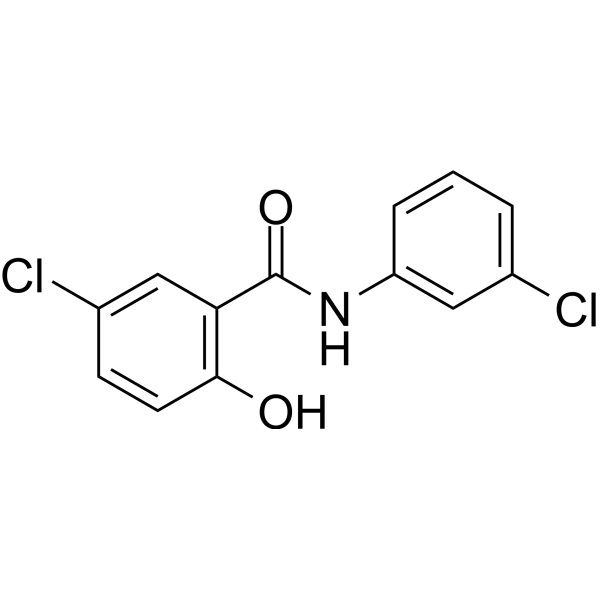
SARS-CoV-2-IN-14 (compound 6) is a potent inhibitor of SARS-CoV-2 with an IC50 of 0.39 μM. SARS-CoV-2-IN-14 is a niclosamide analogue. SARS-CoV-2-IN-14 contains higher stability in human plasma and liver S9 enzymes assay than niclosamide, which can improve bioavailability and half-life when administered orally .
loading...
    loading...
Cat. No.: HY-161819
Target:  

Trk Receptor

Research Areas:  

Cancer

TRK-IN-29 (Compound B31) is a second-generation TRK inhibitor (IC50: 9 nM, 0.6 nM, 18 nM, 5 nM, 6 nM for TRKA G595R, TRKA F589L, TRKA G667C, TRKA and TRKC respectively). TRK-IN-29 inhibits the phosphorylation of TRKA. TRK-IN-29 has good antiproliferative activities against NTRK fusion positive cells. TRK-IN-29 has exellent plasma stability and moderate pharmacokinetic properties .
loading...
    loading...
Cat. No.: HY-169064
Research Areas:  

Infection

HIV-1 inhibitor-75 is a human immunodeficiency virus 1 (HIV-1) inhibitor, with an EC50 value ranging from 0.0039 to 0.338 μM. The binding target of HIV-1 inhibitor-75 is reverse transcriptase, with an IC50 value of 0.055 μM. HIV-1 inhibitor-75 shows good in vitro metabolic stability, exhibiting moderate clearance rates and a longer half-life in human plasma and liver microsomes .
loading...
    loading...
Cat. No.: HY-150681
CAS No.: 2816165-16-7
Target:  

SARS-CoV

Research Areas:  

Infection

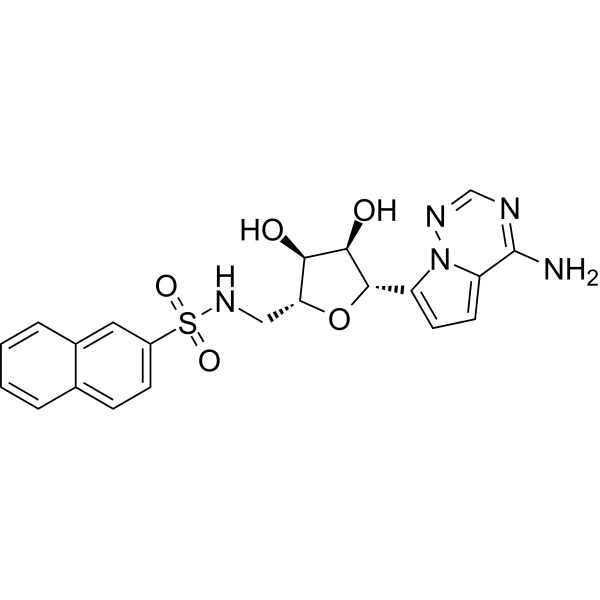
SARS-CoV-2 nsp14-IN-2 is a potent SARS-CoV-2 Nsp14 methyltransferase inhibitor with an IC50 value of 0.093 µM. SARS-CoV-2 nsp14-IN-2 shows antiviral activity. SARS-CoV-2 nsp14-IN-2 shows plasma and liver S9 stability. SARS-CoV-2 nsp14-IN-2 has the potential for the research of COVID-19 .
loading...
    loading...
Cat. No.: HY-P2161A
Target:  

Kisspeptin Receptor

Research Areas:  

Cancer

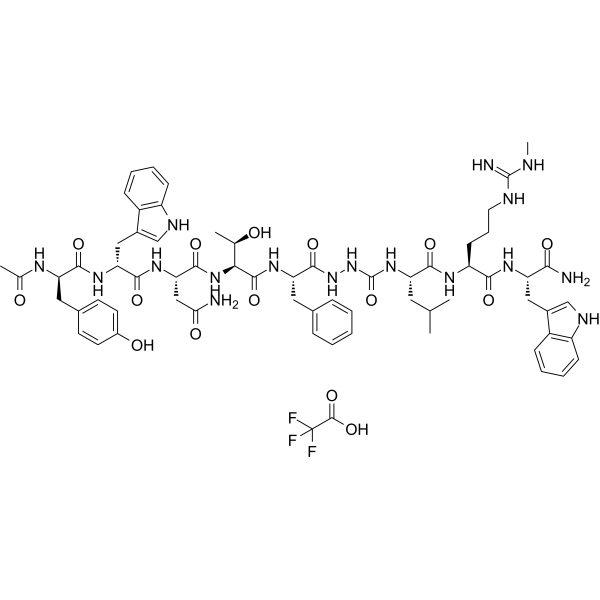
TAK-683 TFA is a potent full KISS1 receptor (KISS1R) agonist (IC50=170 pM) with improved metabolic stability. TAK-683 TFA is a nonapeptide metastin analog, exhibits agonistic activities to KISS1R with EC50 values of 0.96 nM and 1.6 nM for human and rat, respectively . TAK-683 TFA depletes GnRH in the hypothalamus and reduces plasma FSH, LH, and testosterone levels in vivo, it has the potential for the study of hormone-dependent prostate cancer .
loading...
    loading...
Cat. No.: HY-161823
Target:  

Bacterial

Research Areas:  

Infection

Anti-MRSA agent 13 (Compound 9b) is an agent against methicillin-resistant Staphylococcus aureus (MRSA), exhibiting a minimum inhibitory concentration (MIC) of 0.5–2 μg/mL against clinically isolated MRSA strains. Anti-MRSA agent 13 possesses favorable biosafety, plasma tolerance stability, and a low tendency to develop resistance. Anti-MRSA agent 13 disrupts cell walls and membranes, reduces metabolic activity, causes oxidative damage, affects DNA function, and ultimately leads to MRSA death through multi-target synergies .
loading...
    loading...
Cat. No.: HY-164477
CAS No.: 1431166-12-9
Target:  

Androgen Receptor

Research Areas:  

Cancer

FL442 is an Androgen Receptor (AR) modulator. FL442 exhibits strong inhibitory effects in AR-dependent prostate cancer cells, showing similar inhibitory efficiency to traditional antiandrogen drugs Bicalutamide (HY-14249) and Enzalutamide (HY-70002), while maintaining antiandrogenic activity against the AR mutant F876L, which is highly resistant to Enzalutamide. Pharmacokinetic studies of FL442 in mice reveal a long half-life (8 hours), good targeting (prostate tissue), and metabolic stability, and it effectively inhibits LNCaP tumor growth at low plasma concentrations (30 ng/mL) .
loading...
    loading...
Cat. No.: HY-170606
CAS No.: 3068686-30-3
Target:  

Glycosidase

Research Areas:  

Metabolic Disease

α-Glucosidase-IN-79 (Compound 4d9) is a non-competitive α-Glucosidase inhibitor with an IC50 of 2.11 μM, which is more potent than existing α-Glucosidase inhibitors such as Acarbose (HY-B0089) (IC50 of 327.0 μM) and HXH8r (IC50 of 15.32 μM). α-Glucosidase-IN-79 is non-cytotoxic to human normal hepatocyte (LO2) cells and shows good metabolic stability in rat plasma. α-Glucosidase-IN-79 holds promise for research into type 2 diabetes .
loading...
    loading...
Cat. No.: HY-161988
CAS No.: 3055131-42-2
Target:  

Bacterial

Research Areas:  

Infection Inflammation/Immunology

Antimicrobial agent-34 (compound 4h) is an antibacterial agent (MIC = 1–4 μg/mL), with a clogP value of 9.14. Antimicrobial agent-34 has good plasma stability (HC50 of 131.1 μg/mL) and good membrane selectivity (HC50/MIC is 65.6), with rapid sterilization capability. Antimicrobial agent-34 destroys the integrity of bacterial cell membranes, induces an increase in intracellular reactive oxygen species, and leaks protein and DNA, ultimately leading to bacterial death. Antimicrobial agent-34 demonstrates significant in vivo antibacterial potency in a mouse sepsis model infected with Staphylococcus aureus ATCC43300 .
loading...
    loading...
Cat. No.: HY-169059
Target:  

Ferroptosis

Research Areas:  

Inflammation/Immunology

Ferroptosis-IN-12 (Cpd-A1) is a ferroptosis inhibitor. Ferroptosis-IN-12 exhibits effective ferroptosis inhibition in Erastin (HY-15763)-treated mouse tubular epithelial cells (mTECs) and improves kidney function, alleviates renal tubular damage, and reduces inflammation in a dose-dependent manner in acute kidney injury (AKI) mouse models induced by ischemia/reperfusion (I/R) or cecal ligation and puncture (CLP). Ferroptosis-IN-12 demonstrates good plasma stability and high distribution in kidney tissues in pharmacokinetic studies in mice. Ferroptosis-IN-12 holds promise for research in the field of acute kidney injury (AKI) .
loading...
    loading...
Cat. No.: HY-N3980R
CAS No.: 489-86-1
Synonyms: Champacol (Standard); Guaiac alcohol (Standard)
Guaiol (Standard) is the analytical standard of Guaiol. This product is intended for research and analytical applications. Guaiol is a sesquiterpenoid alcohol with oral activity found in various traditional Chinese medicines, exhibiting biological activities such as anti-proliferative, autophagy-promoting, insecticidal, anti-anxiety, anti-inflammatory, diuretic, and blood pressure-lowering effects. Guaiol induces apoptosis in non-small cell lung cancer cells by regulating the stability of RAD51 through autophagy modulation. Guaiol can also act directly on parasites, inhibiting their growth by affecting the kinetoplast, mitochondrial matrix and plasma membrane of the promastigotes. Guaiol kills amastigotes at an IC50 of 0.01 µg/mL. Guaiol can be used in research related to cancer, infections, cardiovascular diseases, and inflammatory conditions [4]
loading...
    loading...
Cat. No.: HY-179390
Target:  

Adrenergic Receptor

Research Areas:  

Neurological Disease

KMCA-0011 is an orally active ɑ2C adrenoceptor antagonist (Ki = 56.7 nM). KMCA-0011 alleviates depressive behaviors by enhancing BDNF and synaptic plasticity. KMCA-0011 displays favorable metabolic stability, including high plasma stability (99.8% after 120 min). KMCA-0011 can be used for the research of depression .
loading...
    loading...
Cat. No.: HY-W190925
CAS No.: 2170240-97-6
Research Areas:  

Others

APN-C3-biotin is a heterobifunctional linker containing an APN moiety with exquisite chemoselectivity for cysteine and Biotin. The superior stability of APN-cysteine conjugates in aqueous media, human plasma, and living cells makes this new thiol-click reaction a promising methodology for applications in bioconjugation.
loading...
    loading...
Cat. No.: HY-100432R
CAS No.: 877963-94-5
LOC14 (Standard) is the analytical standard of LOC14 (HY-100432). This product is intended for research and analytical applications. LOC14 is a potent Protein disulfide isomerase (PDI) inhibitor with EC50 and Kd values of 500 nM and 62 nM, respectively. LOC14 exhibits high stability in mouse liver microsomes and blood plasma, low intrinsic microsome clearance, and low plasma-protein binding . LOC14 inhibits PDIA3 activity, decreases intramolecular disulfide bonds and subsequent oligomerization (maturation) of HA in lung epithelial cells .
loading...
    loading...
Cat. No.: HY-183978
CAS No.: 128053-53-2
Target:  

Renin

Research Areas:  

Cardiovascular Disease

KRI-1314 is an orally active human renin inhibitor with selectivity for primate renin over non-primate renin. KRI-1314 competitively inhibits the binding of recombinant human renin to its substrate, reduces plasma renin activity, lowers blood pressure, and exhibits high stability in tissue homogenates. KRI-1314 is applicable to research on renin-dependent hypertension and hypertension-related studies .
loading...
    loading...
Cat. No.: HY-180125
Research Areas:  

Infection

Antibacterial agent 307 is an antibacterial agent. Antibacterial agent 307 shows MICs of 1-4 μg/mL against Gram-positive bacteria, moderate activity against Gram-negative bacteria, low hemolytic toxicity, and excellent plasma stability. Antibacterial agent 307 compromises bacterial membrane integrity via increased permeability and depolarization, induces endogenous ROS accumulation, causes cytoplasmic protein and nucleic acid leakage, and drives rapid bacterial cell death. Antibacterial agent 307 can be used for the research of bacterial infection .
loading...
    loading...
Cat. No.: HY-180125A
Research Areas:  

Infection

Antibacterial agent 307 hydrochloride is an antibacterial agent. Antibacterial agent 307 hydrochloride shows MICs of 1-4 μg/mL against Gram-positive bacteria, moderate activity against Gram-negative bacteria, low hemolytic toxicity, and excellent plasma stability. Antibacterial agent 307 hydrochloride compromises bacterial membrane integrity via increased permeability and depolarization, induces endogenous ROS accumulation, causes cytoplasmic protein and nucleic acid leakage, and drives rapid bacterial cell death. Antibacterial agent 307 hydrochloride can be used for the research of bacterial infection .
loading...
    loading...
Cat. No.: HY-182042
Target:  

Dengue Virus

Research Areas:  

Infection

DENV-IN-15 is a sulfonyl anthranilic acid derivative and a pan-serotype anti-dengue virus (DENV) inhibitor with broad-spectrum anti-RNA virus activity. The EC50 value of DENV-IN-15 against DENV-2 in Huh-7 cells is 0.7 μM. DENV-IN-15 selectively regulates the translation of mRNAs encoding translation-related proteins and containing a 5'-oligopyrimidine tract. DENV-IN-15 reduces the expression of specific ribosomal proteins, thereby inhibiting viral replication. DENV-IN-15 exhibits enhanced membrane permeability, human plasma stability and human liver microsomal metabolic stability. DENV-IN-15 is applicable to research related to dengue virus infection .
loading...
    loading...
Cat. No.: HY-179393
Target:  

HBV

Research Areas:  

Cancer

HBV-IN-54 is a selective and orally active HBV inhibitor. HBV-IN-54 exhibits anti-HBV activity in both HepAD38 cells (EC50 = 0.020 μM, CC50 > 100 μM) and HLCZ01 cells (EC50 = 0.024 μM, CC50 > 100 μM). HBV-IN-54 inhibits viral replication in vivo. HBV-IN-54 displays favorable physicochemical properties and high plasma stability. HBV-IN-54 can be used for research on Hepatitis B (HBV) .
loading...
    loading...
Cat. No.: HY-181929
CAS No.: 2549180-90-5
Synonyms: H018
Target:  

JAK

Research Areas:  

Inflammation/Immunology

RAI-20 (H018) is an orally active JAK1/JAK2 dual inhibitor (IC50=15.1 and 22.7 nM). RAI-20 exhibits excellent pharmacokinetic properties, including plasma stability, systemic exposure, and a long half-life. In a collagen-induced arthritis rat model, RAI-20 shows significant anti-inflammatory and anti-arthritic activities, effectively reducing paw swelling volume and arthritis index. RAI-20 can be used for research on the pathogenesis of rheumatoid arthritis .
loading...
    loading...

