6394 Results for "

CCK-mediated pathways

" in MedChemExpress (MCE) Product Catalog:
Products (6394)

6394 Results for "CCK-mediated pathways" in MCE Product Catalog:

33
33 Cited Publications
Cat. No.: HY-N0145
CAS No.: 3681-99-0
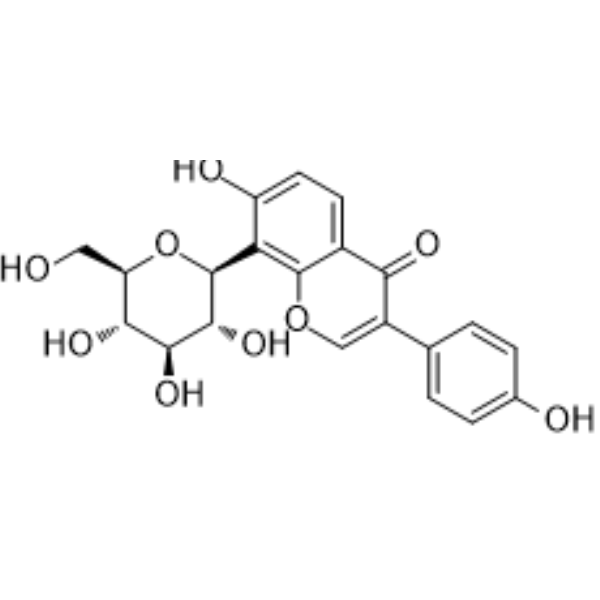
Puerarin is an isoflavone extracted from Pueraria root and is a 5-HT2C receptor antagonist. Puerarin inhibits the dorsal motor nucleus of the vagus (DMV)-vagus nerve pathway, which in turn leads to decreased fat absorption .
loading...
    loading...
33
33 Cited Publications
Cat. No.: HY-B0660
CAS No.: 10417-94-4
Synonyms: EPA; Timnodonic acid
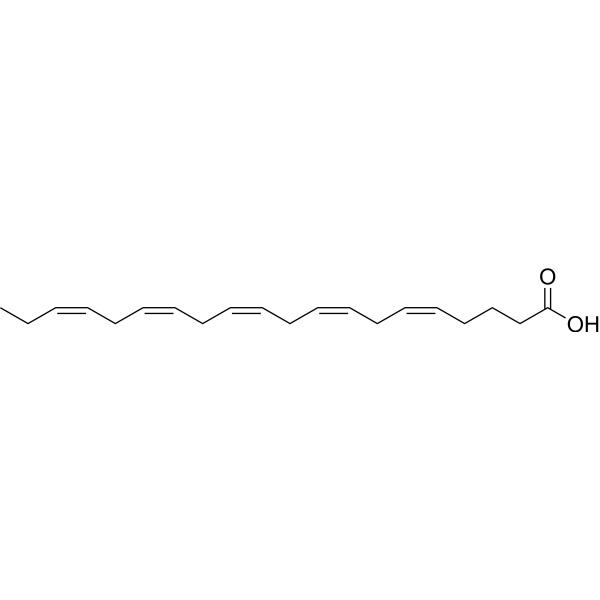
Eicosapentaenoic Acid (EPA) is an orally active Omega-3 long-chain polyunsaturated fatty acid (ω-3 LC-PUFA). Eicosapentaenoic Acid exhibits a DNA demethylating action that promotes the re-expression of the tumor suppressor gene CCAAT/enhancer-binding protein δ (C/EBPδ). Eicosapentaenoic Acid activates RAS/ERK/C/EBPβ pathway through H-Ras intron 1 CpG island demethylation in U937 leukemia cells. Eicosapentaenoic Acid can promote relaxation of vascular smooth muscle cells and vasodilation .
loading...
    loading...
33
33 Cited Publications
Cat. No.: HY-W011269
CAS No.: 73167-03-0
Synonyms: EPA sodium; Timnodonic acid sodium
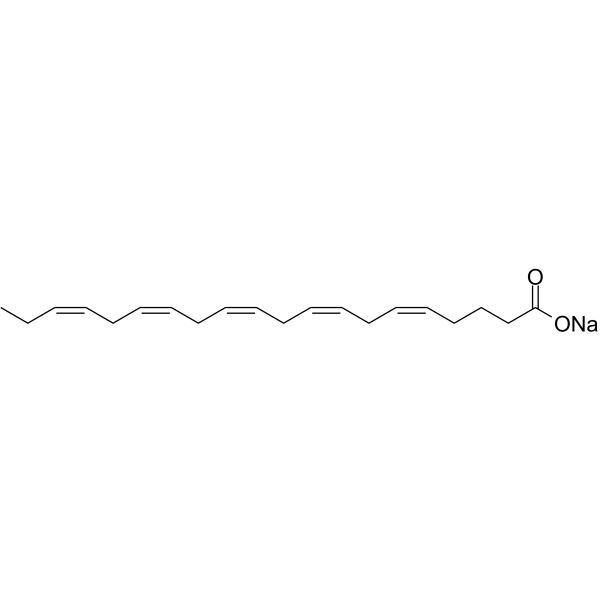
Eicosapentaenoic Acid (EPA)sodium is an orally active Omega-3 long-chain polyunsaturated fatty acid (ω-3 LC-PUFA). Eicosapentaenoic Acid sodium exhibits a DNA demethylating action that promotes the re-expression of the tumor suppressor gene CCAAT/enhancer-binding protein δ (C/EBPδ). Eicosapentaenoic Acid sodium activates RAS/ERK/C/EBPβ pathway through H-Ras intron 1 CpG island demethylation in U937 leukemia cells. Eicosapentaenoic Acid sodium can promote relaxation of vascular smooth muscle cells and vasodilation .
loading...
    loading...
32
32 Cited Publications
Cat. No.: HY-13687
CAS No.: 873225-46-8
Purity:  99.88%
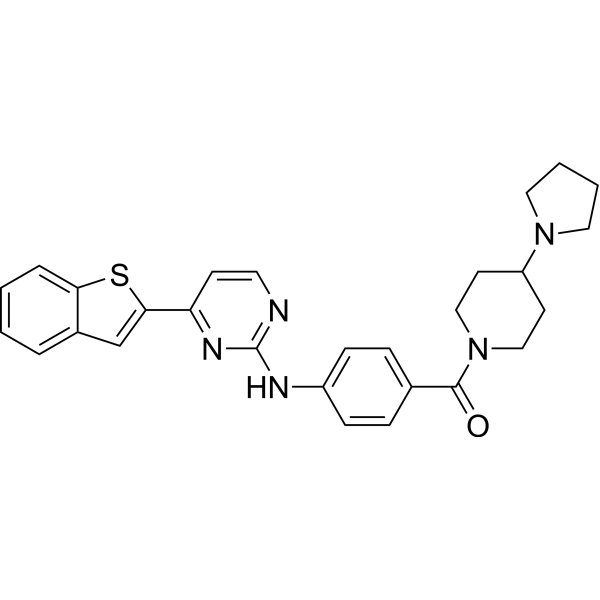
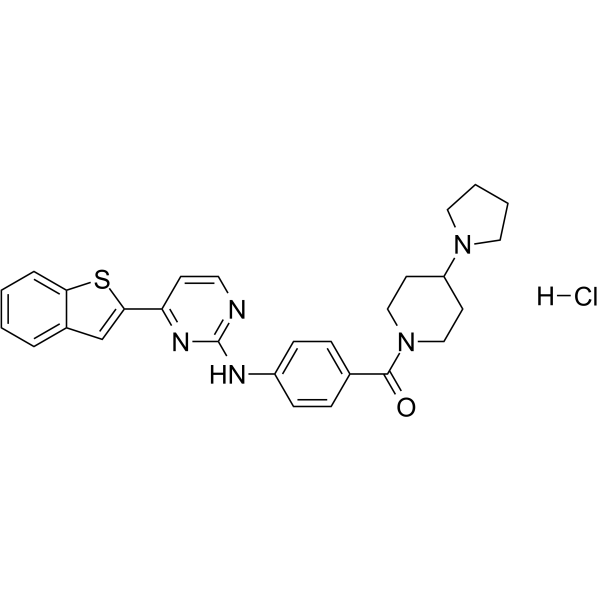
IKK 16 is an orally active IKK inhibitor. IKK 16 shows IC50s of 40 nM, 70 nM, 200 nM, and 50 nM for IKK2, IKK complex, IKK1, and LRRK 2, respectively. IKK 16 is also a pan-PKD inhibitor, inhibiting PKD1, PKD2, and PKD3 with IC50s of 153.9, 115, and 99.7 nM, respectively. IKK 16 is also an ABCB1 inhibitor, interfering with the binding of ABCB1 to its substrates. IKK 16 protects against LPS (HY-D1056)-induced multiple organ dysfunction by reducing the acute inflammatory response induced by endotoxin exposure. IKK 16 can restore renal function and alleviate fibrosis in acute kidney injury. IKK 16 attenuates cardiac dysfunction associated with polymicrobial sepsis in mice with type 2 diabetes mellitus (T2DM) by inhibiting the NF-κB pathway .
loading...
    loading...
32
32 Cited Publications
Cat. No.: HY-13687A
CAS No.: 1186195-62-9
Purity:  99.95%
IKK 16 hydrochloride is an orally active IKK inhibitor. IKK 16 hydrochloride shows IC50s of 40 nM, 70 nM, 200 nM, and 50 nM for IKK2, IKK complex, IKK1, and LRRK 2, respectively. IKK 16 hydrochloride is also a pan-PKD inhibitor, inhibiting PKD1, PKD2, and PKD3 with IC50s of 153.9, 115, and 99.7 nM, respectively. IKK 16 hydrochloride is also an ABCB1 inhibitor, interfering with the binding of ABCB1 to its substrates. IKK 16 hydrochloride protects against LPS (HY-D1056)-induced multiple organ dysfunction by reducing the acute inflammatory response induced by endotoxin exposure. IKK 16 hydrochloride can restore renal function and alleviate fibrosis in acute kidney injury. IKK 16 hydrochloride attenuates cardiac dysfunction associated with polymicrobial sepsis in mice with type 2 diabetes mellitus (T2DM) by inhibiting the NF-κB pathway .
loading...
    loading...
31
31 Cited Publications
Cat. No.: HY-13749
CAS No.: 486460-32-6
Purity:  99.75%
Synonyms: MK-0431
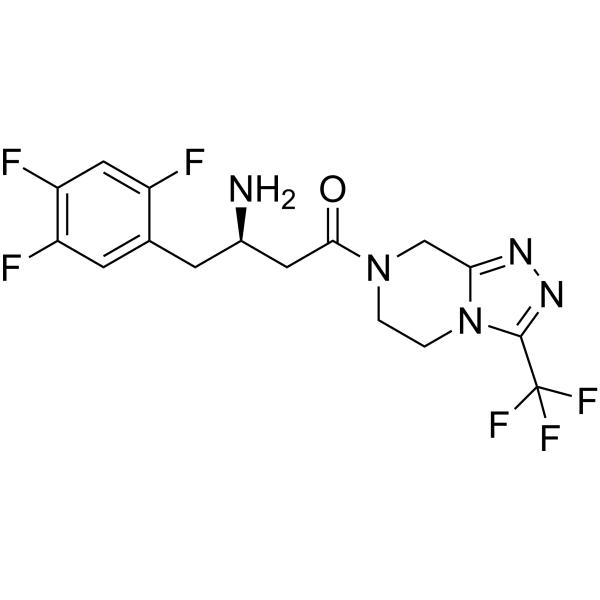
Sitagliptin (MK-0431) is an orally active and highly selective DPP4 inhibitor with an IC50 value of 19 nM. Sitagliptin blocks the degradation of glucagon-like peptide-1 (GLP-1) and glucose-dependent insulinotropic peptide (GIP) by competing inhibition mechanism (Kᵢ = 1 nM), thereby increasing the level of active incretin. Sitagliptin can also directly stimulate the secretion of GLP-1 by intestinal L cells by activating the cAMP/PKA and ERK1/2 pathways, and this effect is independent of DPP-4. Sitagliptin shows protective effects on pancreatic islet grafts in 1-type diabetes models. Sitagliptin can be used for the study of 1-type and 2-type diabetes .
loading...
    loading...
31
31 Cited Publications
Cat. No.: HY-13749A
CAS No.: 654671-78-0
Purity:  99.79%
Synonyms: MK-0431 phosphate
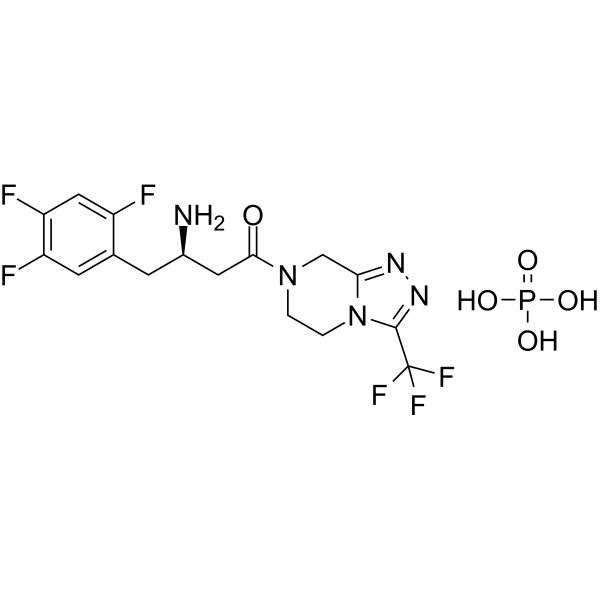
Sitagliptin (MK-0431) phosphate is an orally active and highly selective DPP4 inhibitor with an IC50 value of 19 nM. Sitagliptin phosphate blocks the degradation of glucagon-like peptide-1 (GLP-1) and glucose-dependent insulinotropic peptide (GIP) by competing inhibition mechanism (Kᵢ = 1 nM), thereby increasing the level of active incretin. Sitagliptin phosphate can also directly stimulate the secretion of GLP-1 by intestinal L cells by activating the cAMP/PKA and ERK1/2 pathways, and this effect is independent of DPP-4. Sitagliptin phosphate shows protective effects on pancreatic islet grafts in 1-type diabetes models. Sitagliptin phosphate can be used for the study of 1-type and 2-type diabetes .
loading...
    loading...
31
31 Cited Publications
Cat. No.: HY-13749B
CAS No.: 654671-77-9
Purity:  99.83%
Synonyms: MK-0431 phosphate monohydrate
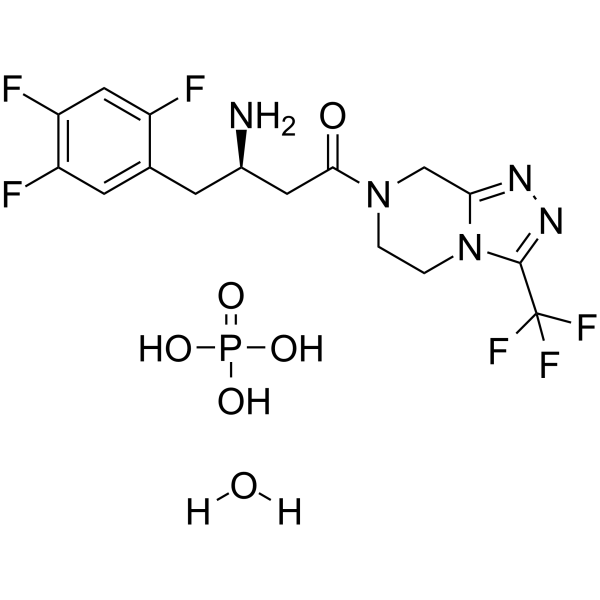
Sitagliptin (MK-0431) phosphate monohydrate is an orally active and highly selective DPP4 inhibitor with an IC50 value of 19 nM. Sitagliptin phosphate monohydrate blocks the degradation of glucagon-like peptide-1 (GLP-1) and glucose-dependent insulinotropic peptide (GIP) by competing inhibition mechanism (Kᵢ = 1 nM), thereby increasing the level of active incretin. Sitagliptin phosphate monohydrate can also directly stimulate the secretion of GLP-1 by intestinal L cells by activating the cAMP/PKA and ERK1/2 pathways, and this effect is independent of DPP-4. Sitagliptin phosphate monohydrate shows protective effects on pancreatic islet grafts in 1-type diabetes models. Sitagliptin phosphate monohydrate can be used for the study of 1-type and 2-type diabetes .
loading...
    loading...
30
30 Cited Publications
Cat. No.: HY-14536
CAS No.: 61-73-4
Purity:  95.05%
Synonyms: Basic Blue 9; CI-52015; Methylthioninium chloride
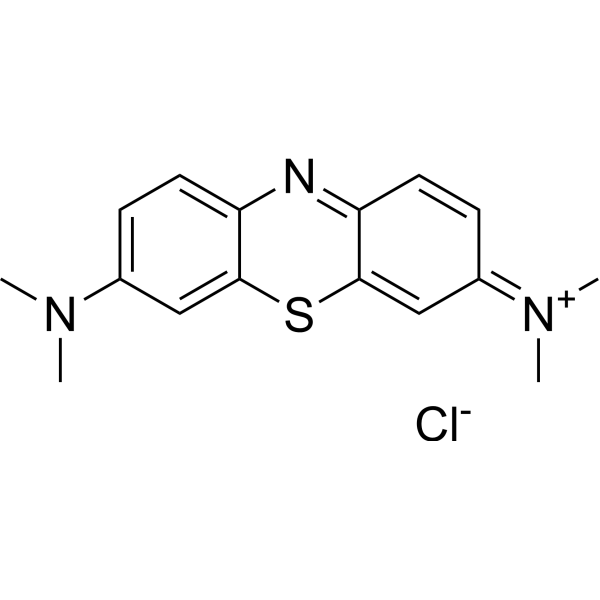
Methylene blue (Basic Blue 9) is a guanylyl cyclase (sGC), monoamine oxidase A (MAO-A) and NO synthase (NOS) inhibitor. Methylene blue is a vasopressor and is often used as a dye in several medical procedures. Methylene blue through the nitric oxide syntase/guanylate cyclase signalling pathway to reduce prepulse inhibition. Methylene blue is a REDOX cycling compound and able to cross the blood-brain barrier. Methylene blue is a Tau aggregation inhibitor. Methylene Blue is a photosensitizer and redox agent. Methylene blue reduces cerebral edema, attenuated microglial activation and reduced neuroinflammation .
loading...
    loading...
29
29 Cited Publications
Cat. No.: HY-W250119
CAS No.: 23411-34-9
Synonyms: EDTA disodium calcium salt hydrate; Ethylenediaminetetraacetic acid disodium calcium salt hydrate
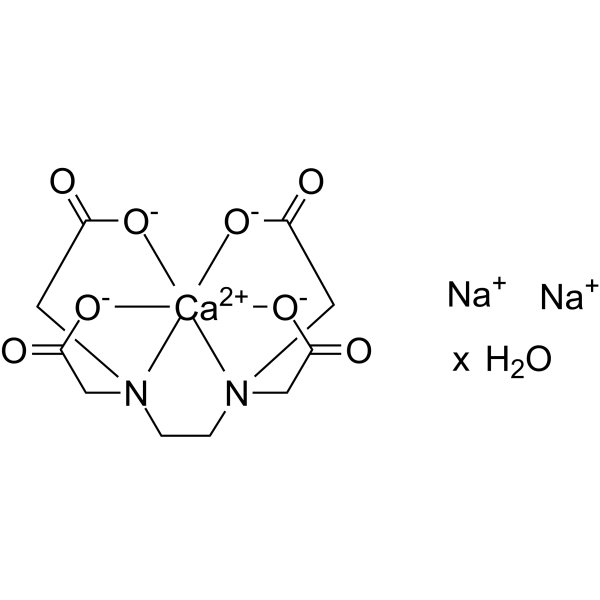
Calcium disodium edetate hydrate (EDTA disodium calcium salt hydrate) is a metal chelator and antifungal agent. Calcium disodium edetate hydrate chelates Mn 2+, damages mitochondria, and interferes with carbohydrate metabolic pathways, particularly the synthesis of pyruvate in glycolysis. Calcium disodium edetate hydrate inhibits Penicillium digitatum and delays conidial germination. Calcium disodium edetate (hydrate) enhances the host defense system of citrus fruits. Calcium disodium edetate hydrate is applicable to research related to citrus green mold .
loading...
    loading...
29
29 Cited Publications
Cat. No.: HY-100001
CAS No.: 130495-35-1
Purity:  ≥99.01%
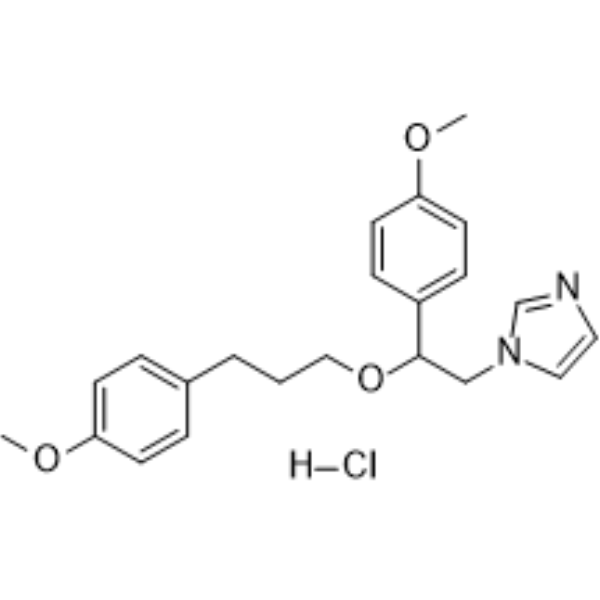
SKF-96365 hydrochloride is a TRPC channel antagonist and store-operated calcium entry (SOCE) inhibitor. SKF-96365 hydrochloride reduces calcium ion influx by inhibiting the activity and expression of TRPC6, STIM1 and Orai1. SKF-96365 hydrochloride inhibits voltage-gated sodium current (cardiac INa/NaV1.5) and slows myocardial conduction. SKF-96365 hydrochloride inhibits phosphorylation/activation of CaMKIIγ and suppresses the downstream AKT signaling pathway. SKF-96365 hydrochloride induces G2/M phase cell cycle arrest, apoptosis and cytoprotective autophagy in colorectal cancer cells. SKF-96365 hydrochloride alleviates allergic rhinitis symptoms by reducing inflammatory cytokine levels. SKF-96365 hydrochloride reduces intracellular calcium overload, inhibits Homer1 expression, prevents nuclear damage and suppresses apoptosis. SKF-96365 hydrochloride inhibits the growth of colorectal cancer xenografts in nude mice . SKF-96365 hydrochloride is applicable to research related to allergic rhinitis, colorectal cancer, Parkinson's disease, persistent spontaneous nociception and hyperalgesia .
loading...
    loading...
29
29 Cited Publications
Cat. No.: HY-125942
CAS No.: 162849-90-3
SKF-96365 is a TRPC channel antagonist and store-operated calcium entry (SOCE) inhibitor. SKF-96365 reduces calcium ion influx by inhibiting the activity and expression of TRPC6, STIM1 and Orai1. SKF-96365 inhibits voltage-gated sodium current (cardiac INa/NaV1.5) and slows myocardial conduction. SKF-96365 inhibits phosphorylation/activation of CaMKIIγ and suppresses the downstream AKT signaling pathway. SKF-96365 induces G2/M phase cell cycle arrest, apoptosis and cytoprotective autophagy in colorectal cancer cells. SKF-96365 alleviates allergic rhinitis symptoms by reducing inflammatory cytokine levels. SKF-96365 reduces intracellular calcium overload, inhibits Homer1 expression, prevents nuclear damage and suppresses apoptosis. SKF-96365 inhibits the growth of colorectal cancer xenografts in nude mice . SKF-96365 is applicable to research related to allergic rhinitis, colorectal cancer, Parkinson's disease, persistent spontaneous nociception and hyperalgesia .
loading...
    loading...
28
28 Cited Publications
Cat. No.: HY-13404
CAS No.: 1029712-80-8
Purity:  99.75%
Synonyms: INC280; INCB28060
Target:  

c-Met/HGFR Apoptosis

Research Areas:  

Cancer

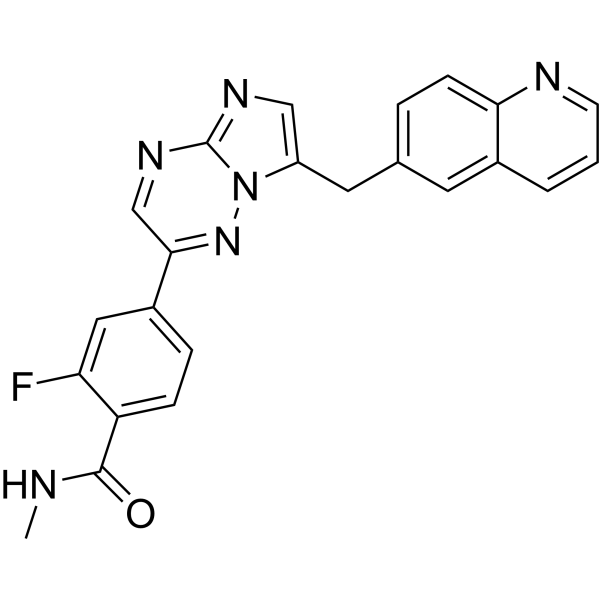
Capmatinib (INC280; INCB28060) is a potent, orally active, selective, and ATP competitive c-Met kinase inhibitor (IC50=0.13 nM). Capmatinib can inhibit phosphorylation of c-MET as well as c-MET pathway downstream effectors such as ERK1/2, AKT, FAK, GAB1, and STAT3/5. Capmatinib potently inhibits c-MET-dependent tumor cell proliferation and migration and effectively induces apoptosis. Antitumor activity. Capmatinib is largely metabolized by CYP3A4 and aldehyde oxidase .
loading...
    loading...
28
28 Cited Publications
Cat. No.: HY-13404A
CAS No.: 1197376-85-4
Synonyms: INC280 dihydrochloride; INCB28060 dihydrochloride
Target:  

c-Met/HGFR Apoptosis

Research Areas:  

Cancer

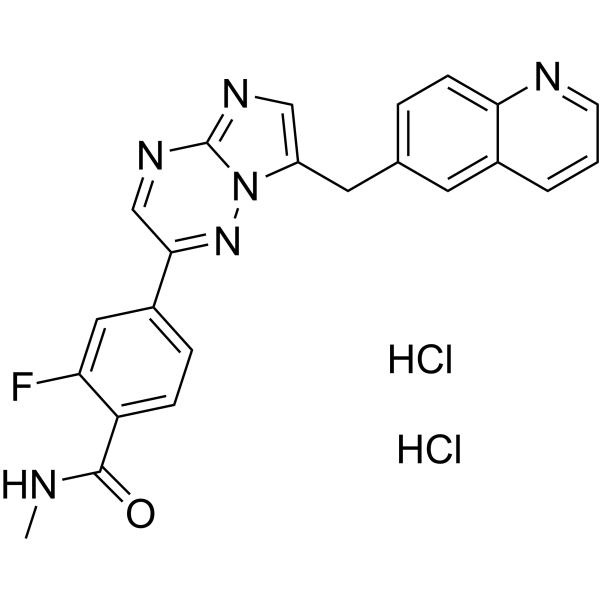
Capmatinib (INC280; INCB28060) dihydrochloride is a potent, orally active, selective, and ATP competitive c-Met kinase inhibitor (IC50=0.13 nM). Capmatinib dihydrochloride can inhibit phosphorylation of c-MET as well as c-MET pathway downstream effectors such as ERK1/2, AKT, FAK, GAB1, and STAT3/5. Capmatinib dihydrochloride potently inhibits c-MET-dependent tumor cell proliferation and migration and effectively induces apoptosis. Antitumor activity. Capmatinib dihydrochloride is largely metabolized by CYP3A4 and aldehyde oxidase .
loading...
    loading...
28
28 Cited Publications
Cat. No.: HY-13404B
CAS No.: 1029714-89-3
Purity:  99.60%
Synonyms: INC280 hydrochloride; INCB-28060 hydrochloride
Target:  

c-Met/HGFR Apoptosis

Research Areas:  

Cancer

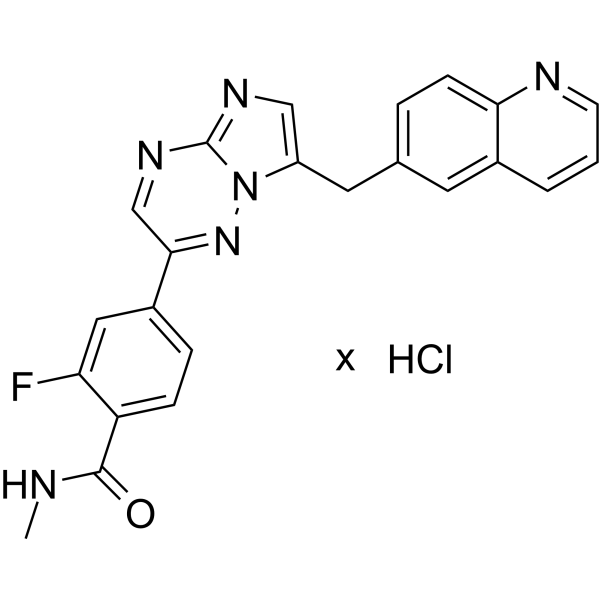
Capmatinib (INC280; INCB28060) hydrochloride is a potent, orally active, selective, and ATP competitive c-Met kinase inhibitor (IC50=0.13 nM). Capmatinib hydrochloride can inhibit phosphorylation of c-MET as well as c-MET pathway downstream effectors such as ERK1/2, AKT, FAK, GAB1, and STAT3/5. Capmatinib hydrochloride potently inhibits c-MET-dependent tumor cell proliferation and migration and effectively induces apoptosis. Antitumor activity. Capmatinib hydrochloride is largely metabolized by CYP3A4 and aldehyde oxidase .
loading...
    loading...
28
28 Cited Publications
Cat. No.: HY-13404C
CAS No.: 1865733-40-9
Purity:  99.78%
Synonyms: INC280 dihydrochloride hydrate; INCB-28060 dihydrochloride hydrate
Target:  

c-Met/HGFR Apoptosis

Research Areas:  

Cancer

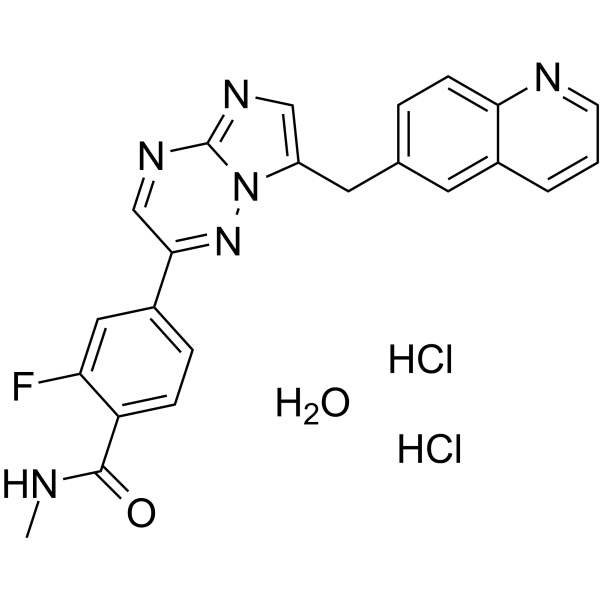
Capmatinib (INC280; INCB28060) dihydrochloride hydrate is a potent, orally active, selective, and ATP competitive c-Met kinase inhibitor (IC50=0.13 nM). Capmatinib dihydrochloride hydrate can inhibit phosphorylation of c-MET as well as c-MET pathway downstream effectors such as ERK1/2, AKT, FAK, GAB1, and STAT3/5. Capmatinib dihydrochloride hydrate potently inhibits c-MET-dependent tumor cell proliferation and migration and effectively induces apoptosis. Antitumor activity. Capmatinib dihydrochloride hydrate is largely metabolized by CYP3A4 and aldehyde oxidase .
loading...
    loading...
27
27 Cited Publications
Cat. No.: HY-D0958
CAS No.: 122965-43-9
Synonyms: Basic Blue 9 hydrate; CI-52015 hydrate; Methylthioninium chloride hydrate
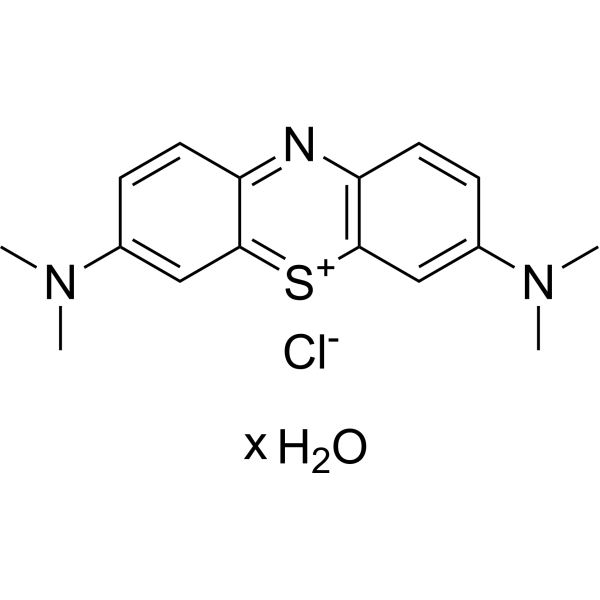
Methylene blue (Basic Blue 9) hydrate is a guanylyl cyclase (sGC), monoamine oxidase A (MAO-A) and NO synthase (NOS) inhibitor. Methylene blue is a vasopressor and is often used as a dye in several medical procedures. Methylene blue hydrate through the nitric oxide syntase/guanylate cyclase signalling pathway to reduce prepulse inhibition. Methylene blue hydrate is a REDOX cycling compound and able to cross the blood-brain barrier. Methylene blue hydrate is a Tau aggregation inhibitor. Methylene blue hydrate reduces cerebral edema, attenuated microglial activation and reduced neuroinflammation .
loading...
    loading...
27
27 Cited Publications
Cat. No.: HY-P1363
Synonyms: Amyloid β-peptide (1-42) (human) TFA
Target:  

Amyloid-β

Research Areas:  

Neurological Disease

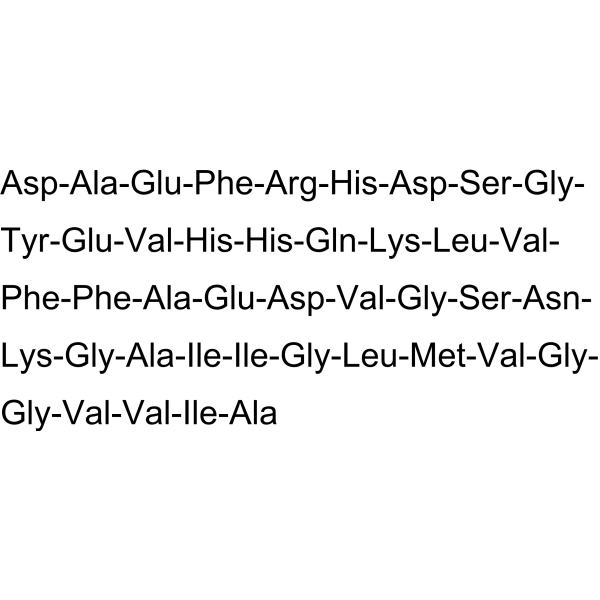
β-Amyloid (1-42) (Amyloid β-peptide (1-42), human TFA, a 42-amino acid peptide that has not been treated with HFIP, is a brain-penetrant amyloid protein fragment, which can be used in research on Alzheimer's disease and Down’s syndrome. β-Amyloid (1-42), human TFA remaining as a monomer exhibits antioxidant and neuroprotective effects. β-Amyloid (1-42), human TFA, after being monomericized by HFIP and dissolved in DMSO to form the stock solution, on the one hand, can form soluble oligomers (AβOs) when incubated at 4 °C, which have synaptic toxicity and neurotoxicity; on the other hand, it can be incubated at 37 °C to form insoluble fibrils, with lower neurotoxicity, and participating in the oxidative damage process. Aβ42 oligomers bind to various neuronal surface receptors (such as PrPc, mGluR5, NMDA receptors, etc.), triggering oxidative stress, calcium homeostasis imbalance, and synaptic toxicity via activating downstream signaling pathways, leading to neuronal dysfunction and death .
loading...
    loading...
27
27 Cited Publications
Cat. No.: HY-P1363A
CAS No.: 107761-42-2
Synonyms: Amyloid β-peptide (1-42) (human)
Target:  

Amyloid-β

Research Areas:  

Neurological Disease

β-Amyloid (1-42) (Amyloid β-peptide (1-42)), human, a 42-amino acid peptide that has not been treated with HFIP, is a brain-penetrant amyloid protein fragment, which can be used in research on Alzheimer's disease and Down’s syndrome. β-Amyloid (1-42), human remaining as a monomer exhibits antioxidant and neuroprotective effects. β-Amyloid (1-42), human, after being monomericized by HFIP and dissolved in DMSO to form the stock solution, on the one hand, can form soluble oligomers (AβOs) when incubated at 4 °C, which have synaptic toxicity and neurotoxicity; on the other hand, it can be incubated at 37 °C to form insoluble fibrils, with lower neurotoxicity, and participating in the oxidative damage process. Aβ42 oligomers bind to various neuronal surface receptors (such as PrPc, mGluR5, NMDA receptors, etc.), triggering oxidative stress, calcium homeostasis imbalance, and synaptic toxicity via activating downstream signaling pathways, leading to neuronal dysfunction and death .
loading...
    loading...
27
27 Cited Publications
Cat. No.: HY-P1363B
CAS No.: 107761-42-2
Target:  

Amyloid-β

Research Areas:  

Neurological Disease

β-Amyloid (1-42), human, HFIP-treated, a 42-amino acid peptide that has been treated with HFIP from β-Amyloid (1-42), human (HY-P1363A), is a brain-penetrant amyloid protein fragment, which can be used in research on Alzheimer's disease and Down’s syndrome. β-Amyloid (1-42), human, HFIP-treated remaining as a monomer exhibits antioxidant and neuroprotective effects. β-Amyloid (1-42), human, HFIP-treated, after being dissolved in DMSO to form the stock solution, on the one hand, can form soluble oligomers (AβOs) when incubated at 4°C, which have synaptic toxicity and neurotoxicity; on the other hand, it can be incubated at 37°C to form insoluble fibrils, with lower neurotoxicity, and participating in the oxidative damage process. Aβ42 oligomers bind to various neuronal surface receptors (such as PrPc, mGluR5, NMDA receptors, etc.), triggering oxidative stress, calcium homeostasis imbalance, and synaptic toxicity via activating downstream signaling pathways, leading to neuronal dysfunction and death .
loading...
    loading...

