85 Results for "

kinetic characterization

" in MedChemExpress (MCE) Product Catalog:
Products (85)

85 Results for "kinetic characterization" in MCE Product Catalog:

Cat. No.: HY-147150
CAS No.: 150424-94-5
Target:  

Fluorescent Dye

Research Areas:  

Others

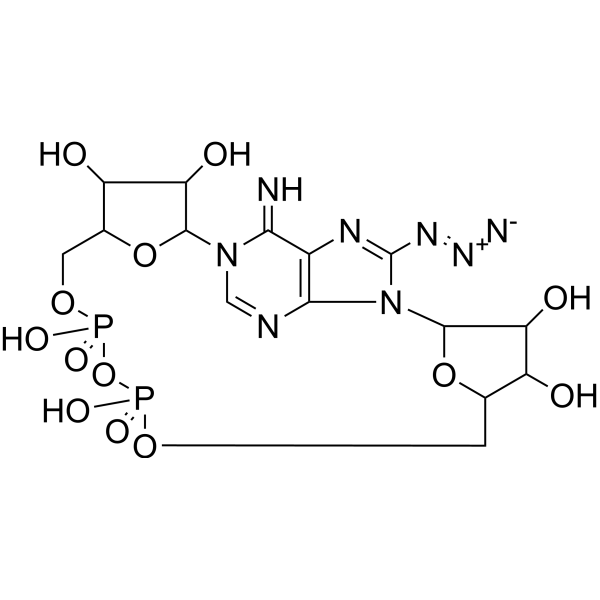
8-Azido-cADPR, with its photoactive azido group, is a potent photoaffinity probe. 8-Azido-cADPR can be used for the identification and characterization of cADPR-binding proteins . 8-Azido-cADPR is a click chemistry reagent, it contains an Azide group and can undergo copper-catalyzed azide-alkyne cycloaddition reaction (CuAAc) with molecules containing Alkyne groups. It can also undergo strain-promoted alkyne-azide cycloaddition (SPAAC) reactions with molecules containing DBCO or BCN groups.
loading...
    loading...
Cat. No.: HY-179216
CAS No.: 2397562-26-2
Target:  

HDAC

KTT-1 is a kinetically selective and orally active HDAC2 inhibitor. KTT-1 exhibits high HDAC2-selectivity over HDAC1. KTT-1 inhibits osteoclast differentiation at an early stage by downregulating c-Fos expression. KTT-1 effectively suppresses arthritis symptoms in the collagen-induced arthritis (CIA) mouse model. KTT-1 can be used for the research of rheumatoid arthritis and neurodegenerative diseases .
loading...
    loading...
Cat. No.: HY-120512
CAS No.: 13159-16-5
5-Phenyl-4E-pentenol is a product of the peroxidase-catalyzed reduction of PPHP. 5-Phenyl-4E-pentenol can be rapidly isolated by solid phase extraction and quantified by isocratic reversed-phase high performance liquid chromatography (HPLC) with UV detection. 5-Phenyl-4E-pentenol is a fluorescent dye that can be used to determine the kinetic properties of heme-containing and non-heme peroxidases and to evaluate the ability of oxidative compounds to serve as substrates for peroxidase reduction. .
loading...
    loading...
Cat. No.: HY-12701
CAS No.: 82668-33-5
Synonyms: U-99194A free base; PNU-99194A; JPC-211
Target:  

Dopamine Receptor

Research Areas:  

Neurological Disease

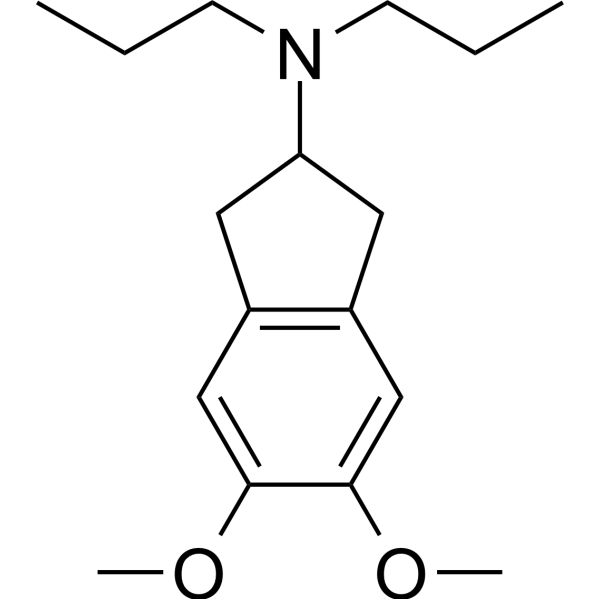
U-99194 (PNU-99194) is a selective, potent dopamine D3 receptor antagonist. U-99194 inhibits the activation of D3 receptor mediated by endogenously released dopamine or exogenous D3 agonists. U-99194 abrogates the IPSC-suppressive effect of the D3 agonist PD 128907 in rat hippocampal slices. U-99194 significantly suppresses Nicotine (HY-127019)-induced tremor in mice. U-99194 can be used for the study of dopamine D3 receptor-mediated motor disorders, particularly kinetic tremors .
loading...
    loading...
Cat. No.: HY-W011426R
CAS No.: 142-91-6
Synonyms: Propan-2-yl hexadecanoate (Standard)
Isopropyl palmitate (Standard) is the analytical standard of Isopropyl palmitate. This product is intended for research and analytical applications. Isopropyl palmitate is an fatty acid ester. Isopropyl palmitate can be used for design and characterization of bioactive bilayer films. The bilayer membrane not only has the ability to scavenge free radicals and inhibit lipid peroxidation, but also can inhibit the growth of known foodborne pathogens. Isopropyl palmitate can be used as an excipient, such as lubricant, oily carrier, solvent, controlled-release transdermal film. Pharmaceutical excipients, or pharmaceutical auxiliaries, refer to other chemical substances used in the pharmaceutical process other than pharmaceutical ingredients. Pharmaceutical excipients generally refer to inactive ingredients in pharmaceutical preparations, which can improve the stability, solubility and processability of pharmaceutical preparations. Pharmaceutical excipients also affect the absorption, distribution, metabolism, and elimination (ADME) processes of co-administered drugs .
loading...
    loading...
Cat. No.: HY-P5415
CAS No.: 127134-13-8
Target:  

HIV

Research Areas:  

Others

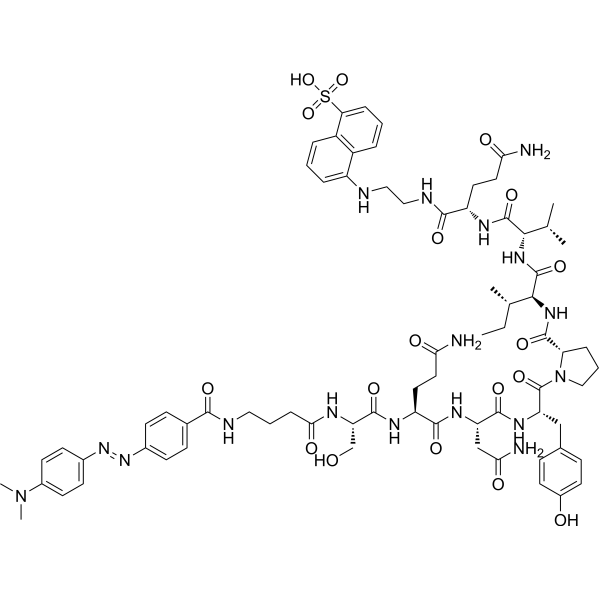
DABCYL-GABA-Ser-Gln-Asn-Tyr-Pro-Ile-Val-Gln-EDANS is a biological active peptide. (DABCYL-GABA-Ser-Gln-Asn-Tyr-Pro-Ile-Val-Gln-EDANS is also called HIV protease substrate I in some literature. It is widely used for the continuous assay for HIV protease activity. The 11-Kd protease (PR) encoded by the human immunodeficiency virus 1 (HIV-1) is essential for the correct processing of viral polyproteins and the maturation of infectious virus, and is therefore a target for the design of selective acquired immunodeficiency syndrome (AIDS) therapeutics. The FRET-based fluorogenic substrate is derived from a natural processing site for HIV-1 PR. Incubation of recombinant HIV-1 PR with the fluorogenic substrate resulted in specific cleavage at the Tyr-Pro bond and a time-dependent increase in fluorescence intensity that is linearly related to the extent of substrate hydrolysis. The fluorescence quantum yields of the HIV-1 PR substrate in the FRET assay increased by 40.0- and 34.4-fold, respectively, per mole of substrate cleaved. Because of its simplicity and precision in the determination of reaction rates required for kinetic analysis, this substrate offers many advantages over the commonly used HPLC or electrophoresis-based assays for peptide substrate hydrolysis by retroviral PRs. Abs/Em = 340nm/490nm.)
loading...
    loading...
Cat. No.: HY-N21756
CAS No.: 2760199-11-7
Dendronbibisline C (compound 17) is a neolignan derivative found in the fruits of Citrus medica L. var. Sarcodactylis Swingle. Dendronbibisline C is used in studies related to the characterization of neolignan chemical constituents .
loading...
    loading...
Cat. No.: HY-115853B
CAS No.: 129135-03-1
Research Areas:  

Others

Pyclen sulfate forms kinetically and thermodynamically stable nine-coordinate Ln (III) complexes, as well as Mn (II)-based MRI contrast agents. Pyclen-Based Mn(II) Complexes can be used for liver-specific MRI .
loading...
    loading...
Cat. No.: HY-117908
CAS No.: 1281861-06-0
Research Areas:  

Infection

DSM267 is a triazolopyrimidine inhibitor of Plasmodium falciparum dihydroorotate dehydrogenase (PfDHODH), with an IC50 of 38 nM, while its IC50 against human DHODH exceeds 100000 nM. DSM267 is used for the in vitro systematic screening and characterization of the resistance evolution pathways of Plasmodium falciparum to DHODH inhibitors .
loading...
    loading...
Cat. No.: HY-W415799
CAS No.: 1658458-26-4
Research Areas:  

Others

(2S)-Ac4GalNAl can be used for the identification and characterization of specific surface groups of glycoproteins. The alkyne groups can react with azides via copper-catalyzed Click Chemistry. The acetyl groups on the glucose allow for easier penetration through the cell membrane.
loading...
    loading...
Cat. No.: HY-109165AR
CAS No.: 2242751-53-5
Synonyms: AG10 hydrochloride (Standard)
Acoramidis hydrochloride (Standard) is the analytical standard of Acoramidis (hydrochloride) (HY-109165A). This product is intended for research and analytical applications. Acoramidis (AG10) hydrochloride is an orally active and selective Kinetic stabilizer of WT and V122I-TTR (transthyretin). Acoramidis (AG10) hydrochloride is used in the study for transthyretin amyloidosis .
loading...
    loading...
Cat. No.: HY-D3033
Target:  

Fluorescent Dye

Research Areas:  

Others

FITC-Alginate is a FITC (HY-66019)-labeled sodium alginate. FITC-Alginate acts as a fluorescent dye and probe, which enables the visualization of sodium alginate microspheres, microreservoirs, and sodium alginate-iron complexes via confocal microscopy, providing support for structural characterization, distribution analysis, and cell localization studies. The excitation/emission wavelengths of FITC-Alginate are 488 nm/~550 nm .
loading...
    loading...
Cat. No.: HY-189015
CAS No.: 179169-88-1
Target:  

mGluR

Research Areas:  

Neurological Disease

Homo-AMPA is a stereospecific mGluR6 agonist (EC50 = 58 μM) and a weak NMDA (HY-17551) receptor antagonist (IC50 = 131 μM), exerting anxiolytic-like effects and modulating pain-responsive neuronal activity through selective activation of mGluR6. Homo-AMPA can serve as a standard agonist for the pharmacological characterization of mGluR6 in related studies .
loading...
    loading...
Cat. No.: HY-188067
CAS No.: 497180-72-0
Target:  

Imidazoline Receptor

Research Areas:  

Cardiovascular Disease

LNP-911 is a ligand for the I1 imidazoline receptor. LNP-911 allosterically modulates I1Rs and enhances the effect of agonists on Forskolin (HY-15371)-stimulated cAMP accumulation. LNP-911 exists mainly as a stable imine tautomer. After radioiodination, LNP-911 serves as a selective high-affinity radioligand for characterization studies of I1Rs in membrane preparations. LNP-911 can be used in hypertension-related research .
loading...
    loading...
Cat. No.: HY-123446
CAS No.: 1301167-87-2
Research Areas:  

Neurological Disease

JNJ-42259152 is a phosphodiesterase 10A (PDE10A) positron emission tomography (PET) tracer that is specific for PDE10A activity. JNJ-42259152 can be dynamically scanned in healthy volunteers to assess its kinetic properties in the brain. The half-life of JNJ-42259152 in the blood is an average of 90 minutes. JNJ-42259152 has demonstrated reliable binding potential (BPND) in different target areas (such as the lentiform nucleus, caudate nucleus, ventral striatum, etc.), providing an important tool for studying neuropsychiatric diseases .
loading...
    loading...
Cat. No.: HY-187358
Target:  

DNA/RNA Synthesis

Research Areas:  

Others

Polθ-IN-12 is a DNA polymerase θ (PolQ) polymerase domain inhibitor with a human pIC50 of 8.3. Polθ-IN-12 binds to the allosteric pocket of the PolQ polymerase domain, forming salt bridge interactions with residues Arg-2347 and Arg-2419. Polθ-IN-12 displays improved human metabolic stability and high kinetic solubility at pH 7.4. Polθ-IN-12 shows low CACO-2 permeability and acts as a modest efflux substrate .
loading...
    loading...
Cat. No.: HY-187813
Target:  

HDAC

Research Areas:  

Cancer

HDAC2-IN-4 is a HDAC2 inhibitor with an IC50 of 4.2 nM against human HDAC2. HDAC2-IN-4 binds to the active site of HDAC2 via hydrogen bonding and hydrophobic interactions, forming a thermodynamically stable and kinetically compatible protein-ligand complex to inhibit enzymatic activity. HDAC2-IN-4 inhibits cancer cell proliferation and exhibits low toxicity to normal cells. HDAC2-IN-4 can be used in studies related to human endocervical adenocarcinoma and Burkitt lymphoma .
loading...
    loading...
Cat. No.: HY-P992254

Target:  

LAG-3

Research Areas:  

Cancer

Anti-LAG-3 Antibody (BAP050) is an anti-LAG3 antibody with Kd values of 9.0 nM (Equilibrium) and 0.80 nM (Kinetic) against hLAG3. Anti-LAG-3 Antibody (BAP050) binds to an epitope outside the 30-amino-acid residue loop in the first immunoglobulin-like domain (D1) of hLAG3. Anti-LAG-3 Antibody (BAP050) is applicable for cancer-related research. The isotype control is Mouse IgG1 kappa, Isotype Control (HY-P99977) .
loading...
    loading...
Cat. No.: HY-175132
Synonyms: NBD L-threo cer (d18:1/12:0); NBD L-threo ceramide (d18:1/12:0); N-Dodecanoyl-NBD L-threo-sphingosine
Target:  

Fluorescent Dye

Research Areas:  

Others

C12 NBD L-threo Ceramide (d18:1/12:0) (NBD L-threo cer (d18:1/12:0); NBD L-threo ceramide (d18:1/12:0); N-Dodecanoyl-NBD L-threo-sphingosine) is an NBD fluorescently labeled ceramide analog. C12 NBD L-threo Ceramide (d18:1/12:0) is an isomer of C12 NBD ceramide. C12 NBD L-threo Ceramide (d18:1/12:0) can be used for fluorescence detection, imaging, and kinetic analysis.
loading...
    loading...
Cat. No.: HY-184681
CAS No.: 3109318-09-1
Research Areas:  

Inflammation/Immunology

β2AR agonist 7 is a MABA with both muscarinic acetylcholine M3 receptor antagonistic activity and β2-adrenergic receptor agonistic activity, with a Ki of 1.75 nM for hM3 and an EC50 of 0.054 nM for hβ2. β2AR agonist 7 binds to the M3 muscarinic receptor with high affinity and long-acting kinetic characteristics. β2AR agonist 7 induces smooth muscle relaxation and acts as a bronchoprotective agent against acute bronchoconstriction. β2AR agonist 7 can be used in the research of asthma and chronic obstructive pulmonary disease .
loading...
    loading...

