


948 Results for "

sensitive

" in MedChemExpress (MCE) Product Catalog:
Products (948)

948 Results for "sensitive" in MCE Product Catalog:

Art. -Nr.: HY-DY1026
ER-Tracker dye is a derivative of BODIPY series dyes coupled with Glibenclamide (HY-15206) , highly selective binding to the endoplasmic reticulum, non-toxic to cells at low concentrations, this type of dye is an environmentally sensitive probe, and formaldehyde treatment can still retain part of the fluorescence, with high fluorescence life, good extinction coefficient and other characteristics. Glibenclamide is an atp-dependent K + channel blocker (Kir6, KATP) and CFTR Cl-channel blocker that binds in the endoplasmic reticulum. ER-Tracker is not suitable for staining cells after fixation. Ex/Em=587/615 nm .
Solvent and concentration: DMSO: 1 mM
loading...
    loading...
Art. -Nr.: HY-N20619
CAS. Nr.: 475673-78-0
Sterekunthal B is a naphthoquinone compound and antimalarial agent. Sterekunthal B can be isolated from plants of the Bignoniaceae family, including the root bark of Stereospermum colais. Sterekunthal B inhibits the growth of Chloroquine (HY-17589A)-sensitive Plasmodium falciparum strain PoW with an IC50 of 23.3 μg/mL. Sterekunthal B also inhibits the growth of Chloroquine-resistant Plasmodium falciparum strain Dd2 with an IC50 of 15.2 μg/mL. Sterekunthal B exhibits non-selective cytotoxicity toward endothelial cells. Sterekunthal B can be used in malaria-related research .
loading...
    loading...
Art. -Nr.: HY-P1117A
MMK1 TFA is a potent and selective human formyl peptide receptor like-1 (FPRL-1/FPR2) agonist with EC50s of <2 nM and >10000 nM for FPRL-1 and FPR1, respectively. MMK1 TFA is a potent chemotactic and calcium-mobilizing agonist. MMK1 TFA potently activates phagocytic leukocytes and enhances Pertussis Toxin-sensitive production by human monocytes of proinflammatory cytokines IL-1b and IL-6. MMK1 TFA exerts anxiolytic-like activity .
loading...
    loading...
Art. -Nr.: HY-W040144
CAS. Nr.: 76-60-8
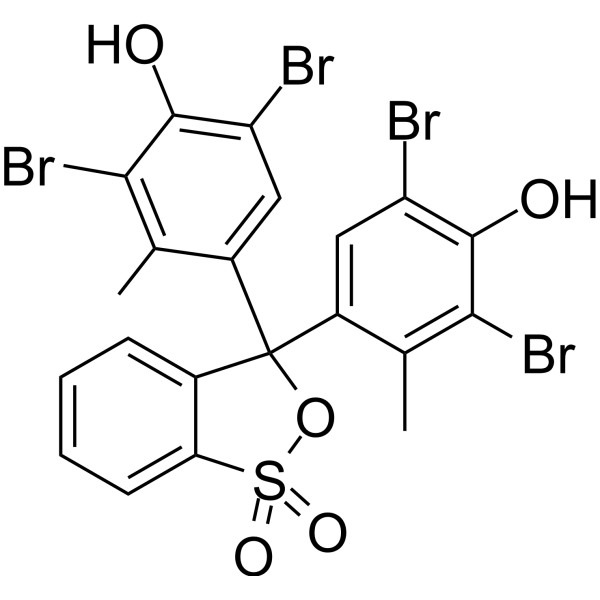
Bromocresol green is a pH-sensitive triphenylmethane dye commonly used for the determination of protein and albumin in serum. Bromocresol green is a bio-based dye with a yellow-green to blue-green color. Bromocresol green turns yellow (λmax=435 nm, protonated form) when placed in acidic solution (e.g. pH=4.15), and turns blue in basic solution (λmax=615 nm, deprotonated form). Bromocresol green is widely used as a pH indicator in the field of biochemical analysis. In addition, Bromocresol green is also used to detect the concentration of molecules such as creatinine, and to judge the viability of cells .
loading...
    loading...
Art. -Nr.: HY-W040430
CAS. Nr.: 494-97-3
(S)-Nornicotine is a nicotine metabolite that crosses the blood-brain barrier. (S)-Nornicotine weakly inhibits human CYP2A6 with a Ki >300 μM. (S)-Nornicotine promotes dopamine release in rat striatal and nucleus accumbens slices and increases endogenous DOPAC overflow through a calcium-dependent nAChR pathway that is sensitive to Mecamylamine (HY-B1395A). (S)-Nornicotine reduces behavioral responses maintained by nicotine or sucrose, exerts analgesic effects in persistent inflammatory pain and neuropathic pain models, and enhances the analgesic effect of morphine. (S)-Nornicotine is useful for research on tobacco dependence and pain .
loading...
    loading...
Art. -Nr.: HY-W040430A
CAS. Nr.: 101832-65-9
(S)-Nornicotine hydrochloride is a nicotine metabolite that crosses the blood-brain barrier. (S)-Nornicotine hydrochloride weakly inhibits human CYP2A6 with a Ki >300 μM. (S)-Nornicotine hydrochloride promotes dopamine release in rat striatal and nucleus accumbens slices and increases endogenous DOPAC overflow through a calcium-dependent nAChR pathway that is sensitive to Mecamylamine (HY-B1395A). (S)-Nornicotine hydrochloride reduces behavioral responses maintained by nicotine or sucrose, exerts analgesic effects in persistent inflammatory pain and neuropathic pain models, and enhances the analgesic effect of morphine. (S)-Nornicotine hydrochloride is useful for research on tobacco dependence and pain .
loading...
    loading...
Art. -Nr.: HY-W923198
CAS. Nr.: 480439-15-4
Synonyms: Methacryloyloxy fluorescein
Fluorescein O-methacrylate (Methacryloyloxy fluorescein) is a pH-responsive fluorescent monomeric dye. Fluorescein O-methacrylate exhibits pH-responsive fluorescence properties: its fluorescence is activated under alkaline conditions and quenched under neutral or acidic conditions; reversible switching of fluorescence is achievable by adjusting the pH of the solution. Fluorescein O-methacrylate can be used as a monomer for the synthesis of amphiphilic fluorescein polymers. These polymers can self-assemble into stable polymer nanoparticles with enhanced aqueous-phase fluorescence, and also enable the conjugation of nanoparticles with amine-containing biomolecules to support sensitive optical detection of biomarkers (Ex/Em = 490/520 nm) .
loading...
    loading...
Art. -Nr.: HY-P703239
Synonyms: CUL5; CUL-5; Cullin 5; VACM1; VACM-1; Cullin-5 (Vasopressin-Activated Calcium-Mobilizing Receptor-1); Cullin-5; Vasopressin-Activated Calcium-Mobilizing Receptor-1; Vasopressin-Activated Calcium-Mobilizing Receptor 1; RNF7; sensitive To Apoptosis Zinc RIN
Species:  
Human
Source:  
Sf9 insect cells
loading...
    loading...
Art. -Nr.: HY-P703351
Reinheit:  ≥ 80%, as determined by reducing SDS-PAGE.
Synonyms: SLC5A7; Solute Carrier Family 5 (Choline Transporter), Member 7; Solute Carrier Family 5 Member 7; Motor Neuronopathy, Distal Hereditary, Type VIIA; CHT1; Hemicholinium-3-sensitive Choline Transporter; High Affinity Choline Transporter 1; SLC5A7 Protein;
Species:  
Human
Source:  
HEK293
loading...
    loading...
Art. -Nr.: HY-101360R
CAS. Nr.: 10045-45-1
Synonyms: 1-Ethyl-2-benzimidazolinone (Standard)
1-EBIO (1-Ethyl-2-benzimidazolinone) (Standard) is the analytical standard of 1-EBIO (HY-101360). This product is intended for research and analytical applications. 1-EBIO is an activator of Ca 2+ sensitive K + channels wirh an EC50 of 136 μM for KCa3.1. 1-EBIO induces Cl - secretion, K + conductance, membrane hyperpolarization, and afterhyperpolarisation currents. 1-EBIO reduces epileptiform activity, seizure incidence, and rescues cells from Ionomycin (HY-13434)-induced death .
loading...
    loading...
Art. -Nr.: HY-105521A
CAS. Nr.: 94096-42-1
Synonyms: (S)-Nafenodone; LU-43706
Forschungsgebiete:  

Neurological Disease

Dexnafenodone hydrochloride ((S)-Nafenodone; LU-43706) is a novel antidepressant candidate molecule that selectively inhibits the norepinephrine synaptosomal uptake transporter. Dexnafenodone hydrochloride inhibits the fast inward Na + current and slow inward Ca 2+ current in cardiomyocytes. Dexnafenodone hydrochloride inhibits voltage-gated and receptor-activated Ca 2+ influx in vascular smooth muscle, depletes norepinephrine-sensitive intracellular Ca 2+ stores, suppresses agonist-stimulated Ca 2+ influx, relaxes precontracted vascular smooth muscle, inhibits spontaneous myogenic activity, and modulates cardiac electrophysiology, exerting negative chronotropic and negative inotropic effects. Dexnafenodone hydrochloride can be used in the research of depression .
loading...
    loading...
Art. -Nr.: HY-131501
CAS. Nr.: 523-39-7
Reinheit:  ≥98.0%
Menaquinone 9 is a naphthoquinone-type vitamin K and electron transport component produced by bacteria. Menaquinone 9 is an orally active analog of Vitamin K2 (HY-109569). Menaquinone 9 acts as an ultraviolet-sensitive, photooxidizable substrate that generates more polar photodegradation products under oxygen and ultraviolet irradiation. Menaquinone 9 binds to the αβ dimer of Escherichia coli nitrate reductase, supporting electron transport within the αβ subunit structure of the enzyme. Menaquinone 9 serves as a precursor for bone Menaquinone-4 (HY-B2156). Menaquinone 9 can be used in studies related to metabolic diseases .
loading...
    loading...
Art. -Nr.: HY-160113E
Sodium phosphate buffer 0.1M, pH 8.0 is an aqueous sodium phosphate buffer with a concentration of 0.1M and a pH value of 8.0. Sodium phosphate buffer 0.1M, pH 8.0 can be used for the preparation of hydrated micellar membranes, the construction of pH-sensitive nanocarriers, and the maintenance of stable environmental conditions for pH-cleavable PEG-Hz-PE micelles. Sodium phosphate buffer 0.1M, pH 8.0 can also serve as a universal solvent, reaction medium and eluent, and is widely applied in experimental processes such as antibody thiolation, nanoparticle purification and cross-linking reactions .
loading...
    loading...
Art. -Nr.: HY-164236
CAS. Nr.: 119242-44-3
Target:  

Endogenous Metabolite

Forschungsgebiete:  

Metabolic Disease

C22 Glucosylceramide (d18:1/22:0) is a bioactive sphingolipid composed of a d18:1 sphingoid base and a 22:0 fatty acid chain. C22 Glucosylceramide (d18:1/22:0) specifically exists in Doxorubicin (HY-15142A)-sensitive cancer cells, and its circulating concentration is positively correlated with the incidence of cardiovascular events. C22 Glucosylceramide (d18:1/22:0) has been widely used in research related to cardiovascular diseases, hypercholesterolemia, metabolic syndrome, breast adenocarcinoma and other fields .
loading...
    loading...
Art. -Nr.: HY-174343
CAS. Nr.: 1228283-36-0
Target:  

Parasite

Forschungsgebiete:  

Infection

ELQ-121 is a potent inhibitor of the ubiquinol-oxidation (QO)-site of parasites. ELQ-121 has IC50 of 0.05 nM against chloroquine sensitive and multidrug resistant P. falciparum in vitro. ELQ-121 inhibits T. gondii and N. caninum with IC50 below 1 nM in vitro. ELQ-121 suppresses B. besnoiti tachyzoite proliferation with an IC50 of 0.49 nM and induces mitochondrial disruption. ELQ-121 can form polyethylene glycol carbonate ester prodrug which demonstrates in vivo efficacy against P. yoelii in mice. ELQ-121 is suitable for antimalarial research .
loading...
    loading...
Art. -Nr.: HY-19927A
CAS. Nr.: 1645260-76-9
Target:  

5-HT Receptor

Forschungsgebiete:  

Neurological Disease Endocrinology

DA-6886 is a 5-Hydroxytryptamine receptor 4 (5-HT4) agonist. DA-6886 induces relaxation of the rat oesophagus preparation in a 5-HT4 receptor antagonist-sensitive manner. The evaluation of DA-6886 in CHO cells expressing hERG channels reveals that it inhibits hERG channel current with an pIC50 value of 4.3, indicating that the compound is 1000-fold more selective for the 5-HT4 receptor over hERG channels. DA-6886 can be used in the study of constipated irritable bowel syndrome .
loading...
    loading...
Art. -Nr.: HY-B0881R
CAS. Nr.: 968-81-0
Forschungsgebiete:  

Metabolic Disease Cancer

Acetohexamide (Standard) is the analytical standard of Acetohexamide. This product is intended for research and analytical applications. Acetohexamide is an orally active first-generation sulfonylurea agent used in research related to type 2 diabetes and cancer. Acetohexamide exerts reductase activity in human erythrocytes. Acetohexamide stimulates the pancreas to secrete insulin. Acetohexamide inhibits ATP-sensitive potassium channels in the β cells of the pancreas. Acetohexamide can inhibit the formation of circular chemorepellent induced defects (CCIDs) in lymphendothelial cell (LEC) monolayers. Acetohexamide inhibits markers of epithelial-to-mesenchymal-transition and migration. Acetohexamide suppresses the synthesis of 12(S)-HETE. Acetohexamide can potentiate hypoglycaemic action .
loading...
    loading...
Art. -Nr.: HY-D3100
CAS. Nr.: 2412201-40-0
Target:  

Fluorescent Dye

Forschungsgebiete:  

Others

NRTP is a fluorescent probe used for mitochondrial polarity detection and photothermal sensitization. NRTP targets mitochondria via a positively charged triphenylphosphonium moiety, which is attracted by the negative mitochondrial membrane potential; meanwhile, its polarity-sensitive Nile red fluorophore enables it to perceive changes in environmental polarity. NRTP reduces cell viability when used as a photothermal sensitizer. The excitation wavelength is 561 nm, and emission light is collected in two channels: 570-620 nm (red channel) and 665-735 nm (deep red channel). NRTP can reveal the downregulation of mitochondrial polarity during light-induced cell death, as well as polarity changes triggered by exposure to cholesterol .
loading...
    loading...
Art. -Nr.: HY-D3111
CAS. Nr.: 1240465-12-6
Target:  

Fluorescent Dye

Forschungsgebiete:  

Neurological Disease

DBHA is a long-wavelength polarity-sensitive fluorescent probe based on Nile Red. Under the catalysis of Pd (OAc)2/TPPTS, DBHA site-selectively labels protein tyrosine residues via a π-allyl palladium complex intermediate. Utilizing the property that its maximum emission wavelength blue-shifts with decreasing local polarity (650 nm in aqueous solution → 584-608 nm in hydrophobic domains), it detects changes in local polarity and conformation of protein tyrosine domains under acid/thermal denaturation conditions. DBHA can be used in studies related to SOD1-associated oxidative stress neurodegenerative diseases .
loading...
    loading...
Art. -Nr.: HY-P3269
CAS. Nr.: 178805-91-9
Target:  

Calcium Channel

Forschungsgebiete:  

Cardiovascular Disease

Calciseptine is a natural polypeptide toxin found in the venom of the black mamba snake (Dendroaspis p. polylepis). Calciseptine is a highly effective and selective blocker of the L-type channel of the Cav1.2 subtype, with an IC50 value of 92 nM. Calciseptine has no effect on Cav3.1, Cav2.2, Cav2.1, Cav1.1, voltage-sensitive sodium channels and potassium channels. Calciseptine exhibits negative inotropic and negative relaxant effects on mice, and does not affect heart rate or the action potential of sinoatrial node pacemaker cells. Calciseptine can be used for research on cardiovascular diseases[1].
loading...
    loading...

