

929 Results for "

Cardiac

" in MedChemExpress (MCE) Product Catalog:
Products (929)

929 Results for "Cardiac" in MCE Product Catalog:

Cat. No.: HY-DY1088
CAS No.: 75350-46-8
Synonyms: N-(5-Fluoresceinyl)maleimide (solution)
Fluorescein-5-maleimide (solution) (N-(5-Fluoresceinyl)maleimide (solution)) is a fluorescent dye. Fluorescein-5-maleimide can be used to detect the redox state of thiols in eukaryotic cells. Fluorescein-5-maleimide can label peptides and is used to detect negatively charged nanoparticles. Fluorescein-5-maleimide can also label actin to explore its interaction with cardiac myosin-binding protein C (cMyBP-C), which helps in developing small molecule modulators for heart failure. Fluorescein-5-maleimide can screen mutant proteins that contain cysteine residues. The excitation wavelength of Fluorescein-5-maleimide is 494 nm, and the emission wavelength is 519 nm .

Solvent and concentration: DMSO: 10 mM
loading...
    loading...
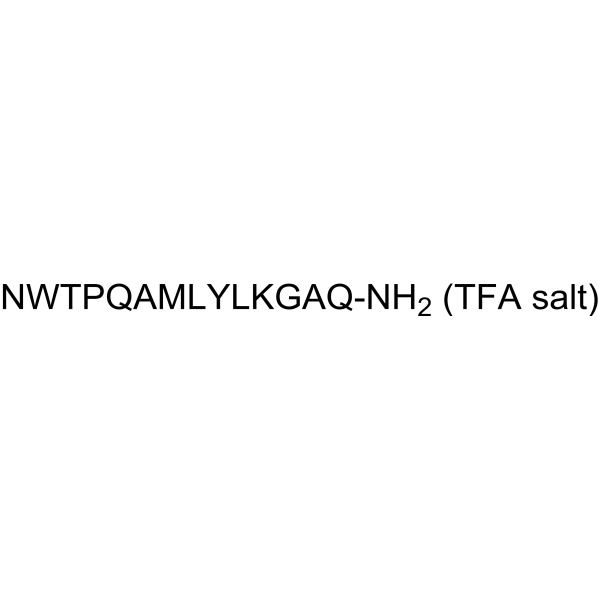
Cat. No.: HY-P1723A
Synonyms: Neuropeptide Q TFA
Spexin (Neuropeptide Q) TFA is a selective agonist of galanin receptors GAL2 and GAL3, and is a conserved peptide that functions as a neurotransmitter/neuromodulator and endocrine factor. Spexin TFA can function through both central and peripheral actions. Spexin TFA upregulates Beclin 1 to inhibit ferroptosis induced by excessive autophagy, reduces the uptake of long-chain fatty acids by adipocytes, and regulates energy metabolism by increasing lipid oxidation (e.g., reducing the respiratory exchange ratio in rodents). Spexin TFA improves cardiac function in the Doxorubicin hydrochloride (HY-15142)-induced cardiotoxicity model, protects mitochondrial membrane potential, and reduces iron accumulation and lipid peroxidation. Spexin TFA can be used to study obesity and its related metabolic disorders, cardiovascular diseases (e.g., cardioprotection), and side effects of tumor chemotherapy .
loading...
    loading...
Cat. No.: HY-P1764
CAS No.: 149146-12-3
Secretoneurin, rat is a 33-amino acid neuropeptide produced by proteolytic processing of chromogranin II, widely distributed in the central and peripheral nervous systems, and its release is calcium-dependent. Secretoneurin, rat modulates the activities of caspase-3, caspase-1, the NLRP3 inflammasome, IGF-1R, VEGFR1, VEGFR2, FGFR3, AMPK, ERK1/2/MAPK, and Jak2/Stat3 pathways. Secretoneurin, rat regulates neuronal apoptosis, synaptic structure, inflammation, neurogenesis, angiogenesis, oxidative stress, cardiomyocyte hypertrophy, dopamine release, and cell migration and proliferation. Secretoneurin, rat is used in studies of global cerebral ischemia, myocardial infarction, stroke, and cardiac hypertrophy .
loading...
    loading...
Cat. No.: HY-P2632
CAS No.: 289042-25-7
Synonyms: RADA16
Research Areas:  

Neurological Disease

RAD16-I (RADA16) is a non-directed self-assembling peptide hydrogel. Under physiological conditions, RAD16-I spontaneously forms a three-dimensional nanofiber network that mimics the extracellular matrix, and possesses excellent properties such as high water content, biocompatibility and degradability. RAD16-I serves as an ideal scaffold for three-dimensional cell culture. RAD16-I not only maintains cell viability and induces self-organization, but also supports cell adhesion, proliferation, differentiation and insulin secretion, effectively stabilizes islet clusters and promotes directed differentiation of the cardiac lineage. RAD16-I can construct a cell-friendly nano-microenvironment for research related to diseases such as myocardial infarction and diabetes .
loading...
    loading...
Cat. No.: HY-P991219
Synonyms: EnX209

Research Areas:  

Inflammation/Immunology

Anti-IL11RA Antibody (X209) (EnX209) is a human-derived IgG4, κ-type antibody inhibitor targeting IL11RA, with a KD of 6 nM. Anti-IL11RA Antibody (X209) blocks the IL11RA signaling pathway, inhibits ERK-dependent activation, and reduces the activation level of ERK1/2. Anti-IL11RA Antibody (X209) exerts a protective effect against fibrosis. Anti-IL11RA Antibody (X209) is applicable to studies related to liver fibrosis, cardiac fibrosis and other related conditions. Recommended isotype control: Human IgG4 kappa, Isotype Control (HY-P99003) .
loading...
    loading...
Cat. No.: HY-W005255S
3-(3-Hydroxyphenyl)propionic acid- 13C is the 13C-labeled 3-(3-Hydroxyphenyl)propionic acid (HY-W005255). 3-(3-Hydroxyphenyl)propionic acid (3HPPA) is an endothelium-dependent nitric oxide (NO) release promoter and endothelial nitric oxide synthase (eNOS) activator. 3-(3-Hydroxyphenyl)propionic acid activates eNOS to mediate vascular smooth muscle relaxation and enhances endothelial cell NO synthesis, inducing vasodilation and reducing peripheral vascular resistance. 3-(3-Hydroxyphenyl)propionic acid can dose-dependently reduce systolic and diastolic blood pressure in spontaneously hypertensive rats (SHR) without affecting cardiac contractility or heart rate. 3-(3-Hydroxyphenyl)propionic acid has antihypertensive and vascular protective effects and can be used in the prevention and treatment of cardiovascular diseases .
loading...
    loading...
Cat. No.: HY-W017540S
Cyclocreatine- 13C3 is the 13C-labeled Cyclocreatine (HY-W017540). Cyclocreatine, a creatine analogue, acts as a brain-penetrant and potent bioenergetic protective agent by providing high levels of ATP. Cyclocreatine can be phosphorylated and dephosphorylated by creatine kinases. Cyclocreatine suppresses creatine metabolism ameliorating the cognitive, autistic and epileptic phenotype in a mouse model of creatine transporter defciency. Cyclocreatine protects against ischemic injury and enhances cardiac recovery during early reperfusion in dogs and rats. Cyclocreatine decreases plaque-adjacent neuronal dystrophy in TREM2-deficient mice with amyloid-β pathology. Cyclocreatine is proming for research of ischemic heart disease, cardiovascular diseases, Alzheimer’s disease and other neurodegenerative diseases associated with microglial dysfunction, prostate cancer .
loading...
    loading...
Cat. No.: HY-W777120
CAS No.: 1285970-69-5
Synonyms: R 51619-13C,d3; (±)-Cisaprid-13C,d3
Cisapride- 13C,d3 (R 51619- 13C,d3) is the deuterated, 13C-labeled Cisapride (HY-14149). Cisapride (R 51619) is an orally active, selective 5-HT4 receptor agonist with an EC50 of 140 nM. Cisapride also acts as an hERG potassium channel blocker with an IC50 of 9.4 nM. Cisapride exerts gastrointestinal prokinetic effects by activating 5-HT4 receptors, but it also blocks the hERG potassium channel responsible for the repolarization phase of cardiac action potentials, delaying repolarization and thus prolonging the action potential duration . Cisapride can be used in research related to gastrointestinal dysfunction, gastroesophageal reflux disease, functional dyspepsia, chronic gastritis, gastroparesis, ulcerative colitis and necrotizing enterocolitis .
loading...
    loading...
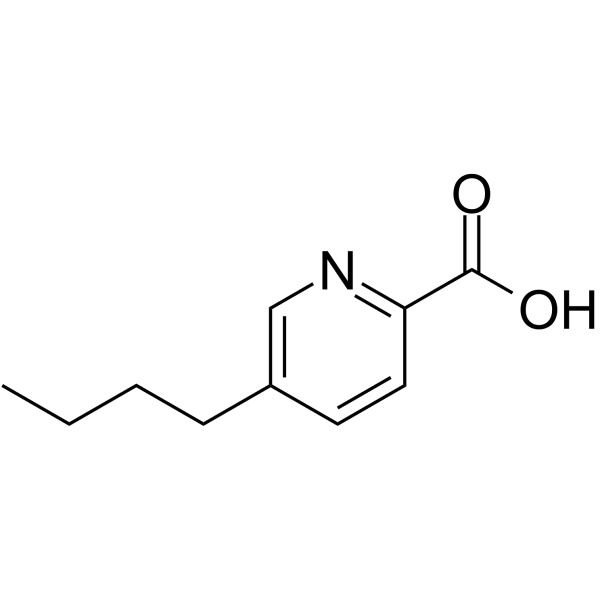
Cat. No.: HY-128483
CAS No.: 536-69-6
Purity:  99.94%
Fusaric acid is an orally active multi-pathway inhibitor with the activity of inducing oxidative stress and apoptosis. Fusaric acid can chelate divalent metal cations, damage mitochondrial membrane structure, and activate apoptosis-related proteases such as Caspase-3/7, -8, and -9. Fusaric acid also regulates Bax/Bcl-2 protein, inhibits fibrosis-related signaling pathways such as NF-κB, TGF-β1/SMADs, and PI3K/AKT/mTOR, and reduces collagen deposition. Fusaric acid is also a dopamine β-hydroxylase inhibitor, which reduces endogenous levels of norepinephrine and epinephrine in the brain, heart, spleen, and adrenal glands. Fusaric acid can play a role in myocardial fibrosis and improve cardiac hypertrophy in heart disease, and can also be used in the study of esophageal cancer and liver cancer .
loading...
    loading...
Cat. No.: HY-14744B
CAS No.: 865430-76-8
Synonyms: (S)-Amlodipine hydrochloride; Levoamlodipine hydrochloride
Target:  

Calcium Channel MMP

Research Areas:  

Cardiovascular Disease

Levamlodipine ((S)-Amlodipine; Levoamlodipin) hydrochloride is an orally active L-type calcium channel blocker and MMP-9 modulator with high permeability and retention properties. Levamlodipine hydrochloride significantly enhances plaque stability and improves lipid profiles by reducing blood pressure, decreasing systolic blood pressure variability, and inhibiting MMP-9 expression in atherosclerotic plaques. Levamlodipine hydrochloride not only alleviates cardiac and aortic hypertrophy and prevents renal atrophy, but also produces synergistic effects in blood pressure reduction and organ protection when combined with bisoprolol (HY-129029). Levamlodipine hydrochloride exerts no significant inhibitory effect on abdominal aortic intimal hyperplasia. When excessively accumulated in the epidermis, Levamlodipine hydrochloride may induce changes in keratin structure, impair the skin barrier and trigger inflammation; long-term use further exacerbates skin irritation caused by local administration. Levamlodipine hydrochloride can be used in research related to hypertension and atherosclerosis .
loading...
    loading...
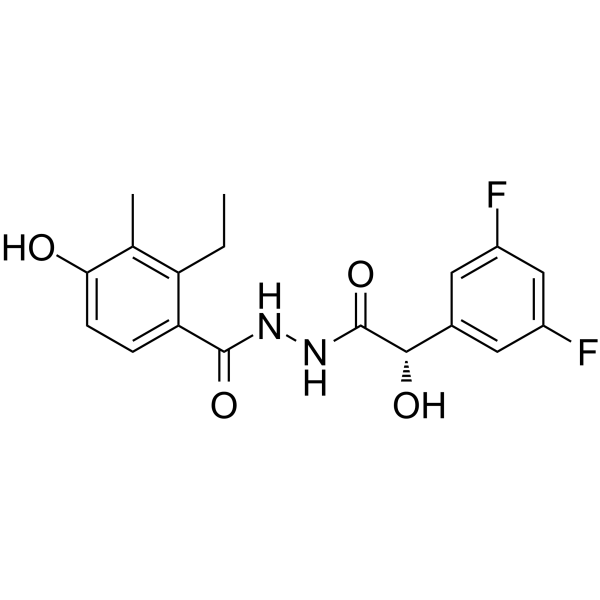
Cat. No.: HY-15193B
CAS No.: 1184940-46-2
Purity:  99.95%
Target:  

SGK Drug Isomer

Research Areas:  

Cardiovascular Disease Cancer

EMD638683 (S-Form) (Compound 1a), the S-enantiomer of EMD638683 (HY-15193), is a SGK1 inhibitor with an IC50 value > 300 nM. EMD638683 is an orally active SGK1 inhibitor with an IC50 of 3 μM. EMD638683 exhibits strong inhibition against SGK1, moderate inhibition against SGK2 and SGK3, and shows excellent selectivity for other AGC kinase family members. EMD638683 has antihypertensive activity by inhibiting SGK1, and independently of the blood pressure-lowering effect, it effectively prevents heart inflammation and fibrosis caused by hypertension by inhibiting the cardiac NLRP3 inflammation body/ IL-1β axis. EMD638683 promotes apoptosis of colon cancer cells and sensitizes radiotherapy. EMD638683 (S-Form) can be used in research related to hypertension, hypertensive heart damage, and colon cancer .
loading...
    loading...
Cat. No.: HY-164583
CAS No.: 2923115-67-5
Research Areas:  

Others

DMTr-2'-O-C22-rA-3'-CE-Phosphoramidite is an RNA phosphoramidite monomer. DMTr-2'-O-C22-rA-3'-CE-Phosphoramidite allows site-specific introduction of a 2'-O-C22 lipophilic modification at adenosine positions to construct double-stranded RNA (dsRNA) molecules with extrahepatic delivery capability. DMTr-2'-O-C22-rA-3'-CE-Phosphoramidite supports target gene silencing in skeletal muscle, cardiac muscle and adipose tissue by enhancing the lipophilicity and tissue uptake efficiency of dsRNA. DMTr-2'-O-C22-rA-3'-CE-Phosphoramidite can be used for the construction and mechanism research of nucleic acid silencing molecules .
loading...
    loading...
Cat. No.: HY-P12080
CAS No.: 176365-43-8
pUR4 is a recombinant peptide that acts as a fibronectin (FN) inhibitor. pUR4 binds to the N-terminal type I modules of fibronectin, inhibiting the polymerization of soluble fibronectin and its deposition into the extracellular matrix (ECM). pUR4 reduces β1 integrin activation by depleting ECM fibronectin and disrupting FN-β1 integrin coupling. pUR4 attenuates TNF-α-induced endothelial hyperpermeability, maintains endothelial monolayer integrity, and reduces TNF-α-induced cell morphological changes. pUR4 decreases neutrophil adhesion to cardiac endothelial cells, T cell interstitial migration, immune cell infiltration, collagen deposition, and fibroblast activation. pUR4 can be used in research on pathological vascular leakage, heart failure, inflammation, chronic kidney disease, liver fibrosis, and intestinal fibrosis .
loading...
    loading...
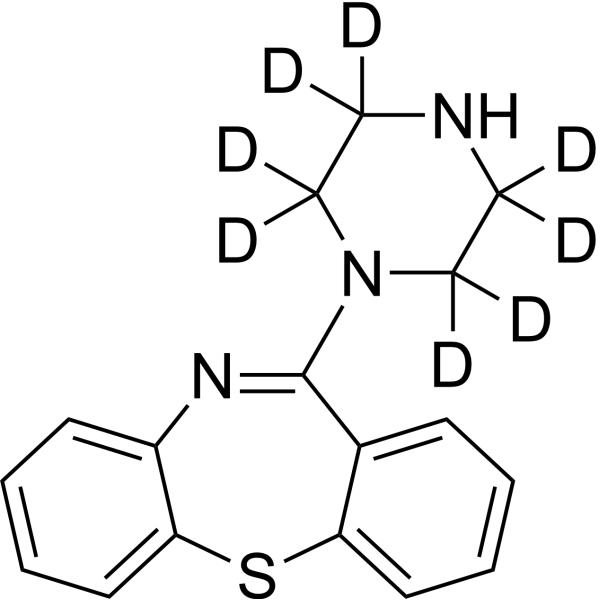
Cat. No.: HY-W052508S
CAS No.: 1189866-35-0
Synonyms: N-Desalkylquetiapine-d8
Norquetiapine-d8 (N-Desalkylquetiapine-d8) is the deuterium labeled Norquetiapine.Norquetiapine ( N-Desalkylauetiapine), a metabolite of Quetiapine (HY-14544), is a selective HCN1 channel inhibitor, with an IC50 of 13.9 μM. Norquetiapine selectively inhibits noradrenaline reuptake, is a partial 5-HT1A (Ki = 45 nM) receptor agonist, and acts as an antagonist at presynapticα2 (Ki = 237 nM), 5-HT2C(Ki = 107 nM), and 5-HT7 (Ki = 76 nM) receptors. Norquetiapine blocks the human cardiac sodium channel Nav1.5 in a state-dependent manner. Norquetiapine shows partial anti-inflammatory effects in LPS (HY-D1056) injected C57BL/6 mice. Norquetiapine can be used for the study of depression and inflammation .
loading...
    loading...
Cat. No.: HY-W338810S
Target:  

Endogenous Metabolite

Research Areas:  

Cancer

S-(5'-Adenosyl)-L-methionine- 13C5 sulfate is the 13C-labeled S-(5'-Adenosyl)-L-methionine chloride (HY-W338810). S-(5'-Adenosyl)-L-methionine chloride is the endogenous methyl donor in the methionine cycle and numerous methylation reactions, including protein methylation. S-(5'-Adenosyl)-L-methionine chloride can activate cardiac ryanodine receptor RyR2 in a concentration-dependent manner, enhancing the affinity of RyR2 for ryanodine. The Kd of S-(5'-Adenosyl)-L-methionine chloride with MetJ in Escherichia coli is 0.18 mM. S-(5'-Adenosyl)-L-methionine chloride can cause changes in the methylation index of Cisplatin (HY-17394)-sensitive and Cisplatin-resistant ovarian cancer cells. S-(5'-Adenosyl)-L-methionine chloride can be used for methylation-related research .
loading...
    loading...
Cat. No.: HY-W996116
CAS No.: 1933460-23-1
AZM198 is an orally active myeloperoxidase (MPO) inhibitor. AZM198 irreversibly inactivates MPO (IC50=0.015 μM) via covalent binding to the heme prosthetic group, preferentially targets extracellular MPO activity, and reduces neutrophil extracellular trap formation, reactive oxygen species production and degranulation. AZM198 increases the fibrous cap thickness of atherosclerotic plaques, reduces lesion area, ameliorates hepatic steatosis and fibrosis in non-alcoholic steatohepatitis, and alleviates proteinuria and inflammatory infiltration associated with glomerulonephritis. AZM198 also decreases circulating levels of high-sensitivity Cardiac Troponin I and IL-1β, and mitigates endothelial cell injury. Therefore, AZM198 is suitable for research on various MPO-related diseases, including atherosclerotic cardiovascular disease, myocardial infarction, ischemic stroke, non-alcoholic steatohepatitis and crescentic glomerulonephritis .
loading...
    loading...
Cat. No.: HY-P702975
Purity:  ≥ 90%, as determined by reducing SDS-PAGE.
Synonyms: PFKFB2; PFK/FBPase 2; 6-Phosphofructo-2-Kinase/Fructose-2,6-Biphosphatase 2; Fructose-2,6-Bisphosphatase, Cardiac Isozyme; 6-Phosphofructo-2-Kinase/Fructose-2,6-Bisphosphatase 2; 6PF-2-K/Fru-2,6-P2ASE Heart-Type Isozyme; 6PF-2-K/Fru-2,6-P2ase Heart-Type I
Species:  
Human
Source:  
Sf9 insect cells
loading...
    loading...
Cat. No.: HY-12708R
CAS No.: 50-53-3
Chlorpromazine (Standard) is the analytical standard of Chlorpromazine (HY-12708). This product is intended for research and analytical applications. Chlorpromazine is an orally active, blood-brain barrier-transparent antipsychotic agent that effectively antagonises D2 dopamine receptors and 5-HT2A, which is widely used in schizophrenia and other psychiatric disorders. Chlorpromazine exerts anti-cancer activity through a variety of pathways, including anti-proliferation, induction of autophagy and cycle arrest (G2-M phase), inhibition of cytochrome c oxidase (CcO), inhibition of tumour growth and metastasis, and inhibition of tumour immune escape. Chlorpromazine also blocks hNav1.7 channels (IC50=25.9 μM; concentration-dependent) and HERG potassium channels (IC50=21.6 μM), which has potential for analgesic and cardiac arrhythmic studies. Chlorpromazine also can inhibit clathrin-mediated endocytosis .
loading...
    loading...
Cat. No.: HY-128483R
CAS No.: 536-69-6
Fusaric acid (Standard) is the analytical standard of Fusaric acid (HY-128483). This product is intended for research and analytical applications. Fusaric acid is an orally active multi-pathway inhibitor with the activity of inducing oxidative stress and apoptosis. Fusaric acid can chelate divalent metal cations, damage mitochondrial membrane structure, and activate apoptosis-related proteases such as Caspase-3/7, -8, and -9. Fusaric acid also regulates Bax/Bcl-2 protein, inhibits fibrosis-related signaling pathways such as NF-κB, TGF-β1/SMADs, and PI3K/AKT/mTOR, and reduces collagen deposition. Fusaric acid is also a dopamine β-hydroxylase inhibitor, which reduces endogenous levels of norepinephrine and epinephrine in the brain, heart, spleen, and adrenal glands. Fusaric acid can play a role in myocardial fibrosis and improve cardiac hypertrophy in heart disease, and can also be used in the study of esophageal cancer and liver cancer .
loading...
    loading...
Cat. No.: HY-14744C
CAS No.: 865430-78-0
Synonyms: (S)-Amlodipine hydrobromide; Levoamlodipine hydrobromide
Target:  

Calcium Channel MMP

Research Areas:  

Cardiovascular Disease Others

Levamlodipine ((S)-Amlodipine; Levoamlodipin) hydrobromide is an orally active L-type calcium channel blocker and MMP-9 modulator with high permeability and retention properties. Levamlodipine hydrobromide significantly enhances plaque stability and improves lipid profiles by reducing blood pressure, decreasing systolic blood pressure variability, and inhibiting MMP-9 expression in atherosclerotic plaques. Levamlodipine hydrobromide not only alleviates cardiac and aortic hypertrophy and prevents renal atrophy, but also produces synergistic effects in blood pressure reduction and organ protection when combined with bisoprolol (HY-129029). Levamlodipine hydrobromide exerts no significant inhibitory effect on abdominal aortic intimal hyperplasia. When excessively accumulated in the epidermis, Levamlodipine hydrobromide may induce changes in keratin structure, impair the skin barrier and trigger inflammation; long-term use further exacerbates skin irritation caused by local administration. Levamlodipine hydrobromide can be used in research related to hypertension and atherosclerosis .
loading...
    loading...

