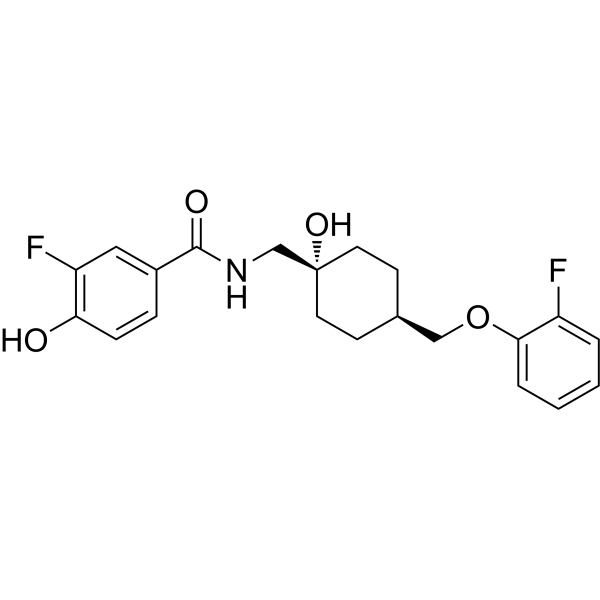
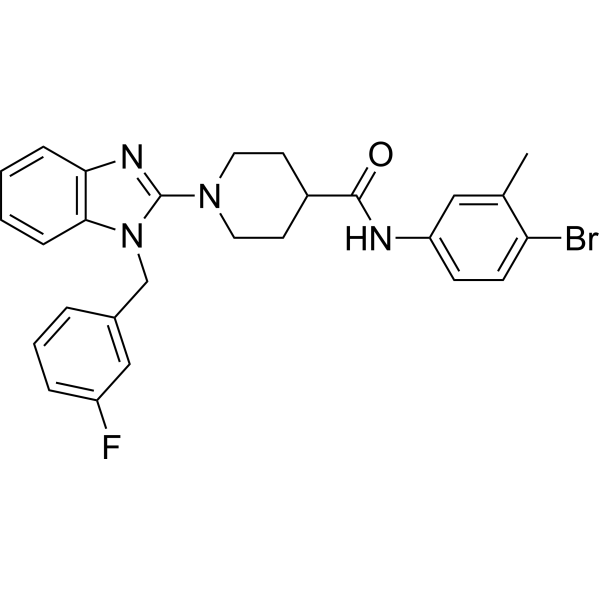
960 Results for "

manner

" in MedChemExpress (MCE) Product Catalog:
Products (960)

960 Results for "manner" in MCE Product Catalog:

Cat. No.: HY-B1067A
CAS No.: 91-75-8
Synonyms: Phenazoline
Target:  

Histamine Receptor

Research Areas:  

Neurological Disease Endocrinology

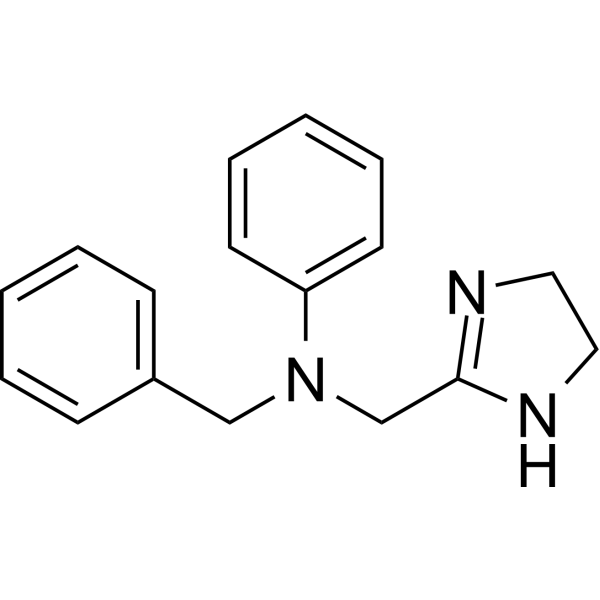
Antazoline (Phenazoline) is a histamine H1 receptor antagonist with anticholinergic and antiviral properties. Antazoline can prevent histamine from acting on target cells through a reversible competition effect on histamine receptor sites of these cells. Antazoline can exert an antiallegic effect and prevent the occurrence of physiological reactions from the effect of blocking as well as inhibiting H1 receptor. Antazoline can effectively reduce HBV DNA in the extracellular supernatant in a dose-dependent manner, with EC50 of 2.910 μmol/L in HepAD38 cells. Antazoline also has a significant inhibitory effect on HBV DNA in the extracellular supernatant of Huh7 cells (EC50 = 2.349 μmol/L). Antazoline has anti-arrhythmic effect in acute myocardial infarctions. Antazoline can be studied in research for cardiovascular diseases, and HBV .
loading...
    loading...
Cat. No.: HY-P11909
Research Areas:  

Infection

3-WP is a linear 20-peptide with a C-terminal amidation modification. 3-WP acts on lipoteichoic acid (LTA) and disrupts cell wall permeability, induces intracellular reactive oxygen species (ROS) accumulation in a dose-dependent manner, and simultaneously inhibits respiratory chain dehydrogenase activity and intracellular ATP synthesis, thereby interfering with bacterial energy metabolism and exerting Bacterial antibacterial effects. The combination of 3-WP and Melittin (HY-P0233) exerts synergistic antibacterial effects against Gram-positive bacteria, reduces the required dosage of Melittin, and thus improves the cell selectivity of Melittin. 3-WP can serve as a peptide adjuvant for Melittin in food storage scenarios. 3-WP can be used in the research of foodborne diseases caused by methicillin-resistant Staphylococcus aureus .
loading...
    loading...
Cat. No.: HY-W008806
CAS No.: 143537-62-6
Synonyms: OHHL; N-(3-Oxohexanoyl)homoserine lactone
Target:  

Bacterial

Research Areas:  

Infection Inflammation/Immunology

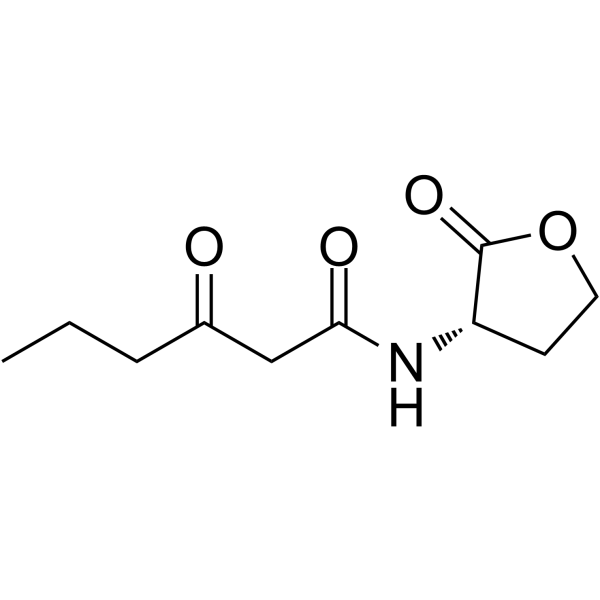
N-(3-Oxohexanoyl)-L-homoserine lactone (OHHL; N-(3-Oxohexanoyl)homoserine lactone) is a specific agonist of LuxR-type transcription factor CarR with a Kd of 1.8 μM. N-(3-Oxohexanoyl)-L-homoserine lactone activates CarR by inducing protein multimerization, promoting its binding to target DNA sequences in the carR-carA intergenic region, thereby upregulating the transcription of carbapenem biosynthesis genes. N-(3-Oxohexanoyl)-L-homoserine lactone acts as a quorum sensing signal molecule, enabling bacteria to coordinate the production of carbapenem antibiotics in a cell density-dependent manner. N-(3-Oxohexanoyl)-L-homoserine lactone is used to study bacterial quorum sensing mechanisms, especially the secondary metabolism and virulence factor regulatory pathways of Erwinia carotovora and Yersinia enterocolitica .
loading...
    loading...
Cat. No.: HY-W115721
CAS No.: 523-21-7
Synonyms: Sodium rhodizonate dibasic
Rhodizonic acid disodium (Sodium rhodizonate dibasic) is a transition metal-dependent pro-oxidant and lead detection agent that induces reactive oxygen species generation, DNA damage, and inhibits Aconitase activity. Rhodizonic acid disodium generates superoxide anion radicals in an iron (II)-dependent manner, leading to aconitase inactivation. Rhodizonic acid disodium also triggers hydroxyl radical-mediated DNA strand breaks and 8-OHdG formation via copper ion reduction. Rhodizonic acid disodium reacts with lead to form a scarlet precipitate, with the color intensity proportional to lead content, enabling qualitative or quantitative analysis of lead. Rhodizonic acid disodium can also be used for real-time visualization of the dynamic process of lead sequestration in the plant rhizosphere and evaluation of the effects of environmental factors such as soil type on the stability of lead-sequestering structures .
loading...
    loading...
Cat. No.: HY-113465S
CAS No.: 1240398-14-4
Synonyms: LTE4-d5
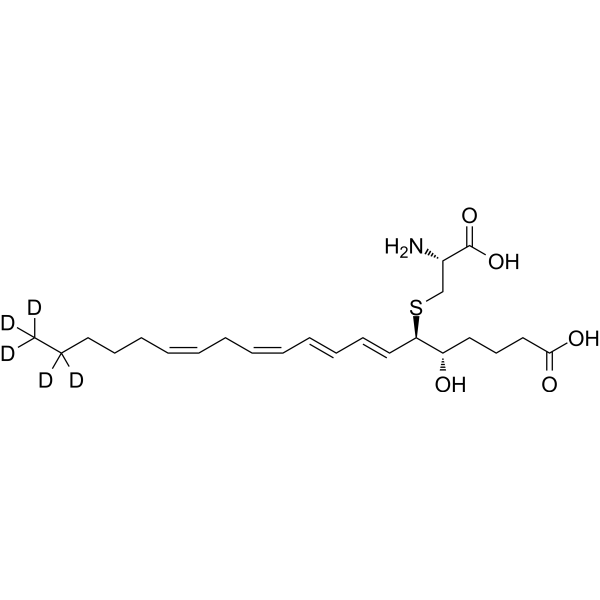
Leukotriene E4-d5 (LTE4-d5) is the d-5-labeled Leukotriene E4 (HY-113465). Leukotriene E4 is a stable final metabolite of cysteinyl leukotrienes, produced by immune cells such as mast cells and eosinophils. Leukotriene E4 serves as a key biomarker for evaluating asthma severity, Aspirin (HY-14654) sensitivity, and mast cell activation disorders. Leukotriene E4 is a full functional agonist of CysLT1R, which induces sustained intracellular calcium mobilization and Erk phosphorylation. Leukotriene E4 mediates inflammation in a P2Y12 receptor-dependent manner. Leukotriene E4 can be used in the research of asthma and non-steroidal anti-inflammatory drug-exacerbated respiratory diseases .
loading...
    loading...
Cat. No.: HY-120247
CAS No.: 1520893-08-6
Research Areas:  

Others

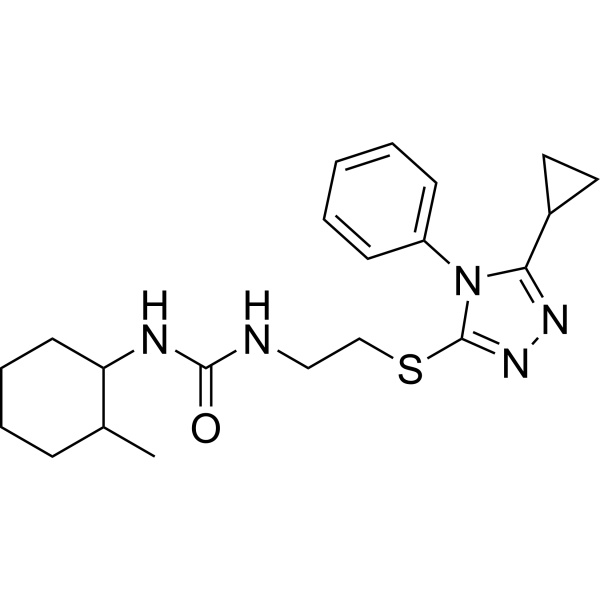
TASP0434299 (Compound 10) is a labeled ligand for the vasopressin V1b receptor. TASP0434299 exhibits high binding affinity for human and murine V1B receptors, with IC50 values of 0.526 nM and 0.641 nM, respectively, and shows potent antagonistic activity against the human V1B receptor with an IC50 of 0.639 nM. TASP0434299 is a substrate for human and rhesus monkey P-glycoprotein, resulting in low brain uptake in rhesus monkeys. TASP0434299 binds to V1B receptors in rat and monkey pituitary tissues in a saturable and specific manner both in vitro and in vivo. When radiolabeled with tritium or 11C, TASP0434299 serves as a prototype V1B receptor radiotracer to visualize V1B receptor in the pituitary gland of anesthetized monkeys via positron emission tomography .
loading...
    loading...
Cat. No.: HY-123985
CAS No.: 2230047-87-5
Purity:  99.28%
Research Areas:  

Neurological Disease

MFN2 agonist-1 is an allosteric agonist of mitofusin 2 (MFN2) with an EC50 of 3 nM. MFN2 agonist-1 mimics the MFN2 HR1 peptide to compete for HR2, disrupt the HR1-HR2 autoinhibitory interaction, stabilize the open conformation of MFN2, and promote GTP hydrolysis and mitochondrial fusion. MFN2 agonist-1 acts in a manner dependent on endogenous MFN1 or MFN2, and does not impair cell viability. MFN2 agonist-1 reverses mitochondrial fragmentation, depolarization, aggregation and axonal transport defects, restores bidirectional movement and improves enhanced autophagy. MFN2 agonist-1 is used in studies related to Charcot-Marie-Tooth disease type 2A, Alzheimer's disease, Parkinson's disease and Huntington's disease .
loading...
    loading...
Cat. No.: HY-137325A
CAS No.: 301334-89-4
Target:  

Calcium Channel

Research Areas:  

Metabolic Disease

2-Chloro-ATP sodium (2-Chloro ATP) is an adenine nucleotide and an analog of ATP. It is an antagonist of the purinergic P2Y1 receptor and inhibits intracellular calcium mobilization induced by ADP (HY-W010918) in Jurkat cells expressing the human receptor (Ki=2.3 μM). 2-Chloro-ATP sodium is an agonist of the purinergic P2X receptor and induces inward currents in HEK293 cells expressing human bladder smooth muscle or rat PC12 forms of the receptor (EC50=0.5 and 2.5 μM). 2-Chloro-ATP sodium induces relaxation of precontracted guinea pig cecal strips in a concentration-dependent manner. 2-Chloro-ATP sodium has been used to study the substrate specificity of cyclic nucleotide-dependent protein kinases such as protein kinase A (PKA) and PKG.
loading...
    loading...
Cat. No.: HY-156735
CAS No.: 863564-24-3
Purity:  99.72%
Target:  

17β-HSD

Research Areas:  

Cancer

HSD17B13-IN-2 is an HSD17B13 inhibitor with human IC50 values of 0.18 μM (with β-estradiol as substrate) and 0.25 μM (with Leukotriene B4 as substrate), and it exhibits selectivity for human HSD17B11. HSD17B13-IN-2 binds to the active site of HSD17B13 in an NAD +-dependent manner, interacts with the bound NAD + cofactor, and stabilizes human HSD17B13 protein to prevent its aggregation. HSD17B13-IN-2 reduces the conversion of β-estradiol to estrone in cellular assays. HSD17B13-IN-2 can be used in studies related to nonalcoholic fatty liver disease .
loading...
    loading...
Cat. No.: HY-160267
CAS No.: 950403-60-8
Target:  

HIV DNA/RNA Synthesis

Research Areas:  

Infection Neurological Disease Cancer

iPAF1C is a inhibitor of the polymerase-associated factor 1 complex (PAF1C) with specific targeting to the PAF1 binding groove of CTR9 (a key subunit of PAF1C). iPAF1C disrupts PAF1C assembly by interfering with the PAF1-CTR9 interaction. iPAF1C selectively impairs BRD4-mediated recruitment of PAF1 to chromatin at hypoxia-responsive genes and inhibits RNA polymerase II (RNAPII) pause release. iPAF1C increases the population of HIV-1 NL4.3 Nef-IRES-GFP infected primary human CD4 +T cells in a dose-dependent manner. PAF1C can be used for the study of infection and diseases associated with abnormal hypoxic adaptation (e.g., cancers, neurological disorders) .
loading...
    loading...
Cat. No.: HY-168996
CAS No.: 3032908-44-1
Target:  

CDK Apoptosis

Research Areas:  

Cancer

LA-CB1 is an Abemaciclib (HY-16297A) derivative that targets CDK4/6 and promotes its degradation via the ubiquitin-proteasome pathway, thereby disrupting the CDK4/6-Cyclin D1-Rb-E2F axis and inducing G0/G1 cell cycle arrest and apoptosis. LA-CB1 exhibits antiproliferative activity against MDA-MB-231 cells, with an IC50 of 0.27 µM, and effectively inhibits epithelial-mesenchymal transition (EMT), cell migration, invasion, and angiogenesis. In highly aggressive models such as triple-negative breast cancer (TNBC), LA-CB1 significantly suppresses tumor growth in a dose-dependent manner. LA-CB1 holds potential for research in the field of breast cancer .
loading...
    loading...
Cat. No.: HY-169433
Naph-Se-TMZ is a PROTAC-like HDAC1 degrader. Naph-Se-TMZ induces ROS-dependent reduction in HDAC1 protein expression and total HDAC activity, and decreases cell viability in a dose-dependent manner. Naph-Se-TMZ exhibits activity in both TMZ-sensitive and TMZ-resistant glioma cells, and its cytotoxicity is reversed by the ROS scavenger N-acetylcysteine (HY-B0215). Naph-Se-TMZ can be used in studies related to glioblastoma .
Naph-Se-TMZ consists of a target protein ligand (red segment): Temozolomide (HY-17364), a DNA intercalator (blue segment): Nitro-Naphthalimide-C2-acylamide (HY-169437), and a molecular linker (black segment). Meanwhile, the activity control for the target protein ligand is Temozolomide-amino hydrochloride (HY-169439), and the DNA intercalator+linker is NNISC-2 (HY-169438).
loading...
    loading...
Cat. No.: HY-173523
CAS No.: 3054009-82-1
Target:  

PROTACs CDK c-Myc

Research Areas:  

Cancer

KI-CDK9d-32 is a selective CDK9 PROTAC degrader (IC50 = 3 nM; DC50 = 0.89 nM). KI-CDK9d-32 induces CDK9 degradation via the ubiquitin-proteasome pathway to abrogates CDK9 enzymatic and scaffolding functions, downregulates MYC expression and MYC-dependent signaling, represses TNF-alpha signaling pathways activity and pre-rRNA levels. KI-CDK9d-32 disrupts nucleolar homeostasis, blocks cell cycle progression and cellular translation by reducing 4EBP1 phosphorylation, and elicits cancer cell cytotoxicity in a CRBN-dependent manner, while high ABCB1 activity attenuates the efficacy. KI-CDK9d-32 can be used for the research of acute lymphoblastic leukemia, rhabdomyosarcoma, pancreatic adenocarcinoma .
loading...
    loading...
Cat. No.: HY-182760
MN33-63 is a Bcl-2 inhibitor, caspase-3 activator and DNA crosslinker with broad-spectrum anticancer activity. MN33-63 improves the water solubility of SN-38 (HY-13704), inhibits tumor growth and proliferation in a dose-dependent manner, and causes no obvious toxicity. MN33-63 relieves the inhibition of the mitochondrial apoptotic pathway, initiates the apoptosis program, inhibits Topo I activity, and promotes its degradation via the ubiquitin-proteasome and autophagy-lysosome pathways. MN33-63 induces DNA crosslinking, G2/M cell cycle arrest, inhibition of cancer cell migration, and cancer cell apoptosis through the mitochondrial pathway. MN33-63 can be used in the research of colorectal cancer, cervical cancer, hepatocellular carcinoma, lung adenocarcinoma and gastric cancer .
loading...
    loading...
Cat. No.: HY-B1067AR
CAS No.: 91-75-8
Synonyms: Phenazoline (Standard)
Antazoline (Phenazoline) (Standard) is the analytical standard of Antazoline. This product is intended for research and analytical applications. Antazoline is a histamine H1 receptor antagonist with anticholinergic and antiviral properties. Antazoline can prevent histamine from acting on target cells through a reversible competition effect on histamine receptor sites of these cells. Antazoline can exert an antiallegic effect and prevent the occurrence of physiological reactions from the effect of blocking as well as inhibiting H1 receptor. Antazoline can effectively reduce HBV DNA in the extracellular supernatant in a dose-dependent manner, with EC50 of 2.910 μmol/L in HepAD38 cells. Antazoline also has a significant inhibitory effect on HBV DNA in the extracellular supernatant of Huh7 cells (EC50 = 2.349 μmol/L). Antazoline has anti-arrhythmic effect in acute myocardial infarctions. Antazoline can be studied in research for cardiovascular diseases, and HBV .
loading...
    loading...
Cat. No.: HY-B1067BR
CAS No.: 154-68-7
Synonyms: Phenazoline phosphate (Standard)
Antazoline (phosphate) (Standard) is the analytical standard of Antazoline (phosphate). This product is intended for research and analytical applications. Antazoline phosphate is a histamine H1 receptor antagonist with anticholinergic and antiviral properties. Antazoline phosphate can prevent histamine from acting on target cells through a reversible competition effect on histamine receptor sites of these cells. Antazoline phosphate can exert an antiallegic effect and prevent the occurrence of physiological reactions from the effect of blocking as well as inhibiting H1 receptor. Antazoline phosphate can effectively reduce HBV DNA in the extracellular supernatant in a dose-dependent manner, with EC50 of 2.910 μmol/L in HepAD38 cells. Antazoline phosphate also has a significant inhibitory effect on HBV DNA in the extracellular supernatant of Huh7 cells (EC50 = 2.349 μmol/L). Antazoline phosphate has anti-arrhythmic effect in acute myocardial infarctions. Antazoline phosphate can be studied in research for cardiovascular diseases, and HBV .
loading...
    loading...
Cat. No.: HY-B1067R
CAS No.: 2508-72-7
Synonyms: Phenazoline hydrochloride (Standard)
Antazoline (hydrochloride) (Standard) is the analytical standard of Antazoline (hydrochloride). This product is intended for research and analytical applications. Antazoline hydrochloride is a histamine H1 receptor antagonist with anticholinergic and antiviral properties. Antazoline hydrochloride can prevent histamine from acting on target cells through a reversible competition effect on histamine receptor sites of these cells. Antazoline hydrochloride can exert an antiallegic effect and prevent the occurrence of physiological reactions from the effect of blocking as well as inhibiting H1 receptor. Antazoline hydrochloride can effectively reduce HBV DNA in the extracellular supernatant in a dose-dependent manner, with EC50 of 2.910 μmol/L in HepAD38 cells. Antazoline hydrochloride also has a significant inhibitory effect on HBV DNA in the extracellular supernatant of Huh7 cells (EC50 = 2.349 μmol/L). Antazoline hydrochloride has anti-arrhythmic effect in acute myocardial infarctions. Antazoline hydrochloride can be studied in research for cardiovascular diseases, and HBV .
loading...
    loading...
Cat. No.: HY-N0245R
CAS No.: 30462-34-1
Theaflavin-3-gallate (Standard) is the analytical standard of Theaflavin-3-gallate. This product is intended for research and analytical applications. Theaflavin-3-gallate, a black tea theaflavin monomer, is regarded as the biologically important active component of black tea and provides health benefits. Theaflavin-3-gallate acts as prooxidants and induces oxidative stress in the carcinoma cells. Theaflavin-3-gallate reacts directly with reduced glutathione (GSH) in a time- and concentration-dependent manner. Theaflavin-3-gallate induces apoptosis and G1 cell cycle arrest in ovarian cancer A2780/CP70 cells through p53-dependent pathways. Theaflavin-3-gallate induces DNA damage through ATM/Chk/p53 pathway .
loading...
    loading...
Cat. No.: HY-N0390R
CAS No.: 56-85-9
Synonyms: L-Glutamic acid 5-amide (Standard)
L-Glutamine (Standard) is the analytical standard of L-Glutamine (HY-N0390). This product is intended for research and analytical applications. L-Glutamine is an orally active nutritional agent and cellular metabolism regulator. L-Glutamine is taken up in a Na +-dependent manner and targets multiple key molecules including glutaminase, mTORC1, NF-κB, STAT-3 and HIF-1α. L-Glutamine enhances glutaminolytic catabolism, drives the conversion of glutamate to α-ketoglutarate, thereby regulating gene expression, integrating metabolic signals, mediating glutamine flux and maintaining redox homeostasis. L-Glutamine also promotes cell proliferation, osteogenic differentiation and fracture healing, exerts neuroprotective and cardioprotective effects, and inhibits osteoarthritis. L-Glutamine can be applied to research related to osteoporosis, osteoarthritis, ischemic stroke and acute cantharidin-induced cardiotoxicity .
loading...
    loading...
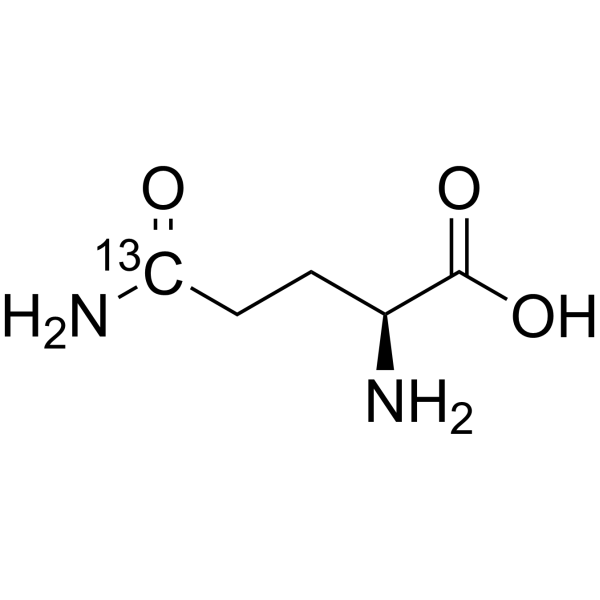
Cat. No.: HY-N0390S4
CAS No.: 159680-32-7
Synonyms: L-Glutamic acid 5-amide-5-13C
L-Glutamine-5- 13C is the 13C-labeled L-Glutamine (HY-N0390). L-Glutamine is an orally active nutritional agent and cellular metabolism regulator. L-Glutamine is taken up in a Na +-dependent manner and targets multiple key molecules including glutaminase, mTORC1, NF-κB, STAT-3 and HIF-1α. L-Glutamine enhances glutaminolytic catabolism, drives the conversion of glutamate to α-ketoglutarate, thereby regulating gene expression, integrating metabolic signals, mediating glutamine flux and maintaining redox homeostasis. L-Glutamine also promotes cell proliferation, osteogenic differentiation and fracture healing, exerts neuroprotective and cardioprotective effects, and inhibits osteoarthritis. L-Glutamine can be applied to research related to osteoporosis, osteoarthritis, ischemic stroke and acute cantharidin-induced cardiotoxicity .
loading...
    loading...

