1119 Results for "

STAT

" in MedChemExpress (MCE) Product Catalog:
Products (1119)

1119 Results for "STAT" in MCE Product Catalog:

Cat. No.: HY-17663
CAS No.: 2992741-10-1
Target:  

PARP STAT STING IFNAR

Research Areas:  

Cancer

KMR-206 is a PARP7 inhibitor with an IC50 of 13.7 nM. KMR-206 relieves AHR-mediated transcriptional repression and enhances CYP1A1 expression in the presence of TCDD. KMR-206 induces the STING-dependent IFN-β signaling pathway and increases the levels of STAT1, pSTAT1 and nuclear PARP7 in cancer cells. KMR-206 reduces the viability of lung adenocarcinoma cells, enhances radiation-induced immunogenic signals, and induces the production of immunogenic signals in glioblastoma cancer stem cells. KMR-206 destabilizes FRA1 to increase IRF1 levels and promotes the IRF3-CBP/p300 interaction. KMR-206 can be used in studies related to lung adenocarcinoma and glioblastoma .
loading...
    loading...
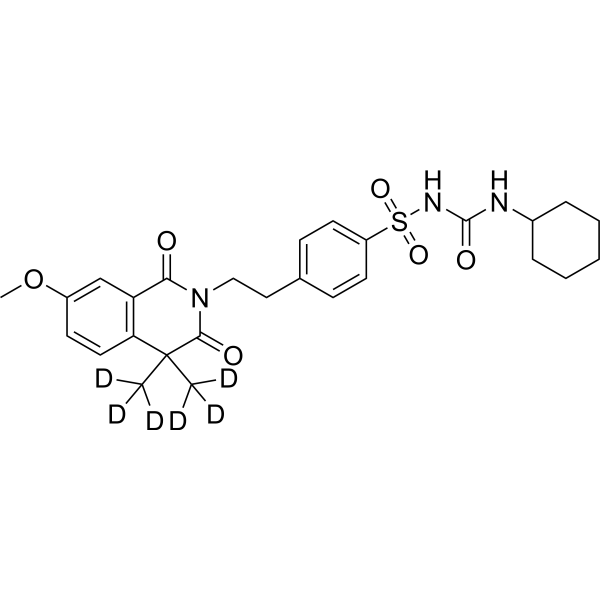
Cat. No.: HY-B1114S
Synonyms: AR-DF 26-d6
Gliquidone-d6 (AR-DF 26-d6) is the deuterated-labeled Gliquidone (HY-B1114). Gliquidone can bind to the pancreatic β-cells and increases insulin release to regulate blood glucose levels. Gliquidone significantly decreases LPS (HY-D1056)-induced proinflammatory responses and inhibits ERK/STAT3/NF-κB phosphorylation in BV2 microglial cells. Gliquidone can suppress microgliosis, microglial hypertrophy mediated by LPS, and proinflammatory cytokine COX-2 and IL-6 levels in murine model. Gliquidone also exhibits good anticancer activity in lung carcinoma cells. Gliquidone has antioxidant property. Gliquidone can be studied in research for type 2 diabetes and cancers .
loading...
    loading...
Cat. No.: HY-N0143R
CAS No.: 60-81-1
Synonyms: Floridzin (Standard)
Phlorizin (Floridzin) (Standard) is the analytical standard of Phlorizin. This product is intended for research and analytical applications. Phlorizin is an orally active non-selective sodium-glucose cotransporter (SGLT) inhibitor, with an IC50 of 0.04 μM and a Ki of 39 nM against hSGLT2, and an IC50 of 0.17 μM and a Ki of 0.31 μM against hSGLT1. Phlorizin promotes GLUT4 translocation, inhibits gluconeogenesis and promotes glycogen synthesis by activating the PI3K/Akt/mTOR pathway. Phlorizin reduces DNA damage and apoptosis (apoptosis) by inhibiting the NF-κB inflammatory pathway. Phlorizin induces apoptosis via activating the Caspase pathway by antagonizing the JAK/STAT3 and PCK pathways. Phlorizin also exhibits antibacterial, anti-inflammatory and neuroprotective activities .
loading...
    loading...
Cat. No.: HY-N20711
CAS No.: 1428417-60-0
Usenamine A is an orally active natural dibenzofuran compound with multiple biological activities such as anti-inflammatory and anticancer effects. Usenamine A inhibits the AKT/mTOR/STAT3/ID1 signaling axis and induces ubiquitin-proteasome degradation of ID1. Usenamine A targets the TNF-TNFR2 complex, inhibits RGS2, and interferes with Myosin-9/actin cytoskeleton remodeling. Usenamine A induces apoptosis, autophagy and ROS-mediated endoplasmic reticulum stress in cancer cells, inhibits cancer cell proliferation and invasion, and reduces the production of pro-inflammatory cytokines. Usenamine A alleviates arthritis-related symptoms. Usenamine A can be used in studies related to liver cancer, non-small cell lung cancer, rheumatoid arthritis and ankylosing spondylitis .
loading...
    loading...
Cat. No.: HY-W753956
CAS No.: 3044090-39-0
Iminostilbene-d10 is the deuterium labeled Iminostilbene (HY-N7064). Iminostilbene is a chemical precursor of carbamazepine. Additionally, Iminostilbene is an orally active inhibitor of PKM2 (Pyruvate Kinase M2) and COX2 (Cyclooxygenase-2). Iminostilbene exerts its effects by inhibiting PKM2 and its interaction with HIF-1α and STAT3, reducing COX2 and iNOS expression, and decreasing LPS-induced release of IL-1β, IL-6, TNF-α, and MCP-1, thereby suppressing macrophage-mediated inflammatory responses and improving myocardial ischemia/reperfusion (MI/R) injury. Iminostilbene holds promise for research in inflammation regulation, cardiovascular diseases (such as MI/R injury), and macrophage-mediated immune-related diseases .
loading...
    loading...
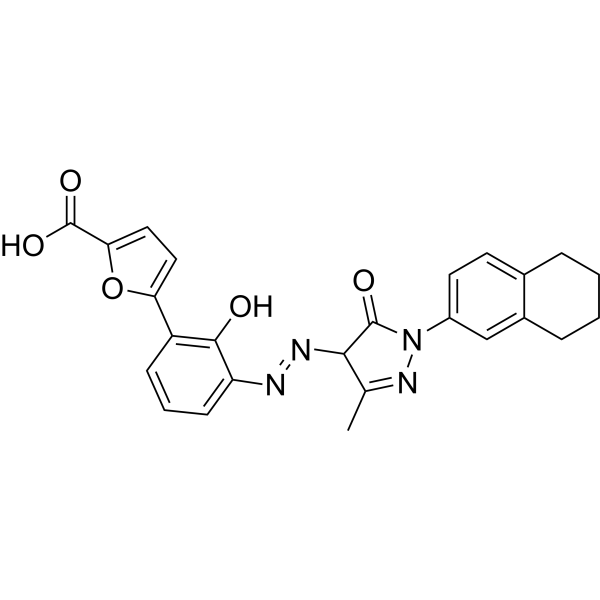
Cat. No.: HY-122620
CAS No.: 2114365-78-3
Purity:  98.33%
Synonyms: Hetrombopag (tautomerism); SHR-8735 (tautomerism)
Rafutrombopag (tautomerism) (Hetrombopag) is an orally active nonpeptide thrombopoietin receptor (TPOR/MPL) agonist. Rafutrombopag can chelate iron and alleviate iron overload while promoting haematopoiesis. Rafutrombopag specifically stimulates proliferation and differentiation of human TPOR‐expressing cells, including 32D‐ MPL and human hematopoietic stem cells through stimulation of STAT, PI3K and ERK signalling pathways. Rafutrombopag effectively up-regulates G1-phase-related proteins, including p-RB, Cyclin D1 and CDK4/6, normalizes progression of the cell cycle, and prevents apoptosis by modulating BCL-XL/BAK expression in 32D-MPL cells. Rafutrombopag protects cardiomyocyte survival from oxidative stress damage as an enhancer of stem cells. Rafutrombopag can be used for the study of immune thrombocytopenia and oxidative stress-related cardiovascular disease .
loading...
    loading...
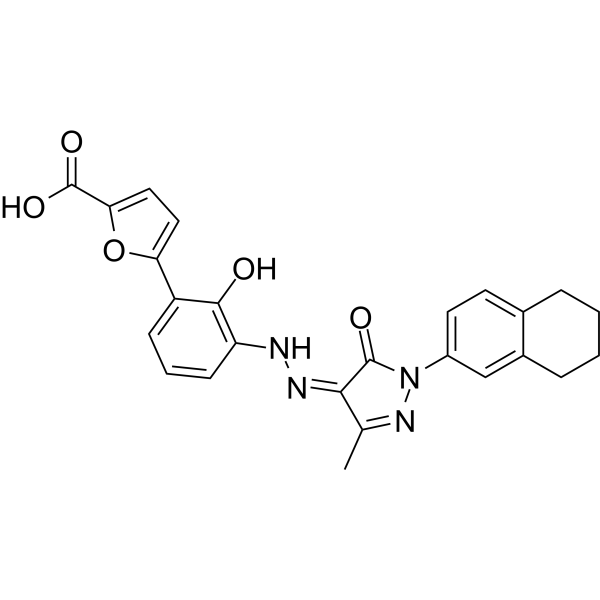
Cat. No.: HY-145589
CAS No.: 2600513-51-5
Synonyms: Hetrombopag; SHR-8735
Rafutrombopag (Hetrombopag) is an orally active nonpeptide thrombopoietin receptor (TPOR/MPL) agonist. Rafutrombopag can chelate iron and alleviate iron overload while promoting haematopoiesis. Rafutrombopag specifically stimulates proliferation and differentiation of human TPOR-expressing cells, including 32D-MPL and human hematopoietic stem cells through stimulation of STAT, PI3K and ERK signalling pathways. Rafutrombopag effectively up-regulates G1-phase-related proteins, including p-RB, Cyclin D1 and CDK4/6, normalizes progression of the cell cycle, and prevents apoptosis by modulating BCL-XL/BAK expression in 32D-MPL cells. Rafutrombopag protects cardiomyocyte survival from oxidative stress damage as an enhancer of stem cells. Rafutrombopag can be used for the study of immune thrombocytopenia and oxidative stress-related cardiovascular disease .
loading...
    loading...
Cat. No.: HY-16782R
CAS No.: 945614-12-0
Synonyms: ARRY-614 (Standard)
Pexmetinib (Standard) (ARRY-614 (Standard)) is the analytical standard of Pexmetinib (HY-16782). This product is intended for research and analytical applications. Pexmetinib (ARRY-614) is an orally active dual Tie-2 and p38 MAPK inhibitor. Pexmetinib binds to Tie-2 and p38 MAPK in a "DFG-out" conformation, attenuates the phosphorylation of p38, inhibits STAT3 activation, reduces the promoter-binding activity of NFATc1, and decreases the expression of MMPs. Pexmetinib inhibits leukemia cell proliferation, abrogates TNF-α-mediated myelosuppression of healthy hematopoietic stem cells, stimulates hematopoiesis in primary myelodysplastic syndrome (MDS) samples, inhibits RANKL-induced osteoclast formation and bone resorption, and suppresses migration, invasion and induced osteolysis of breast cancer cells. Pexmetinib can be used in research related to myelodysplastic syndrome, acute myeloid leukemia and breast cancer-induced osteolysis .
loading...
    loading...
Cat. No.: HY-172200
CAS No.: 2834094-36-7
Target:  

PD-1/PD-L1 HDAC

Research Areas:  

Inflammation/Immunology Cancer

PD-L1/HDAC6-IN-1 is an orally active dual inhibitor of PD-L1 and HDAC6, with IC50 values of 26.8 nM and 78 nM, respectively. PD-L1/HDAC6-IN-1 binds to human and murine PD-L1 proteins with high affinity, while it reduces STAT3 phosphorylation and downregulates PD-L1 expression by inhibiting HDAC6, thus blocking the PD-1/PD-L1 interaction. PD-L1/HDAC6-IN-1 exhibits potent anti-tumor activity in a mouse melanoma model. PD-L1/HDAC6-IN-1 is suitable for research on tumor immune regulation related to melanoma .
loading...
    loading...
Cat. No.: HY-172200A
Target:  

PD-1/PD-L1 HDAC

Research Areas:  

Inflammation/Immunology Cancer

PD-L1/HDAC6-IN-1 TFA is an orally active dual inhibitor of PD-L1 and HDAC6, with IC50 values of 26.8 nM and 78 nM, respectively. PD-L1/HDAC6-IN-1 TFA binds to human and murine PD-L1 proteins with high affinity, while it reduces STAT3 phosphorylation and downregulates PD-L1 expression by inhibiting HDAC6, thus blocking the PD-1/PD-L1 interaction. PD-L1/HDAC6-IN-1 TFA exhibits potent anti-tumor activity in a mouse melanoma model. PD-L1/HDAC6-IN-1 is suitable for research on tumor immune regulation related to melanoma .
loading...
    loading...
Cat. No.: HY-175849
Research Areas:  

Cancer

ALK degrader 1 is a potent, hydrophobic tag (HyT)-based degrader that induces ubiquitin-proteasome system (UPS)-dependent EML4-ALK degradation (DC50 = 0.13 μM). ALK degrader 1 demonstrates potent ALK degradation and antiproliferative effects in ALK-dependent cell lines, while showing minimal cytotoxicity in ALK fusion-negative cells. ALK degrader 1 triggers cell cycle arrest at the G0/G1 phase and stimulates apoptosis. ALK degrader 1 not only facilitates efficient degradation of the ALK protein but also disrupts key downstream effectors, including the STAT3 signaling axis. ALK degrader 1 mediates robust EML4-ALK degradation in vivo. ALK degrader 1 can be used for ALK-related diseases research .
loading...
    loading...
Cat. No.: HY-176535
CAS No.: 2648377-08-4
Synonyms: BBC0115
KB-0118 (BBC0115) is an orally active BET bromodomain inhibitor. KB-0118 selective binds to BRD2 and BRD4 over BRD3, with Kd values of 36.7 μM for BRD2 BD1 and 47.4 μM for BRD4 BD1. KB-0118 inhibits pro-inflammatory cytokines, including TNF, IL-1β, and IL-23a and selectively suppresses Th17 cell differentiation. KB-0118 modulates Th17-driven inflammation occurs through epigenetic suppression of BRD4, confirmed by downregulation of STAT3 and BRD4 target genes. KB-0118 has immunomodulatory effects in inflammatory bowel disease (IBD) model.
loading...
    loading...
Cat. No.: HY-179715
PROTAC JAK1/2 degrader-1 is an orally active JAK1/JAK2 PROTAC degrader, with DC50 values of 1.4 μM and 0.92 μM against JAK1 and JAK2, respectively. PROTAC JAK1/2 degrader-1 triggers degradation via a CRBN- and proteasome-dependent pathway. PROTAC JAK1/2 degrader-1 inhibits the secretion of tumor necrosis factor-α (TNF-α) and interleukin-6 (IL-6). PROTAC JAK1/2 degrader-1 alleviates inflammatory responses and colon injury by inhibiting the JAK/STAT3 signaling pathway. PROTAC JAK1/2 degrader-1 can be used for the research of inflammatory bowel disease .
loading...
    loading...
Cat. No.: HY-181587
Research Areas:  

Cancer

PDGFRA/CAIX/XII-IN-1 is an inhibitor of PDGFRA, CA IX and CA XII, with an IC50 of 20 nM against PDGFRA, a Ki of 93.3 nM against CA IX, and a Ki of 80.0 nM against CA XII. PDGFRA/CAIX/XII-IN-1 binds to the ATP-binding pocket of PDGFRA and blocks the downstream STAT3, AKT and ERK1/2 signaling pathways. PDGFRA/CAIX/XII-IN-1 induces G0/G1 cell cycle arrest and endogenous apoptosis (Apoptosis), including cleavage of PARP-1, caspase-9 and caspase-3, activation of caspase 3/7, and down-regulation of Mcl-1. PDGFRA/CAIX/XII-IN-1 exhibits antiproliferative activity in eosinophilic leukemia cells. PDGFRA/CAIX/XII-IN-1 can be used for the research of leukemia .
loading...
    loading...
Cat. No.: HY-182281
Target:  

FLT3 STAT Akt ERK Apoptosis

Research Areas:  

Cancer

FLT3-IN-41 is a highly potent FLT3 inhibitor. The IC50 values of FLT3-IN-41 against human FLT3-ITD and FLT3-WT are 3.16 nM and 294.7 nM, respectively. By binding to the ATP-binding pockets of FLT3-ITD and FLT3-WT and forming hydrogen bonds with hinge region residues and Phe830, FLT3-IN-41 inhibits the STAT5, Akt and Erk signaling pathways. FLT3-IN-41 induces G2/M phase arrest and promotes apoptosis in FLT3-ITD-positive acute myeloid leukemia cells, exhibiting significant antiproliferative activity. FLT3-IN-41 serves as a valuable tool for the study of acute myeloid leukemia .
loading...
    loading...
Cat. No.: HY-188122
CAS No.: 113960-50-2
Meglumine cyclic adenylate is a cAMP analog. Meglumine cyclic adenylate promotes STAT3 phosphorylation at Ser727 and mitochondrial translocation. Meglumine cyclic adenylate inhibits cell apoptosis by reducing cytochrome c release and caspase-3 activation. Meglumine cyclic adenylate suppresses the expression of NF-κBp65, activates adenylate cyclase 3, and inhibits phosphodiesterase 4D. Meglumine cyclic adenylate enhances myocardial contractility, increases myocardial Ca 2+ influx, dilates peripheral blood vessels, improves hypotension and bradycardia, promotes spinal cord function recovery, and regulates fear extinction and anxiety-like behaviors. Meglumine cyclic adenylate can be used in research related to cerebral ischemia/reperfusion injury, systemic inflammatory response syndrome, acute T4 thoracic spinal cord injury, and post-traumatic stress disorder (PTSD) .
loading...
    loading...
Cat. No.: HY-189068
CAS No.: 1240895-94-6
Research Areas:  

Cancer

GL-4512 is an orally active LILRB4/ILT3 inhibitor with an IC50 of 37 nM against human targets, and human Kd values of 18.1 nM and 39.2 nM, respectively. GL-4512 directly binds to the extracellular pockets of LILRB4/ILT3 that accommodate their ligands, blocks the LILRB4-SCG2 signaling pathway, and inhibits the downstream SHP1/SHP2 and STAT3 signaling pathways. GL-4512 restores anti-tumor immune activity, promotes the production of IFN-γ and IL-2, enhances the activation of cytotoxic T cells, reduces tumor cell viability, inhibits tumor growth, and strengthens intratumoral immune activation. GL-4512 can be used in research related to colorectal cancer and acute myeloid leukemia .
loading...
    loading...
Cat. No.: HY-N0732R
CAS No.: 37905-08-1
Jolkinolide B (Standard) is the analytical standard of Jolkinolide B (HY-N0732). This product is intended for research and analytical applications. Jolkinolide B is a bioactive diterpene isolated from the roots of Euphorbia fischeriana Steud with oral activity. Jolkinolide B downregulates XIAP, cIAP1, cIAP2, and phosphorylated Akt, upregulates Smac, activates caspase-3 and caspase-9, and inhibits NF-κB, TGFβ/smad3 and JAK/STAT3 pathways. Jolkinolide B exerts comprehensive biological effects including inducing cancer cell apoptosis, suppressing inflammatory responses, improving lung function, alleviating hepatic steatosis and eliminating intracellular Mycobacterium tuberculosis. Jolkinolide B can be used for the research of leukemia, histiocytic lymphoma, asthma, metabolic dysfunction-associated steatotic liver disease and tuberculosis .
loading...
    loading...
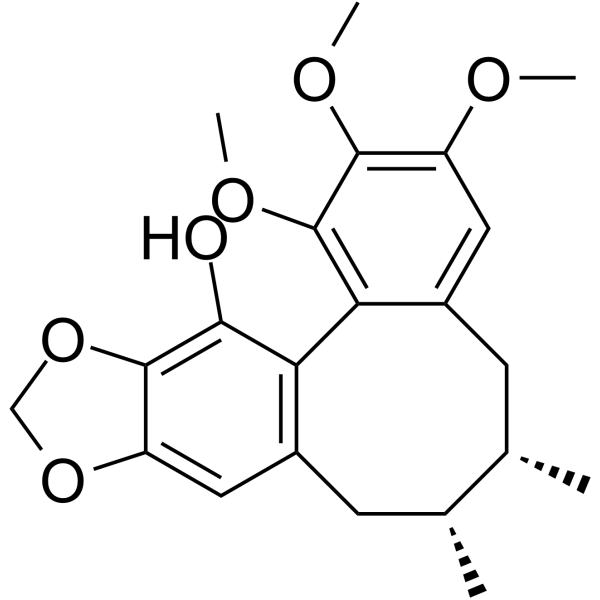
Cat. No.: HY-N3963
CAS No.: 82425-45-4
Synonyms: (+)-Gomisin M2
Gomisin M2 ((+)-Gomisin M2) is a lignan isolated from the fruits of Schisandra chinensis with oral availability. Gomisin M2 inhibits STAT1 phosphorylation as well as NF-κB p65 phosphorylation and nuclear translocation. Gomisin M2 reduces inflammatory cell infiltration, cytokine and chemokine expression, and serum IgE and IgG2a levels. Gomisin M2 inhibits MAPK phosphorylation, IκBα degradation, and NF-κB nuclear translocation in keratinocytes. Gomisin M2 induces apoptosis, mitochondrial membrane potential disruption, and cytochrome c release, and inhibits DNA synthesis and mammosphere formation through downregulation of Wnt/β-catenin. Gomisin M2 can be used for research on atopic dermatitis, psoriasis, breast cancer, liver injury, and multidrug-resistant mammary adenocarcinoma .
loading...
    loading...
Cat. No.: HY-P991641
Synonyms: LY3012218

Target:  

FLT3 p38 MAPK STAT PI3K Akt

Research Areas:  

Cancer

IMC-EB10 (LY3012218) is an anti-FLT3 monoclonal antibody. IMC-EB10 binds to FLT3 with high affinity (Kd = 158 pM) and blocks the binding of FLT3 ligand to FLT3 (IC50 ≈ 10 nM), thereby inhibiting MAPK, STAT5, and PI3K/Akt signaling in leukemia cells. IMC-EB10 can enhance the anti-leukemic effect of Methotrexate (HY-14519) and inhibit leukemias expressing wild-type or ITD-mutated FLT3 receptors. IMC-EB10 prolongs the survival of acute lymphoblastic leukemia (ALL) cells and primary leukemia samples and reduces engraftment in non-obese diabetic/severe combined immunodeficiency patients. IMC-EB10 is indicated for leukemia research .
loading...
    loading...

