127 Results for "

Psychiatric Disorder

" in MedChemExpress (MCE) Product Catalog:
Products (127)

127 Results for "Psychiatric Disorder" in MCE Product Catalog:

Cat. No.: HY-116524A
Target:  

5-HT Receptor

PF-04781340 TFA is a potent and selective 5-HT2C receptor agonist, with an EC50 of 9 nM and a Ki of 3 nM, respectively. PF-04781340 TFA exhibits weak partial agonist activity at the 5-HT2B receptor, with an EC50 of 1484 nM. PF-04781340 TFA can be used in the research of obesity and psychiatric disorders .
loading...
    loading...
Cat. No.: HY-110175R
CAS No.: 191744-13-5
Research Areas:  

Neurological Disease

CX614 (Standard) is the analytical standard of CX614 (HY-110175). This product is intended for research and analytical applications. CX614 is a positive variant modulator of AMPA receptors that enhances excitatory postsynaptic potentials (amplitude and duration) by blocKing and slowing the inactivation of responses to glutamate and automatically evokes excitatory postsynaptic currents in neuronal cultures. CX614 can be used in the study of psychiatric disorders such as depression .
loading...
    loading...
Cat. No.: HY-184883
CAS No.: 2746405-41-2
Target:  

mAChR

Research Areas:  

Neurological Disease

VU6035406 is a functionally selective mAChR inhibitor, with mAChR IC50 values of 21 nM, 51 nM and 47 nM against human, rat and mouse targets, respectively. VU6035406 does not act as a P-glycoprotein substrate. VU6035406 shows extremely low inhibitory activity against cytochrome P450 1A2, 2C9, 2D6 and 3A4. VU6035406 can be used in the research of neurological and psychiatric disorders .
loading...
    loading...
Cat. No.: HY-182440
CAS No.: 1162658-64-1
Target:  

5-HT Receptor

Research Areas:  

Neurological Disease

AZD3783 is an orally active, blood-brain barrier-penetrant 5-HT1B receptor antagonist. AZD3783 reverses agonist-induced hypothermia, inhibits separation-induced vocalizations in guinea pig pups, and acts as a moderately permeable glycoprotein substrate with moderate clearance. AZD3783 inhibits hERG channel activity. AZD3783 is applicable for research on depression, anxiety disorders, and other psychiatric diseases associated with serotonergic neurotransmission .
loading...
    loading...
Cat. No.: HY-159829A
CAS No.: 3028447-14-2
Synonyms: NBI-1117568 citrate; HTL-0016878 citrate
Target:  

mAChR

Research Areas:  

Neurological Disease

Direclidine (NBI-1117568, HTL-0016878) citrate is a selective orthosteric agonist targeting the muscarinic acetylcholine M4 receptor, exhibiting very low affinity for M1, M2, M3, and M5 receptors. Direclidine citrate binds to the orthosteric site of the M4 receptor in a non-covalent, competitive manner. Direclidine citrate specifically activates the M4 receptor, inhibiting the release of acetylcholine from striatal cholinergic interneurons, thereby regulating the balance of the dopaminergic system and reducing psychiatric symptoms associated with excessive dopamine release. Direclidine citrate can improve symptoms associated with neuropsychiatric disorders and is used in research on schizophrenia and other neuropsychiatric disorders .
loading...
    loading...
Cat. No.: HY-180832
Target:  

COX

Research Areas:  

Neurological Disease

COX-1 ligand 1 (Compound 44) is a selective COX-1 ligand (Kds or Kis: 22 nM for rhesus monkey COX-1; 43 nM for hCOX-1). COX-1 ligand 1 inhibits [ 3H]PS13 binding to human COX-1. COX-1 ligand 1, when radiolabeled with 11C or 18F, can be used in studies of COX-1 imaging and psychiatric disorders .
loading...
    loading...
Cat. No.: HY-19733S1
Synonyms: ITI-007-d4
Lumateperone-d4 tosylate (ITI-007-d4 tosylate) is the deuterium labeled Lumateperone tosylate (HY-19733). Lumateperone (ITI-007) tosylate is a 5-HT2A receptor antagonist (Ki = 0.54 nM), a partial agonist of presynaptic D2 receptors and an antagonist of postsynaptic D2 receptors (Ki = 32 nM), and a dopamine D1 receptor modulator. Lumateperone tosylate has anticancer activity and can also be used in studies of psychiatric disorders such as schizophrenia .
loading...
    loading...
Cat. No.: HY-100404R
CAS No.: 864864-86-8
Synonyms: MK5435 (Standard)
DFMTI (Standard) (MK5435 (Standard)) is the analytical standard of DFMTI (HY-100404). This product is intended for research and analytical applications. DFMTI is a blood-brain barrier-penetrant mGluR1 inhibitor. DFMTI abolishes the tobacco mosaic virus (TMV) resistance phenotype of NbAS-B-overexpressing plants by inhibiting glutamate production required for the activation of the Salicylic acid (HY-B0167) pathway . DFMTI disrupts prepulse inhibition in rats. DFMTI can be used in research related to psychiatric disorders and tobacco mosaic virus infection .
loading...
    loading...
Cat. No.: HY-B1693A
CAS No.: 1236-99-3
Synonyms: Methotrimeprazine hydrochloride
Levomepromazine (Methotrimeprazine) hydrochloride is an orally active antipsychotic compound and Ca 2+ release inducer. Levomepromazine inhibits SERCA pump and induces an increase in cytoplasmic Ca 2+ levels. Levomepromazine hydrochloride has antagonistic effects on a variety of neurotransmitter receptors, including dopamine, cholinergic, serotonin, and histamine receptors. Levomepromazine hydrochloride can induce adaptive ER stress and autophagy. In addition, Levomepromazine hydrochloride has antiviral, anti-inflammatory, neuroprotective and analgesic, sedative and anti-injurious activities. Levomepromazine hydrochloride can be used in the study psychiatric disorders and relieving nausea and vomiting .
loading...
    loading...
Cat. No.: HY-B1693R
CAS No.: 60-99-1
Synonyms: Methotrimeprazine (Standard)
Levomepromazine (Standard) is the analytical standard of Levomepromazine. This product is intended for research and analytical applications. Levomepromazine (Methotrimeprazine) is an orally active antipsychotic compound and Ca 2+ release inducer. Levomepromazine inhibits SERCA pump and induces an increase in cytoplasmic Ca 2+ levels. Levomepromazine has antagonistic effects on a variety of neurotransmitter receptors, including dopamine, cholinergic, serotonin, and histamine receptors. Levomepromazine can induce adaptive ER stress and autophagy. In addition, Levomepromazine has antiviral, anti-inflammatory, neuroprotective and analgesic, sedative and anti-injurious activities. Levomepromazine can be used in the study psychiatric disorders and relieving nausea and vomiting .
loading...
    loading...
Cat. No.: HY-107664B
Target:  

Neurotensin Receptor

Research Areas:  

Neurological Disease

SR 142948 TFA is an orally active and selective non-peptide neurotensin receptor (NT) antagonist with IC50s of 1.19 nM, 0.32 nM, 3.96 nM in h-NTR1-CHO cells, HT-29 cells, and adult rat brain, respectively. SR 142948 TFA antagonizes NT-induced inositol monophosphate formation in HT-29 cells with an IC50 of 3.9 nM. SR 142948 TFA blocks hypothermia, analgesia and steering behavior induced by NT in vivo. SR 142948 TFA shows blood-brain permeability and can be used in study of psychiatric disorders .
loading...
    loading...
Cat. No.: HY-12443
CAS No.: 1293395-67-1
Purity:  99.56%
Target:  

Casein Kinase

Research Areas:  

Neurological Disease

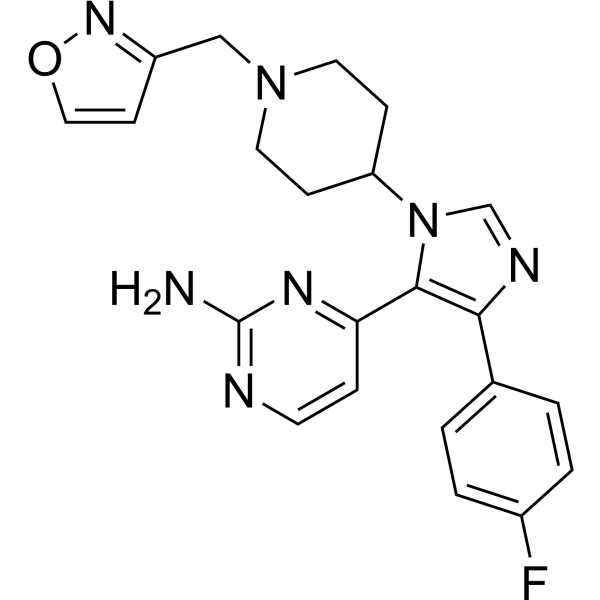
PF-5006739 is a potent and selective inhibitor of CK1δ/ε with IC50s of 3.9 nM and 17.0 nM, respectively. PF-5006739 is a potential therapeutic agent for a range of psychiatric disorders with low nanomolar in vitro potency for CK1δ/ε and high kinome selectivity. PF-5006739 attenuats opioid agent-seeking behavior in a rodent operant reinstatement model in animals in a dose-dependent manner . PF-5006739 improves glucose tolerance in both diet-induced obesity (DIO) and genetic (ob/ob) mice models of obesity .
loading...
    loading...
Cat. No.: HY-166562S
Synonyms: Methotrimeprazine-d6 hydrochloride
Levomepromazine-d6 hydrochloride (Methotrimeprazine-d6 hydrochloride) is the deuterium labeled Levomepromazine hydrochloride. Levomepromazine (Methotrimeprazine) hydrochloride is an orally active antipsychotic compound and Ca 2+ release inducer. Levomepromazine inhibits SERCA pump and induces an increase in cytoplasmic Ca 2+ levels. Levomepromazine hydrochloride has antagonistic effects on a variety of neurotransmitter receptors, including dopamine, cholinergic, serotonin, and histamine receptors. Levomepromazine hydrochloride can induce adaptive ER stress and autophagy. In addition, Levomepromazine hydrochloride has antiviral, anti-inflammatory, neuroprotective and analgesic, sedative and anti-injurious activities. Levomepromazine hydrochloride can be used in the study psychiatric disorders and relieving nausea and vomiting .
loading...
    loading...
Cat. No.: HY-187504
CAS No.: 3129083-72-0
Target:  

5-HT Receptor

Research Areas:  

Neurological Disease

5-HT2A receptor activator-1 is an allosteric modulator of the 5-HT2A receptor, with an EC50 of 0.56 μM. 5-HT2A receptor activator-1 exerts allosteric interaction with the 5-HT2A receptor, enhances 5-HT-induced receptor activation by binding to the allosteric site, and shows no obvious agonistic activity on its own. 5-HT2A receptor activator-1 can be used in the research of neurological or psychiatric disorders .
loading...
    loading...
Cat. No.: HY-187129
CAS No.: 82230-53-3
Research Areas:  

Neurological Disease

Girisopam is a PDE inhibitor with IC50 values of 3.2, 4.0, and 12.5 μM against PDE4, PDE2, and PDE5, respectively. Girisopam exhibits anxiolytic, antidepressant, anti-aggressive, and antipsychotic activities. The binding sites of Girisopam are enriched exclusively in the basal ganglia of rat brains, and depletion of these sites is associated with damage to the striatonigral pathway. Girisopam enhances the potency of μ-opioid receptor agonists, attenuates the antagonistic effect of low-dose Naloxone (HY-17417A), and synergistically potentiates the anti-fighting effect of Chlorpromazine (HY-12708). Girisopam can be used in studies related to psychiatric disorders such as anxiety and depression .
loading...
    loading...
Cat. No.: HY-W004464
CAS No.: 20980-22-7
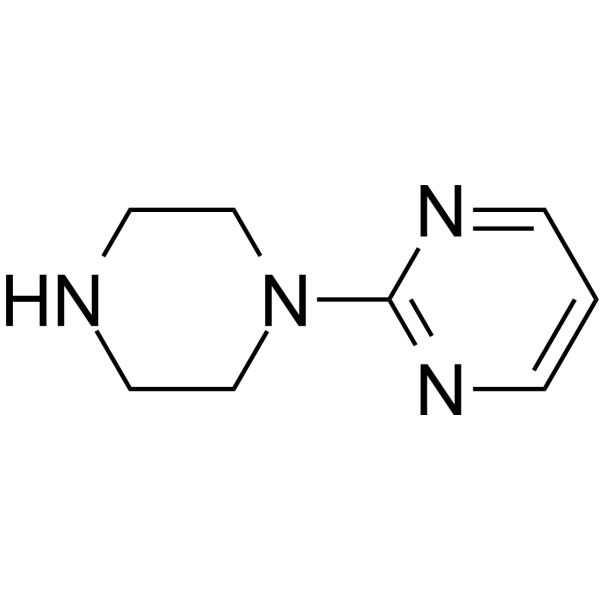
2-(1-Piperazinyl)pyrimidine is an orally effective α2-adrenoceptor antagonist and 5-HT1A receptor agonist. 2-(1-Piperazinyl)pyrimidine is an in vivo metabolite related to buspirone. 2-(1-Piperazinyl)pyrimidine modulates excitatory synaptic transmission in the hippocampus and the release of monoamine transmitters such as norepinephrine and 5-HT by blocking α2-adrenoceptor and activating 5-HT1A Receptor. 2-(1-Piperazinyl)pyrimidine is used in research on psychiatric disorders such as anxiety and depression .
loading...
    loading...
Cat. No.: HY-107664R
CAS No.: 184162-64-9
SR 142948 (Standard) is the analytical standard of SR 142948 (HY-107664). This product is intended for research and analytical applications. SR 142948 is an orally active and selective non-peptide neurotensin receptor (NT) antagonist with IC50s of 1.19 nM, 0.32 nM, 3.96 nM in h-NTR1-CHO cells, HT-29 cells, and adult rat brain, respectively. SR 142948 antagonizes NT-induced inositol monophosphate formation in HT-29 cells with an IC50 of 3.9 nM. SR 142948 blocks hypothermia, analgesia and steering behavior induced by NT in vivo. SR 142948 shows blood-brain permeability and can be used in study of psychiatric disorders .
loading...
    loading...
Cat. No.: HY-B0504S1
CAS No.: 1173022-95-1
Synonyms: NSC13123-13C
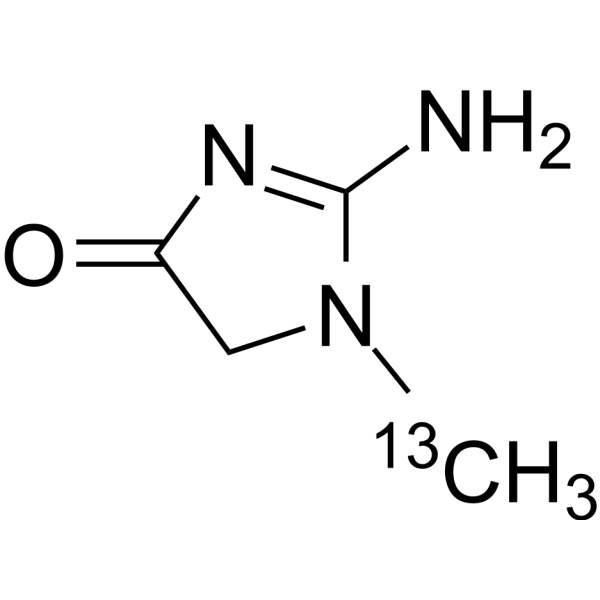
Creatinine- 13C is the 13C-labeled Creatinine. Creatinine (NSC13123) is an orally active, blood-brain barrier-permeable modulator of GABAA and NMDA receptors, with activities of antioxidation and metabolic regulation. Creatinine is generated via non-enzymatic conversion of creatine and phosphocreatine in muscle. Creatinine serum levels correlate with muscle mass, glomerular filtration rate, and extrarenal clearance, serving as an evaluation biomarker for renal function, muscle mass, and clinical outcomes, and used for perioperative renal risk assessment. In addition, Creatinine can induce specific Cryptococcus species to produce creatinine deiminase and act as their nitrogen source, while it can be secreted via renal tubules. Creatinine is widely used in research related to various diseases such as neurodegenerative diseases, psychiatric disorders, acute kidney injury, chronic kidney disease, and renal failure .
loading...
    loading...
Cat. No.: HY-B0504S2
Synonyms: NSC13123-d5
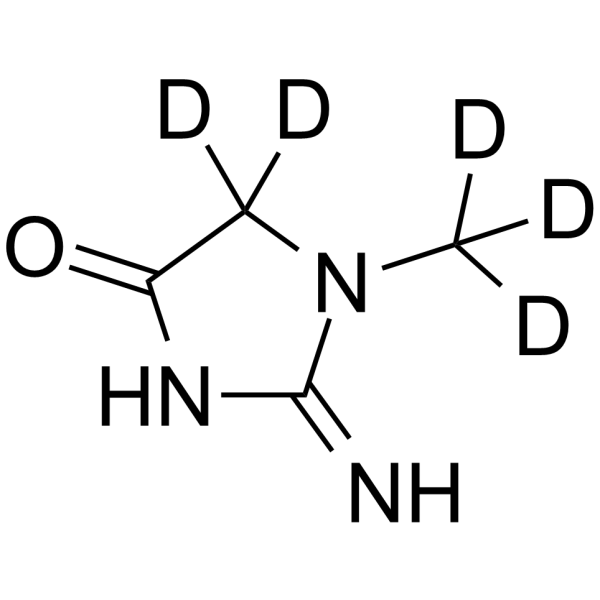
Creatinine-d5 is the deuterium labeled Creatinine. Creatinine (NSC13123) is an orally active, blood-brain barrier-permeable modulator of GABAA and NMDA receptors, with activities of antioxidation and metabolic regulation. Creatinine is generated via non-enzymatic conversion of creatine and phosphocreatine in muscle. Creatinine serum levels correlate with muscle mass, glomerular filtration rate, and extrarenal clearance, serving as an evaluation biomarker for renal function, muscle mass, and clinical outcomes, and used for perioperative renal risk assessment. In addition, Creatinine can induce specific Cryptococcus species to produce creatinine deiminase and act as their nitrogen source, while it can be secreted via renal tubules. Creatinine is widely used in research related to various diseases such as neurodegenerative diseases, psychiatric disorders, acute kidney injury, chronic kidney disease, and renal failure .
loading...
    loading...
Cat. No.: HY-W004464R
CAS No.: 20980-22-7
2-(1-Piperazinyl)pyrimidine Standard is the analytical standard of 2-(1-Piperazinyl)pyrimidine (HY-W004464). This product is intended for research and analytical applications. 2-(1-Piperazinyl)pyrimidine is an orally effective α2-adrenoceptor antagonist and 5-HT1A receptor agonist. 2-(1-Piperazinyl)pyrimidine is an in vivo metabolite related to buspirone. 2-(1-Piperazinyl)pyrimidine modulates excitatory synaptic transmission in the hippocampus and the release of monoamine transmitters such as norepinephrine and 5-HT by blocking α2-adrenoceptor and activating 5-HT1A Receptor. 2-(1-Piperazinyl)pyrimidine is used in research on psychiatric disorders such as anxiety and depression .
loading...
    loading...

