128 Results for "

U2OS cell

" in MedChemExpress (MCE) Product Catalog:
Products (128)

128 Results for "U2OS cell" in MCE Product Catalog:

Cat. No.: HY-183643
Target:  

DNA/RNA Synthesis

Research Areas:  

Cancer

RUVBL1/2-IN-1 is an orally active RUVBL1/2 complex inhibitor with an EC50 of 0.012 μM against human targets. RUVBL1/2-IN-1 impairs ATPase-related functions, thereby reducing nuclear MYC protein levels, impairing DNA damage response and inhibiting cancer cell proliferation. In a MYC-dependent Burkitt's lymphoma xenograft model, RUVBL1/2-IN-1 effectively inhibits tumor growth and suppresses the activity of RUVBL1 R117H mutant cells. RUVBL1/2-IN-1 has been applied in research related to MYC-dependent Burkitt's lymphoma .
loading...
    loading...
Cat. No.: HY-137059
CAS No.: 1217503-60-0
GO-Y078 is a curcumin (HY-N0005) analog. GO-Y078 activates p38/JNK1/2. GO-Y078 activates the MAPK pathway, Caspase 3/8/9, PARP, AP-1, DR5, and TP53, while inhibiting cIAP-1, XIAP, and NF-κB. GO-Y078 induces sub-G1/G2/M phase arrest and Apoptosis. GO-Y078 impairs angiogenesis. GO-Y078 can be used in research related to osteosarcoma, cervical cancer, oral squamous cell carcinoma, and peritoneal metastasis of gastric cancer .
loading...
    loading...
Cat. No.: HY-133908
CAS No.: 1914047-60-1
Research Areas:  

Others

PFI-3 Control is an inactive analog of PFI-3 (HY-12409), serving as an inactive negative control. PFI-3 Control shows no detectable binding activity toward purified PB1 (5), SMARCA2A, SMARCA2B, and SMARCA4 family VIII bromodomain proteins .
loading...
    loading...
Cat. No.: HY-12835
CAS No.: 1324003-64-6
Purity:  99.64%
Target:  

LPL Receptor

Research Areas:  

Inflammation/Immunology

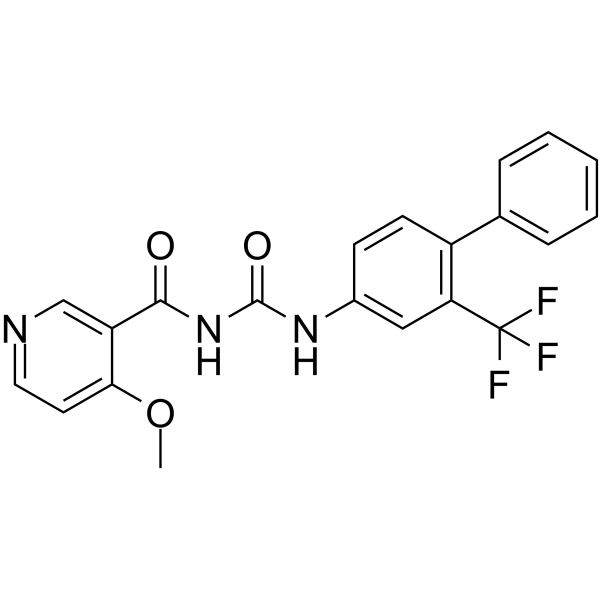
S1P1 agonist III is an orally active hS1P1 agonist with an EC50 value of 18 nM. S1P1 agonist III shows limited activity against hS1P3. S1P1 agonist III can be used in the research of multiple sclerosis .
loading...
    loading...
Cat. No.: HY-161430
CAS No.: 3035072-49-9
Research Areas:  

Cancer

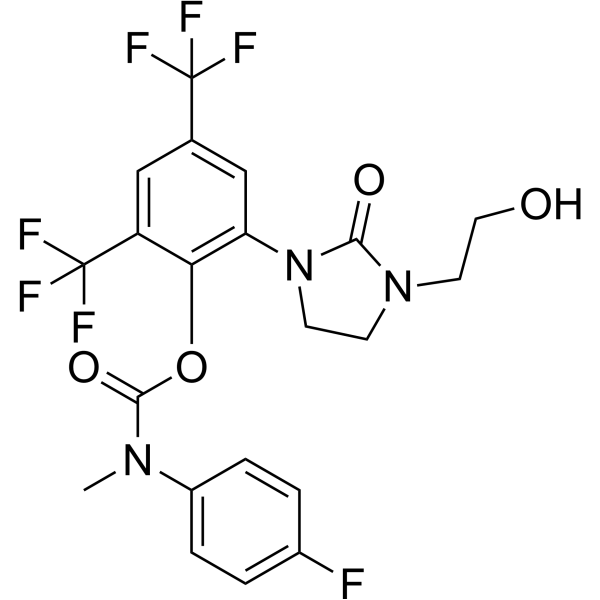
RTx-161 is a DNA polymerase θ inhibitor with an IC50 of 4.1 nM. RTx-161 induces DNA damage, PARP cleavage, apoptosis, and selectively kills homologous recombination-deficient (HRD) cells. RTx-161 acts synergistically with PARP inhibitors to suppress PARP inhibitor resistance in cancer cells. RTx-161 can be used for the research of BRCA G12C mutant cancer and HR-deficient cancers .
loading...
    loading...
Cat. No.: HY-D3163
Target:  

Fluorescent Dye

Research Areas:  

Others

Endo-pH is a cell-permeable, pH-responsive fluorescent probe based on BODIPY, with a pKa of 5.08. When pH decreases from 7.32 to 4.97, Endo-pH undergoes protonation under acidic conditions, resulting in a 79-fold increase in fluorescence intensity at 786 nm. The detection wavelengths of its protonated form are Ex/Em=688/786 nm, while the absorption wavelength of its non-protonated form is 745 nm. Endo-pH can be used for staining late endosomes in live cells and determining the fusion time of late endosomes and lysosomes .
loading...
    loading...
Cat. No.: HY-184244
CAS No.: 3094094-17-1
Synonyms: CAS-13312-010
Target:  

Deubiquitinase

Research Areas:  

Cancer

CAS-010 (CAS-13312-010) is a potent and selective USP28 inhibitor with an IC50 of 2.2 nM against full-length USP28. CAS-010 acts as a ubiquitin-competitive inhibitor and shows higher selectivity over USP25 (IC50 = 51 nM) and other USP family members, disrupting the 53BP1-USP28 interaction and suppressing p53-dependent transcription of CDKN1A (p21), MDM2, and BAX. CAS-010 can be used for studying USP28-mediated DNA damage response and p53 signaling in cancer-related research .
loading...
    loading...
Cat. No.: HY-189238
Target:  

c-Kit PDGFR

Research Areas:  

Cancer

KIT/PDGFRA-IN-3 is a KIT and PDGFRA mutant kinase inhibitor, with an IC50 of 9 nM against human PDGFRA. KIT/PDGFRA-IN-3 inhibits the kinase activity of KIT, exhibiting superior selectivity for mutant KIT over wild-type KIT. KIT/PDGFRA-IN-3 suppresses the kinase activity of PDGFRA and blocks downstream signaling pathways. KIT/PDGFRA-IN-3 can be used in studies of gastrointestinal stromal tumors .
loading...
    loading...
Cat. No.: HY-181933
CAS No.: 339025-18-2
Target:  

Clathrin Dynamin

Research Areas:  

Infection

Clathrin-IN-5 (Compound 9) is a Clathrin N-terminal domain-Amphiphysin protein-protein interaction inhibitor with an IC50 of 2.77 μM. Clathrin-IN-5 inhibits the protein-protein interaction between the clathrin N-terminal domain and amphiphysin. Clathrin-IN-5 inhibits clathrin-mediated endocytosis with an IC50 of 4.6 μM. Clathrin-IN-5 inhibits the GTPase activity of Dynamin I with an IC50 of 29.7 μM .
loading...
    loading...
Cat. No.: HY-130311
CAS No.: 3443-82-1
Synonyms: 2-Monolinolein; 2-Monolinoleoylglycerol
Target:  

Cannabinoid Receptor

Research Areas:  

Neurological Disease

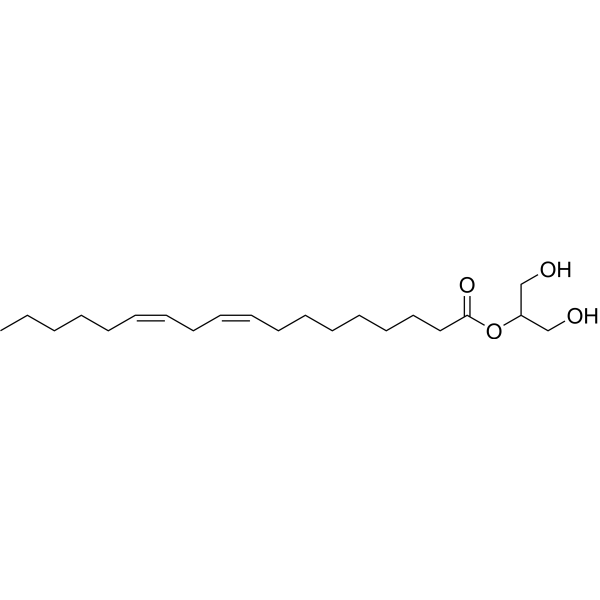
2-Linoleoyl glycerol (2-Monolinolein) is a partial CB1 receptor agonist with a pEC50 of 4.781. 2-Linoleoyl glycerol activates the hCB1 receptor. 2-Linoleoyl glycerol does not induce an increase in intracellular free Ca 2+. 2-Linoleoyl glycerol can be used in the research of neurological disorders .
loading...
    loading...
Cat. No.: HY-182746
Research Areas:  

Cancer

RG7388-PEG3-Click-F is a fluorinated analog of the MDM2 inhibitor RG7388 (HY-15676), with an IC50 of 16.8 nM against MDM2. [ 18F]RG7388-PEG3-Click-F exhibits high uptake and specificity in MDM2-expressing myeloma cells, and can be used for non-invasive assessment of MDM2 protein expression levels in tumors .
loading...
    loading...
Cat. No.: HY-W784030
CAS No.: 1380349-88-1
Research Areas:  

Others

N-TCO-L-lysine is a non-canonical amino acid. N-TCO-L-lysine contains a trans-cyclooctene (TCO) bioorthogonal reactive linker. N-TCO-L-lysine undergoes a bioorthogonal click reaction with SiR-Tz to enable fluorescent labeling of endogenously expressed proteins with site-specific incorporation. When used in combination with SiR-Tz, N-TCO-L-lysine allows super-resolution and live-cell imaging of endogenous proteins .
loading...
    loading...
Cat. No.: HY-182335
CAS No.: 2655556-75-3
PF-07245303 is a ITK/TRK inhibitor. PF-07245303 reduces the production of inflammatory cytokines such as IL-4 and IFNγ, and inhibits the phosphorylation of PLCγ1. PF-07245303 inhibits nerve growth factor-induced basophil activation and the phosphorylation of TRKA. PF-07245303 reduces oxazolone-induced ear swelling in mouse ear tissues. PF-07245303 is applicable to research related to atopic dermatitis .
loading...
    loading...
Cat. No.: HY-183102
CAS No.: 384860-40-6
Target:  

Aurora Kinase Apoptosis

Research Areas:  

Cancer

ATC12 is a Aurora-A kinase inhibitor. ATC12 binds to Aurora-A and competes with TPX2 for binding to disrupt the Aurora-A/TPX2 interaction. ATC12 inhibits cancer cell proliferation, induces apoptosis and cellular senescence. ATC12 can be used in the research of breast cancer .
loading...
    loading...
Cat. No.: HY-D3415
CAS No.: 3030070-69-7
TOR-G4 is a Fluorescent probe that binds to G-quadruplex (G4) nucleic acid structures. TOR-G4 exhibits a unique fluorescence lifetime when bound to G4 compared to other structures, enabling sensitive discrimination between G4-bound and non-G4-bound states. TOR-G4 mainly colocalizes with RNA in the cytoplasm and nucleolus. TOR-G4 can be used to investigate the roles of RNA G4 in cells. TOR-G4 shows cytotoxicity against osteosarcoma cells .
loading...
    loading...
Cat. No.: HY-183980
Research Areas:  

Cancer

MJ-NR-27 is a bifunctional small molecule of ribonuclease-targeting chimera (RIBOTAC) that targets NRAS mRNA containing a G-quadruplex structure. MJ-NR-27 uses RNase L ligand 3 (HY-177030) as the RNase L ligand, RNA binder 4 (HY-183981) as the RNA binder, and Bis-PEG3-acid (HY-126891) as the linker. MJ-NR-27 achieves target RNA degradation by recruiting ribonuclease RNase L, and significantly induces morphological changes in tumor cells. MJ-NR-27 can be used in cancer research .
loading...
    loading...
Cat. No.: HY-146248B
Purity:  98.02%
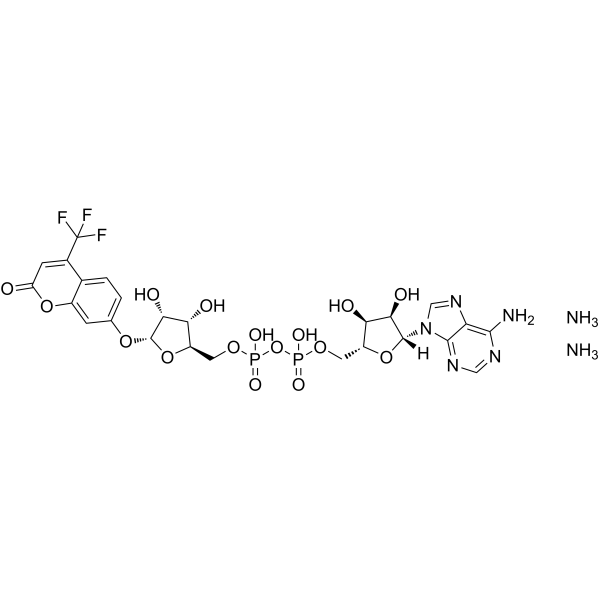
TFMU-ADPr diammonium is a selective reporter substrate of SARS-CoV-2 Macro1 (IC50=0.59 μM), with an excitation wavelength (λEx) of 385 nm, and an emission wavelength (λEm) of 502 nm (or 495 nm). TFMU-ADPr diammonium can also undergo enzymatic hydrolysis with Poly(ADP-ribose) Glycohydrolase (PARG) sourced from human, Tetrahymena thermophila and ADP-ribosylhydrolase 3 from human to release fluorophores, thereby directly reporting total poly (ADP-ribose) hydrolase activity. TFMU-ADPr diammonium binds to the ADPr-binding site of SARS-CoV-2 Macro1, and its TFMU moiety inserts into the narrow hydrophobic groove of this protein. TFMU-ADPr diammonium can thus be used to evaluate small-molecule inhibitors targeting PAR hydrolases under in vitro conditions, to investigate the regulatory mechanisms of ADP-ribosyl catabolic enzymes, or to detect PAR hydrolase activity in whole-cell lysate assays. TFMU-ADPr diammonium is also applicable to COVID-19-related research .
loading...
    loading...
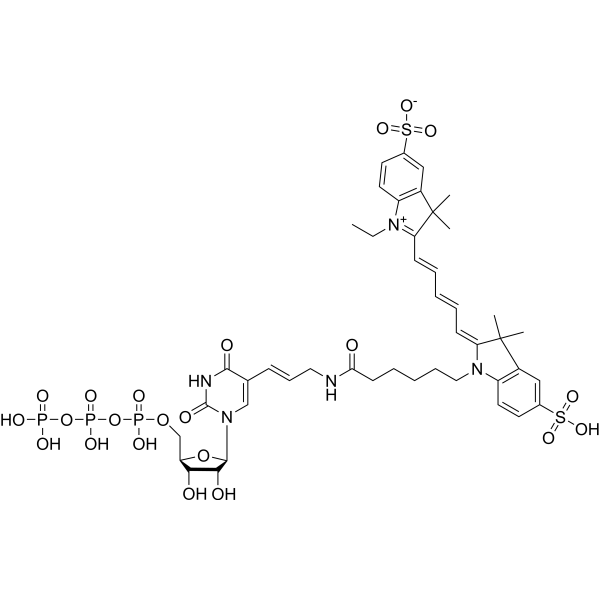
Cat. No.: HY-150145
Cy5-UTP is a fluorescently labeled ribonucleotide triphosphate that can be used as a substrate for terminal deoxynucleotidyl transferase (TdT). Cy5-UTP can be employed to label RNA probes generated in vitro (Ex/Em: 650/665 nm). Cy5-UTP can be applied in FISH, multi-color fluorescence analysis, especially in dual-color expression arrays that combine with Cy5-UTP .
loading...
    loading...
Cat. No.: HY-182040
Nrf2 activator-24 is a Nrf2 activator with anti-inflammatory and antioxidant activities. Nrf2 activator-24 promotes the nuclear translocation of Nrf2, thereby inducing the expression of downstream antioxidant and cytoprotective genes. Nrf2 activator-24 inhibits cytokine-driven inflammatory responses in keratinocytes. Nrf2 activator-24 attenuates inflammation, nitrosation and oxidative stress responses in macrophages. Nrf2 activator-24 alleviates local inflammation and atopic dermatitis-like symptoms in DNCB-induced mouse models. Nrf2 activator-24 can be used in research related to atopic dermatitis .
loading...
    loading...
Cat. No.: HY-N4067
CAS No.: 566-24-5
Synonyms: isoCDCA
Category:  

Natural Products

Isochenodeoxycholic acid (isoCDCA) is a FXR agonist. Isochenodeoxycholic acid activates the activity of FXR and induces the mRNA expression of FXR target genes (Ostβ and Kng1). Isochenodeoxycholic acid serves as a substrate for the liver class I ADH γγ isozyme-mediated 3β-dehydrogenation reaction .
loading...
    loading...

