137 Results for "

Chalcone

" in MedChemExpress (MCE) Product Catalog:
Products (137)

137 Results for "Chalcone" in MCE Product Catalog:

Cat. No.: HY-107412
CAS No.: 856849-35-9
Purity:  99.43%
Synonyms: PS-IX; AM114
Target:  

Proteasome

Research Areas:  

Cancer

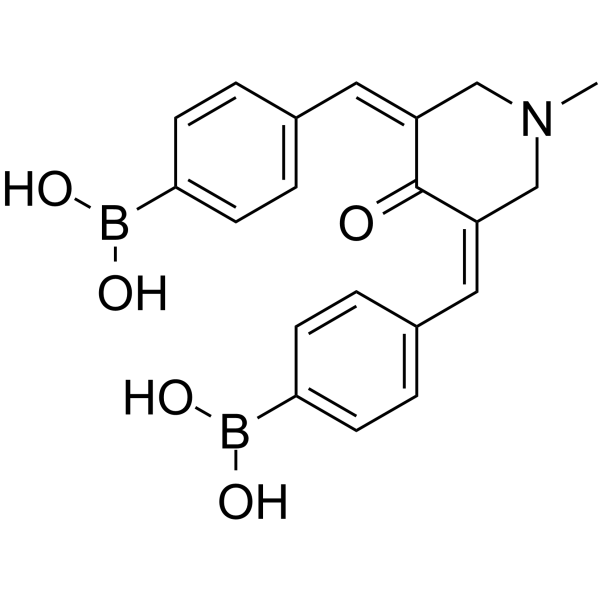
Proteasome inhibitor IX (PS-IX; AM114) is a Chalcone derivative and a chymotrypsin-like activity of the 20S proteasome inhibitor with an IC50 value of ~1 μM. Proteasome inhibitor IX exhibits HCT116 p53 +/+ cells growth inhibitory activity with an IC50 value of 1.49 μM. Proteasome inhibitor IX has potent anticancer activity .
loading...
    loading...
Cat. No.: HY-189048
Research Areas:  

Infection

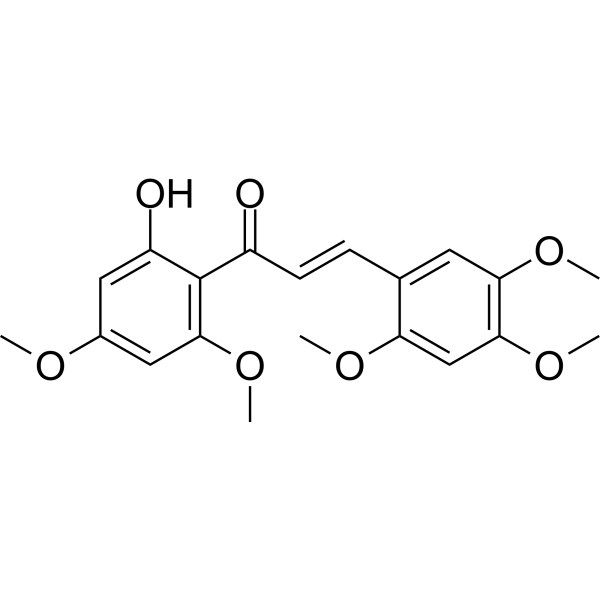
CPN4F is a chalcone derivative with antiparasitic activity. CPN4F is an inhibitor of the cysteine protease cruzain. CPN4F forms a key hydrogen bond with the Trp-184 residue in the active site of parasitic cruzain as an electrophile, and induces oxidative stress, cell membrane degradation, and necrosis, thereby inhibiting parasite proliferation. CPN4F is used in research related to Chagas disease .
loading...
    loading...
Cat. No.: HY-181720
CAS No.: 1911631-77-0
Target:  

Caspase PARP Apoptosis

Research Areas:  

Cancer

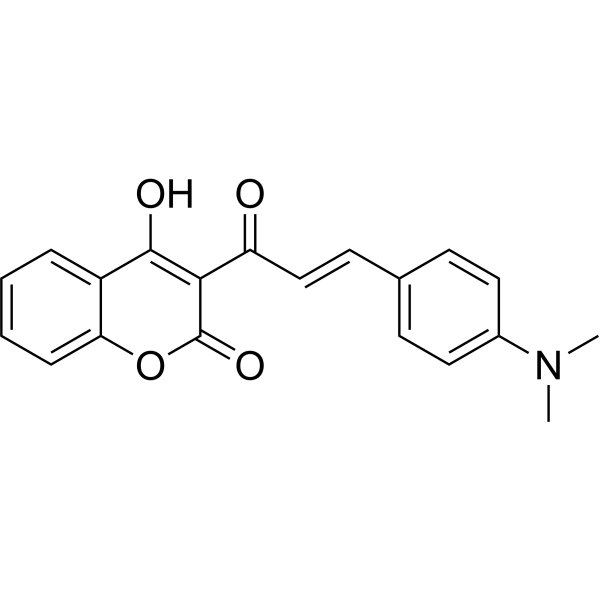
Antitumor agent-214 is a chalcone analogue with anti-tumor activity. Antitumor agent-214 induces cell cycle arrest and apoptosis in tumor cells, disrupts mitochondrial metabolism, and upregulates the expression of caspase 3, caspase 7 and caspase 9, downregulates PARP1. Antitumor agent-214 can be used for anti-tumor research related to colorectal cancer, breast cancer, lung cancer, and cervical cancer .
loading...
    loading...
Cat. No.: HY-183934
CAS No.: 1345412-48-7
Anti-inflammatory agent 99 is a chalcone derivative. Anti-inflammatory agent 99 inhibits LPS (HY-D1056)-induced NF-κB nuclear translocation and suppress the phosphorylation of JNK, ERK, and p38. Anti-inflammatory agent 99 inhibits the expression of cytoinflammatory factors such as TNF-α and IL-6 induced by LPS. Anti-inflammatory agent 99 can be used for the research of LPS-induced septic shock .
loading...
    loading...
Cat. No.: HY-179481
CAS No.: 3085517-19-4
Ferroptosis inducer-13 is a 5′-prenylated chalcone derivative that effectively induces ferroptosis in human non-small cell lung cancer (NSCLC) cells by altering the activity of the Nrf2/xCT/GPX4 pathway. Ferroptosis inducer-13 exhibits potent anti-proliferative effects in vitro, and inhibits tumour growth in a NSCLC mouse model. Ferroptosis inducer-13 can be used for NSCLC research .
loading...
    loading...
Cat. No.: HY-107412R
CAS No.: 856849-35-9
Synonyms: PS-IX (Standard); AM114 (Standard)
Research Areas:  

Cancer

Proteasome inhibitor IX (Standard) is the analytical standard of Proteasome inhibitor IX (HY-107412). This product is intended for research and analytical applications. Proteasome inhibitor IX (PS-IX; AM114) is a Chalcone derivative and a chymotrypsin-like activity of the 20S proteasome inhibitor with an IC50 value of ~1 μM. Proteasome inhibitor IX exhibits HCT116 p53+/+ cells growth inhibitory activity with an IC50 value of 1.49 μM. Proteasome inhibitor IX has potent anticancer activity .
loading...
    loading...
Cat. No.: HY-119833
CAS No.: 73694-15-2
Purity:  99.1%
Rubone, a chalcone analog, is a modulator of miR-34a. Rubone upregulates miR-34a expression in a p53 dependent manner, downregulates the downstream target Bcl-2 and Cyclin D1 expression, and suppresses hepatocellular carcinoma (HCC) growth in vivo. Rubone enhances the anticancer effect of Paclitaxel (PTX; HY-B0015) in PTX-resistant prostate cancer cell lines by reversing the expression of miR-34a downstream targets .
loading...
    loading...
Cat. No.: HY-157992
CAS No.: 1022282-98-9
Purity:  98.27%
LM-021 is a coumarin-chalcone derivative with anti-aggregatory, antioxidant, neuroprotective and anti-inflammatory properties which suppresses nitric oxide (NO), IL-1β, IL-6, TNF-α production, CD68 antigen (CD68) and histocompatibility-2 (MHCII) expression. LM-021 also attenuates the increase of caspase 1 activity, lactate dehydrogenase release and ROS level. LM-021 can be used for neurological research .
loading...
    loading...
Cat. No.: HY-N2132R
CAS No.: 1775-97-9
Synonyms: Flavokavain B (Standard)
Flavokawain B (Standard) is the analytical standard of Flavokawain B. This product is intended for research and analytical applications. Flavokawain B (Flavokavain B) is a chalcone isolated from the root extracts of kava-kava plant and a potent apoptosis inducer for inhibiting the growth of various cancer cell lines. Flavokawain B (Flavokavain B) shows strong antiangiogenic activity. Flavokawain B (Flavokavain B) inhibits human brain endothelial cell (HUVEC) migration and tube formation with very low and non-toxic concentrations .
loading...
    loading...
Cat. No.: HY-N7056R
CAS No.: 2657-25-2
4'-Hydroxychalcone (Standard) is the analytical standard of 4'-Hydroxychalcone (HY-N7056). This product is intended for research and analytical applications. 4'-Hydroxychalcone is a chalcone isolated from licorice root, with hepatoprotective activity. 4'-Hydroxychalcone inhibits TNFα-induced NF-κB activation via proteasome inhibition. 4'-Hydroxychalcone induces a rapid potassium release from mitochondrial vesicles and causes deterioration of respiratory control and oxidative phosphorylation of isolated rat liver mitochondria .
loading...
    loading...
Cat. No.: HY-141462
CAS No.: 13323-66-5
2',4-Dihydroxychalcone is an orally active natural chalcone flavonoid. 2',4-Dihydroxychalcone restores intestinal barrier integrity by upregulating tight junction proteins, regulates intestinal flora balance and alleviates inflammation. 2',4-Dihydroxychalcone induces GPX4 degradation, ferroptosis and apoptosis, triggers cell cycle arrest, and exhibits broad anti-tumor activity. 2',4-Dihydroxychalcone also possesses antifungal activity, antileishmanial activity, and reduces the hemolytic effect and virulence of Vibrio vulnificus .
loading...
    loading...
Cat. No.: HY-W110154
CAS No.: 19152-36-4
2'-Hydroxy-3,4-dimethoxychalcone is a chalcone derivative and lipoxygenase inhibitor with an IC50 of 67.5 μM. 2'-Hydroxy-3,4-dimethoxychalcone acts as a radical scavenger that scavenges DPPH stable free radical, superoxide anion radical, and hydroxyl radical. 2'-Hydroxy-3,4-dimethoxychalcone scavenges hydrogen peroxide and inhibits linoleic acid lipid peroxidation. 2'-Hydroxy-3,4-dimethoxychalcone can be used for research on oxidative damage and inflammatory diseases .
loading...
    loading...
Cat. No.: HY-181028
Tyrosinase-IN-48 (Compound 3) is a potent and competitive chalcone-based tyrosinase inhibitor with an IC50 of 0.49 μM. Tyrosinase-IN-48 has potent antioxidant potential with significant DPPH and ABTS radical scavenging capacity. Tyrosinase-IN-48 can chelate the binuclear copper ions in the active center of tyrosinase and reduce Cu 2+ to Cu +, thereby reducing the catalytic activity of the enzyme. Tyrosinase-IN-48 has low cytotoxicity for HEK293 cells and zebrafish embryo. Tyrosinase-IN-48 shows antibrowning effects to improve food quality and can be used for research of food preservation .
loading...
    loading...
Cat. No.: HY-181029
Tyrosinase-IN-49 (Compound 12) is a potent and mixed-type chalcone-based tyrosinase inhibitor with an IC50 of 0.19 μM. Tyrosinase-IN-49 has potent antioxidant potential with significant DPPH and ABTS radical scavenging capacity. Tyrosinase-IN-49 can chelate the binuclear copper ions in the active center of tyrosinase and reduce Cu 2+ to Cu +, thereby reducing the catalytic activity of the enzyme. Tyrosinase-IN-49 has low cytotoxicity for HEK293 cells and zebrafish embryo. Tyrosinase-IN-49 shows antibrowning effects to improve food quality and can be used for research of food preservation .
loading...
    loading...
Cat. No.: HY-123656
CAS No.: 1613078-24-2
Target:  

Apoptosis

Research Areas:  

Cancer

Antiproliferative agent-61 is a synthetic β-carlinyl chalcone with significant antiproliferative activity. Antiproliferative agent-61 showed significant effects in a range of solid tumor cell lines, with the most prominent effects in breast cancer. Antiproliferative agent-61 showed IC50 values of 2.25 and 3.29 μM in the human breast cancer MCF-7 cell line. Antiproliferative agent-61 significantly induced DNA fragmentation and apoptosis in breast cancer cells. Antiproliferative agent-61 inhibited the interaction of MDM2 with p53 and promoted the degradation of MDM2 .
loading...
    loading...
Cat. No.: HY-W002251
CAS No.: 5381-20-4
Benzo[b]thiophene-3-carbaldehyde is a 3-formyl-substituted benzo[b]thiophene derivative that acts as an oxidizable substrate to convert to benzo[b]thiophene-3-carboxylic acid under liquid-phase conditions. Compared with analogs such as benzaldehyde and thiophene-2-carbaldehyde, Benzo[b]thiophene-3-carbaldehyde has lower oxidation difficulty, and can significantly increase the reaction rate in the presence of initiators (such as Na +Br - or DBA). Benzo[b]thiophene-3-carbaldehyde also serves as a key starting material for the synthesis of compounds including heteroaryl chalcones .
loading...
    loading...
Cat. No.: HY-L068
583 compounds

Flavonoids are an important class of natural products; particularly, they belong to a class of plant secondary metabolites having a polyphenolic structure, widely found in fruits, vegetables and certain beverages. Flavonoids can be subdivided into different subgroups depending on the carbon of the C ring on which the B ring is attached and the degree of unsaturation and oxidation of the C ring. These subgroups are: flavones, flavonols, flavanones, flavanonols, flavanols or catechins, anthocyanins and chalcones. Flavonoids are now considered as an indispensable component in a variety of nutraceutical, pharmaceutical, medicinal and cosmetic applications. This is attributed to their anti-oxidative, anti-inflammatory, anti-mutagenic and anti-carcinogenic properties coupled with their capacity to modulate key cellular enzyme function. Naturally occurring flavonoids are known to have biological activities for use as drugs, for example, in diseases like cancer, Alzheimer’s disease (AD), atherosclerosis, etc.

MCE offers a unique collection of 583 natural flavonoid compounds which is a useful tool for drug discovery as an important source of lead compounds.

