135 Results for "

LC3

" in MedChemExpress (MCE) Product Catalog:
Products (135)

135 Results for "LC3" in MCE Product Catalog:

Cat. No.: HY-176046
CAS No.: 3081572-35-9
Research Areas:  

Cancer

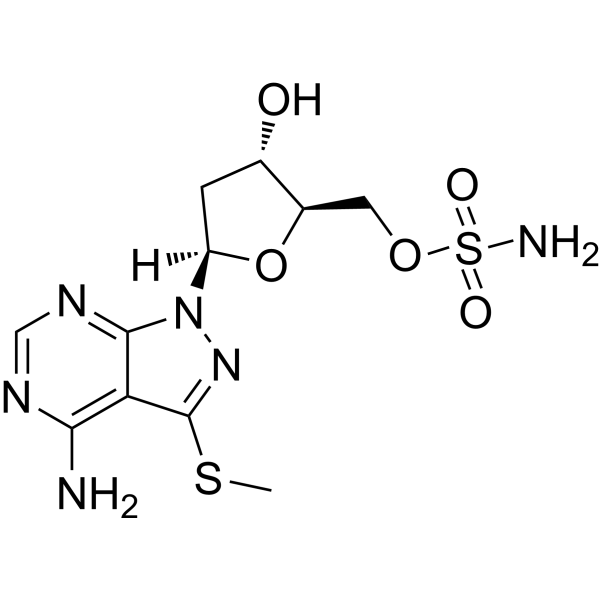
E3 Ligase Ligand-linker Conjugate 183 is an E3 ligase ligand-linker conjugate of PCSK9 autophagic degrader 2 (HY-176043). E3 Ligase Ligand-linker Conjugate 183 consists of LC3B ligand 2 (HY-176045) and the corresponding linker (HY-141373) .
loading...
    loading...
Cat. No.: HY-146131
CAS No.: 2226229-76-9
Purity:  98.17%
Target:  

Atg7 Atg8/LC3 Autophagy

Research Areas:  

Cancer

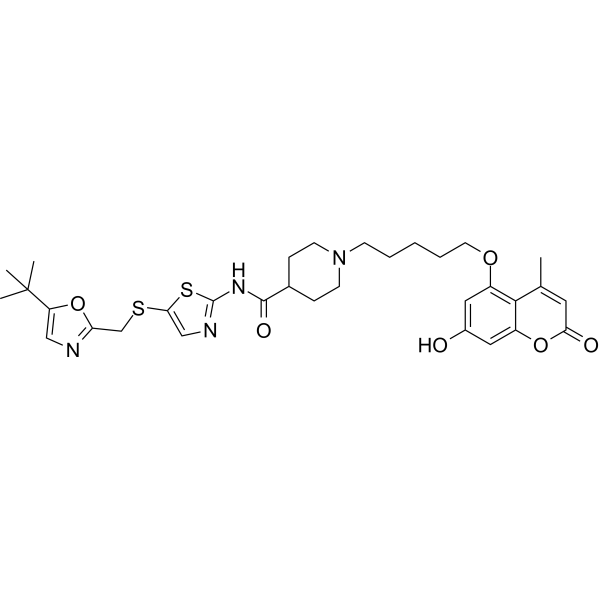
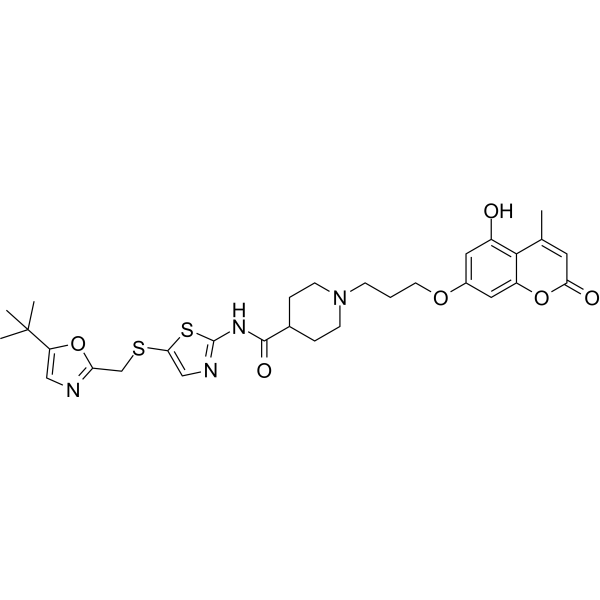
ATG7-IN-3 (Compound 18) is a potent ATG7 inhibitor with an IC50 of 0.048 μM. ATG7-IN-3 inhibits Autophagy. ATG7-IN-3 inhibits the formation of LC3B puncta. ATG7-IN-3 can be used in the researches of glioma and colon cancer .
loading...
    loading...
Cat. No.: HY-157548
Target:  

p62 Atg8/LC3 Autophagy

Research Areas:  

Cancer

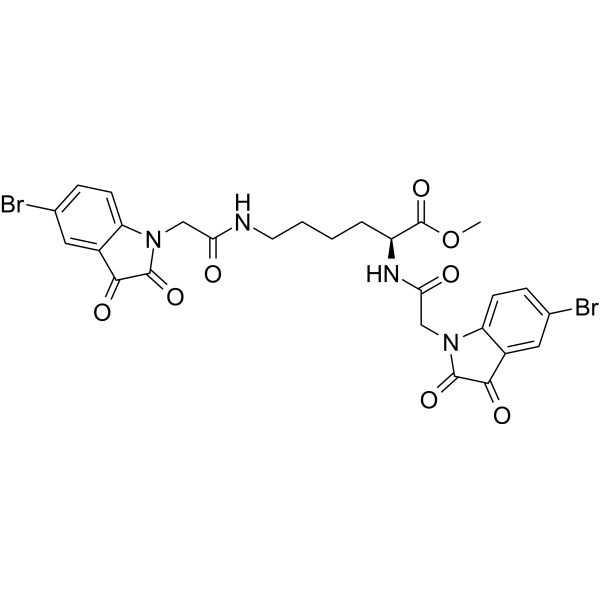
Antitumor agent-133 (compound 4d) is a bis-isatin derivative, with activities against Huh1 (IC50=17.13 μM) and Huh7 (IC50=8.27 μM). Antitumor agent-133 induces cell autophagy and inhibits tumor growth through regulation of LC3BII, ATG5 and p62 proteins .
loading...
    loading...
Cat. No.: HY-179049
EGFR/tubulin-IN-1 (Compound 26) is a dual-target inhibitor of EGFR and tubulin. EGFR/tubulin-IN-1 significantly reduces the levels of p-EGFR, p-AKT, and p-ERK in cells, disrupting the microtubule structure of the cells. EGFR/tubulin-IN-1 significantly inhibits the proliferation of H1975 cells and significantly blocks the cells in the G2/M phase. EGFR/tubulin-IN-1 induces the expression of autophagy markers LC3B-II and Beclin-1, while down-regulating the expression of p62. EGFR/tubulin-IN-1 induces ferroptosis, with increased ROS content and depletion of glutathione (GSH). EGFR/tubulin-IN-1 inhibits epithelial-mesenchymal transition (EMT) and tumor metastasis. EGFR/tubulin-IN-1 has a significant tumor-suppressing effect in the H1975 transplanted tumor nude mouse model. EGFR/tubulin-IN-1 can be used for the study of non-small cell lung cancer .
loading...
    loading...
Cat. No.: HY-168896
CAS No.: 3066836-42-5
Target:  

CDK ATTECs

Research Areas:  

Cancer

CDK9 autophagic degrader 1 (Compound 28) is a ATTEC degrader that can be used to degrade CDK9 and also affects the levels of the associated Cyclin T1. CDK9 autophagic degrader 1 shows over 80% CDK9 inhibition rate at 100 nM . ( Pink: LC3B ligand (HY-168897); Black: linker (HY-W017758); Blue: target protein ligand (HY-10008); linker + target protein ligand (HY-168898))
loading...
    loading...
Cat. No.: HY-183714
CAS No.: 2922798-57-8
Research Areas:  

Cancer

Anticancer agent 325 is an apoptosis/autophagy inducer and anticancer agent. Anticancer agent 325 exhibits cytotoxic activity against gastric cancer cells, with no significant effect on healthy gastric epithelial cells. Anticancer agent 325 enhances the expression of activated/cleaved Caspase-3 to promote apoptosis. Anticancer agent 325 also enhances the cleavage of PARP, a downstream marker of apoptosis, promotes LC3B lipidation, and activates autophagy. Anticancer agent 325 can be used in the research of gastric cancer .
loading...
    loading...
Cat. No.: HY-I0501
CAS No.: 551-93-9
Synonyms: o-aminoacetophenone
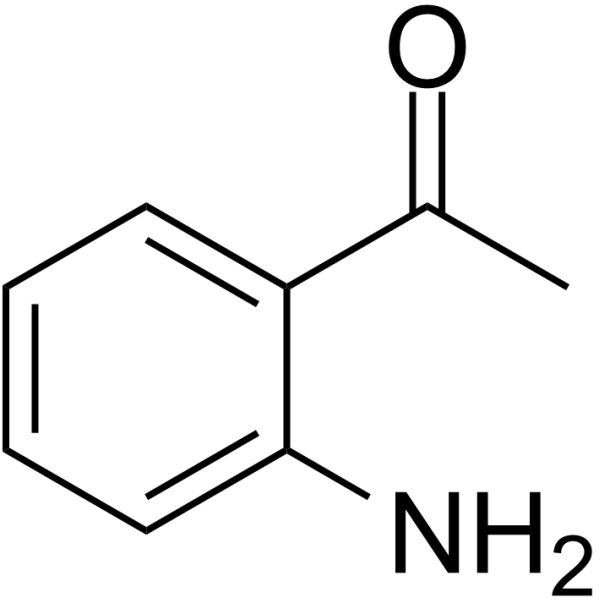
2'-Aminoacetophenone is an orally active inducer of apoptosis and respiratory biomarker. 2'-Aminoacetophenone can be used to detect Pseudomonas aeruginosa infections in the lungs of cystic fibrosis patients. 2'-Aminoacetophenone can inhibit the protein levels of LC3BII and p62 in macrophages infected with pqsA or mvfR and regulate autophagy. 2'-Aminoacetophenone can disrupt mitochondrial function by inducing oxidative stress and apoptosis signaling, leading to dysfunction in mouse skeletal muscle .
loading...
    loading...
Cat. No.: HY-I0501R
CAS No.: 551-93-9
Synonyms: o-aminoacetophenone (Standard)
2'-Aminoacetophenone (Standard) is the analytical standard of 2'-Aminoacetophenone. This product is intended for research and analytical applications. 2'-Aminoacetophenone is an orally active inducer of apoptosis and respiratory biomarker. 2'-Aminoacetophenone can be used to detect Pseudomonas aeruginosa infections in the lungs of cystic fibrosis patients. 2'-Aminoacetophenone can inhibit the protein levels of LC3BII and p62 in macrophages infected with pqsA or mvfR and regulate autophagy. 2'-Aminoacetophenone can disrupt mitochondrial function by inducing oxidative stress and apoptosis signaling, leading to dysfunction in mouse skeletal muscle .
loading...
    loading...
Cat. No.: HY-156083
CAS No.: 3020773-81-0
Research Areas:  

Cancer

CDK9 degrader-2 is a bifunctional degrader of ATTEC (Autophagy-Tethering Compound) that degrades the CDK9/cyclin T1 complex. CDK9 degrader-2 forms a ternary complex with CDK9 and LC3B, and achieves degradation through the autophagy-lysosome pathway, a process independent of the ubiquitin-proteasome system. CDK9 degrader-2 downregulates the expression of Mcl-1 and c-Myc proteins, induces apoptosis, and exhibits antitumor activity in in vivo MV4-11 xenograft models. CDK9 degrader-2 can be used for leukemia research .
loading...
    loading...
Cat. No.: HY-173119
SKLB-D18 is an orally active ERK1/2/ERK5 inhibitor, with an IC50 of 38.69 nM and a Kd of 126.9 nM against human ERK1, an IC50 of 40.12 nM and a Kd of 209.8 nM against ERK2, and an IC50 of 59.72 nM and a Kd of 468.2 nM against ERK5. SKLB-D18 inhibits cancer cell proliferation, induces G0/G1 cell cycle arrest and apoptosis. SKLB-D18 reduces the levels of p-ERK5, p-RSKp90, p-c-Myc and c-Myc, and upregulates the level of p-ERK1/2, thereby inhibiting the ERK1/2/5 pathway in cells. SKLB-D18 increases LC3B-II accumulation, and decreases the levels of p62, p-mTOR and p-p70S6K. SKLB-D18 elevates the levels of ROS, lipid peroxidation and free ferrous ions, reduces the levels of NCOA4 and GPX4, and induces ferritin autophagy-dependent ferroptosis in cancer cells. SKLB-D18 exhibits antitumor activity in a triple-negative breast cancer xenograft mouse model. SKLB-D18 can be used in research related to triple-negative breast cancer .
loading...
    loading...
Cat. No.: HY-123967
CAS No.: 324579-65-9
Purity:  99.91%
Research Areas:  

Inflammation/Immunology

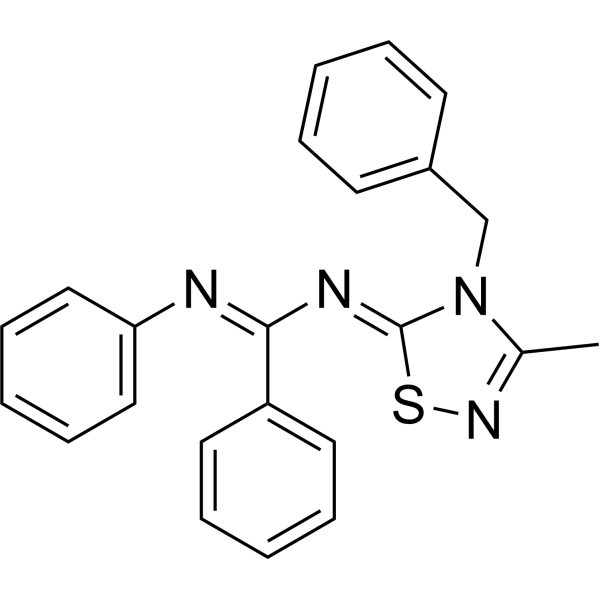
RNF5 inhibitor inh-02 is a potent inhibitor of E3 ubiquitin ligase RNF5/RMA1. RNF5 inhibitor inh-02 rescues F508del-CFTR function in F508del-CFTR-expressing immortalized cells (CFBE41o⁻, EC50 = 2.6 μM; FRT, EC 50 = 2.2 μM). RNF5 inhibitor inh-02 increases LC3IIB expression and autophagic vacuole number via reducing ATG4B ubiquitylation and promotes cell motility. RNF5 inhibitor inh-02 can be used for the study of cystic fibrosis .
loading...
    loading...
Cat. No.: HY-156795
CAS No.: 3020773-91-2
Research Areas:  

Cancer

CDK9/CycT1 degrader-1 is an autophagy-anchored bifunctional degrader that mediates the degradation of the CDK9/cyclin T1 protein complex. CDK9/CycT1 degrader-1 binds both CDK9 and LC3B simultaneously to form a ternary complex, achieving target protein degradation via the autophagy-lysosome pathway. CDK9/CycT1 degrader-1 downregulates the protein levels of Mcl‑1 and c‑Myc and induces apoptosis. PROTAC CDK9/CycT1 Degrader-2 is applicable to cancer-related research .
loading...
    loading...
Cat. No.: HY-B0824A
CAS No.: 439680-76-9
Target:  

Autophagy

Research Areas:  

Others

(1R)-cis-Bifenthrin is a widely used pyrethroid pesticide with activity that reduces motor coordination. (1R)-cis-Bifenthrin has a significant impact on the motor function of ParKin-/- mice, as shown by increased pole climbing time and wheel running Time decreases. Exposure of (1R)-cis-Bifenthrin resulted in a significant reduction in tyrosine hydroxylase-positive cell counts and protein expression. (1R)-cis-Bifenthrin caused increased expression of mitophagy-related proteins LC3B and p62. (1R)-cis-Bifenthrin has a lower binding energy with transferrin and transferrin receptor 2, showing stronger interactions. The biological effects of (1R)-cis-Bifenthrin show relationships with mitophagy and ferroptosis-related pathways .
loading...
    loading...
Cat. No.: HY-183273
CAS No.: 3087270-50-3
Research Areas:  

Cancer

BRD4/AKT-IN-1 is a BRD4/AKT inhibitor with BRD4 IC50 66.12 nM and AKT1 IC50 143.81 nM. BRD4/AKT-IN-1 blocks BRD4-mediated c-Myc transcriptional regulation, modulates AKT1 signaling, decouples AKT phosphorylation from pro-survival effectors. BRD4/AKT-IN-1 induces G0/G1 cell cycle arrest via downregulated phosphorylated RB, cyclin E1, CDK2. BRD4/AKT-IN-1 elevates LC3B levels to promote autophagy. BRD4/AKT-IN-1 promotes apoptosis in cancer cells. BRD4/AKT-IN-1 can be used for the research of metastatic castration-resistant prostate cancer .
loading...
    loading...
Cat. No.: HY-160229
Synonyms: R-1075 sodium
ssRNA40 sodium (R-1075 sodium) is a single-stranded RNA40 derived from HIV-1. ssRNA40 sodium activates the TLR7, TLR8, TLR2, RIG-I, MDA5, MyD88, Caspase-3, IRE1α, NLRP3 inflammasome and IRF7 signaling pathways. ssRNA40 sodium alters mRNA expression in neutrophils, induces pro-inflammatory cytokines, ROS, autophagy (autophagy), pyroptosis (pyroptosis), neuronal death, neurodegeneration, aggregate formation and NK cell activation. ssRNA40 sodium activates the expression of CD62L, CD11b, CD69, MX1, OAS1, ATG7, LC3B and XBP1 in immune cell and neuronal populations. ssRNA40 sodium causes cortical neuron loss and axonal damage in mice in a TLR7-dependent manner. ssRNA40 sodium can be used in research on HIV-1 infection, neurodegeneration, COVID-19 and HIV-associated neurological disorders [3] .
loading...
    loading...

