1443 Results for "

CDK

" in MedChemExpress (MCE) Product Catalog:
Products (1443)

1443 Results for "CDK" in MCE Product Catalog:

  • Categories Recommended:
    More
Cat. No.: HY-N11231
CAS No.: 7176-02-5
Fucoxanthinol, a carotenoid, is a deacetylated Fucoxanthin (HY-N2302) metabolite with oral activity, and inhibits rat pancreatic lipase with an IC50 of 764 nM. Fucoxanthinol reduces expression of Bcl-2, Bcl-xL, survivin, XIAP, cIAP2, cyclin D1, cyclin D2, cyclin E, CDK4, CDK6, β-catenin, JunD, PPARγ, and induces GADD45α expression. Fucoxanthinol activates caspase-3, caspase-8, caspase-9, Nrf2/Keap1/ARE pathway, and inhibits activation of Akt, NF-κB, AP-1, PDPK1, GSK3β phosphorylation. Fucoxanthinol induces apoptosis, G0/G1 cell cycle arrest, inhibits cancer cell viability, proliferation, migration, invasiveness, tumour growth, adipocyte differentiation, oxidative stress, neurotoxicity, triglyceride absorption, angiogenesis, and obesity-induced inflammation. Fucoxanthinol can be used for the research of osteosarcoma, leukemia, lymphoma, adult T-cell leukemia, prostate cancer, colon cancer, breast cancer, hypertriglyceridaemia, Alzheimer’s disease, Parkinson’s disease, obesity, insulin resistance, malignant melanoma, and type II diabetes .
loading...
    loading...
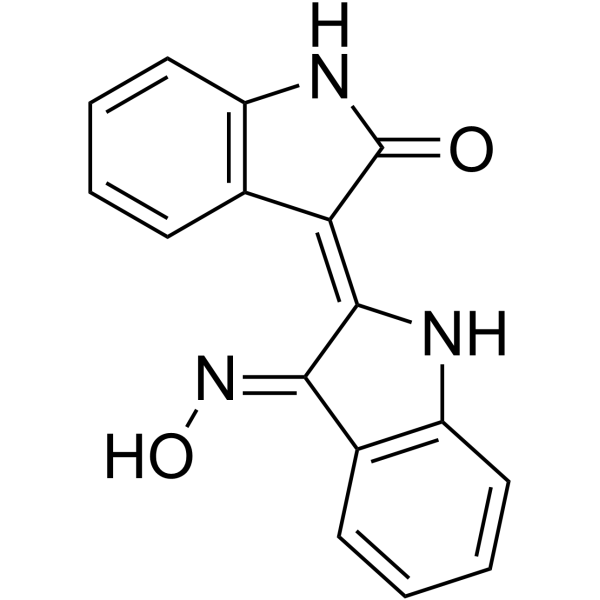
Cat. No.: HY-139254
CAS No.: 667463-82-3
Purity:  99.10%
Synonyms: IDR3O; I3O
Target:  

CDK GSK-3 JNK Wnt

Research Areas:  

Neurological Disease

Indirubin-3′-oxime (IDR3O), a synthetic derivative of indirubin, is a potent inhibitor of cyclin-dependent kinases (CDKs) and glycogen synthase kinase 3β (GSK3β). Indirubin-3′-oxime directly inhibits the activity of all three isoforms of JNK (JNK1, JNK2, and JNK3), with IC50s of 0.8 μM, 1.4 μM, and 1.0 μM, respectively. Indirubin-3′-oxime can enhance height growth via activation of Wnt/β-catenin signaling in chondrocytes .
loading...
    loading...
Cat. No.: HY-164399
CAS No.: 1799802-29-1
Target:  

HSP EGFR CDK Akt

Research Areas:  

Cancer

SST0116CL1 is a HSP90 inhibitor (IC50: 0.21 μM). SST0116CL1 binds to the ATP binding pocket of Hsp90, and interferes with Hsp90 chaperone function thus resulting in client protein (EGFR, CDK4 and AKT) degradation. SST0116CL1 induces degradation of Her2 in BT-474 cell (IC50: 0.2 μM). SST0116CL1 has antiproliferative activity and inhibits tumor growth. SST0116CL1 can be used for the study of leukemia, gastric and ovarian carcinoma .
loading...
    loading...
Cat. No.: HY-170992
Research Areas:  

Cancer

Autophagy agonist-1 (compound 22) is an Autophagy agonist. Autophagy agonist-1 exhibits significant anticancer activity against HepG2 cells and normal cells with IC50s of 8.8 μM and > 50 μM. Autophagy agonist-1 induces G1/S phase cell cycle arrest and inhibits CDK4 and CyclinD1 expression while upregulating P21. Autophagy agonist-1 promotes the accumulation of autophagosomes and the proteins LC3 and PINK1, enhancing autophagy and mitophagy in HepG2 cells .
loading...
    loading...
Cat. No.: HY-175538
Research Areas:  

Cancer

USP10-IN-4 is a potent ubiquitin-specific protease 10 (USP10) inhibitor with an IC50 of 10.87 μM and a Kd of 365 nM. USP10-IN-4 effectively inhibits USP10-mediated proteasomal degradation of downstream proteins YAP and p53, leading to the subsequent downregulation of CDK4 in the p53 signaling pathway. USP10-IN-4 promotes apoptosis in HCC cells and inhibits the onset and progression of liver cancer. USP10-IN-4 can used for the study of hepatocellular carcinoma (HCC) .
loading...
    loading...
Cat. No.: HY-183547
CAS No.: 3055032-68-0
Target:  

Wee1 CDK

Research Areas:  

Cancer

WEE1/PKMYT1-IN-4 is a selective WEE1/PKMYT1 inhibitor, with IC50 values of 0.185 μM and 2.2 nM for human WEE1 and PKMYT1, respectively. WEE1/PKMYT1-IN-4 inhibits phosphorylation of CDK1 at T14 and Y15, disrupting the G2/M cell cycle checkpoint. WEE1/PKMYT1-IN-4 can be used for the research of colorectal cancer and amplified breast cancer .
loading...
    loading...
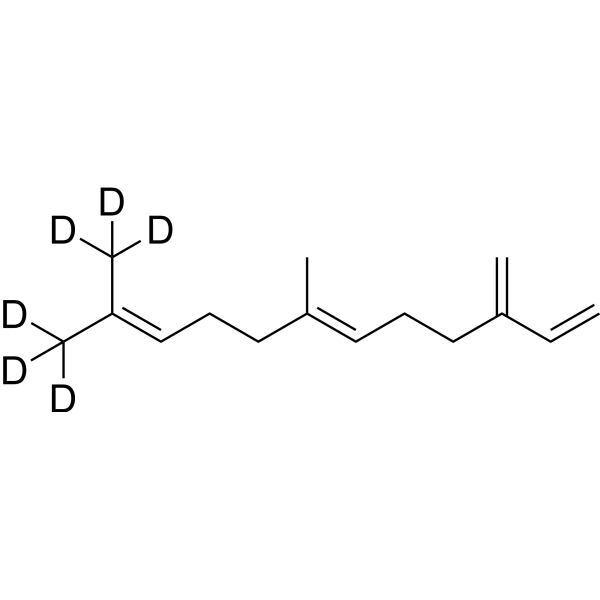
Cat. No.: HY-N7364S
CAS No.: 1092965-77-9
Synonyms: trans-β-Farnesene-d6
(E)-β-Farnesene-d6 is deuterated labeled (E)-β-Farnesene (HY-N7364). (E)-β-Farnesene (trans-β-Farnesene) is an aphid alarm pheromone, which can be found in Phlomis aurea Decne essential oil. (E)-β-Farnesene shows good binding score with a value of -30.64 kcal/mol to the CDK2 receptor. (E)-β-Farnesene also exhibits good affinity to odorant-binding protein 3 (OBP3). (E)-β-Farnesene can be used as a feeding stimulant for the sand fly Lutzomyia longipalpis .
loading...
    loading...
Cat. No.: HY-L188
2,134 compounds

Although brain cancer only accounts for 2% of all tumors, it has a poor prognosis, high mortality and high recurrence rate. Brain cancer can be divided into primary brain cancer and secondary brain cancer. According to the location of the cancer, brain cancer can also be divided into: brain glioma, pituitary adenoma, schwannoma, craniopharyngioma, meningioma and so on. Glioma is the most common primary brain tumor, accounting for about 1/3 of all brain tumors. At present, brain cancer lacks precision targeted therapeutic drugs, and there is still a great clinical demand that has not been met. With the continuous development of high-throughput screening technology, it may be able to help develop effective anti-brain cancer drugs by screening compounds targeting PKC, PD-1, c-Met, PARP, etc targets.

MCE designs a unique collection of 2,134 small molecules with definite or potential anti-brain cancer activity, which is an important tool for studying the pathological mechanism of brain cancer and developing drugs for brain cancer.

Cat. No.: HY-118447
CAS No.: 443913-79-9
Target:  

CDK Survivin

Research Areas:  

Cancer

RO0505124 is a selective CDK4 inhibitor with an IC50 of 20 nM. RO0505124 reversibly binds the ATP pocket of the kinase. RO0505124 induces G1 phase arrest in cancer cells via reduced retinoblastoma protein (Rb) phosphorylation, blocking S phase progression. RO0505124 exhibits anti-proliferative activity against various cancer cells. RO0505124 delays mitosis, induces aberrant mitosis with lagging chromosomes, driving mitotic slippage and formation of multinucleated or micronucleated cells. RO0505124 inhibits G2/M phase accumulation of survivin and borealin. RO0505124 can be used for the research of cancer .
loading...
    loading...
Cat. No.: HY-147125
CAS No.: 2640292-37-9
Target:  

HSP Akt CDK Raf Apoptosis

Research Areas:  

Cancer

DDO-6600 is a covalent Hsp90 inhibitor. DDO-6600 disrupts the interaction between Hsp90 and its co-chaperone protein Cdc37, thereby inducing the degradation of kinase client proteins (such as AKT, CDK4, c-Raf). DDO-6600 has inhibitory activity against various cancer cells. DDO-6600 inhibits the migration and invasion of HCT-116 cells, and induces cell cycle arrest and apoptosis. DDO-6600 significantly inhibits tumor growth in the HCT-116 xenograft tumor model. DDO-6600 can be used for research on colorectal cancer .
loading...
    loading...
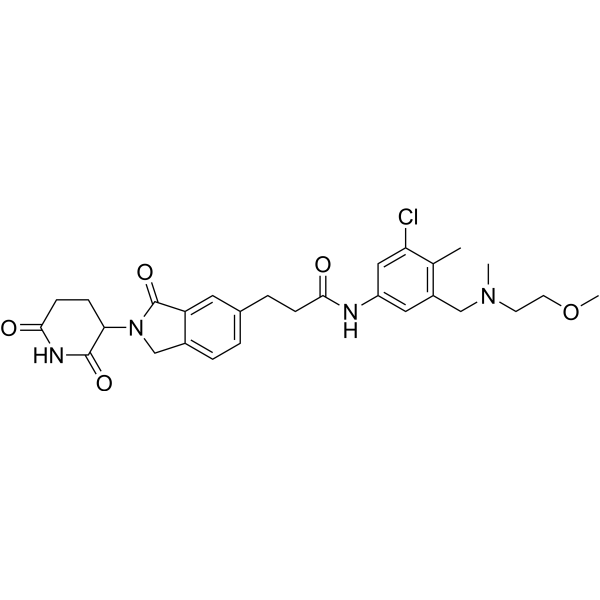
Cat. No.: HY-155552
CAS No.: 3037491-05-4
GSPT1 degrader-1 is a highly selective degrader targeting GSPT1. GSPT1 degrader-1 induces degradation via the ubiquitin-proteasome system. GSPT1 degrader-1 induces G0/G1 phase arrest, apoptosis (apoptosis) and inhibits proliferation in leukemia cells. GSPT1 degrader-1 reduces the levels of CDK6 and Cyclin B1, while increases the levels of activated caspase-3 and caspase-9 in leukemia cells. GSPT1 degrader-1 can be used in leukemia research .
loading...
    loading...
Cat. No.: HY-182447
CAS No.: 69095-83-6
Synonyms: DL111-IT
Target:  

CDK Apoptosis

Research Areas:  

Endocrinology Cancer

Contragestazol (DL111-IT) is a non-hormonal antifertility agent. Contragestazol reduces the expression of Cyclin D1 and CDK4, increases the expression of total retinoblastoma protein (pRb), and decreases the level of hyperphosphorylated pRb. Contragestazol induces G0/G1 phase cell cycle arrest. Contragestazol inhibits embryonic development by inducing luteal cell apoptosis and reducing intrauterine polyamine levels. Contragestazol exhibits antitumor activity against prostate cancer, S180 tumor and H22 tumor. Contragestazol shows extremely potent activity in terminating early pregnancy in animals .
loading...
    loading...
Cat. No.: HY-183787
Target:  

PI3K Akt mTOR Apoptosis CDK

Research Areas:  

Cancer

PI3Kα-IN-33 is an orally active and selective PI3Kα inhibitor with an IC50 of 9.9 nM. PI3Kα-IN-33 blocks the PI3K/Akt/mTOR signaling pathway. PI3Kα-IN-33 induces apoptosis and triggers G2/M-phase arrest via Cyclin B1 and CDK1 downregulation. PI3Kα-IN-33 can be used for the research of colorectal cancer .
loading...
    loading...
Cat. No.: HY-187562
Target:  

Wee1 CDK

Research Areas:  

Cancer

PKMYT1-IN-15 is an orally active PKMYT1 inhibitor with an IC50 of 6.02 nM. PKMYT1-IN-15 inhibits the phosphorylation of CDK1 at Thr14. As an antiproliferative agent, DNA damage inducer and antitumor agent, PKMYT1-IN-15 triggers replication-associated DNA damage and cell death in CCNE1-amplified cancer cells, and suppresses tumor growth in the OVCAR3 xenograft model. PKMYT1-IN-15 can be used for the research of CCNE1-amplified cancers (e.g., ovarian cancer, breast cancer) .
loading...
    loading...
Cat. No.: HY-W097625R
CAS No.: 26964-24-9
6-Methoxyflavone (Standard) is the analytical standard of 6-Methoxyflavone (HY-W097625). This product is intended for research and analytical applications. 6-Methoxyflavone is an orally active methoxyflavone. 6-Methoxyflavone suppresses neuroinflammation in microglia through the inhibition of TLR4/MyD88/p38 MAPK/NF-κB dependent pathways and the activation of HO-1/NQO-1 signaling. 6-Methoxyflavone induces S-phase arrest through the CCNA2/CDK2/p21CIP1 signaling pathway and activates the PERK/EIF2a/ATF4/CHOP pathway in HeLa cells. 6-Methoxyflavone acts as a Flumazenil (HY-B0009)-insensitive positive allosteric modulator at human recombinant α1β2γ2L and α2β2γ2L GABAα receptors. 6-Methoxyflavone inhibits NFAT Translocation into the nucleus and suppresses T cell activation. 6-Methoxyflavone partially restores chronic ethanol-induced behavioral deficits in mice. 6-Methoxyflavone antagonizes chronic constriction injury and diabetes associated neuropathic nociception expression. 6-Methoxyflavone can be used for the study of cancer, inflammation and neurological diseases .
loading...
    loading...
Cat. No.: HY-P81587
Synonyms: SKP2; FBXL1; S-phase kinase-associated protein 2; Cyclin-A/CDK2-associated protein p45; F-box protein Skp2; F-box/LRR-repeat protein 1; p45skp2

Host:  

Rabbit

Application:  

WB, IHC-P, ICC/IF, FC

Reactivity:  

Human, Mouse, Rat

loading...
    loading...
Cat. No.: HY-P85367
Synonyms: SKP2; FBXL1; S-phase kinase-associated protein 2; Cyclin-A/CDK2-associated protein p45; F-box protein Skp2; F-box/LRR-repeat protein 1; p45skp2

Host:  

Mouse

Application:  

WB, IHC-P

Reactivity:  

Mouse, Rat

loading...
    loading...
Cat. No.: HY-11010R
CAS No.: 345987-15-7
AS601245 (Standard) is the analytical standard of AS601245 (HY-11010). This product is intended for research and analytical applications. AS601245 is an orally active, selective, ATP competitive JNK (c-Jun NH2-terminal protein Kinase) inhibitor with IC50s of 150, 220, and 70 nM for three JNK human isoforms (hJNK1, hJNK2, and hJNK3), respectively. AS601245 exhibits 10- to 20-fold selectivity over c-src, CDK2, and c-Raf and more than 50- to 100-fold selectivity over a range of Ser/Thr- and Tyr-protein Kinases. Neuroprotective properties .
loading...
    loading...
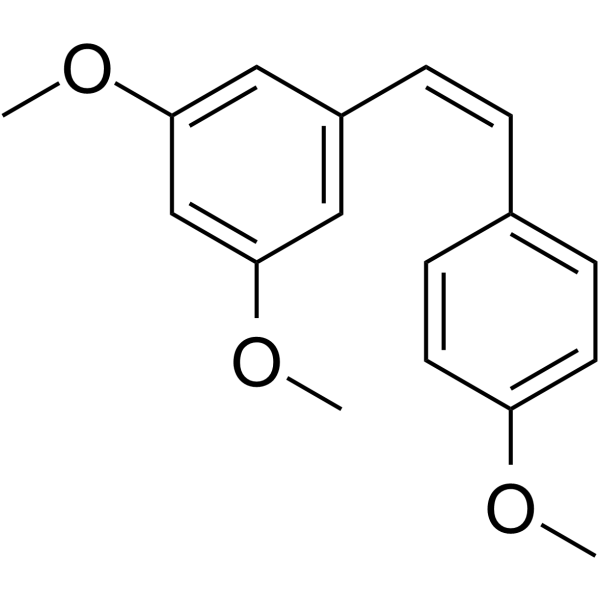
Cat. No.: HY-121989
CAS No.: 94608-23-8
Purity:  ≥98.0%
Synonyms: (Z)-3,5,4'-Trimethoxystilbene
cis-Trismethoxy resveratrol ((Z)-3,5,4'-Trimethoxystilbene) is an anti-HCV agent and Tubulin inhibitor, with an IC50 of 4 μM against Tubulin. cis-Trismethoxy resveratrol induces G2/M phase cell cycle arrest, reduces DCLK1, decreases CDK1 levels, blocks phosphorylation of Akt Ser 473, and induces the expression of p21 Cip1/Waf1. cis-Trismethoxy resveratrol exhibits anti-tumor and hepatoprotective activities. cis-Trismethoxy resveratrol can be used in studies related to colon adenocarcinoma, hepatocellular carcinoma, hepatitis C, and liver injury .
loading...
    loading...
Cat. No.: HY-145121R
CAS No.: 2871872-79-4
DS96432529 (Standard) is the analytical standard of DS96432529 (HY-145121). This product is intended for research and analytical applications. DS96432529 is an orally active CDK8 inhibitor with an IC50 of 33 nM. DS96432529 enhances ALPase activity, with an EC200 of 63 nM. DS96432529 inhibits TNF-α-induced activation of the RLR signaling pathway, activates mitophagy, accelerates mineralized nodule formation, and suppresses the proliferation of periodontal ligament stem cells. DS96432529 promotes bone formation, alleviates ligation-induced alveolar bone loss, and increases bone mineral density in ovariectomized animal models. DS96432529 can be used in studies related to periodontitis and osteoporosis .
loading...
    loading...

