190 Results for "

Sedative

" in MedChemExpress (MCE) Product Catalog:
Products (190)

190 Results for "Sedative" in MCE Product Catalog:

Cat. No.: HY-108204
CAS No.: 579494-66-9
Synonyms: THRX 918661
Target:  

GABA Receptor

Research Areas:  

Others

AZD 3043 (THRX 918661) is a positive allosteric modulator of GABA(A) receptors with sedative and hypnotic activity. AZD 3043 can enhance GABA(A) receptor-mediated chloride currents in vitro and produce hypnotic and electroencephalographic inhibitory effects in vivo. Due to its esterase-dependent metabolic pathway, it has a short duration of action and can be quickly cleared even after long-term infusion, which may have clinical application potential.
loading...
    loading...
Cat. No.: HY-W717221
CAS No.: 2714414-49-8
Medetomidine-d5 (d5-Major) is the deuterium labeled Medetomidine (HY-17034). Medetomidine is an orally active α2-adrenoceptor agonist (Ki: 1.08 nM). Medetomidine has sedative and analgesic effects. Medetomidine can cause peripheral vasoconstriction through the activation of α2 adrenoceptors on blood vessels .
loading...
    loading...
Cat. No.: HY-109074
CAS No.: 1164115-89-2
Purity:  ≥95.0%
Synonyms: SENS-111
Target:  

Histamine Receptor

Research Areas:  

Neurological Disease

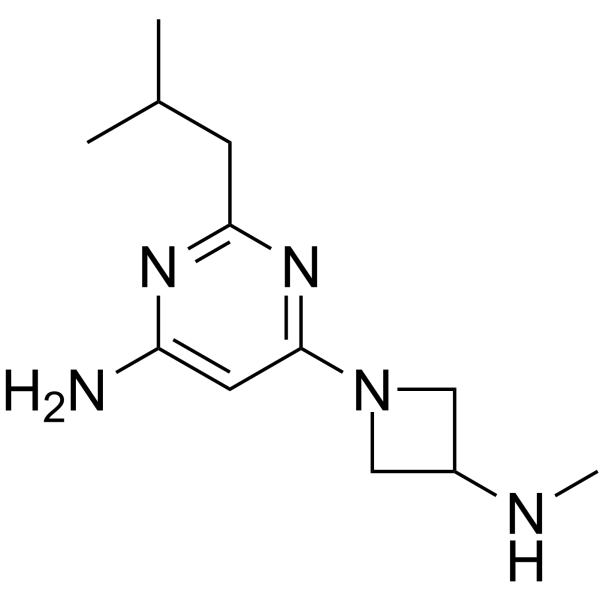
Seliforant (SENS-111) is a selective, orally active histamine H4 receptor antagonist. Seliforant inhibits the sustained activity of vestibular neurons and modulates vestibular-related responses. Seliforant reduces spontaneous nystagmus in rats with excitotoxic acute unilateral vestibular loss. Seliforant shows no sedative effect. Seliforant can be used in research related to acute unilateral vestibular loss, vestibular dysfunction, and acute unilateral vestibular lesions .
loading...
    loading...
Cat. No.: HY-19046
CAS No.: 103353-87-3
Synonyms: SC 48274 hydrochloride; BTG 1501 hydrochloride
Research Areas:  

Neurological Disease

AGN‑2979 hydrochloride (SC 48274 hydrochloride; BTG 1501 hydrochloride) is an orally active and selective tryptophan hydroxylase inhibitor with antidepressant-like and anxiolytic-like activities. AGN‑2979 hydrochloride inhibits stress-induced activation of tryptophan hydroxylase, thereby limiting the biosynthesis of 5-hydroxytryptamine in the brain. AGN-2979 hydrochloride possesses non-sedative anxiolytic and cognitive-enhancing properties. AGN-2979 hydrochloride is applicable to research related to depression and generalized anxiety disorder .
loading...
    loading...
Cat. No.: HY-19046A
CAS No.: 53873-21-5
Synonyms: SC 48274; BTG 1501
Research Areas:  

Neurological Disease

AGN‑2979 (SC 48274; BTG 1501) is an orally active and selective tryptophan hydroxylase inhibitor with antidepressant-like and anxiolytic-like activities. AGN‑2979 inhibits stress-induced activation of tryptophan hydroxylase, thereby limiting the biosynthesis of 5-hydroxytryptamine in the brain. AGN-2979 possesses non-sedative anxiolytic and cognitive-enhancing properties. AGN-2979 is applicable to research related to depression and generalized anxiety disorder .
loading...
    loading...
Cat. No.: HY-131997
CAS No.: 89112-85-6
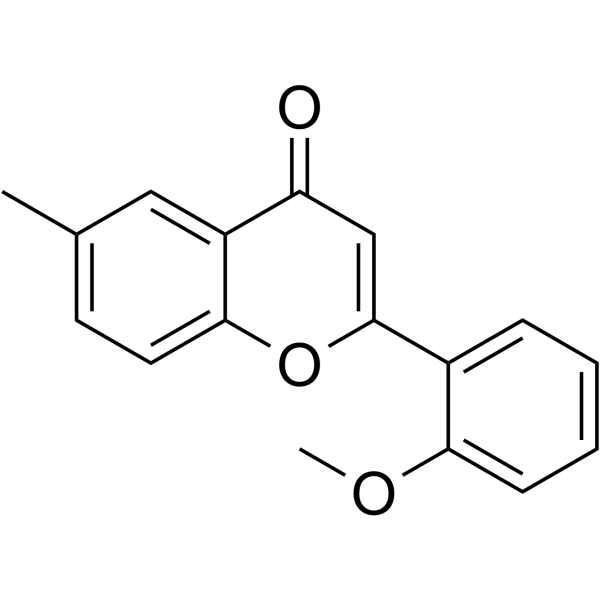
2'MeO6MF is a brain-penetrant positive allosteric modulator at α2β1γ2L and all α1-containing GABAA receptors. 2'MeO6MF also can directly activate α2β2/3 and α2β2/3γ2L GABAA receptors. 2'MeO6MF has anxiolytic and psychomotor stabilizing properties. 2'MeO6MF offers neuroprotection and improved functional recovery and dampens the stroke-induced inflammatory response .
loading...
    loading...
Cat. No.: HY-103496
CAS No.: 134516-99-7
Target:  

GABA Receptor

Research Areas:  

Neurological Disease

U-90042 is a gamma-aminobutyric acidA receptor agonist of α1, α3 and α6 subtypes with Ki values of 7.8 nM, 9.5 nM and 11.0 nM, respectively. U-90042 suppresses locomotor activity and impairs rotarod performance in mice. U-90042 produces sedation and ataxia and prolongs sleeping time in mice, rats and monkeys. U-90042 can be used as a sedative and hypnotic agent .
loading...
    loading...
Cat. No.: HY-111283
CAS No.: 85379-09-5
Synonyms: (+)-AJ 76; (1S,2R)-AJ 76
Target:  

Dopamine Receptor

Research Areas:  

Neurological Disease

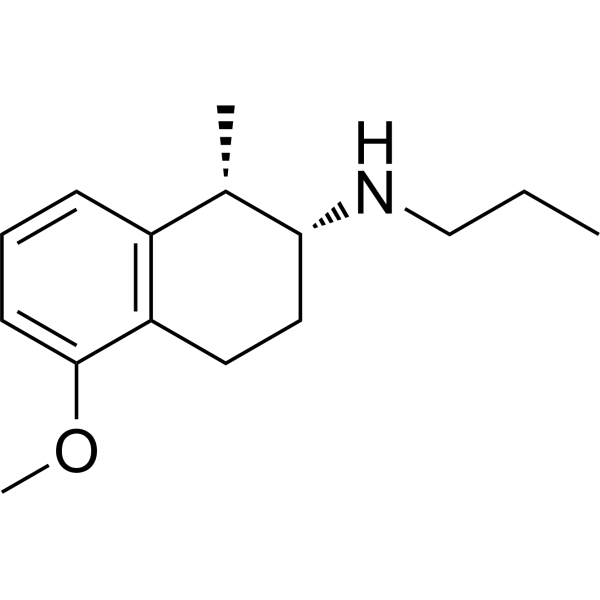
AJ-76 ((+)-AJ 76; (1S,2R)-AJ 76) is a dopamine autoreceptor antagonist. AJ-76 can increase the synthesis and turnover of dopamine in the rat brain, while having little effect on the synthesis and turnover of serotonin (5-HT) and norepinephrine. AJ-76 can also antagonize the sedative effects of low-dose apomorphine and has a weak antagonistic effect on postsynaptic dopamine receptor .
loading...
    loading...
Cat. No.: HY-165378
CAS No.: 25627-36-5
Synonyms: (E)-Dosulepin hydrochloride; (E)-Dothep hydrochloride
Target:  

Histamine Receptor

Research Areas:  

Neurological Disease

(E)-Dothiepin ((E)-Dosulepin;(E)-Dothep) hydrochloride is an antidepressant agent with sedative/anxiolytic activity. (E)-Dothiepin hydrochloride is an inhibitor preferring of noradrenaline uptake than serotonin uptake. (E)-Dothiepin hydrochloride facilitates noradrenergic neurotransmission via inhibiting the neuronal uptake. (E)-Dothiepin hydrochloride is also an antagonist of histamine H1-receptor without cardiotoxicity. (E)-Dothiepin hydrochloride exhibits significant analgesic activity in psychogenic facial pain,idiopathic fibromyalgia syndrome or rheumatoid arthritis .
loading...
    loading...
Cat. No.: HY-N18648
CAS No.: 84696-40-2
Piper methysticum extract extract is obtained from Piper methysticum, Piperaceae, and used to relax the body and mood, restore physical strength, and reduce pain. Piper methysticum extract is a more popular treatment of anxiety herb and is considered to be a non-addictive non-toxic herb. It has anti-anxiety, anti-fungal, anti-irritation, anti-inflammatory, soothing, sedative and other effects. It can effectively reduce the stimulation of skin neurons and inhibit the activation of NF-kB signal.
loading...
    loading...
Cat. No.: HY-W704752
CAS No.: 2469242-68-8
Z-Doxepin-d3 hydrochloride is the deuterium labeled 7-Hydroxychlorpromazine hydrochloride (HY-W704749). 7-Hydroxychlorpromazine hydrochloride is the active metabolite of Chlorpromazine (HY-12708). 7-Hydroxychlorpromazine hydrochloride can increase prolactin levels in rats. 7-Hydroxychlorpromazine hydrochloride can increase dopamine turnover and has a sedative effect. In addition, 7-Hydroxychlorpromazine hydrochloride can effectively inhibit amphetamine-induced stereotyped behavior in rats and is used in the study of psychosis .
loading...
    loading...
Cat. No.: HY-A0022
CAS No.: 24853-80-3
Synonyms: Azafen; Pipofezin hydrochloride; Pipofezine hydrochloride
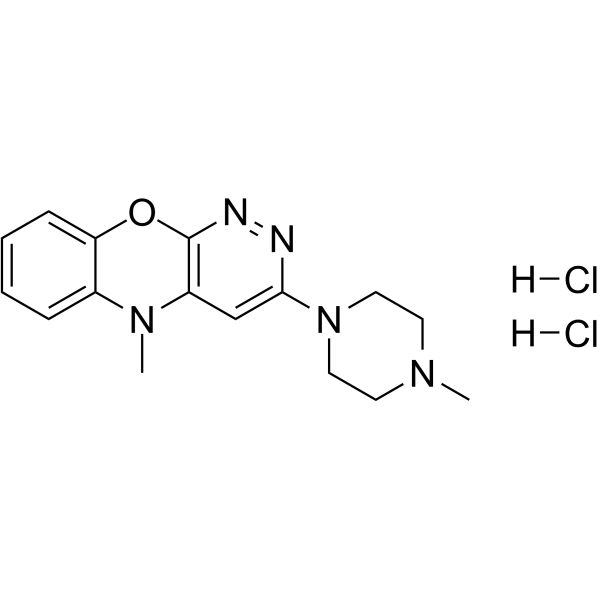
Azaphen (Azafen) is an orally active tricyclic antidepressant that inhibits the reuptake of serotonin and monoamines, regulates the 5-HT2c receptor, and exerts sedative, antidepressant and anxiolytic effects. Azaphen increases the bioavailability of serotonin in the synaptic cleft, does not block muscarinic receptors or affect monoamine oxidase activity, and binds to the human serotonin transporter via salt bridges, π-stacking, π-cation and hydrophobic interactions. Azaphen can be used in studies related to depression .
loading...
    loading...
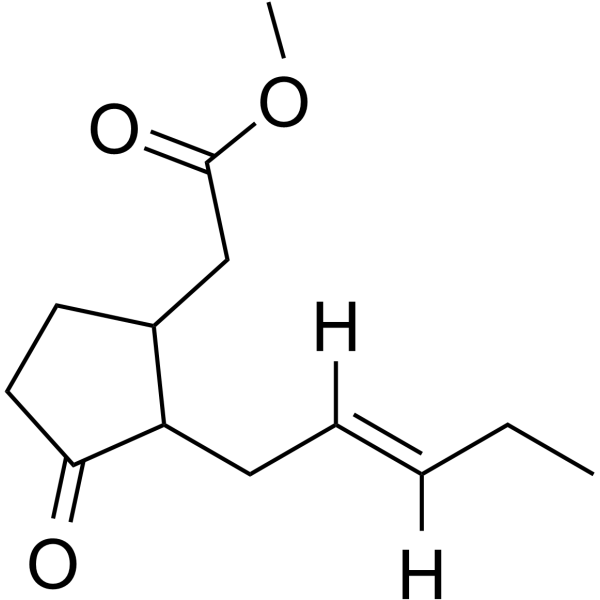
Cat. No.: HY-W013507
CAS No.: 39924-52-2
(rac)-Methyl jasmonate is the racemate of Methyl jasmonate (HY-135663). Methyl jasmonate is a phytohormone that regulates the defense response of plants under biotic and biotic stress through jasmonate signaling pathway. Methyl jasmonate inhibits the activation of NF-κB signaling pathway. Methyl jasmonate can promote the mitochondrial ROS production, but also scavenges free radicals and reduces the oxidative stress. Methyl jasmonate exhibits anti-inflammatory, antitumor, anticonvulsant, antinociceptive and sedative activities .
loading...
    loading...
Cat. No.: HY-L218
166 compounds

Animal drug (also veterinary drug) refers to a drug intended for use in the diagnosis, cure, mitigation, treatment, or prevention of disease in animals. Animal Drugs @ FDA is a searchable online database that includes most FDA-approved and conditionally approved animal drugs. The major classes of veterinary drugs include antibiotics, anthelmintics, coccidiostats, nonsteroidal anti-inflammatory drugs, sedatives, corticosteroids, beta-agonists, and anabolic hormones.

MCE has collected 166 FDA-approved veterinary drug compounds for use in scientific research.

Cat. No.: HY-B1693A
CAS No.: 1236-99-3
Synonyms: Methotrimeprazine hydrochloride
Levomepromazine (Methotrimeprazine) hydrochloride is an orally active antipsychotic compound and Ca 2+ release inducer. Levomepromazine inhibits SERCA pump and induces an increase in cytoplasmic Ca 2+ levels. Levomepromazine hydrochloride has antagonistic effects on a variety of neurotransmitter receptors, including dopamine, cholinergic, serotonin, and histamine receptors. Levomepromazine hydrochloride can induce adaptive ER stress and autophagy. In addition, Levomepromazine hydrochloride has antiviral, anti-inflammatory, neuroprotective and analgesic, sedative and anti-injurious activities. Levomepromazine hydrochloride can be used in the study psychiatric disorders and relieving nausea and vomiting .
loading...
    loading...
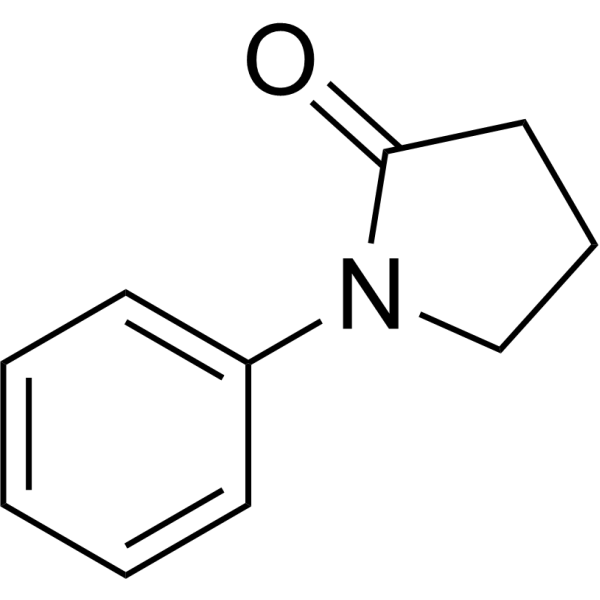
Cat. No.: HY-W103463
CAS No.: 4641-57-0
Synonyms: 1-Phenylpyrrolidin-2-one
Target:  

GABA Receptor

Research Areas:  

Neurological Disease

1-Phenyl-2-pyrrolidinone (1-Phenylpyrrolidin-2-one) is a phenyl analogue of GABA with sedative effect, decreasing the exploratory behavior of rats at 50-100 mg/kg (i.v.). 1-Phenyl-2-pyrrolidinone also has been proved to inhibit emotional reactions in dogs and cats. 1-Phenyl-2-pyrrolidinone induces decreases in the pressor reaction to emotional stress without accompanied by normalization of the function of baroreceptor reflexes .
loading...
    loading...
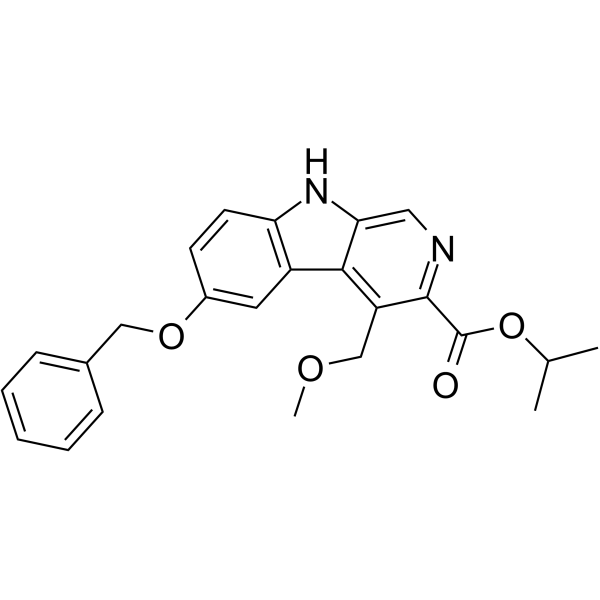
Cat. No.: HY-105115
CAS No.: 111841-85-1
Synonyms: ZK 112119
Target:  

GABA Receptor

Research Areas:  

Neurological Disease

Abecarnil (ZK 112119) is a ligand or a partial agonist for benzodiazepine (BZ) receptor. Abecarnil possesses anxiolytic and anticonvulsant properties. Abecarnil can act as a positive allosteric modulator of GABAA receptor. Abecarnil inhibits the binding of the BZ [3H]lormetazepam to rat cerebral cortex membranes, with an IC50 of 0.82 nM. Abecarnil can be used for epilepsy research .
loading...
    loading...
Cat. No.: HY-121102
CAS No.: 1257067-10-9
Carboetomidate is a pyrrole derivative analogous to the sedative-hypnotic drug Etomidate, which induces general anesthesia while avoiding the inhibition of adrenal steroid synthesis. Carboetomidate enhances GABAA receptor function via β2/β3 subunits, inhibits neuronal nicotinic acetylcholine receptors (nAChR) and 5-HT3A receptors, and increases plasma IL-10 levels during endotoxemia. Carboetomidate is applicable to research related to sepsis and sleep disorders .
loading...
    loading...
Cat. No.: HY-184901
CAS No.: 2789716-24-9
Target:  

GlyT

Research Areas:  

Neurological Disease

GLyT2-IN-3 is a potent GlyT2 inhibitor with a KD of 23.7 nM. GLyT2-IN-3 inhibits GlyT2-mediated glycine uptake with an IC50 of 19.4 nM. GLyT2-IN-3 shows broad-spectrum antinociceptive effects in three pain models, does not induce sedative effects or motor coordination impairment in mice, and exhibits favorable pharmacokinetic properties in rats with an oral bioavailability of 88.57%, GLyT2-IN-3 can be used for the study of neuropathic pain .
loading...
    loading...
Cat. No.: HY-I0135
CAS No.: 24886-52-0
Synonyms: Azafen free base; Pipofezin; Pipofezine
Research Areas:  

Neurological Disease

Azaphen free base (Azafen free base) is an orally active tricyclic antidepressant that inhibits the reuptake of serotonin and monoamines, regulates the 5-HT2c receptor, and exerts sedative, antidepressant and anxiolytic effects. Azaphen free base increases the bioavailability of serotonin in the synaptic cleft, does not block muscarinic receptors or affect monoamine oxidase activity, and binds to the human serotonin transporter via salt bridges, π-stacking, π-cation and hydrophobic interactions. Azaphen free base can be used in studies related to depression .
loading...
    loading...

