

255 Results for "

human KB

" in MedChemExpress (MCE) Product Catalog:
Products (255)

255 Results for "human KB" in MCE Product Catalog:

Cat. No.: HY-P702983
Purity:  ≥ 80%, as determined by reducing SDS-PAGE.
Synonyms: RELB; V-Rel Reticuloendotheliosis Viral Oncogene Homolog B, Nuclear Factor Of Kappa Light Polypeptide Gene Enhancer In B-Cells 3; RELB Proto-Oncogene, NF-KB Subunit; I-REL; Transcription Factor RelB; IMD53; REL-B; I-Rel; V-Rel Avian Reticuloendotheliosis
Species:  
Human
Source:  
Sf9 insect cells
loading...
    loading...
Cat. No.: HY-P704292
Purity:  ≥ 95%, as determined by Bis-Tris PAGE.
Synonyms: FOLR1; KB Cells FBP; Prev. FOLR; FBP; Ovarian Tumor-Associated Antigen MOv18; Folate Binding Protein; Adult Folate-Binding Protein; FRalpha; Folate Receptor 1 (Adult); NCFTD; Folate Receptor, Adult; FRα; Folate Receptor 1; FRA; Folate Receptor Alpha; FR-A
Species:  
Human
Source:  
HEK293
loading...
    loading...
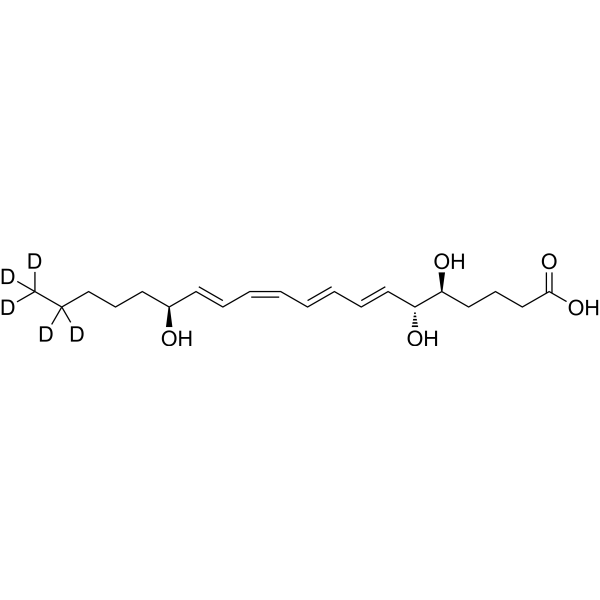
Cat. No.: HY-113509S
CAS No.: 1622429-53-1
Synonyms: LXA4-d5
Lipoxin A4-d5 is the deuterium labeled Lipoxin A4. Lipoxin A4 (LXA4), an endogenous lipoxygenase-derived eicosanoid mediator, has potent dual pro-resolving and anti-inflammatory properties . Lipoxin A4 inhibits proliferation and inflammatory cytokine/chemokine production of human epidermal keratinocytes (NHEKs) associated with the ERK1/2 and NF-kB pathways . Lipoxin A4 inhibits serum amyloid A (SAA)-mediated IL-8 release with an IC50 value of 25.74 nM .
loading...
    loading...
Cat. No.: HY-125322
CAS No.: 144860-69-5
Target:  

Bacterial

Research Areas:  

Infection

Reveromycin C is a polyketide originally isolated from Streptomyces that has antifungal activity against C. albicans (MICs=2.0 and >500 μg/mL at pH 3 and 7.4, respectively). Reveromycin C inhibits EGF-induced mitogenic activity in the Balb/MK mouse epidermal cell line. It also reverses the morphology of sarcoma-virus-transformed NRK rat kidney cells (EC50=1.58 μg/mL) and inhibits proliferation of KB cells and K562 human chronic myelogenous leukemia cells (IC50=2.0 μg/mL for both).
loading...
    loading...
Cat. No.: HY-182283
sEH-IN-23 is a soluble epoxide hydrolase inhibitor with a IC50 of 0.8 nM against human sEH and 0.7 nM against murine sEH. sEH-IN-23 inhibits inflammatory factor production mediated by NF-κB activation, reactive oxygen species (ROS) generation, and the release of pro-inflammatory cytokines IL-1β, IL-6 and TNF-α. sEH-IN-23 exhibits anti-inflammatory activity in acute lung injury models. sEH-IN-23 can be used for the research of acute lung injury .
loading...
    loading...
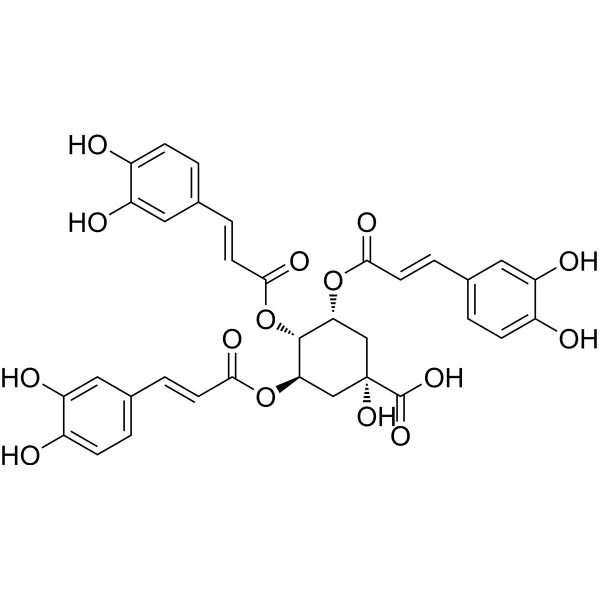
Cat. No.: HY-N6588
CAS No.: 86632-03-3
Synonyms: 3,4,5-triCQA
3,4,5-Tricaffeoylquinic acid (3,4,5-triCQA) inhibits tumor necrosis factor-α-stimulated production of inflammatory mediators in keratinocytes via suppression of Akt- and NF-κB-pathways. 3,4,5-Tricaffeoylquinic acid induces cell cycle arrest at G0/G1, actin cytoskeleton organization, chromatin remodeling, neuronal differentiation, and bone morphogenetic protein signaling in human neural stem cells. 3,4,5-Tricaffeoylquinic acid has the potential for the research of aging-associated diseases .
loading...
    loading...
Cat. No.: HY-P2358
CAS No.: 1001405-52-2
PSMα3 is an inhibitor of NF-κB p65 and p38 MAPK. PSMα3 forms membrane pores and binds to residues of human insulin B chain to inhibit insulin aggregation. PSMα3 forms α-type amyloid-like fibrils to exert cytotoxic effects, and acts as a functional amyloid virulence determinant of Staphylococcus aureus. PSMα3 is applicable to research related to spondyloarthritis, rheumatoid arthritis, insulin-derived amyloidosis, and Staphylococcus aureus infection .
loading...
    loading...
Cat. No.: HY-P991598
CAS No.: 2304625-87-2
Synonyms: MOR12743; MOR03207

Research Areas:  

Inflammation/Immunology

MOR-106 (MOR12743) is a humanized anti-IL-17C IgG1 monoclonal antibody. MOR-106 inhibits the NF-κB signaling pathway by specifically binding to IL-17C (IC50 = 59 pM for human IL-17C, IC50 = 55 pM for mouse IL-17C). MOR-106 can effectively inhibit skin inflammation and reduce related inflammatory factors in animal models of psoriasis and atopic dermatitis .
loading...
    loading...
Cat. No.: HY-N2259R
CAS No.: 19431-84-6
Synonyms: (+)-Curcumenol (Standard)
Curcumenol (Standard) ((+)-Curcumenol (Standard)) is the analytical standard of Curcumenol (HY-N2259). This product is intended for research and analytical applications. Curcumenol ((+)-Curcumenol) is a natural compound with oral efficacy, exhibiting an IC50 of 12.6 μM and a Ki of 10.8 μM against human CYP3A4. Curcumenol inhibits TNFα-induced phosphorylation/degradation of IκBα, phosphorylation/nuclear translocation of NF-κB p65, as well as the upregulation of MMP3, MMP9, MMP13, TRAF3, IL1RL1, TNFα and IL-1β. Curcumenol suppresses LPS-induced phosphorylation of Akt and p38 MAPK, as well as the production of pro-inflammatory mediators/proteins, and downregulates the SLC7A11/NF-κB/TGF-β pathway. Curcumenol binds to and inhibits the activation of Fyn and Lyn, blocks the function of downstream FcεRI signaling components, and reduces the release of allergic mediators/cytokines. Curcumenol upregulates the expression of KDM6B, and promotes chondrocyte proliferation and cartilage repair. Curcumenol induces ferroptosis and apoptosis, regulates the EMT process, and inhibits tumor growth and metastasis of triple-negative breast cancer. Curcumenol possesses anti-inflammatory, neuroprotective, antioxidant, antitumor, antiviral and hepatoprotective activities. Curcumenol can be used in research related to intervertebral disc degeneration, cancer, inflammation, central nervous system neurodegenerative diseases, allergic reactions and knee osteoarthritis .
loading...
    loading...
Cat. No.: HY-P72371
Purity:  ≥ 95%, as determined by reducing SDS-PAGE.
Synonyms: FOLR1; KB Cells FBP; Prev. FOLR; FBP; Ovarian Tumor-Associated Antigen MOv18; Folate Binding Protein; Adult Folate-Binding Protein; FRalpha; Folate Receptor 1 (Adult); NCFTD; Folate Receptor, Adult; FRα; Folate Receptor 1; FRA; Folate Receptor Alpha; FR-A
Species:  
Human
Source:  
HEK293
loading...
    loading...
Cat. No.: HY-P78445
Purity:  ≥ 95%, as determined by Bis-Tris PAGE.
Synonyms: FOLR1; KB Cells FBP; Prev. FOLR; FBP; Ovarian Tumor-Associated Antigen MOv18; Folate Binding Protein; Adult Folate-Binding Protein; FRalpha; Folate Receptor 1 (Adult); NCFTD; Folate Receptor, Adult; FRα; Folate Receptor 1; FRA; Folate Receptor Alpha; FR-A
Species:  
Human
Source:  
HEK293
loading...
    loading...
Cat. No.: HY-P701278
Purity:  ≥ 95%, as determined by reducing SDS-PAGE.
Synonyms: FOLR1; KB Cells FBP; Prev. FOLR; FBP; Ovarian Tumor-Associated Antigen MOv18; Folate Binding Protein; Adult Folate-Binding Protein; FRalpha; Folate Receptor 1 (Adult); NCFTD; Folate Receptor, Adult; FRα; Folate Receptor 1; FRA; Folate Receptor Alpha; FR-A
Species:  
Human
Source:  
HEK293
loading...
    loading...
Cat. No.: HY-P705023
Purity:  ≥ 95%, as determined by reducing SDS-PAGE.
Synonyms: FOLR1; KB Cells FBP; Prev. FOLR; FBP; Ovarian Tumor-Associated Antigen MOv18; Folate Binding Protein; Adult Folate-Binding Protein; FRalpha; Folate Receptor 1 (Adult); NCFTD; Folate Receptor, Adult; FRα; Folate Receptor 1; FRA; Folate Receptor Alpha; FR-A
Species:  
Human
Source:  
HEK293
loading...
    loading...
Cat. No.: HY-162538
CAS No.: 3053823-69-8
Target:  

PROTACs IRAK NF-κB

Research Areas:  

Inflammation/Immunology

LC-MI-3 is an orally active IRAK4 PROTAC degrader with an IC50 of 57.2 nM and high selectivity among human protein kinases. LC-MI-3 eliminates IRAK4 kinase and scaffolding functions via the cereblon E3 ubiquitin ligase and ubiquitin-proteasome systems. LC-MI-3 inhibits downstream nuclear factor-κB and IRAK4-mediated inflammatory signaling pathways. LC-MI-3 can be used for the research of acute lung injury, sepsis, psoriasis, and inflammatory diseases .
loading...
    loading...
Cat. No.: HY-176192
SMU-14a is a selective Toll-like receptor 3 (TLR3) inhibitor wirh an IC50 of 0.18 μM. SMU-14a reduces phosphorylation of p65, ERK, and TBK1 via NF-κB, MAPK, and IRF3 signaling pathways. SMU-14a inhibits IL-6 secretion in mouse peritoneal macrophages, downregulates TNF-α in human peripheral blood monocytes and decreases serum alanine aminotransferase (ALT) and aspartate aminotransferase (AST) levels. SMU-14a can be used for the research of acute hepatitis .
loading...
    loading...
Cat. No.: HY-P2358A
Target:  

NF-κB p38 MAPK

Research Areas:  

Infection Inflammation/Immunology

PSMα3 TFA is an inhibitor of NF-κB p65 and p38 MAPK. PSMα3 TFA forms membrane pores and binds to residues of human insulin B chain to inhibit insulin aggregation. PSMα3 TFA forms α-type amyloid-like fibrils to exert cytotoxic effects, and acts as a functional amyloid virulence determinant of Staphylococcus aureus. PSMα3 TFA is applicable to research related to spondyloarthritis, rheumatoid arthritis, insulin-derived amyloidosis, and Staphylococcus aureus infection .
loading...
    loading...
Cat. No.: HY-P991402

Target:  

TNF Receptor NF-κB

Research Areas:  

Cancer

BI-1910 is an agonistic human IgG2 monoclonal antibody targeting TNFR2, which selectively binds to human TNFR2 without inhibiting TNF-α binding. As an endogenous agonist, BI-1910 activates TNFR2 and mediates the activation of the NF-κB signaling pathway. Its agonistic activity is independent of FcγR or cross-linking; it can directly costimulate T cells and NK cells, induce T cell proliferation, and activate tumor-specific CD8+ T cells. BI-1910 exhibits antitumor activity in vivo, and shows an additive antitumor effect when combined with anti-PD-1 (HY-P9902). It can be used in research related to advanced/metastatic non-small cell lung cancer and hepatocellular carcinoma. Recommended isotype control: Human IgG2 lambda, Isotype Control (HY-P991206) .
loading...
    loading...
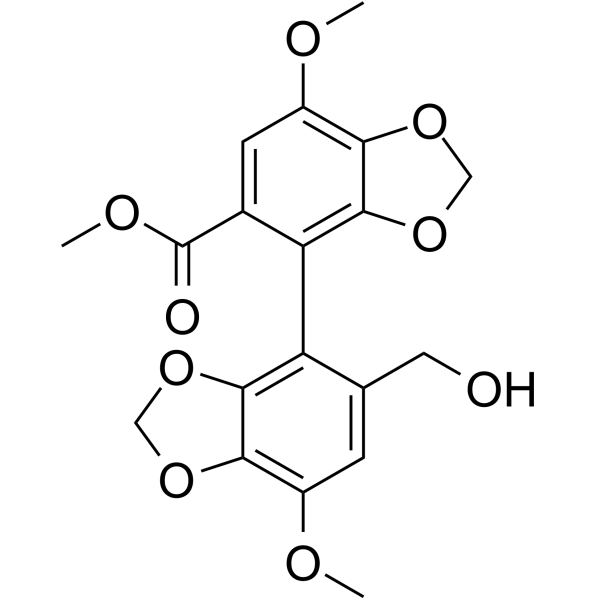
Cat. No.: HY-B0766
CAS No.: 118159-48-1
Synonyms: SY801
Bicyclol (SY801) is an orally active derivative of the traditional Chinese medicine Schisandra chinensis, which has antiviral, anti-inflammatory, immunomodulatory, antioxidant, anti-steatosis, anti-fibrotic and anti-tumor activities. Bicyclol regulates the expression of heat shock proteins and plays an anti-apoptosis role in hepatocytes. Bicyclol reduces the activation of NF-κB and the levels of inflammatory factors in hepatocytes infected with hepatitis C virus (HCV) by inhibiting the activation of the ROS-MAPK-NF-κB pathway, and prevents ferroptosis in acute liver injury. Bicyclol can change the expression of Mdr-1, GSH/GST and Bcl-2, increase the intracellular concentration of anticancer drugs, and sensitize drug-resistant cells to anticancer drugs. Bicyclol inhibits the proliferation of human malignant hepatoma cells by regulating the PI3K/AKT pathway and the Ras/Raf/MEK/ERK pathway. Bicyclol can be used in the study of chronic hepatitis, acute liver injury, nonalcoholic fatty liver disease, liver fibrosis and hepatocellular carcinoma .
loading...
    loading...
Cat. No.: HY-179047
CAS No.: 3040320-18-8
SMU-L11-R is a selective TLR7 agonist with an EC50 of 0.012 μM for human TLR7. SMU-L11-R specifically activates TLR7, recruits  MyD88, and triggers MAPK/NF-κB pathways, leading to TNF-α/IL-1β/IL-6 secretion in both mouse and human peripheral blood mononuclear cells. SMU-L11-R promotes M1-like macrophage polarization. SMU-L11-R exhibits excellent synergistic anti-tumor effects with PD-L1 inhibitors by upregulating CD8 +T cells. SMU-L11-R shows potential in colorectal cancer studies .
loading...
    loading...
Cat. No.: HY-W726101
CAS No.: 5996-06-5
Synonyms: O,O-Dimethylisoboldine hydrobromide; S-(+)-Glaucine hydrobromide; NSC 34396 hydrobromide
Glaucine hydrobromide (O,O-Dimethylisoboldine hydrobromide; S-(+)-Glaucine hydrobromide; NSC 34396 hydrobromide) is an alkaloid extracted from Glaucium flavum that possesses various activities, including cough relief, bronchodilation, anti-inflammatory effects, analgesia, antipyretic properties, and anticancer effects. Glaucine hydrobromide acts as a selective and orally active inhibitor of phosphodiesterase 4 (PDE4), with a Ki of 3.4 µM in human bronchial tissues and polymorphonuclear leukocytes. Glaucine hydrobromide induces relaxation of human isolated bronchi by antagonizing calcium channels. Additionally, Glaucine hydrobromide inhibits the activation of NF-κB, leading to a reduction in the expression of the MMP-9 gene, thereby suppressing the migration and invasion of breast cancer cells. Therefore, Glaucine hydrobromide holds potential for research in asthma and breast cancer .
loading...
    loading...

