2087 Results for "

Probe L

" in MedChemExpress (MCE) Product Catalog:
Products (2087)

2087 Results for "Probe L" in MCE Product Catalog:

Cat. No.: HY-D2907
CAS No.: 3091879-39-6
Synonyms: DBCO-Cy5; Cyanine5 dibenzocyclooctyne
Cyanine5 DBCO (DBCO-Cy5) is a low-toxicity azide reactive probe (NIR fluorescent dye), for imaging azide-labeled biomolecules via a copper-free "click-through" reaction. Cyanine5 DBCO has no apparent cytotoxicity or animal toxicity and shows no damage to the physiological functions of cells other than the target cells (azide-labeled cells). Cyanine5 DBCO can be used to label and track cells in vitro and in vivo (Ex=635 nm, Em=650-700 nm) .
loading...
    loading...
Cat. No.: HY-D3007
LD-CK is a fluorescent probe based on a coumarin-chromone structure, specifically designed to visualize lipid droplet polarity changes and endowed with multimodal imaging capability. LD-CK contains a high-performance lipophilic coumarin moiety, which enables it to specifically target lipid droplets upon cellular entry while minimizing background fluorescence to the greatest extent. LD-CK has an excitation wavelength (Ex) of 488 nm and an emission wavelength (Em) of 540 nm (in low-polarity environments such as toluene) or 640 nm (in high-polarity environments such as glycerol), with its emission peak undergoing a redshift as solvent polarity increases .
loading...
    loading...
Cat. No.: HY-D3122
Target:  

Fluorescent Dye

Research Areas:  

Others

Mem-RhoNox is a fluorescent probe used to detect labile Fe (II) on the plasma membrane surface and inside endosomes during iron uptake in live cells. Mem-RhoNox can anchor to the extracellular surface of the plasma membrane; upon contact with Fe (II), its N-oxide group undergoes a deoxygenation reaction, converting weakly fluorescent Mem-RhoNox into strongly fluorescent Mem-Rhodamine. During transferrin-mediated endocytosis, Mem-RhoNox enters endosomes together with the transferrin-transferrin receptor complex, and reacts with Fe (II) released by transferrin to enable detection of endosomal Fe (II) .
loading...
    loading...
Cat. No.: HY-D3160
Target:  

Fluorescent Dye

Research Areas:  

Others

Golgi-hNR is a cell membrane-permeable Golgi-targeted fluorescent probe containing a sulfonamide group. Golgi-hNR selectively accumulates in the Golgi apparatus of living cells, enabling real-time tracking and homeostasis assessment of reversible pH changes in the Golgi apparatus. Golgi-hNR exhibits a pH-dependent "off-on" fluorescence response mechanism within the pH 7.4-3.0 range, and its red fluorescence intensity decreases with increasing pH. The Ex/Em of Golgi-hNR is 560/664 nm and 580/664 nm, with the maximum emission peak located at 615 nm .
loading...
    loading...
Cat. No.: HY-D3163
Target:  

Fluorescent Dye

Research Areas:  

Others

Endo-pH is a cell-permeable, pH-responsive fluorescent probe based on BODIPY, with a pKa of 5.08. When pH decreases from 7.32 to 4.97, Endo-pH undergoes protonation under acidic conditions, resulting in a 79-fold increase in fluorescence intensity at 786 nm. The detection wavelengths of its protonated form are Ex/Em=688/786 nm, while the absorption wavelength of its non-protonated form is 745 nm. Endo-pH can be used for staining late endosomes in live cells and determining the fusion time of late endosomes and lysosomes .
loading...
    loading...
Cat. No.: HY-D3251
LCP is a polar-responsive fluorescent probe for the cellular microenvironment. LCP responds to polarity changes in the cellular microenvironment via fluorescence resonance energy transfer, emitting blue fluorescence in low-polarity environments (Ex/Em = 420 nm/550 nm) and red fluorescence (Ex/Em = 500 nm/662 nm) in high-polarity environments. LCP enables dual-color visualization of dynamic changes in lysosomes and cytoplasmic membranes during cell apoptosis, and monitors cell viability through localization and emission color changes. LCP can be used in cancer research .
loading...
    loading...
Cat. No.: HY-D3437
Target:  

Fluorescent Dye

Research Areas:  

Others

LRhod-PM is a photo-activated plasma membrane fluorescent probe based on a self-initiating photo-oxidation cascade mechanism. LRhod-PM, a non-fluorescent reduced rhodamine, is oxidized to the fluorescent form Rhod-PM upon visible light irradiation. LRhod-PM has maximum excitation and emission wavelengths of 560 nm and 585 nm, respectively. LRhod-PM enables wash-free labeling of the plasma membrane of living cells, including fine structures such as filopodia and tunneling nanotubes. LRhod-PM can be used in studies related to single-molecule localization super-resolution imaging of living cells .
loading...
    loading...
Cat. No.: HY-DY1043
CAS No.: 730931-46-1
ER-Tracker dye is a derivative of BODIPY series dyes coupled with Glibenclamide (HY-15206) , highly selective binding to the endoplasmic reticulum, non-toxic to cells at low concentrations, this type of dye is an environmentally sensitive probe, and formaldehyde treatment can still retain part of the fluorescence, with high fluorescence life, good extinction coefficient and other characteristics. Glibenclamide is an atp-dependent K + channel blocker (Kir6, KATP) and CFTR Cl-channel blocker that binds in the endoplasmic reticulum. ER-Tracker is not suitable for staining cells after fixation .
Solvent and concentration: DMSO: 1 mM
loading...
    loading...
Cat. No.: HY-P11253
Target:  

VISTA

Research Areas:  

Inflammation/Immunology

DOTA-Bn-CA-170 is a molecular probe targeting the VISTA protein, with a Kd value of 0.124 nM. DOTA-Bn-CA-170 is formed by covalently linking the p-SCN-Bn-DOTA ligand with CA-170 (HY-101093). DOTA-Bn-CA-170 labeled with [ 68Ga]Ga successfully achieves specific and high-contrast PET imaging of VISTA expression in various tumor-bearing mouse models. DOTA-Bn-CA-170 can be used for the study of VISTA-targeted immunotherapy .
loading...
    loading...
Cat. No.: HY-P11618
Target:  

Glycoprotein VI

Research Areas:  

Cancer

10P3Me is a Glypican-3 (GPC3)-targeting probe with a Ka of 93.8 nM for the human target. 10P3Me exhibits high binding affinity to GPC3, targets GPC3-positive cells, and serves as an agent for PET imaging. 10P3Me selectively accumulates in GPC3-positive tumor tissues, including subcutaneous xenograft models and orthotopic HepG2-LUC liver cancer models, to achieve precise localization of lesions .
loading...
    loading...
Cat. No.: HY-P11934
Research Areas:  

Others

TPE-GGH is a water-soluble aggregation-induced emission (AIE)-active fluorescent probe composed of tetraphenylethylene (TPE)-modified tripeptide (Gly-Gly-His-NH2). TPE-GGH detects Cu 2+ with high selectivity and sensitivity, with a limit of detection of 28.5 nM. TPE-GGH exhibits low toxicity and favorable membrane permeability, and can be used for Cu 2+ imaging in living cells (LLC) and zebrafish, as well as for Cu 2+ detection in environmental water samples and semi-quantitative analysis via portable test strips/smartphone RGB technology .
loading...
    loading...
Cat. No.: HY-W010706
CAS No.: 67219-55-0
Synonyms: 5'-O-DMT-N4-Bz-dC
Research Areas:  

Others

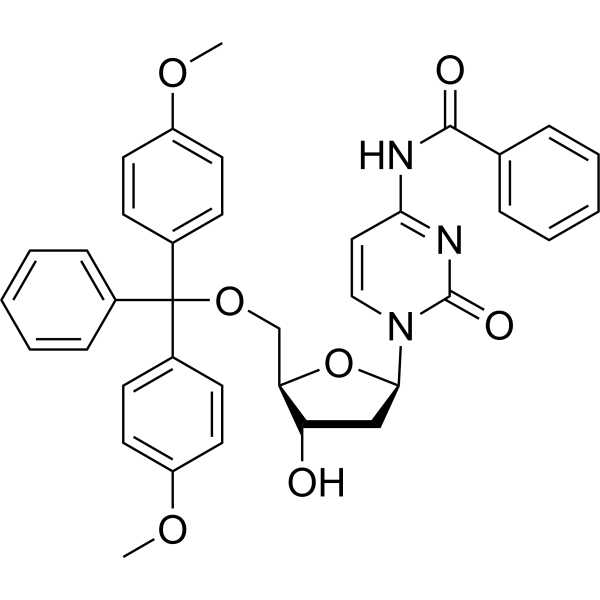
N4-Benzoyl-5'-O-(4,4'-dimethoxytrityl)-2'-deoxycytidine (5'-O-DMT-N4-Bz-dC) can be used for synthesis oligodeoxynucleotides containing a 3'-S-phosphorothiolate (3'-PS) linkage. N4-Benzoyl-5'-O-(4,4'-dimethoxytrityl)-2'-deoxycytidine is an useful tool for probing enzyme-catalyzed cleavage processes in DNA .
loading...
    loading...
Cat. No.: HY-W1119950
CAS No.: 1644649-86-4
3'-NH-Tr-2',3'-DMF-ddA-5'-CE-Phosphoramidite is an adenine nucleotide monomer precursor used in solid-phase synthesis of oligonucleotides, particularly modified oligonucleotides, such as those with DNA chain end modifications. 3'-NH-Tr-2',3'-DMF-ddA-5'-CE-Phosphoramidite, with trityl (Tr), cyanoethyl (CE), and dimethylformamidine (DMF) protecting groups, is a ddNTP adenosine nucleoside useful in applications such as solid-phase oligonucleotide synthesis, probe design, and chain-termination sequencing .
loading...
    loading...
Cat. No.: HY-W338446
CAS No.: 22191-97-5
Target:  

Tau Protein

Research Areas:  

Neurological Disease

BF-170 is a selective tau fibril binding agent with an EC50 of 221 nM. It exhibits good blood-brain barrier permeability, and after intravenous injection in mice, the concentration in brain tissue reaches 9.1% ID/g within 2 minutes (with a brain clearance rate of 0.25% ID/g after 30 minutes). BF-170 can be used as a probe for tau protein pathology imaging in Alzheimer's disease (AD). It plays an important role in early-stage AD research and holds potential for imaging studies of tau-related neurodegenerative diseases .
loading...
    loading...
Cat. No.: HY-W750220
Target:  

β-glucuronidase

Research Areas:  

Metabolic Disease

4-Methylumbelliferyl β-D-glucuronide dihydrate is a fluorescent substrate and fluorescent probe used to detect the activity of β-D-glucuronidase. 4-Methylumbelliferyl β-D-glucuronide dihydrate also serves as a surrogate for assessing fecal coliform contamination in aquatic environments. 4-Methylumbelliferyl β-D-glucuronide dihydrate releases 4-methylumbelliferone via enzyme-mediated cleavage of the β-glycosidic bond; the latter emits fluorescence under alkaline conditions, with an excitation wavelength of 365-366 nm and an emission wavelength of 444 nm .
loading...
    loading...
Cat. No.: HY-D3105
Target:  

Fluorescent Dye

Research Areas:  

Others

DCA is a Fluorescent probe for visualization of phase behavior in ER membranes. DCA is an ER-targeting, polarity-responsive NIR ratiometric probe, with its p-toluenesulfonamide group responsible for ER localization; its sensitivity to polarity relies on its donor-π-acceptor (D-π-A) structure, where aniline acts as the donor and dicyanomethylene acts as the acceptor, driving an intramolecular charge transfer (ICT) process upon excitation. In environments with low polarity, such as the closely packed, low water content ERₒ phase of ER membranes, DCA emits at a shorter wavelength, while in high polarity environments like the loosely packed, higher water content ERd phase, ICT leads to a red-shifted emission, allowing discrimination of the two phases via dual NIR emission colors and ratiometric imaging. Ex/Em = 488/570–620 nm and 488/665–735 nm; additional excitation/emission pairs include Ex/Em = 488/631 nm in low polarity 1,4-dioxane and Ex/Em = 488/677 nm in 1,4-dioxane with 30% water, the higher polarity condition. It shows a large Stokes shift of ~170 nm, and pH, viscosity, and biologically relevant species including Cys, GSH, H₂O₂, and metal ions do not exert marked interference on its fluorescence spectra[1].
loading...
    loading...
Cat. No.: HY-100335R
CAS No.: 1022899-36-0
Research Areas:  

Cancer

PCI-33380 (Standard) is the analytical standard of PCI-33380 (HY-100335). This product is intended for research and analytical applications. PCI-33380 is a fluorescent probe ( (Ex=532 nm, Em=555 nm). PCI-33380 consists of a (BTK) inhibitor PCI-32765 (HY-10997) attaching with a Bodipy-FL fluorophore via a piperazine linker. PCI-33380 binds predominantly to Btk in B cell lysates with cell permeable activity. PCI-33380 can be used for imaging live cancer cells such as non-Hodgkin lymphoma research
loading...
    loading...
Cat. No.: HY-101189R
CAS No.: 1046447-90-8
JNJ-39758979 (Standard) is the analytical standard of JNJ-39758979 (HY-101189). This product is intended for research and analytical applications. JNJ-39758979, a chemical probe, is a selective, orally active, and high-affinity histamine H4 receptor antagonist with Kis of 12.5, 5.3, and 25 nM for human, mouse, and monkey histamine H4 receptor, respectively. JNJ-39758979 functionally antagonizes histamine-induced cAMP inhibition with a pA2 of 7.9 in transfected cells. JNJ-39758979 shows good anti-inflammatory and antipruritic activity .
loading...
    loading...
Cat. No.: HY-103609R
CAS No.: 129-00-0
Synonyms: Benzo[def]phenanthrene (Standard)
Pyrene (Standard) is the analytical standard of Pyrene. This product is intended for research and analytical applications. Pyrene is a polycyclic aromatic hydrocarbon (PAH) composed of four fused benzene rings. It has a distinct aromatic odor, produced by incomplete combustion of organic matter. Pyrene exhibits strong fluorescence, emitting in the blue region of the spectrum, making it useful as a probe for studying molecular interactions in solution and on surfaces. Pyrene is also used as a model compound for the study of PAHs in various environments and biological systems because of its ubiquity in these environments. However, long-term exposure to pyrene has been associated with potential health risks, including carcinogenicity and mutagenicity.
loading...
    loading...
Cat. No.: HY-112083R
CAS No.: 2377576-35-5
Research Areas:  

Cancer

BAY-3827 (Standard) is the analytical standard of BAY-3827 (HY-112083). This product is intended for research and analytical applications. BAY-3827, a chemical probe, is a potent and selective AMPK inhibitor with IC50 values of 1.4 nM at low (10 μM ATP concentration) and 15 nM at high (2 mM ATP concentration). BAY-3827 shows over 500-fold selectivity for most of the 331 Kinases. BAY-3827 prevents phosphorylation of acetyl-CoA carboxylase 1 and shows strongest anti-proliferative activity in androgen-dependent prostate cancer cell lines .
loading...
    loading...

