

2087 Results for "

Probe L

" in MedChemExpress (MCE) Product Catalog:
Products (2087)

2087 Results for "Probe L" in MCE Product Catalog:

Cat. No.: HY-149203
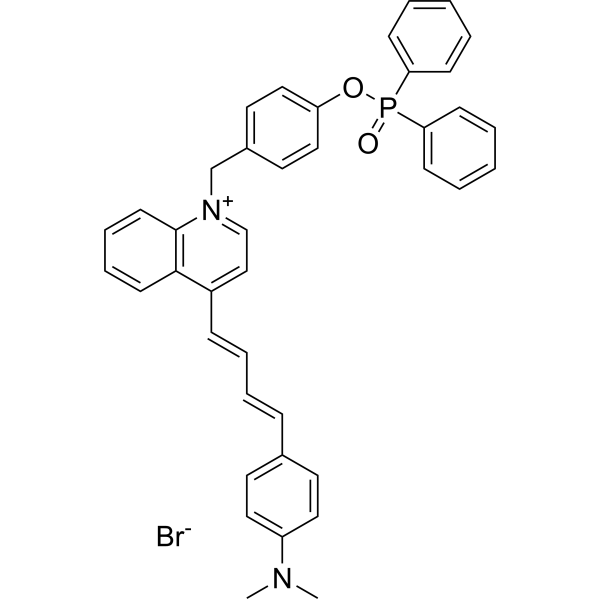
MQA-P is a multifunctional near-infrared (NIR) fluorescent probe for simultaneously detecting ONOO -, viscosity, and polarity within mitochondria. MQA-P exhibits a remarkable turn-on response to ONOO - (λem=645 nm) and is highly sensitive to viscosity/polarity in the NIR channel with λem>704 nm. MQA-P exhibits excited-state intramolecular charge transfer (ESICT) feature that is highly polarity-sensitive by engineering N,N-dimethylamino as the electron donor and a quinoline cationic unit as the electron acceptor. MQA-P is used for ferroptosis or cancer diagnosis in vitro and in vivo via dual-channel images .
loading...
    loading...
Cat. No.: HY-152901
CAS No.: 2106868-12-4
Target:  

Fluorescent Dye

Research Areas:  

Others

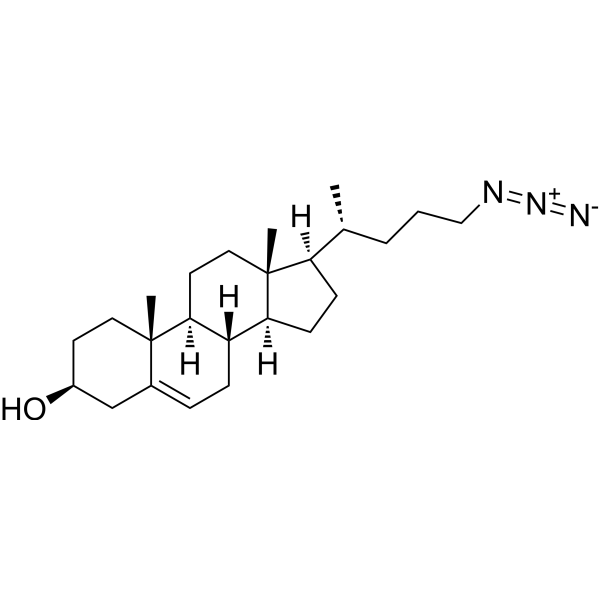
Chol-N3 is a bioorthogonal-based chol probe. Chol-N3 can combine with super-resolution fluorescence microscopy (SRM), providing direct visualization of nanoscale lipid heterogeneity in the cell surface of resting living cells . Chol-N3 is a click chemistry reagent, it contains an Azide group and can undergo copper-catalyzed azide-alkyne cycloaddition reaction (CuAAc) with molecules containing Alkyne groups. It can also undergo strain-promoted alkyne-azide cycloaddition (SPAAC) reactions with molecules containing DBCO or BCN groups.
loading...
    loading...
Cat. No.: HY-153665
CAS No.: 2761446-55-1
Purity:  99.45%
Research Areas:  

Cancer

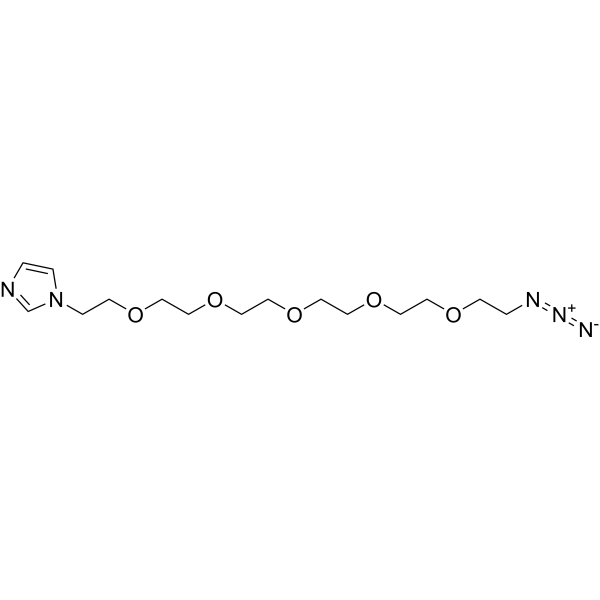
Deg-1 is a bifunctional probe with a cleavage group and a covalent binding group. Deg-1 binds covalently to target nucleic acids and acts as a click degrader to cleave nucleic acid molecules, exhibiting the potential to selectively cleave target nucleic acids intracellularly. Deg-1 contains an azide group that can undergo copper-catalyzed azide-alkyne cycloaddition (CuAAc) with alkynyl groups, as well as strain-promoted alkyne-azide cycloaddition (SPAAC) with DBCO or BCN. Deg-1 can be used in studies related to acute myeloid leukemia and RNA function .
loading...
    loading...
Cat. No.: HY-153789
CAS No.: 2419358-87-3
Purity:  98.82%
Target:  

PI5P4K mTOR

Research Areas:  

Cancer

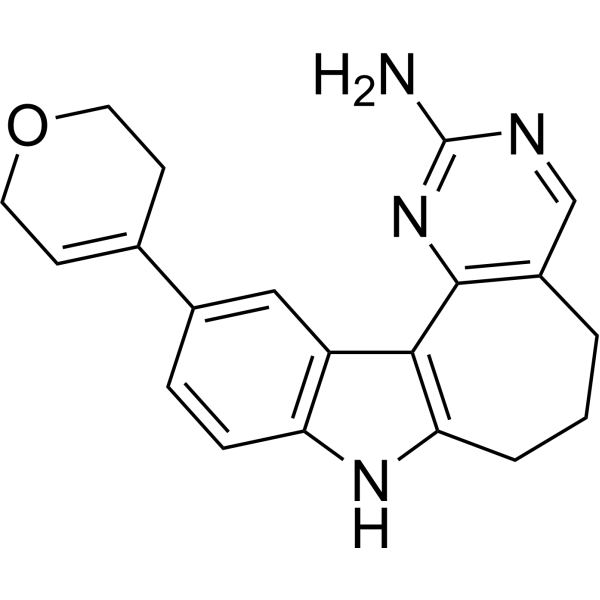
PI5P4Kγ-IN-1 is an ATP-competitive, highly selective chemical probe for PI5P4Kγ, with a Kd of 19 nM and an IC50 of 67 nM. PI5P4Kγ-IN-1 effectively inhibits PI5P4Kγ function and activates the mTORC1 signaling pathway in cells. PI5P4Kγ-IN-1 can be used in studies related to diseases such as breast cancer .
loading...
    loading...
Cat. No.: HY-158067
CAS No.: 2359695-48-8
Purity:  89.40%
Synonyms: DFO-DBCO
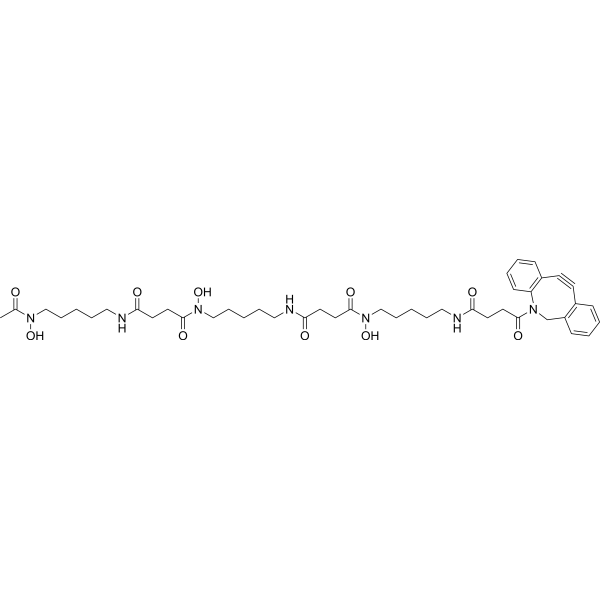
Deferoxamine-DBCO (DFO-DBCO) is a bifunctional small-molecule synthetic building block obtained by covalent conjugation of the DFO metal-chelating group with DBCO, and is a bifunctional chelator. Deferoxamine-DBCO efficiently chelates radioactive metals (such as 89Zr) through the DFO moiety to achieve radiolabeling. Deferoxamine-DBCO undergoes a metal-free Huisgen cycloaddition reaction with azide-containing biomolecules (such as siRNA and monoclonal antibodies) through the DBCO moiety under bioorthogonal conditions to accomplish targeted conjugation. Deferoxamine-DBCO is applicable to research related to bioconjugation chemistry and the preparation of PET radiotracer probes .
loading...
    loading...
Cat. No.: HY-158082B
Synonyms: Tetramethyl rhodamine isothiocyanate glucan, MW 40000
Target:  

Fluorescent Dye

Research Areas:  

Others

TRITC-dextran (Tetramethyl rhodamine isothiocyanate glucan), MW 40000 is a TRITC (HY-D0791)-labeled neutral 40 kDa fluorescent polysaccharide probe. TRITC-dextran, MW 40000 forms a membrane layer on the surface of protocells composed of protamine/folate condensates, and is used to assess membrane fluidity via fluorescence recovery after photobleaching. TRITC-dextran, MW 40000 can also be used to evaluate the anti-bacterial invasion ability and colloidal stability of coated condensates, as well as analyze the permeability of vascular and lymphatic endothelial cell layers .
loading...
    loading...
Cat. No.: HY-173116
CAS No.: 2051527-54-7
Target:  

Carbonic Anhydrase

Research Areas:  

Cancer

DOTA-XYIMSR-01 is a molecular probe targeting CAIX that can be labeled with 177Lu for the inhibition and localization of malignant gliomas. The uptake of [177Lu] Lu-XYIMSR-01 in U87MG tumors is 6.19 % of the injected dose per gram (% ID/g), and the tumor-to-muscle uptake ratio is 20.14. In the orthotopic glioma model, combined injection with Temozolomide (HY-17364) can significantly improve the survival rate of mice and inhibit tumor growth. DOTA-XYIMSR-01 shows promise for research in the field of anti-cancer therapy .
loading...
    loading...
Cat. No.: HY-175323
Target:  

Integrin PD-1/PD-L1

Research Areas:  

Cancer

NOTA-IMB-RGD is a dual molecular probe targeting integrin αvβ3 and programmed death ligand-1 (PD-L1). NOTA-IMB-RGD blocks the PD-1/PD-L1 signaling pathway and integrin αvβ3-overexpressing tumor vasculature. NOTA-IMB-RGD is promising for research of solid tumors co-expressing PD-L1 and αvβ3 (e.g., glioma, breast cancer) .
loading...
    loading...
Cat. No.: HY-181712
Target:  

IRAK

Research Areas:  

Cancer

IRAK1-IN-2 is an orally active IRAK1 inhibitor and antitumor agent with high selectivity for IRAK4 and other kinases in the same group. IRAK1-IN-2 functionally inhibits IRAK1 and interferes with the TLR/IL-1R signaling pathway. IRAK1-IN-2 suppresses hepatocellular carcinoma-related cellular processes in vitro and in animal models. IRAK1-IN-2 serves as a chemical probe for IRAK1 research and is applicable to studies on hepatocellular carcinoma .
loading...
    loading...
Cat. No.: HY-181816
CAS No.: 3095344-37-6
Target:  

PD-1/PD-L1

Research Areas:  

Cancer

PD-1/PD-L1-IN-60 is the counterpart of the small-molecule immuno-probe [ 18F] LG‑8, and the two together enable integrated immuno-diagnosis and therapy. PD-1/PD-L1-IN-60 exhibits potent anti-tumor activity in mouse models of melanoma and lung cancer with high PD‑L1 uptake. PD-1/PD-L1-IN-60 can be used for relevant research on melanoma and lung cancer .
loading...
    loading...
Cat. No.: HY-183468
CAS No.: 945611-89-2
Research Areas:  

Others

MV152 serves as the inactive control for the proteasome activity probe MV151. It contains a reduced ethyl sulfone group that replaces the vinyl sulfone reactive group of MV151, while retaining the identical fluorescent reporter group and peptide recognition sequence. MV152 does not bind to the active site of the proteasomal catalytic subunit β, does not induce peptide-mediated elevation of 20S proteasome activity, and does not label the proteasomal catalytic subunit β in brain tissue homogenates. MV152 can be used as an inactive negative control in proteasome-related experiments .
loading...
    loading...
Cat. No.: HY-187279A
Synonyms: Alkyne-PEG2000-CSRNLIDC
Alkyne-PEG2000-pPB (Alkyne-PEG2000-CSRNLIDC) is a functionalized PEGylated lipid conjugate composed of three modular components: alkyne (propargyl/alkyne linker) as the lipid anchoring group, PEG, and platelet-derived growth factor receptor β-binding peptide (pPB peptide (HY-P11549)) as the terminal targeting/functional ligand. Alkyne-PEG2000-pPB does not contain a lipid anchoring group but instead provides a terminal reactive site for post-assembly ligand or probe conjugation on PEGylated nanoparticles.
loading...
    loading...
Cat. No.: HY-187324A
Alkyne-PEG2000-GE11 is a functionalized PEGylated lipid conjugate composed of three modular components: alkyne (propargyl/alkyne linker) as the lipid anchoring group, a polyethylene glycol (PEG) spacer arm with a molecular weight of 2000 Da, and GE11 peptide (YHWYGYTPQNVI) (HY-P10128) as the terminal targeting/functional ligand. Alkyne-PEG2000-GE11 does not contain a lipid anchoring group but instead provides a terminal reactive site for post-assembly ligand or probe conjugation on PEGylated nanoparticles.
loading...
    loading...
Cat. No.: HY-187325A
Alkyne-PEG2000-RVG29 is a functionalized PEGylated lipid conjugate composed of three modular components: alkyne (propargyl/alkyne linker) as the lipid anchoring group, a polyethylene glycol (PEG) spacer arm with a molecular weight of 2000 Da, and RVG29 peptide (YTIWMPENPRPGTPCDIFTNSRGKRASNG) (HY-P5623) as the terminal targeting/functional ligand. Alkyne-PEG2000-RVG29 does not contain a lipid anchoring group but instead provides a terminal reactive site for post-assembly ligand or probe conjugation on PEGylated nanoparticles.
loading...
    loading...
Cat. No.: HY-187368
(S)-DMP2 is a benzoxaborole-derived photoaffinity probe that efficiently enriches eukaryotic translation initiation factor 4E (eIF4E) with stereoselectivity. (S)-DMP2 acts as a cap-binding competitive inhibitor that competes with the 7-methylguanosine cap of mRNA for binding at the cap-binding pocket of eIF4E, covalently modifies residues within this pocket, and impairs the cap-binding ability of eIF4E. (S)-DMP2 is applicable to research on eIF4E-related mechanisms and diseases .
loading...
    loading...
Cat. No.: HY-D1721
Research Areas:  

Others

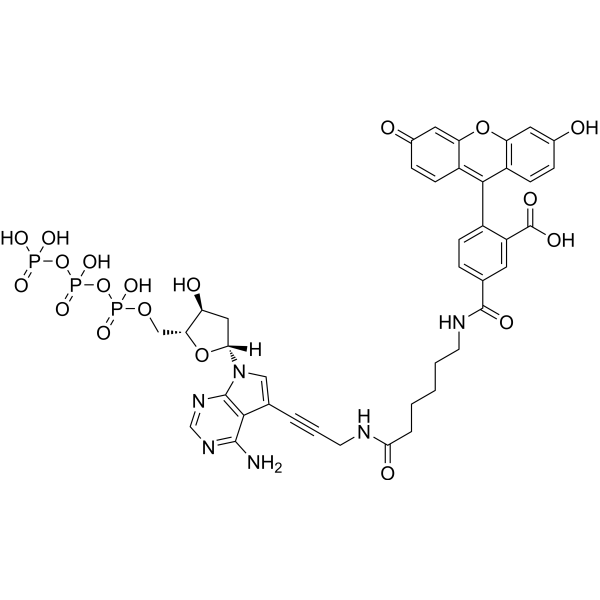
Fluorescein-12-dATP is a fluorescein-labeled deoxyadenosine triphosphate and signal amplifier. Fluorescein-12-dATP can be incorporated into the 3'-end of exposed thrombin-binding aptamers via terminal deoxynucleotidyl transferase to form multi-labeled nucleic acid chains, which are used for signal amplification in thrombin detection. Fluorescein-12-dATP acts as a fluorescent detection probe in chip-based aptamer sandwich biosensors for the detection of thrombin in serum. Fluorescein-12-dATP can be used in studies related to thrombin detection .
loading...
    loading...
Cat. No.: HY-D1739
Research Areas:  

Others

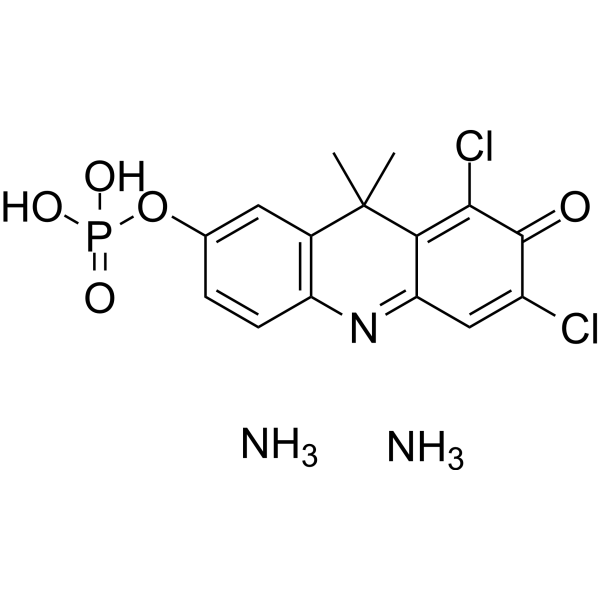
DDAO phosphate diTEA is an amphoteric surfactant derived from DDAO (dimethyldodecylamine oxide). The head group of DDAO in DDAO phosphate diTEA exists in a non-ionic state at pH > 7 and in a cationic state at pH < 5 due to protonation of the oxygen atom. When combined with the anionic surfactant SDS, DDAO can incorporate into mixed micelles, reducing the net micellar charge and attenuating electrostatic repulsion between SDS head groups. DDAO can be used to formulate the ONOO⁻-targeting probe DDAO-PN, which generates significant near-infrared fluorescence at 657 nm .
loading...
    loading...
Cat. No.: HY-D2004
CAS No.: 1430816-27-5
ATTO 488 streptavidin is a fluorescent reagent that specifically targets and binds to biotin (biotin), formed by the conjugation of ATTO 488 with streptavidin (HY-P3152). ATTO 488 streptavidin enables visualization of the activity of streptavidin immobilized on the surface of polymeric nanoparticles, or acts as a fluorescent probe to detect the selective binding and internalization process of anti-HB-EGF/NA with cells expressing HB-EGF (with no such effect on cells that do not express this receptor). ATTO 488 streptavidin effectively verifies the function of streptavidin conjugated to the surface of nanoparticles and is suitable for research related to atherosclerotic cardiovascular diseases .
loading...
    loading...
Cat. No.: HY-D2365
CAS No.: 304014-13-9
QSY 21 NHS is a dark quencher and an efficient energy transfer acceptor for far-red and near-infrared fluorescent probes. QSY 21 NHS operates at a wavelength range of 540-750 nm and is commonly used in FRET applications. QSY 21 NHS does not fluoresce under normal conditions. The NHS ester can be used to label primary amines (R-NH2) of proteins, amine-modified oligonucleotides and other amine-containing molecules. QSY 21 NHS can be conjugated with dendritic poly-L-lysine to achieve intramolecular quenching of Cy5 fluorescence .
loading...
    loading...
Cat. No.: HY-D2729
CAS No.: 3012597-48-4
Cy3-NO2-Tre is a nitroreductase-responsive cyanine-based fluorescent probe that specifically labels Mycobacterium tuberculosis (Mtb). Cy3-NO2-tre generated fluorescence after activation by a specific nitroreductase, Rv3368c, which is conserved in the Mycobacteriaceae. Cy3-NO2-tre effectively imaged mycobacteria within infected host cells, tracked the infection process, and visualized Mycobacterium smegmatis being endocytosed by macrophages (Ex/Em= 540-550/575-625 nm) .
loading...
    loading...

