
2046 Results for "

concentration

" in MedChemExpress (MCE) Product Catalog:
Products (2046)

2046 Results for "concentration" in MCE Product Catalog:

Cat. No.: HY-147913
CAS No.: 2457245-94-0
Target:  

PI3K Akt mTOR Apoptosis

Research Areas:  

Cancer

PI3K/Akt/mTOR-IN-3 (compound 3d) is a potent PI3K/AKT/mTOR inhibitor. PI3K/Akt/mTOR-IN-3 displays the inhibitory activity in MCF-7, HeLa and HepG2 cells, with IC50 values of 0.77, 1.23, and 4.57μM, respectively. PI3K/Akt/mTOR-IN-3 inhibits the migration of MCF-7 and HeLa cells at the concentration of 4 μM. PI3K/Akt/mTOR-IN-3 induces cell apoptosis and S phase arrest .
loading...
    loading...
Cat. No.: HY-156208
CAS No.: 574738-16-2
Synonyms: AdaGalCer(d18:1/2:0); Admantanyl galactosylceramide (d18:1/2:0); Admantanyl galCer(d18:1/2:0)
C2 Adamantanyl galactosylceramide (AdaGalCer) (d18:1/2:0) is a bioactive sphingolipid. C2 Adamantanyl galactosylceramide (d18:1/2:0) stimulates glucocerebrosidase activity in vitro. C2 Adamantanyl galactosylceramide (d18:1/2:0) inhibits microsomal LacCer and Gb3 synthase, and inhibits cell sulfatide synthesis. C2 Adamantanyl galactosylceramide (d18:1/2:0) reduces glucosylceramide (GlcCer) levels in normal and lysosomal storage disease (LSD) cells. C2 Adamantanyl galactosylceramide (d18:1/2:0) acts as a substrate for A4GALT and is able to lower Gb3 levels with an IC50 concentration of 40 μM in fabry disease cells .
loading...
    loading...
Cat. No.: HY-157432
CAS No.: 3020681-05-1
Target:  

EGFR Apoptosis

Research Areas:  

Cancer

EGFR-IN-97 (compound 6q) is a EGFR inhibitor. EGFR-IN-97 shows inhibitory activity against Ba/F3-EGFR L858R/T790M/C797S and Ba/F3-EGFR Del19/T790M/C797S cells, with IC50 values of 0.42 μM and 0.41 μM, respectively. EGFR-IN-97 can promote apoptosis of NCI-H1975-EGFR L858R/T790M/C797S cells at the concentration of 0.8 μM .
loading...
    loading...
Cat. No.: HY-16342
CAS No.: 827034-92-4
NA808 is an Serine Palmitoyltransferase (SPT) inhibitor. NA808 reduces sphingomyelin synthesis, inhibits its activation in hepatic stellate cells, and decreases the expression of α-SMA protein and mRNA, as well as collagen 1A1 mRNA (IC50 0.16, 0.12, and 0.11 μM, respectively). NA808 inhibits HCV replication and reduces NS3 and RdRp protein expression in HCV replicon cells without significant cytotoxicity and exhibits almost no immunosuppressive effect at effective concentrations. NA808 demonstrates broad-spectrum antiviral activity in humanized chimeric liver mice infected with various HCV genotypes, and dose-dependently reduces serum and hepatic HCV RNA levels. NA808 can be used for research on non-alcoholic steatohepatitis and hepatitis C virus infection .
loading...
    loading...
Cat. No.: HY-169481
CAS No.: 3027918-96-0
Research Areas:  

Neurological Disease Cancer

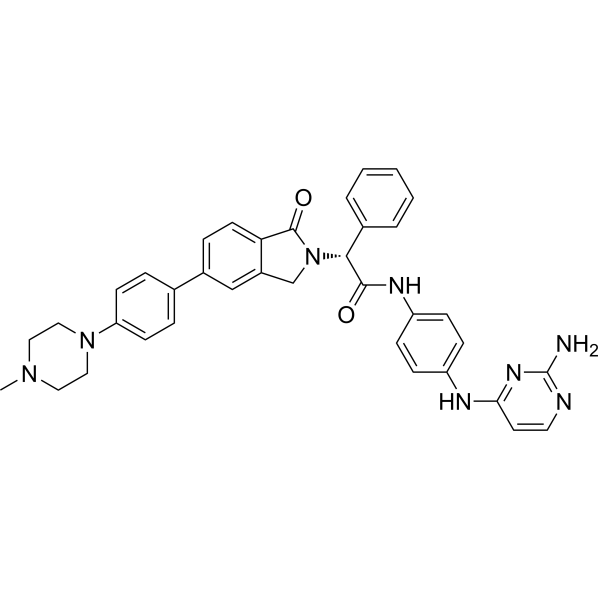
AP-1 is a targeted ALK PROTAC degrader. AP-1 effectively degrades various ALK fusion/mutation forms, including degradation of NPM-ALK (DC50 = 4.6 nM) and EML4-ALK (DC50 = 357.6 nM), and exhibits a typical hook effect at high concentrations. AP-1 inhibits phosphorylation of downstream STAT3, downregulates gene expression in the JAK-STAT pathway, and kills ALK-positive tumor cells via activating the caspase-3-dependent apoptosis pathway. AP-1 shows cytotoxicity against a variety of cancer cells and possesses anti-tumor activity. AP-1 can be used in research related to non-small cell lung cancer, neuroblastoma, and anaplastic large cell lymphoma .
loading...
    loading...
Cat. No.: HY-17357R
CAS No.: 78281-72-8
Synonyms: AHR 9434 (Standard); AL 6515 (Standard)
Nepafenac (AHR 9434; AL 6515) (Standard) is the analytical standard of Nepafenac (HY-17357). This product is intended for research and analytical applications. Nepafenac, a nonsteroidal anti-inflammatory agent, is a topically administered COX-2 inhibitor with an IC50 of 0.12 μM. Nepafenac exhibits only weak COX-1 inhibitory activity (IC50 = 64.3 μM). Nepafenac possesses unique prodrug properties, which enable it to rapidly convert into the active metabolite Amfenac (HY-17479) in the ocular tissues, thereby achieving high concentrations in the retina and choroid. Nepafenac reduces inflammation and pain by inhibiting the activity of cyclooxygenase (COX) enzymes and thereby decreasing the production of prostaglandin PGE₂. Nepafenac can delay the metastasis of uveal melanoma (UM) in rabbit eyes. Nepafenac is mainly used for pain management and inflammation control after ophthalmic surgeries.
loading...
    loading...
Cat. No.: HY-179038
CAS No.: 433702-41-1
Target:  

Bacterial

Research Areas:  

Infection

PYO12 is a 3-phenyl-4-phenoxypyrazole type antibacterial compound. PYO12 exhibits selective activity against Gram-positive bacteria with MIC for S. aureus, B. subtilis, S. pneumoniae, and MRSA of 1, 1, 1, and 4 μg/mL respectively. PYO12 has no activity against Gram-negative bacteria. PYO12 can significantly increase bacterial membrane permeability and significantly upregulate cell wall stress-related genes, possibly by binding to the C55-PP part of lipid II. PYO12 shows a concentration-dependent bactericidal effect, has low toxicity to mammalian cells, and does not cause hemolysis. PYO12 can be used to develop new antibiotics targeting bacterial cell wall synthesis .
loading...
    loading...
Cat. No.: HY-182368
Target:  

PI3K Akt Apoptosis

Research Areas:  

Cancer

PI3Kα-IN-30 is an orally active, selective PI3Kα inhibitor with an IC50 of 2.8 nM. PI3Kα-IN-30 inhibits cancer cell proliferation, as well as the phosphorylation of Akt (S473) and pS6 (S240/244). PI3Kα-IN-30 shows low growth inhibitory activity against normal somatic cell lines at a concentration of 30 μM. PI3Kα-IN-30 induces cancer cell apoptosis and exerts anti-tumor efficacy in xenograft models. PI3Kα-IN-30 can be used for the research of breast cancer .
loading...
    loading...
Cat. No.: HY-184034
CAS No.: 94-23-5
Synonyms: Intracaine
Target:  

Na+/Ca2+ Exchanger

Research Areas:  

Others

Parethoxycaine (Intracaine) is an ester-type local anesthetic that possesses dual activities as a non-selective inhibitor and agonist potentiator in smooth muscle, while acting as a mixed-type inhibitor of cytochrome c oxidase at the enzyme level. Parethoxycaine non-competitively inhibits the contraction of guinea pig ileal longitudinal muscle by interfering with transmembrane Ca 2+ transport (blocking K +/CD responses in an equi-effective manner), and potentiates norepinephrine (NA) responses in rat vas deferens by blocking NA uptake and promoting Ca 2+ mobilization (increasing the maximum amplitude without affecting K + responses). Parethoxycaine inhibits the activity of purified cytochrome c oxidase in a concentration-dependent manner, and can be used in research focusing on Ca 2+ signal transduction, smooth muscle contraction regulation, and mitochondrial energy metabolism .
loading...
    loading...
Cat. No.: HY-184291
CAS No.: 3114314-82-5
Research Areas:  

Cancer

VCP/p97 IN-4 is a p97/VCP inhibitor (Kd=14.99 μM) targeting the allosteric site of the D1-D2 domain. VCP/p97 IN-4 inhibits the ATPase activity of VCP/p97 in an ATP concentration-independent manner. VCP/p97 IN-4 induces apoptosis, autophagy, mitochondrial stress and mitochondrial membrane depolarization. VCP/p97 IN-4 inhibits the growth of patient-derived colorectal cancer organoids and exhibits in vivo efficacy in a colorectal cancer xenograft mouse model. VCP/p97 IN-4 can be used for the research of colorectal cancer .
loading...
    loading...
Cat. No.: HY-184897
CAS No.: 312724-83-7
Target:  

Chloride Channel NF-κB

Research Areas:  

Inflammation/Immunology

YS-01 is an inhibitor of pendrin (SLC26A4) with pulmonary protective activity. YS-01 inhibits pendrin-mediated anion exchange activity, reduces pendrin expression, and suppresses the activation of NF-κB and the production of proinflammatory cytokines. YS-01 alleviates lipopolysaccharide-induced and ventilator-induced lung injury. YS-01 attenuates ovalbumin-induced airway hyperresponsiveness, inflammatory infiltration, epithelial thickening and goblet cell hyperplasia, and reduces eosinophil and neutrophil counts. YS-01 decreases MUC5AC transcription levels induced by IL-4, reverses the reduction of airway surface liquid volume, and inhibits the increase of apical SCN − concentration in epithelial cells. YS-01 can be used in studies related to lung injury and allergic asthma .
loading...
    loading...
Cat. No.: HY-B0612B
CAS No.: 185197-71-1
Research Areas:  

Neurological Disease

(S)-Lercanidipine is a calcium channel blocker with antihypertensive and neuroprotective activities. (S)-Lercanidipine reduces oxidative stress and protects auditory sensory hair cells from noise-induced damage. (S)-Lercanidipine showed significant protective effects on cell viability in in vitro experiments, especially at low concentrations. (S)-Lercanidipine has been found to effectively reduce the hearing threshold of mice after noise stimulation and protect the survival of outer hair cells. The antioxidant properties of (S)-Lercanidipine are reflected in its increased expression of antioxidant enzyme genes and decreased expression of oxidative enzyme genes. (S)-Lercanidipine administration is effective in reducing noise-induced hearing loss both before and after noise exposure. (S)-Lercanidipine may alleviate noise-induced hearing loss and protect the survival of outer hair cells through its antioxidant mechanism .
loading...
    loading...
Cat. No.: HY-B1777S
CAS No.: 93827-50-0
Synonyms: NSC 268508-15N2; Neuridine-15N2
Spermine- 15N2 (NSC 268508- 15N2) is the 15N-labeled Spermine (HY-B1777). Spermine is a natural antioxidant and anti-inflammatory agent. Spermine is known to inhibit some bacterial cultures, especially strains of Staphylococcus aureus. Spermine induces neurotoxicity in the striarum dose-dependently. Spermine can reversibly inhibits DNA synthetic response, mixed lymphocyte response and the induction of cytolytic lymphocyte response in primary cultures of murine spleen cells. Spermine tetrahydrochloride is a polyamine nitric oxide donor that can provide nitric oxide to platelets and inhibit platelet activation to a certain extent concentration-dependently. Spermine tetrahydrochloride occurs in mammalian tissues, plants, bacteria, ribosomes and bacteriophage. Spermine tetrahydrochloride inhibits primary human embryo lung fibroblasts in vitro .
loading...
    loading...
Cat. No.: HY-D1056I
Synonyms: LPS, from Akkermansia muciniphila
Lipopolysaccharides, from Akkermansia muciniphila (LPS, from Akkermansia muciniphila) are lipopolysaccharide endotoxins derived from Akkermansia muciniphila and are TLR-4 activators. Unlike typical LPS, Lipopolysaccharides, from Akkermansia muciniphila are R-type LPS or lipooligosaccharides (LOS), lacking the O-antigen domain and consisting only of a core oligosaccharide and a lipid A. Lipopolysaccharides, from Akkermansia muciniphila can activate TLR4 and TLR2, and may inhibit the TLR4/NF-κB pathway, thereby alleviating LPS-induced acute kidney injury .
It is recommended to prepare a solution with concentration ≥2 mg/mL. Vortex thoroughly for more than 10 minutes. Due to the adsorption characteristics of LPS, silanized container or low adsorption centrifuge tubes should be used for aliquoting and storage, and mix thoroughly before use.
loading...
    loading...
Cat. No.: HY-DY1088
CAS No.: 75350-46-8
Synonyms: N-(5-Fluoresceinyl)maleimide (solution)
Fluorescein-5-maleimide (solution) (N-(5-Fluoresceinyl)maleimide (solution)) is a fluorescent dye. Fluorescein-5-maleimide can be used to detect the redox state of thiols in eukaryotic cells. Fluorescein-5-maleimide can label peptides and is used to detect negatively charged nanoparticles. Fluorescein-5-maleimide can also label actin to explore its interaction with cardiac myosin-binding protein C (cMyBP-C), which helps in developing small molecule modulators for heart failure. Fluorescein-5-maleimide can screen mutant proteins that contain cysteine residues. The excitation wavelength of Fluorescein-5-maleimide is 494 nm, and the emission wavelength is 519 nm .

Solvent and concentration: DMSO: 10 mM
loading...
    loading...
Cat. No.: HY-DY1097
CAS No.: 107091-89-4
Thiazole Orange (solution) is an asymmetric anthocyanin dye that can be coupled with oligonucleotides (ONs) to prepare fluorescent hybridization probes. Thiazole Orange has been widely used in biomolecular detection and staining of DNA/ RNA in gels and can be used for reticulocyte analysis. Thiazole orange generates a significant fluorescence enhancement and high quantum yield when it binds with nucleic acids, especially RNA. Thiazole orange can permeate living cell membranes. Thiazole orange can use UV light for detection, but can also be detected with blue light. The excitation and emission of Thiazole orange are λex = 510 nm (488 nm and 470 nm also show strong excitation) and λem = 527 nm, respectively .
Solvent and concentration: DMSO: 10 mM
The 1 mL volume is defined as the base specification. All larger sizes correspond to incremental volumes of this base.
loading...
    loading...
Cat. No.: HY-N19910
CAS No.: 1448363-50-5
Dihydroeleutherinol-8-O-β-D-glucopyranoside is an anti-inflammatory agent. Dihydroeleutherinol-8-O-β-D-glucopyranoside exists in the rhizomes of Eleutherine bulbosa and acts as a pro-inflammatory cytokine inhibitor. Dihydroeleutherinol-8-O-β-D-glucopyranoside inhibits the production of IL-12 p40 (IC50 = 1.0 μM) and IL-6 (IC50 = 5.0 μM) in lipopolysaccharide-stimulated dendritic cells. At the tested concentrations, Dihydroeleutherinol-8-O-β-D-glucopyranoside does not inhibit the production of TNF-α in lipopolysaccharide-stimulated dendritic cells and shows no cytotoxicity against dendritic cells. Dihydroeleutherinol-8-O-β-D-glucopyranoside can be used in studies related to rheumatoid arthritis .
loading...
    loading...
Cat. No.: HY-N7700
CAS No.: 15769-56-9
Synonyms: G2013
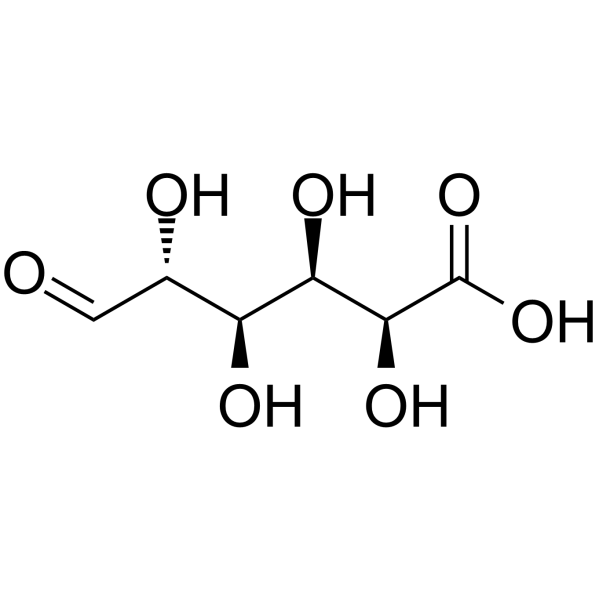
Guluronic acid (G2013) is an orally active oxidative stress regulator and anti-inflammatory agent that exerts pharmacological effects by down-regulating various pro-inflammatory and oxidative stress-related genes (such as TLR4, NF-κB, iNOS, etc.) and inhibiting the activities of COX-2, MMPs and VEGF. Low-dose Guluronic acid up-regulates the expression of immunoregulatory genes SHIP1 and SOCS1, thereby effectively inhibiting cancer-related inflammation, tumor angiogenesis, cell adhesion and metastasis, while reducing the accumulation of immunosuppressive cells. Guluronic acid significantly prolongs the survival time of tumor-bearing hosts within a concentration range without direct cytotoxicity, demonstrating favorable safety. Guluronic acid has involved in the research of multiple sclerosis, ankylosing spondylitis, breast cancer and other inflammatory diseases .
loading...
    loading...
Cat. No.: HY-P11091
CAS No.: 2387505-19-1
Target:  

Bacterial

Research Areas:  

Infection

PA2-GNU7 is an antimicrobial peptide (AMP). PA2-GNU7 exhibits potent antimicrobial activity with minimal inhibitory concentration (MIC) against P. aeruginosa, E. coli, S. typhimurium, S. aureus, and C. albicans are 2 μM, 1 μM, 2 μM, 2 μM, and 8 μM, respectively. PA2-GNU7 rapidly and selectively kills Pseudomonas aeruginosa without affecting other commensal bacteria. PA2-GNU7 significantly improves survival of mice infected with P. aeruginosa. PA2-GNU7 can be used for the research and development of therapeutic agents against MDR Pseudomonas aeruginosa infections .
loading...
    loading...
Cat. No.: HY-P5423
CAS No.: 107658-43-5
Target:  

Exosomes Liposome

Research Areas:  

Cancer

GALA is a pH-responsive amphipathic peptide consisting of 30 amino acids, which acts as a lung endothelium-targeting ligand. GALA undergoes a conformational transition from random coil to α-helix in an acidic environment at pH 5.0, thereby inducing endosomal membrane destabilization and fusion. GALA-modified liposomes traverse lung endothelial cells via clathrin-dependent endocytosis and transcytosis, and specifically accumulate in the lungs after intravenous injection. GALA significantly promotes the cytosolic release of cargos carried by exosomes, plasmids and liposomes, effectively enhances gene transfection efficiency, and drives gene knockdown of functional macromolecules (such as siRNA) in alveolar epithelial cells (with no significant cytotoxicity at effective concentrations). GALA serves as a critical tool for studies on lung cancer metastasis (e.g., melanoma lung metastasis) and lung-targeted drug delivery systems .
loading...
    loading...

