
19 Results for "

ATRA

" in MedChemExpress (MCE) Product Catalog:
Products (19)

19 Results for "ATRA" in MCE Product Catalog:

150
150 Cited Publications
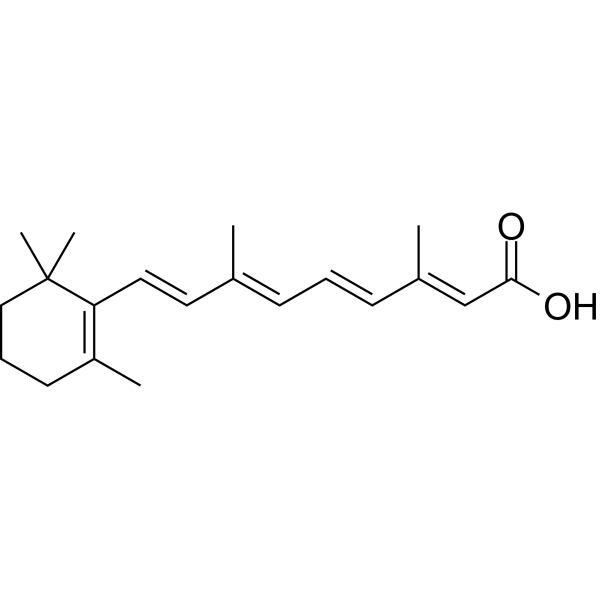
Cat. No.: HY-14649
CAS No.: 302-79-4
Purity:  99.81%
Synonyms: Vitamin A acid; all-trans-Retinoic acid; ATRA
Retinoic acid is a metabolite of vitamin A that plays important roles in cell growth, differentiation, and organogenesis. Retinoic acid is a natural agonist of RAR nuclear receptors, with IC50s of 14 nM for RARα/β/γ. Retinoic acid bind to PPARβ/δ with Kd of 17 nM. Retinoic acid acts as an inhibitor of transcription factor Nrf2 through activation of retinoic acid receptor alpha.
loading...
    loading...
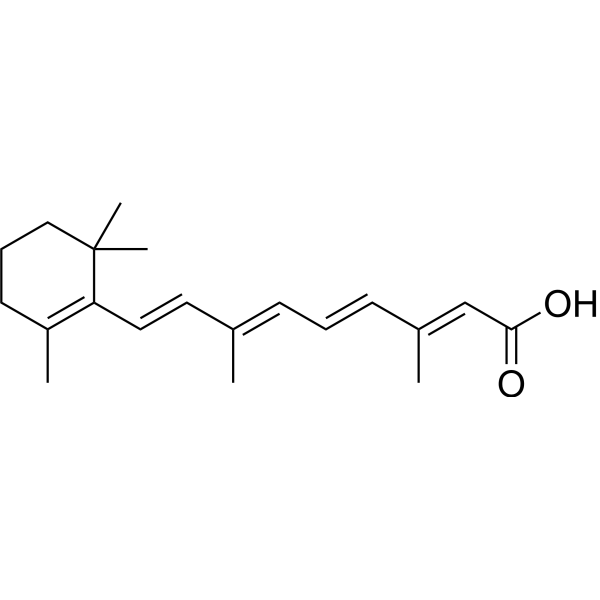
Cat. No.: HY-14649R
CAS No.: 302-79-4
Synonyms: Vitamin A acid (Standard); all-trans-Retinoic acid (Standard); ATRA (Standard)
Retinoic acid (Standard) is the analytical standard of Retinoic acid. This product is intended for research and analytical applications. Retinoic acid is a metabolite of vitamin A that plays important roles in cell growth, differentiation, and organogenesis. Retinoic acid is a natural agonist of RAR nuclear receptors, with IC50s of 14 nM for RARα/β/γ. Retinoic acid bind to PPARβ/δ with Kd of 17 nM. Retinoic acid acts as an inhibitor of transcription factor Nrf2 through activation of retinoic acid receptor alpha.
loading...
    loading...
Cat. No.: HY-NP004
Synonyms: CVF
Cobra Venom Factor (CVF) is a selective activator targeting complement components C3, C5, and factor B in the complement system. After binding to factor B, Cobra Venom Factor is cleaved by factor D, forming a stable C3/C5 convertase resistant to regulatory proteins H and I. This continuously hydrolyzes C3 and C5, depleting serum complement while inducing neutrophil migration, vascular leakage, and increased TNF-α levels. Cobra Venom Factor can be used to deplete complement and mimic complement activation-related pathological states, and is applied in animal models of complement-mediated diseases such as acute respiratory distress syndrome (ARDS), sepsis, and shock. Cobra Venom Factor can be isolated from the venom of cobras (e.g., Naja atra, Naja melanoleuca, Naja kaouthia, etc.) .
loading...
    loading...
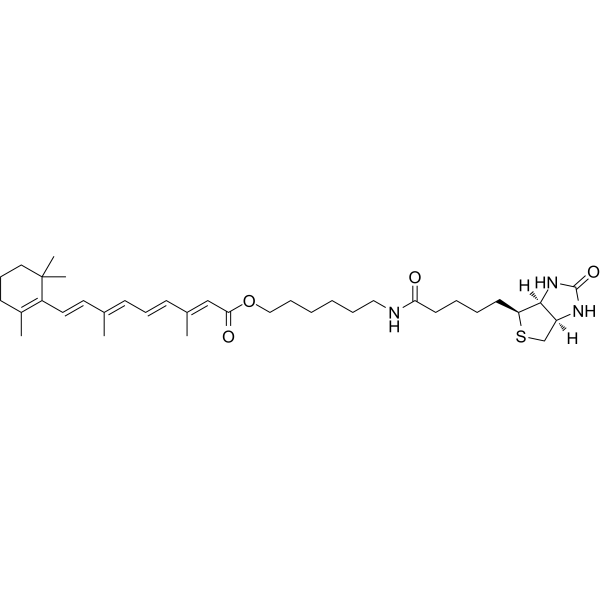
Cat. No.: HY-141793
CAS No.: 2226143-93-5
Purity:  95.74%
Synonyms: Biotin-ATRA-conjugate
ATRA-biotin (Biotin-ATRA-conjugate) is a biotin-conjugated ATRA. ATRA-biotin can be used to track ATRA in cells or a given tissue .
loading...
    loading...
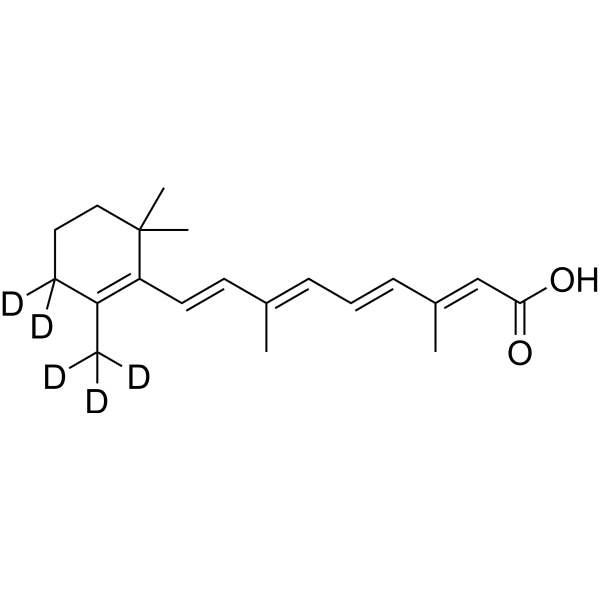
Cat. No.: HY-14649S4
CAS No.: 78996-15-3
Synonyms: Vitamin A acid-d5; all-trans-Retinoic acid-d5; ATRA-d5
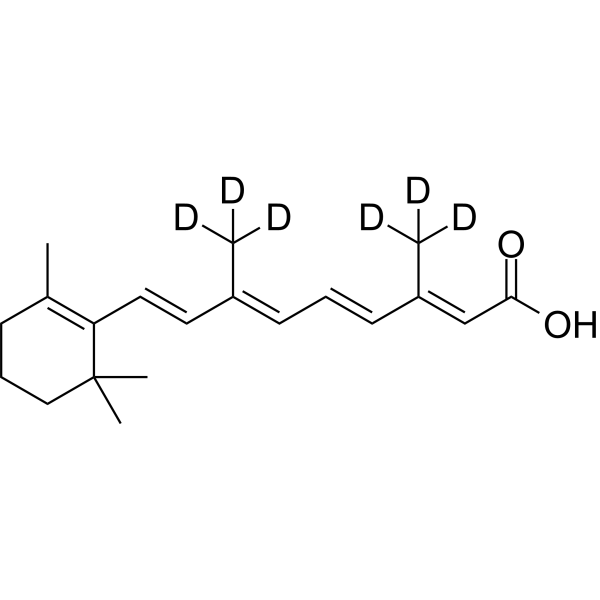
Retinoic acid-d5 is the the deuterium labeled Retinoic acid (HY-14649). Retinoic acid is a metabolite of vitamin A that plays important roles in cell growth, differentiation, and organogenesis. Retinoic acid is a natural agonist of RAR nuclear receptors, with IC50s of 14 nM for RARα/β/γ. Retinoic acid bind to PPARβ/δ with Kd of 17 nM. Retinoic acid acts as an inhibitor of transcription factor Nrf2 through activation of retinoic acid receptor alpha .
loading...
    loading...
Cat. No.: HY-108531
CAS No.: 187400-85-7
Purity:  99.86%
Target:  

RAR/RXR

Research Areas:  

Metabolic Disease

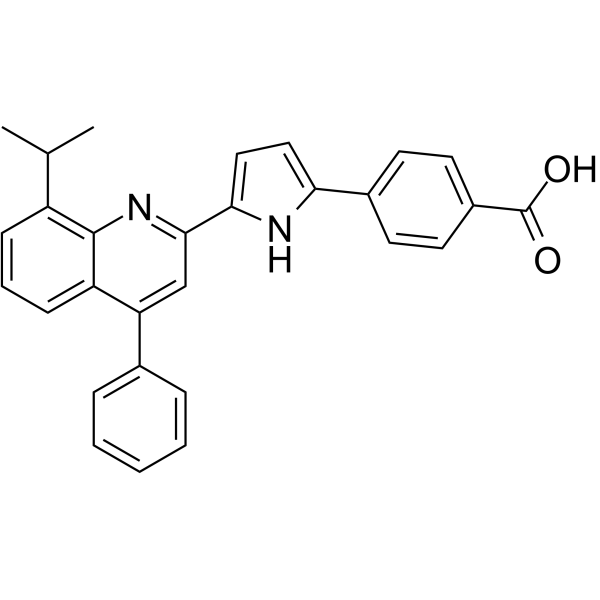
ER 50891 is a RARα antagonist. ER 50891 can significantly antagonize the inhibitory effect of all-trans retinoic acid (ATRA) on the total cell metabolic activity and proliferation of MC3T3-E1 preosteoblasts. ER 50891 rescues ATRA-inhibited osteocalcin (OCN) expression and extracellular matrix mineralization, and suppresses alkaline phosphatase (ALP) activity synergistically. ER 50891 can be used for the study of osteoporosis related to ATRA-induced inhibition of osteoblastogenesis .
loading...
    loading...
Cat. No.: HY-108531A
Purity:  99.86%
Target:  

RAR/RXR

Research Areas:  

Cancer

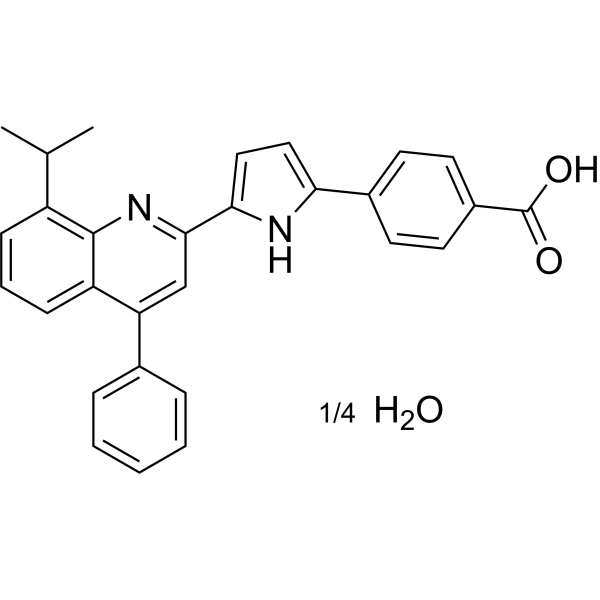
ER 50891 quarterhydrate is a RARα antagonist. ER 50891 can significantly antagonize the inhibitory effect of all-trans retinoic acid (ATRA) on the total cell metabolic activity and proliferation of MC3T3-E1 preosteoblasts. ER 50891 rescues ATRA-inhibited osteocalcin (OCN) expression and extracellular matrix mineralization, and suppresses alkaline phosphatase (ALP) activity synergistically. ER 50891 can be used for the study of osteoporosis related to ATRA-induced inhibition of osteoblastogenesis .
loading...
    loading...
Cat. No.: HY-118761
CAS No.: 13100-69-1
Synonyms: 5,6-epoxy ATRA; 5,6-epoxy RA
Target:  

RAR/RXR

Research Areas:  

Metabolic Disease

all-trans-5,6-epoxy Retinoic acid (5,6-epoxy RA) is an agonist of all isoforms of the retinoic acid receptor (RAR; EC50s=77, 35, and 4 nM for RARα, RARβ, and RARγ, respectively). 5,6-epoxy RA (1 μM) also induces growth arrest of MCF-7 and NB4 cells in vitro. It is a natural metabolite of all-trans retinoic acid, which is a metabolite of vitamin A.
loading...
    loading...
Cat. No.: HY-169863
CAS No.: 2324152-25-0
Target:  

RAR/RXR

Research Areas:  

Inflammation/Immunology

DC360 is a synthetic retinoid analogue of all-trans retinoic acid (ATRA) which induces RARβ expression. DC360 can be utilized in characterization of retinoid signalling pathways .
loading...
    loading...
Cat. No.: HY-14649S3
CAS No.: 2483831-72-5
Purity:  98.9%
Synonyms: Vitamin A acid-d6; all-trans-Retinoic acid-d6; ATRA-d6
Retinoic acid-d6 is the deuterium labeled Retinoic acid[1]. Retinoic acid is a metabolite of vitamin A that plays important roles in cell growth, differentiation, and organogenesis. Retinoic acid is a natural agonist of RAR nuclear receptors, with IC50s of 14 nM for RARα/β/γ. Retinoic acid bind to PPARβ/δ with Kd of 17 nM. Retinoic acid acts as an inhibitor of transcription factor Nrf2 through activation of retinoic acid receptor alpha[2][3][4][5][6][7].
loading...
    loading...
Cat. No.: HY-111839
CAS No.: 135325-47-2
Synonyms: CRABP-II ligand 1
Research Areas:  

Cancer

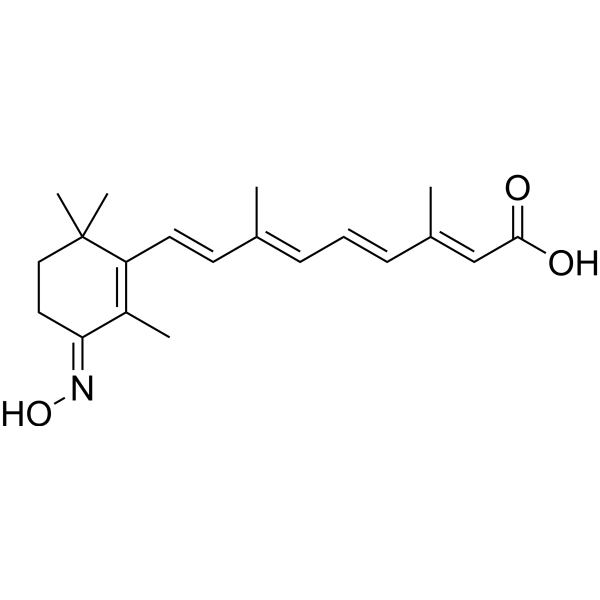
ATRA-hydroxyimino (CRABP-II ligand 1), the Retinoic acid (ATRA)-based moiety, binds to cIAP1 ligand (Bestatin) via a linker to form SNIPER to degrade CRABP-II in IMR-32 cells .
loading...
    loading...
Cat. No.: HY-14649S5
CAS No.: 154461-49-1
Synonyms: Vitamin A acid-d3; all-trans-Retinoic acid-d3; ATRA-d3
Retinoic acid-d3 is the deuterium labeled Retinoic acid (HY-14649). Retinoic acid is a metabolite of vitamin A that plays important roles in cell growth, differentiation, and organogenesis. Retinoic acid is a natural agonist of RAR nuclear receptors, with IC50s of 14 nM for RARα/β/γ. Retinoic acid bind to PPARβ/δ with Kd of 17 nM. Retinoic acid acts as an inhibitor of transcription factor Nrf2 through activation of retinoic acid receptor alpha .
loading...
    loading...
Cat. No.: HY-14649S6
CAS No.: 3041101-53-2
Synonyms: Vitamin A acid-d3-1; all-trans-Retinoic acid-d3-1; ATRA-d3-1
Retinoic acid-d3-1 is the deuterium labeled Retinoic acid (HY-14649). Retinoic acid is a metabolite of vitamin A that plays important roles in cell growth, differentiation, and organogenesis. Retinoic acid is a natural agonist of RAR nuclear receptors, with IC50s of 14 nM for RARα/β/γ. Retinoic acid bind to PPARβ/δ with Kd of 17 nM. Retinoic acid acts as an inhibitor of transcription factor Nrf2 through activation of retinoic acid receptor alpha .
loading...
    loading...
Cat. No.: HY-123647
CAS No.: 53126-64-0
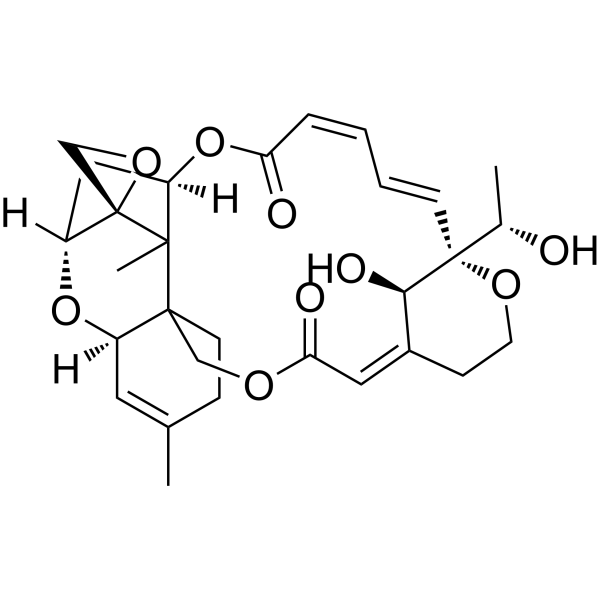
Satratoxin H is a toxic metabolite of Stachybotrys atra. Satratoxin H induces caspase-3 and PARP cleavage via p38 MAPK and JNK pathways, stimulates JNK, ERK, and p38 MAPK phosphorylation, and activates JNK and p38 MAPK in a glutathione-sensitive manner. Satratoxin H induces DNA double-stranded breaks, apoptotic body formation, intracellular reactive oxygen species generation, and endoplasmic reticulum stress via ATF6, PERK, and IRE1 pathways. Satratoxin H can be used for the research of central nervous system disorders and melanoma .
loading...
    loading...
Cat. No.: HY-182728
CAS No.: 110952-26-6
Target:  

Cytochrome P450

Research Areas:  

Metabolic Disease

CD564 (Compound 11b) is a cytochrome P450 CYP26A1 and CYP26B1 inhibitor, with IC50 values of 1.63 μM and 0.52 μM, respectively. Cytochrome P450 CYP26 enzymes clear all-trans retinoic acid (atRA) .
loading...
    loading...
Cat. No.: HY-184097
CAS No.: 3098670-37-9
Target:  

PROTACs

Research Areas:  

Cancer

MS9117 is a PROTAC molecule that targets and degrades LSD1/BHC110 by recruiting CRBN. MS9117 effectively increases the level of histone H3 lysine 4 monomethylation. MS9117 significantly inhibits the proliferation and colony formation of cancer cells, promotes their myeloid differentiation, and enhances the sensitivity of non-acute promyelocytic leukemia-type AML cells to all-trans retinoic acid (ATRA) .
loading...
    loading...
Cat. No.: HY-182948
CAS No.: 2089135-65-7
Research Areas:  

Others

Dichloro-all-trans-retinone is a selective retinaldehyde dehydrogenase (RALDH) inhibitor, with an IC50 of 434.7 nM and a Ki of 194.4 nM against chicken RALDH1; an IC50 of 55 nM and a Ki of 5.1 nM against chicken RALDH2; an IC50 of 191.32 nM and a Ki of 64.35 nM against human RALDH2; and an IC50 of 161.27 nM and a Ki of 6.74 nM against chicken RALDH3. Dichloro-all-trans-retinone inhibits the synthesis of all-trans retinoic acid (ATRA). Dichloro-all-trans-retinone is applicable to research related to form-deprivation-induced myopia .
loading...
    loading...
Cat. No.: HY-138032
CAS No.: 326914-17-4
Synonyms: N,N-Dimethyl sunitinib
SU11657 (N,N-Dimethyl sunitinib) is an orally active multi-targeted tyrosine kinase inhibitor with IC50 values of 0.04 μM (c-Kit), 0.005 μM (PDGFR), 0.013 μM (VEGFR1), 0.017 μM (VEGFR2) and 50 nM (FLT3), respectively. SU11657 exhibits anti-angiogenic activity. SU11657 delays leukemia progression, synergizes with ATRA (HY-14649) to reduce leukemia burden, and inhibits symptoms and tissue damage associated with rheumatoid arthritis. SU11657 can be used in research related to FLT3-mutated acute promyelocytic leukemia, rheumatoid arthritis, neuroblastoma, and benign/atypical meningioma .
loading...
    loading...
  • 1

