1. Search Result
Search Result
Results for "

DPDS

" in MedChemExpress (MCE) Product Catalog:

24

Inhibitors & Agonists

1

Biochemical Assay Reagents

2

Natural
Products

6

Isotope-Labeled Compounds

1

Click Chemistry

1

Oligonucleotides

Cat. No. Product Name Target Research Areas Chemical Structure
  • HY-W012926
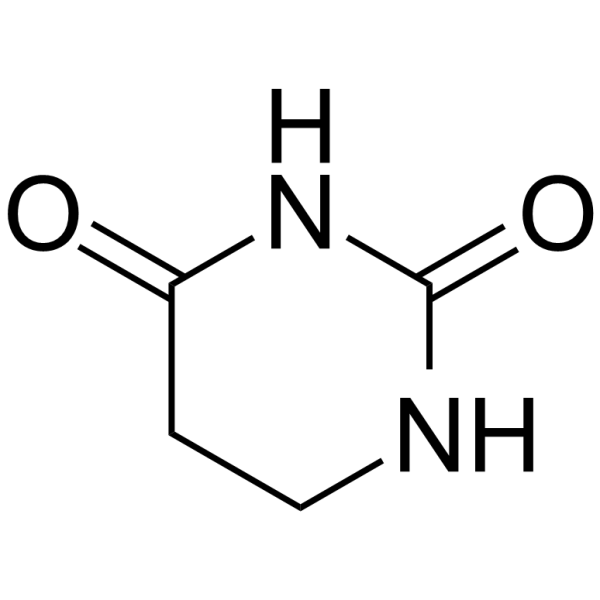
    Dihydrouracil
    1 Publications Verification

    5,6-Dihydrouracil

    Endogenous Metabolite Metabolic Disease
    Dihydrouracil (5,6-Dihydrouracil), a metabolite of Uracil, can be used as a marker for identification of dihydropyrimidine dehydrogenase (DPD)-deficient .
    Dihydrouracil
  • HY-W010450
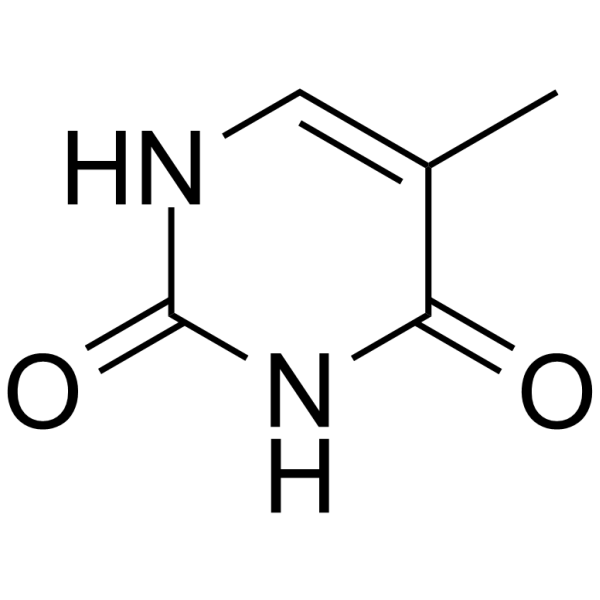
    Thymine
    1 Publications Verification

    Endogenous Metabolite Metabolic Disease Cancer
    Thymine, one of the four bases of DNA, is a substrate for rat liver dihydropyrimidine dehydrogenase (DPD), with a Km value of 2.2 μM, Ki of 24 μM (using 5-FU as the DPD substrate), and a specific activity of 0.68 nmol/min/mg .
    Thymine
  • HY-14905

    Tri-O-acetyl uridine

    Drug Derivative Neurological Disease
    Uridine triacetate (Tri-O-acetyl uridine) is an orally active proagent of Uridine (HY-B1449). Uridine triacetate is quickly absorbed in the gut, and is rapidly deacetylated in the circulation to yield free uridine. Uridine triacetate is used for the research of 5-fluorouracil (5-FU) and capecitabine toxicity, or early-onset cardiac or central nervous system (CNS) .
    Uridine triacetate
  • HY-124062
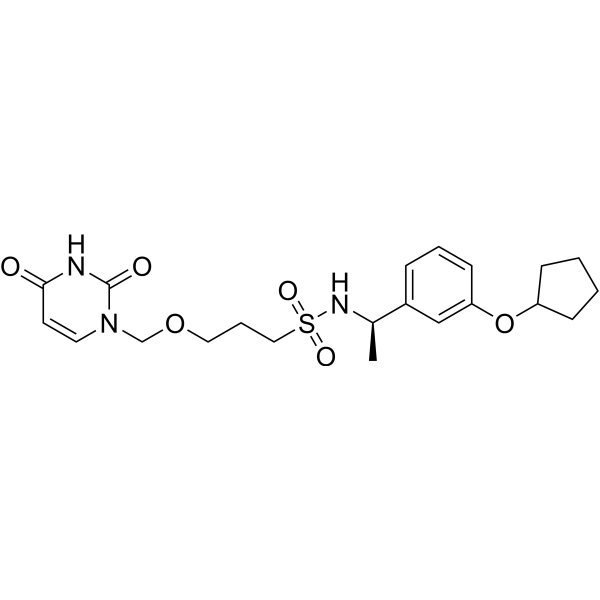
    TAS-114
    3 Publications Verification

    DNA/RNA Synthesis Cancer
    TAS-114 is an orally active dual dUTPase/dihydropyrimidine dehydrogenase (DPD) inhibitor, can improving the therapeutic efficacy of fluoropyrimidine .
    TAS-114
  • HY-17469
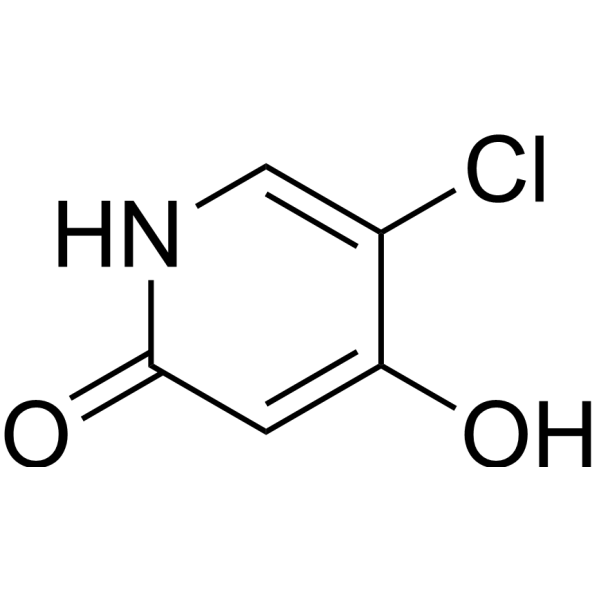
    Gimeracil
    3 Publications Verification

    Gimestat

    DNA/RNA Synthesis Dihydropyrimidine Dehydrogenase (DPD) Cancer
    Gimeracil, a component of an oral fluoropyrimidine derivative S-1, inhibits DNA DSB repair and is a potent inhibitor of DPYD (dihydropyrimidine dehydrogenase, DPD) .
    Gimeracil
  • HY-10533
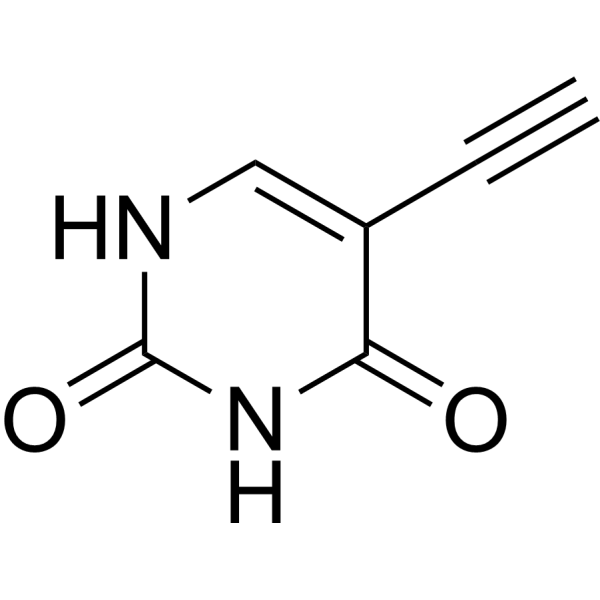
    Eniluracil
    1 Publications Verification

    5-Ethynyluracil; GW776C85

    Biochemical Assay Reagents Cancer
    Eniluracil (5-Ethynyluracil) is an orally active dihydropyrimidine dehydrogenase (DPD) inhibitor. Eniluracil irreversibly inhibits DPD, increases the oral bioavailability of 5-fluorouracil to 100%, and facilitates the uniform absorption and toxicity of 5-fluorouracil. Eniluracil can be used in cancer research of combination with fluoropyrimidines (including 5-fluorouracil) . Eniluracil is a click chemistry reagent, it contains an Alkyne group and can undergo copper-catalyzed azide-alkyne cycloaddition (CuAAc) with molecules containing Azide groups.
    Eniluracil
  • HY-W012926S1

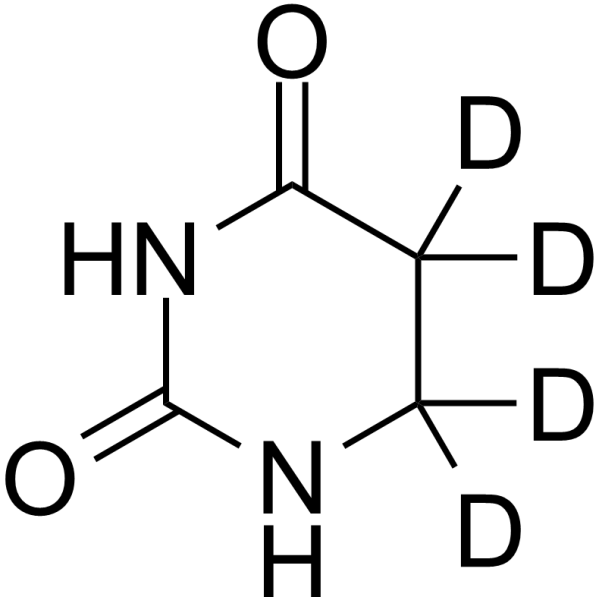
    5,6-Dihydrouracil-d4

    Isotope-Labeled Compounds Endogenous Metabolite Metabolic Disease
    Dihydrouracil-d4 is the deuterium labeled Dihydrouracil . Dihydrouracil (HY-W012926), a metabolite of Uracil, can be used as a marker for identification of dihydropyrimidine dehydrogenase (DPD)-deficient .
    Dihydrouracil-d4
  • HY-134160

    5-DHFU; 5-Fluorodihydropyrimidine-2,4-dione; 5-Fluorodihydrouracil

    Nucleoside Antimetabolite/Analog Cancer
    5,6-Dihydro-5-Fluorouracil (5-DHFU; 5-Fluorodihydropyrimidine-2,4-dione) is the active metabolite of the thymidylate synthase inhibitor prodrug 5-fluorouracil (HY-90006), which is formed from 5-fluorouracil by dihydropyrimidine dehydrogenase (DPD). 5,6-Dihydro-5-Fluorouracil is cytotoxic to HaCaT keratinocytes (IC50=13.5 μM). Intravenous administration of 5,6-Dihydro-5-Fluorouracil (90 mg/kg/wk) in combination with 5-fluorouracil and the DPD inhibitor eniluracil (HY-10533) slows tumor growth in a rat colon cancer model.
    5,6-Dihydro-5-Fluorouracil
  • HY-W196803

    Propyl Disulfide; DPDS

    Environmental Pollutants Cytochrome P450 Others
    Dipropyl disulfide is oxidized to dipropyl thiosulfinate (DPDSO) by rat microsomes. Both flavincontaining monooxygenases (FMO) and cytochrome P450 enzymes (CYPs) are involved in dipropyl disulfide oxidation. Dipropyl disulfide forms two metabolites: propylglutathione sulfide conjugate and propylthiol .
    Dipropyl disulfide
  • HY-W001983

    Dihydropyrimidine Dehydrogenase (DPD) Cancer
    5-Iodouracil (Compound 4b) is an irreversible dihydropyrimidine dehydrogenase (DPD) inhibitor (IC50=0.22 μM). 5-Iodouracil is promising for research of DPD-overexpressing solid tumors like non-small cell lung cancer (NSCLC) .
    5-Iodouracil
  • HY-W012926S

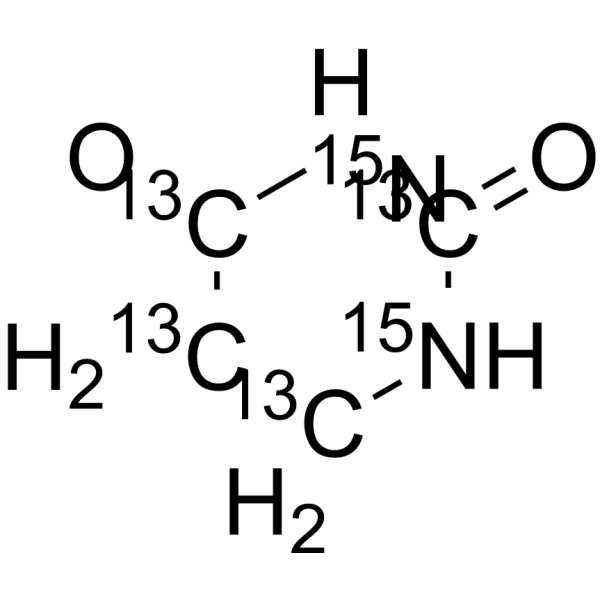
    5,6-Dihydrouracil-13C4,15N2

    Endogenous Metabolite Metabolic Disease
    Dihydrouracil- 13C4, 15N2 is the 13C and 15N labeled Dihydrouracil . Dihydrouracil (5,6-Dihydrouracil), a metabolite of Uracil, can be used as a marker for identification of dihydropyrimidine dehydrogenase (DPD)-deficient .
    Dihydrouracil-13C4,15N2
  • HY-114249

    Nucleoside Antimetabolite/Analog Dihydropyrimidine Dehydrogenase (DPD) Cancer
    DFP-11207 is an orally active fluoropyrimidine cytotoxic agent. DFP-11207 combines a 5-FU (HY-90006) pro-drug with a reversible DPD inhibitor and a potent inhibitor of OPRT, resulting in enhanced pharmacological activity of 5-FU with decreased gastrointestinal and myelosuppressive toxicities. DFP-11207 can be used for the research of cancer .
    DFP-11207
  • HY-134160S

    5-DHFU-13C,15N2; 5-Fluorodihydropyrimidine-2,4-dione-13C,15N2; 5-Fluorodihydrouracil-13C,15N2

    Isotope-Labeled Compounds Nucleoside Antimetabolite/Analog Cancer
    5,6-Dihydro-5-Fluorouracil- 13C, 15N2 (5-DHFU- 13C, 15N2) is the 13C- and 15N-labeled labeled 5,6-Dihydro-5-Fluorouracil (HY-134160). 5,6-Dihydro-5-Fluorouracil (5-DHFU; 5-Fluorodihydropyrimidine-2,4-dione) is the active metabolite of the thymidylate synthase inhibitor prodrug 5-fluorouracil (HY-90006), which is formed from 5-fluorouracil by dihydropyrimidine dehydrogenase (DPD). 5,6-Dihydro-5-Fluorouracil is cytotoxic to HaCaT keratinocytes (IC50=13.5 μM). Intravenous administration of 5,6-Dihydro-5-Fluorouracil (90 mg/kg/wk) in combination with 5-fluorouracil and the DPD inhibitor eniluracil (HY-10533) slows tumor growth in a rat colon cancer model.
    5,6-Dihydro-5-Fluorouracil-13C,15N2
  • HY-W012926R

    5,6-Dihydrouracil (Standard)

    Reference Standards Endogenous Metabolite Metabolic Disease
    Dihydrouracil (Standard) is the analytical standard of Dihydrouracil. This product is intended for research and analytical applications. Dihydrouracil (5,6-Dihydrouracil), a metabolite of Uracil, can be used as a marker for identification of dihydropyrimidine dehydrogenase (DPD)-deficient[1][2].
    Dihydrouracil (Standard)
  • HY-W196803R

    Propyl Disulfide (Standard); DPDS (Standard)

    Cytochrome P450 Reference Standards Others
    Dipropyl disulfide is oxidized to dipropyl thiosulfinate (DPDSO) by rat microsomes. Both flavincontaining monooxygenases (FMO) and cytochrome P450 enzymes (CYPs) are involved in dipropyl disulfide oxidation. Dipropyl disulfide forms two metabolites: propylglutathione sulfide conjugate and propylthiol .
    Dipropyl disulfide (Standard)
  • HY-W014109

    (E)-5-(2-Bromovinyl)uracil; BVU

    DNA/RNA Synthesis Infection
    (E)-5-(2-Bromovinyl)uracil (BVU) is a pyrimidine base and an inactive metabolite of the antiviral agents sorivudine and (E)-5-(2-bromovinyl)-2'-deoxyuridine (BVDU) that may be regenerated to BVDU in vivo. BVU irreversibly inactivates dihydropyrimidine dehydrogenase (DPD) in an NADPH-dependent manner. It enhances the efficacy of the chemotherapeutic agent and DPD substrate 5-fluorouracil (HY-90006) in a P388 murine leukemia model when administered at a dose of 200 μmol/kg, increasing survival time.
    (E)-5-(2-Bromovinyl)pyrimidine-2,4(1H,3H)-dione
  • HY-10533R

    5-Ethynyluracil (Standard); GW776C85 (Standard)

    Biochemical Assay Reagents Reference Standards Cancer
    Eniluracil (Standard) is the analytical standard of Eniluracil. This product is intended for research and analytical applications. Eniluracil (5-Ethynyluracil) is an orally active dihydropyrimidine dehydrogenase (DPD) inhibitor. Eniluracil irreversibly inhibits DPD, increases the oral bioavailability of 5-fluorouracil to 100%, and facilitates the uniform absorption and toxicity of 5-fluorouracil. Eniluracil can be used in cancer research of combination with fluoropyrimidines (including 5-fluorouracil) . Eniluracil is a click chemistry reagent, it contains an Alkyne group and can undergo copper-catalyzed azide-alkyne cycloaddition (CuAAc) with molecules containing Azide groups.
    Eniluracil (Standard)
  • HY-17469R

    Gimestat (Standard)

    DNA/RNA Synthesis Dihydropyrimidine Dehydrogenase (DPD) Reference Standards Cancer
    Gimeracil (Standard) is the analytical standard of Gimeracil. This product is intended for research and analytical applications. Gimeracil, a component of an oral fluoropyrimidine derivative S-1, inhibits DNA DSB repair and is a potent inhibitor of DPYD (dihydropyrimidine dehydrogenase, DPD) .
    Gimeracil (Standard)
  • HY-W777340

    Gimestat-13C3

    Isotope-Labeled Compounds DNA/RNA Synthesis Dihydropyrimidine Dehydrogenase (DPD) Cancer
    Gimeracil- 13C3 (Gimestat- 13C3) is the 13C-labeled Gimeracil (HY-17469). Gimeracil, a component of an oral fluoropyrimidine derivative S-1, inhibits DNA DSB repair and is a potent inhibitor of DPYD (dihydropyrimidine dehydrogenase, DPD) .
    Gimeracil-13C3
  • HY-17469S

    Gimestat-13C3,15N

    Isotope-Labeled Compounds Cancer
    Gimeracil- 13C3, 15N (Gimestat- 13C3, 15N) is 13C and 15N labeled Gimeracil. Gimeracil, a component of an oral fluoropyrimidine derivative S-1, inhibits DNA DSB repair and is a potent inhibitor of DPYD (dihydropyrimidine dehydrogenase, DPD) .
    Gimeracil-13C3,15N
  • HY-W779020

    5,6-Dihydrouracil-13C,15N2

    Isotope-Labeled Compounds Endogenous Metabolite Metabolic Disease
    Dihydrouracil- 13C, 15N2 (5,6-Dihydrouracil- 13C, 15N2) is the 13C- and 15N-labeled Dihydrouracil (HY-W012926). Dihydrouracil (5,6-Dihydrouracil), a metabolite of Uracil, can be used as a marker for identification of dihydropyrimidine dehydrogenase (DPD)-deficient .
    Dihydrouracil-13C,15N2
  • HY-19413

    Dihydropyrimidine Dehydrogenase (DPD) Endogenous Metabolite Cancer
    Ro-09-4889 is a prodrug. Ro-09-4889 can inhibit dihydropyrimidine dehydrogenase (DPD) activity and its effect is dose-dependent. Ro-09-4889 can be used for cancer research .
    Ro-09-4889
  • HY-182942

    Bacterial Elastase Infection
    PV-DPD-19 is an autoinducer-2 (AI-2) quorum sensing inhibitor. PV-DPD-19 reduces AI-2 production and inhibits the expression of multiple MSCRAMMs. In co-culture systems with Staphylococcus aureus, PV-DPD-19 decreases the production of pyocyanin and Elastase in Pseudomonas aeruginosa. PV-DPD-19 impairs the adhesion ability of Staphylococcus aureus to lung epithelial cells. PV-DPD-19 inhibits biofilm formation of Pseudomonas aeruginosa (MBIC50 = 27 μg/mL) and Staphylococcus aureus (MBIC50 = 35 μg/mL). PV-DPD-19 shows no cytotoxicity in both in vitro lung epithelial cell models and in vivo Galleria mellonella larva models .
    PV-DPD-19
  • HY-179188

    Biochemical Assay Reagents Others
    DPD Medium is mainly used for tissue culture and protoplast culture of woody plants, especially trees.
    DPD Medium

Inquiry Online

Your information is safe with us. * Required Fields.

Salutation


Country or Region *

Applicant Name *


Organization Name *

Department *


Email Address *


Product Name *

Cat. No.


Requested quantity *

Phone Number *


Remarks

Inquiry Online

Inquiry Information

Product Name:
Cat. No.:
Quantity:
MCE Japan Authorized Agent:

