
29 Results for "

AIE

" in MedChemExpress (MCE) Product Catalog:
Products (29)

29 Results for "AIE" in MCE Product Catalog:

Cat. No.: HY-118159
CAS No.: 110231-30-6
Purity:  99.68%
Synonyms: DPPP
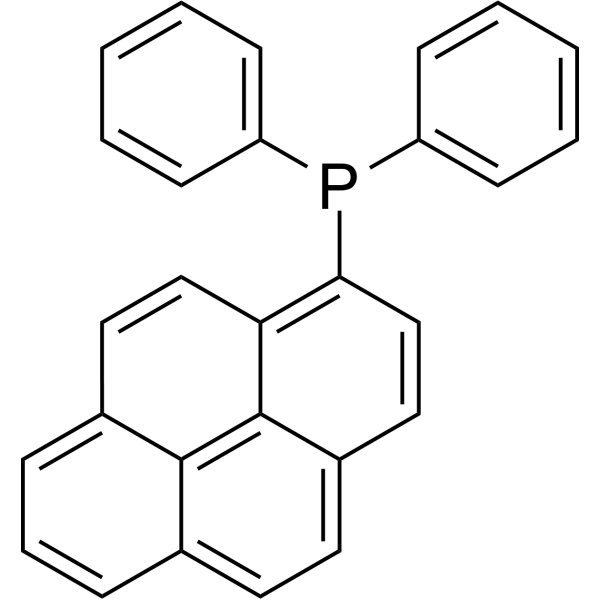
Diphenyl-1-pyrenylphosphine (DPPP) is a functional organic molecule with both fluorescent properties and metal coordination ability, which is commonly used in materials and coordination chemistry research. Upon exposure to ultraviolet light, Diphenyl-1-pyrenylphosphine undergoes photoinduced phosphorus atom oxidation to form O-DPPP, triggering a transition from aggregation-induced emission (AIE) to aggregation-caused quenching (ACQ). Diphenyl-1-pyrenylphosphine reacts stoichiometrically with lipid hydroperoxides to produce fluorescent diphenyl-1-pyrenylphosphine oxide. Diphenyl-1-pyrenylphosphine can insert into cell membranes to monitor lipid peroxidation processes in living cells .
loading...
    loading...
Cat. No.: HY-152073
CAS No.: 2924598-24-1
Purity:  98.76%
Target:  

Fluorescent Dye

Research Areas:  

Others

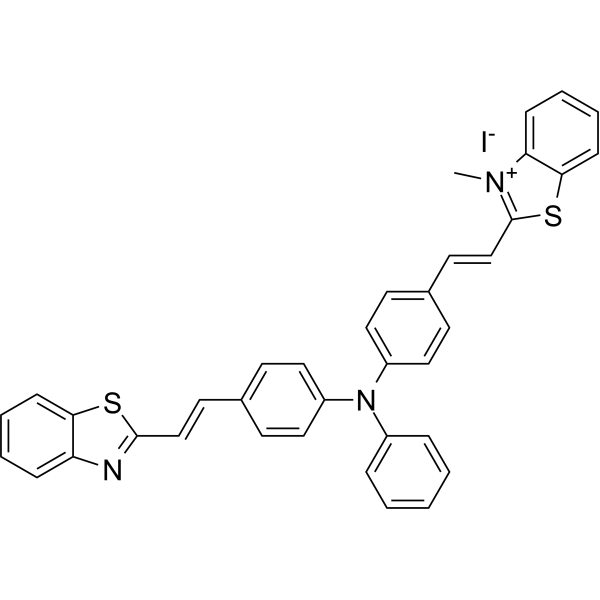
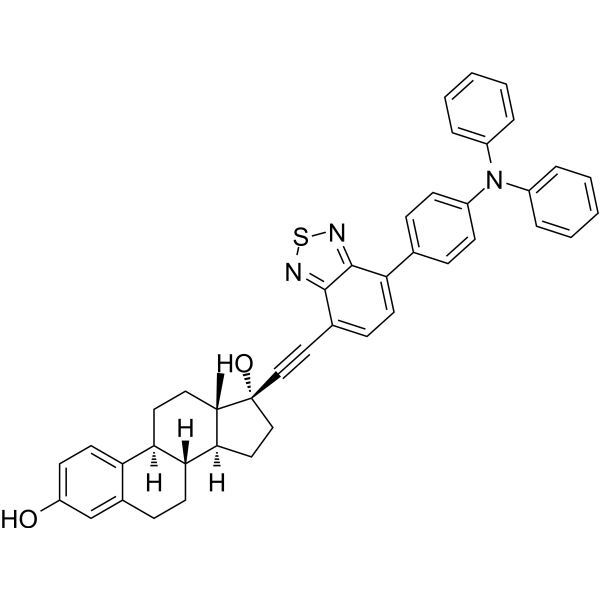
BETA-1 is the first twisted intramolecular charge transfer (TICT)-aggregation-induced emission (AIE) integration molecule. BETA-1 emits cyan fluorescence in lipid droplets (LDs) and red fluorescence in mitochondria. BETA-1 can be used for the simultaneous and dual-color imaging of LDs and mitochondria in vivo and in vitro .
loading...
    loading...
Cat. No.: HY-D1456
CAS No.: 2621957-88-6
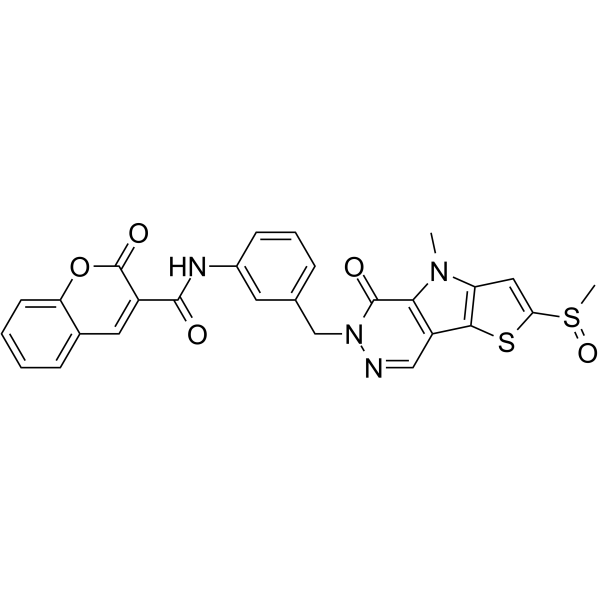
TEPC466 is a novel TEPP-46-based aggregation-induced emission (AIE) probe. TEPC466 shows a high degree of selectivity and sensitivity for the detection of PKM2 protein via the AIE effect. EPC466 can be used for the detection of PKM2. TEPC466 is successfully applied in imaging the PKM2 protein in colorectal cancer cells with low toxicity. TEPC466 is a useful tool for cancer diagnosis and research .
loading...
    loading...
Cat. No.: HY-D2299
CAS No.: 2653341-17-2
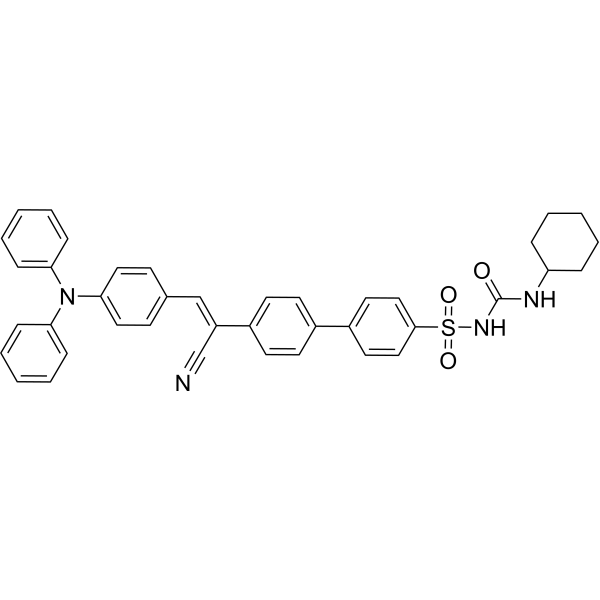
AIE-ER is a specific endoplasmic reticulum (ER) fluorescent probe (green channel: λex=405 nm, λem=450~650 nm) that exhibits remarkable photostability, high brightness, and low working concentration. AIE-ER may provide an avenue for studying diseases related to the endoplasmic reticulum .
loading...
    loading...
Cat. No.: HY-W074648
CAS No.: 1239602-35-7
Target:  

MOFs Bacterial

Research Areas:  

Infection

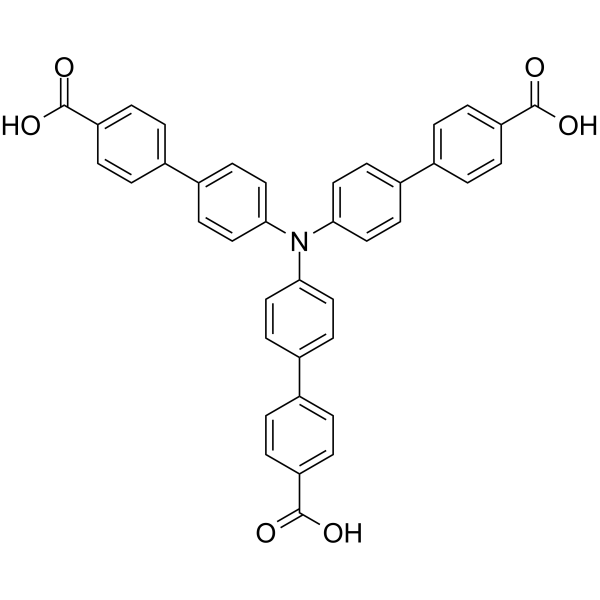
Antibacterial agent 18 is a multi-arm AIE molecule extracted from patent CN110123801A, compound 23. Antibacterial agent 18 can be used for resisting Gram-positive and Gram-negative bacteria. Antibacterial agent 18 can be conjugated in the cell wall of rigid arm configuration insertion bacterium, and block cell wall turns sugar and turns peptide process, to inhibit or kill bacterium .
loading...
    loading...
Cat. No.: HY-W008048
CAS No.: 362-75-4
Research Areas:  

Others

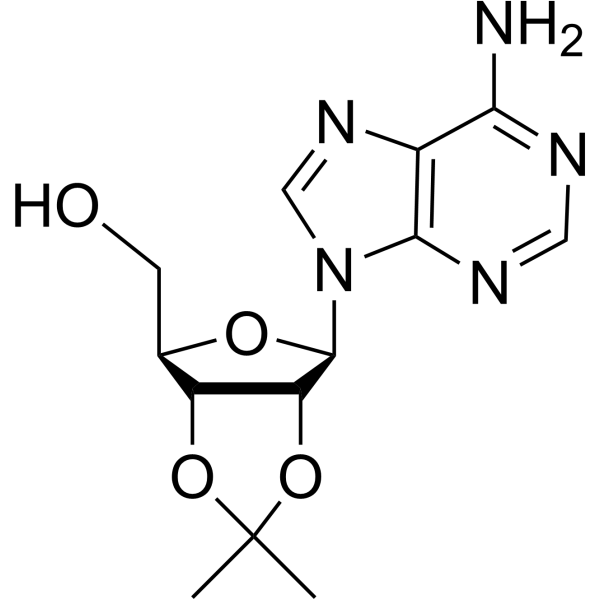
2',3'-O-Isopropylideneadenosine is a nucleoside compound and also a Golgi-targeting moiety. 2',3'-O-Isopropylideneadenosine constitutes a furanose ribose group that undergoes cyclization at the O (2') and O (3') atoms. As a component of the fluorescent probe TPE-Ade, 2',3'-O-Isopropylideneadenosine enables specific Golgi localization for fluorescence imaging. 2',3'-O-Isopropylideneadenosine participates in the synthesis of aggregation-induced emission (AIE) fluorescent probes .
loading...
    loading...
Cat. No.: HY-W133963
CAS No.: 9063-38-1
Carboxyl methylstarch sodium is an anionic polymer prepared by carboxymethylation of starch, with properties of stability, thickening ability and film-forming capacity . Carboxyl methylstarch sodium exhibits metal adsorption activity and can remove copper ions and cadmium ions from aqueous solutions. Carboxyl methylstarch sodium can serve as a hydrophilic shell component for AIE-active luminescent polymer nanoprobes to achieve high water dispersibility. Carboxyl methylstarch sodium can bind to vancomycin without altering the in vitro antibacterial activity of vancomycin. Carboxyl methylstarch sodium possesses biodegradable, non-toxic and environmentally friendly characteristics. Carboxyl methylstarch sodium can be applied to relevant researches in various fields such as food, medicine and industry .
loading...
    loading...
Cat. No.: HY-D1504
CAS No.: 110992-55-7
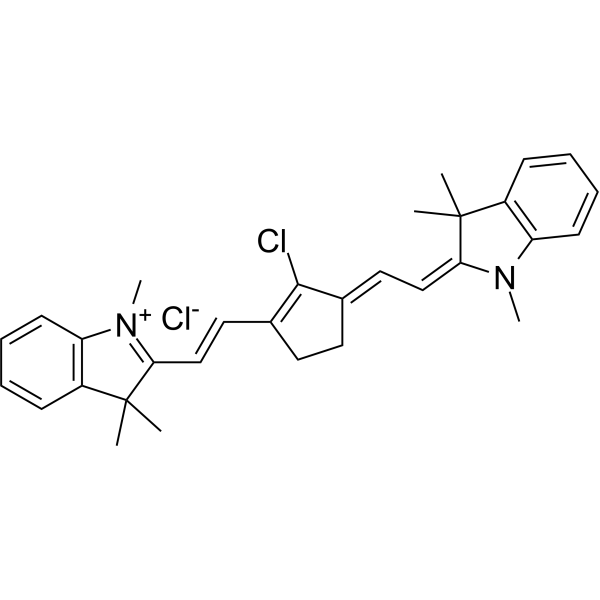
IR-797 chloride is a near-infrared (NIR) dye. IR 797 has absorption maxima near 700 nm. IR-797 shows some aggregation-induced-emission (AIE) properties. IR-797 shows shows cytotoxic .
loading...
    loading...
Cat. No.: HY-W856375A
CAS No.: 2046513-40-8
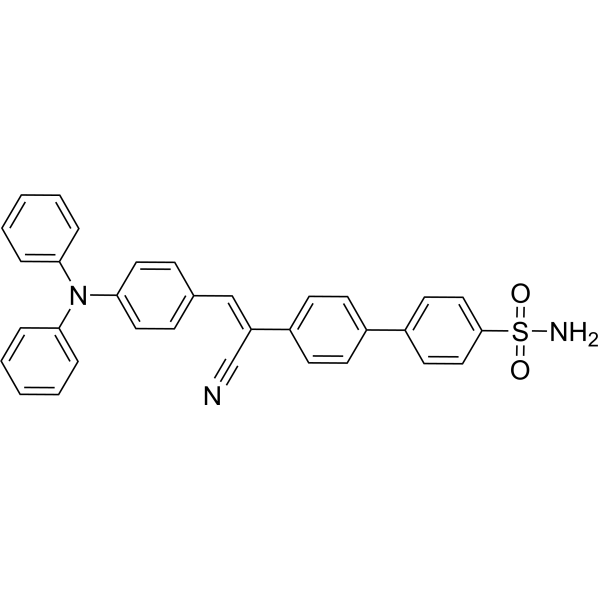
BSPOTPE is the mixture of (E)-BSPOTPE (HY-W856375) and (Z)-BSPOTPE. BSPOTPE binds Human serum albumin (HSA) (HY-P1956), exhibits aggregation-induced emission (AIE) phenomenon. BSPOTPE shows selectivity for albumin (such as HSA and BSA), but has no obvious fluorescence response to other proteins and DNA. BSPOTPE can be used as fluorescent probe for HSA .
loading...
    loading...
Cat. No.: HY-D2297
CAS No.: 2653341-16-1
AIE-GA is a Golgi apparatus (GA) fluorescent probe (green channel: λex = 405 nm, λem = 500-700 nm). AIE-GA has a favourable binding ability to interact with COX-2. AIE-GA binds to the cyclooxygenase catalytic site of COX-2 .
loading...
    loading...
Cat. No.: HY-D2268
CAS No.: 2316820-94-5
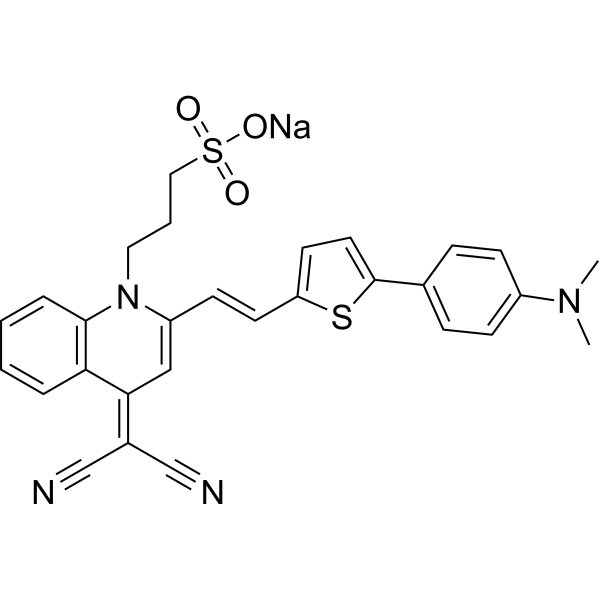
QM-FN-SO3 is a BBB-penetrable near-infrared (NIR) aggregation-induced emission (AIE)-active probe for Aβ plaques. QM-FN-SO3 can be used for in vivo detection of Aβ plaques. QM-FN-SO3 has ultra-high S/N ratio, binding affinity, and high-performance NIR emission .
loading...
    loading...
Cat. No.: HY-W856375
CAS No.: 953792-48-8
(E)-BSPOTPE is the E configuration of BSPOTPE (HY-W856375A). BSPOTPE binds Human serum albumin (HSA) (HY-P1956), exhibits aggregation-induced emission (AIE) phenomenon. BSPOTPE shows selectivity for albumin (such as HSA and BSA), but has no obvious fluorescence response to other proteins and DNA. BSPOTPE can be used as fluorescent probe for HSA .
loading...
    loading...
Cat. No.: HY-151468
CAS No.: 2810130-33-5
Target:  

Fluorescent Dye

Research Areas:  

Others

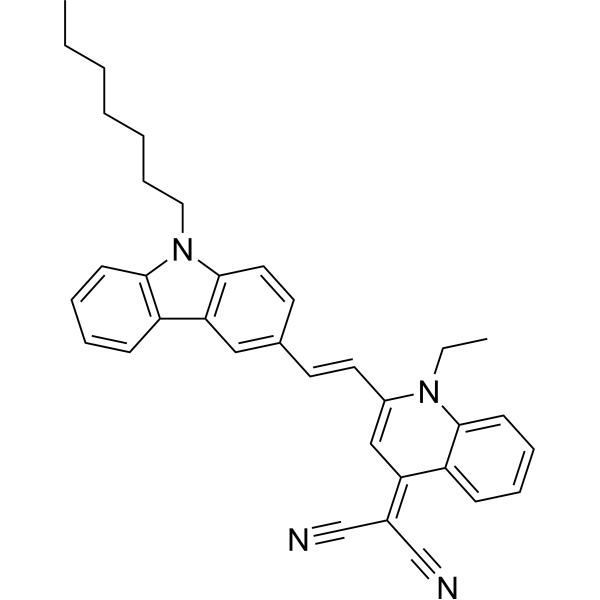
AIECbz-LD-C7 is an aggregation-induced emission (AIE) probe based on the conjugation of quinoline-malononitrile (QM) and carbazole. AIECbz-LD-C7 has excellent LD-specificity. AIECbz-LD-C7 can be used for tracking the dynamic changes of LDs and studying the association between LDs and lysosome/endoplasmic reticulum (ER) .
loading...
    loading...
Cat. No.: HY-D2268A
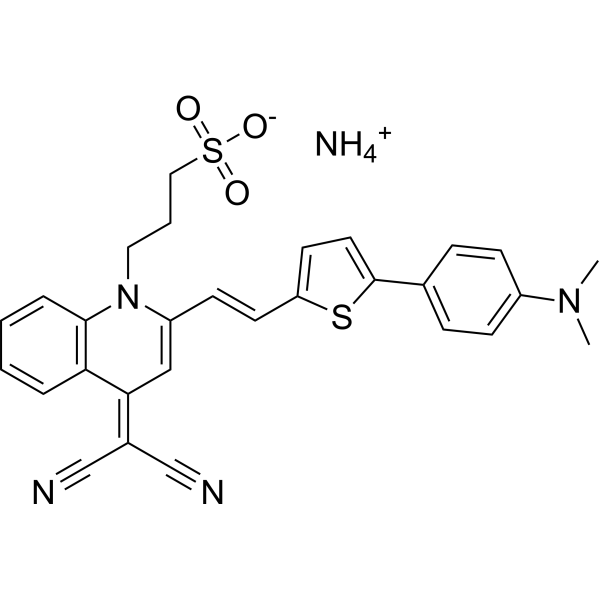
QM-FN-SO3 ammonium is a BBB-penetrable near-infrared (NIR) aggregation-induced emission (AIE)-active probe for Aβ plaques. QM-FN-SO3 ammonium can be used for in vivo detection of Aβ plaques. QM-FN-SO3 ammonium has ultra-high S/N ratio, binding affinity, and high-performance NIR emission .
loading...
    loading...
Cat. No.: HY-P10674
Research Areas:  

Neurological Disease

QMT-CBT is a near-infrared aggregation-induced luminescent photon. After activation of caspase1 (Cas1), QMT-CBT undergoes a CBT-Cys click reaction to form a cyclic dimer QMT-Dimer (the first aggregate) and assembles into nanoparticles (the second aggregate), turning the AIE signal "on" to enhance imaging of Alzheimer's disease (AD) .
loading...
    loading...
Cat. No.: HY-151536
CAS No.: 2922973-15-5
Target:  

Fluorescent Dye

Research Areas:  

Neurological Disease

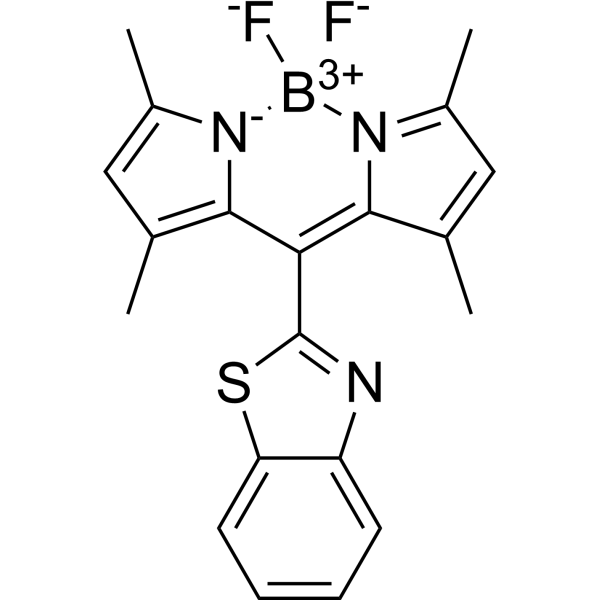
meso-Benzothiazole-BODIPY 505/515 is a boron dipyrromethenes (BODIPY) -based fluorescent probeAIE) properties. meso-Benzothiazole-BODIPY 505/515 can monitor cellular viscosity changes and autophagy. meso-Benzothiazole-BODIPY 505/515 can be used for the research of Alzheimer’s diseases, lysosomal storage diseases and neural degeneration diseases .
loading...
    loading...
Cat. No.: HY-D2639
CAS No.: 3032077-04-3
TPE-PY is a fluorescent dye targeting mitochondria, which has cationic and lipophilic characteristics, enabling specific targeting of mitochondria. TPE-PY functions through the aggregation-induced emission (AIE) mechanism. TPE-PY mechanism of action is based on the restriction of intramolecular rotation (RIR), which enhances fluorescence in the aggregated state. TPE-PY is mainly used in the field of biological imaging, especially for the specific staining of mitochondria in living cells, facilitating the observation of the location, morphology, and quantity of mitochondria .
loading...
    loading...
Cat. No.: HY-W008048S
2',3'-O-Isopropylideneadenosine- 13C5 is the 13C-labeled 2',3'-O-Isopropylideneadenosine (HY-W008048). 2',3'-O-Isopropylideneadenosine is a nucleoside compound and also a Golgi-targeting moiety. 2',3'-O-Isopropylideneadenosine constitutes a furanose ribose group that undergoes cyclization at the O (2') and O (3') atoms. As a component of the fluorescent probe TPE-Ade, 2',3'-O-Isopropylideneadenosine enables specific Golgi localization for fluorescence imaging. 2',3'-O-Isopropylideneadenosine participates in the synthesis of aggregation-induced emission (AIE) fluorescent probes .
loading...
    loading...
Cat. No.: HY-D2986
CAS No.: 2634719-04-1
TBD–anchor is a water-soluble, positively charged AIE photosensitizer. TBD–anchor can specifically bind to bacterial membranes and efficiently produce 1O2. TBD–anchor has bactericidal activity against various bacteria and good biocompatibility. TBD–anchor can be used for research on bacterial infections .
loading...
    loading...
Cat. No.: HY-P71659
Purity:  ≥ 90%, as determined by reducing SDS-PAGE.
Synonyms: AIE 75; AIE75; Antigen NY CO 38/NY CO 37; Deafness autosomal recessive 18; DFNB 18; DFNB18
Species:  
Source:  
loading...
    loading...

