11 Results for "

Alstroemeria cultivars

" in MedChemExpress (MCE) Product Catalog:
Products (11)

11 Results for "Alstroemeria cultivars" in MCE Product Catalog:

4
4 Cited Publications
Cat. No.: HY-N8377
CAS No.: 205687-01-0
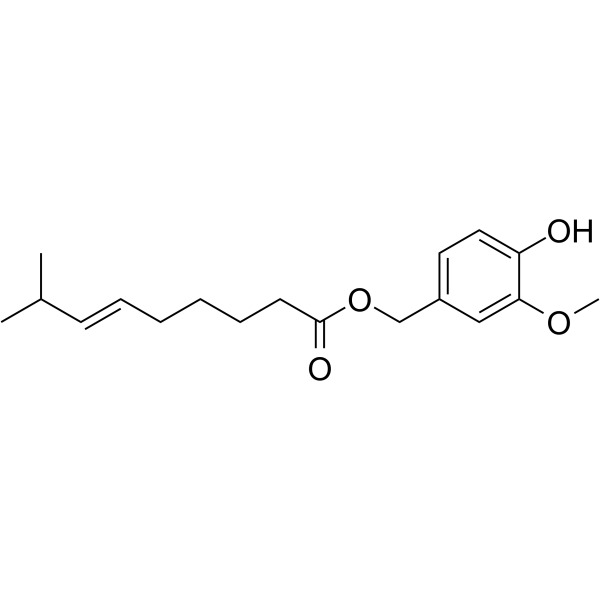
Capsiate, as a capsaicin analogue extracted from a non-pungent cultivar of CH-19 sweet red pepper, is an orally active agonist of TRPV1 .
loading...
    loading...
Cat. No.: HY-113418
CAS No.: 667-65-2
Purity:  ≥99.0%
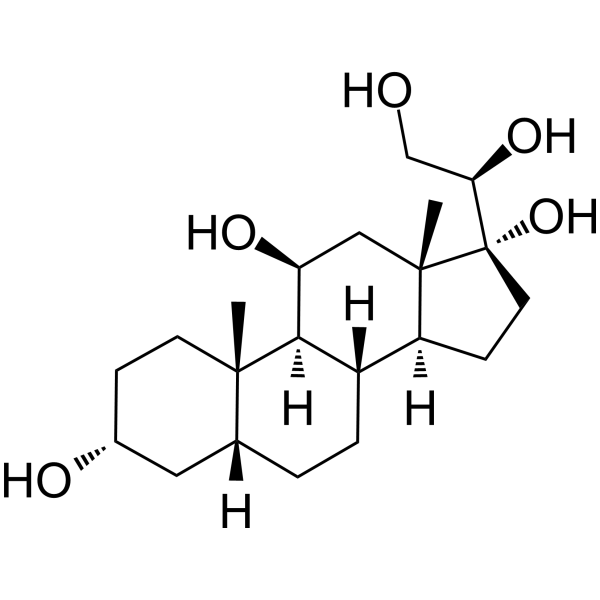
Beta-Cortol is an O-glycosylated compound and cortisol metabolite. It can be isolated from the leaves of mulberry cultivar Yu 711, and its concentration decreases significantly when the plant is subjected to drought stress. Beta-Cortol serves as a biomarker, as serum Beta-Cortol levels in early non-small cell lung cancer models are downregulated to 1/8 of the preoperative level after tumor resection. Due to such dramatic changes under specific pathological conditions, Beta-Cortol is currently widely used in studies related to early non-small cell lung cancer .
loading...
    loading...
Cat. No.: HY-N8722
CAS No.: 480-15-9
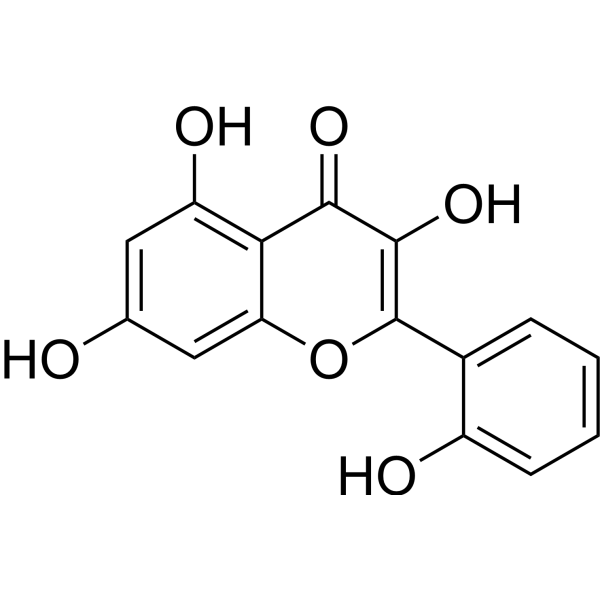
Datiscetin (compound 5) is a natural compound isolated from the cultivar “Roland”, and shows fungitoxic activity towards F. oxysporum f. sp. dianthi. .
loading...
    loading...
Cat. No.: HY-107210
CAS No.: 23290-26-8
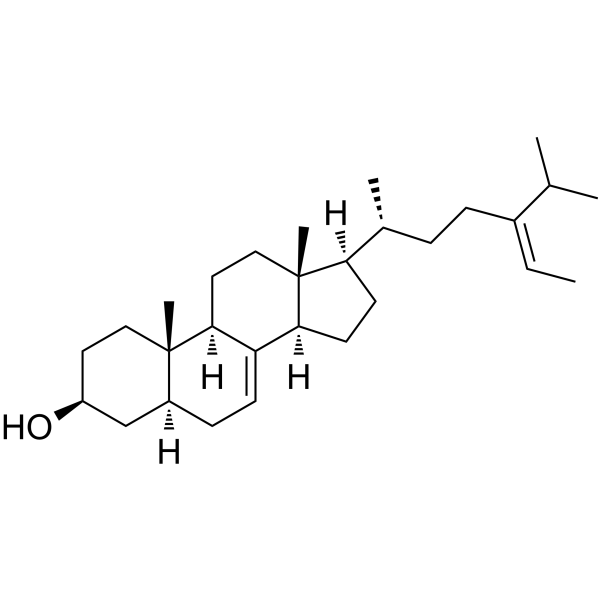
Avenasterol is a natural sterol isolated from seed oils of Testouri and Jebali cultivars .
loading...
    loading...
Cat. No.: HY-P2715
CAS No.: 73554-93-5
Target:  

Fluorescent Dye

Research Areas:  

Others

Boc-Leu-Ser-Thr-Arg-AMC is a fluorogenic AMC-linked protease substrate .
loading...
    loading...
Cat. No.: HY-135752
CAS No.: 99827-19-7
Target:  

Bacterial

Research Areas:  

Infection

Carbendazim mixture with flusilazole is a fungicide used to control sooty mold caused by Botrytis narcissicola. The disease is the most common foliar disease of daffodils (Narcissus cultivars) in the UK and causes significant losses in bulb and flower production. Carbendazim mixture with flusilazole was found to be effective in reducing lesion size and significantly reducing symptoms of secondary sooty mold after spraying when used in combination with several other fungicides. In field trials in Cambridgeshire and Lincolnshire, a spraying program using this fungicide mixture was effective in controlling sooty mold. In addition, alternating four to six sprays using two or three fungicides with different modes of action not only reduced disease damage but also increased bulb production. The study discusses the selection of appropriate fungicides and control methods that may reduce the number of spraying applications.
loading...
    loading...
Cat. No.: HY-183425
CAS No.: 301-16-6
Synonyms: Chrysoeriol-8-C-glucoside
Scoparin is a C-glycosylflavone (chrysoeriol-8-C-glucoside) present in the juices of Citrus sinensis cultivars Sanguinello and Moro, as well as Citrus bergamia Risso and Citrus limetta Risso. Scoparin exhibits antioxidant activity .
loading...
    loading...
Cat. No.: HY-N11889
CAS No.: 28288-98-4
Isorhamnetin 3,4′-diglucoside is a flavonol diglucoside that can be isolated from red-skinned onions (Allium cepa L.) from southern Italy, shallots (Allium ascalonicum Hort.), Zea mays pollen, and flowers of Crocus chrysanthus-biflorus cultivars .
loading...
    loading...
Cat. No.: HY-N17996
CAS No.: 2803327-85-5
3'-O-Methylisosaponarin is a spsoscoparin glycoside found in the leaves of C. sativus cultivar Chinese Yellow. 3'-O-Methylisosaponarin shows weak anti-lipase activity. 3'-O-Methylisosaponarin can be used for the research of disturbances of lipid metabolism .
loading...
    loading...
Cat. No.: HY-W094560
CAS No.: 1312-76-1
Research Areas:  

Infection

Potassium silicate acts as a silicon-containing foliar fertilizer and an inhibitor of rice blast. Foliar application of Potassium silicate to the susceptible rice cultivar 'Metica 1' reduces the incidence of rice blast caused by Pyricularia oryzae. Potassium silicate does not enhance silicon uptake or accumulation in rice plants. Potassium silicate can be used in studies related to rice blast .
loading...
    loading...
Cat. No.: HY-W142206
CAS No.: 930-60-9
Cyclopent-4-ene-1,3-dione is a potent antifungal inhibitor of chitin synthesis. Cyclopent-4-ene-1,3-dione is potently antifungal against human pathogenic Candida species (IC50 = 1-2 μM). Cyclopent-4-ene-1,3-dione is detected in feijoa cultivars with high antifungal bioactivity. Cyclopent-4-ene-1,3-dione can be used for the research of fungal infections .
loading...
    loading...
  • 1

