Search Result
Results for "
Antileishmanial
" in MedChemExpress (MCE) Product Catalog:
6
Isotope-Labeled Compounds
| Cat. No. |
Product Name |
Target |
Research Areas |
Chemical Structure |
-
- HY-13685
-
|
HePC; Hexadecyl phosphocholine
|
Akt
HIV
Parasite
|
Infection
Cancer
|
|
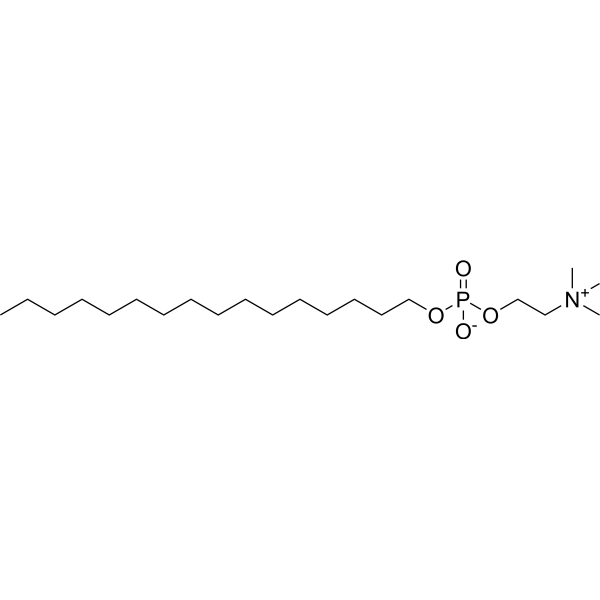
Miltefosine is a broad spectrum antimicrobial, anti-leishmanial, phospholipid agent acting by inhibiting the PI3K/Akt activity . Miltefosine is an inhibitor of CTP-phosphocholine cytidyltransferase (CCT) .
|
-
-
- HY-16565
-
|
|
Biochemical Assay Reagents
Drug Intermediate
Parasite
|
Infection
|
|
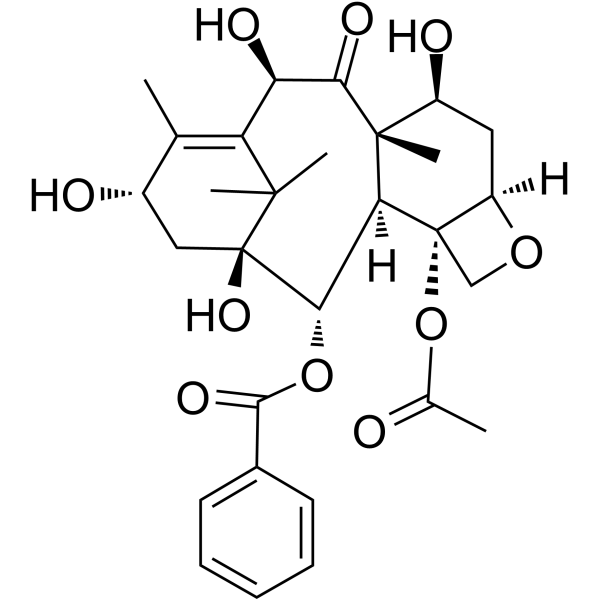
10-Deacetylbaccatin-III is an intermediate in the preparation process of paclitaxel. 10-Deacetylbaccatin III can be isolated from the dried needles and small branches of the European yew tree (Taxus baccata). 10-Deacetylbaccatin III exhibits antileishmanial activity .
|
-
-
- HY-147092
-
|
|
Environmental Pollutants
Microtubule/Tubulin
Herbicide
|
Infection
|
|
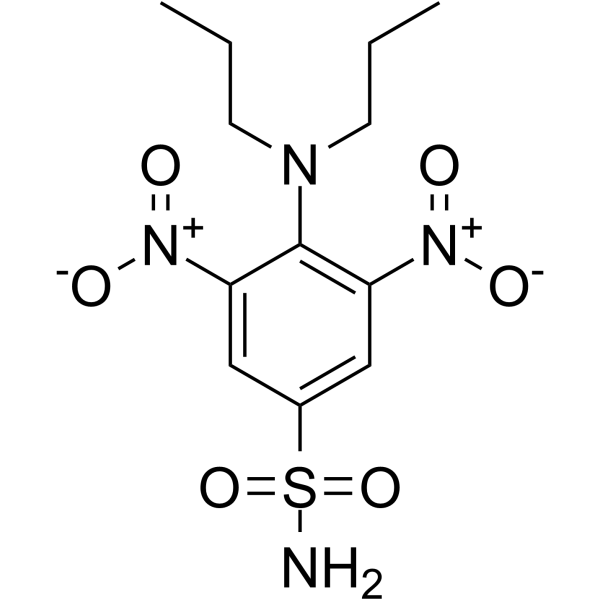
Oryzalin is a dinitroaniline herbicide with antimitotic and antileishmanial activities. Oryzalin can bind to plant tubulin, inhibit the polymerization of microtubules in plant cells, and affect chromosome migration. Oryzalin can also be used to induce chromosome doubling .
|
-
-
- HY-W012634
-
-
-
- HY-N7906
-
|
Myricetin 3-β-D-glucopyranoside
|
Bacterial
Parasite
Antibiotic
|
Infection
Inflammation/Immunology
|
|
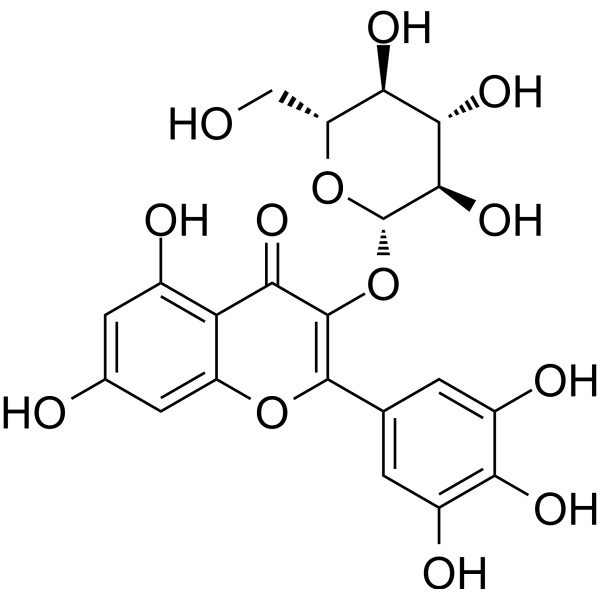
Myricetin 3-O-glucoside (Myricetin 3-β-D-glucopyranoside) is a flavonol from Tibouchina paratropica and Hakmeitau beans. Myricetin 3-O-glucoside exhibits anti-Leishmanial, anti-inflammatory and antimicrobial activities .
|
-
-
- HY-W077028
-
|
|
Biochemical Assay Reagents
|
Others
|
|
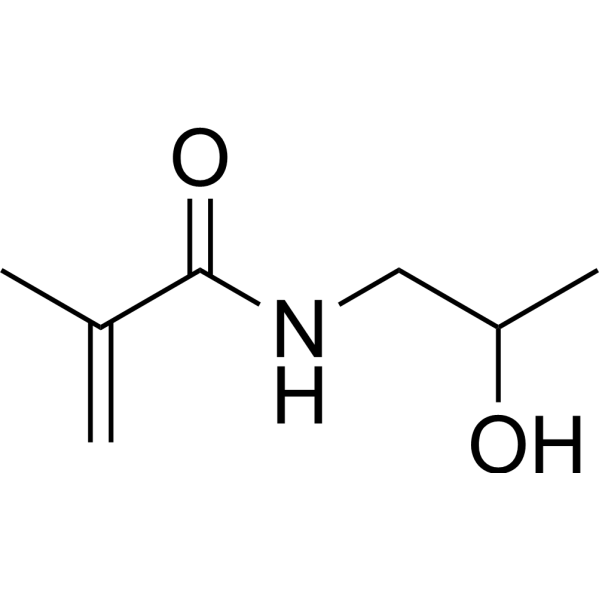
N-(2-Hydroxypropyl)methacrylamide is used to synthesize copolymers for the targeted delivery of antileishmanial agents in Visceral leishmaniasis (VL) .
|
-
-
- HY-N1453
-
|
|
Apoptosis
Fungal
Parasite
|
Infection
Cancer
|
|
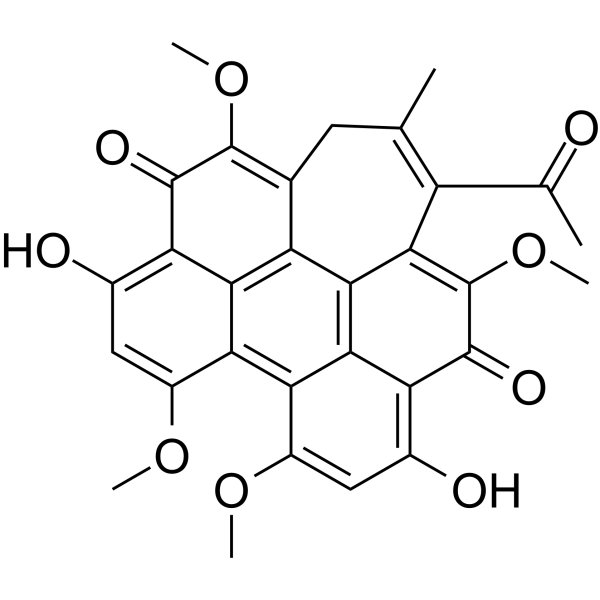
Hypocrellin B, a pigment isolated from the fungi Hypocrella bambusae and Shiraia bambusicola, is an apoptosis inducer. Hypocrellin B can be used as a photosensitizer for photodynamic therapy of cancer. Hypocrellin B also has antimicrobial and antileishmanial activities .
|
-
-
- HY-75247
-
-
-
- HY-N0397
-
|
|
Parasite
|
Infection
Inflammation/Immunology
|
|
Harpagide is a class of iridoid glycoside isolated from Scrophularia ningpoensis and has antiparasitic activity, which exhibits good in vitro trypanocidal activities against African trypanosomes (T.b. rhodesiense) with an IC50 of 21 μg/mL. Harpagide exerts significant antileishmanial activity against L. donovani with an IC50 value of 2.0 μg/mL. Harpagide also possess significant anti-inflammatory activities .
|
-
-
- HY-121368
-
|
|
Parasite
|
Infection
Inflammation/Immunology
Cancer
|
|
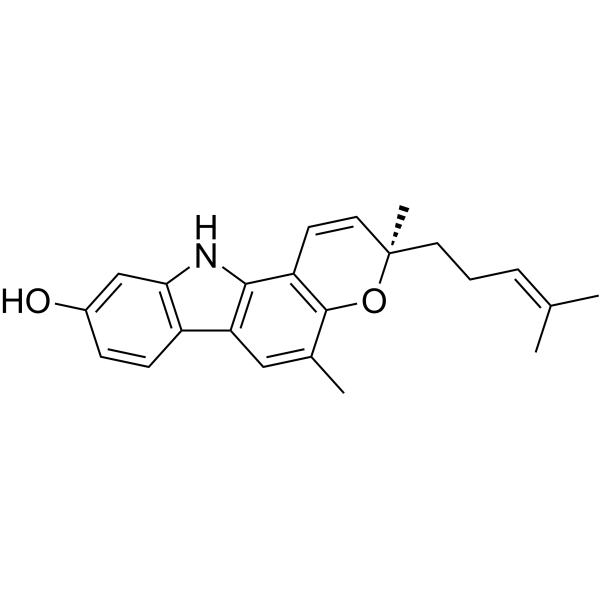
Mahanine is a carbazole alkaloid with various biological properties. Mahanine is a potent anticancer agent against different types of cancer cells. Mahanine exhibits antileishmanial activity and can be used for Leishmania infection research research.
|
-
-
- HY-W075770
-
|
Nickel monoxide
|
Environmental Pollutants
Apoptosis
Reactive Oxygen Species (ROS)
Caspase
TGF-beta/Smad
p38 MAPK
Akt
PI3K
|
Infection
Metabolic Disease
Cancer
|
|
Nickel(II) oxide (nickel monoxide) is a chemical warfare agent that can enter the body through the respiratory tract and other routes, distributing to organs such as the lungs and testes. The nanoparticle form of nickel(II) oxide (NiO NPs) exhibits antibacterial, anti-leishmanial, anti-diabetic, and anti-cancer activities. NiO NPs can be activated by ultraviolet and visible light, generating reactive oxygen species (ROS). Nickel(II) oxide induces oxidative stress by generating reactive oxygen species, activating the TGF-β1-mediated MAPK and PI3K/AKT pathways, disrupting the MMPs/TIMPs balance, and upregulating the expression of inflammatory factors (IL-1β, IL-6) and apoptosis-related molecules (Bax, caspase-3, p53), while inhibiting the activity of the anti-apoptotic molecule Bcl-2. Nickel(II) oxide induces cytotoxicity, promotes fibrosis, triggers inflammatory responses, and causes apoptosis. Nickel(II) oxide can be applied in research on the safety assessment of nanomaterials, such as in the context of pulmonary fibrosis and reproductive system toxicity .
|
-
-
- HY-101011
-
-
-
- HY-B0483
-
-
-
- HY-W012634S
-
|
|
Isotope-Labeled Compounds
Bacterial
|
Cancer
|
|
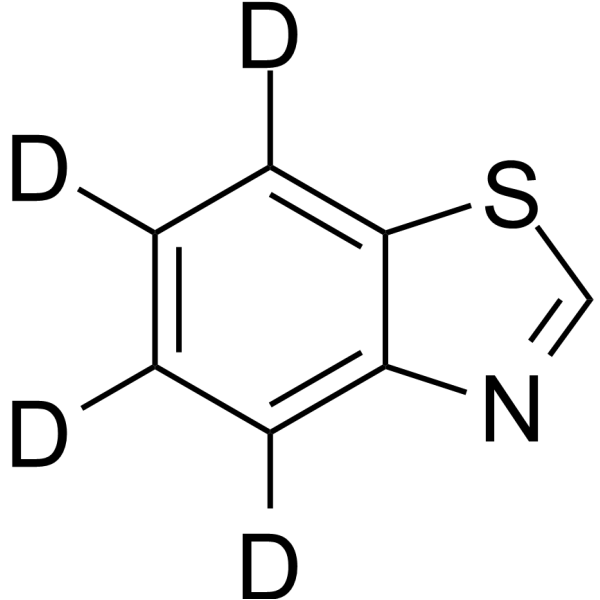
Benzothiazole-d4 is a deuterium labeled Benzothiazole (HY-W012634). Benzothiazole is a natural occurring heterocyclic nuclei. Benzothiazole nucleus possesses a number of biological activities such as anticancer, antimicrobial, antidiabetic, anti-inflammatory, antileishmanial, and antiviral .
|
-
-
- HY-155520
-
|
|
Parasite
|
Infection
|
|
Antileishmanial agent-19 (Compound F27) is an antileishmanial agent, with a IC50 of 3.39 μM for L. donovani promastigotes. Antileishmanial agent-19 inhibits Leishmania prolyl-tRNA synthetase. Antileishmanial agent-19 inhibits host PI3K/Akt/CREB axis-mediated IL-10 secretion. Antileishmanial agent-19 induces autophagy-mediated apoptosis in L. donovani promastigotes. Antileishmanial agent-19 reduces parasite burden in L.d-infected animals .
|
-
-
- HY-N1077
-
|
|
Cholinesterase (ChE)
Endogenous Metabolite
|
Others
|
|
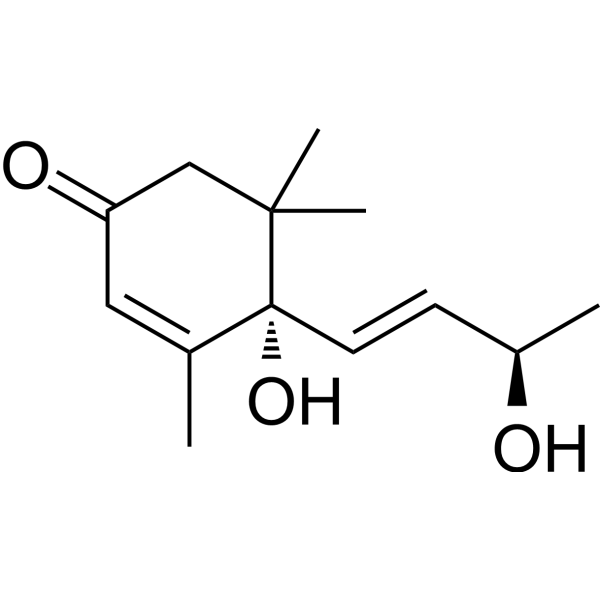
Vomifoliol, a compound related to abscisie acid (ABA), has a modified 2,4-pentadiene side chain and has activity equal to that displayed by ABA. Vomifoliol exhibits antiacetylcholinesterase activity and displays moderate antileishmanial activity .
|
-
-
- HY-134467
-
|
|
Parasite
NO Synthase
|
Infection
|
|
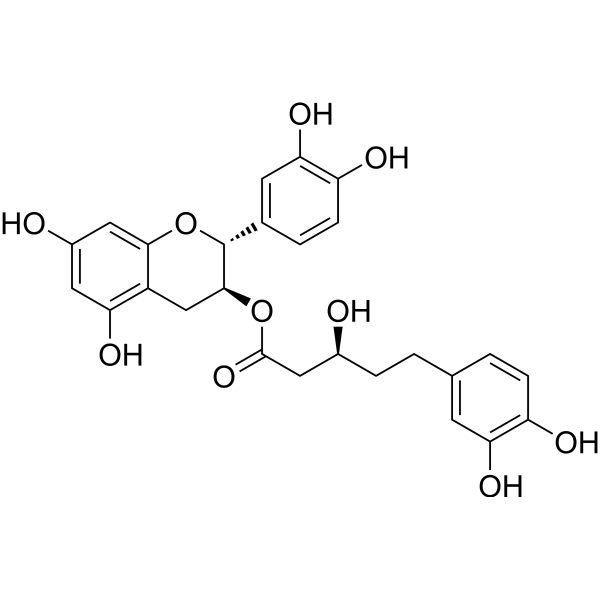
Phylloflavan is an antileishmanial (Antileishmanial) agent with an EC50 of 3.2 nM against intracellular amastigotes of Leishmania donovani. Phylloflavan is isolated from Phyllocldus plants. Phylloflavan induces moderate levels of NO release. Phylloflavan also inhibits the cytopathic effect of encephalomyocarditis virus on L929 fibroblasts (38 U/mL) .
|
-
-
- HY-151935
-
|
|
Parasite
|
Infection
|
|
Antileishmanial agent-13 is a quinoline-isatin hybrid, acts as an antileishmanial agent against L. Major Leishmania strain. Antileishmanial agent-13 acquires the antileishmanial activity via the anti-folate mechanism. Antileishmanial agent-13 has potent inhibition against both promastigote and amastigote forms with IC50s of 0.604 μM and 0.508 μM, respectively .
|
-
-
- HY-N7985
-
|
|
Parasite
Bacterial
|
Infection
Cancer
|
|
Pendulone is a isoflavanquinone with good antiplasmodial activity with an IC50 of 7.0 µM. Pendulone also has antileishmanial, antibacterial and anticancer activity .
|
-
-
- HY-178784
-
|
|
Parasite
|
Infection
|
|
Antileishmanial agent-37 (Compound 1b) is an antileishmanial agent, TbPTR1 (an IC50 value of 17.1 μM) and LmPTR1 inhibitor. Anti-leishmaniasis agent-37 has a moderate effect against Leishmania infantum .
|
-
-
- HY-149958
-
|
|
Parasite
|
Infection
|
|
Antileishmanial agent-17 is a coumarin hybrid compound with antileishmanial effects (IC50 <0.78 μM). Antileishmanial agent-17 is safe to normal VERO cells. Antileishmanial agent-17 binds to folate pathway enzymes pteridine reductase and DHFR-TS. And Antileishmanial agent-17 shows the most potent with IC50 value of 0.40 μM against promastigote and 0.68 μM against amastigote, respectivley.
|
-
-
- HY-13685R
-
|
HePC (Standard); Hexadecyl phosphocholine (Standard)
|
Akt
HIV
Parasite
Reference Standards
|
Infection
Cancer
|
|
Miltefosine (Standard) is the analytical standard of Miltefosine. This product is intended for research and analytical applications. Miltefosine is a broad spectrum antimicrobial, anti-leishmanial, phospholipid agent acting by inhibiting the PI3K/Akt activity . Miltefosine is an inhibitor of CTP-phosphocholine cytidyltransferase (CCT) .
|
-
-
- HY-W019829
-
|
|
Tyrosinase
Parasite
|
Infection
|
|
Polyphyllin C (compound 2) is a spirostanol saponin. Polyphyllin C exhibits mild (IC50=36.87 µM) activities against the tyrosinase and moderate (IC50=1.59 µg/mL) antileishmanial activities .
|
-
-
- HY-131300
-
|
|
Parasite
|
Infection
|
|
Colchicoside is a bioactive tropolone alkaloid with anti-leishmanial and anti-leishmanial?activities .
|
-
-
- HY-19688B
-
|
WR 6026 tosylate
|
Parasite
Mitochondrial Metabolism
|
Infection
|
|
Sitamaquine (WR6026) tosylate, an orally active 8-aminoquinoline analog, is an antileishmanial agent. Sitamaquine tosylate inhibits mitochondrial complex II (succinate dehydrogenase). Sitamaquine tosylate is a lipophilic weak base that rapidly accumulates in acidic compartments of Leishmania spp., mainly in acidocalcisomes .
|
-
-
- HY-N8471
-
|
|
Parasite
SARS-CoV
|
Infection
Inflammation/Immunology
|
|
Niazinin is a thiocarbamate glycoside with antileishmanial activities, with an IC50 value of 5.25 μM. Niazinin also shows a binding affinity with the target protein 3CL protease. Niazinin has promising leishmanicidal, anti-inflammatory and anti-pyretic activity .
|
-
-
- HY-162498
-
|
|
Parasite
|
Infection
|
|
Antileishmanial agent-29 (Compound 110) is an orally active antileishmanial agent. Antileishmanial agent-29 (p.o., 40, 60 mg/kg, 10 days) protects mice from leishmania infection .
|
-
-
- HY-W097659
-
|
|
Parasite
|
Infection
|
|
Antileishmanial agent-32 (Compound 12) exhibits a weak antileishmanial activity that inhibits stationary promastigote forms of L. amazonensis with an IC50 >15 μM. Antileishmanial agent-32 exhibits cytotoxicity towards murine macrophages .
|
-
-
- HY-155301
-
|
|
Parasite
|
Infection
|
|
Antileishmanial agent-24 (compound 33) is an antileishmanial agent with an IC50 of 5.39 μM against amastigote .
|
-
-
- HY-W631668
-
|
|
Parasite
|
Infection
|
|
Antileishmanial agent-34 (Fig. (9), compound 3) is an aurone with antileishmanial activity. Antileishmanial agent-34 against extracellular forms of Lmaj, Ldon, Linf and Lenr as well as against intracellular forms of Ldon (IC50 of <2 µg/mL) .
|
-
-
- HY-138812
-
|
|
Parasite
|
Infection
Inflammation/Immunology
|
|
Antileishmanial agent-28 (Compd 12) is an antileishmanial agent, with EC50 values of 1.5 μM (L.donovani), 13 μM (L.amazonensis) and 18 μM (J774A.1), respectively .
|
-
-
- HY-156427
-
|
|
Parasite
|
Infection
|
|
Antileishmanial agent-25 (compound 24) is selective antileishmanial activity on intracellular amastigotes, with the IC50 of 6.63 μM .
|
-
-
- HY-155549
-
|
|
Parasite
|
Infection
|
|
Antileishmanial agent-20 is selective towards Leishmania parasite. Antileishmanial agent-20 has IC50 value of 2.8 μM and 0.2 μM for L. infantum and L. braziliensis, respectively. Antileishmanial agent-20 can be used for parasites research .
|
-
-
- HY-149834
-
|
|
Parasite
|
Infection
|
|
Antileishmanial agent-18 (Compound 1e) is an antileishmanial agent. Antileishmanial agent-18 effectively inhibits growth of L. donovani promastigotes. Antileishmanial agent-18 is safe for host cells .
|
-
-
- HY-149956
-
|
|
Parasite
|
Infection
|
|
Antileishmanial agent-15 (compound 13c) is a potent antileishmanial agent. Antileishmanial agent-15 shows antileishmanial and cytotoxic activity against L. major promastigotes and amastigotes, with IC50 values of 0.78 and 0.99 μM, respectively .
|
-
-
- HY-146744
-
|
|
Parasite
|
Infection
|
|
Antileishmanial agent-4 is a ribonucleoside analogue and acts as an antileishmanial agent .
|
-
-
- HY-163457
-
|
|
Aminoacyl-tRNA Synthetase
Parasite
|
Infection
|
|
Antileishmanial agent-27 (compound 7j) is a benzothiazolo-coumarin derivative. Antileishmanial agent-27 is a competitive inhibitor of arginyl-tRNA synthetases (ArgRSs). Antileishmanial agent-27 shows selectivity toward ArgRS of Leishmania donovani (LdArgRS) than its human counterpart (HsArgRS), with IC50 values of 1.2 and 19 μM, respectively. Antileishmanial agent-27 possesses high pharmacokinetic properties .
|
-
-
- HY-146745
-
|
|
Parasite
|
Inflammation/Immunology
|
|
Antileishmanial agent-4 is a ribonucleoside analogue and acts as an antileishmanial agent. Antileishmanial agent-4 is against L.infantum and T.cruzi with EC50 values of 0.68 μM and 0.83 μM, respectively .
|
-
-
- HY-147535
-
|
|
Parasite
|
Infection
|
|
Antileishmanial agent-7 (compound 23) is a potent antileishmanial agent. Antileishmanial agent-7 shows antileishmanial activity against Leishmania donovani and L-6, with IC50 values of 6.89 and 259 μM, respectively .
|
-
-
- HY-147534
-
|
|
Parasite
|
Infection
|
|
Antileishmanial agent-6 (compound 8m) is a potent antileishmanial agent. Antileishmanial agent-6 shows antileishmanial and cytotoxic activity against Leishmania donovani and L-6, with IC50 values of 0.54 and 10.2 μM, respectively .
|
-
-
- HY-147537
-
|
|
Parasite
|
Infection
|
|
Antileishmanial agent-9 (compound 16c) has potent and selective activity against Leishmania donovani (L. donovani) with an IC50 value of 4.01 μM. Antileishmanial agent-9 has relatively low cytotoxicity in L-6 cells (IC50 = 40.1 μM) .
|
-
-
- HY-147536
-
|
|
Parasite
|
Infection
|
|
Antileishmanial agent-8 (compound 18) has potent and selective activity against Leishmania donovani (L. donovani) with an IC50 value of 5.64 μM. Antileishmanial agent-8 has relatively low cytotoxicity in L-6 cells (IC50=73.9 μM) .
|
-
-
- HY-N6816
-
|
|
Parasite
|
Infection
|
|
Ludaconitine, isolated from Aconitum spicatum (Bruhl) Stapf, exhibits antileishmanial activity with an IC50 of 36.10 μg/mL .
|
-
-
- HY-127160
-
-
-
- HY-178033
-
|
|
Parasite
Mitochondrial Metabolism
Reactive Oxygen Species (ROS)
|
Infection
|
|
Antileishmanial agent-35 (Compound 6) is an antileishmanial agent with an IC50 of 0.29μM for promastigotes of Leishmania amazonensis. Antileishmanial agent-35 significantly decreases the mitochondrial membrane potential and ATP levels, and further increases the production of ROS by a blockage in the electron transport chain, where ubiquinone intervenes. Antileishmanial agent-35 can be used for cutaneous leishmaniases research .
|
-
-
- HY-B0221A
-
-
-
- HY-N15413
-
|
|
Parasite
|
Infection
|
|
Thalidasine (compound 3) is a bisbenzyltetrahydroisoquinoline alkaloid. Thalidasine is a anticancer agent against human colon adenocarcinoma cells. Thalidasine exhibits antileishmanial activity and can be used for Leishmania infection research research .
|
-
-
- HY-125648
-
|
alpha-Euphorbol
|
Parasite
|
Infection
|
|
Euphorbadienol (alpha-Euphorbol), a triterpenic compound, isolated from the latex of Euphorbia resinifera. The derivatives of Euphorbadienol can be used as elicitors of disease resistance, and has antileishmanial and antitrypanosomal activity .
|
-
-
- HY-N2926
-
|
|
Parasite
|
Infection
|
|
β-Carboline-1-propionic acid is a alkaloid which can be extracted from Ailanthus altissima. β-Carboline-1-propionic acid can be used as an antileishmanial agent .
|
-
-
- HY-B0219S
-
-
- HY-W011581
-
|
|
Drug Intermediate
|
Infection
Cancer
|
|
6,9-Dichloro-2-methoxyacridine is an aromatic heterocyclic compound. 6,9-Dichloro-2-methoxyacridine is a precursor of ACS03, which exhibits antileishmanial and antitumor activities .
|
-
- HY-22044
-
ICA
1 Publications Verification
N-[4-(2-Pyridinyl)-2-thiazolyl]-2-pyridinamine
|
Parasite
|
Infection
Cardiovascular Disease
|
|
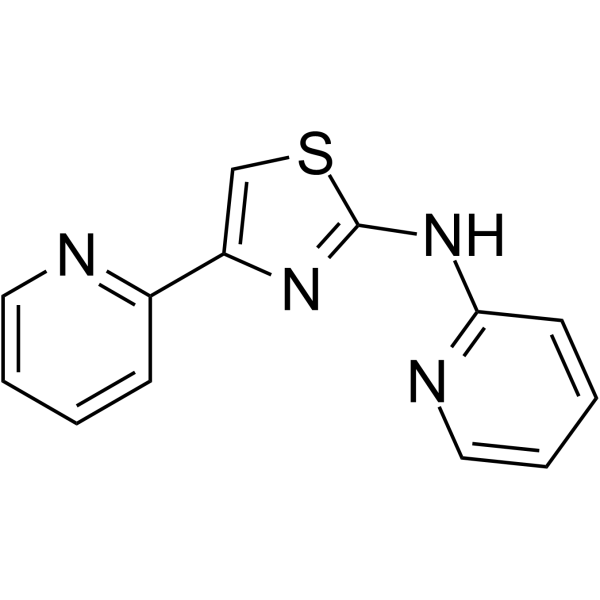
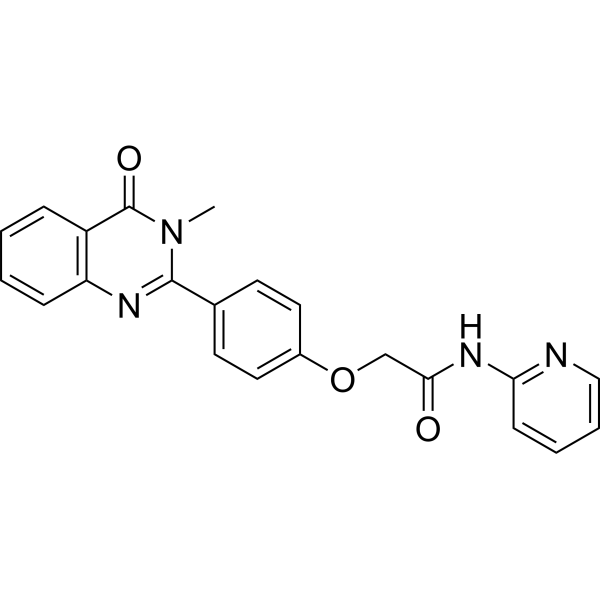
ICA (N-(pyridin-2-yl)-4-(pyridin-2-yl)thiazol-2-amine) is a SK channel inhibitor that has antileishmanial activity with an IC50 of 2.1 µM.
|
-
- HY-P1957
-
|
|
Parasite
|
Infection
|
|
Dihydrocyclosporin A is a derivative of Cyclosporine A (HY-B0579). Dihydrocyclosporin A significantly inhibites promastigotes and intracellular amastigotes. Dihydrocyclosporin A is highly cytotoxic .
|
-
- HY-N7489
-
|
|
Parasite
|
Infection
Inflammation/Immunology
|
|
β-Hederin, a saponin isolated from Hedera helix L.(Araliaceae), possesses antileishmanial activity. β-Hederin exhibits IC50 values of 1.5 μM, 68 nM and 4.57 μM in L. Mexicana promastigotes, L. mexicana amastigotes and THP1 cells, respectively .
|
-
- HY-138050
-
|
(-)-Nyasol; (Z)-Hinokiresinol; cis-Hinokiresinol
|
NO Synthase
Bacterial
Fungal
Parasite
Leukotriene Receptor
|
Infection
Inflammation/Immunology
|
|
Nyasol ((-)-Nyasol) is an active compound that has antifungal, antibacterial, antileishmanial, hyaluronidase inhibition activities. Nyasol inhibits LTB4 binding to human neutrophils. Nyasol suppresses neuroinflammatory response through the inhibition of I-κB degradation in LPS (HY-D1056)-stimulated BV-2 microglial cells .
|
-
- HY-155845
-
|
|
Parasite
|
Infection
|
|
Antileishmanial agent-21 (compound 4e) is an antileishmanial agent that targets the Leishmania pteridine reductase 1 (Lm-PTR1). Antileishmanial agent-21 has an anti-folate mechanism, and folic acid and leucovorin can reverse the anti-leishmanial activity of Antileishmanial agent-21. Antileishmanial agent-21 inhibits the Chloroquine (HY-17589A)-resistant strain of Plasmodium falciparum (RKL9) with an IC50 of 0.0198-0.096 μM .
|
-
- HY-178456
-
|
|
Parasite
Reactive Oxygen Species (ROS)
Apoptosis
|
Infection
|
|
Antileishmanial agent-36 (compound 4f) is an indole-dihydropyrimidinone derivative with anti-leishmanial activity. Antileishmanial agent-36 induces reactive oxygen species (ROS)-mediated mitochondrial dysfunction and apoptosis. Antileishmanial agent-36 exhibits potent activity against L. donovani (IC50 =4.54 μM) with low cytotoxicity against J774.1 macrophage. Antileishmanial agent-36 clears the parasite burden in a visceral leishmaniasis (VL) model. Antileishmanial agent-36 can be used for VL research .
|
-
- HY-170358
-
|
|
Parasite
|
Infection
|
|
Antileishmanial agent-31 (Compound p1) is a pyrazole derivative. Antileishmanial agent-31 has anti-leishmania activity with an IC50 of 35.53 μg/mL. In addition, Antileishmanial agent-31 has high stability. Antileishmanial agent-31 can be used for anti-leishmaniasis research .
|
-
- HY-155846
-
|
|
Parasite
Bacterial
|
Infection
|
|
Antileishmanial agent-22 (compound 15b) is a parasite inhibitor and an antibacterial agent, with antileishmanial, antimalarial, and anti-tubercular activities. Antileishmanial agent-22 inhibits leishmanial (IC50=0.408 μM) based on antifolate mechanism. And, Antileishmanial agent-22 inhibits Folic acid and Folinic acid at 100 μM with inhibitory rates of 88% and 94%, respectively. Antileishmanial agent-22 inhibits P. berghei in vivo and in vitro, with 96.67% suppression under 48.4 μM/kg/day and 0.038 μM (IC50), respectively. Moreover, Antileishmanial agent-22 inhibits M. tuberculosis with MIC of 28.44 μM .
|
-
- HY-173213
-
|
|
Parasite
|
Infection
Inflammation/Immunology
|
Antileishmanial agent-33 (4e), a hybrid compound of grandisin and machilin G, shows moderate activity on promastigotes (IC50 of 38.1 μM). Antileishmanial agent-33 (4e) shows potential as an antileishmanial agent for the research of cutaneous leishmaniasis (CL) .
|
-
- HY-147857
-
|
|
Parasite
|
Infection
|
|
Antileishmanial agent-12 (compound 5a) is a potent anti-leishmanial agent. Antileishmanial agent-12 shows antiprotozoal activity against Leishmania brazilensis, Leishmania infantum, and T. cruzi, with IC50 values of 14.9, 21.3 and 9.3 μM, respectively .
|
-
- HY-132905
-
|
|
Parasite
|
Infection
|
|
Antileishmanial agent-2 shows submicromolar antileishmanial activity (IC50 = 0.29 μM) and a very high selectivity index with respect to mammalian cells.
|
-
- HY-147856
-
|
|
Parasite
|
Infection
|
|
Antileishmanial agent-11 (compound 4d) is a potent anti-leishmanial agent. Antileishmanial agent-11 shows antiprotozoal activity against Leishmania brazilensis, Leishmania infantum, and T. cruzi, with IC50 values of 28.3, 24.8 and 13.0 μM, respectively .
|
-
- HY-149957
-
|
|
Parasite
|
Infection
|
|
Antileishmanial agent-16 (compound 14c) is an anti-Leishmania agent. Antileishmanial agent-16 has superior anti-Leishmania major promastigotes activity (IC50 = 0.59 µM) and anti-Leishmania major amastigotes activity (IC50 = 0.81 µM). Antileishmanial agent-16 has good safety to mammalian cells (VERO cells) .
|
-
- HY-155207
-
|
|
Parasite
|
Infection
|
|
Antileishmanial agent-23 (compound G1/9) is a potent and selective trypanothione reductase (TR) inhibitor, with an IC50 of 2.24 ± 0.52 μM. Antileishmanial agent-23 inhibits the growth of Leishmania, Trypanosoma cruzi, and Trypanosoma brucei .
|
-
- HY-147766
-
|
|
Parasite
|
Infection
|
|
Antileishmanial agent-10 (Compound 7h) is an antiprotozoal agent .
|
-
- HY-149093
-
|
|
Parasite
|
Infection
|
|
Antileishmanial agent-14 is a sulfuretin analog with potential activity against the parasite Leishmania donovani promastigotes (IC50=4.1 μM). Antileishmanial agent-14 also inhibits infection by L. donovani amastigotes (IC50=11.1 μM) .
|
-
- HY-144700
-
|
|
Parasite
|
Infection
|
|
Antileishmanial agent-3 (Compound 13) is a promising growth inhibitor of Leishmania major .
|
-
- HY-161325
-
|
|
Parasite
|
Infection
|
|
Antileishmanial agent-26 (Compound 69) is a guanidine-containing compound with anti-Leishmania donovani activity. Its IC50 value against Leishmania donovani is 5.67 μM, and its CC50 value against THP-1 is 3.79 μM. Antileishmanial agent-26 can be used in the research of tropical diseases .
|
-
- HY-115725
-
|
|
Parasite
|
Infection
|
|
Antileishmanial agent-1 exhibits the activity against L. amazonensis promastigotes (IC50 = 15.52 μM) and intracellular amastigotes (IC50 = 4.10 μM).
|
-
- HY-162833
-
|
|
Parasite
|
Infection
|
|
Antileishmanial agent-30 (compound 17k) is a potent inhibitor of leishmania, with the IC50, CC50, and SI of 0.2 μM, >100 μM and >500 for L. donovani .
|
-
- HY-156464
-
|
|
Topoisomerase
|
Infection
|
|
Topoisomerase I inhibitor 10 (compound 13) is a leishmanial topoisomerase IB inhibitor. Topoisomerase I inhibitor 10 has antileishmanial activity against L. donovani promastigotes, with the IC50 of 27.91 μM .
|
-
- HY-156462
-
|
|
Topoisomerase
|
Infection
|
|
Topoisomerase I inhibitor 9 (compound 3d) is a leishmanial topoisomerase IB inhibitor. Topoisomerase I inhibitor 9 has antileishmanial activity against L. donovani promastigotes, with the IC50 of 34.81μM .
|
-
- HY-W077028R
-
-
- HY-19688A
-
|
WR 6026 hydrochloride
|
Parasite
Mitochondrial Metabolism
|
Infection
|
|
Sitamaquine (WR6026) hydrochloride, an orally active 8-aminoquinoline analog, is an antileishmanial agent. Sitamaquine hydrochloride inhibits mitochondrial complex II (succinate dehydrogenase). Sitamaquine hydrochloride is a lipophilic weak base that rapidly accumulates in acidic compartments of Leishmania spp., mainly in acidocalcisomes .
|
-
- HY-W012634R
-
|
|
Reference Standards
Bacterial
|
Infection
Metabolic Disease
Inflammation/Immunology
Cancer
|
|
Benzothiazole (Standard) is the analytical standard of Benzothiazole. This product is intended for research and analytical applications. Benzothiazole is a natural occurring heterocyclic nuclei. Benzothiazole nucleus possesses a number of biological activities such as anticancer, antimicrobial, antidiabetic, anti-inflammatory, antileishmanial, and antiviral. Furthermore, Benzothiazole nucleus can function as an efficacious β-amyloid imaging agent .
|
-
- HY-180833
-
|
|
Parasite
|
Infection
|
|
Antileishmanial agent-39 (Compound 4h) is an antileishmanial agent. Antileishmanial agent-39 shows antileishmanial activity against the axenic amastigote form of Leishmania infantum with an IC50 of 0.42 μM .
|
-
- HY-N1453R
-
|
|
Reference Standards
Apoptosis
Fungal
Parasite
|
Infection
Cancer
|
|
Hypocrellin B (Standard) is the analytical standard of Hypocrellin B. This product is intended for research and analytical applications. Hypocrellin B, a pigment isolated from the fungi Hypocrella bambusae and Shiraia bambusicola, is an apoptosis inducer. Hypocrellin B can be used as a photosensitizer for photodynamic therapy of cancer. Hypocrellin B also has antimicrobial and antileishmanial activities[1][2][3].
|
-
- HY-179584
-
|
|
Parasite
|
Infection
|
|
Antileishmanial agent-38 (compound 197) is a host-directed small molecule antileishmanial agent exhibiting potent broad-spectrum activity against Leishmania spp. Antileishmanial agent-38 inhibits intracellular parasites primarily by targeting the host protein lysozyme, while also displaying direct activity against extracellular L. donovani promastigotes. Antileishmanial agent-38 can be used for leishmaniasis research .
|
-
- HY-W159102
-
|
|
Parasite
|
Infection
|
|
8CN, a 2-amino-thiophene derivative, has anti-leishmanial activity. 8CN can be used in research of Leishmaniasis .
|
-
- HY-123251
-
|
|
Parasite
|
Infection
|
|
DB-766 is an anti-parasite and antileishmanial agent, and is active against T. cruzi. DB-766 effectively reduces the parasite load in the blood and cardiac tissue .
|
-
- HY-133838
-
|
BM41440
|
Parasite
PKC
|
Infection
Cancer
|
|
Ilmofosine (BM41440) is a potent and selective protein kinase C inhibitor. Ilmofosine induces cell cycle arrest at the G2 phase. Ilmofosine also is an anti-leishmanial agent .
|
-
- HY-127160R
-
|
|
Parasite
Bacterial
Reference Standards
|
Infection
|
|
Benzoxonium (chloride) (Standard) is the analytical standard of Benzoxonium (chloride). This product is intended for research and analytical applications. Benzoxonium chloride is an anti-leishmanial agent. Benzoxonium chloride inhibits bacteria, certain protozoa, yeasts and non-spore forming organisms .
|
-
- HY-139666R
-
|
|
Amino Acid Derivatives
Reference Standards
|
Others
|
|
Benzoxonium (chloride) (Standard) is the analytical standard of Benzoxonium (chloride). This product is intended for research and analytical applications. Benzoxonium chloride is an anti-leishmanial agent. Benzoxonium chloride inhibits bacteria, certain protozoa, yeasts and non-spore forming organisms .
|
-
- HY-B0483R
-
-
- HY-168262
-
|
|
Parasite
|
Infection
|
|
Antitrypanosomal agent 22 (compound 13) is a nitrothienylazine compound with trypanosomaticidal efficacy. Antitrypanosomal agent 22 shows leishmanicidal and trypanocidal with in vitro submicromolar activities, and devoid of toxicity on mammalian cells are uncovered .
|
-
- HY-146166
-
|
|
Parasite
Reactive Oxygen Species (ROS)
|
Infection
Inflammation/Immunology
|
|
PT4 is a therapeutic agent against Cutaneous leishmaniasis (CL). PT4 is effective against both species of Leishmania, with IC50s of 125.18 and 233.18 μM for L. amazonensis and L. braziliensis, respectively. PT4 decreases of mitochondrial membrane potential and increases production of reactive oxygen species, which leads to parasite death. PT4 has a potent in vivo anti-inflammatory activity .
|
-
- HY-75247R
-
-
- HY-N8181
-
|
|
Parasite
|
Infection
|
|
1,3-Linolein-2-Olein, a triglyceride, is an antileishmanial agent. 1,3-Linolein-2-Olein inhibits promatigotes of the parasite (IC50=0.079 ug/ml) and inhibits the growth of amastigotes (IC50= 40.03 ug/ml) .
|
-
- HY-N16426
-
|
|
Parasite
|
Infection
Cancer
|
|
Mycoleptone A is an azafluorenone compound. Mycoleptone A exhibits certain anti-leishmanial activity, with an LD50 of 28.5 μM against L. major. Mycoleptone A shows cytotoxicity against human prostate cancer cell line PC3, with an IC50 of 10.0 μM. Mycoleptone A can be used in research on anti-parasitic and anti-tumor aspects .
|
-
- HY-147092R
-
|
|
Reference Standards
Microtubule/Tubulin
Herbicide
|
Infection
|
|
Oryzalin (Standard) is the analytical standard of Oryzalin (HY-147092). This product is intended for research and analytical applications. Oryzalin is a dinitroaniline herbicide with antimitotic and antileishmanial activities. Oryzalin can bind to plant tubulin, inhibit the polymerization of microtubules in plant cells, and affect chromosome migration. Oryzalin can also be used to induce chromosome doubling .
|
-
- HY-13685S1
-
|
HePC-d4; Hexadecyl phosphocholine-d4
|
Isotope-Labeled Compounds
Akt
Parasite
HIV
|
Infection
Cancer
|
|
Miltefosine-d4 (HePC-d4) is deuterium labeled Miltefosine. Miltefosine is a broad spectrum antimicrobial, anti-leishmanial, phospholipid agent acting by inhibiting the PI3K/Akt activity . Miltefosine is an inhibitor of CTP-phosphocholine cytidyltransferase (CCT) .
|
-
- HY-183290
-
|
|
Parasite
Reactive Oxygen Species (ROS)
|
Infection
|
|
Antileishmanial agent-41 (Compound 20k) is a selective Antileishmanial agent with a IC50 of 1.51 μg/mL against Leishmania donovani. Antileishmanial agent-41 increases ROS levels. Antileishmanial agent-41 can be used for the research of leishmaniasis .
|
-
- HY-183262
-
|
|
Parasite
Reactive Oxygen Species (ROS)
|
Infection
|
|
Antileishmanial agent-40 is an orally active and selective antileishmanial agent. Antileishmanial agent-40 elevates intracellular reactive oxygen species (ROS) levels in Leishmania donovani promastigotes. Antileishmanial agent-40 induces cell cycle arrest at the sub-G0/G1 phase in Leishmania donovani promastigotes, indicative of programmed-like parasite death. Antileishmanial agent-40 can be used for the research of leishmaniasis .
|
-
- HY-183362
-
|
|
Parasite
Adenosine Kinase
|
Infection
|
|
Antileishmanial agent-42 is an antileishmanial agent. Antileishmanial agent-42 has favorable interactions with key active site residues (e.g., Ser63, Asn66/295/299) of adenosine kinase. Antileishmanial agent-42 exerts activity against promastigote and amastigote forms of L. amazonensis, L. braziliensis, L. infantum, and L. donovani .
|
-
- HY-183621
-
|
|
Parasite
Reactive Oxygen Species (ROS)
Autophagy
|
Infection
|
|
Antileishmanial agent-43 is a 3,4,5‑trisubstituted isoxazole with selective antileishmanial activity. Antileishmanial agent-43 shows IC50 values of 12.7 μM against Leishmania amazonensis promastigotes and 0.96 μM against intracellular amastigotes. Antileishmanial agent-43 induces ROS elevation, oxidative stress and mitochondrial dysfunction, resulting in lipid peroxidation, mitochondrial depolarization and ATP imbalance. Antileishmanial agent-43 causes cell shrinkage, phosphatidylserine externalization, plasma membrane permeabilization, and promotes autophagy. Antileishmanial agent-43 can be used for the research of leishmaniasis .
|
-
- HY-180130
-
|
|
Parasite
|
Infection
|
|
LC-61 is a potent antileishmanial agent with an IC50 of 0.076 µM against intracellular L. infantum .
|
-
- HY-177958
-
-
- HY-181145
-
|
|
Parasite
|
Infection
|
|
Antitrypanosomal agent 29 is an antileishmanial agent against Leishmania donovani. Antitrypanosomal agent 29 shows no inhibitory activity against Trypanosoma cruzi and exhibits no significant cytotoxicity toward human fibroblast MRC-5 cells. Antitrypanosomal agent 29 can be used in research on leishmaniasis .
|
-
- HY-N19720
-
|
|
Drug Derivative
Parasite
|
Infection
|
|
Bractein is a natural aurone flavonoid with potential antioxidant activity. Bractein shows in vitro antileishmanial activity and inhibits promastigotes and intracellular amastigotes of Leishmania donovani. Bractein exhibits no obvious cytotoxicity against mammalian macrophages with an EC50 value > 25.0 μg/mL. Bractein can be used for the research of Leishmania .
|
-
- HY-W015818
-
|
2-Benzoxazolone; 1,3-Benzoxazol-2(3H)-one; 2-Hydroxybenzoxazole
|
Parasite
|
Infection
|
|
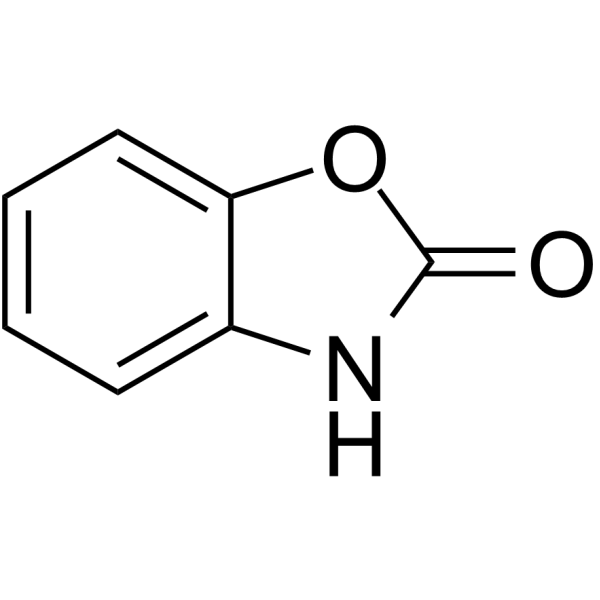
2-Benzoxazolinone is an anti-leishmanial agent with an LC50 of 40 μg/mL against L. donovani . A building block in chemical synthesis. 1,3-Benzoxazol-2(3H)-one derivatives have antimicrobial activity against a selection of Gram-positive, Gram-negative bacteria and yeasts . Derivatives as anti-quorum sensing agent .
|
-
- HY-129819
-
|
|
Bacterial
|
Infection
|
|
(Rac)-DNDI-8219 is an antituberculosis compound with potent anti-leishmanial activity. (Rac)-DNDI-8219 demonstrated superior efficacy in the Leishmania donovani mouse model. (Rac)-DNDI-8219 showed promising activity in the Leishmania infantum hamster model. (Rac)-DNDI-8219 candidate compound R-6 provided excellent oral efficacy in the same hamster model .
|
-
- HY-B0219A
-
|
|
Xanthine Oxidase
|
Infection
Neurological Disease
Inflammation/Immunology
Cancer
|
|
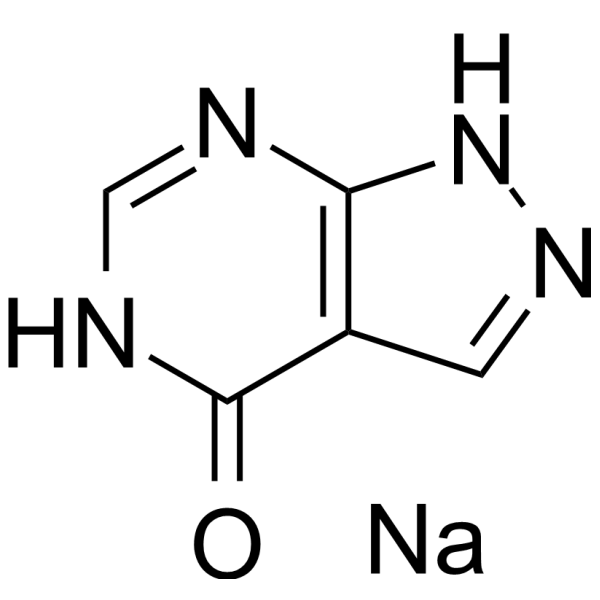
Allopurinol sodium is a potent and orally active xanthine oxidase inhibitor with an IC50 value of 0.2-50 μM. Allopurinol sodium can be used in the research of hyperuricemia and gout. Allopurinol sodium decreases the expression of HIF-1α and HIF-2α protein. Allopurinol sodium shows anti-depressant and anti-nociception activity. Anti-leishmanial effect .
|
-
- HY-B0219
-
|
|
Xanthine Oxidase
|
Infection
Neurological Disease
Inflammation/Immunology
Cancer
|
|
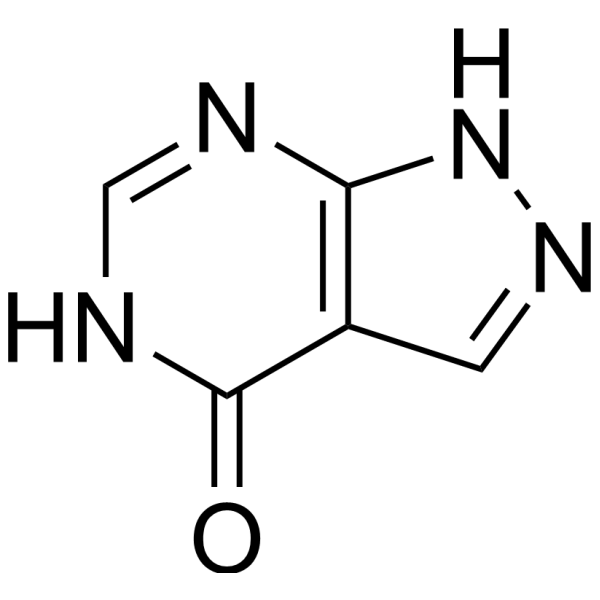
Allopurinol is a potent and orally active xanthine oxidase inhibitor with an IC50 value of 0.2-50 μM. Allopurinol can be used in the research of hyperuricemia and gout. Allopurinol decreases the expression of HIF-1α and HIF-2α protein. Allopurinol shows anti-depressant and anti-nociception activity. Anti-leishmanial effect .
|
-
- HY-76228
-
|
Pyrazole
|
Parasite
iGluR
|
Infection
|
|
1H-pyrazole (Pyrazole) is a five-membered heterocyclic compound, and its derivatives are orally effective antimalarial and antileishmanial agents with the potential to modulate targets such as alcohol dehydrogenase and NMDA receptors. 1H-pyrazole derivatives exhibit inhibitory effects on Plasmodium berghei in infected mice and on promastigotes of Leishmania aethiopica, respectively. 1H-pyrazole can be used in research related to malaria and leishmaniasis .
|
-
- HY-185556
-
|
|
Parasite
|
Infection
|
|
14-Hydroxydehydroabietane is a ribosomal enzyme inhibitor. 14-Hydroxydehydroabietane exhibits in vitro antileishmanial activity against promastigotes, amastigotes and intracellular amastigotes of Leishmania infantum and Leishmania braziliensis. 14-Hydroxydehydroabietane induces ultrastructural changes in Leishmania braziliensis promastigotes. 14-Hydroxydehydroabietane reduces the infection rate of macrophages by Leishmania infantum and Leishmania braziliensis. 14-Hydroxydehydroabietane can be used for the research of leishmaniasis .
|
-
- HY-W197328
-
|
|
Parasite
|
Infection
|
|
Isonicotinaldehyde 2-pyridin is an antileishmanial agent that is effective against the promastigotes of L. amazonensis and L. braziliensis. Isonicotinaldehyde 2-pyridin has no significant toxic effects on mouse macrophages. The biological activity of Isonicotinaldehyde 2-pyridin is closely related to increasing reactive oxygen species (ROS) and interfering with parasite mitochondrial function. Isonicotinaldehyde 2-pyridin showed its effects on L. amazonensis in preliminary studies on its pharmacological mechanism of action .
|
-
- HY-19688
-
|
WR 6026
|
Parasite
Succinate Dehydrogenase
Apoptosis
Calcium Channel
Mitochondrial Metabolism
|
Infection
|
|
Sitamaquine (WR 6026) is an orally active Antileishmanial agent and Succinate dehydrogenase inhibitor. Sitamaquine accumulates in the acidocalcisomes of Leishmania, induces organelle alkalization, and crosses the plasma membrane of Leishmania via temperature- and energy-independent diffusion. Sitamaquine disrupts oxidative phosphorylation in Leishmania, induces mitochondrial depolarization, oxidative stress, elevated intracellular calcium, plasma membrane depolarization, and Apoptosis-like cell death. Sitamaquine can be used in the research of leishmaniasis .
|
-
- HY-B0219R
-
|
|
Reference Standards
Xanthine Oxidase
|
Infection
Neurological Disease
Inflammation/Immunology
Cancer
|
|
Allopurinol (Standard) is the analytical standard of Allopurinol. This product is intended for research and analytical applications. Allopurinol is a potent and orally active xanthine oxidase inhibitor with an IC50 value of 0.2-50 μM. Allopurinol can be used in the research of hyperuricemia and gout. Allopurinol decreases the expression of HIF-1α and HIF-2α protein. Allopurinol shows anti-depressant and anti-nociception activity. Anti-leishmanial effect .
|
-
- HY-N0397R
-
|
|
Reference Standards
Parasite
|
Infection
Inflammation/Immunology
|
|
Harpagide (Standard) is the analytical standard of Harpagide. This product is intended for research and analytical applications. Harpagide is a class of iridoid glycoside isolated from Scrophularia ningpoensis and has antiparasitic activity, which exhibits good in vitro trypanocidal activities against African trypanosomes (T.b. rhodesiense) with an IC50 of 21 μg/mL. Harpagide exerts significant antileishmanial activity against L. donovani with an IC50 value of 2.0 μg/mL. Harpagide also possess significant anti-inflammatory activities .
|
-
- HY-N2894
-
|
|
Parasite
|
Infection
|
|
Piperolactam A is a natural product that can be isolated from root of Piper betle. Piperolactam A exhibits promising leishmanicidal action against wild type and drug resistant strains of Leishmania donovani .
|
-
- HY-W015818R
-
|
2-Benzoxazolone (Standard); 1,3-Benzoxazol-2(3H)-one (Standard); 2-Hydroxybenzoxazole (Standard)
|
Reference Standards
Parasite
|
Infection
|
|
2-Benzoxazolinone (Standard) is the analytical standard of 2-Benzoxazolinone. This product is intended for research and analytical applications. 2-Benzoxazolinone is an anti-leishmanial agent with an LC50 of 40 μg/mL against L. donovani . A building block in chemical synthesis. 1,3-Benzoxazol-2(3H)-one derivatives have antimicrobial activity against a selection of Gram-positive, Gram-negative bacteria and yeasts . Derivatives as anti-quorum sensing agent[4].
|
-
- HY-N7926
-
|
|
Environmental Pollutants
Apoptosis
Parasite
TNF Receptor
Interleukin Related
|
Infection
Inflammation/Immunology
|
|
Pentadecane is an orally active natural plant volatile alkane with anti-inflammatory, analgesic, antipyretic and anti-leishmanial activities. Pentadecane presents IC50 values of 65.3 μM, 60.5 μM and 194.8 μM against Leishmania infantum promastigotes, amastigotes and intracellular amastigotes, respectively. Pentadecane downregulates the mRNA expression of TNF-α and IL-12 and inhibits the release of inflammatory mediators. Pentadecane arrests the cell cycle of Leishmania infantum and induces apoptosis. Pentadecane can be applied to the research of inflammation and leishmaniasis .
|
-
- HY-76228R
-
|
Pyrazole (Standard)
|
Reference Standards
Parasite
iGluR
|
Infection
Inflammation/Immunology
|
|
1H-pyrazole (Standard) is the analytical standard of 1H-pyrazole. This product is intended for research and analytical applications. 1H-pyrazole (Pyrazole) is a five-membered heterocyclic compound, and its derivatives are orally effective antimalarial and antileishmanial agents with the potential to modulate targets such as alcohol dehydrogenase and NMDA receptors. 1H-pyrazole derivatives exhibit inhibitory effects on Plasmodium berghei in infected mice and on promastigotes of Leishmania aethiopica, respectively. 1H-pyrazole can be used in research related to malaria and leishmaniasis .
|
-
- HY-B0219S1
-
|
|
Isotope-Labeled Compounds
Xanthine Oxidase
|
Infection
Neurological Disease
Inflammation/Immunology
Cancer
|
|
Allopurinol- 13C, 15N2 is the 13C- and 15N-labeled labeled Allopurinol (HY-B0219). Allopurinol is a potent and orally active xanthine oxidase inhibitor with an IC50 value of 0.2-50 μM. Allopurinol can be used in the research of hyperuricemia and gout. Allopurinol decreases the expression of HIF-1α and HIF-2α protein. Allopurinol shows anti-depressant and anti-nociception activity. Anti-leishmanial effect .
|
-
- HY-W779244
-
|
|
Isotope-Labeled Compounds
Biochemical Assay Reagents
Drug Intermediate
|
Infection
|
|
1H-Pyrazole-3,4,5-d3 is the deuterium labeled 1H-pyrazole (HY-76228). 1H-pyrazole is a nitrogen-containing heterocyclic compound composed of a five-membered ring and two nitrogen atoms. 1H-pyrazole is an intermediate in organic synthesis. 1H-pyrazole coordinates with metal ions. 1H-pyrazole derivatives have antibacterial, anti-inflammatory, anti-malarial, and anti-leishmanial activities .
|
-
- HY-N16745
-
|
|
Parasite
HIV
HIV Protease
|
Infection
|
|
5-Hydroxynoracronycine is a selective inhibitor targeting Leishmania, HIV-1 protease, and nitric oxide (NO) production. 5-Hydroxynoracronycine has an IC50 of 93.1 μmol/L against HIV-1 protease and an IC50 of 0.19 mg/mL for scavenging DPPH free radicals. 5-Hydroxynoracronycine exerts anti-leishmanial, anti-HIV, antioxidant and antibacterial activities by inhibiting pathogen proliferation, enzyme activity and inflammation-related NO excessive production. 5-Hydroxynoracronycine can be used in the research of leishmaniasis, HIV infection, and inflammation-related diseases .
|
-
- HY-N7926S
-
|
|
Isotope-Labeled Compounds
Parasite
TNF Receptor
Interleukin Related
Apoptosis
|
Infection
Inflammation/Immunology
|
|
Pentadecane-d32 is the deuterium labeled Pentadecane (HY-N7926). Pentadecane is an orally active natural plant volatile alkane with anti-inflammatory, analgesic, antipyretic and anti-leishmanial activities. Pentadecane presents IC50 values of 65.3 μM, 60.5 μM and 194.8 μM against Leishmania infantum promastigotes, amastigotes and intracellular amastigotes, respectively. Pentadecane downregulates the mRNA expression of TNF-α and IL-12 and inhibits the release of inflammatory mediators. Pentadecane arrests the cell cycle of Leishmania infantum and induces apoptosis. Pentadecane can be applied to the research of inflammation and leishmaniasis .
|
-
- HY-N7926R
-
|
|
Parasite
Reference Standards
TNF Receptor
Interleukin Related
Apoptosis
|
Infection
Inflammation/Immunology
|
|
Pentadecane (Standard) is the analytical standard of Pentadecane (HY-N7926). This product is intended for research and analytical applications. Pentadecane is an orally active natural plant volatile alkane with anti-inflammatory, analgesic, antipyretic and anti-leishmanial activities. Pentadecane presents IC50 values of 65.3 μM, 60.5 μM and 194.8 μM against Leishmania infantum promastigotes, amastigotes and intracellular amastigotes, respectively. Pentadecane downregulates the mRNA expression of TNF-α and IL-12 and inhibits the release of inflammatory mediators. Pentadecane arrests the cell cycle of Leishmania infantum and induces apoptosis. Pentadecane can be applied to the research of inflammation and leishmaniasis .
|
-
- HY-N17550
-
|
|
Bacterial
Parasite
|
Infection
Inflammation/Immunology
Cancer
|
|
25-Hydroperoxycycloart-23-en-3β-ol is an anticancer, antibacterial, and antimalarial agent. 25-Hydroperoxycycloart-23-en-3β-ol can be isolated from Blepharodon nitidum. 25-Hydroperoxycycloart-23-en-3β-ol exhibits anti-Mycobacterium tuberculosis and antileishmanial activities. 25-Hydroperoxycycloart-23-en-3β-ol shows significant cytotoxic activity against a panel of tumor cell lines (large cell lung cancer, melanoma, colon adenocarcinoma, chronic myelogenous leukemia) .
|
-
- HY-P2310
-
|
|
Bacterial
Parasite
Apoptosis
HIV
HSV
CMV
TNF Receptor
NOD-like Receptor (NLR)
DNA/RNA Synthesis
Influenza Virus
|
Cardiovascular Disease
Infection
|
|
Defensin HNP-1 human is a type of human neutrophil peptide (HNPs). Defensin HNP-1 human possesses immunomodulatory functions and can delay the apoptosis of neutrophils. Defensin HNP-1 human inhibits DNA/RNA/protein synthesis and interferes with metabolic pathways, thus exhibiting broad antibacterial activity. Defensin HNP-1 human has direct inactivation effects on HIV, HSV-1, HSV-2, CMV, influenza virus, etc. Defensin HNP-1 human has antileishmanial activity. Defensin HNP-1 human is involved in endothelial cell dysfunction during the early development of atherosclerosis .
|
-
- HY-W663179
-
|
|
Parasite
Cytochrome P450
|
Infection
|
|
DNDI-VL-2098 is an orally active antileishmanial agent. DNDI-VL-2098 exhibits high permeability, in vitro metabolic stability, and selective inhibition of CYP2C19 (IC50=0.47 μM). DNDI-VL-2098 does not affect the activities of other major CYP enzymes (CYP1A2, CYP2C9, CYP2D6 and CYP3A4) at concentrations up to 12.5 μM. It shows favorable pharmacokinetic properties in multiple animal models including mice, hamsters, rats and dogs. DNDI-VL-2098 is characterized by moderate to high plasma protein binding and can be used for the research of visceral leishmaniasis .
|
-
- HY-P2310A
-
|
|
Bacterial
Parasite
Apoptosis
HIV
HSV
CMV
TNF Receptor
Interleukin Related
NOD-like Receptor (NLR)
DNA/RNA Synthesis
Influenza Virus
|
Cardiovascular Disease
Infection
|
|
Defensin HNP-1 human TFA is a type of human neutrophil peptide (HNPs). Defensin HNP-1 human TFA possesses immunomodulatory functions and can delay the apoptosis of neutrophils. Defensin HNP-1 human TFA inhibits DNA/RNA/protein synthesis and interferes with metabolic pathways, thus exhibiting broad antibacterial activity. Defensin HNP-1 human TFA has direct inactivation effects on HIV, HSV-1, HSV-2, CMV, influenza virus, etc. Defensin HNP-1 human TFA has antileishmanial activity. Defensin HNP-1 human TFA is involved in endothelial cell dysfunction during the early development of atherosclerosis .
|
-
- HY-N4267
-
|
|
Calcium Channel
Platelet-activating Factor Receptor (PAFR)
UGT
Leukotriene Receptor
TNF Receptor
PGE synthase
Interleukin Related
|
Cardiovascular Disease
Infection
Inflammation/Immunology
|
|
Yangambin is a PAF receptor antagonist and UGT1A1/UGT1A3 inhibitor, with an IC50 of 29.7 μM and a Ki of 17.1 μM against human UGT1A1, and an IC50 of 56.5 μM and a Ki of 66.8 μM against human UGT1A3. Yangambin blocks PAF-mediated responses, inhibits LTB4-mediated neutrophil infiltration, and suppresses inflammatory events and anaphylactic contraction. Yangambin acts as a central nervous system inhibitor to reduce spontaneous activity, and also exhibits analgesic, anticonvulsant, antileishmanial, vasodilatory and hypotensive effects. Yangambin blocks voltage-gated Ca 2+ channels, reduces the production of NO, TNF-α, IL-6 and PGE2 in cells, increases the production of IL-10, and exerts a protective effect against cardiovascular injury. Yangambin can be used in research related to allergies, cutaneous leishmaniasis, central nervous system diseases and cardiovascular diseases .
|
-
| Cat. No. |
Product Name |
Target |
Research Area |
-
- HY-P2310
-
|
|
Bacterial
Parasite
Apoptosis
HIV
HSV
CMV
TNF Receptor
NOD-like Receptor (NLR)
DNA/RNA Synthesis
Influenza Virus
|
Cardiovascular Disease
Infection
|
|
Defensin HNP-1 human is a type of human neutrophil peptide (HNPs). Defensin HNP-1 human possesses immunomodulatory functions and can delay the apoptosis of neutrophils. Defensin HNP-1 human inhibits DNA/RNA/protein synthesis and interferes with metabolic pathways, thus exhibiting broad antibacterial activity. Defensin HNP-1 human has direct inactivation effects on HIV, HSV-1, HSV-2, CMV, influenza virus, etc. Defensin HNP-1 human has antileishmanial activity. Defensin HNP-1 human is involved in endothelial cell dysfunction during the early development of atherosclerosis .
|
-
- HY-P2310A
-
|
|
Bacterial
Parasite
Apoptosis
HIV
HSV
CMV
TNF Receptor
Interleukin Related
NOD-like Receptor (NLR)
DNA/RNA Synthesis
Influenza Virus
|
Cardiovascular Disease
Infection
|
|
Defensin HNP-1 human TFA is a type of human neutrophil peptide (HNPs). Defensin HNP-1 human TFA possesses immunomodulatory functions and can delay the apoptosis of neutrophils. Defensin HNP-1 human TFA inhibits DNA/RNA/protein synthesis and interferes with metabolic pathways, thus exhibiting broad antibacterial activity. Defensin HNP-1 human TFA has direct inactivation effects on HIV, HSV-1, HSV-2, CMV, influenza virus, etc. Defensin HNP-1 human TFA has antileishmanial activity. Defensin HNP-1 human TFA is involved in endothelial cell dysfunction during the early development of atherosclerosis .
|
-
- HY-P1957
-
|
|
Parasite
|
Infection
|
|
Dihydrocyclosporin A is a derivative of Cyclosporine A (HY-B0579). Dihydrocyclosporin A significantly inhibites promastigotes and intracellular amastigotes. Dihydrocyclosporin A is highly cytotoxic .
|
| Cat. No. |
Product Name |
Category |
Target |
Chemical Structure |
-
- HY-16565
-
-
-
- HY-W012634
-
|
|
Source Classification
|
Environmental Pollutants
Bacterial
|
|
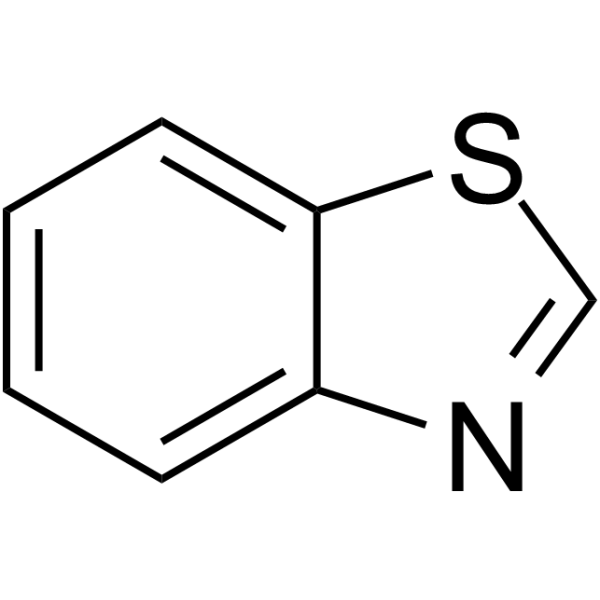
Benzothiazole is a natural occurring heterocyclic nuclei. Benzothiazole nucleus possesses a number of biological activities such as anticancer, antimicrobial, antidiabetic, anti-inflammatory, antileishmanial, and antiviral. Furthermore, Benzothiazole nucleus can function as an efficacious β-amyloid imaging agent [1][2][3][4].
|
-
-
- HY-N7906
-
-
-
- HY-76228
-
-
-
- HY-N1453
-
-
-
- HY-75247
-
-
-
- HY-N0397
-
-
-
- HY-121368
-
-
-
- HY-N7926
-
-
-
- HY-N1077
-
-
-
- HY-134467
-
-
-
- HY-W015818
-
-
-
- HY-N4267
-
|
|
Cardiovascular Disease
Structural Classification
other families
Classification of Application Fields
Lignans
Phenylpropanoids
Plants
Disease Research Fields
Source Classification
|
Calcium Channel
Platelet-activating Factor Receptor (PAFR)
UGT
Leukotriene Receptor
TNF Receptor
PGE synthase
Interleukin Related
|
|
Yangambin is a PAF receptor antagonist and UGT1A1/UGT1A3 inhibitor, with an IC50 of 29.7 μM and a Ki of 17.1 μM against human UGT1A1, and an IC50 of 56.5 μM and a Ki of 66.8 μM against human UGT1A3. Yangambin blocks PAF-mediated responses, inhibits LTB4-mediated neutrophil infiltration, and suppresses inflammatory events and anaphylactic contraction. Yangambin acts as a central nervous system inhibitor to reduce spontaneous activity, and also exhibits analgesic, anticonvulsant, antileishmanial, vasodilatory and hypotensive effects. Yangambin blocks voltage-gated Ca 2+ channels, reduces the production of NO, TNF-α, IL-6 and PGE2 in cells, increases the production of IL-10, and exerts a protective effect against cardiovascular injury. Yangambin can be used in research related to allergies, cutaneous leishmaniasis, central nervous system diseases and cardiovascular diseases .
|
-
-
- HY-N7985
-
-
-
- HY-W019829
-
-
-
- HY-131300
-
-
-
- HY-N8471
-
-
-
- HY-N6816
-
-
-
- HY-B0221A
-
-
-
- HY-N15413
-
-
-
- HY-125648
-
-
-
- HY-N2926
-
-
-
- HY-N7489
-
-
-
- HY-138050
-
-
-
- HY-W012634R
-
|
|
Microorganisms
Source Classification
|
Reference Standards
Bacterial
|
|
Benzothiazole (Standard) is the analytical standard of Benzothiazole. This product is intended for research and analytical applications. Benzothiazole is a natural occurring heterocyclic nuclei. Benzothiazole nucleus possesses a number of biological activities such as anticancer, antimicrobial, antidiabetic, anti-inflammatory, antileishmanial, and antiviral. Furthermore, Benzothiazole nucleus can function as an efficacious β-amyloid imaging agent .
|
-
-
- HY-N1453R
-
-
-
- HY-75247R
-
-
-
- HY-N8181
-
-
-
- HY-N16426
-
|
|
Natural Products
Microorganisms
Source Classification
|
Parasite
|
|
Mycoleptone A is an azafluorenone compound. Mycoleptone A exhibits certain anti-leishmanial activity, with an LD50 of 28.5 μM against L. major. Mycoleptone A shows cytotoxicity against human prostate cancer cell line PC3, with an IC50 of 10.0 μM. Mycoleptone A can be used in research on anti-parasitic and anti-tumor aspects .
|
-
-
- HY-N0397R
-
|
|
Iridoids
Scrophularia ningpoensis Hemsl.
Terpenoids
Scrophulariaceae
Plants
Source Classification
|
Reference Standards
Parasite
|
|
Harpagide (Standard) is the analytical standard of Harpagide. This product is intended for research and analytical applications. Harpagide is a class of iridoid glycoside isolated from Scrophularia ningpoensis and has antiparasitic activity, which exhibits good in vitro trypanocidal activities against African trypanosomes (T.b. rhodesiense) with an IC50 of 21 μg/mL. Harpagide exerts significant antileishmanial activity against L. donovani with an IC50 value of 2.0 μg/mL. Harpagide also possess significant anti-inflammatory activities .
|
-
-
- HY-N2894
-
-
-
- HY-W015818R
-
|
2-Benzoxazolone (Standard); 1,3-Benzoxazol-2(3H)-one (Standard); 2-Hydroxybenzoxazole (Standard)
|
Alkaloids
Structural Classification
Other Alkaloids
Gramineae
Secale cereale
Plants
Source Classification
|
Reference Standards
Parasite
|
|
2-Benzoxazolinone (Standard) is the analytical standard of 2-Benzoxazolinone. This product is intended for research and analytical applications. 2-Benzoxazolinone is an anti-leishmanial agent with an LC50 of 40 μg/mL against L. donovani . A building block in chemical synthesis. 1,3-Benzoxazol-2(3H)-one derivatives have antimicrobial activity against a selection of Gram-positive, Gram-negative bacteria and yeasts . Derivatives as anti-quorum sensing agent[4].
|
-
-
- HY-76228R
-
|
Pyrazole (Standard)
|
Alkaloids
Structural Classification
Other Alkaloids
Endogenous metabolite
Source Classification
|
Reference Standards
Parasite
iGluR
|
|
1H-pyrazole (Standard) is the analytical standard of 1H-pyrazole. This product is intended for research and analytical applications. 1H-pyrazole (Pyrazole) is a five-membered heterocyclic compound, and its derivatives are orally effective antimalarial and antileishmanial agents with the potential to modulate targets such as alcohol dehydrogenase and NMDA receptors. 1H-pyrazole derivatives exhibit inhibitory effects on Plasmodium berghei in infected mice and on promastigotes of Leishmania aethiopica, respectively. 1H-pyrazole can be used in research related to malaria and leishmaniasis .
|
-
-
- HY-N7926R
-
|
|
Structural Classification
Natural Products
Kaempferia galanga L.
Plants
Source Classification
Zingiberaceae
|
Parasite
Reference Standards
TNF Receptor
Interleukin Related
Apoptosis
|
|
Pentadecane (Standard) is the analytical standard of Pentadecane (HY-N7926). This product is intended for research and analytical applications. Pentadecane is an orally active natural plant volatile alkane with anti-inflammatory, analgesic, antipyretic and anti-leishmanial activities. Pentadecane presents IC50 values of 65.3 μM, 60.5 μM and 194.8 μM against Leishmania infantum promastigotes, amastigotes and intracellular amastigotes, respectively. Pentadecane downregulates the mRNA expression of TNF-α and IL-12 and inhibits the release of inflammatory mediators. Pentadecane arrests the cell cycle of Leishmania infantum and induces apoptosis. Pentadecane can be applied to the research of inflammation and leishmaniasis .
|
-
-
- HY-N19720
-
-
-
- HY-N16745
-
|
|
Structural Classification
Alkaloids
Citrus hystrix DC.
Rutaceae
Acridone Alkaloids
Plants
Source Classification
|
Parasite
HIV
HIV Protease
|
|
5-Hydroxynoracronycine is a selective inhibitor targeting Leishmania, HIV-1 protease, and nitric oxide (NO) production. 5-Hydroxynoracronycine has an IC50 of 93.1 μmol/L against HIV-1 protease and an IC50 of 0.19 mg/mL for scavenging DPPH free radicals. 5-Hydroxynoracronycine exerts anti-leishmanial, anti-HIV, antioxidant and antibacterial activities by inhibiting pathogen proliferation, enzyme activity and inflammation-related NO excessive production. 5-Hydroxynoracronycine can be used in the research of leishmaniasis, HIV infection, and inflammation-related diseases .
|
-
-
- HY-N17550
-
-
| Cat. No. |
Product Name |
Chemical Structure |
-
- HY-W012634S
-
|
|
|
Benzothiazole-d4 is a deuterium labeled Benzothiazole (HY-W012634). Benzothiazole is a natural occurring heterocyclic nuclei. Benzothiazole nucleus possesses a number of biological activities such as anticancer, antimicrobial, antidiabetic, anti-inflammatory, antileishmanial, and antiviral .
|
-
-
- HY-B0219S1
-
|
|
|
Allopurinol- 13C, 15N2 is the 13C- and 15N-labeled labeled Allopurinol (HY-B0219). Allopurinol is a potent and orally active xanthine oxidase inhibitor with an IC50 value of 0.2-50 μM. Allopurinol can be used in the research of hyperuricemia and gout. Allopurinol decreases the expression of HIF-1α and HIF-2α protein. Allopurinol shows anti-depressant and anti-nociception activity. Anti-leishmanial effect .
|
-
-
- HY-B0219S
-
|
|
|
Allopurinol-d2 is deuterium labeled Allopurinol. Allopurinol is a potent xanthine oxidase inhibitor (IC50 values of 0.2 to 50 μM). Allopurinol can be used for the research of hyperuricemia and gout. Antileishmanial effect .
|
-
-
- HY-W779244
-
|
|
|
1H-Pyrazole-3,4,5-d3 is the deuterium labeled 1H-pyrazole (HY-76228). 1H-pyrazole is a nitrogen-containing heterocyclic compound composed of a five-membered ring and two nitrogen atoms. 1H-pyrazole is an intermediate in organic synthesis. 1H-pyrazole coordinates with metal ions. 1H-pyrazole derivatives have antibacterial, anti-inflammatory, anti-malarial, and anti-leishmanial activities .
|
-
-
- HY-13685S1
-
|
|
|
Miltefosine-d4 (HePC-d4) is deuterium labeled Miltefosine. Miltefosine is a broad spectrum antimicrobial, anti-leishmanial, phospholipid agent acting by inhibiting the PI3K/Akt activity . Miltefosine is an inhibitor of CTP-phosphocholine cytidyltransferase (CCT) .
|
-
-
- HY-N7926S
-
|
|
|
Pentadecane-d32 is the deuterium labeled Pentadecane (HY-N7926). Pentadecane is an orally active natural plant volatile alkane with anti-inflammatory, analgesic, antipyretic and anti-leishmanial activities. Pentadecane presents IC50 values of 65.3 μM, 60.5 μM and 194.8 μM against Leishmania infantum promastigotes, amastigotes and intracellular amastigotes, respectively. Pentadecane downregulates the mRNA expression of TNF-α and IL-12 and inhibits the release of inflammatory mediators. Pentadecane arrests the cell cycle of Leishmania infantum and induces apoptosis. Pentadecane can be applied to the research of inflammation and leishmaniasis .
|
-
| Cat. No. |
Product Name |
|
Classification |
-
- HY-168262
-
|
|
|
Alkynes
|
|
Antitrypanosomal agent 22 (compound 13) is a nitrothienylazine compound with trypanosomaticidal efficacy. Antitrypanosomal agent 22 shows leishmanicidal and trypanocidal with in vitro submicromolar activities, and devoid of toxicity on mammalian cells are uncovered .
|
| Cat. No. |
Product Name |
|
Classification |
-
- HY-13685
-
|
HePC; Hexadecyl phosphocholine
|
|
Phospholipids
|
|
Miltefosine is a broad spectrum antimicrobial, anti-leishmanial, phospholipid agent acting by inhibiting the PI3K/Akt activity . Miltefosine is an inhibitor of CTP-phosphocholine cytidyltransferase (CCT) .
|
Your information is safe with us. * Required Fields.
Inquiry Information
- Product Name:
- Cat. No.:
- Quantity:
- MCE Japan Authorized Agent:

