



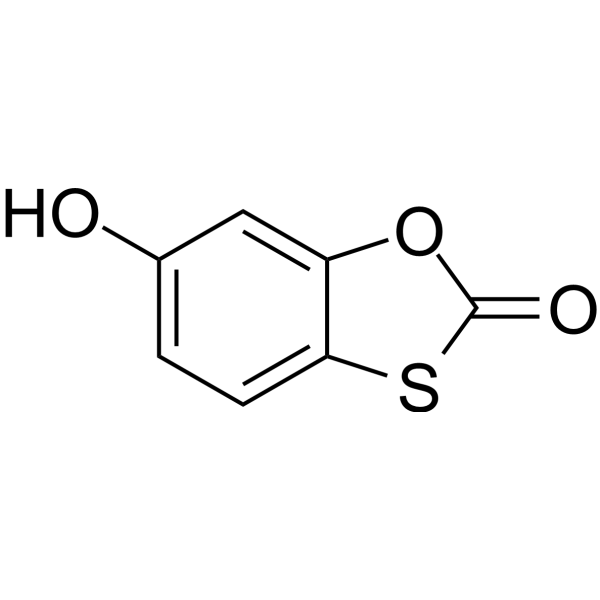
Tioxolone

Based on 1 Customer Validation
Tioxolone is an inhibitor for the carbonic anhydrase. Tioxolone exhibits anti-leishmanial, antitumor, and anti-inflammatory activities. Tioxolone can be used in research of acne and psoriasis.
Nur für Forschungszwecke. Wir verkaufen nicht an Patienten.
- Reinheit : 98.24%
- CAS. Nr.: 4991-65-5
- Formel: C7H4O3S
- Molecular Weight:168.17
-
Speicherung:Powder -20°C, 3 years , 4°C, 2 years ; In solvent -80°C, 2 years , -20°C, 1 year

To place orders, for customer services and technical support, please contact: MedChemExpress USA
Tel: 609-228-6898 E-mail: [email protected] [email protected]


-
 Biologische Aktivität
-
Chemical Information
-
Lösungsmittel & Löslichkeit
- Protokoll
- Reinheit & Dokumentation
- Verweise
-
 Help & FAQs


-
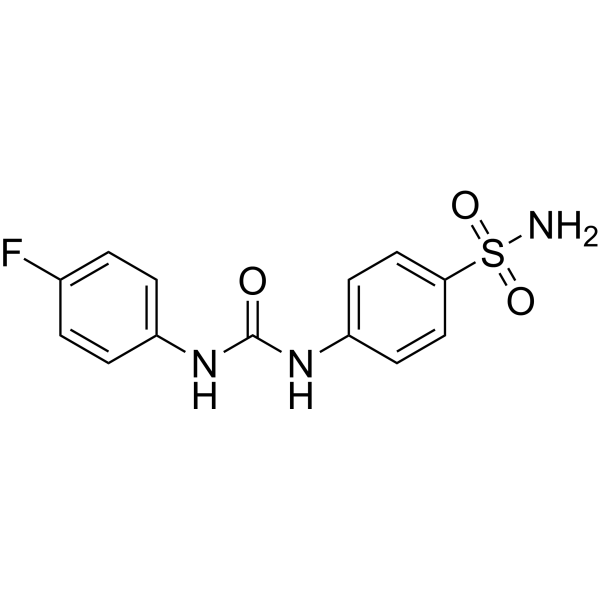
HY-13513
U-104CA IX/XII Inhibitor -
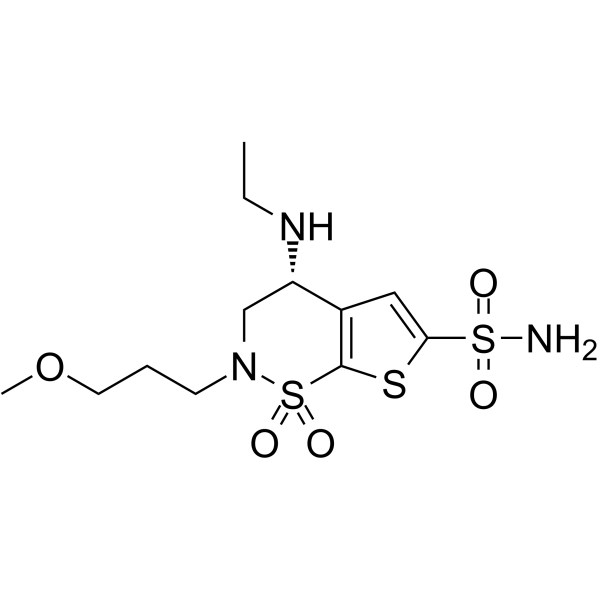
HY-B0588
BrinzolamideCarbonic Anhydrase II Inhibitor -
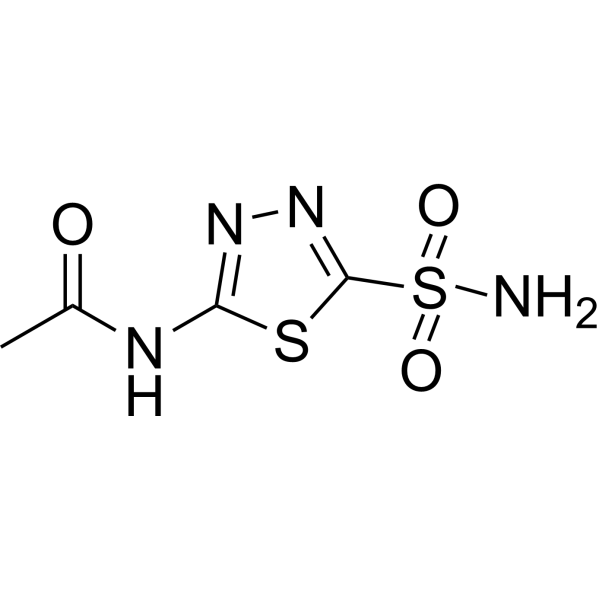
HY-B0782
AcetazolamideCA IX Inhibitor -
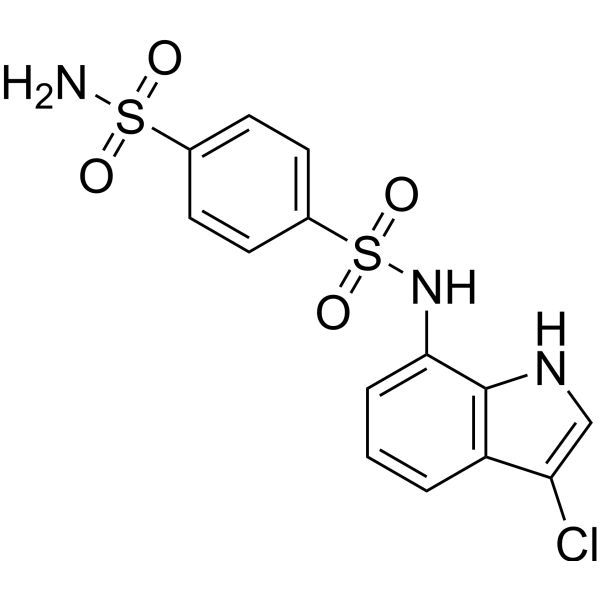
HY-13650
IndisulamCarbonic Anhydrase Inhibitor/RBM39 Molecular Glue Degrader -
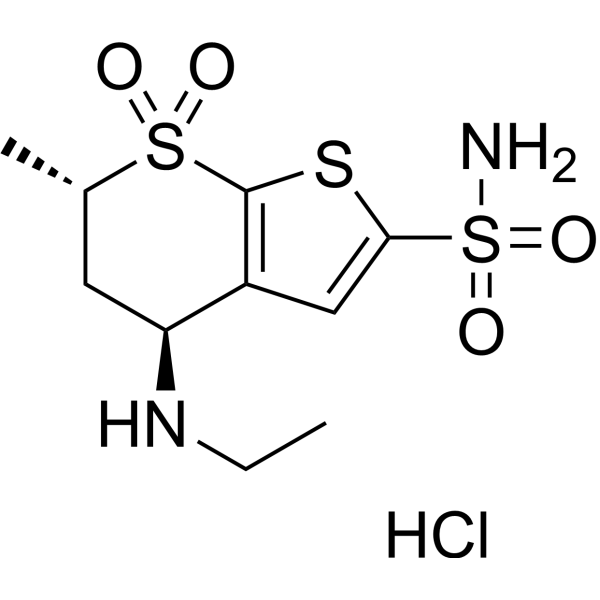
HY-B0109A
Dorzolamide hydrochlorideCarbonic Anhydrase II Inhibitor -
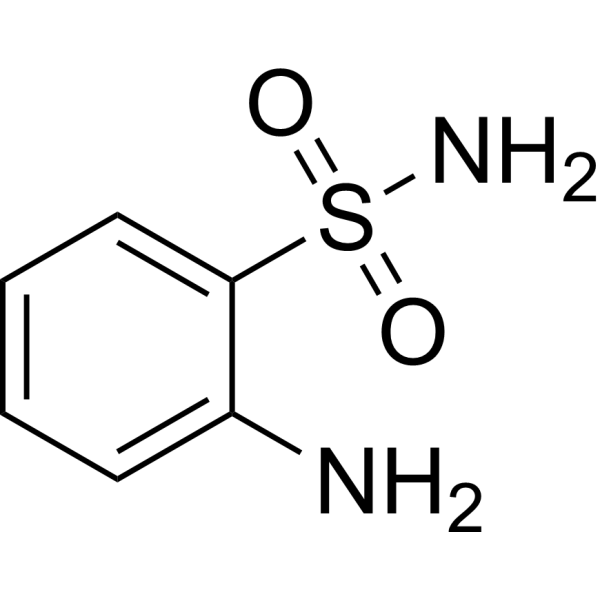
HY-B2147
2-AminobenzenesulfonamideCarbonic Anhydrase Inhibitor -
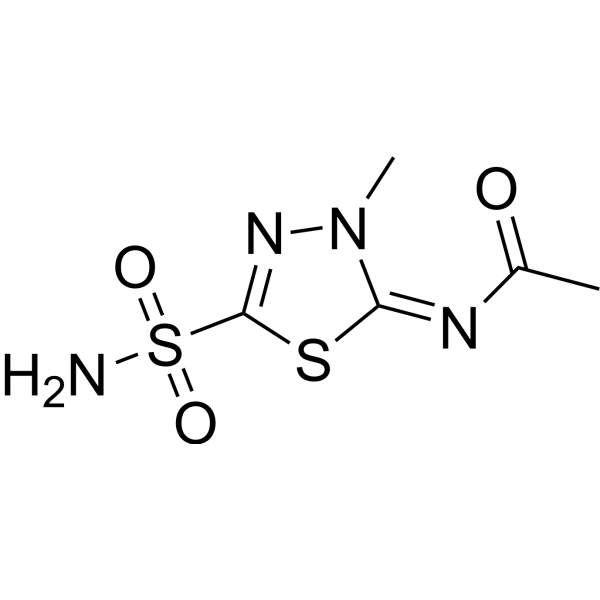
HY-B0553
MethazolamideCarbonic Anhydrase Inhibitor -

HY-B0483R
Tioxolone (Standard)Carbonic Anhydrase Inhibitor -
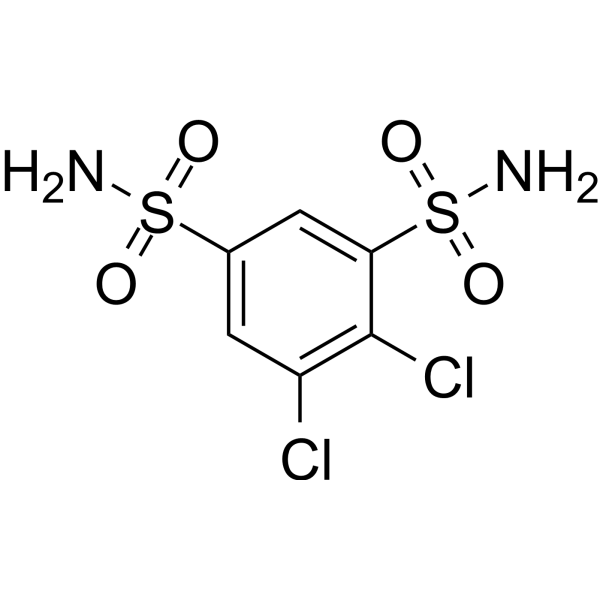
HY-B0397
DichlorphenamideCarbonic Anhydrase Inhibitor -
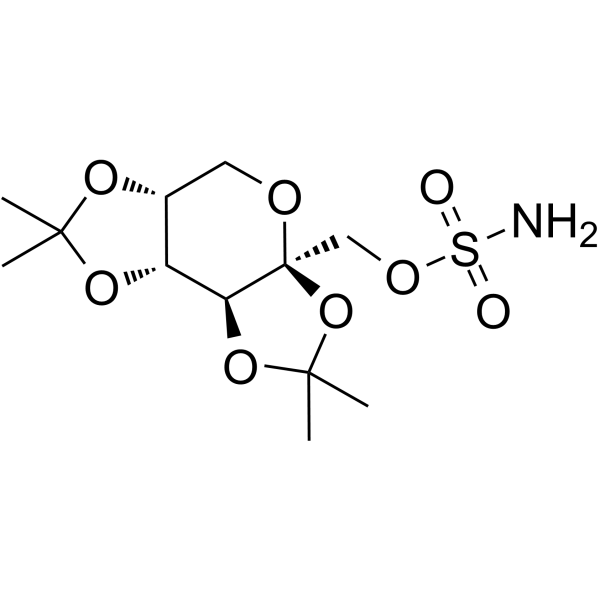
HY-B0122
TopiramateAntiepileptic Agent -
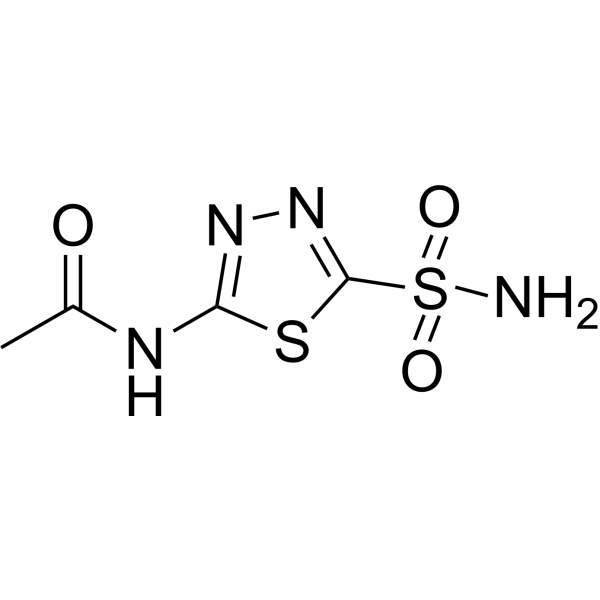
HY-B0782R
Acetazolamide (Standard) -
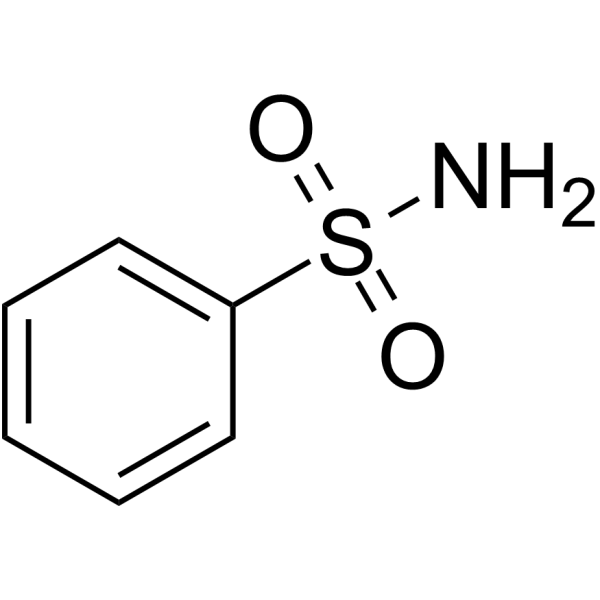
HY-101087
BenzenesulphonamideCA Inhibitor
Alle Parasite Isoform-spezifische Produkte anzeigen
More

Biologische Aktivität
Beschreibung
In Vitro
Tioxolone exhibits anti-leishmanial activity against amastigote and promastigote with IC50s of 49.8 μg/mL and 56.1 μg/mL[2].
Tioxolone (12.5-200 μg/mL, 48 h) dose-dependently induces apoptosis of Leishmania promastigote[2].
Tioxolone (12.5-200 μg/mL, 48 h) increases the expression of IL-12 and metacaspase, decreases the expression of IL-10, exhibiting immunomodulatory effect[2].
Tioxolone (10 µM, 12h) promotes the expression of LC3-II, reduces the expression of p62 protein, and induces autophagy in cancer cell A375[3].
MedChemExpress (MCE) has not independently confirmed the accuracy of these methods. They are for reference only.


Chemical Information
-
CAS. Nr. 4991-65-5
-
Appearance Solid
-
Molecular Weight 168.17
-
Formel C7H4O3S
-
Color Light yellow to yellow
-
SMILES
O=C1OC2=CC(O)=CC=C2S1
-
Versand
Room temperature in continental US; may vary elsewhere.
-
Speicherung
Powder -20°C 3 years 4°C 2 years In solvent -80°C 2 years -20°C 1 year


Lösungsmittel & Löslichkeit
In Vitro:
DMSO : ≥ 100 mg/mL (594.63 mM; Hygroscopic DMSO has a significant impact on the solubility of product, please use newly opened DMSO)
H2O : 0.67 mg/mL (3.98 mM; Need ultrasonic)
* "≥" means soluble, but saturation unknown.
Please refer to the solubility information to select the appropriate solvent. Once prepared, please aliquot and store the solution to prevent product inactivation from repeated freeze-thaw cycles.
Storage method and period of stock solution: -80°C, 2 years; -20°C, 1 year. When stored at -80°C, please use it within 2 years. When stored at -20°C, please use it within 1 year.
* Note: If you choose water as the stock solution, please dilute it to the working solution, then filter and sterilize it with a 0.22 μm filter before use.
Please refer to the solubility information to select the appropriate solvent. Once prepared, please aliquot and store the solution to prevent product inactivation from repeated freeze-thaw cycles.
Storage method and period of stock solution: -80°C, 2 years; -20°C, 1 year. When stored at -80°C, please use it within 2 years. When stored at -20°C, please use it within 1 year.
* Note: If you choose water as the stock solution, please dilute it to the working solution, then filter and sterilize it with a 0.22 μm filter before use.
Konzentration (Stammlösung) × Volumen (Stammlösung) = Konzentration (Ziellösung) × Volumen (Ziellösung)
In Vivo:
Select the appropriate dissolution method based on your experimental animal and administration route.
- For the following dissolution methods, please ensure to first prepare a clear stock solution using an In Vitro approach and then sequentially add co-solvents:
- To ensure reliable experimental results, the clarified stock solution can be appropriately stored based on storage conditions. As for the working solution for In Vivo experiments, it is recommended to prepare freshly and use it on the same day.
- The percentages shown for the solvents indicate their volumetric ratio in the final prepared solution. If precipitation or phase separation occurs during preparation, heat and/or sonication can be used to aid dissolution.
Add each solvent one by one: 10% DMSO 40% PEG300 5% Tween-80 45% Saline
Solubility: ≥ 2.5 mg/mL (14.87 mM); Clear solution
This protocol yields a clear solution of ≥ 2.5 mg/mL (saturation unknown).
Taking 1 mL working solution as an example, add 100 μL DMSO stock solution (25.0 mg/mL) to 400 μL PEG300, and mix evenly; then add 50 μL Tween-80 and mix evenly; then add 450 μL Saline to adjust the volume to 1 mL.
Preparation of Saline: Dissolve 0.9 g sodium chloride in ddH₂O and dilute to 100 mL to obtain a clear Saline solution.
Add each solvent one by one: 10% DMSO 90% (20% SBE-β-CD in Saline)
Solubility: ≥ 2.5 mg/mL (14.87 mM); Clear solution
This protocol yields a clear solution of ≥ 2.5 mg/mL (saturation unknown).
Taking 1 mL working solution as an example, add 100 μL DMSO stock solution (25.0 mg/mL) to 900 μL 20% SBE-β-CD in Saline, and mix evenly.
Preparation of 20% SBE-β-CD in Saline (4°C, storage for one week): 2 g SBE-β-CD powder is dissolved in 10 mL Saline, completely dissolve until clear.
In Vivo Dissolution Calculator
Please enter the basic information of animal experiments:
-
-
-
-
Recommended: Prepare an additional quantity of animals to account for potential losses during experiments.
Please enter your animal formula composition:
-
%DMSO +
Recommended: Keep the proportion of DMSO in working solution below 2% if your animal is weak.
-
%+
-
+%Tween-80 + +
-
%Saline +
The co-solvents required include: DMSO, . All of co-solvents are available by MedChemExpress (MCE). , Tween 80. All of co-solvents are available by MedChemExpress (MCE).
Working solution concentration: 0.22 mg/mL
Method for preparing stock solution: mg drug dissolved in μL DMSO. Stock solution concentration: mg/mL.
1. Take μL DMSO stock solution;
2. Add μL .
μL , mix evenly;
3. Then add μL Tween 80, mix evenly;
4. Then add μL
Please ensure that the stock solution in the first step is dissolved to a clear state, and add co-solvents in sequence. You can use ultrasonic heating (ultrasonic cleaner, recommended frequency 20-40 kHz), vortexing, etc. to assist dissolution.


Reinheit & Dokumentation
-
Data Sheet (273 KB)
-
SDS (393 KB)
- English - EN (393 KB)
- Français - FR (393 KB)
- Deutsch - DE (393 KB)
- Norwegian - NO (393 KB)
- Español - ES (393 KB)
- Swedish - SV (393 KB)
- Italian - IT (393 KB)
- Korean - KR (393 KB)
- Portuguese - PT (393 KB)
-
Handling Instructions (2659 KB)
Verweise


Complete Stock Solution Preparation Table
Please refer to the solubility information to select the appropriate solvent. Once prepared, please aliquot and store the solution to prevent product inactivation from repeated freeze-thaw cycles.
Storage method and period of stock solution: -80°C, 2 years; -20°C, 1 year. When stored at -80°C, please use it within 2 years. When stored at -20°C, please use it within 1 year.
| Optional Solvent | Concentration Solvent Mass | 1 mg | 5 mg | 10 mg | 25 mg |
|---|---|---|---|---|---|
| H2O / DMSO | 1 mM | 5.9463 mL | 29.7313 mL | 59.4626 mL | 148.6564 mL |
| DMSO | 5 mM | 1.1893 mL | 5.9463 mL | 11.8925 mL | 29.7313 mL |
| 10 mM | 0.5946 mL | 2.9731 mL | 5.9463 mL | 14.8656 mL | |
| 15 mM | 0.3964 mL | 1.9821 mL | 3.9642 mL | 9.9104 mL | |
| 20 mM | 0.2973 mL | 1.4866 mL | 2.9731 mL | 7.4328 mL | |
| 25 mM | 0.2379 mL | 1.1893 mL | 2.3785 mL | 5.9463 mL | |
| 30 mM | 0.1982 mL | 0.9910 mL | 1.9821 mL | 4.9552 mL | |
| 40 mM | 0.1487 mL | 0.7433 mL | 1.4866 mL | 3.7164 mL | |
| 50 mM | 0.1189 mL | 0.5946 mL | 1.1893 mL | 2.9731 mL | |
| 60 mM | 0.0991 mL | 0.4955 mL | 0.9910 mL | 2.4776 mL | |
| 80 mM | 0.0743 mL | 0.3716 mL | 0.7433 mL | 1.8582 mL | |
| 100 mM | 0.0595 mL | 0.2973 mL | 0.5946 mL | 1.4866 mL |
* Note: If you choose water as the stock solution, please dilute it to the working solution, then filter and sterilize it with a 0.22 μm filter before use.


Tioxolone Related Classifications
HY-B0483 Related Classifications
 Powered by Bioz