
249 Results for "

Bacillus subtilis

" in MedChemExpress (MCE) Product Catalog:
Products (249)

249 Results for "Bacillus subtilis" in MCE Product Catalog:

2
2 Cited Publications
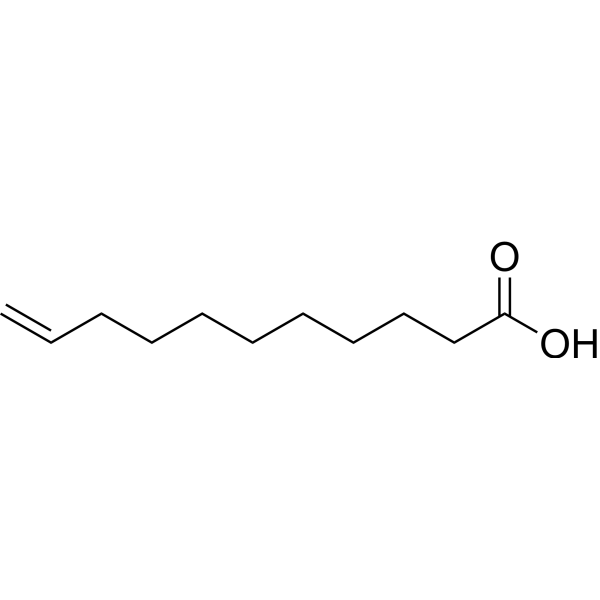
Cat. No.: HY-B0914
CAS No.: 112-38-9
Synonyms: Undecylenic acid
10-Undecenoic acid (Undecylenic acid) is an antifungal agent. 10-Undecenoic acid inhibits oligomerization, scavenges ROS and inhibits μ-calpain activity. 10-Undecenoic acid has neuroprotective effects. 10-Undecenoic acid has anticancer effects on a variety of tumors. 10-Undecenoic acid inhibits C. albicans biofilm formation and MRSA infection. 10-Undecenoic acid inhibits quorum sensing signals of Bacillus subtilis and Pseudomonas aeruginosa .
loading...
    loading...
2
2 Cited Publications
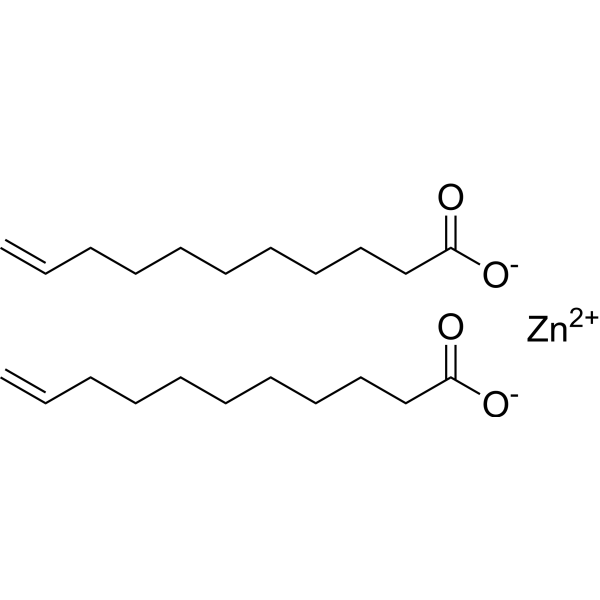
Cat. No.: HY-B0914A
CAS No.: 557-08-4
Synonyms: Zinc undecylenate
10-Undecenoic acid zinc salt (Undecylenic acid zinc salt) is an antifungal agent. 10-Undecenoic acid zinc salt inhibits oligomerization, scavenges ROS and inhibits μ-calpain activity. 10-Undecenoic acid zinc salt has neuroprotective effects. 10-Undecenoic acid zinc salt has anticancer effects on a variety of tumors. 10-Undecenoic acid zinc salt inhibits C. albicans biofilm formation and MRSA infection. 10-Undecenoic acid zinc salt inhibits quorum sensing signals of Bacillus subtilis and Pseudomonas aeruginosa .
loading...
    loading...
2
2 Cited Publications
Cat. No.: HY-Y1139
CAS No.: 111-16-0
Synonyms: Heptanedioic acid; 1,5-Pentanedicarboxylic acid; 1,7-Heptanedioic acid
Pimelic acid (Heptanedioic acid; 1,5-Pentanedicarboxylic acid) is a seven-carbon α,ω-dicarboxylic acid and a downstream product of fatty acid synthesis. Pimelic acid is a key precursor in biotin biosynthesis. Pimelic acid can be converted to pimelic acid-CoA by the BioW enzyme, thereby bypassing exogenous biotin requirements to support growth in various biotinytrophic bacteria and fungi, and reversing antibiotic-induced inhibition of biotin synthesis. Furthermore, Pimelic acid has been proposed as a highly specific biomarker for oxygen-induced retinopathy in mice. Pimelic acid can be used to study retinopathy of preterm infants, oxygen-induced retinopathy, and microbial biotin metabolism .
loading...
    loading...
2
2 Cited Publications
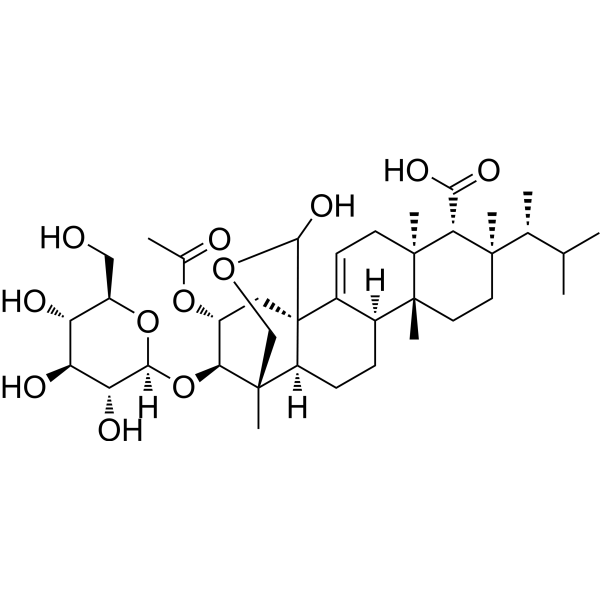
Cat. No.: HY-110354
CAS No.: 1094451-90-7
Purity:  99.58%
Synonyms: G28UCM
Research Areas:  

Infection

UCM05 (G28UCM) is a fatty acid synthase (FASN) and filamentous temperature-sensitive protein Z (Ftsz) inhibitor. UCM05 inhibits fatty acid synthesis, viral replication, and Gram-positive bacterial growth. UCM05 binds to FtsZ GTP-binding sites, inhibits GTPase activity, and disrupts Z-ring localization. UCM05 can be used for the research of HSV-1/2 infection, HIV-1 infection, and Gram-positive bacterial infections[1][2][3].
loading...
    loading...
1
1 Cited Publications
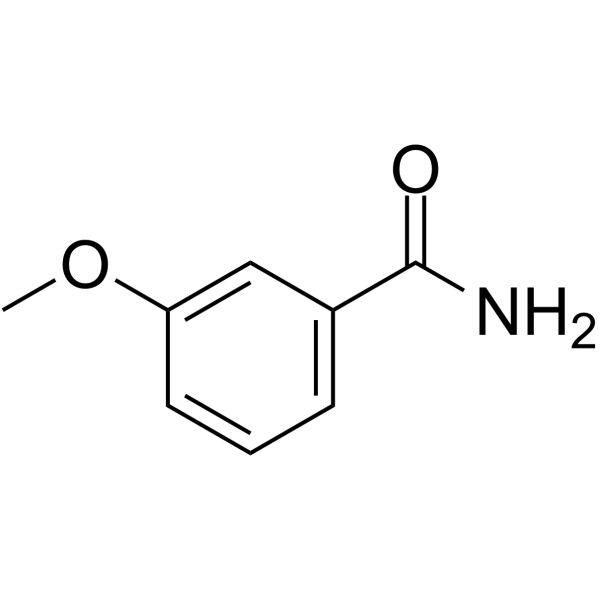
Cat. No.: HY-121497
CAS No.: 5813-86-5
Purity:  99.40%
Synonyms: 3-MBA
Target:  

PARP Bacterial

Research Areas:  

Cancer

3-Methoxybenzamide (3-MBA), an inhibitor of ADP-ribosyltransferase (ADPRTs) and PARP, inhibits cell division in Bacillus subtilis, leading to filamentation and eventually lysis of cells . 3-Methoxybenzamide (3-MBA) enhances in vitro plant growth, microtuberization, and transformation efficiency of blue potato (Solanum tuberosum L. subsp. andigenum) .
loading...
    loading...
1
1 Cited Publications
Cat. No.: HY-108307
CAS No.: 66803-19-8
Purity:  ≥98.0%
Synonyms: Gentamicin C2b sulfate; Antibiotic XK-62-2 sulfate; Sagamicin sulfate
Micronomicin sulfate (Gentamicin C2b sulfate) is an aminoglycoside antibiotic isolated from Micromonospora. Micronomicin sulfate is a broad-spectrum antibiotic close to the gentamicin-type antibiotics, exhibits a high activity against Pseudomonas, Proteus, Klebsiella pneumoniae, Serratia, etc (MIC=0.001-8.3 μg/ml) .
loading...
    loading...
1
1 Cited Publications
Cat. No.: HY-N1916
CAS No.: 63644-62-2
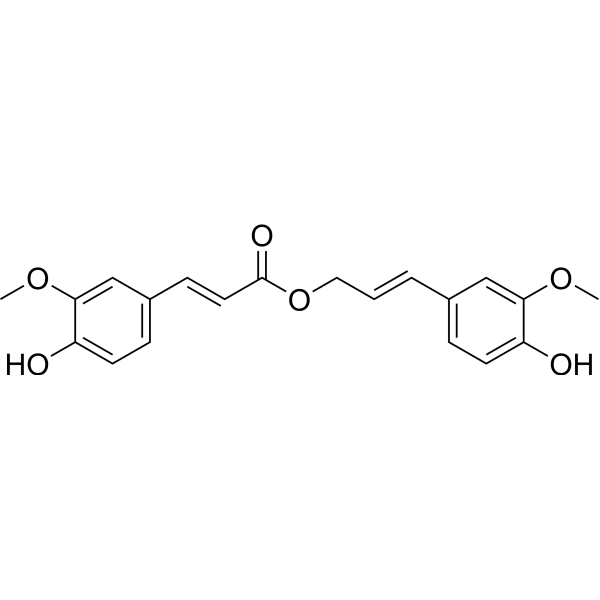
Coniferyl ferulate is an orally active phenolic acid compound. Coniferyl ferulate is a potent inhibitor of glutathione S-transferase (GST) (IC50 = 0.3 μM), which downregulates P-gp expression, induces apoptosis in B-MD-C1 (ADR+/+) cells, and reverses multidrug resistance. Coniferyl ferulate blocks the NMDAR/NR2B-CaMKII-MAPKs signaling pathway, inhibits ROS production and mitochondrial apoptosis, while reshapes the intestinal microbiota and microbial metabolism, ameliorates colonic inflammation and alleviates depressive symptoms in mice. Coniferyl ferulate can alleviate the toxicity of xylene to hematopoietic stem and progenitor cells by targeting Mgst2. Coniferyl ferulate exhibits antibacterial activity against the Gram-positive Bacillus subtilis and Staphylococcus aureus .
loading...
    loading...
Cat. No.: HY-131409
CAS No.: 62354-43-2
Purity:  99.55%
Synonyms: D-Val-Leu-Lys-p-itoailide dihydrochloride; D-VLK-pNA dihydrochloride; S 2251 dihydrochloride
Target:  

Fluorescent Dye

Research Areas:  

Others

D-Val-Leu-Lys-pNA (D-Val-Leu-Lys-p-nitroanilide) dihydrochloride is a chromogenic peptide substrate that serves as a characteristic substrate for plasmin and plasminogen. D-Val-Leu-Lys-pNA dihydrochloride acts as a sensitive substrate for the DFE27 serine protease derived from Bacillus subtilis DC27. Catalyzed by plasmin, D-Val-Leu-Lys-pNA dihydrochloride binds and hydrolyzes to release p-nitroaniline (pNA), which can be detected colorimetrically at 405 nm as a measure of fibrinolytic activity .
loading...
    loading...
Cat. No.: HY-N13668
CAS No.: 468757-69-9
Rhodomyrtone is an antibiotic that can be found in the leaves of Rhodomyrtus tomentosa. Rhodomyrtone kills Gram-positive bacterial cells without causing bacteriolysis. Rhodomyrtone exhibits activity against a variety of Gram-positive bacteria, including Bacillus cereus, Bacillus subtilis, Enterococcus faecalis, Staphylococcus epidermidis, Streptococcus gordonii, Streptococcus pneumoniae, Streptococcus pyogenes and Streptococcus salivarius. Rhodomyrtone is applicable to studies related to bacterial infections .
loading...
    loading...
Cat. No.: HY-118090
CAS No.: 1116-22-9
Purity:  99.72%
Synonyms: γ-Glu-Glu; H-γ-Glu-Glu-OH
Target:  

Bacterial

Research Areas:  

Infection

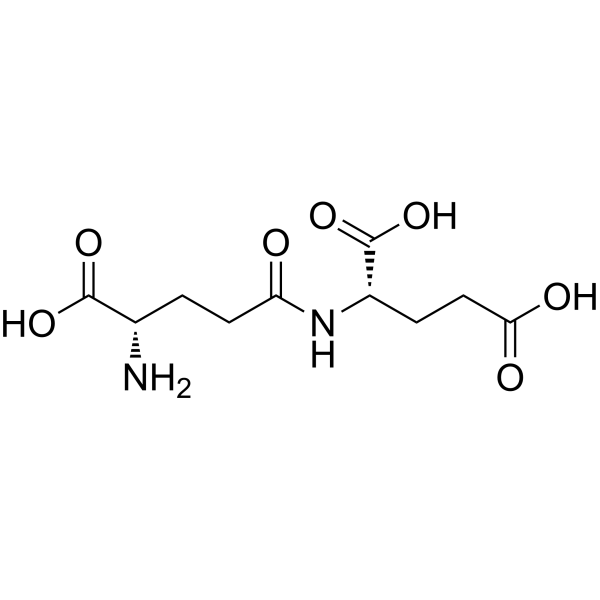
L-γ-Glutamyl-L-glutamic acid (D-γ-Glu-Glu) is a γ-glutamyl dipeptide. L-γ-Glutamyl-L-glutamic acid exists in the acid hydrolysate of poly-γ-glutamic acid produced by Bacillus subtilis F-2-01 .
loading...
    loading...
Cat. No.: HY-121382
CAS No.: 639-14-5
Purity:  99.51%
Gypsogenin is a selective mixed-type BChE inhibitor (Ki=19.99 μM) that also exhibits significant cytotoxicity against various human cancer cell lines. Gypsogenin inhibits tumor growth by inducing cell cycle arrest and triggering apoptosis. Gypsogenin displays antibacterial activity against bacteria such as Bacillus subtilis and Bacillus thuringiensis, and often serves as a key parent nucleus for the synthesis of anticancer compounds. Gypsogenin is widely used in research on Alzheimer's disease and various cancers including colon cancer, melanoma, and leukemia .
loading...
    loading...
Cat. No.: HY-P2124
CAS No.: 20829-55-4
Target:  

Antibiotic Bacterial

Research Areas:  

Infection

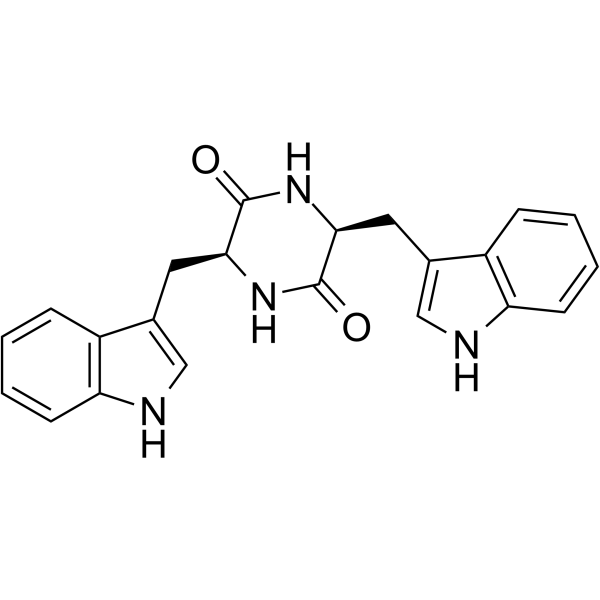
Cyclo(L-Trp-L-Trp) is an antibiotic, and shows antimicrobial activity. Cyclo(L-Trp-L-Trp) can inhibit A. baumannii, as well as Candida albicans, Bacillus subtilis, Micrococcus luteus, Saccharomyces cerevisiae, Aspergillus niger, Staphylococcus aureus. Cyclo(L-Trp-L-Trp) can be used in microbial infection research .
loading...
    loading...
Cat. No.: HY-153575
Target:  

PROTACs Bacterial

Research Areas:  

Infection

BacPROTAC-1 is a BacPROTAC degrader that induces the degradation of the target protein mSA by recruiting ClpC/ClpC1. BacPROTAC-1 binds to mSA, Bacillus subtilis ClpCNTD and Mycobacterium smegmatis ClpC1NTD with Kd values of 3.9, 2.8 and 0.69 μM, respectively. BacPROTAC-1 forms a ternary complex between the substrate and ClpC, promotes ClpC reassembly and activation, and induces ATP-dependent degradation of mSA and mSA fusion model substrates via the ClpCP or ClpC1P1P2 protease system. BacPROTAC-1 can be used in studies on bacterial targeted protein degradation, bacterial protein homeostasis and antibacterial target discovery .
loading...
    loading...
Cat. No.: HY-34439
CAS No.: 123-32-0
Synonyms: NSC 49139
2,5-Dimethylpyrazine (NSC 49139) is a flavor compound. 2,5-Dimethylpyrazine forms in baked foods. It can also be produced by Bacillus subtilis via microbial mechanisms. 2,5-Dimethylpyrazine imparts baking, nutty, earthy, and cocoa-like aroma characteristics to heated foods. In fully fired oolong tea, 2,5-Dimethylpyrazine exhibits a roasted peanut flavor .
loading...
    loading...
Cat. No.: HY-W040795
CAS No.: 19962-37-9
N2-Acetylguanine is a C2-modified guanine. N2-Acetylguanine binds GR (guanine-guanine riboswitch) with an Kd value of 300 nM. N2-Acetylguanine modulate transcriptional termination. N2-Acetylguanine has the potential for the research of antimicrobial agent .
loading...
    loading...
Cat. No.: HY-E70216
Target:  

Others

Research Areas:  

Others

Bsu DNA polymerase, Large fragment is a polymerase derived from Bacillus subtilis. Bsu DNA polymerase, Large fragment is a DNA isothermal amplification polymerase with chain replacement activity, which used in RPA recombinase polymerase amplification technology .
loading...
    loading...
Cat. No.: HY-E70124A
CAS No.: 9013-79-0
Research Areas:  

Metabolic Disease

Esterase, Bacillus subtilis is a carboxylate hydrolase. Esterase, Bacillus subtilis accepts a branched alcohol moiety as substrate .
loading...
    loading...
Cat. No.: HY-N10751
CAS No.: 30361-33-2
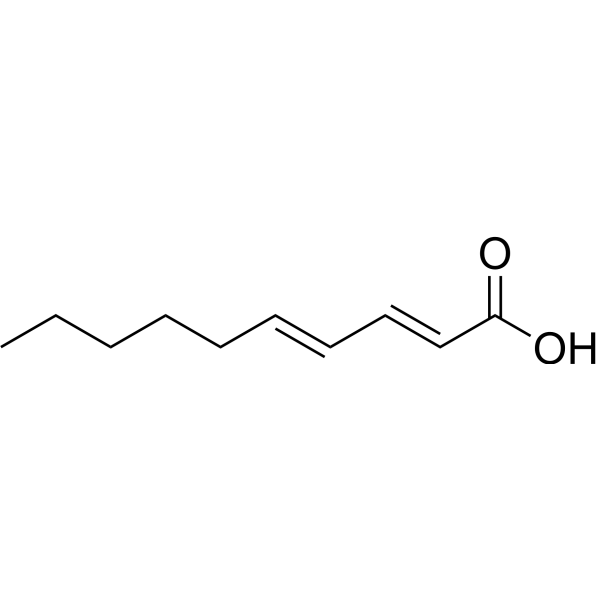
(2E,4E)-Decadienoic acid is an anti-oomycete aliphatic compound that can be found in Coculture of Bacillus subtilis and Trichoderma asperellum .
loading...
    loading...
Cat. No.: HY-105282
CAS No.: 110865-90-2
Purity:  95.87%
Synonyms: MM 45289; A 82846A
Category:  

Microorganisms Antibiotics

Target:  

Antibiotic Bacterial

Eremomycin (MM 45289) is a potent glycopeptide antibiotic closely related to Vancomycin (HY-B0671). Eremomycin shows antibacterial activity in Staphylococcus spp. and Bacillus subtilis ATCC6633, with the MIC values of 0.03-1.6 μg/mL .
loading...
    loading...
Cat. No.: HY-E70409
Target:  

Endogenous Metabolite

Research Areas:  

Metabolic Disease

Diacetinase, Bacillus subtilis is a member of the esterase family and is responsible for catalyzing the hydrolysis of diacetin. This enzyme is used in the measurement of lipase activity .
loading...
    loading...

