
4 Results for "

Cu-complex

" in MedChemExpress (MCE) Product Catalog:
Products (4)

4 Results for "Cu-complex" in MCE Product Catalog:

1
1 Cited Publications
Art. -Nr.: HY-139324
CAS. Nr.: 68341-14-0
Reinheit:  ≥95.0%
Target:  

GSK-3 Amyloid-β

Forschungsgebiete:  

Neurological Disease Cancer

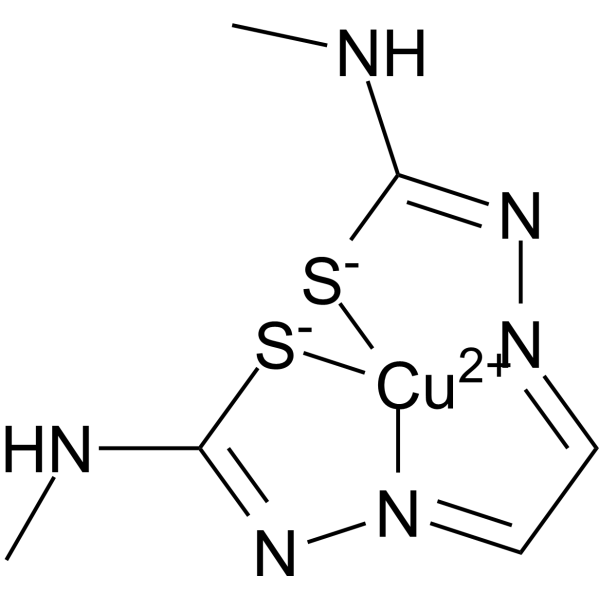
Cu(II)GTSM, a cell-permeable Cu-complex, significantly inhibits GSK3β. Cu(II)GTSM inhibits Amyloid-β oligomers (AβOs) and decreases tau phosphorylation. Cu(II)GTSM also decreases the abundance of Amyloid-β trimers. Cu(II)GTSM is a potential anticancer and antimicrobial agent .
loading...
    loading...
Art. -Nr.: HY-W782083
CAS. Nr.: 1583289-85-3
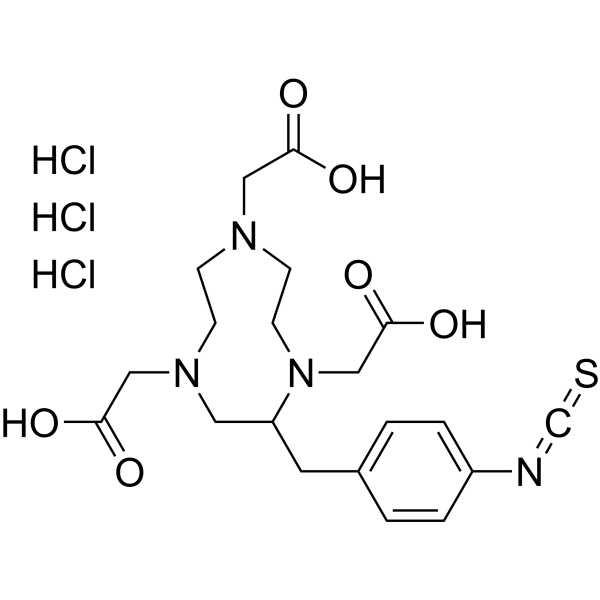
p-SCN-Bn-NOTA trihydrochloride is a macrocyclic chelator. p-SCN-Bn-NOTA trihydrochloride can be covalently coupled to molecules such as peptides through the thiocyanate group to form hexacoordinate copper (such as 64Cu) complexes. p-SCN-Bn-NOTA trihydrochloride specifically binds to GRPR or EGFR highly expressed on the surface of tumor cells, mediating tumor enrichment of radioactive probes. p-SCN-Bn-NOTA trihydrochloride can be used to study malignant tumors expressing GRPR or EGFR, such as prostate cancer and colorectal cancer .
loading...
    loading...
Art. -Nr.: HY-115832
CAS. Nr.: 79514-49-1
Target:  

Transferrin Receptor

Forschungsgebiete:  

Cancer

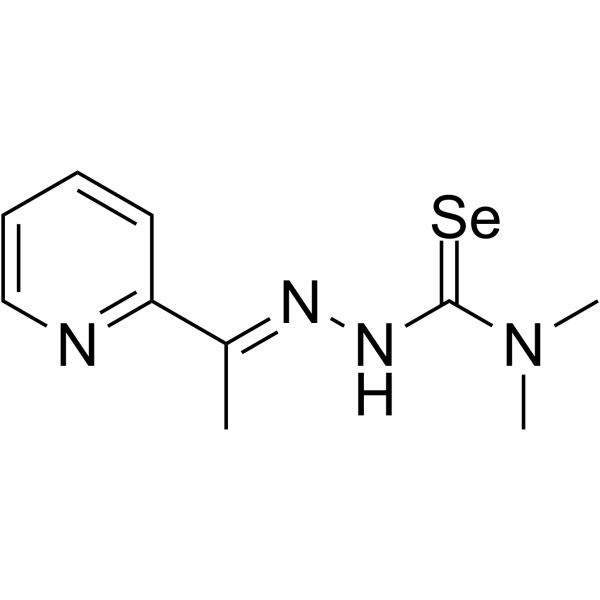
Ap44mSe is a selenosemicarbazone that effectively depletes cellular Fe, resulting in transferrin receptor-1 up-regulation, ferritin down-regulation, and increased expression of the potent metastasis suppressor, N-myc downstream regulated gene-1. Ap44mSe forms redox active Cu complexes that target the lysosome to induce lysosomal membrane permeabilization .
loading...
    loading...
Art. -Nr.: HY-190512
CAS. Nr.: 3101626-89-2
Forschungsgebiete:  

Cancer

Copper chelator is a copper chelator with anticancer activity. Copper chelator inhibits mitochondrial complex IV through copper depletion, triggering ROS/RNS stress and activating ERK/JNK/p38/AMPK, while suppressing the NRF2 antioxidant response through Keap1 upregulation. Copper chelator induces paraptosis-like death, endoplasmic reticulum stress, mitochondrial dysfunction, and ATP depletion, and inhibits cancer cell invasion and metastasis by downregulating MMP and FOSL1. Copper chelator chelates Cu (I) to form Cu complexes and releases NO with glutathione. Copper chelator inhibits the proliferation of Cu-sensitive melanoma cells and organoids as well as melanoma tumor growth in mice. Copper chelator can be used for research on melanoma .
loading...
    loading...
